Everest Three High Passes Trek Overview
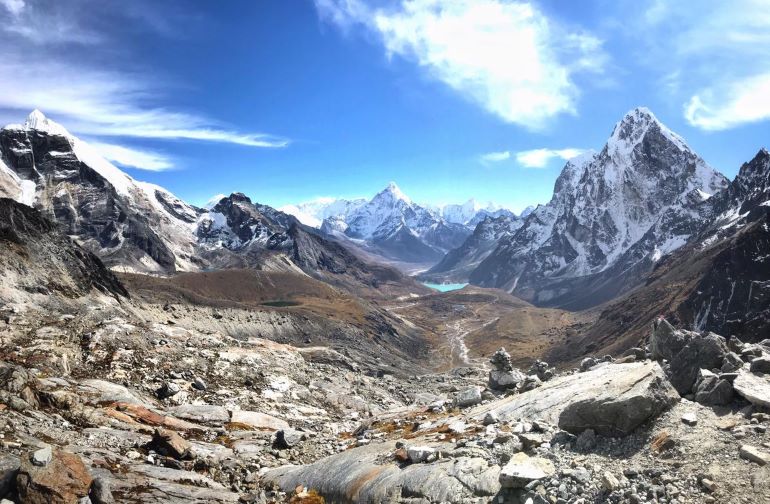
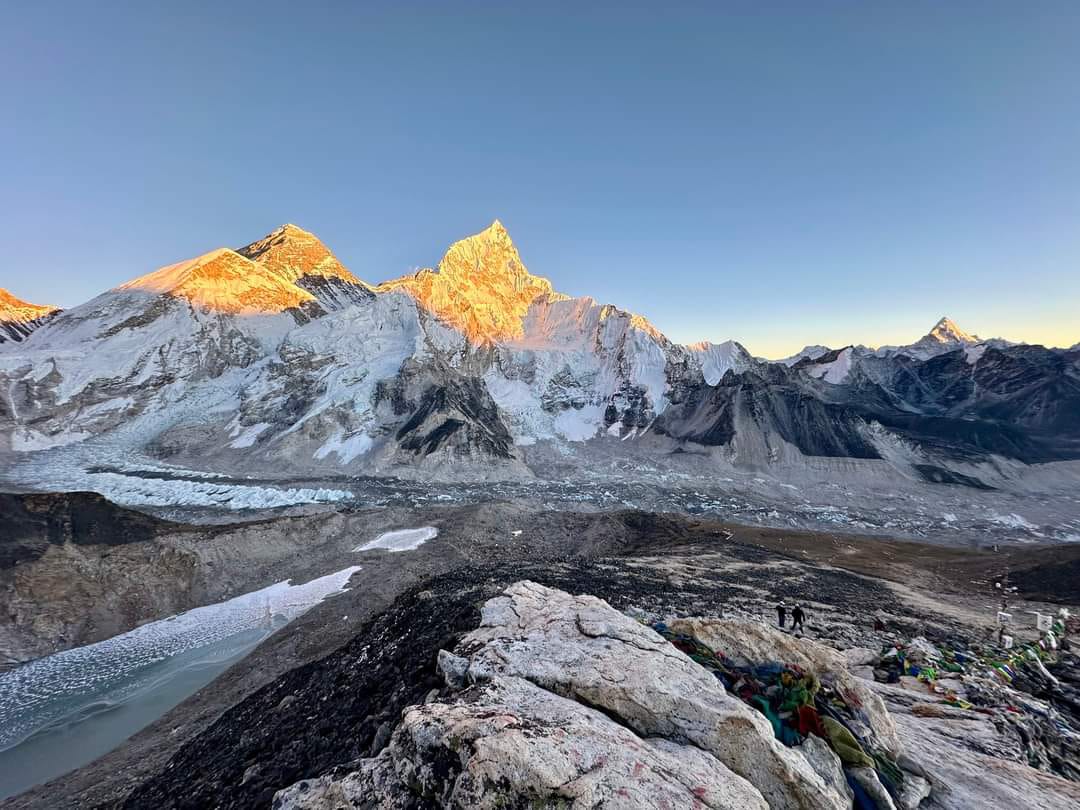
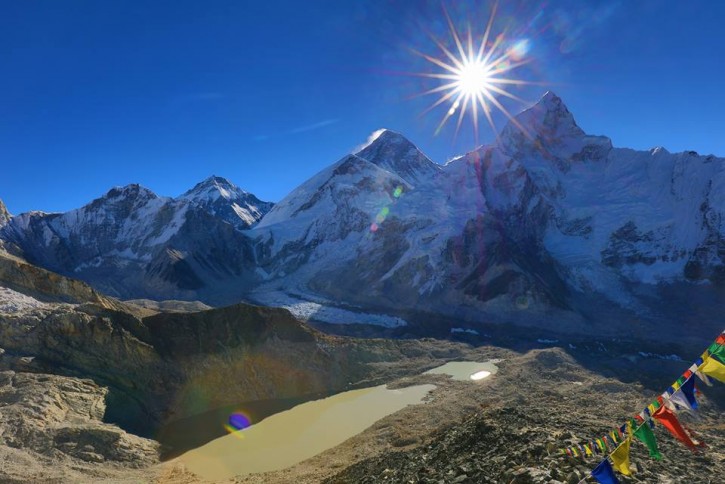
The Everest Three High Passes Trek is the most complete and adventurous journey in the Everest (Khumbu) region. Instead of following a single valley in and out, the route loops across the region, linking three high Himalayan passes, Kongma La (5,535 m), Cho La (5,420 m) and Renjo La (5,360 m), with the iconic highlights of Everest Base Camp, Kala Patthar and the Gokyo Lakes. Over about three weeks, you'll cross glaciers, climb rocky passes, stay in remote Sherpa settlements and enjoy close-up views of Everest, Lhotse, Makalu, Cho Oyu, Ama Dablam and dozens of other peaks. It's a demanding trek for fit, experienced trekkers, and one of the most rewarding adventures in the Himalayas. With Nepal Trip Services, you'll have expert guidance, well-planned acclimatization and full support from start to finish.
Trek Facts at a Glance
| Detail |
Information |
| Trek Region |
Everest (Khumbu), Sagarmatha National Park |
| Duration |
19 Days (including arrival and departure) |
| Trekking Days |
16–17 days |
| Maximum Altitude |
Kala Patthar (5,644 m / 18,519 ft) |
| High Passes |
Kongma La (5,535 m), Cho La (5,420 m), Renjo La (5,360 m) |
| Total Trek Distance |
About 160–170 km |
| Difficulty |
Strenuous |
| Start / End Point |
Lukla (2,860 m) |
| Accommodation |
Hotel in Kathmandu; teahouses on the trek |
| Best Seasons |
March – May & late September – November |
| Permits |
Sagarmatha National Park & Khumbu Pasang Lhamu Rural Municipality permits |
The Three High Passes
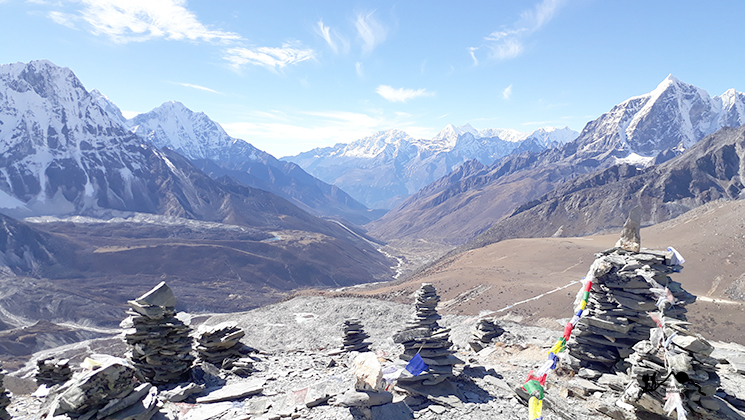
Kongma La (5,535 m): The highest and toughest of the three passes connects Chhukung with Lobuche. A long, rocky climb leads to a remote summit marked with prayer flags, with views of Makalu, Lhotse and the Khumbu Glacier.
Cho La (5,420 m): This dramatic pass links the Everest Base Camp valley with the Gokyo valley. The crossing includes a short glacier walk on the far side and gives striking views of Cholatse and Ama Dablam.
Renjo La (5,360 m): Known for one of the finest Everest panoramas in the Khumbu, Renjo La looks back over the Gokyo Lakes and the Ngozumpa Glacier to Everest, Lhotse and Makalu. It's the last and most scenic of the three.
The Classic Route
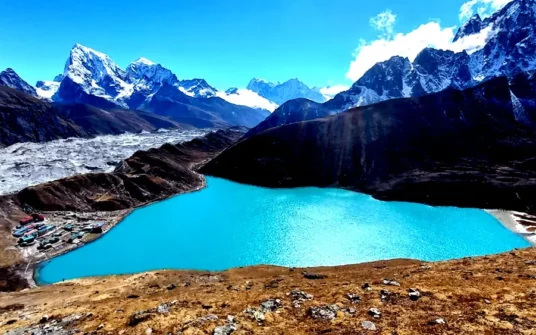
The trek starts with a scenic flight to Lukla, followed by the trail through pine forests and suspension bridges to Namche Bazaar (3,440 m), where you'll spend an acclimatization day. From there, the route passes Tengboche Monastery and Dingboche to the quiet valley of Chhukung, then crosses Kongma La to Lobuche. Next comes the highlight many trekkers dream of: Everest Base Camp (5,364 m) and the sunrise from Kala Patthar. You'll then cross Cho La into the Gokyo valley, explore the turquoise Gokyo Lakes, climb Gokyo Ri (5,357 m), and finish with Renjo La before descending through the peaceful Bhote Koshi Valley and historic Thame back to Namche and Lukla.
Sherpa Culture & Natural Beauty
Beyond the passes, this trek offers a deep cultural experience. Visit Tengboche, the largest monastery in the Khumbu, along with the ancient Thame Monastery and the villages of Khumjung and Pangboche, where Sherpa traditions and Buddhist faith shape everyday life. The entire route lies within Sagarmatha National Park, a UNESCO World Heritage Site that's home to the Himalayan tahr, musk deer, Danphe pheasant and the elusive snow leopard.
Difficulty & Acclimatization
The Three Passes Trek is graded strenuous. It involves long walking days of 6–9 hours, several nights above 4,500 m and steep, rocky or icy sections on the passes. Previous high-altitude trekking experience and excellent fitness are strongly recommended. To reduce the risk of altitude sickness, the itinerary includes acclimatization days in Namche Bazaar and Dingboche, and the anticlockwise route builds altitude gradually before the highest pass.
Why Trek with Nepal Trip Services?
With 16 years of experience in the Everest region, Nepal Trip Services provides government-licensed, highly experienced guides who know the passes and changing mountain conditions well. Every trek includes all permits, domestic flights, teahouse accommodation, meals on the trail, porter support and daily health checks with a pulse oximeter. We also coordinate emergency rescue with your insurance provider. If you'd like a shorter or gentler adventure, explore our Classic Everest Base Camp Trek or Gokyo Lakes Trek. You could also enjoy close-up Himalayan views on the short, beginner-friendly Everest View Trek, or see Everest from a quieter angle on the Pikey Peak Trek in the lower Solu region. Browse all our Everest Region Treks to find the perfect route for you.
Meals & Accommodation During the Everest Three High Passes Trek
|
Day
|
Route
|
Altitude
|
Meals
|
Accommodation
|
|
01
|
Arrival in Kathmandu
|
1,400 m
|
Welcome Dinner
|
Hotel in Kathmandu
|
|
02
|
Kathmandu → Lukla (flight) → Phakding
|
2,610 m
|
B, L, D
|
Teahouse in Phakding
|
|
03
|
Phakding → Namche Bazaar
|
3,440 m
|
B, L, D
|
Teahouse in Namche Bazaar
|
|
04
|
Acclimatisation day in Namche Bazaar
|
3,440 m
|
B, L, D
|
Teahouse in Namche Bazaar
|
|
05
|
Namche Bazaar → Tengboche
|
3,860 m
|
B, L, D
|
Teahouse in Tengboche
|
|
06
|
Tengboche → Dingboche
|
4,340 m
|
B, L, D
|
Teahouse in Dingboche
|
|
07
|
Acclimatisation day in Dingboche
|
4,340 m
|
B, L, D
|
Teahouse in Dingboche
|
|
08
|
Dingboche → Chhukung
|
4,700 m
|
B, L, D
|
Teahouse in Chhukung
|
|
09
|
Chhukung → Kongma La (5,535 m) → Lobuche
|
4,940 m
|
B, L, D
|
Teahouse in Lobuche
|
|
10
|
Lobuche → Everest Base Camp → Gorak Shep
|
5,164 m
|
B, L, D
|
Teahouse in Gorak Shep
|
|
11
|
Gorak Shep → Kala Patthar → Dzongla
|
4,830 m
|
B, L, D
|
Teahouse in Dzongla
|
|
12
|
Dzongla → Cho La (5,420 m) → Thangnak
|
4,700 m
|
B, L, D
|
Teahouse in Thangnak
|
|
13
|
Thangnak → Gokyo
|
4,790 m
|
B, L, D
|
Lakeside teahouse in Gokyo
|
|
14
|
Gokyo Ri hike & explore Gokyo
|
4,790 m
|
B, L, D
|
Lakeside teahouse in Gokyo
|
|
15
|
Gokyo → Renjo La (5,360 m) → Lungden
|
4,350 m
|
B, L, D
|
Teahouse in Lungden
|
|
16
|
Lungden → Namche Bazaar
|
3,440 m
|
B, L, D
|
Teahouse in Namche Bazaar
|
|
17
|
Namche Bazaar → Lukla
|
2,860 m
|
B, L, D
|
Teahouse in Lukla
|
|
18
|
Lukla → Kathmandu (flight)
|
1,400 m
|
Breakfast & Farewell Dinner
|
Hotel in Kathmandu
|
|
19
|
Final departure
|
1,400 m
|
Breakfast
|
—
|
B = Breakfast, L = Lunch, D = Dinner
Accommodation
- Kathmandu: Comfortable 3★ hotel with private bathroom (twin sharing)
- Lower trail (Phakding–Tengboche): Good teahouses, some with attached bathrooms and hot showers
- Higher trail (Dingboche and above): Basic, clean twin rooms with shared toilets
- Remote stops (Dzongla, Thagnak, Lungden): Simple lodges with limited facilities
- Extras: Hot showers, Wi-Fi and charging are usually available at a small extra cost
Meals
- 3 meals a day on the trek (breakfast, lunch and dinner)
- Popular dishes: Dal bhat, noodles, soups, pasta, potatoes, momos and Sherpa stew
- Breakfast: Porridge, Tibetan bread, eggs, chapati and pancakes
- Hot drinks: Tea, coffee and garlic soup, said to help with acclimatization
- Dietary needs: Vegetarian and other special diets can be arranged
Accommodation and meals are an important part of the Everest Three High Passes Trek. You’ll stay in comfortable teahouses and lodges along the route, with nutritious meals such as dal bhat, noodles, soups, momos, and Tibetan bread. For detailed information about rooms, facilities, meal options, drinking water, Wi-Fi, charging, and extra costs, read our Everest Three High Passes Trek: Meals & Accommodation Guide.
Everest Three High Passes Trek Preparation & Training
Good preparation is the key to a safe and enjoyable Everest Three High Passes Trek. We recommend starting your training 8–12 weeks before departure. Build cardiovascular endurance with running, cycling, swimming or brisk uphill walking 4–5 times a week, and add strength training such as squats, lunges, step-ups and core exercises to prepare your legs and back for steep climbs and long descents over Kongma La, Cho La and Renjo La. The most effective training is hiking with a daypack of 6–8 kg on hilly terrain or stairs, gradually building up to back-to-back long hikes of 6–8 hours, much like real trekking days in the Khumbu. If you can, gain some experience at altitude beforehand, and get a medical check-up, especially if you have heart, lung or blood pressure conditions. Practical preparation matters too: break in your trekking boots, get used to using trekking poles, and pack the right gear, including warm layers and microspikes for icy pass crossings. Mental preparation is just as important, as the trek takes patience, a steady pace and a positive attitude on cold mornings and long days. For a complete week-by-week plan, fitness tests and expert tips, read our Everest Three High Passes Trek Training & Fitness Guide. Before your trip, Nepal Trip Services will share a detailed packing list and training guidance, so you arrive in Kathmandu confident and ready.
Is the Everest Three High Passes Trek Suitable for Beginners?
In most cases, the Everest Three High Passes Trek is not recommended for complete beginners. It's one of the toughest teahouse treks in Nepal, with long days of 6–9 hours, three passes above 5,300 m, several nights above 4,500 m and rough, rocky or icy trail sections. These demand excellent fitness, mental stamina and ideally previous high-altitude trekking experience. That said, a very fit and determined beginner who has done regular hiking or endurance training can complete it with 2–3 months of focused preparation, a well-paced itinerary with extra acclimatization days and the support of an experienced guide. Many first-time Himalayan trekkers find it more rewarding, and safer, to start with the Classic Everest Base Camp Trek or the Gokyo Lakes Trek to build altitude experience, or to try a gentler route like the Poon Hill Trek or the Everest View Trek. Not sure if you're ready? Read our complete guide, Can Beginners Do the Everest Three High Passes Trek?, or let Nepal Trip Services look at your fitness and trekking background and help you choose the right Himalayan adventure, or customize the Three Passes route with extra rest days to suit you.
Why Choose the Everest Three High Passes Trek?
- The ultimate Everest adventure: Cross Kongma La (5,535 m), Cho La (5,420 m) and Renjo La (5,360 m) on the Khumbu's most complete trek.
- Everest's best sights in one trip: Everest Base Camp, Kala Patthar, Gokyo Lakes and Gokyo Ri on a single circuit.
- Four 8,000 m giants: Close-up views of Everest, Lhotse, Makalu and Cho Oyu, plus Ama Dablam and Pumori.
- Fewer crowds: Quiet, remote valleys such as Chhukung, Dzongla and Lungden, away from the busy EBC trail.
- Glaciers and sacred lakes: Cross the Ngozumpa Glacier and visit the turquoise Gokyo Lakes.
- The finest Everest panorama: Renjo La offers stunning views of Everest above the Gokyo Lakes.
- Authentic Sherpa culture: Visit Tengboche Monastery, historic Thame and lively Namche Bazaar.
- Safe, gradual acclimatization: Rest days at Namche, Dingboche and Chhukung before the first pass.
- UNESCO wilderness: Trek through Sagarmatha National Park, home to the Himalayan tahr and snow leopard.
- The next big challenge: It's the perfect step up after the Classic Everest Base Camp Trek or Gokyo Lakes Trek.
- Expert support: Licensed guides, porters, daily oxygen checks and 16 years of Everest expertise from Nepal Trip Services.
Everest Three High Passes Trek: Additional Information
Best Time for the Everest Three High Passes Trek
The best time for the Everest Three High Passes Trek is mid-October to November and April to May. During these months, the weather is stable, the skies are clear and the three passes, Kongma La, Cho La and Renjo La, are usually free of heavy snow. Choosing the right season matters more on this route than on almost any other Everest trek, because conditions on the passes can make the difference between a safe crossing and a turned-back day.
Seasons & Pass Conditions
| Season |
Months |
Pass Conditions |
Views |
Rating |
| Autumn |
Late Sep – Nov |
Dry, stable, mostly snow-free |
Crystal clear |
Best |
| Spring |
Late Mar – May |
Some old snow early; clear by late April |
Clear mornings |
Excellent |
| Winter |
Dec – Feb |
Deep snow, ice, very cold; passes often closed |
Very clear |
Not recommended |
| Monsoon |
Jun – Aug |
Rain, fog, slippery rock; risky crossings |
Mostly cloudy |
Not recommended |
Best Months at a Glance
| Month |
Why Go / Why Avoid |
| March |
Cold early in the month; snow possible on passes. Good for late-March starts |
| April |
Warmer days, rhododendron blooms, Everest expedition season |
| May |
Warmest month on the passes; some afternoon clouds |
| September |
Late-monsoon rain early in the month; improving by the end |
| October |
Best visibility and stable weather; busiest month |
| November |
Clear, dry and quieter; colder nights at high camps |
| December |
Possible early snow; some high teahouses begin closing |
Temperatures at High Altitude (Approx.)
| Season |
Day (above 4,500 m) |
Night (above 4,500 m) |
| Autumn |
0°C – 10°C |
-10°C to -18°C |
| Spring |
3°C – 12°C |
-8°C to -15°C |
| Winter |
-8°C – 3°C |
-20°C to -30°C |
Quick Tips
- For the clearest views: Trek from mid-October to mid-November.
- For warmer pass crossings: Choose late April to May.
- Start pass days early (around 4–5 AM), before wind and cloud build up.
- Carry microspikes in every season, as Cho La can be icy year-round.
- Add 1–2 buffer days for Lukla flight delays and bad weather on the passes.
- Book 2–3 months ahead for October and April departures.
Not sure which month suits you? Nepal Trip Services will help you choose the safest and most rewarding time for your Everest Three High Passes Trek.
Permits & Entry Fees
The Everest Three High Passes Trek lies entirely within Sagarmatha National Park, a UNESCO World Heritage Site, and the Khumbu Pasang Lhamu Rural Municipality. Every trekker needs two permits. When you book with Nepal Trip Services, both are arranged for you and included in your trek package.
Required Permits (2026)
| Permit |
Foreign Nationals |
Where Issued |
Where Checked |
| Sagarmatha National Park Entry Permit |
NPR 3,000 (≈ US$20) |
Kathmandu (Nepal Tourism Board) or Monjo |
Monjo checkpoint |
| Khumbu Pasang Lhamu Rural Municipality Permit |
NPR 3,000 (≈ US$20) |
Lukla |
Lukla checkpoint |
| Total |
NPR 6,000 (≈ US$40) |
|
|
SAARC nationals get discounted rates. Fees are set by the authorities and may change.
Good to Know
- No TIMS card is needed for the Everest region. It has been replaced by the local Khumbu Pasang Lhamu permit.
- No extra permit is needed for the three passes, Gokyo or Everest Base Camp; your two permits cover the whole circuit.
- Permits are non-transferable and non-refundable.
- Keep your permits with you at all times, as they're checked at Lukla, Monjo and other points along the trail.
Documents Required
- Valid passport (6+ months) and Nepal visa
- Passport-size photos (2 copies)
- Trekking itinerary and insurance details
Quick Tips
- Carry photocopies of your passport and permits in a waterproof pouch.
- Bring NPR cash for any small local fees or donations.
- Coming in via Jiri or Phaplu? An extra Gaurishankar Conservation Area permit may apply, so tell us in advance.
No queues, no paperwork. Nepal Trip Services handles every permit for your Everest Three High Passes Trek, so you can focus on the mountains.
How Difficult Is the Everest Three High Passes Trek?
The Everest Three High Passes Trek is graded strenuous, and it's one of the most demanding teahouse treks in Nepal. You don't need any technical climbing skills, but you do need excellent fitness, stamina and ideally previous high-altitude trekking experience. The challenge comes from the combination of long days, high altitude and three tough pass crossings above 5,300 m.
Difficulty at a Glance
| Factor |
Details |
| Difficulty Grade |
Strenuous |
| Maximum Altitude |
Kala Patthar (5,644 m) |
| Daily Walking |
6–9 hours (up to 10 hours on pass days) |
| Total Distance |
About 160–170 km |
| Nights Above 4,500 m |
8–10 nights |
| Terrain |
Rocky trails, moraine, steep scree and a short glacier crossing |
| Experience Needed |
Previous high-altitude trekking recommended |
Pass-by-Pass Difficulty
| Pass |
Altitude |
Main Challenge |
Difficulty |
| Kongma La |
5,535 m |
Highest pass; long climb and steep, rocky descent to the Khumbu Glacier |
⭐⭐⭐⭐⭐ |
| Cho La |
5,420 m |
Steep scramble plus a glacier crossing that can be icy |
⭐⭐⭐⭐ |
| Renjo La |
5,360 m |
Long stone-stepped climb; easiest of the three, with stunning views |
⭐⭐⭐ |
How It Compares
Who Is It For?
- Fit, experienced trekkers who've already trekked at altitude
- EBC or Gokyo trekkers looking for a bigger challenge
- Determined, well-trained hikers willing to prepare for 2–3 months
- Not ideal for complete beginners or anyone with heart or lung conditions
How to Make It Easier
- Train for 8–12 weeks with cardio, strength work and long hikes carrying a pack.
- Follow the anticlockwise route for better acclimatization.
- Walk slowly and drink 3–4 litres of water a day.
- Use microspikes and trekking poles on icy, steep sections.
- Start pass days early (around 4–5 AM) to avoid afternoon wind and cloud.
- Hire a porter, so you only carry a light daypack.
With Nepal Trip Services' experienced guides, gradual acclimatization and daily health checks, the Everest Three High Passes Trek is a demanding but achievable Himalayan adventure.
Altitude Sickness & Acclimatization
On the Everest Three High Passes Trek, you'll spend 8–10 nights above 4,500 m and cross three passes above 5,300 m, so altitude sickness (AMS) is the biggest health risk. It can affect anyone, whatever their age or fitness. The good news is that it's preventable and manageable with a gradual ascent, proper acclimatization days and close monitoring by an experienced guide.
Altitude Profile (Anticlockwise Route)
| Stage |
Highest Point |
Sleeping Altitude |
Acclimatization |
| Lukla → Namche Bazaar |
3,440 m |
3,440 m |
Rest day in Namche |
| Tengboche → Dingboche |
4,410 m |
4,410 m |
Gradual gain |
| Chhukung |
4,730 m |
4,730 m |
Acclimatization hike |
| Kongma La → Lobuche |
5,535 m |
4,940 m |
Climb high, sleep lower |
| EBC → Gorak Shep |
5,364 m |
5,164 m |
Highest night |
| Kala Patthar → Dzongla |
5,644 m |
4,830 m |
Climb high, sleep lower |
| Cho La → Thagnak |
5,420 m |
4,700 m |
Climb high, sleep lower |
| Gokyo (Gokyo Ri) |
5,357 m |
4,790 m |
Rest/hike day |
| Renjo La → Lungden |
5,360 m |
4,380 m |
Descent begins |
Know the Warning Signs
| Mild AMS |
Severe (HAPE / HACE): Descend Immediately |
| Headache |
Breathlessness at rest |
| Nausea or loss of appetite |
Persistent cough or chest tightness |
| Dizziness, fatigue |
Confusion or unusual behaviour |
| Poor sleep |
Loss of balance or coordination |
How We Prevent Altitude Sickness
- Gradual ascent: No big jumps in sleeping altitude above 3,000 m
- Acclimatization days in Namche Bazaar and Dingboche/Chhukung
- "Climb high, sleep low" after each pass and viewpoint
- Daily oxygen and pulse checks with a pulse oximeter
- Flexible itinerary with options to rest, skip Kongma La or descend if needed
Your Part
- Walk slowly, at a pace where you can still talk comfortably.
- Drink 3–4 litres of water a day, and avoid alcohol and smoking.
- Eat well, especially carbohydrates such as dal bhat.
- Speak up early and tell your guide about any symptoms.
- Ask your doctor before the trip about altitude medication such as Diamox.
If Symptoms Get Worse
Descending is the most effective treatment. In serious cases, Nepal Trip Services coordinates helicopter evacuation with your insurer. This is why insurance covering trekking up to 6,000 m and helicopter rescue is mandatory for this trek.
Go slow, listen to your body and trust your guide. With Nepal Trip Services, every stage of your Everest Three High Passes Trek is planned with your safety in mind.
Kongma La, Cho La & Renjo La Crossing Guide
The three high passes are the heart of the Everest Three High Passes Trek. Each one has its own character: Kongma La is the highest and most remote, Cho La is the most technical with its glacier crossing, and Renjo La has the finest Everest views. Here's what to expect on each crossing (anticlockwise route).
The Three Passes at a Glance
| Detail |
Kongma La |
Cho La |
Renjo La |
| Altitude |
5,535 m |
5,420 m |
5,360 m |
| Route |
Chhukung → Lobuche |
Dzongla → Thagnak |
Gokyo → Lungden |
| Walking Time |
8–9 hours |
7–8 hours |
7–8 hours |
| Ascent / Descent |
~800 m ↑ / ~600 m ↓ |
~590 m ↑ / ~720 m ↓ |
~570 m ↑ / ~980 m ↓ |
| Start Time |
4:00 – 5:00 AM |
4:30 – 5:30 AM |
5:00 – 6:00 AM |
| Main Challenge |
Long climb, steep rocky descent, Khumbu Glacier crossing |
Steep boulder scramble and icy glacier section |
Long descent on loose rock |
| Difficulty |
Hardest |
Most technical |
Easiest |
Kongma La (5,535 m): The Highest Pass
- Route: A long, steady climb from Chhukung past small frozen lakes to the prayer-flag-covered summit.
- Views: Makalu, Lhotse, Ama Dablam and the Imja Valley.
- Descent: A steep, rocky drop, then a 1–1.5 hour crossing of the Khumbu Glacier to Lobuche.
- Tip: It's the most remote pass, with no teahouses between Chhukung and Lobuche, so carry enough water and snacks.
Cho La (5,420 m): The Glacier Pass
- Route: A climb from Dzongla across boulders, steep scree and a short glacier section near the top.
- Views: Cholatse, Ama Dablam and the dramatic glacier landscape.
- Descent: A steep, rocky path down to Thagnak, at the edge of the Ngozumpa Glacier.
- Tip: Microspikes are essential. The glacier can be icy, especially early in the morning or after snowfall.
Renjo La (5,360 m): The Best Views
- Route: A climb on stone steps from Gokyo, past the shore of Gokyo Lake.
- Views: One of the finest panoramas in the Khumbu: Everest, Lhotse, Makalu, Cho Oyu and the turquoise lake below.
- Descent: Long and steep on loose rock to the quiet Bhote Koshi Valley and Lungden.
- Tip: Take your time at the top. It's the last pass, and the view is unforgettable.
Pass-Day Essentials
- Microspikes and trekking poles
- Down jacket, windproof shell, warm gloves and a hat
- 2–3 litres of water (in an insulated bottle), plus energy snacks and a packed lunch
- Headlamp for the pre-dawn start
- Sunglasses (Category 3–4) and SPF 50+ sunscreen for snow glare
Crossing Tips
- Start early. Weather is clearest in the morning, and wind picks up in the afternoon.
- Walk slowly and steadily, taking short, regular breaks.
- Follow your guide closely on glacier and scree sections.
- Be ready to turn back. If weather or health conditions are poor, safety comes first.
- Use the alternative route: Kongma La can be skipped via Dingboche and Lobuche if needed.
With Nepal Trip Services' experienced guides leading every crossing, you can take on Kongma La, Cho La and Renjo La safely and confidently on your Everest Three High Passes Trek.
Clockwise vs Anticlockwise Route
The Everest Three High Passes Trek is a loop, so you can do it in either direction. Most trekkers, and Nepal Trip Services, choose the anticlockwise route (Kongma La → Cho La → Renjo La) because it builds altitude more gradually and reaches Everest Base Camp mid-trek. The clockwise route (Renjo La → Cho La → Kongma La) is quieter and saves Everest Base Camp for the end, but it needs extra acclimatization at the start.
Route Order
| Direction |
Route |
| ⟲ Anticlockwise |
Lukla → Namche → Dingboche → Chhukung → Kongma La → Lobuche → EBC & Kala Patthar → Cho La → Gokyo → Renjo La → Thame → Namche → Lukla |
| ⟳ Clockwise |
Lukla → Namche → Thame → Lungden → Renjo La → Gokyo → Cho La → Lobuche → EBC & Kala Patthar → Kongma La → Chhukung → Namche → Lukla |
Side-by-Side Comparison
| Factor |
⟲ Anticlockwise |
⟳ Clockwise |
| Acclimatization |
Gradual: Namche, Dingboche and Chhukung before the first pass |
Faster gain; needs an extra rest day in Thame or Lungden |
| First Pass |
Kongma La (5,535 m), the hardest, when you're fresh |
Renjo La (5,360 m), the easiest, as a warm-up |
| Pass Ascents |
Mostly gentler climbs, steeper descents |
Mostly steeper climbs, gentler descents |
| Everest Base Camp |
Mid-trek (Day 10) |
Near the end of the trek |
| Crowds |
Busier near EBC early on |
Quieter start through the Bhote Koshi Valley |
| Flexibility |
Easy to skip Kongma La via Dingboche |
Harder to change plans once committed |
| Best For |
Most trekkers, especially first-time high-pass trekkers |
Experienced, well-acclimatized trekkers |
Why We Recommend Anticlockwise
- Safer acclimatization, with rest days before going above 5,000 m
- The gentler side of each pass is climbed, through Chhukung, Dzongla and Gokyo
- Easy backup plan: If Kongma La isn't possible, the route continues via Dingboche to Lobuche
- Everest Base Camp in the middle of the trek, with time left to explore Gokyo afterwards
Choosing Your Direction
- First time crossing high passes? Go anticlockwise.
- Want quieter trails and Everest as the grand finale? Go clockwise, with an extra acclimatization day.
- Short on time? Anticlockwise is easier to adjust if the weather or your health changes.
Not sure which direction suits you? Nepal Trip Services will help you choose the best route for your Everest Three High Passes Trek based on your experience, fitness and travel dates.
Lukla Flights & Ramechhap Airport Guide
Every Everest Three High Passes Trek begins and ends with a flight to Tenzing–Hillary Airport in Lukla (2,860 m), one of the world's most famous mountain airstrips. Its short, sloping runway sits on the edge of a mountainside, and the flight in gives you your first views of the high Himalayas. In the busy spring and autumn seasons, most Lukla flights depart from Manthali Airport in Ramechhap instead of Kathmandu, so it helps to know what to expect.
Lukla Flight Options
| Detail |
From Kathmandu (TIA) |
From Ramechhap (Manthali) |
| When Used |
Off-season (mostly winter & monsoon) |
Peak seasons (spring & autumn) |
| Flight Time |
35–40 minutes |
About 20 minutes |
| Drive to Airport |
20–30 min from Thamel |
~130 km, 4–5 hours from Kathmandu |
| Departure from Hotel |
Early morning (5–6 AM) |
Very early (around 1–2 AM) |
| Aircraft |
Small twin-engine planes (Twin Otter, Dornier, Let 410) |
Same |
Flight routing is decided by the authorities and airlines each season. We'll confirm your departure point before you arrive.
About Lukla Airport
- Altitude: 2,860 m (9,383 ft)
- Runway: About 527 m long with a steep 12% uphill gradient
- Operations: Daylight only, mostly morning flights when winds are calm
- Airlines: Several domestic carriers operate daily, including Tara Air, Summit Air and Sita Air
Baggage Allowance
- Checked + hand luggage: Usually 15 kg in total (about 10 kg checked + 5 kg carry-on)
- Excess baggage: Charged per kilogram, if space allows
- Tip: Leave extra luggage at your Kathmandu hotel for free.
Flight Delays & Cancellations
- Lukla flights depend on the weather. Cloud, fog or wind can delay or cancel them, especially in the monsoon and winter.
- Add 1–2 buffer days at the end of your trek to protect your international flight.
- Helicopter option: If flights are cancelled for several days, a shared or private helicopter can be arranged at extra cost.
Quick Tips
- Sit on the left side when flying to Lukla for the best Himalayan views.
- Carry warm layers, water and snacks in your hand luggage, as delays can mean long waits.
- Keep valuables and medicines in your carry-on.
- Stay calm during the landing. Pilots on this route are highly experienced.
From booking your seats to early-morning transfers to Ramechhap, Nepal Trip Services handles every detail of your Lukla flight, so your Everest Three High Passes Trek starts smoothly.
Teahouse Accommodation & Facilities
On the Everest Three High Passes Trek, you'll stay in teahouses: family-run mountain lodges run by Sherpa families who offer warm hospitality, hearty meals and a cozy place to rest. Standards vary a lot along the circuit. Namche Bazaar and Lukla have comfortable lodges with modern facilities, while remote stops such as Dzongla, Thagnak and Lungden are simple and basic. Every night, though, ends in a warm dining hall with mountain views.
Teahouse Standards Along the Route
| Stop |
Altitude |
Standard |
Facilities |
| Phakding, Namche, Lukla |
2,610 – 3,440 m |
Comfortable |
Attached bathrooms (some), hot showers, Wi-Fi, bakeries |
| Tengboche, Dingboche, Thame |
3,800 – 4,410 m |
Good |
Shared bathrooms, solar showers, Wi-Fi |
| Chhukung, Lobuche, Gokyo |
4,730 – 4,940 m |
Basic |
Shared toilets, limited hot water, paid charging |
| Gorak Shep, Dzongla, Thagnak, Lungden |
4,380 – 5,164 m |
Very basic |
Shared squat toilets, few or no showers, limited power |
What to Expect in Your Room
- Twin rooms with two single beds, a foam mattress, a pillow and a blanket
- Thin wooden walls and unheated rooms, which get very cold at night above 4,000 m
- Shared toilets on most of the trail; attached bathrooms are available in some lodges in Namche and Lukla
- Single rooms in lower villages on request; at high stops, rooms may be shared in peak season
Teahouse Facilities
| Facility |
Availability |
| Heated Dining Hall |
Yak-dung or wood stove in the evenings |
| Hot Shower |
Lower villages; paid and limited above 4,500 m |
| Wi-Fi |
Everest Link cards work in most villages (paid) |
| Charging |
Paid per device; costs rise with altitude |
| Drinking Water |
Boiled/filtered water and refill stations |
| Toilets |
Western-style lower down; squat toilets at high stops |
Dining & Social Life
- Meals are served in a warm, shared dining hall, the social heart of each teahouse.
- Menus include dal bhat, noodles, soups, pasta, potatoes, momos and Sherpa stew.
- Dal bhat comes with free refills, the best fuel for pass days.
Teahouse Tips
- Bring a warm sleeping bag rated to -15°C to -20°C, as blankets aren't enough at high stops.
- Carry toilet paper, hand sanitizer and a quick-dry towel.
- Bring a power bank to cut down on charging costs.
- Keep water bottles in your sleeping bag at night so they don't freeze.
- Expect simple conditions at Dzongla, Thagnak and Lungden; it's all part of the adventure.
All teahouses on your Everest Three High Passes Trek are pre-arranged by Nepal Trip Services with trusted local hosts, so you always have a warm, welcoming place to rest.
Food, Drinking Water & Hygiene
Eating well, staying hydrated and keeping clean are some of the most important ways to stay healthy and strong on the Everest Three High Passes Trek. The teahouses along the route serve fresh, hearty meals made for trekkers, and safe drinking water is easy to get with a little planning. Basic hygiene habits go a long way toward avoiding stomach upsets at high altitude.
Food on the Trail
| Meal |
Popular Choices |
| Breakfast |
Porridge, Tibetan bread, chapati, eggs, pancakes, muesli |
| Lunch |
Dal bhat, fried rice, noodles, soups, potatoes, momos |
| Dinner |
Dal bhat, pasta, Sherpa stew, thukpa, pizza (lower villages) |
| Hot Drinks |
Ginger-lemon-honey tea, garlic soup, milk tea, coffee, hot chocolate |
| Snacks |
Chocolate bars, biscuits, nuts, dried fruit (bring some from Kathmandu) |
Best trekking fuel: Dal bhat, a filling meal of rice, lentil soup and vegetables that comes with free refills, giving you lasting energy for long pass days.
Smart Eating Tips
- Eat plenty of carbohydrates. They help your body work better at altitude.
- Choose vegetarian meals above Namche. Meat is carried up by porters and may not be fresh.
- Eat even when you're not hungry. Appetite loss is common at altitude.
- Expect food prices to rise the higher you go, as all supplies are carried in.
Safe Drinking Water
| Option |
Details |
| Refill Stations |
Safe drinking-water stations in many villages, the cheapest and greenest choice |
| Boiled Water |
Available at all teahouses (small fee) |
| Purification Tablets / Filter |
Use with tap or stream water |
| Bottled Water |
Expensive and restricted in the Khumbu to reduce plastic waste |
- Drink 3–4 litres a day to help with acclimatization.
- Never drink untreated tap or stream water.
- Use an insulated bottle on pass days so your water doesn't freeze.
Hygiene on the Trek
- Wash or sanitize your hands before every meal and after using the toilet.
- Carry toilet paper, wet wipes and biodegradable soap.
- Expect limited showers above 4,500 m; wet wipes are a trekker's best friend.
- Use toilets at teahouses whenever you can, and pack out all your waste.
- Avoid sharing water bottles to prevent illness spreading in the group.
If Your Stomach Gets Upset
- Drink oral rehydration salts (ORS) and rest.
- Stick to plain foods such as rice, toast, soup or boiled potatoes.
- Tell your guide if symptoms last more than a day.
Our Nepal Trip Services guides choose clean, trusted teahouses and help you eat and drink well, so you have the energy you need for every pass on the Everest Three High Passes Trek.
Wi-Fi, Mobile Network & Charging
Staying connected on the Everest Three High Passes Trek is possible in most villages, thanks to Everest Link Wi-Fi, mobile networks and teahouse charging points. Connectivity becomes limited or unavailable on the passes and at remote stops such as Dzongla, Thagnak and Lungden, so plan to be offline for a day or two at a time.
Connectivity Along the Route
| Area |
Mobile Signal |
Wi-Fi |
Charging |
| Lukla, Phakding, Namche |
Good (NTC & Ncell) |
Widely available |
Easy (often in rooms in Namche) |
| Tengboche, Dingboche, Chhukung |
Patchy |
Everest Link |
Paid, in the dining hall |
| Lobuche, Gorak Shep |
Weak |
Everest Link (slow) |
Paid, limited |
| Gokyo, Thame |
Limited |
Available |
Paid |
| Dzongla, Thagnak, Lungden |
Very limited / none |
Unreliable |
Paid, very limited |
| The three passes |
No coverage |
None |
None |
Coverage depends on weather, power supply and network maintenance.
Everest Link Wi-Fi
- The most reliable internet in the Khumbu, available in most villages
- Prepaid cards are sold at teahouses, with packages by data amount or number of days
- Speeds are slow and shared: fine for messages and photos, but not for video calls
Mobile SIM Cards
- Buy a local SIM in Kathmandu (NTC or Ncell) with your passport and a photo.
- NTC usually has better coverage at higher altitudes than Ncell.
- Check that your phone is unlocked before you travel.
Charging Your Devices
- Teahouses charge per device or per hour, and the price rises with altitude.
- Power comes from solar or micro-hydro at high stops and may be limited on cloudy days.
- Charging is usually in the dining hall, not your room, above Namche.
- Nepal uses Type C, D and M sockets (230V), so bring a universal adapter.
Connectivity Tips
- Carry a 20,000 mAh power bank to keep your phone and camera going.
- Keep batteries warm inside your sleeping bag at night, as cold drains them quickly.
- Download offline maps and entertainment before leaving Kathmandu.
- Use airplane mode when there's no signal to save battery.
- Let family know you'll be offline on pass days.
- Your guide carries a phone for safety updates and emergencies.
Enjoy the chance to unplug and take in the Himalayas. When you need to stay in touch, Nepal Trip Services keeps you connected and supported throughout your Everest Three High Passes Trek.
Everest Three High Passes Trek Cost & Daily Budget
Knowing the full cost of the Everest Three High Passes Trek helps you plan with confidence. Your Nepal Trip Services package covers the main expenses: permits, Lukla flights, guide and porter, teahouses and meals on the trek. You'll still need a budget for personal extras such as Wi-Fi, hot showers, snacks and tips.
What Your Package Covers
| Included in the Package |
Your Benefit |
| Lukla flights (round trip) |
The biggest single cost, fully covered |
| Permits (Sagarmatha NP + Khumbu Pasang Lhamu) |
About NPR 6,000 per person, covered |
| Licensed guide & porter |
Salary, food, insurance and lodging covered |
| Teahouse accommodation |
All nights on the trek |
| 3 meals a day on the trek |
Breakfast, lunch and dinner |
| Kathmandu hotel & airport transfers |
As per the itinerary |
Additional Costs (Not Included)
| Expense |
Approximate Cost |
| Nepal visa (30 days, recommended for a 20-day trek) |
US$50 |
| Travel insurance (up to 6,000 m with helicopter rescue) |
US$150 – 300 |
| Gear rental or purchase (microspikes, poles, etc.) |
US$30 – 100 |
| Tips for guide and porter |
US$150 – 250 in total (customary) |
| Meals in Kathmandu (except welcome and farewell dinners) |
US$10 – 25 per meal |
Daily Trail Budget for Extras
| Item |
Lower Villages |
Above 4,500 m |
| Hot drinks (tea, coffee) |
NPR 100 – 250 |
NPR 250 – 500 |
| Boiled / refill water (per litre) |
NPR 50 – 150 |
NPR 200 – 400 |
| Hot shower |
NPR 300 – 500 |
NPR 600 – 1,000 |
| Device charging (per device) |
NPR 200 – 400 |
NPR 400 – 800 |
| Snacks (chocolate, biscuits) |
NPR 200 – 400 |
NPR 400 – 800 |
| Everest Link Wi-Fi card |
NPR 2,000 – 3,500 (multi-day pack) |
|
Suggested daily budget: About US$20–30 per day for personal extras on the trail.
Prices are approximate. Costs rise with altitude because everything is carried up by porters or yaks.
Money-Saving Tips
- Carry enough NPR cash from Kathmandu. ATMs are only in Lukla and Namche and don't always work.
- Use refill stations and purification tablets instead of buying bottled water.
- Bring snacks from Kathmandu, where they're much cheaper.
- Use a power bank to cut down on charging costs.
- Rent bulky gear (down jacket, sleeping bag) in Thamel rather than buying it.
- Join a small group to lower the per-person package cost.
With clear, honest pricing and no hidden fees, Nepal Trip Services makes it easy to budget for your Everest Three High Passes Trek.
Packing List & Microspikes Guide
Packing the right gear is essential for the Everest Three High Passes Trek, where temperatures can drop below -20°C and the pass crossings can be icy. Keep your load light, layer your clothing well, and don't forget the most important piece of pass-day kit: microspikes.
Essential Packing Checklist
| Category |
Must-Have Items |
| Clothing |
Thermal base layers, fleece, down jacket (-20°C), waterproof shell jacket & trousers, trekking trousers |
| Head & Hands |
Warm beanie, sun hat, buff, liner gloves + insulated gloves |
| Footwear |
Broken-in waterproof boots, camp shoes, wool socks (4–5 pairs) |
| Sleeping |
Sleeping bag rated -15°C to -20°C, optional liner |
| Pass Gear |
Microspikes, trekking poles, gaiters (optional) |
| Bags |
30–40 L daypack, 60–80 L duffel (for the porter), dry bags |
| Health |
First-aid kit, sunscreen SPF 50+, lip balm, water purification, personal medicines |
| Essentials |
Headlamp, sunglasses (Cat. 3–4), insulated water bottle, power bank, universal adapter |
| Documents |
Passport, visa, insurance, permits (arranged by us), NPR cash |
Weight limit: Porters carry up to 12–15 kg per trekker. Leave extra luggage at your Kathmandu hotel.
Microspikes Guide
What are microspikes?
Microspikes are lightweight traction devices with small steel spikes and chains that stretch over your trekking boots. They give you a firm grip on ice, hard snow and frozen trails, and unlike crampons, you don't need any technical skills to use them.
| Detail |
Information |
| Why You Need Them |
Icy sections on Cho La glacier, frozen trails on Kongma La, and snow on Renjo La early or late in the season |
| Microspikes vs Crampons |
Microspikes are enough for the Three Passes; crampons aren't usually needed unless there's heavy snow |
| Where to Get Them |
Buy or rent in Thamel (Kathmandu), or rent in Namche Bazaar |
| Fit |
Choose the right size for your boots and test them before the trek |
| Weight |
About 300–400 g per pair, easy to carry in your daypack |
How to Use Microspikes
- Put them on before you reach icy sections, not halfway across them.
- Walk with flat feet and short steps to keep all the spikes in contact with the ice.
- Use your trekking poles for extra balance.
- Take them off on rocky ground to avoid wear and slipping on bare rock.
- Dry them after use and check the chains and rubber for damage.
Smart Packing Tips
- Layer, don't bulk up. Several thin layers are warmer and more flexible than one thick jacket.
- Keep pass-day essentials in your daypack: microspikes, a down jacket, gloves, water and snacks.
- Rent bulky items such as down jackets and sleeping bags in Thamel to save luggage space.
- Pack electronics and documents in dry bags.
- Do a full gear check in Kathmandu with your guide before flying to Lukla.
Before you fly to Lukla, Nepal Trip Services checks your gear and helps you rent or buy anything missing, including microspikes, so you're fully prepared for every pass on the Everest Three High Passes Trek.
Travel Insurance & Helicopter Rescue
Travel insurance is mandatory for the Everest Three High Passes Trek with Nepal Trip Services. The route crosses three passes above 5,300 m and reaches 5,644 m at Kala Patthar, in remote areas several days' walk from the nearest road or hospital. In a serious emergency, a helicopter evacuation is often the only fast way out, and it's very expensive without proper insurance.
What Your Policy Must Cover
| Coverage |
Requirement |
| High-Altitude Trekking |
Up to 6,000 m (the passes and Kala Patthar are above 5,300 m) |
| Helicopter Rescue & Evacuation |
Essential |
| Emergency Medical & Hospital Treatment |
Essential |
| Repatriation |
Recommended |
| Trip Cancellation & Interruption |
Recommended (Lukla flight delays are common) |
| Lost, Stolen or Delayed Baggage |
Recommended |
Check the small print. Many standard travel policies only cover trekking up to 3,000–4,500 m, which isn't enough for this trek.
Helicopter Rescue in the Everest Region
| Detail |
Information |
| Common Reasons |
Severe altitude sickness (HAPE/HACE), serious injury, illness |
| Common Pick-up Points |
Gorak Shep, Lobuche, Dingboche, Gokyo, Thame, Namche |
| Flight Time to Kathmandu |
About 45–60 minutes |
| Approximate Cost |
US$3,000 – 6,000+ without insurance |
| Flying Conditions |
Daylight only; depends on the weather |
Medical Help on the Trail
- Himalayan Rescue Association (HRA) aid post in Pheriche, open in peak seasons
- Health posts in Namche Bazaar and Khunde
- Your guide carries a first-aid kit and a pulse oximeter for daily checks
How a Rescue Works
- Your guide assesses your condition and gives first aid.
- Nepal Trip Services contacts your insurer to confirm coverage.
- A helicopter is dispatched once the insurer approves (or right away in life-threatening cases).
- You're flown to a hospital in Kathmandu for treatment.
Before You Travel
- Send us a copy of your policy and the insurer's 24-hour emergency number.
- Make sure the name on your policy matches your passport.
- Check that "trekking up to 6,000 m" is clearly listed as covered.
- Save your policy details on your phone and in your email.
Insurance Tips
- Buy insurance when you book to cover cancellations.
- Choose a specialist adventure-travel policy, not a basic holiday plan.
- Tell your guide about symptoms early. Quick action can prevent the need for a rescue.
Your safety comes first. With the right insurance and Nepal Trip Services' 24/7 emergency support, you can take on the Everest Three High Passes Trek with complete peace of mind.
Booking & Cancellation Policy
Booking your Everest Three High Passes Trek with Nepal Trip Services is simple and secure. Once your deposit is received, we reserve your Lukla flights, permits, guide, porters and teahouses. This is especially important in peak season, when flights and lodges at Gokyo, Lobuche and Gorak Shep fill up fast.
How to Book
| Step |
What to Do |
| 1. Choose Your Dates |
Pick a fixed departure or a private trek date |
| 2. Send Your Request |
Book online or contact us by email or WhatsApp |
| 3. Pay the Deposit |
20% of the trek cost to confirm your booking |
| 4. Share Your Documents |
Passport copy, photos, insurance (up to 6,000 m) and flight details |
| 5. Pay the Balance |
On arrival in Kathmandu, before the trek |
Payment Terms
- Deposit: 20% of the total trek cost
- Balance: Payable on arrival in Kathmandu
- Payment methods: Bank transfer, secure online card payment or cash (USD/NPR)
- Card fees: A bank charge of about 3–4% may apply
Cancellation by the Trekker
| Notice Before Trek Start |
Cancellation Charge |
| 60 days or more |
Deposit refunded, minus bank/admin charges |
| 30–59 days |
50% of the deposit retained |
| 15–29 days |
100% of the deposit retained |
| Less than 15 days |
50% of the total trek cost |
| No-show / leaving the trek early |
No refund |
All cancellations must be made in writing by email. Lukla flight tickets and permits, once issued, may not be refundable.
Changes & Postponement
- Change your dates: Move your trek or carry your deposit forward to a future departure, subject to availability.
- Switch treks: Transfer your booking to the Classic Everest Base Camp Trek or Gokyo Lakes Trek if you'd like a shorter route.
- Name change: Transfer your booking to another trekker before permits are issued.
Changes Beyond Our Control
Lukla flight delays, snow on the passes, bad weather, landslides or illness may mean changing the route. For example, your guide may skip Kongma La for safety. Any extra costs, such as added nights, helicopter flights or rescue, are covered by the trekker or their insurance. If Nepal Trip Services cancels for reasons within our control, you'll get a full refund or new dates.
Booking Tips
- Book 2–3 months ahead for October–November and April–May.
- Buy insurance with trip cancellation and high-altitude cover as soon as you book.
- Add 1–2 buffer days before your international flight for possible Lukla delays.
Book with confidence. Nepal Trip Services offers clear terms, flexible options and 24/7 support for your Everest Three High Passes Trek.
Note: The 20% deposit and cancellation charges are the same placeholder terms I used for your other trips. Please replace them with your company's actual policy before publishing.
Frequently Asked Questions (FAQs)
1. What is the Everest Three High Passes Trek?
The Everest Three High Passes Trek is a full circuit of the Khumbu region that crosses three high Himalayan passes: Kongma La (5,535 m), Cho La (5,420 m) and Renjo La (5,360 m). It combines Everest Base Camp, Kala Patthar, the Gokyo Lakes and Gokyo Ri in one journey, which makes it the most complete trek in the Everest region.
2. How long is the Everest Three High Passes Trek?
The standard itinerary is 19 days, including arrival and departure in Kathmandu, with about 16–17 days of trekking. Fit trekkers can do it in 18 days, but we recommend 20–21 days for safer acclimatization and buffer time for Lukla flight delays.
3. What is the maximum altitude of the trek?
The highest point is Kala Patthar (5,644 m / 18,519 ft), the famous Everest viewpoint above Gorak Shep. The highest of the three passes is Kongma La (5,535 m).
4. How many kilometres is the Three Passes Trek?
The total trekking distance is about 160–170 km, starting and ending in Lukla. Daily distances range from 8 to 15 km, depending on terrain and altitude.
5. Which direction is best: clockwise or anticlockwise?
Most trekkers go anticlockwise (Kongma La → Cho La → Renjo La). This direction lets you acclimatize gradually through Namche, Dingboche and Chhukung, and the steeper sides of the passes become climbs rather than descents, which is generally safer. Clockwise is possible but needs extra acclimatization at the start.
6. How difficult is the Everest Three High Passes Trek?
It's graded strenuous. You'll walk 6–9 hours a day, spend many nights above 4,500 m, and cross steep, rocky and sometimes icy passes. No technical climbing is needed, but excellent fitness and stamina are essential.
7. Can beginners do the Three Passes Trek?
It isn't ideal for complete beginners. Previous high-altitude trekking experience, such as the Classic Everest Base Camp Trek or the Gokyo Lakes Trek, is strongly recommended. Very fit beginners may manage it with thorough training and extra rest days.
8. Which is the hardest pass?
Kongma La (5,535 m) is usually considered the hardest, because it's the highest and involves a long, steep climb and a rocky descent onto the Khumbu Glacier. Cho La is technically the trickiest, with a short glacier crossing that can be icy.
9. How should I train for the trek?
Start training 8–12 weeks before departure, with cardio (running, cycling, swimming), strength training for your legs and core, and long hikes carrying a 6–8 kg daypack on hills or stairs. Back-to-back training hikes of 6–8 hours are the best preparation.
10. Is altitude sickness a risk on this trek?
Yes. With several nights above 4,500 m, Acute Mountain Sickness (AMS) is the biggest risk. Our itinerary includes acclimatization days in Namche Bazaar and Dingboche, a gradual ascent, and daily oxygen checks with a pulse oximeter to keep you safe.
11. What are the symptoms of altitude sickness?
Common symptoms include headache, nausea, dizziness, fatigue, loss of appetite and trouble sleeping. Serious signs, such as breathlessness at rest, confusion or loss of coordination, need immediate descent and medical attention.
12. What happens if I can't cross a pass?
Your guide will always put safety first. If weather, fitness or altitude make a pass unsafe, there are alternative routes: Kongma La can be skipped by going via Dingboche and Lobuche, for example. Your guide may also adjust the itinerary or add rest days.
13. Is the Three Passes Trek safe?
Yes, with the right preparation and support. Trekking with an experienced licensed guide, following a well-paced itinerary, carrying proper gear such as microspikes, and having insurance with helicopter rescue make the trek safe and manageable.
14. When is the best time for the Everest Three High Passes Trek?
The best seasons are autumn (late September–November) and spring (March–May), when the weather is stable, the skies are clear and the passes are usually free of heavy snow.
15. Can I do the trek in winter or the monsoon?
Winter (December–February) brings heavy snow and extreme cold on the passes, and some high teahouses close. Monsoon (June–August) means rain, clouds, slippery trails and frequent Lukla flight delays. Neither season is recommended for the full Three Passes route.
16. How cold does it get on the passes?
In peak season, daytime temperatures at high altitude are around 0°C to 10°C, while nights can drop to -10°C to -20°C. Strong winds on the passes make it feel even colder, so good layers and a warm sleeping bag are essential.
17. Which permits do I need for the Three Passes Trek?
You need two permits: the Sagarmatha National Park entry permit (about NPR 3,000) and the Khumbu Pasang Lhamu Rural Municipality permit (about NPR 3,000). Nepal Trip Services arranges both for you.
18. How do I get to Lukla?
You'll take a short domestic flight to Lukla (2,860 m). It's about 35–40 minutes from Kathmandu, or 20 minutes from Ramechhap (Manthali) Airport during peak seasons, when many flights are moved there. We handle all your flight bookings and transfers.
19. What if my Lukla flight is delayed or cancelled?
Lukla flights depend on the weather and can be delayed. We recommend adding 1–2 buffer days to your schedule. If you're short on time, an optional helicopter flight can be arranged at extra cost.
20. What kind of accommodation is available?
You'll stay in 3★ hotels in Kathmandu and teahouses on the trek. Lower villages offer comfortable rooms, some with attached bathrooms. Remote stops such as Dzongla, Thagnak and Lungden have basic twin rooms with shared toilets.
21. What food is available on the trail?
Teahouses serve dal bhat, noodles, soups, pasta, potatoes, momos, eggs, porridge and Tibetan bread. Dal bhat is the best energy meal, with free refills. Vegetarian meals are easy to find, and we recommend avoiding meat at higher altitudes.
22. Is drinking water safe on the trek?
Don't drink untreated tap or stream water. Use water purification tablets, a filter, or buy boiled water from teahouses. Many villages have safe drinking-water refill stations, a cheaper and greener choice than bottled water.
23. Is there Wi-Fi and phone signal on the trek?
Yes, in most villages. Everest Link Wi-Fi cards work across much of the region, and NTC and Ncell have coverage in places. Signal is limited or unavailable on the passes and in remote spots like Dzongla and Lungden.
24. Can I charge my devices on the trail?
Yes. Most teahouses offer charging for a small fee, and the cost rises with altitude. Carry a power bank and keep batteries warm, as the cold drains them quickly.
25. Do I need special equipment for the passes?
You don't need technical climbing gear, but microspikes or crampons are highly recommended for the icy sections, especially on Cho La. You'll also need trekking poles, a down jacket, a sleeping bag rated to -15°C to -20°C and good waterproof boots.
26. Do I need a guide for the Three Passes Trek?
A licensed guide is strongly recommended, and trekking rules in Nepal increasingly require one. The passes involve route-finding, changing weather and glacier sections, so an experienced guide greatly improves both your safety and your chances of success.
27. How much weight can a porter carry?
Our porters carry up to 25 kg in total, shared between two trekkers (about 12–15 kg each). Carry only a light daypack with water, snacks, warm layers and essentials.
28. Is travel insurance required?
Yes. Travel insurance is mandatory and must cover high-altitude trekking up to 6,000 m, emergency helicopter evacuation and medical treatment. Please send us a copy of your policy before the trek.
29. How much money should I carry on the trek?
Budget about US$20–30 per day for extras such as Wi-Fi, charging, hot showers, snacks, drinks and tips. Carry Nepali Rupees in cash, as ATMs are only available in Lukla and Namche Bazaar and may not always work.
30. How do I book the Everest Three High Passes Trek?
You can book online or contact Nepal Trip Services by email or WhatsApp. A deposit confirms your trek, and you pay the balance on arrival in Kathmandu. For spring and autumn, we recommend booking 2–3 months in advance to secure flights and teahouses.