Documents & Money
- Passport (valid for 6+ months) or Indian voter ID, plus copies
- Passport-size photos
- Visa fee in US dollars (cash)
- Travel insurance details
- Credit or debit card and small rupee notes

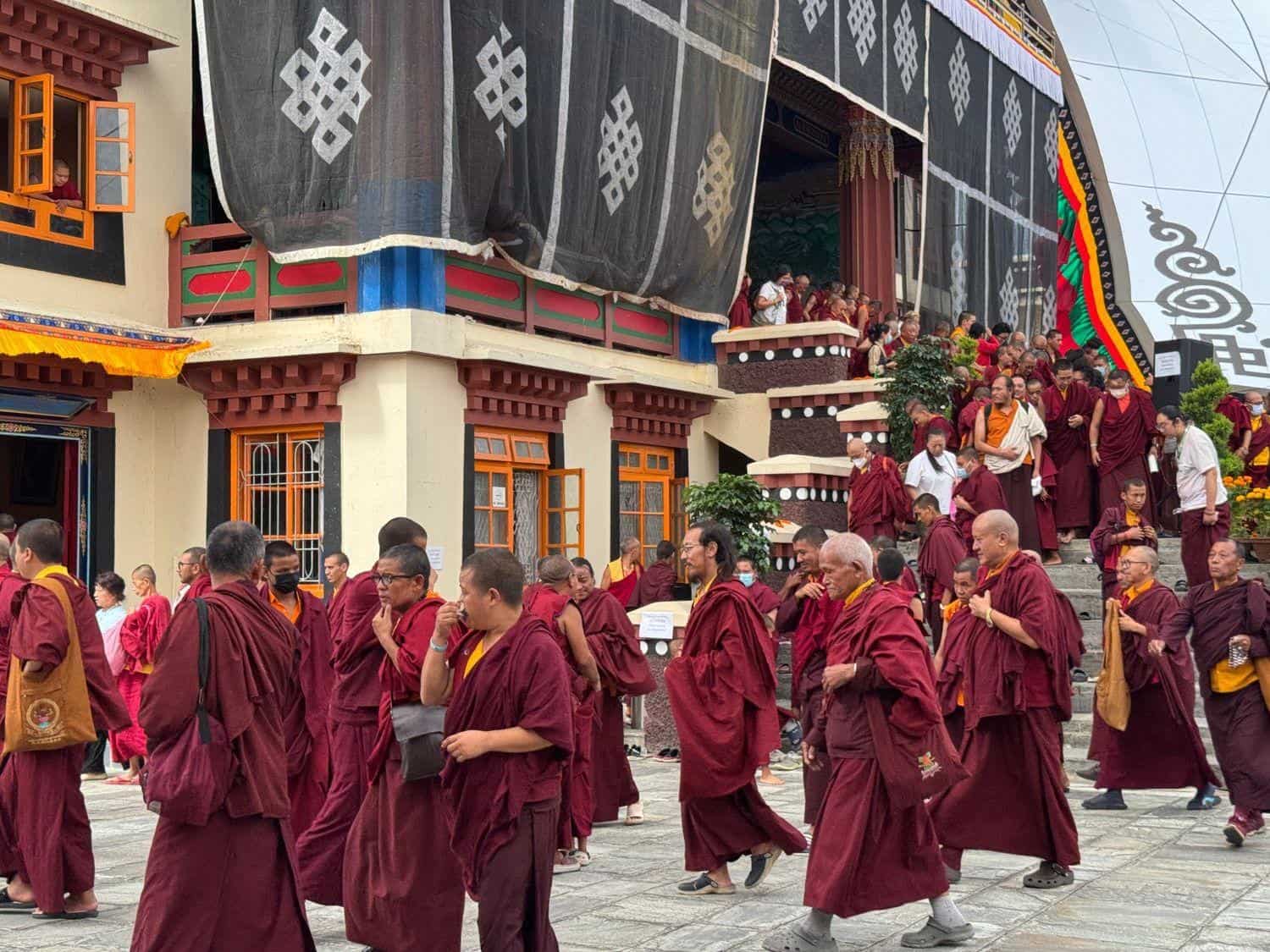
The 6-day Nepal Buddhist & Lumbini Pilgrimage Tour by Nepal Trip Services is a peaceful, private journey through the sacred heart of Buddhism. You’ll begin in Kathmandu, walking with monks and pilgrims around the ancient stupas of Swayambhunath and Boudhanath, then visiting the hilltop Kopan Monastery, a renowned center of Tibetan Buddhist learning. From there, you’ll travel to Lumbini, the birthplace of Lord Buddha and a UNESCO World Heritage Site. Here you’ll pray at the sacred Maya Devi Temple, see the Ashoka Pillar raised in 249 BC, and explore the monasteries built by Buddhist nations from around the world. You’ll also visit Tilaurakot, the ancient Kapilavastu palace where Prince Siddhartha spent his early years, and Gotihawa, linked to the birth of Krakuchchhanda Buddha. You’ll travel by private vehicle, with an optional flight to Lumbini, and stay in comfortable hotels with a licensed English-speaking guide throughout. With a maximum altitude of just 1,400 m, this easy tour suits pilgrims, spiritual travelers and families.
Nepal holds a special place in the heart of every Buddhist. Prince Siddhartha Gautama was born here more than 2,500 years ago, and his teachings went on to shape the lives of millions across Asia and beyond. Today, the country still carries that legacy in its ancient stupas, glowing butter lamps, chanting monks and sacred gardens. The Nepal Buddhist & Lumbini Pilgrimage Tour by Nepal Trip Services is a 6-day private journey to the most important Buddhist sites in the Kathmandu Valley and the Lumbini region. It’s designed for pilgrims, spiritual seekers and travelers who want to connect with the life and message of the Buddha at a calm, unhurried pace.
Your pilgrimage begins in Kathmandu, where a Nepal Trip Services representative will welcome you at the airport and take you to your hotel. The Kathmandu Valley has been a meeting point of Buddhist and Hindu traditions for centuries, and its spiritual life is still visible on almost every street corner.
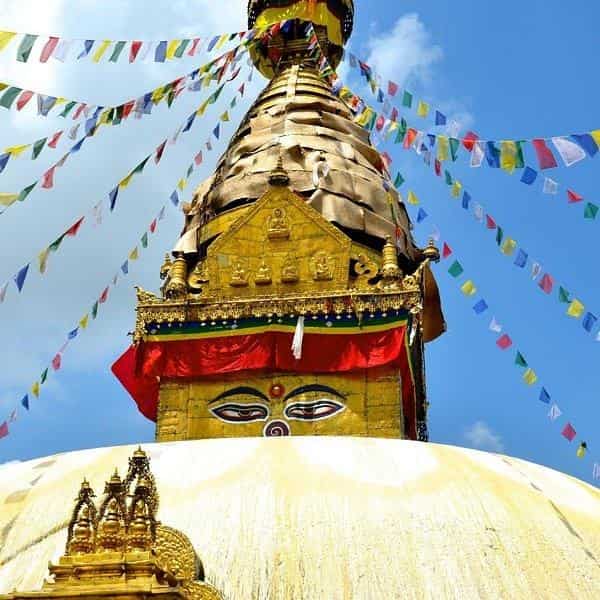
Your first full day is devoted to three of the valley’s most important Buddhist sites. At Swayambhunath, one of the oldest religious sites in Nepal, you’ll climb the steps to a hilltop stupa crowned with the painted eyes of the Buddha, surrounded by prayer flags, shrines and playful monkeys. The views over Kathmandu are beautiful from here, especially in the soft morning light.
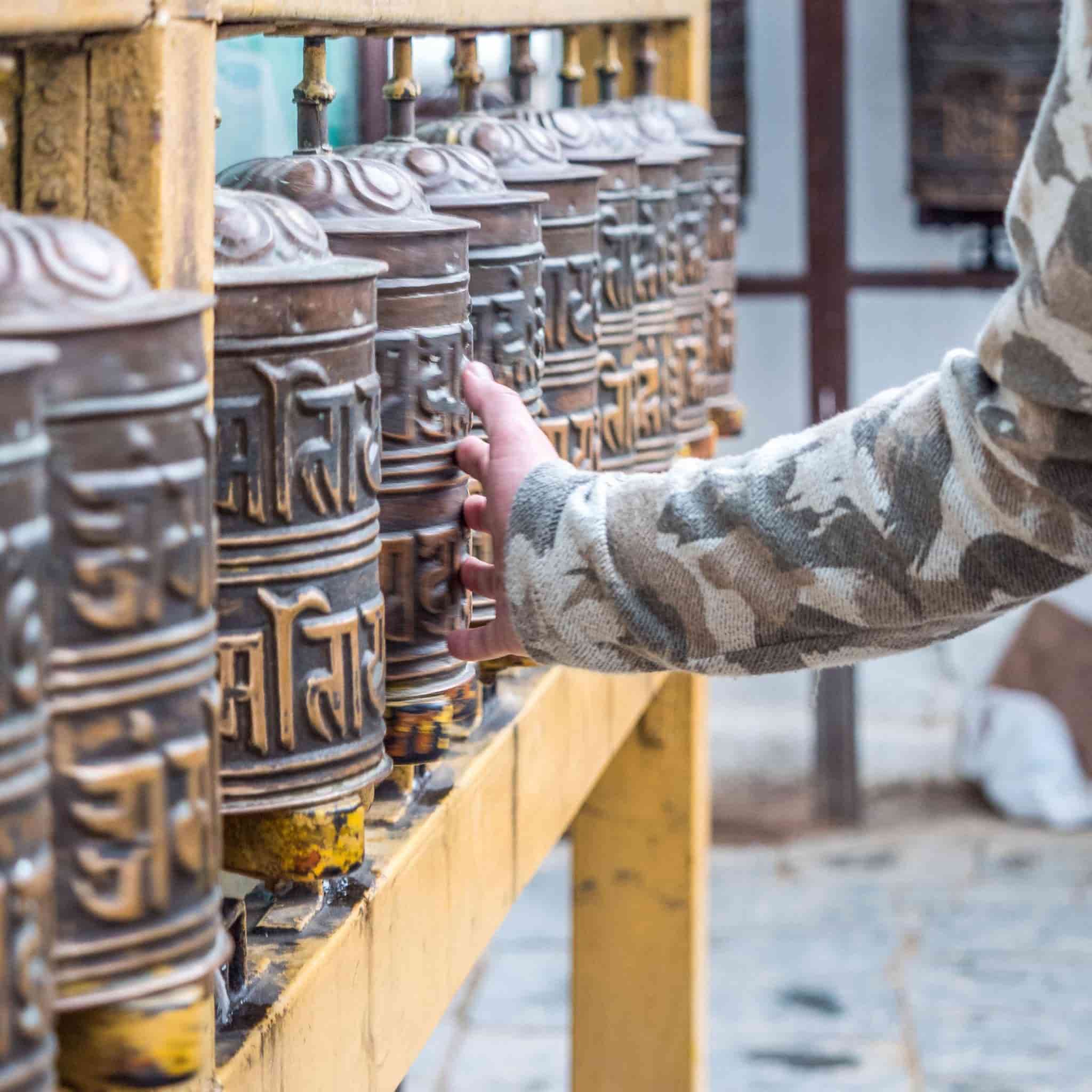
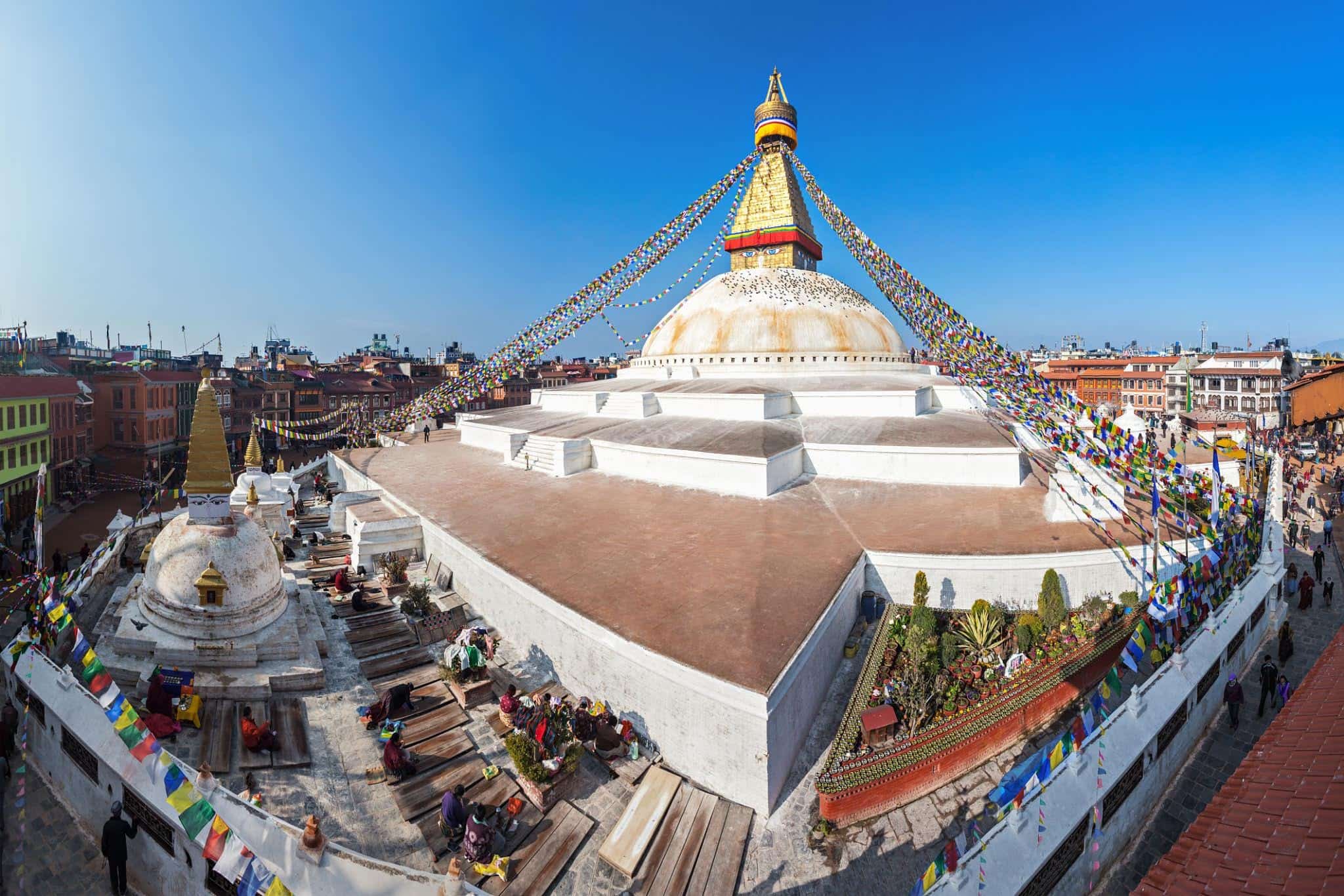
You’ll then visit Boudhanath Stupa, one of the largest stupas in the world and the heart of Tibetan Buddhism in Nepal. Join monks, nuns and pilgrims as they walk clockwise around the great white dome, spinning prayer wheels and murmuring mantras. In the evening, as butter lamps are lit around the stupa, the atmosphere becomes especially peaceful.
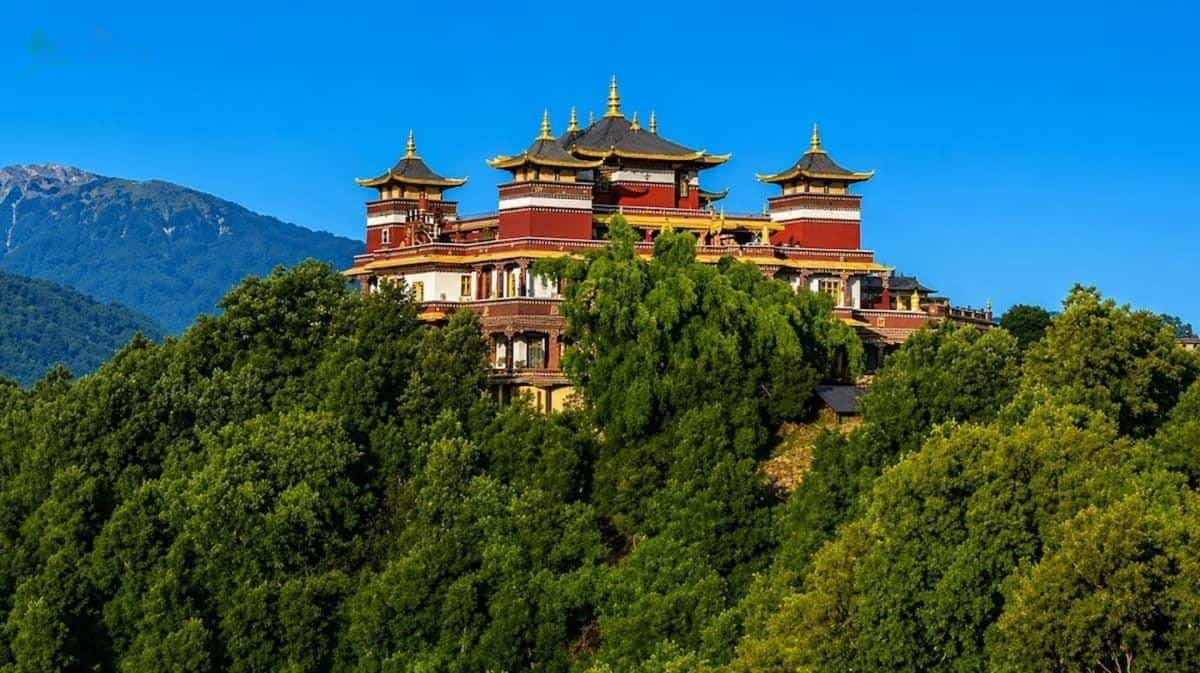
From Boudhanath, a short drive brings you to Kopan Monastery, set on a quiet hilltop to the north. Founded in 1969, Kopan is one of the best-known centers in the world for the study of Tibetan Buddhism and meditation. Its gardens, prayer halls and sweeping valley views make it the perfect place for quiet reflection.
On the third day, you’ll travel southwest from Kathmandu to Lumbini by private vehicle, a scenic drive of about 6 to 7 hours. The road follows river valleys and winds through green hills before descending into the warm, flat plains of the Terai, near the border with India. For a quicker journey, you can choose an optional short flight from Kathmandu to Gautam Buddha International Airport in Bhairahawa, just a short drive from Lumbini.
After checking into your hotel, you’ll begin exploring Lumbini, the place where the story of Buddhism began.
Lumbini is one of the four holiest sites in Buddhism and a UNESCO World Heritage Site. According to Buddhist tradition, Queen Maya Devi gave birth to Prince Siddhartha here in 623 BC, beneath a sal tree in a royal garden.
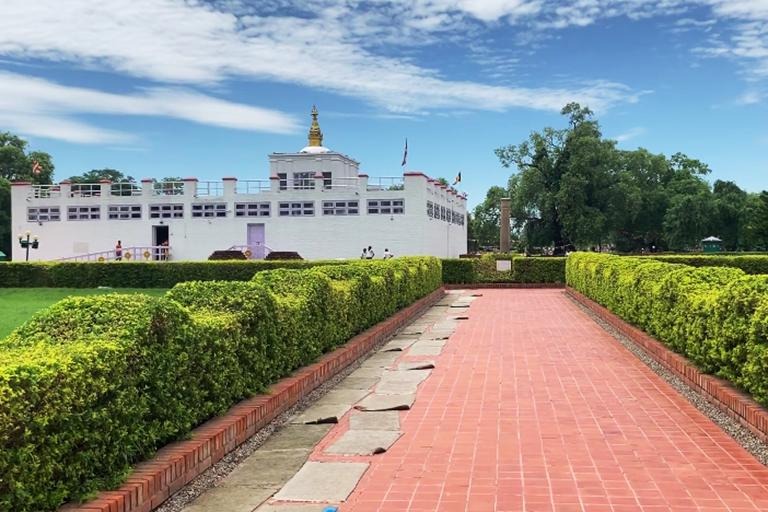
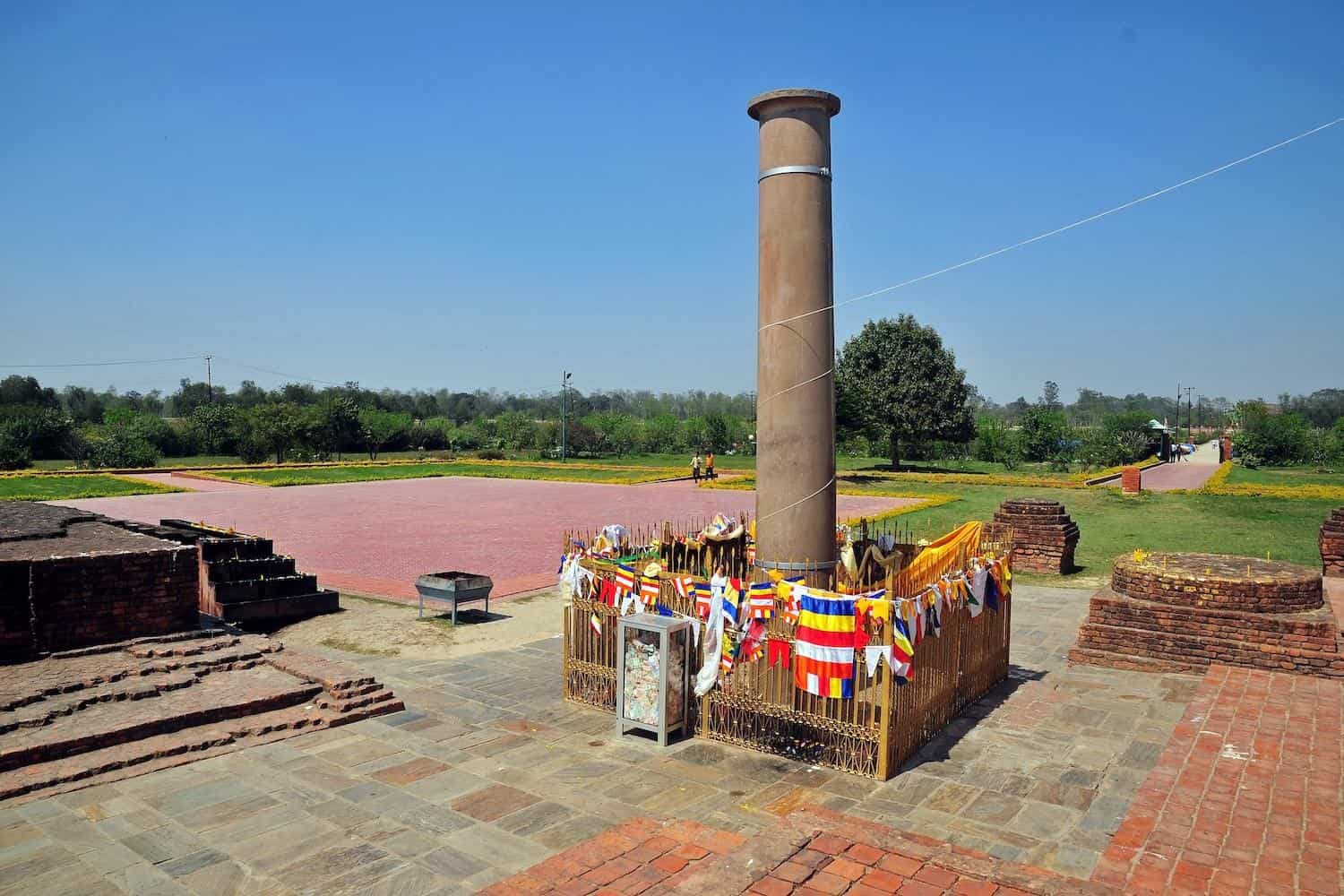
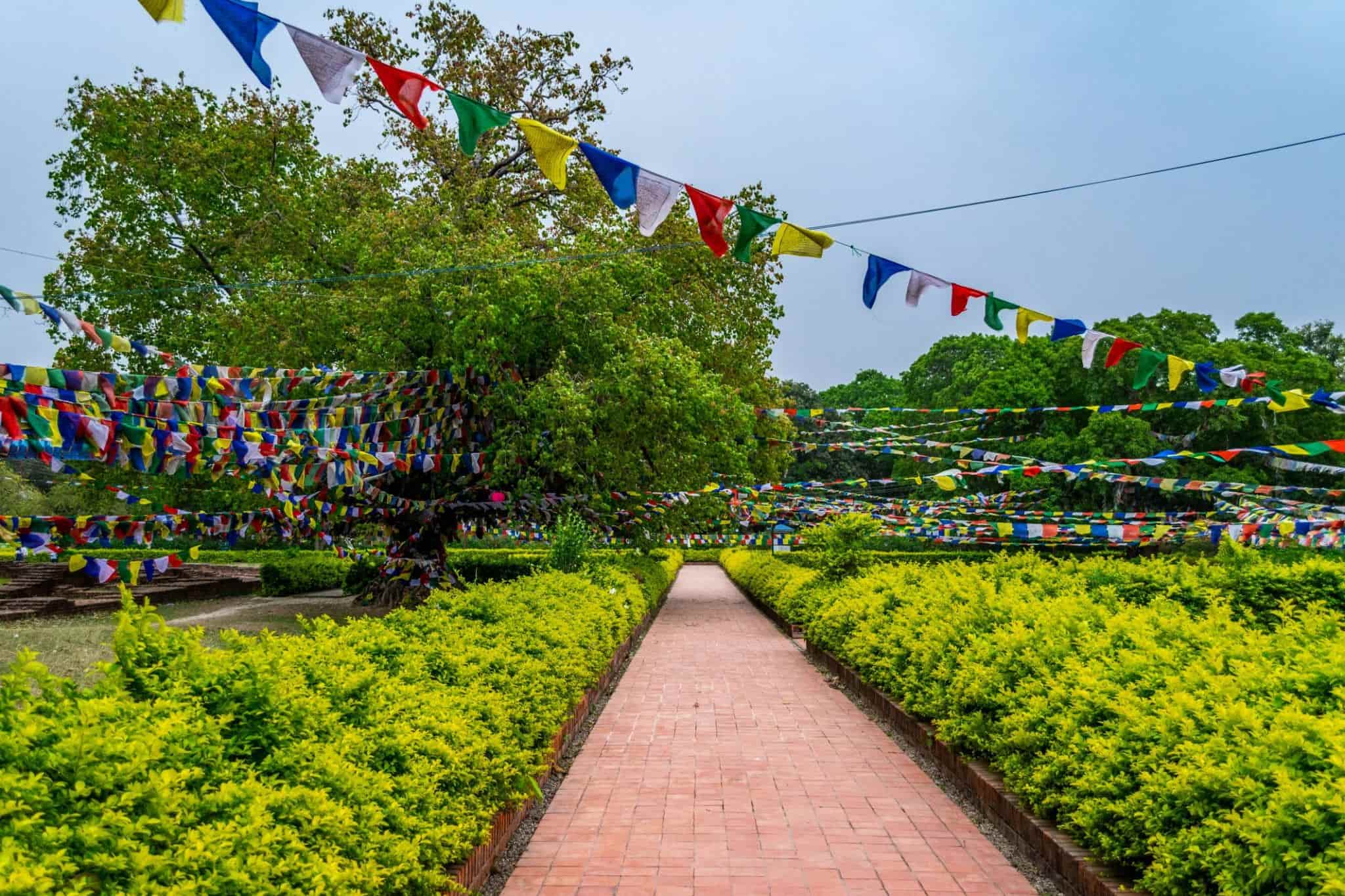
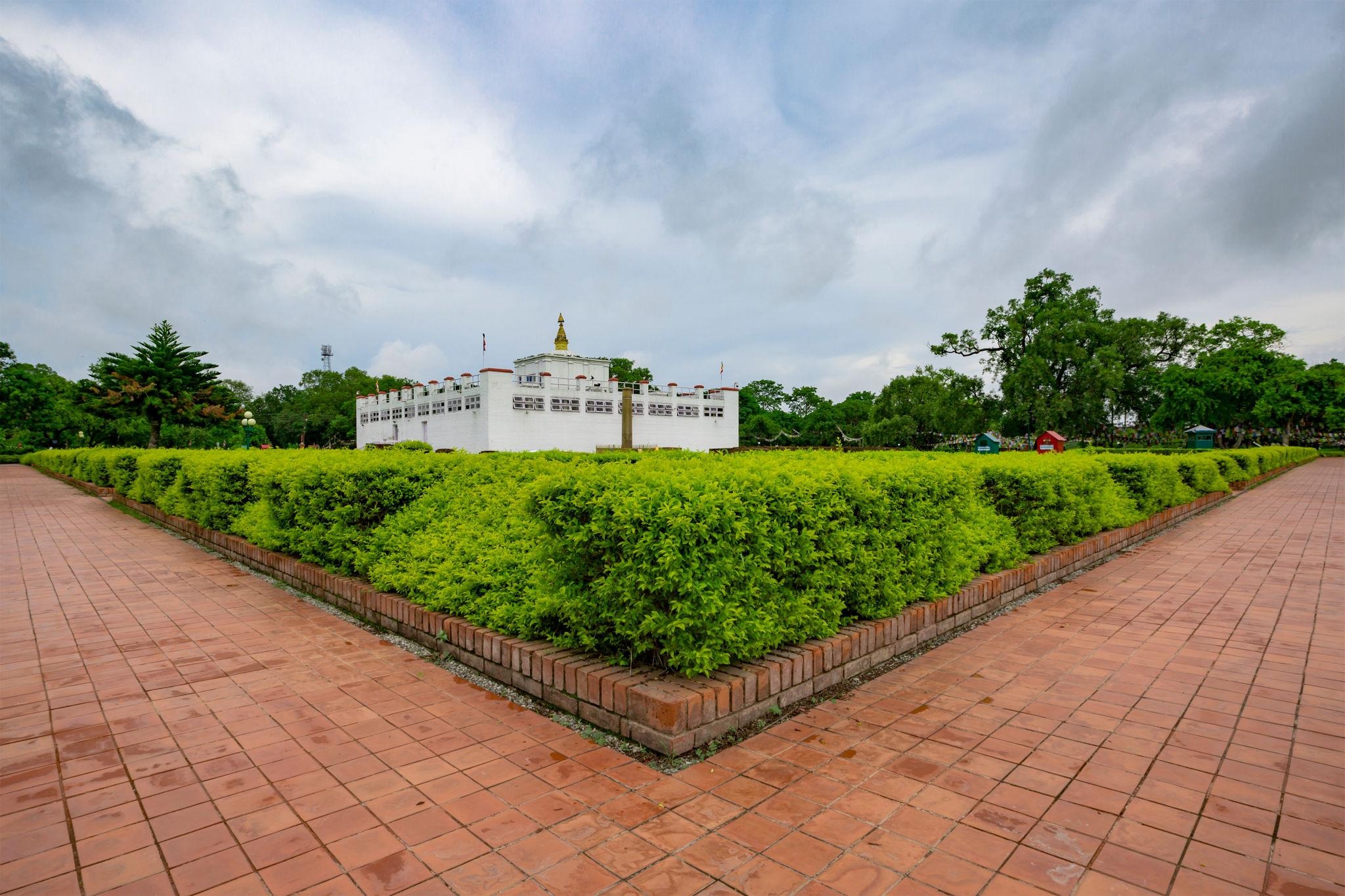
At the heart of the Sacred Garden stands the Maya Devi Temple, built over the ancient ruins that mark the Buddha’s birthplace. Inside, a marker stone shows the exact spot where he is believed to have been born. Nearby, the Ashoka Pillar, raised by Emperor Ashoka in 249 BC, carries an inscription recording his visit. It’s one of the most important pieces of evidence identifying Lumbini as the Buddha’s birthplace. Beside the temple, the Puskarini Pond is where Queen Maya Devi is said to have bathed before giving birth. The Bodhi tree, draped in colorful prayer flags, is a favorite place for pilgrims to meditate.
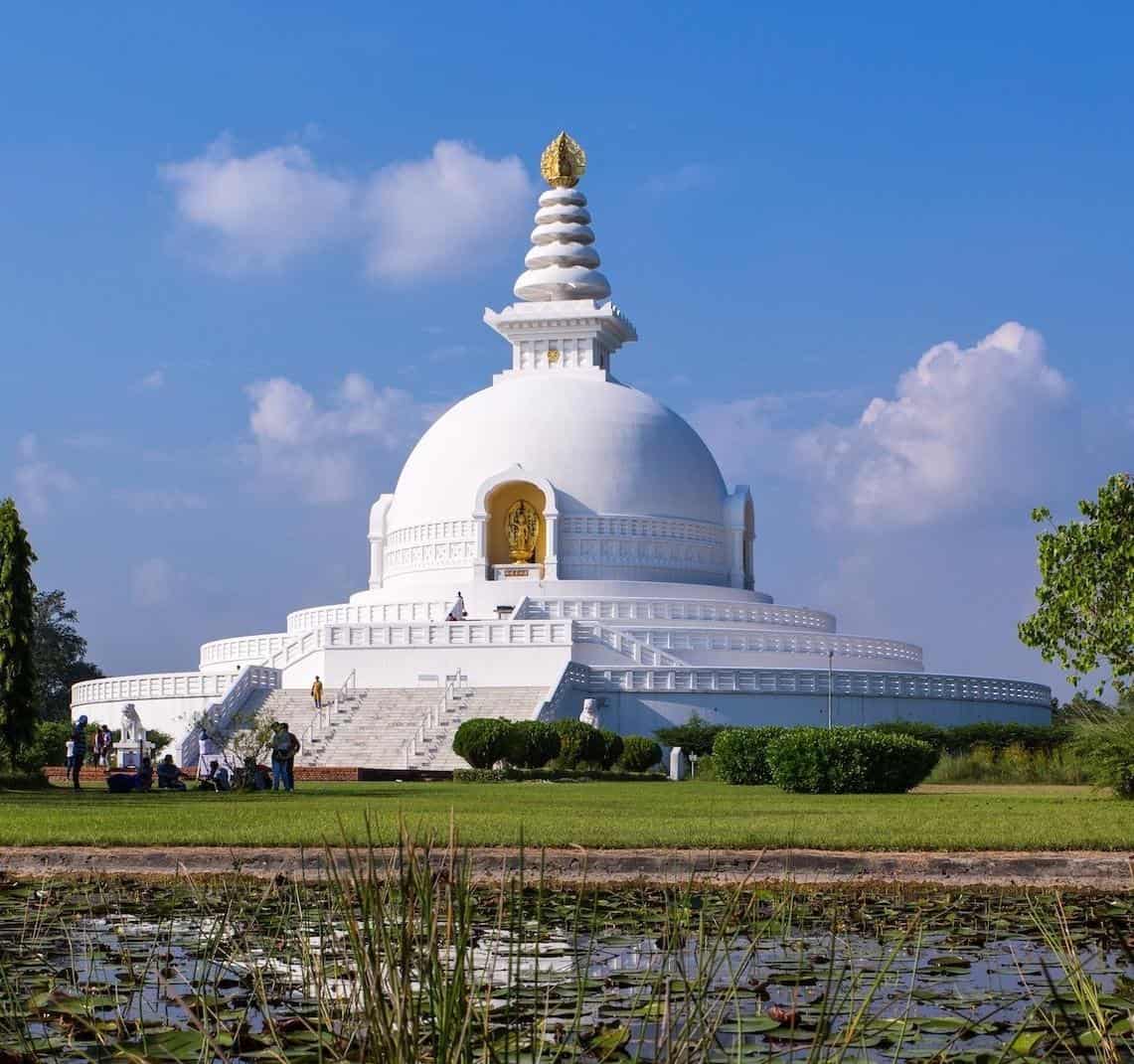
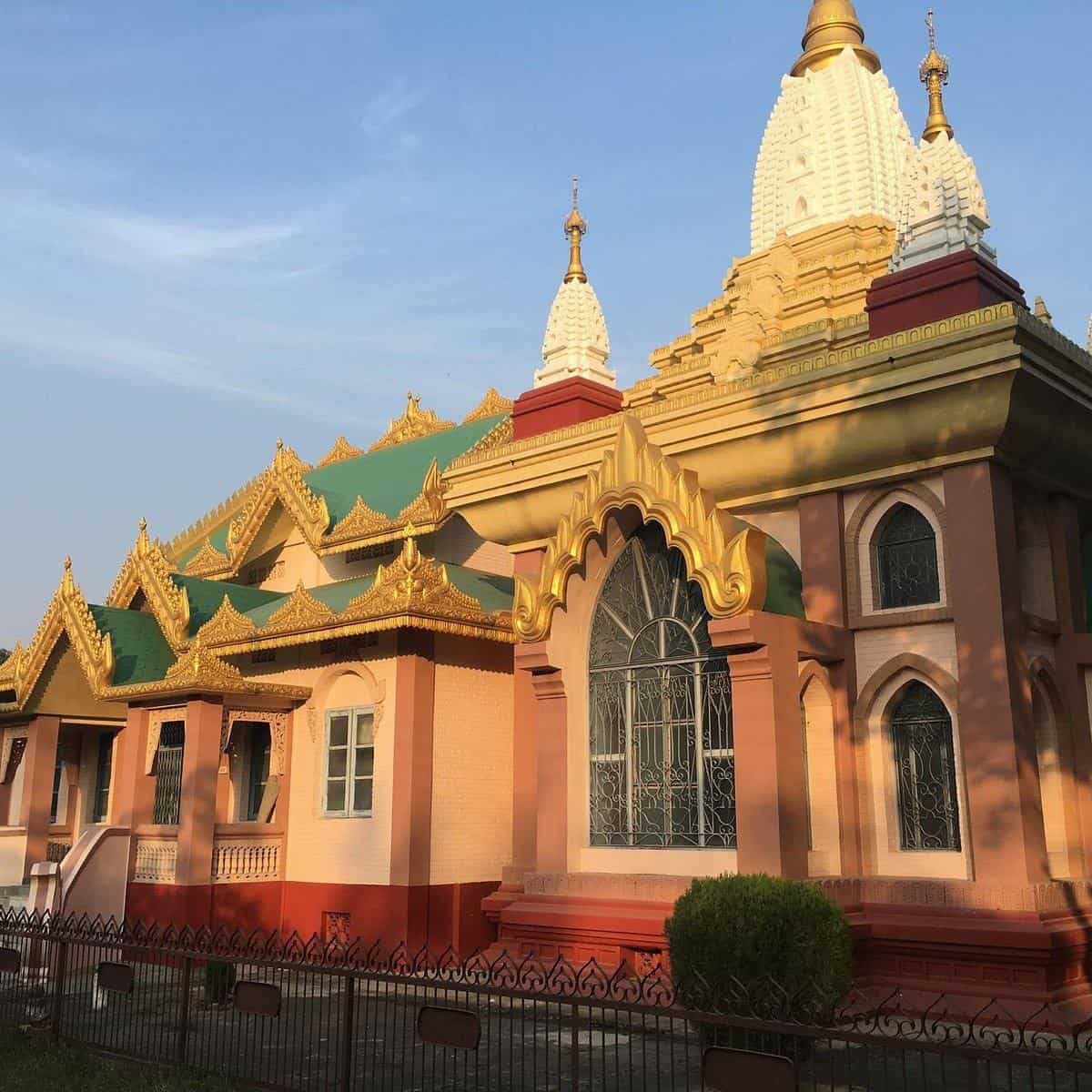
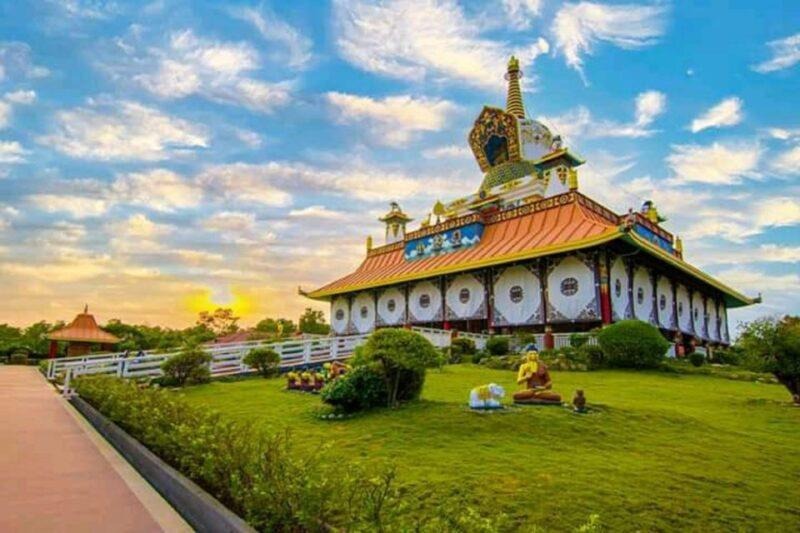
Beyond the Sacred Garden, the Lumbini Monastic Zone is home to dozens of monasteries built by Buddhist communities from around the world. As you walk or cycle between them, you’ll see a remarkable variety of architecture, from the golden Thai monastery and the grand Chinese temple to monasteries from Myanmar, Germany, Vietnam, Korea and beyond. You’ll also visit the Eternal Peace Flame and the gleaming white World Peace Pagoda, built by Japanese Buddhists as a symbol of global harmony.
Your second day in the Lumbini region takes you west to Tilaurakot, believed to be the site of ancient Kapilavastu, the capital of the Shakya kingdom. This is where Prince Siddhartha grew up in royal comfort, and where he eventually left his palace life behind in search of the truth about human suffering. Walking among the brick foundations, palace gates and quiet mango groves, it’s easy to imagine the young prince’s world.
Nearby, you’ll visit Gotihawa, an ancient site associated with the birth of Krakuchchhanda Buddha, one of the Buddhas who came before Siddhartha Gautama. Here, a partly broken Ashoka Pillar stands as another reminder of Emperor Ashoka’s devotion to Buddhist pilgrimage sites.
On the fifth day, you’ll drive back to Kathmandu through the same scenic hills and valleys, arriving in the afternoon. The evening is free to relax, revisit Boudhanath for the evening prayers, or shop for singing bowls, prayer flags, thangka paintings and other Buddhist handicrafts in Thamel. On the final day, you’ll be transferred to the airport for your onward flight, carrying with you the peace and inspiration of Nepal’s sacred sites.
This tour brings together the most meaningful Buddhist sites in Nepal in just six days, without rushing. It’s a fully private trip, so you can take time to pray, meditate or simply sit quietly at the places that mean the most to you. Your licensed English-speaking guide will explain the history, symbolism and rituals at each site, helping you understand the deeper meaning behind what you see. Guides who speak other languages can also be arranged on request.
The tour is easy-graded, with no trekking. The highest point is Kathmandu, at about 1,400 m (4,593 ft), so there are no altitude concerns. That makes the trip comfortable for pilgrims of all ages, including families and senior travelers. You’ll travel in a comfortable private vehicle and stay in well-located hotels in Kathmandu and Lumbini. You’ll also have the flexibility to add extra nights, upgrade your hotels or extend your journey to Pokhara and Chitwan with our Kathmandu, Pokhara, Chitwan & Lumbini Tour.
The tour can be done throughout the year, but the most comfortable months are October to March, when the weather in Lumbini is dry and pleasant. Winter mornings in the Terai can be foggy and cool, but days are usually mild and sunny. From April to June, Lumbini becomes very hot, so sightseeing is best done early in the morning and late in the afternoon. This period also includes Buddha Jayanti, the celebration of the Buddha’s birth, enlightenment and passing, which usually falls in April or May and draws pilgrims from around the world. The monsoon (June to August) brings humidity and rain, but also green landscapes and fewer visitors.
Whether you’re a devoted Buddhist, a spiritual traveler or simply curious about one of the world’s great teachers, this pilgrimage offers a meaningful and peaceful way to experience Nepal. Plan your journey with our Trip Planner or Contact Us, and the Nepal Trip Services team will tailor the tour to your needs.
| Trip Info | Details |
|---|---|
| Altitude | Kathmandu: 1,400 m (4,593 ft) |
| Transfer | Airport to hotel, about 6 km (20–30 minutes) |
| Meals | Not included |
| Accommodation | Hotel in Kathmandu |
Welcome to Nepal, the land of the Buddha’s birth. After you clear immigration and collect your luggage at Tribhuvan International Airport, a Nepal Trip Services representative will greet you in the arrival hall with a traditional welcome and take you to your hotel in a private vehicle.
Once you’ve checked in, take time to rest after your journey. Later in the day, your guide will meet you for a short briefing about your pilgrimage, the sacred sites you’ll visit and the customs to follow at temples and monasteries. If you have the energy, you can take a gentle evening stroll around Thamel, where shops sell prayer flags, singing bowls and Buddhist handicrafts.
| Trip Info | Details |
|---|---|
| Altitude | Kathmandu: 1,400 m (4,593 ft) / Swayambhunath: about 1,420 m (4,659 ft) |
| Sightseeing | About 25 km of driving (full day, 6–7 hours) |
| Meals | Breakfast |
| Accommodation | Hotel in Kathmandu |
After breakfast, begin your pilgrimage at Swayambhunath Stupa, one of the oldest and most sacred Buddhist sites in Nepal and a UNESCO World Heritage Site. Set on a hilltop west of the city, the great white stupa is crowned with the painted eyes of the Buddha, which look out in all four directions as a symbol of wisdom and compassion. Walk clockwise around the stupa, spin the prayer wheels and visit the small shrines and monasteries around it. The views over the Kathmandu Valley are especially beautiful in the morning light.
Next, drive across the city to Boudhanath Stupa, one of the largest stupas in the world and the heart of Tibetan Buddhism in Nepal. Join monks, nuns and pilgrims as they walk around the vast dome, turning prayer wheels and chanting mantras. Around the stupa, you’ll find more than fifty monasteries, along with shops selling incense, prayer beads and thangka paintings. You can also light a butter lamp as an offering.
In the afternoon, drive a short distance north to Kopan Monastery, set on a peaceful hilltop overlooking the valley. Founded in 1969, Kopan is known around the world as a center for Tibetan Buddhist study and meditation. Explore its gardens, prayer halls and stupas, and enjoy a quiet moment of reflection away from the bustle of the city.
Return to Boudhanath in the early evening if you wish, when butter lamps are lit and the stupa glows in the soft light, before heading back to your hotel.
| Trip Info | Details |
|---|---|
| Altitude | Lumbini: about 150 m (492 ft) |
| Distance | About 280 km |
| Driving Time | About 6–7 hours by private vehicle |
| Optional Flight | Kathmandu to Bhairahawa, about 35 minutes, plus a 30–40 minute drive to Lumbini (extra cost) |
| Meals | Breakfast |
| Accommodation | Hotel in Lumbini |
After an early breakfast, set out on a scenic drive southwest from Kathmandu toward Lumbini. The road winds through green hills and river valleys, past terraced fields and small roadside towns, before descending into the warm, flat plains of the Terai near the border with India. You’ll stop for tea and lunch along the way. If you’d prefer a quicker journey, you can take an optional short flight to Gautam Buddha International Airport in Bhairahawa.
On arrival in Lumbini, check into your hotel and rest for a while. In the afternoon, begin exploring the most sacred place in the Buddhist world. Walk into the Sacred Garden and visit the Maya Devi Temple, built over the ancient ruins that mark the birthplace of Prince Siddhartha Gautama. Inside, a protected marker stone shows the exact spot where he’s believed to have been born in 623 BC.
Just beside the temple stands the Ashoka Pillar, raised by Emperor Ashoka in 249 BC. Its ancient inscription records his pilgrimage and confirms Lumbini as the Buddha’s birthplace. You’ll also see the Puskarini Pond, where Queen Maya Devi is believed to have bathed before giving birth. Spend some quiet time meditating beneath the Bodhi tree, draped in colorful prayer flags, as the evening light settles over the garden.
| Trip Info | Details |
|---|---|
| Altitude | Lumbini & Tilaurakot: about 150 m (492 ft) |
| Distance | Lumbini to Tilaurakot, about 27 km one way |
| Driving Time | About 45 minutes to 1 hour each way, plus sightseeing (full day) |
| Meals | Breakfast |
| Accommodation | Hotel in Lumbini |
After breakfast, drive west to Tilaurakot, believed to be the site of ancient Kapilavastu, the capital of the Shakya kingdom. This is where Prince Siddhartha spent the first 29 years of his life in royal comfort, before he left the palace in search of the truth behind human suffering. Walk among the brick foundations of the old palace, its gateways and moat, surrounded by quiet mango groves, and visit the small museum displaying pottery, coins and artifacts found at the site.
A short drive brings you to Gotihawa, an ancient site associated with the birth of Krakuchchhanda Buddha, one of the Buddhas who came before Siddhartha Gautama. Here, you’ll see the base of a partly broken Ashoka Pillar and the remains of an old stupa, another sign of Emperor Ashoka’s deep devotion to Buddhist pilgrimage sites.
Return to Lumbini in the afternoon to explore the Lumbini Monastic Zone, where Buddhist communities from around the world have built temples in their own traditional styles. The West Monastic Zone is home to Mahayana and Vajrayana monasteries, including those from China, Korea, Vietnam and Germany. The East Monastic Zone holds Theravada monasteries, such as the golden Royal Thai Monastery and the Myanmar Golden Temple. You’ll also visit the Eternal Peace Flame and the gleaming white World Peace Pagoda, built by Japanese Buddhists as a symbol of harmony among all nations.
| Trip Info | Details |
|---|---|
| Altitude | Kathmandu: 1,400 m (4,593 ft) |
| Distance | About 280 km |
| Driving Time | About 6–7 hours by private vehicle |
| Optional Flight | Bhairahawa to Kathmandu, about 35 minutes (extra cost) |
| Meals | Breakfast |
| Accommodation | Hotel in Kathmandu |
If you like, rise early for a peaceful morning walk or meditation in the Sacred Garden, when Lumbini is at its quietest. After breakfast, begin your scenic drive back to Kathmandu through the hills and valleys, with stops for tea and lunch along the way.
You’ll arrive in Kathmandu in the afternoon. The evening is free to relax at your hotel, return to Boudhanath for the evening prayers, or shop for singing bowls, prayer flags, thangka paintings, malas and other Buddhist handicrafts in Thamel.
| Trip Info | Details |
|---|---|
| Altitude | Kathmandu: 1,400 m (4,593 ft) |
| Transfer | Hotel to Tribhuvan International Airport, about 6 km (20–30 minutes) |
| Meals | Breakfast |
| Accommodation | Not included |
Enjoy a final breakfast at your hotel and, if time allows, some last-minute shopping or a short visit to a nearby stupa. About three hours before your international flight, a Nepal Trip Services representative will take you to Tribhuvan International Airport for your onward journey.
We hope this pilgrimage brings you peace, inspiration and lasting memories of the land where the Buddha was born. Namaste and safe travels!
Are you interested in planning a custom trip? It only takes 2 minutes.
Essential packing and gear checklist tailored for this trek.


You can make this pilgrimage at any time of year, but the weather in Lumbini changes a lot from season to season. Kathmandu stays mild most of the year, while Lumbini, in the Terai lowlands, can be very hot in summer and cool and foggy in winter.
| Season | Months | Lumbini Weather | Crowds | Rating |
|---|---|---|---|---|
| Autumn & Winter | Oct – Feb | Pleasant days, cool mornings | Moderate | ★★★★★ Best |
| Spring | Mar – May | Warm to very hot | Busy around Buddha Jayanti | ★★★★☆ Great |
| Summer & Monsoon | Jun – Sep | Hot, humid and rainy | Quiet | ★★★☆☆ Good |
This is the most comfortable time for a pilgrimage. Days are sunny and mild, perfect for walking around the Sacred Garden and the Monastic Zone. From December to January, mornings in Lumbini are often foggy and chilly, but the fog usually lifts by late morning. In Kathmandu, skies are clear and the air is fresh. Winter also brings Losar, the Tibetan New Year, which is celebrated with prayers and festivities at Boudhanath.
March is warm and pleasant, but Lumbini gets very hot from April onward. The highlight of this season is Buddha Jayanti, which celebrates the Buddha’s birth, enlightenment and passing. It falls on the full moon of April or May. Lumbini, Boudhanath and Swayambhunath fill with prayers, butter lamps and pilgrims from around the world. It’s a deeply moving time to visit, but hotels fill up quickly.
Summer is the hottest and most humid time in Lumbini, with heavy rain from July to September. The gardens and fields turn lush and green, and the sacred sites are peaceful and uncrowded. Sightseeing is best done early in the morning and late in the afternoon. Roads may be slower because of rain and landslides.
Timing your pilgrimage around a Buddhist festival makes it even more special. Nepal follows the lunar calendar, so festival dates change every year. Nepal Trip Services will confirm the exact dates when you plan your trip.
When: The full moon of April or May
Buddha Jayanti is the most important Buddhist festival of the year. It celebrates three great events in the Buddha’s life: his birth, his enlightenment and his passing into nirvana. In Lumbini, pilgrims from around the world gather at the Maya Devi Temple and the Sacred Garden for prayers, chanting and offerings. In Kathmandu, Boudhanath and Swayambhunath are decorated with prayer flags and butter lamps, and monks lead colorful processions. It’s a joyful and deeply spiritual time to visit.
When: Usually February or early March
Losar marks the Tibetan New Year and is the biggest celebration at Boudhanath. Families dressed in traditional clothes gather to make offerings, hang new prayer flags and join special prayers at the stupa. Monasteries hold ceremonies and masked dances, and the whole area comes alive with music, food and celebration. Nepal also celebrates Sonam Losar (Tamang New Year) and Tamu Losar (Gurung New Year) at other times of year.
When: Every month on the full moon
The full moon (Purnima) is a sacred day in Buddhism. Pilgrims visit stupas and monasteries to pray, light butter lamps and make offerings, so sites like Boudhanath, Swayambhunath and Lumbini are especially busy and atmospheric. Many monasteries also hold special pujas (prayer ceremonies) on full-moon days and other auspicious dates. With advance notice, we can help you attend or sponsor a puja at a monastery.
Entering Nepal is simple for most pilgrims. You can get a tourist visa on arrival at Tribhuvan International Airport in Kathmandu or at major land borders such as Belahiya (Sunauli), near Lumbini. Nepal Trip Services will guide you through every step.
| Visa Duration | Fee (Multiple Entry) |
|---|---|
| 15 days | US$30 |
| 30 days | US$50 |
| 90 days | US$125 |
The 15-day visa covers this 6-day pilgrimage. Fees may change, so check with the Department of Immigration, Nepal, before you travel.
Visas on arrival are also available at the Belahiya (Sunauli) border for most nationalities.
Entrance fees for every site in the itinerary are included in your tour price, and your guide will handle all tickets for you. The fees below are given for reference only. Rates vary by nationality, and they are revised from time to time.
| Site | Approx. Fee (Foreigners) | UNESCO Site |
|---|---|---|
| Swayambhunath Stupa | NPR 500 | Yes |
| Boudhanath Stupa | NPR 400 | Yes |
| Kopan Monastery | Free (donations welcome) | No |
| Item | Details |
|---|---|
| Lumbini Development & Conservation Fee | Charged per day, by nationality (about NPR 1,000 for most foreign visitors) |
| Maya Devi Temple & Sacred Garden | Covered by the conservation fee |
| Lumbini Monastic Zone | Most monasteries are free to enter |
| Still camera | Small fee per day |
| Video camera | Separate, higher fee per day |
| Exemptions | Monks, nuns and people with disabilities don’t pay the conservation fee |
Tickets can be bought in cash, by QR code or online through the Lumbini Development Trust.
| Site | Details |
|---|---|
| Tilaurakot (ancient Kapilavastu) | Small entrance fee, plus a separate fee for the site museum |
| Gotihawa | Usually free |
Lumbini’s fees went up in May 2026, by as much as 75% for foreign visitors, and the official fee table doesn’t clearly show which rate applies to which nationality. That’s why I’ve given approximate amounts. Please confirm the current rates with the Lumbini Development Trust before you set your tour price.
Lumbini lies in the Terai plains of southern Nepal, close to the Indian border. On this pilgrimage, you’ll travel by private vehicle with an experienced driver. You can also choose a quick optional flight, or enter Nepal by road from India.
| Route | Mode | Distance | Duration |
|---|---|---|---|
| Kathmandu → Lumbini | Private vehicle | About 280 km | 6–7 hours |
| Kathmandu → Bhairahawa | Domestic flight (optional) | — | About 35 minutes |
| Bhairahawa Airport → Lumbini | Private vehicle | About 22 km | 30–40 minutes |
| Lumbini → Tilaurakot | Private vehicle | About 27 km | 45 minutes–1 hour |
| Sunauli Border → Lumbini | Private vehicle | About 30 km | About 45 minutes |
The drive leaves the Kathmandu Valley and follows the Trishuli River through green hills and gorges to Mugling. From there, the road continues south via Narayangadh and Butwal into the flat, open plains of the Terai. You’ll pass terraced fields, riverside towns and rural villages, with stops for tea and lunch along the way. The road can be busy, so travel times may vary.
For a faster journey, take a short flight from Kathmandu to Gautam Buddha International Airport in Bhairahawa, followed by a 30–40 minute drive to Lumbini. The flight saves around 5 hours each way and gives you more time at the sacred sites. You can fly one way or both ways, at extra cost.
Many pilgrims from India enter Nepal through the Sunauli–Belahiya border, about 30 km from Lumbini. The nearest major Indian city is Gorakhpur, which has good rail and air connections. We can meet you at the border and adjust the itinerary to start or end in Lumbini, so it fits perfectly with an India Buddhist circuit tour to Bodh Gaya, Sarnath and Kushinagar.
This pilgrimage takes you to some of the holiest places in the Buddhist world. Here’s a short guide to what you’ll see at each site, and why it matters.
Swayambhunath Stupa
Boudhanath Stupa
Maya Devi Temple
Ashoka Pillar
Puskarini Pond
| Zone | Tradition | Monasteries to Visit |
|---|---|---|
| East Monastic Zone | Theravada | Royal Thai Monastery, Myanmar Golden Temple |
| West Monastic Zone | Mahayana & Vajrayana | Zhong Hua Chinese Temple, Korean Temple, Great Lotus Stupa (Germany), Vietnam Phat Quoc Tu |
| Northern End | — | World Peace Pagoda (Japan), Eternal Peace Flame |
The zone is about 1.5 km long, so many visitors explore it by vehicle, bicycle or rickshaw.
This pilgrimage is about more than sightseeing. It’s a chance to slow down, reflect and connect with the Buddha’s teachings at the places where they began. Here’s how you can deepen your spiritual experience along the way.
On this pilgrimage, you’ll stay in comfortable, well-located hotels chosen for easy access to the sacred sites. All rooms have private bathrooms, hot showers and Wi-Fi, and they’re on a twin-sharing basis with breakfast included.
3 nights | Breakfast included
You’ll stay in a comfortable hotel in or near Thamel, close to restaurants, shops and cafés. For a more spiritual stay, we can arrange a hotel near Boudhanath Stupa instead, so you can join the morning and evening prayers just a short walk from your room.
2 nights | Breakfast included
You’ll stay in a peaceful hotel close to the Sacred Garden and the Monastic Zone, in quiet surroundings. Rooms are air-conditioned, which is especially welcome during the hot months from April to September.
For a simple, authentic experience, some monasteries offer guesthouse rooms for pilgrims and visitors:
Upgrades cost extra and depend on availability.
Food on a Buddhist pilgrimage in Nepal is simple, wholesome and easy to enjoy. Vegetarian meals are available everywhere, and breakfast is included every day so you can start each morning well-fed before visiting the sacred sites.
| Day | Destination | Meals Included |
|---|---|---|
| Day 1 | Kathmandu (arrival) | — |
| Day 2 | Kathmandu | Breakfast |
| Day 3 | Lumbini | Breakfast |
| Day 4 | Lumbini | Breakfast |
| Day 5 | Kathmandu | Breakfast |
| Day 6 | Departure | Breakfast |
Total: 5 breakfasts
Lunches and dinners aren’t included, so you’re free to choose where and what to eat. Your guide will recommend good restaurants along the way.
Every site on this pilgrimage is a living place of worship. Following a few simple customs shows respect for the monks, nuns and pilgrims who pray there every day, and it helps you feel part of the experience.
This pilgrimage is easy and low-altitude, but good insurance and a little health planning will help you travel comfortably. That matters most in Lumbini, where the summer heat can be intense.
Travel insurance isn’t included in the tour price, but Nepal Trip Services strongly recommends it. Make sure your policy covers:
Please share a copy of your policy and the emergency contact number with us before you travel.
From April to September, daytime temperatures in Lumbini often go well above 35°C (95°F). To stay safe and comfortable:
Your pilgrimage already includes hotels, breakfast, private transport, guiding and entrance fees. You’ll mainly need money for lunches and dinners, offerings and donations, shopping and tips.
| Offering | Typical Cost |
|---|---|
| Butter lamps | NPR 20–100 each |
| Prayer flags | NPR 200–1,000 per set |
| Khata (white silk scarf) | NPR 50–200 |
| Incense and flowers | NPR 50–200 |
| Monastery donation | Any amount, at your discretion |
| Sponsoring a puja | Varies by monastery, so ask us in advance |
Donations aren’t included in the tour price, and every offering, big or small, is welcomed.
| Who | Suggested Guideline |
|---|---|
| Tour guide | Around US$10–15 per day (per group) |
| Driver | Around US$5–8 per day (per group) |
| Hotel porters | NPR 100–200 per service |
| Restaurants | A 10% service charge is often added, so an extra tip is optional |
| Rickshaw drivers | A small tip for good service |
These are guidelines only, so please tip based on your satisfaction.
Staying connected on your pilgrimage is easy. Wi-Fi is available at every hotel on the tour, and mobile coverage is good in Kathmandu, Lumbini and along the main highway.
Local SIM cards
eSIM options
If your phone supports eSIM, buy a travel data plan online before your trip and activate it when you land. It’s quick, simple and keeps your home number active.
Entering from India? Indian SIM cards may not work in Nepal, or may charge high roaming fees, so it’s best to buy a local SIM at the border area or in Bhairahawa.
This pilgrimage involves no trekking, so you can pack light. Choose modest, comfortable clothes for temple visits, light layers for Lumbini’s warm weather and a few spiritual items to make your journey more meaningful.
| Season | What to Pack |
|---|---|
| October – February | Light cotton clothes for the day, plus a fleece, sweater or light jacket for cool and foggy mornings in Lumbini and evenings in Kathmandu |
| March – May | Loose, breathable cotton or linen clothes, a wide-brimmed hat and sunglasses for hot days |
| June – September | Light, quick-dry clothes, a rain jacket or umbrella, and water-resistant sandals |
Year-round essentials:
Spiritual items
Documents & money
Health & personal care
Gadgets & accessories
The Nepal Buddhist & Lumbini Pilgrimage Tour can easily be extended, whether you’d like to visit more sacred sites in Nepal, relax in nature or follow the Buddha’s footsteps into India. Nepal Trip Services will plan every detail for you.
Namo Buddha
Pharping
Lumbini is close to the Indian border, so it’s a natural starting or finishing point for the Buddhist Circuit, the pilgrimage to the four holiest Buddhist sites.
| Site | Country | Significance |
|---|---|---|
| Lumbini | Nepal | Where the Buddha was born |
| Bodh Gaya | India | Where the Buddha attained enlightenment |
| Sarnath | India | Where the Buddha gave his first teaching |
| Kushinagar | India | Where the Buddha passed into parinirvana |
Your safety, comfort and peace of mind come first on every Nepal Trip Services pilgrimage. From your arrival in Kathmandu to the sacred grounds of Lumbini, our experienced local team is with you every step of the way.
Yes. Nepal is generally a safe, peaceful and welcoming country, and pilgrims are treated with special warmth and respect. A few simple precautions will keep your journey smooth:
The Nepal Buddhist & Lumbini Pilgrimage Tour is a 6-day private, guided journey to Nepal’s most sacred Buddhist sites. It covers the great stupas of Swayambhunath and Boudhanath and Kopan Monastery in Kathmandu, followed by Lumbini, the birthplace of Lord Buddha, and the ancient Shakya kingdom sites of Tilaurakot and Gotihawa. It’s designed for pilgrims and spiritual travelers who want to experience Buddhist heritage at a calm, meaningful pace.
The tour runs for 6 days and 5 nights, starting and ending in Kathmandu. You’ll spend three nights in Kathmandu and two nights in Lumbini. Airport pick-up on arrival and drop-off for your departure are included.
This tour suits Buddhist pilgrims, meditation practitioners, monks and nuns, spiritual seekers, history lovers and curious travelers of all faiths. It’s also a good choice for families and senior travelers, since it involves no trekking, no high altitude and only light walking.
Not at all. People of every faith and background are welcome. Many travelers join simply to learn about the life of the Buddha, admire the art and architecture, or enjoy the peaceful atmosphere at sacred sites. All that’s asked is respect for local customs and the people who come here to pray.
Nepal Trip Services runs this tour as a private trip for you, your family or your group. You’ll have your own vehicle, driver and guide, so you can spend more time meditating or praying at the places that mean the most to you. If you prefer to travel with others, ask us about small group departures.
Yes, solo pilgrims are very welcome. You’ll still receive a private vehicle, a dedicated guide and the full itinerary. The cost per person is slightly higher for one traveler, and a single room supplement applies if you’d like a room to yourself.
In Kathmandu, you’ll visit Swayambhunath, the ancient hilltop stupa also known as the Monkey Temple, and Boudhanath Stupa, one of the largest stupas in the world and the center of Tibetan Buddhist life in Nepal. You’ll also visit Kopan Monastery, a peaceful hilltop monastery known worldwide for Buddhist study and meditation. Swayambhunath and Boudhanath are both UNESCO World Heritage Sites.
Kopan Monastery was founded in 1969 and sits on a hill north of Boudhanath. It’s one of the best-known centers in the world for learning about Tibetan Buddhism, attracting students from many countries for its meditation courses and Dharma teachings. Visitors can explore its gardens, prayer halls and stupas, and enjoy wide views over the Kathmandu Valley.
Yes. You can often watch or quietly join morning and evening prayers at monasteries around Boudhanath. Kopan Monastery also runs meditation courses and short teachings at certain times of the year. If you’d like to take part in a meditation session, a puja (prayer ceremony) or a teaching, let us know in advance, and we’ll try to arrange it around your dates.
You’ll travel by private vehicle. The drive covers about 280 km and usually takes around 6 to 7 hours, depending on traffic and road conditions. The route winds through river valleys and green hills before reaching the plains of the Terai. You’ll stop for tea, lunch and short breaks along the way.
Yes. For a quicker journey, you can take an optional domestic flight from Kathmandu to Gautam Buddha International Airport in Bhairahawa. The flight takes about 35 minutes, followed by a short drive of around 30–40 minutes to Lumbini. The flight costs extra, and we can arrange it for one or both directions.
Lumbini is the birthplace of Prince Siddhartha Gautama, who later became the Buddha. It’s one of the four holiest pilgrimage sites in Buddhism, along with Bodh Gaya, Sarnath and Kushinagar in India. In 1997, UNESCO declared Lumbini a World Heritage Site because of its great spiritual and historical importance.
The Maya Devi Temple stands over the ancient ruins that mark the Buddha’s birthplace. Inside, a protected marker stone shows the exact spot where he’s believed to have been born. You’ll also see ancient brick foundations and a carved stone image showing Queen Maya Devi at the moment of the birth. It’s the spiritual heart of Lumbini.
The Ashoka Pillar was raised by the great Indian Emperor Ashoka in 249 BC, when he visited Lumbini on pilgrimage. Its ancient inscription states that the Buddha was born here, which makes it one of the most important pieces of evidence confirming Lumbini as his birthplace. The pillar stands beside the Maya Devi Temple in the Sacred Garden.
The Puskarini Pond is the sacred pond beside the Maya Devi Temple, where Queen Maya Devi is believed to have bathed before giving birth. According to tradition, the newborn prince was also given his first bath here. Today, it’s a peaceful place where pilgrims sit and meditate under the shade of the Bodhi tree.
The Lumbini Monastic Zone is a large area of temples and monasteries built by Buddhist communities from many countries. It’s divided into an East Monastic Zone for the Theravada tradition and a West Monastic Zone for the Mahayana and Vajrayana traditions. You’ll see monasteries from countries such as Thailand, Myanmar, China, Japan, Korea, Vietnam and Germany, each in its own unique architectural style.
Tilaurakot is an archaeological site about 27 km west of Lumbini, believed to be the ancient Kapilavastu palace of the Shakya kingdom, where Prince Siddhartha grew up before leaving in search of enlightenment. Gotihawa, a short drive away, is associated with the birth of Krakuchchhanda Buddha, one of the Buddhas before Siddhartha Gautama, and has a partly broken Ashoka Pillar.
Yes. Meditation is welcome at most Buddhist sites, especially in the Sacred Garden at Lumbini, beneath the Bodhi tree and beside the Puskarini Pond. Many monasteries in the Monastic Zone also have quiet halls where visitors can sit. Please keep your voice low, switch off your phone and respect others who are praying.
Yes. Many pilgrims light butter lamps, hang prayer flags or make offerings at Boudhanath, Swayambhunath and Lumbini. You can buy prayer flags, incense and other offerings near most sites, and your guide will show you how and where to make them respectfully. Donations aren’t included in the tour price.
The highest point is Kathmandu, at about 1,400 m (4,593 ft). Lumbini lies in the Terai lowlands, at only about 150 m (492 ft). Altitude sickness isn’t a concern, so the tour is comfortable for travelers of all ages.
The walking is light and easy. You’ll walk around stupas, monasteries and archaeological sites, usually on flat ground. At Swayambhunath, you can either climb the long stone stairway or use a closer entrance with fewer steps. In Lumbini, the Monastic Zone is quite large, so many visitors explore it by vehicle, bicycle or rickshaw.
You’ll stay in comfortable, well-located hotels in Kathmandu and Lumbini, with private bathrooms, hot showers and Wi-Fi. Rooms are on a twin-sharing basis unless you request otherwise. If you’d like more comfort, we can upgrade you to boutique, 4-star or 5-star hotels.
Daily breakfast is included at your hotels, for a total of 5 breakfasts. Lunches and dinners aren’t included, which gives you the freedom to choose what you’d like to eat. Your guide will gladly recommend good restaurants, including vegetarian and monastery-style options.
Yes, very easy. Vegetarian food is part of everyday life in Nepal, and it’s especially common around Buddhist sites. Hotels and restaurants can also prepare vegan, gluten-free and other special meals on request. Please share your dietary needs when you book.
The most comfortable time is from October to March, when the weather in Lumbini is dry and pleasant. Winter mornings in the Terai can be foggy and cool, but days are usually sunny. From April to June, Lumbini gets very hot, so early-morning and late-afternoon visits are best. The monsoon (June to August) brings rain and humidity but also fewer crowds.
Yes, and it’s a wonderful time to go. Buddha Jayanti, also called Buddha Purnima, celebrates the birth, enlightenment and passing of the Buddha. It usually falls on the full moon in April or May. Lumbini, Boudhanath and Swayambhunath come alive with prayers, processions, butter lamps and pilgrims from around the world. Please book early, as hotels fill up quickly.
Wear modest, comfortable clothing that covers your shoulders and knees. Light, loose cotton clothes are ideal, especially in hot weather in Lumbini. You’ll need to remove your shoes at the Maya Devi Temple and inside monasteries, so slip-on shoes are very helpful. A light scarf is handy for extra coverage.
Yes. Walk clockwise around stupas, temples and prayer wheels, and keep your voice low. Don’t touch statues or offerings, and never point your feet at shrines or monks. Follow any “no photography” signs, especially inside the Maya Devi Temple and prayer halls. Your guide will explain the customs at each site.
Yes, entrance fees for all sites listed in the itinerary are included, covering Swayambhunath, Boudhanath, the Maya Devi Temple, Tilaurakot and other sites on the program. You’ll only need to pay for anything outside the itinerary, along with personal donations and offerings.
Most international visitors need a tourist visa, which can be obtained on arrival at Tribhuvan International Airport or applied for online before travel. The 15-day visa costs US$30 and covers this 6-day tour. Your passport must be valid for at least six months. Indian citizens don’t need a visa, and citizens of other SAARC countries, except Afghanistan, receive a free 30-day visa.
Yes. Many Indian pilgrims enter Nepal through the Sunauli–Belahiya border near Bhairahawa, which is close to Lumbini. We can easily adjust the itinerary to start or end at the border instead of Kathmandu. Indian citizens need a valid passport or voter ID card to enter Nepal.
Yes. Popular extensions include Pokhara for lake and mountain views, Chitwan National Park for a jungle safari, and Namo Buddha, a sacred Buddhist site east of Kathmandu. You could also continue to the Buddhist sites of Bodh Gaya, Sarnath and Kushinagar in India. See our Kathmandu, Pokhara, Chitwan & Lumbini Tour for one popular combination.
Travel insurance isn’t included, but we strongly recommend it. Your policy should cover medical treatment, emergency evacuation, trip cancellation, flight delays and lost luggage. Please bring a copy of your policy and share the emergency contact number with our team.
The cost depends on your group size, travel dates, hotel category and whether you choose to fly or drive to Lumbini. Larger groups pay less per person. To book, send us your preferred dates and number of travelers through our Trip Planner or Contact Us page, and we’ll send you a clear, detailed quote.
Tipping isn’t mandatory, but it’s a common way to thank your guide, driver and hotel staff for good service. Most travelers tip at the end of the tour, and the amount is entirely up to you. If you’d like guidance, our team will happily suggest a fair range before you travel.
You may also like