Hot News Everest Base Camp Trek booking is open now! Grab your seat before it is too late.

Nepal Luxury Tour

8 Days Kathmandu → Kathmandu, Pokhara & Chitwan → Kathmandu

Trip Fact

Destination Nepal
Durations 8 Days
Trip Difficulty Easy
Activities Tour In Nepal
Accommodation 5 Star Hotel
Max. altitude 1400m
Vehicle Flight/ Private Vehicle
Group Size 1-20 Pax
Best Season March–May & September–November
Start / End Point Kathmandu → Kathmandu, Pokhara & Chitwan → Kathmandu
Guiding Method English

About Nepal Luxury Tour

The Nepal Luxury Tour by Nepal Trip Services is an 8-day private journey through Kathmandu, Pokhara and Chitwan, designed for travelers who want to see the best of Nepal in comfort. You’ll explore the UNESCO-listed temples and stupas of the Kathmandu Valley, watch the sun rise over the Annapurna range from Sarangkot, and relax by the lakes of Pokhara. Then you’ll head into Chitwan National Park for canoe rides, jungle walks and jeep safaris in search of rhinos and Bengal tigers. Short domestic flights replace long road journeys, and you’ll stay in award-winning heritage hotels, a lakeside spa resort and a riverside jungle lodge, with a dedicated English-speaking guide throughout. The highest point is just 1,650 m, so the trip is easy for couples, families and older travelers. Optional extras include an Everest helicopter flight and paragliding in Pokhara.

Nepal Luxury Tour Highlights

  • Kathmandu’s UNESCO heritage sites: Explore Pashupatinath Temple, Boudhanath Stupa, Swayambhunath (the Monkey Temple) and Kathmandu Durbar Square with an expert private guide.
  • Handpicked luxury stays: Rest in an award-winning heritage hotel in Kathmandu, a lakeside spa resort in Pokhara and a riverside jungle lodge in Chitwan.
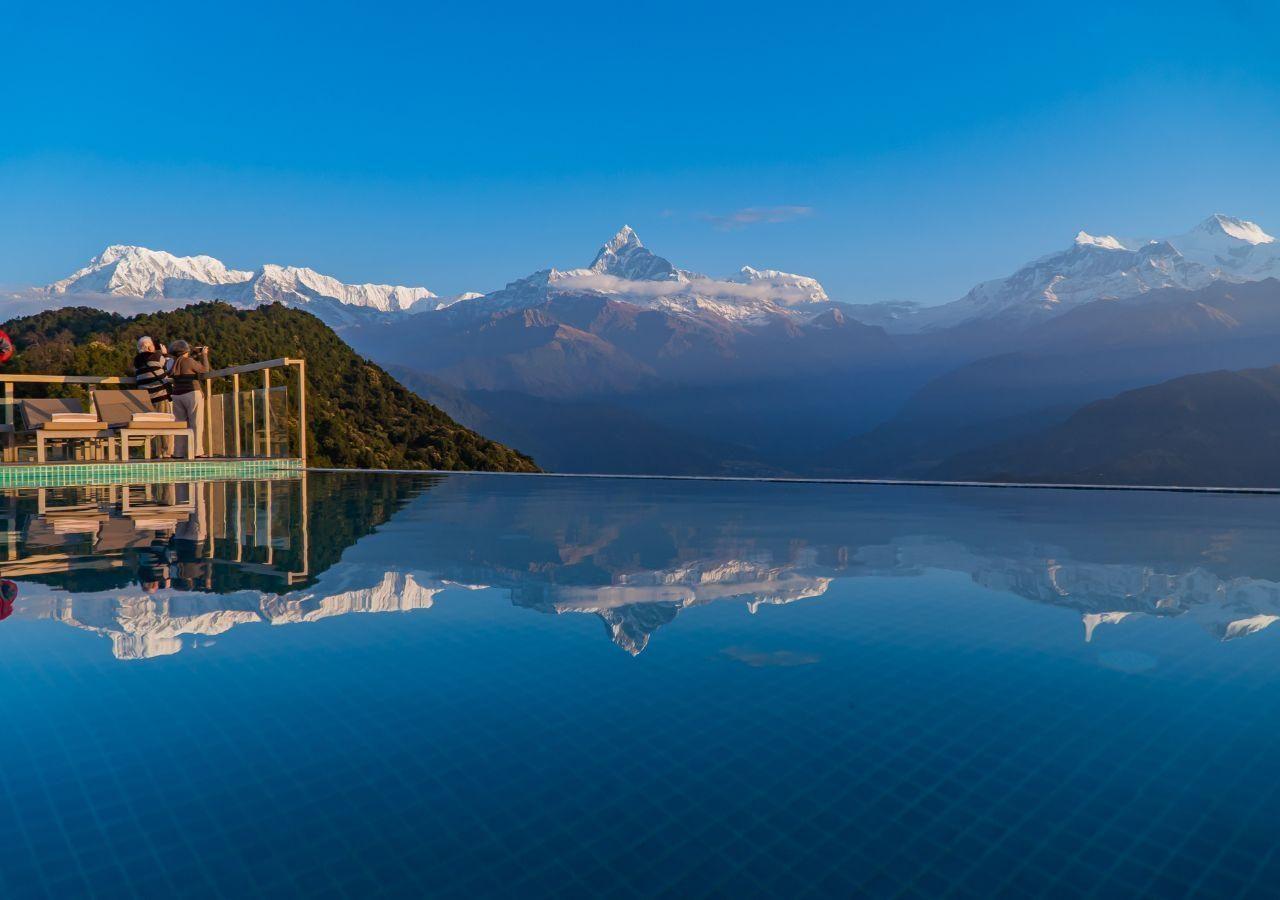
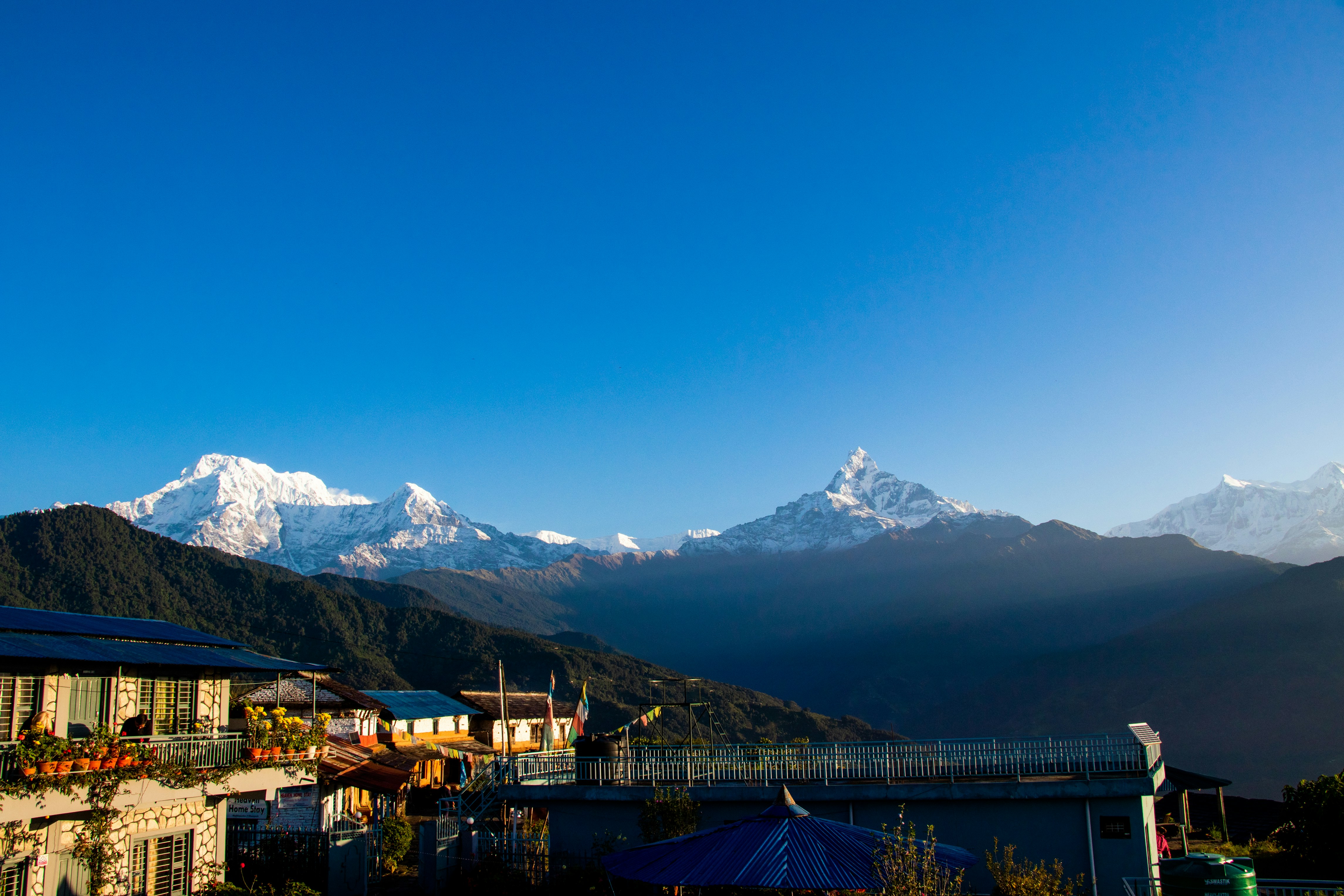
  • Sunrise over the Himalayas: Watch first light spread across the Annapurna range and Machhapuchhre (Fishtail) from Sarangkot.
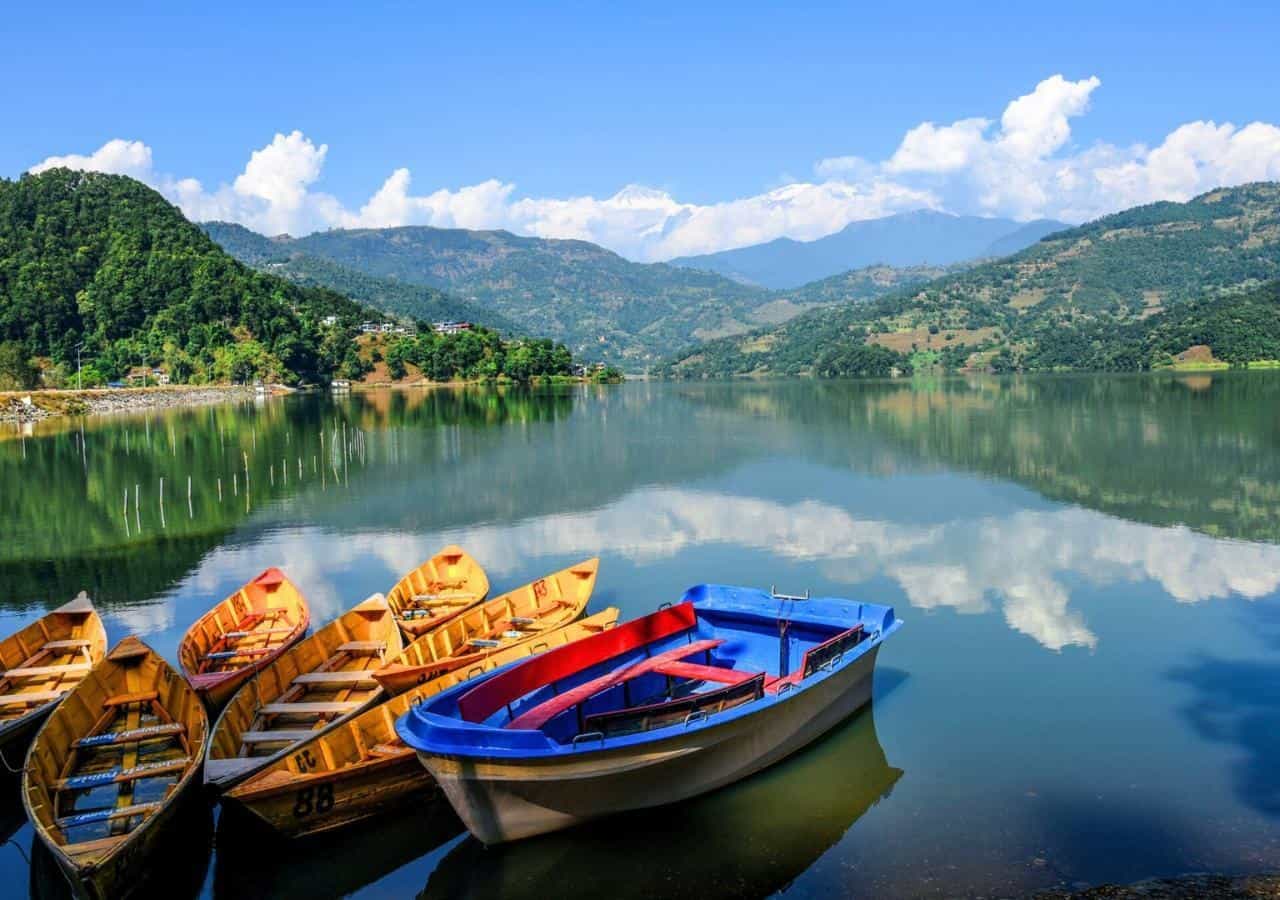
  • Lakeside Pokhara: Enjoy calm evenings by Phewa Lake, walk up to the World Peace Pagoda for panoramic views, and visit Begnas Lake, Seti River Gorge, Mahendra Cave and the International Mountain Museum.
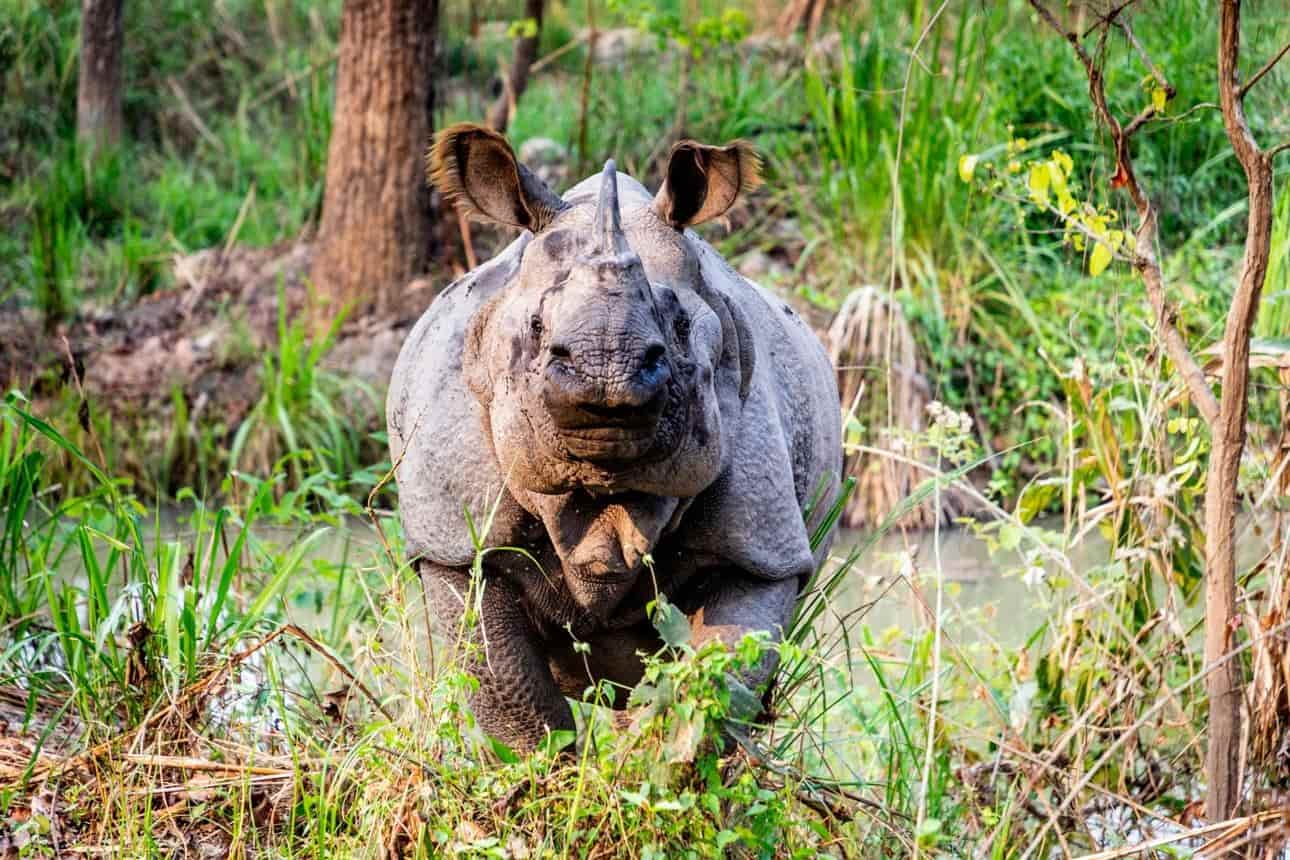
  • Chitwan jungle safari: Look for one-horned rhinos, Bengal tigers, deer and crocodiles on a jeep safari, a guided jungle walk and a dawn canoe ride on the Rapti River.
  • Tharu village and culture: Meet the indigenous Tharu community, explore their village life and enjoy a traditional cultural dance show.
  • Scenic domestic flights: Fly between Kathmandu, Pokhara and Chitwan instead of spending long hours on the road, with Himalayan views along the way.
  • Fully private and tailor-made: Travel only with your own group, with private transfers and a dedicated English-speaking guide from arrival to departure.
  • Easy and comfortable for all ages: The highest point is just 1,650 m (5,413 ft), so the tour suits couples, families and senior travelers with no trekking required.
  • Farewell Nepali dinner: End your trip with a traditional Nepali meal and cultural performance in Kathmandu.
  • Optional add-ons: Upgrade your trip with an Everest Base Camp helicopter flight, paragliding over Phewa Lake, an Annapurna heli tour, a hot air balloon ride or zip flying in Pokhara.

Best Season & Weather

Choose the best time for your trek based on weather and trail conditions.

Good for Trekking
Summer / Monsoon
June-August
20°C – 32°C
Good

Warm, humid, and rainy conditions. Lush landscapes and fewer crowds, but heavy rain may affect flights and road travel.

Nepal Luxury Tour Overview

Nepal is often seen as a destination for hardy trekkers and mountaineers, but there is another way to experience it. The Nepal Luxury Tour by Nepal Trip Services is an 8-day private journey for travelers who want the country’s culture, mountain views and wildlife without giving up comfort. Over one unhurried week, you’ll explore three very different sides of Nepal: the ancient temple cities of the Kathmandu Valley, the lakeside calm of Pokhara beneath the Annapurna range, and the subtropical jungles of Chitwan National Park. Every night is spent in a carefully chosen luxury or heritage property, and every step is guided by people who know these places well.

Kathmandu: Heritage, Spirituality and Old-World Charm

Your journey begins in Kathmandu, where a private transfer takes you from the airport to one of the city’s finest heritage hotels, a quiet retreat of carved wood, brick courtyards and traditional Newari architecture. The next day, a full day of guided sightseeing takes you to four of the valley’s most important UNESCO World Heritage Sites.

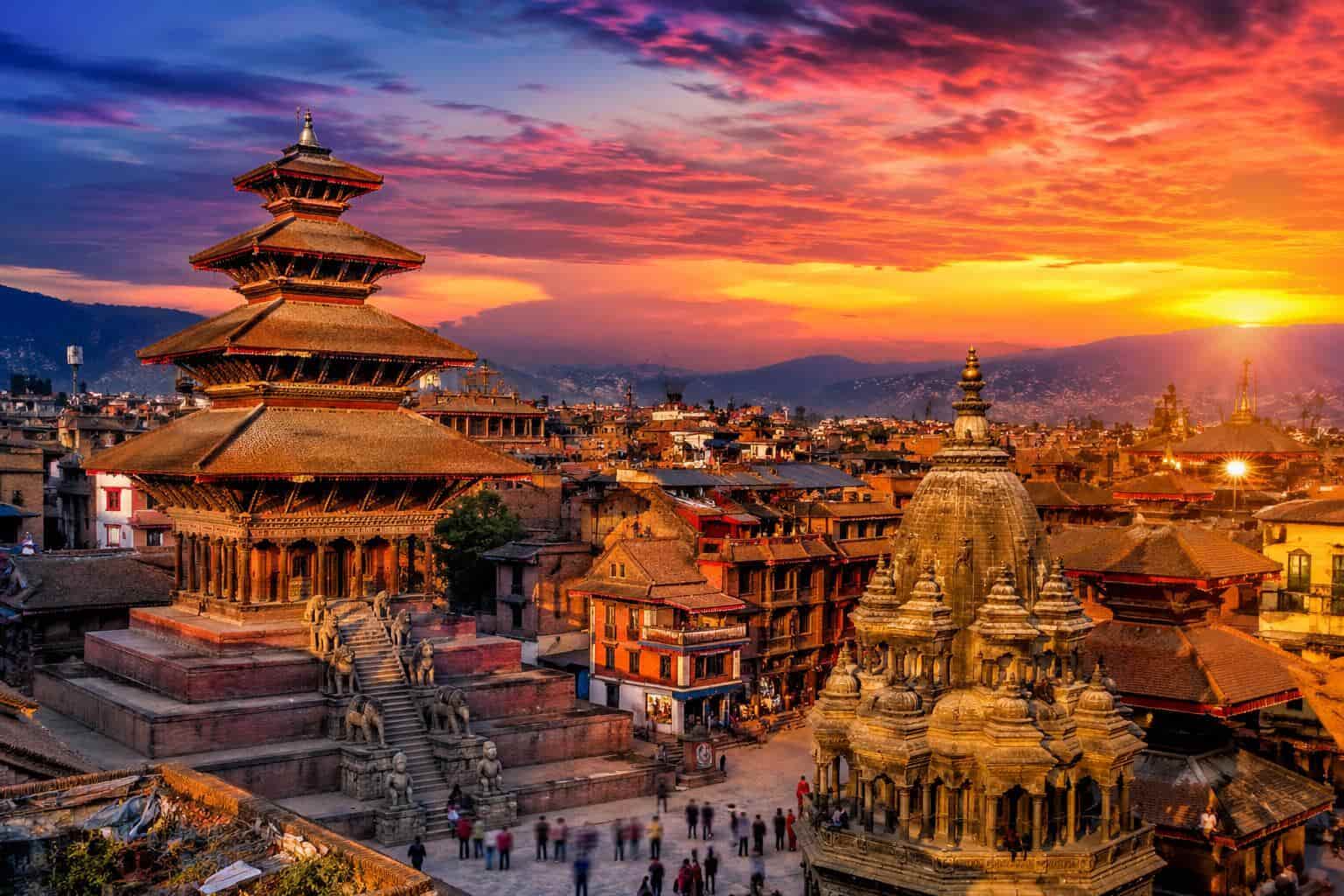
At Pashupatinath Temple, Nepal’s holiest Hindu shrine on the banks of the Bagmati River, you’ll watch centuries-old rituals unfold. At Boudhanath Stupa, one of the largest stupas in the world, you can walk alongside Tibetan pilgrims as they circle the great white dome and spin prayer wheels. Up on its hilltop, Swayambhunath, better known as the Monkey Temple, offers sweeping views across the city. Finally, Kathmandu Durbar Square brings Nepal’s royal history to life through its palaces, courtyards and pagoda-style temples. For travelers who want a once-in-a-lifetime moment, an optional helicopter flight to Everest Base Camp can be arranged on this day.

Pokhara: Lakes, Mountains and Slow Mornings

A short 25-minute flight carries you west to Pokhara, Nepal’s favorite lakeside town. You’ll check into a peaceful spa resort, and in the evening, walk up to the World Peace Pagoda for golden-hour views over Phewa Lake and the city below.

Early the next morning, you’ll drive to Sarangkot to watch the sunrise light up Dhaulagiri, Annapurna and the striking Machhapuchhre (Fishtail) peak. It is one of the most memorable mountain views in the country. Later, a relaxed day tour visits the Seti River Gorge, Mahendra Cave, the quiet shores of Begnas Lake and the International Mountain Museum, which tells the story of the Himalayas and the people who climb them. Pokhara is also Nepal’s adventure capital, so you can add paragliding, zip flying, a hot air balloon ride, an ultralight flight or a helicopter landing at Annapurna Base Camp if you’re feeling bold.

Chitwan: Into the Jungle

From Pokhara, a scenic flight takes you south to Bharatpur and on to a riverside jungle lodge on the edge of Chitwan National Park, another UNESCO World Heritage Site. Here, the snow peaks give way to tall grasslands, sal forests and slow-moving rivers. In the afternoon, you’ll visit a local Tharu village to learn about the indigenous community’s way of life, then enjoy a traditional Tharu cultural dance in the evening.

The following day is all about wildlife. You’ll set off at dawn on a canoe ride along the Rapti River, where crocodiles bask on the banks and kingfishers dart overhead. A guided jungle walk and a visit to the elephant breeding center follow, before a jeep safari deep into the park in search of the one-horned rhinoceros, spotted deer, wild boar and, with luck, the elusive Bengal tiger. The day closes with a sunset by the Rapti River. All meals are included during your stay in Chitwan, so you can simply relax and enjoy the jungle.

Return to Kathmandu and Farewell

A 30-minute flight brings you back to Kathmandu, where you’ll have free time to shop for handicrafts, pashmina and singing bowls in the lively streets of Thamel. Your trip ends with a farewell dinner at a traditional Nepali restaurant, complete with local cuisine and cultural performances, before a private transfer to the airport for your onward journey.

Why Choose This Luxury Tour of Nepal?

What sets this trip apart is how easy it feels. Domestic flights replace the long, bumpy road journeys that many visitors dread, which leaves more time for experiences and less time in transit. The highest point on the tour is just 1,650 m (5,413 ft), so there is no altitude concern and no trekking required. That makes it a strong choice for couples, honeymooners, families and senior travelers alike. The tour runs as a private trip only, so you travel with your own group, at your own pace, with a dedicated English-speaking guide and private vehicle throughout.

Your accommodation reflects the best each region has to offer: an award-winning heritage hotel in Kathmandu, a boutique spa resort in Pokhara and a well-appointed jungle lodge in Chitwan. Airport transfers, domestic flights, guided sightseeing, all Chitwan safari activities and government taxes are included, so there are few surprises along the way.

Best Time for the Nepal Luxury Tour

The tour can run throughout the year, but the best months are September to December and March to May. Autumn brings crisp air and the clearest mountain views, while spring fills the hillsides with blooming rhododendrons and offers excellent wildlife sightings in Chitwan. Winter is also a good choice for travelers who don’t mind cool mornings, as skies are often clear.

Whether you’re visiting Nepal for the first time or returning to see it differently, the Nepal Luxury Tour gives you the country’s highlights at a comfortable pace, in fine surroundings and with personal attention throughout. Speak with the Nepal Trip Services team to tailor the dates, hotels or add-ons to suit your travel style.

Expert Itinerary

01
Trip Info Details
Altitude Kathmandu: 1,400 m (4,593 ft)
Transfer Airport to hotel, about 4 km (15–20 minutes, depending on traffic)
Meals Not included
Accommodation 5 Star Hotel or similar (luxury heritage hotel)

Welcome to Nepal! As your plane descends into the Kathmandu Valley, you may catch your first glimpse of the Himalayas on the northern horizon. After you clear immigration and collect your luggage at Tribhuvan International Airport, a Nepal Trip Services representative will greet you in the arrival hall with a warm traditional welcome and escort you to your private vehicle.

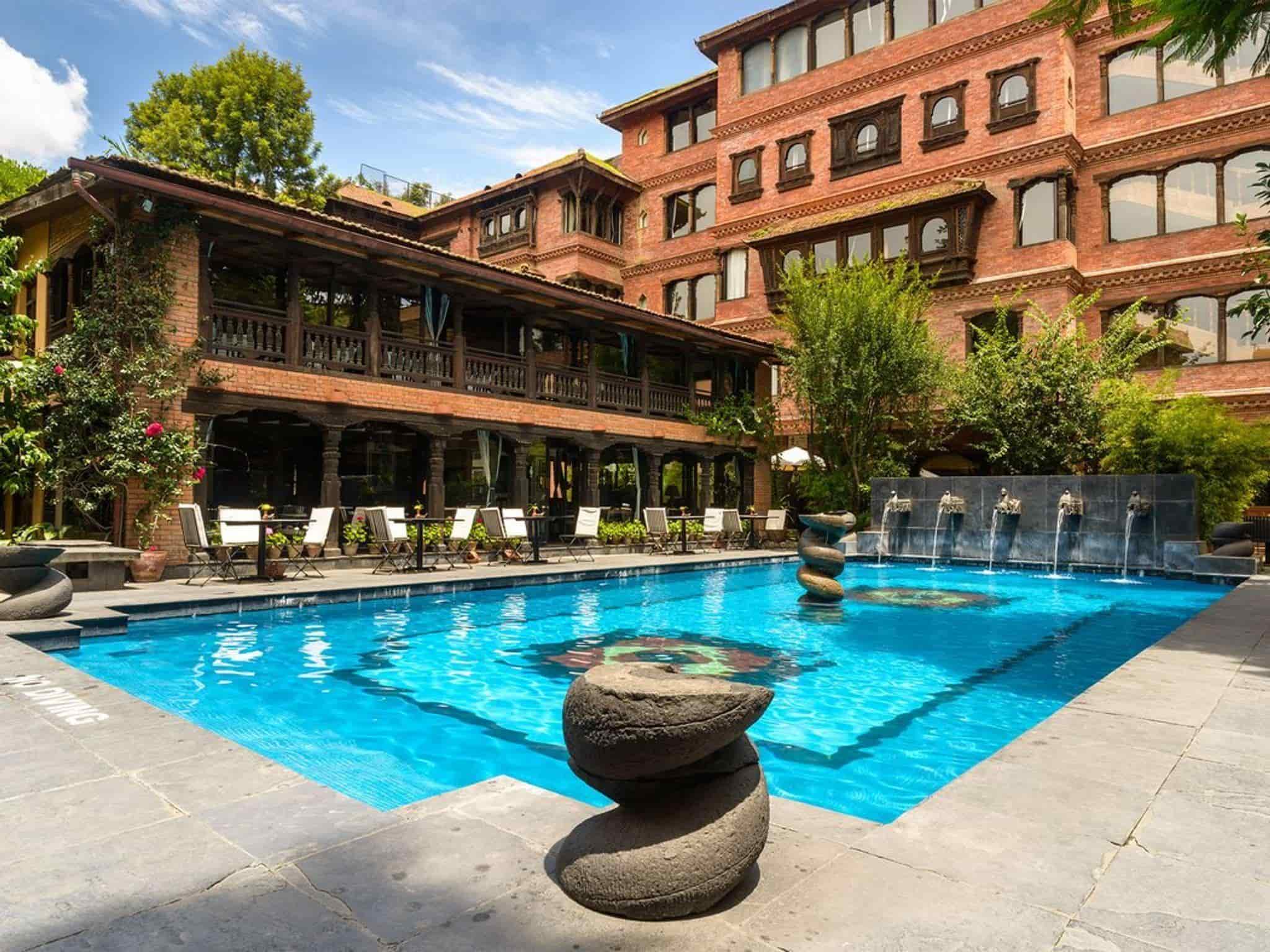
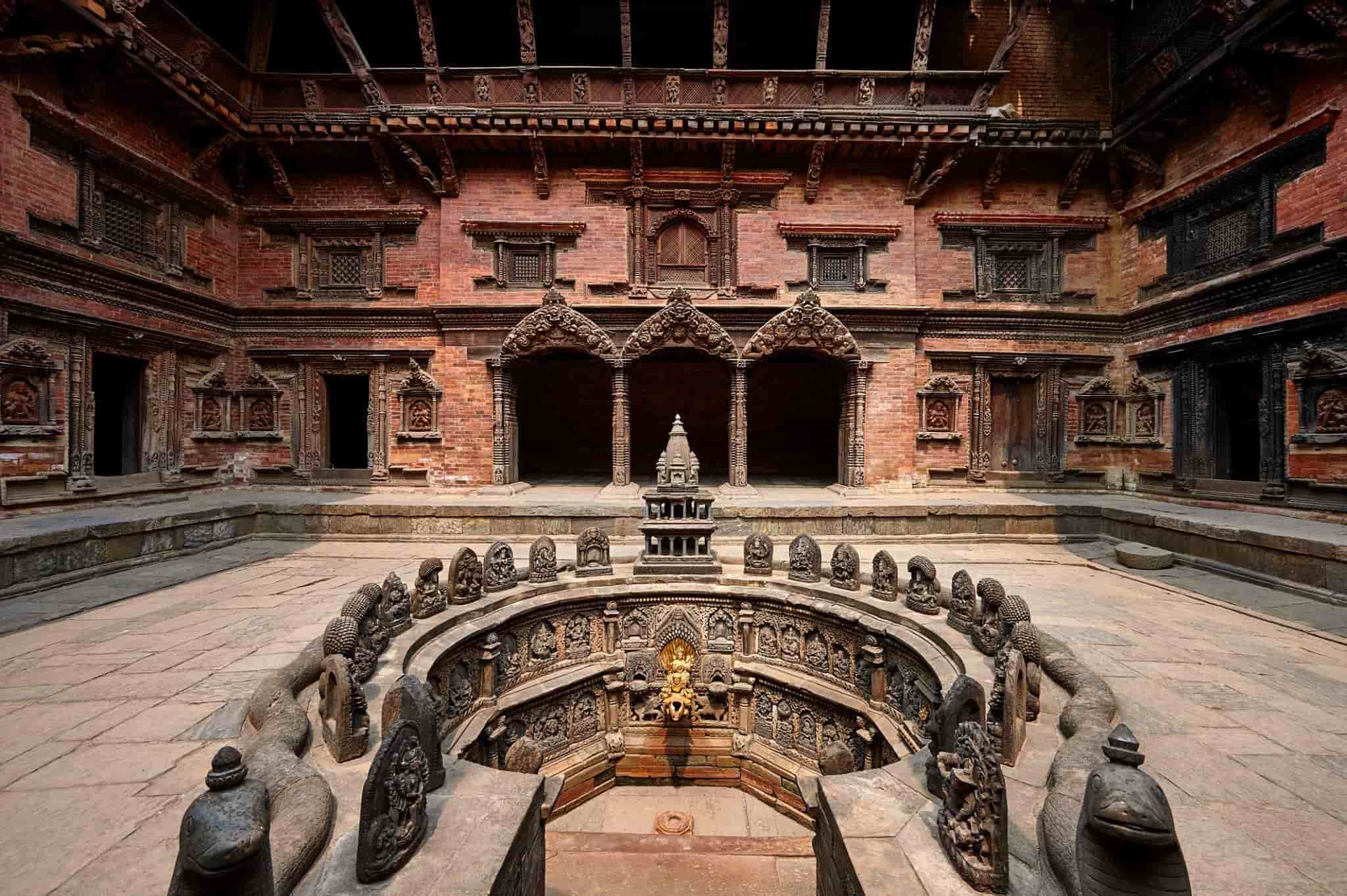
A short drive brings you to Dwarika’s Hotel, one of Nepal’s most celebrated heritage properties, where carved wooden windows, red-brick courtyards and centuries-old artifacts set the tone for the journey ahead. After check-in, take time to rest, freshen up and settle in.

In the evening, your guide will meet you for a short trip briefing. They’ll walk you through the itinerary, answer your questions and share useful tips on local customs, money and safety. The rest of the evening is yours to relax by the pool or enjoy dinner at one of the hotel’s restaurants.

Duration Arrival Day
Distance 15 Km
Accommodation Hotel
Meals Breakfast
02
Trip Info Details
Altitude Kathmandu: 1,400 m (4,593 ft) / Kala Patthar (heli option): 5,545 m (18,192 ft)
Sightseeing About 25–30 km of driving around the valley (full day, 6–7 hours)
Heli Tour Option About 4–5 hours round trip
Meals Breakfast
Accommodation Dwarika’s Hotel or similar

Today, choose between a full day exploring Kathmandu’s UNESCO World Heritage Sites and an unforgettable helicopter flight to Everest.

Option 1: Kathmandu Heritage Day Tour

After breakfast, set out with your private guide to discover four of the Kathmandu Valley’s most important cultural treasures.

  • Pashupatinath Temple: Begin at Nepal’s holiest Hindu shrine, set on the banks of the sacred Bagmati River. Only Hindus may enter the main pagoda temple, but you can explore the wider complex, see wandering sadhus (holy men) and respectfully watch ancient rituals from the opposite bank.
  • Boudhanath Stupa: Next, visit one of the largest stupas in the world and the heart of Tibetan Buddhist culture in Nepal. Walk clockwise around the great white dome with pilgrims, spin the prayer wheels, and stop for tea at a rooftop café overlooking the stupa.
  • Swayambhunath (Monkey Temple): In the afternoon, climb to this hilltop stupa, one of the oldest religious sites in the valley. The all-seeing eyes of the Buddha watch over the city, and the views across Kathmandu are spectacular, especially in the late afternoon light.
  • Kathmandu Durbar Square: End the day in the old royal square, surrounded by palaces, courtyards and pagoda temples. Here, you may catch a glimpse of the Kumari, Nepal’s living goddess, at her ornate residence.

Option 2: Everest Base Camp Helicopter Tour (optional, at extra cost)

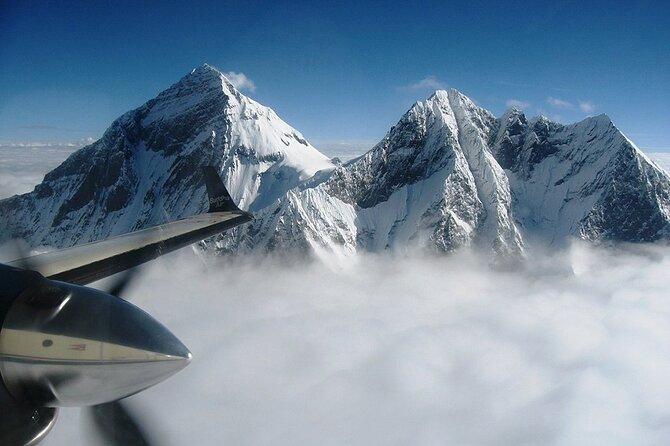
For the ultimate Himalayan experience, take an early-morning private or shared helicopter flight from Kathmandu into the Everest region. You’ll fly over the rolling foothills to Lukla (2,860 m), then follow the Dudh Koshi Valley past Namche Bazaar and Tengboche Monastery. The helicopter lands at Kala Patthar (5,545 m), the classic viewpoint for close-up views of Mount Everest, Lhotse, Nuptse and Ama Dablam, and flies over Everest Base Camp and the Khumbu Icefall.

On the way back, you’ll stop at Hotel Everest View (3,880 m), one of the world’s highest-placed hotels, for breakfast with a panoramic view of Everest. You’ll return to Kathmandu by late morning or early afternoon, with time to relax or visit one or two heritage sites.

Note: Time at Kala Patthar is limited to about 10–15 minutes for safety due to the high altitude. Helicopter flights depend on the weather.

Duration 6–7 hrs
Distance 25–30 km
Accommodation Dwarika’s Hotel
Meals Breakfast
03
Trip Info Details
Altitude Pokhara: 822 m (2,697 ft) / World Peace Pagoda: about 1,100 m (3,609 ft)
Flight Time Kathmandu to Pokhara, about 25 minutes
Transfer Pokhara airport to resort, about 30 minutes
Meals Breakfast
Accommodation Dorje’s Resort & Spa or similar (luxury lakeside resort)

After breakfast, your guide accompanies you to the domestic terminal for a short, scenic flight to Pokhara. On a clear day, the views from the right side of the aircraft are breathtaking, with the snowcapped Ganesh Himal, Manaslu and Annapurna ranges stretching across the northern horizon.

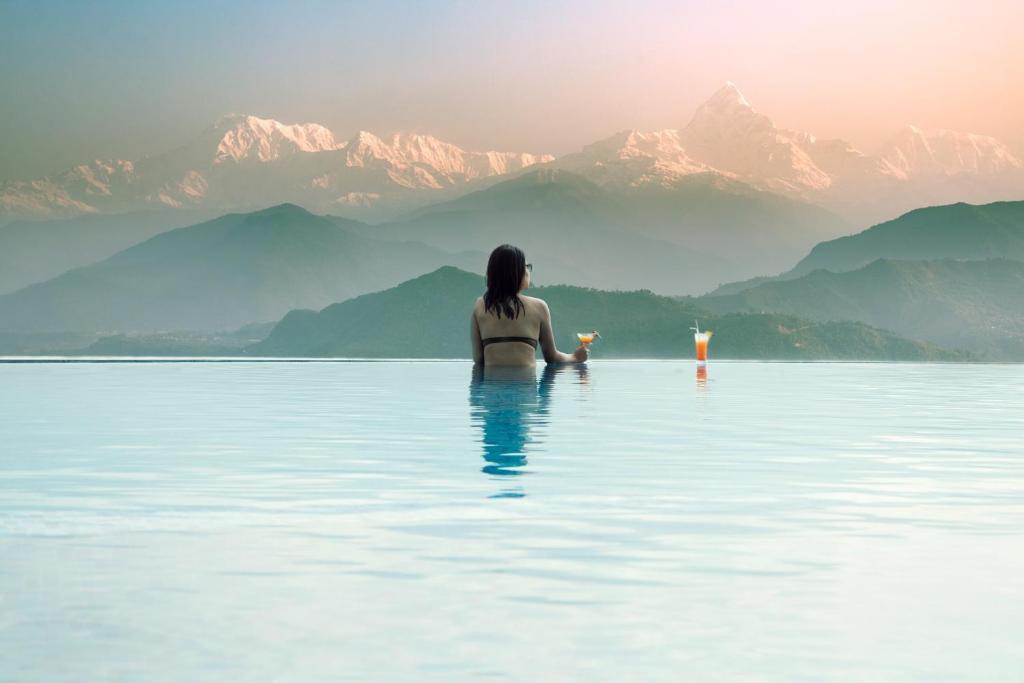
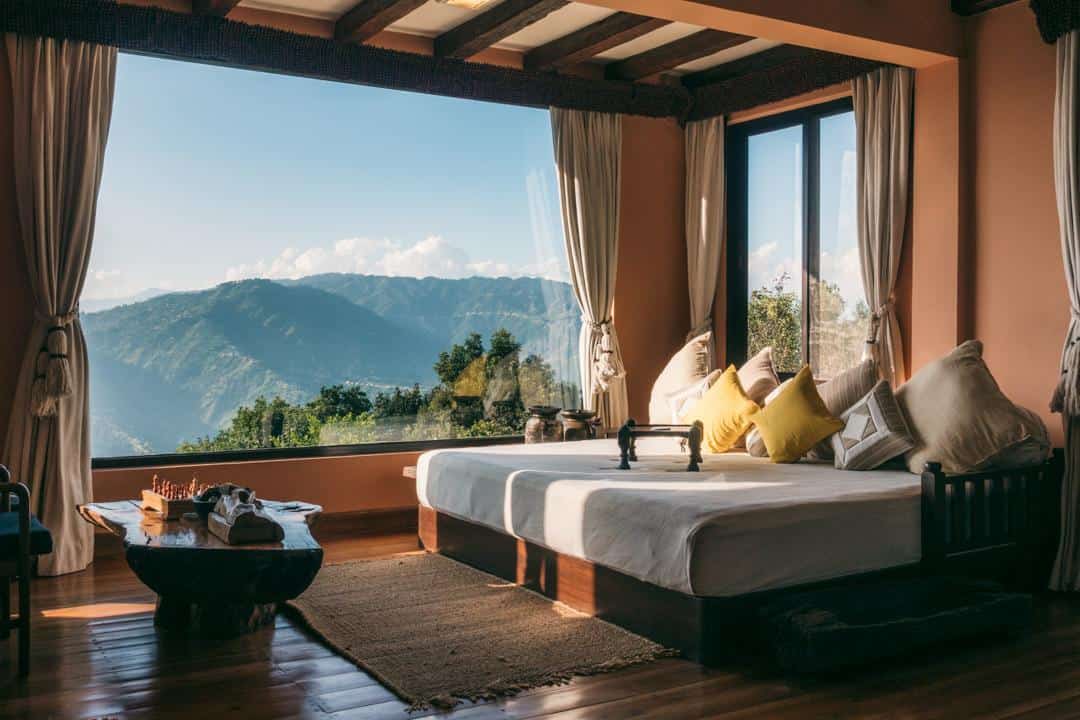
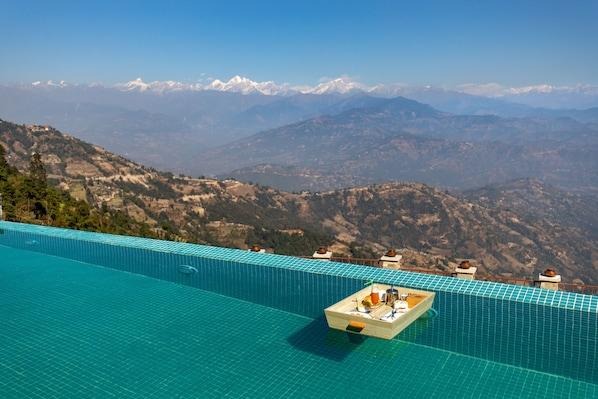
On arrival in Pokhara, you’ll be transferred to Dorje’s Resort & Spa, a peaceful, eco-friendly retreat set among gardens above Phewa Lake. Spend the afternoon at leisure, perhaps with a massage at the spa, a swim in the pool or a stroll along Lakeside’s tree-lined promenade.

Late in the afternoon, head up to the World Peace Pagoda, a gleaming white Buddhist stupa built on a ridge above the southern shore of Phewa Lake. From here, enjoy one of Pokhara’s finest sunset views over the lake, the city and, on clear evenings, the Annapurna range glowing in the evening light. Return to your resort for a relaxed evening.

Duration 25 Minutes
Distance 146 km By Air
Accommodation Dorje’s Resort & Spa
Meals Breakfast
04
Trip Info Details
Altitude Sarangkot: about 1,600 m (5,249 ft) / Pokhara: 822 m (2,697 ft)
Sightseeing About 40–50 km of driving (full day, 6–7 hours)
Meals Breakfast
Accommodation Dorje’s Resort & Spa or similar

Rise early for a short drive up to Sarangkot, Pokhara’s most famous viewpoint. As the sun rises, watch the first golden light touch the peaks of Dhaulagiri, Annapurna and the sharp, pyramid-shaped Machhapuchhre (Fishtail), with Phewa Lake and the valley still in shadow below. It’s one of the most magical mountain sunrises in Nepal. Return to your resort for breakfast.

Later in the morning, continue your private sightseeing tour of Pokhara’s highlights:

  • Seti River Gorge: Peer down into the narrow gorge, where the milky-white Seti River has carved a deep channel through the rock.
  • Mahendra Cave: Explore this limestone cave, known for its stalactites and stalagmites and the small Hindu shrine inside.
  • Begnas Lake: Visit Pokhara’s quieter second lake, surrounded by green hills, fish farms and rice terraces, a peaceful contrast to busy Lakeside.
  • International Mountain Museum: Discover the history of Himalayan mountaineering, the geology of the range and the cultures of Nepal’s mountain communities.

In the late afternoon, you may enjoy a boat ride on Phewa Lake to the island temple of Tal Barahi. Alternatively, you could try one of Pokhara’s optional adventures, such as tandem paragliding from Sarangkot, zip flying, an ultralight flight, a hot air balloon ride, or a helicopter tour with a landing at Annapurna or Mardi Himal Base Camp (all at extra cost).

Duration About 40–50 km of driving (full day, 6–7 hours)
Accommodation Dorje’s Resort & Spa or similar
Meals Breakfast
05
Trip Info Details
Altitude Chitwan: about 150 m (492 ft)
Flight Time Pokhara to Bharatpur, about 20 minutes
Transfer Bharatpur airport to jungle lodge, about 1–1.5 hours by private vehicle
Meals Breakfast, Lunch & Dinner
Accommodation Barahi Jungle Lodge or similar (luxury riverside jungle lodge)

After a leisurely breakfast, you’ll be transferred to Pokhara airport for a short flight south to Bharatpur, the gateway to Chitwan National Park. As you descend, the snow peaks give way to green hills, river valleys and the warm, flat plains of the Terai.

A private drive takes you to Barahi Jungle Lodge, set on the quiet banks of the Rapti River directly across from the national park. After a welcome drink and lunch at the lodge, relax by the riverside pool and keep an eye on the far bank, where one-horned rhinos are often seen grazing.

In the afternoon, join a local naturalist for a walk through a nearby Tharu village. The Tharu are the indigenous people of the Terai, and you’ll learn about their traditional mud-and-thatch homes, farming life and centuries-old relationship with the jungle. In the evening, enjoy a lively Tharu cultural dance performance, including the famous stick dance, followed by dinner at the lodge.

Accommodation Barahi Jungle Lodge or similar
Meals Breakfast
06
Trip Info Details
Altitude Chitwan: about 150 m (492 ft)
Activities Canoe ride, guided jungle walk, elephant breeding center and jeep safari (full day)
Meals Breakfast, Packed Safari Lunch & Dinner
Accommodation Barahi Jungle Lodge or similar

Today is all about wildlife in one of Asia’s finest national parks, a UNESCO World Heritage Site since 1984.

Start at dawn with a peaceful canoe ride on the Rapti River in a traditional dugout canoe. As the morning mist lifts off the water, look for mugger crocodiles and the rare, long-snouted gharial basking on the sandbanks, along with kingfishers, egrets, storks and many other birds.

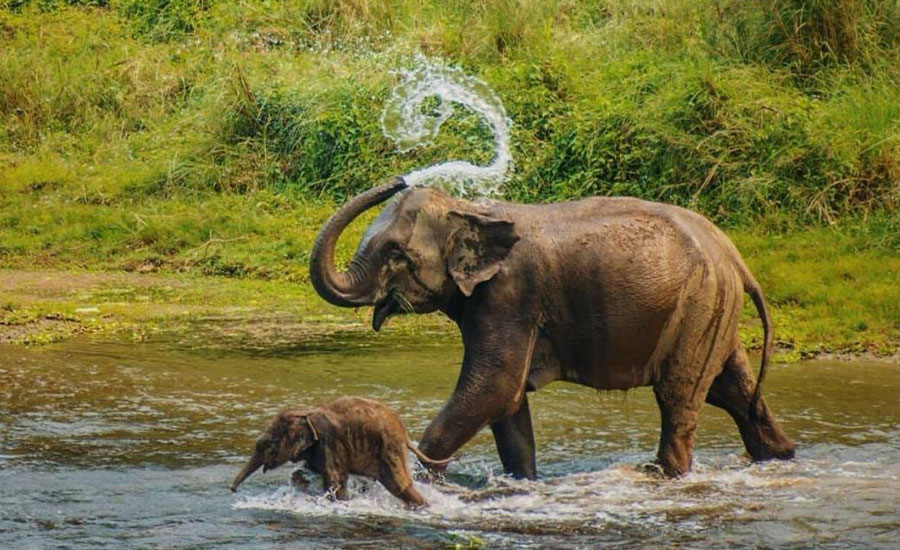
From the riverbank, set off on a guided jungle walk with experienced naturalists, who’ll teach you to read animal tracks, droppings and other signs of life in the forest. You’ll then visit the elephant breeding center, where you can learn about elephant conservation in Nepal and see mothers and calves up close.

After a packed lunch, head deep into the park on a jeep safari through grasslands, sal forest and riverine jungle. This is your best chance to spot the one-horned rhinoceros, spotted deer, sambar, wild boar, monkeys and a wide variety of birds. With patience and luck, you may also glimpse a sloth bear, a leopard or the elusive Bengal tiger.

Return to the lodge in time for a sunset by the Rapti River, as the jungle settles down for the evening. Enjoy dinner and a final night in the heart of Chitwan.

Duration Full Day
Accommodation Barahi Jungle Lodge or similar
Meals Breakfast
07
Trip Info Details
Altitude Kathmandu: 1,400 m (4,593 ft)
Transfer Jungle lodge to Bharatpur airport, about 1–1.5 hours by private vehicle
Flight Time Bharatpur to Kathmandu, about 25–30 minutes
Meals Breakfast & Farewell Dinner
Accommodation Dwarika’s Hotel or similar

Enjoy a final morning by the river. Early risers can join an optional bird-watching walk around the lodge. After breakfast, you’ll drive to Bharatpur airport for a short, scenic flight back to Kathmandu, with views of terraced hillsides and, on clear days, the Himalayas to the north.

On arrival, you’ll be transferred to Dwarika’s Hotel. The afternoon is free for you to relax at the spa or explore at your own pace. Thamel, Kathmandu’s lively tourist hub, is the perfect place to shop for pashmina shawls, singing bowls, thangka paintings, Nepali tea and handicrafts.

In the evening, we invite you to a complimentary farewell dinner at a traditional Nepali restaurant, where you’ll enjoy authentic Nepali cuisine and a cultural performance as you celebrate the end of your journey.

Duration 20–25 minutes
Distance 90–92 km
Accommodation Dwarika’s Hotel or similar
Meals Breakfast
08
Trip Info Details
Altitude Kathmandu: 1,400 m (4,593 ft)
Transfer Hotel to Tribhuvan International Airport, about 4 km (15–20 minutes, depending on traffic)
Meals Breakfast
Accommodation Not included

Enjoy a relaxed breakfast at your hotel and some last-minute shopping or a final stroll if time allows. About three hours before your international flight, a Nepal Trip Services representative will transfer you to Tribhuvan International Airport for your onward journey.

We hope you leave Nepal with wonderful memories and a heart full of mountain views, jungle adventures and warm Nepali hospitality. Namaste and safe travels!


Itinerary Notes

  • Flight times are approximate and may vary with airline schedules and weather conditions.
  • The order of activities in Chitwan may change depending on park rules, weather and wildlife movement.
  • Optional activities such as helicopter tours, paragliding and other adventures cost extra and depend on the weather.
  • Hotels may be replaced with properties of a similar standard if the listed ones are unavailable.
Duration 15–20 minutes
Distance 4 km
Accommodation Your Home
Meals Breakfast
Not satisfied with this Itinerary?

Are you interested in planning a custom trip? It only takes 2 minutes.

Cost Includes

  • Airport transfers: Private pick-up and drop-off for all international and domestic flights, as per the itinerary.
  • Kathmandu accommodation: 3 nights at Dwarika’s Hotel or a similar luxury heritage hotel, on a bed-and-breakfast basis.
  • Pokhara accommodation: 2 nights at Dorje’s Resort & Spa or similar, on a bed-and-breakfast basis.
  • Chitwan accommodation: 2 nights at Barahi Jungle Lodge or similar, with all meals (breakfast, lunch and dinner).
  • Chitwan jungle activities: All safari and jungle activities in Chitwan National Park, including the canoe ride, guided jungle walk, elephant breeding center visit, jeep safari, Tharu village tour and Tharu cultural show.
  • Domestic flights: Kathmandu to Pokhara, Pokhara to Bharatpur (Chitwan), and Bharatpur to Kathmandu.
  • Private transportation: Comfortable private vehicle for all ground transfers and sightseeing, with the vehicle size based on your group.
  • Professional guide: An experienced, government-licensed English-speaking guide throughout the tour.
  • Farewell dinner: A complimentary traditional Nepali dinner with a cultural performance in Kathmandu.
  • Taxes and charges: All applicable government taxes, VAT and service charges.

Cost Excludes

  • International flights: Airfare to and from Nepal.
  • Nepal visa fee: Your tourist visa, which can be obtained on arrival at Tribhuvan International Airport or in advance online.
  • Meals in Kathmandu and Pokhara: Lunch and dinner in these cities, apart from the farewell dinner.
  • Entrance fees: Entry tickets for temples, monasteries, heritage sites and museums.
  • Optional activities: The Everest Base Camp helicopter flight, Annapurna heli tour, paragliding, zip flying, hot air ballooning, ultralight flights, bungee jumping and any other add-ons.
  • Travel insurance: Comprehensive insurance covering medical care, trip cancellation and emergency evacuation, which is strongly recommended.
  • Personal expenses: Bar bills, drinks, laundry, phone and internet charges, shopping and souvenirs.
  • Tips: Gratuities for your guide, driver and hotel staff.
  • Card payment charges: A bank fee of about 4% may apply to credit card payments.
  • Anything not listed above: Any service or cost not mentioned under “Cost Includes.”

Trekking Equipment Checklist

Essential packing and gear checklist tailored for this trek.

Travel Documents

Travel Documents

  • Passport, valid for at least 6 months from your arrival date, with at least two blank pages
  • Two passport-size photos, for your visa and local SIM card
  • Printed or digital copies of your passport, visa and flight tickets
  • Travel insurance policy and emergency contact number
  • Nepal Trip Services booking confirmation and our 24/7 contact number
  • US dollars in cash for your visa fee, plus credit and debit cards
Bags & Luggage

Bags & Luggage

  • Soft duffel bag or medium suitcase, ideally under 15–20 kg for domestic flights
  • Small daypack (15–25 liters) for sightseeing and safari days
  • Waterproof pouch or dry bag for your phone, camera and documents
  • Travel lock for your main luggage
  • Money belt or hidden pouch for cash and passport
Clothing

Clothing

  • Lightweight, breathable T-shirts and shirts (cotton, linen or quick-dry)
  • Long-sleeved shirts for sun and mosquito protection
  • Comfortable long trousers or light travel pants
  • Modest clothing that covers your shoulders and knees for temple visits
  • Light fleece or sweater for cool mornings and evenings
  • Light waterproof jacket or poncho
  • Warm down or padded jacket (essential from November to February)
  • Smart-casual outfits for dinners at luxury hotels and the farewell dinner
  • Swimwear for hotel pools and spas
  • Sleepwear and comfortable loungewear
  • Underwear and socks for 8 days, or fewer if using hotel laundry
Jungle Safari Gear (Chitwan)

Jungle Safari Gear (Chitwan)

  • Neutral-colored clothing in khaki, olive, brown or beige
  • Lightweight long-sleeved shirt and trousers for the jungle walk
  • Wide-brimmed sun hat or cap
  • Binoculars for wildlife and bird watching
  • Insect repellent with DEET or picaridin
  • Warm layer for early-morning jeep and canoe rides in winter
Footwear

Footwear

  • Comfortable walking shoes or lightweight sneakers
  • Slip-on shoes or sandals for easy removal at temples
  • Closed shoes or light hiking shoes for the jungle walk
  • Flip-flops for the hotel, pool and spa
Accessories

Accessories

  • Sunglasses with UV protection
  • Sun hat or cap
  • Light scarf or shawl for temple visits and cool evenings
  • Reusable water bottle
  • Compact travel umbrella (especially for June to September)
  • Gloves, beanie and scarf for winter travel (December to February)
Electronics & Gadgets

Electronics & Gadgets

  • Mobile phone and charger
  • Universal travel adapter (Nepal uses 230V, Type C, D and M plugs)
  • Power bank, carried in your hand luggage only
  • Camera with a zoom or telephoto lens for wildlife and mountain views
  • Spare camera batteries and memory cards
  • Headphones for flights and long transfers
  • Small flashlight or headlamp, which is handy in the jungle lodge at night
Health & Personal Care

Health & Personal Care

  • Personal prescription medicines, with copies of your prescriptions
  • Small first-aid kit with plasters, pain relief, antiseptic cream and rehydration salts
  • Anti-diarrhea and motion sickness tablets
  • Sunscreen (SPF 30 or higher) and lip balm with SPF
  • Hand sanitizer and wet wipes
  • Tissues or a small pack of toilet paper
  • Travel-size toiletries (luxury hotels provide most basics)
  • Spare glasses or contact lenses and solution, if you use them
Everest Helicopter Tour Extras (If Added)

Everest Helicopter Tour Extras (If Added)

  • Warm down jacket, as temperatures at Kala Patthar (5,545 m) can be well below freezing
  • Warm hat, gloves and scarf
  • Thermal base layer
  • Sunglasses to protect your eyes from strong glare off the snow
  • Camera with a fully charged battery, since cold drains batteries quickly
  • Light snacks and water

Captured Memories Of Nepal Luxury Tour

Nepal Luxury Tour: More Information

Best Time for a Luxury Holiday in Nepal

You can take this tour at any time of year, since Kathmandu, Pokhara and Chitwan all sit at low to moderate altitude. Each season, though, offers a different experience. Here’s a quick guide to help you choose the right time for your trip with Nepal Trip Services.

Seasons at a Glance

Season Months Weather Mountain Views Rating
Autumn September – November Dry, mild and sunny Excellent ★★★★★ Best
Spring March – May Warm, with blooming hills Very good (clearest in the mornings) ★★★★☆ Great
Winter December – February Cool, clear and quiet Very good ★★★★☆ Great
Monsoon June – August Warm, humid and rainy Limited ★★★☆☆ Good

Autumn (September – November): Clear Skies & Peak Season

Autumn is the most popular time to visit Nepal. After the monsoon rains, the air is fresh and the skies are clear, giving you crisp views of the Annapurna range from Sarangkot. It also coincides with Dashain and Tihar, Nepal’s biggest festivals, when towns are lit with lamps and full of celebration. Since this is peak season, luxury hotels and domestic flights fill up quickly, so it’s best to book a few months ahead.

Spring (March – May): Rhododendron Blooms & Wildlife Sightings

Spring brings warm days and hillsides covered in red and pink rhododendrons, Nepal’s national flower. It’s also a great time for Chitwan, as the tall grasses are cut back and animals gather near rivers and waterholes, making rhinos and other wildlife easier to spot. Mountain views are best early in the morning, before haze builds up later in the season. Chitwan can get very hot by May, so morning safaris are the most comfortable.

Winter (December – February): Sunny Days & Quiet Escapes

Winter offers sunny days, clear skies and fewer tourists, which makes it ideal for a peaceful and relaxed holiday. Daytime temperatures are pleasant, but mornings and evenings can be cold in Kathmandu and Pokhara, so warm layers are a must. Morning fog sometimes forms in Chitwan and the lowlands, which can delay early flights. Our team will plan your flight times around it.

Monsoon (June – August): Lush Landscapes & Lower Rates

The monsoon turns Nepal green and vibrant, with full rivers, flowing waterfalls and quiet heritage sites. Rain usually falls in the afternoons and evenings, leaving mornings free for sightseeing. Clouds often hide mountain views, some flights may be delayed, and certain jungle activities in Chitwan may be limited. In return, you’ll enjoy fewer crowds and better hotel rates.

Quick Tips

  • For the best mountain views, travel from October to November.
  • For wildlife and flowers, choose March to April.
  • For a quiet trip with fewer crowds, go in December or January.
  • For the best value, consider the monsoon months from June to August.
  • Book early for autumn and spring, as luxury hotels and flights sell out fast.
  • Pack warm layers from November to February for cool mornings and evenings.
  • Keep a spare day before your international flight in case of weather delays.

Travel Documents & Nepal Visa

Getting into Nepal is simple. Most visitors can get a tourist visa on arrival at Tribhuvan International Airport in Kathmandu, and Nepal Trip Services will guide you through every step before you travel.

Required Travel Documents

  • A valid passport with at least 6 months’ validity from your arrival date and at least two blank pages.
  • One recent passport-size photo with a light background. It’s a good idea to carry a spare.
  • Visa fee in cash, preferably US dollars, euros or British pounds.
  • Your return or onward flight ticket.
  • Travel insurance documents covering medical care and emergency evacuation.
  • Your tour booking confirmation from Nepal Trip Services.
  • Photocopies or digital copies of your passport, visa and insurance, kept separately from the originals.

Nepal Tourist Visa Fees

Visa Duration Fee (Multiple Entry)
15 days US$30
30 days US$50
90 days US$125

Fees may change, so please check with the Department of Immigration, Nepal, before you travel.

How to Get a Visa on Arrival

  1. Fill in the online form. Complete the tourist visa form on the Department of Immigration website shortly before your trip, or use the kiosk machines at the airport.
  2. Save your confirmation. Print or save the barcode receipt you receive after submitting the form.
  3. Pay the visa fee. On arrival, pay at the airport bank counter and keep the payment receipt.
  4. Visit the immigration desk. Show your passport, form confirmation and payment receipt. The officer will place the visa in your passport and stamp your entry.

Special Visa Rules for SAARC & Indian Nationals

  • Indian citizens don’t need a visa to enter Nepal. You’ll need a valid passport or a voter ID card issued by the Election Commission of India.
  • Citizens of other SAARC countries (Bangladesh, Bhutan, Maldives, Pakistan and Sri Lanka) receive a free 30-day tourist visa on their first visit in a calendar year.
  • Afghan citizens aren’t covered by the free SAARC visa and must pay the standard visa fee.
  • Children under 10 get a free visa when traveling with a parent.
  • Citizens of a few countries aren’t eligible for a visa on arrival and must apply in advance at a Nepali embassy or consulate. Contact us and we’ll help you check your nationality.

Quick Tips

  • The 15-day visa is enough for the 8-day Nepal Luxury Tour.
  • Carry exact cash in US dollars, as Nepali rupees and Indian currency are usually not accepted for visa fees.
  • Fill in the online form before you fly to save time at the airport.
  • Keep your passport handy, as hotels and domestic airlines will ask for it.
  • Don’t overstay your visa. Overstaying leads to daily fines, so speak with our team if you’d like to extend your trip.

Entrance Fees & UNESCO Heritage Site Tickets

Entry fees for temples, monasteries and heritage sites are not included in the Nepal Luxury Tour price. They are paid at the gate, and your guide will help you buy tickets so you can skip the hassle. Below are the approximate fees for foreign visitors.

Kathmandu Valley Entrance Fees

Site Approx. Fee (Foreigners) UNESCO Site
Kathmandu Durbar Square NPR 1,000 Yes
Pashupatinath Temple NPR 1,000 Yes
Boudhanath Stupa NPR 400 Yes
Swayambhunath (Monkey Temple) NPR 200 Yes
Patan Durbar Square (optional visit) NPR 1,000 Yes
Bhaktapur Durbar Square (optional visit) NPR 1,800 Yes

Pokhara Attractions & Viewpoints

Attraction Approx. Fee (Foreigners)
Sarangkot Viewpoint NPR 50–100
World Peace Pagoda Free
International Mountain Museum NPR 500
Mahendra Cave Small ticket fee
Seti River Gorge Free
Begnas Lake Free (boating extra)
Phewa Lake & Tal Barahi Temple Free (boat fare extra)

Chitwan National Park Permit & Activity Fees

Item Details
National Park Entry Permit About NPR 2,000 per person per day for foreign visitors
Jungle Safari Activities Canoe ride, jungle walk, jeep safari and elephant breeding center visit are included in your tour
Tharu Village Tour & Cultural Show Included in your tour

Good to Know

  • Most tickets are valid for one day only, so keep yours until you leave the site, as it may be checked inside.
  • Carry your passport or a copy, as some ticket counters ask for ID.
  • SAARC nationals usually pay lower entrance fees than other foreign visitors.
  • At Pashupatinath, only Hindus may enter the main temple, but all visitors can explore the complex and watch ceremonies from across the Bagmati River.
  • Some sites charge extra for cameras or video, and drones need special permission.
  • Fees are revised from time to time, so the amounts above are a guide only.

Quick Tips

  • Budget around US$30–40 per person for entrance fees during the tour.
  • Carry small Nepali rupee notes for tickets, donations and boat rides.
  • Visit early in the morning to avoid crowds and enjoy softer light for photos.
  • Dress modestly and remove your shoes where asked at religious sites.
  • Walk clockwise around stupas and prayer wheels as a sign of respect.

Domestic Flights: Kathmandu, Pokhara & Chitwan

On the Nepal Luxury Tour, short domestic flights replace long road journeys, so you spend less time in transit and more time enjoying each destination. Nepal Trip Services books all flights, handles your airport transfers and keeps a close watch on schedules throughout your trip.

Flight Routes & Duration at a Glance

Route Flight Time Tour Day Highlights
Kathmandu → Pokhara About 25 minutes Day 3 Views of the Ganesh Himal, Manaslu and Annapurna ranges on clear days
Pokhara → Bharatpur (Chitwan) About 20 minutes Day 5 Green hills and river valleys as you descend to the lowlands
Bharatpur (Chitwan) → Kathmandu About 25–30 minutes Day 7 Terraced hills and a final sweep over the Kathmandu Valley

Flights are operated by Nepal’s leading domestic airlines, such as Buddha Air and Yeti Airlines. Schedules are subject to change.

Baggage Allowance on Domestic Flights

  • Checked baggage: Usually between 15 kg and 25 kg per person, depending on the airline and fare class. We’ll confirm your exact allowance before you travel.
  • Hand luggage: One small carry-on bag for essentials such as your passport, camera, medicines and valuables.
  • Excess baggage: Extra weight is charged per kilogram at the check-in counter.
  • Extra luggage storage: If you’re carrying more than you need, you can leave it safely at your Kathmandu hotel until you return on Day 7.
  • Restricted items: Power banks and spare lithium batteries must be carried in hand luggage, not in checked bags. Lighters, sharp objects and flammable items aren’t allowed.

Weather Delays & Backup Plans

Domestic flights in Nepal depend on visual flying conditions, so fog, low clouds or heavy rain can sometimes cause delays or cancellations. Delays are most common during the monsoon (June to August) and on foggy winter mornings (December to February), especially in Chitwan.

If your flight is affected, here’s how we’ll handle it:

  • Rebooking: Our team will move you to the next available flight the same day or the following morning.
  • Road transfer: If flying isn’t possible, we’ll arrange a comfortable private vehicle so you can continue your journey by road.
  • Itinerary adjustments: Your guide will rearrange sightseeing or activities so you miss as little as possible.
  • 24/7 support: Our Kathmandu office stays in touch with you and the airline until you reach your destination.

Quick Tips

  • Choose morning flights when possible, as skies are usually clearer and delays are less likely.
  • Sit on the right-hand side on the Kathmandu–Pokhara flight for the best Himalayan views.
  • Arrive at the airport at least one hour before departure for security checks. Your guide will make sure you’re on time.
  • Pack a soft duffel bag rather than a hard suitcase, as it fits more easily on smaller aircraft.
  • Keep your passport handy, as it’s required at domestic check-in.
  • Leave a spare day in Kathmandu before your international flight in case of weather delays.

Luxury Hotels, Resorts & Jungle Lodges

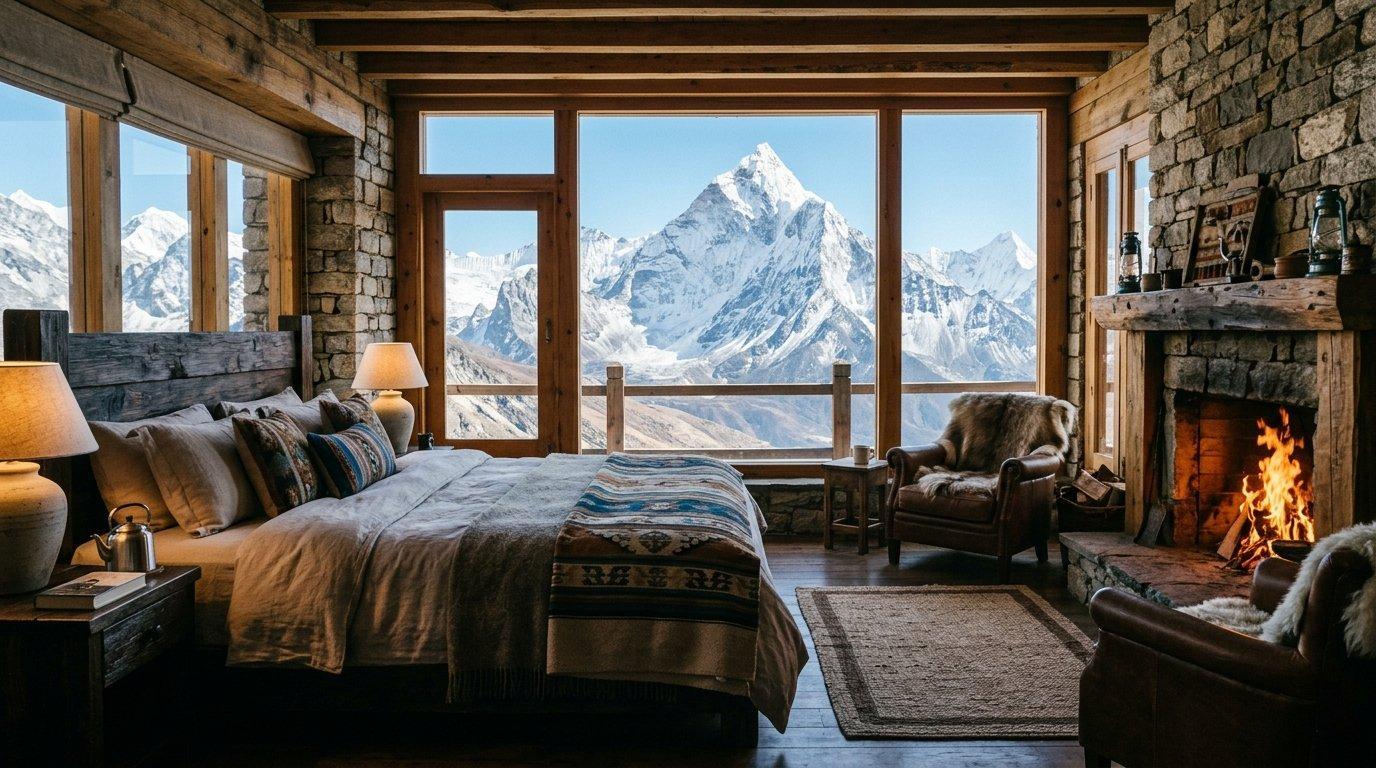
On the Nepal Luxury Tour, each stay is chosen to reflect the character of its destination: a heritage hotel in Kathmandu, a peaceful spa resort in Pokhara and a riverside lodge in Chitwan. If a listed property is fully booked, Nepal Trip Services will arrange one of equal standard.

Heritage Stay in Kathmandu

Dwarika’s Hotel (3 nights)

Dwarika’s is one of Nepal’s most celebrated heritage hotels, located close to Pashupatinath Temple and about a 10-minute drive from the airport. It is known for preserving traditional Newari architecture, and its carved wooden windows, red-brick courtyards and antique artifacts, some dating back to the 13th century, make it feel like a living museum. The hotel has won international awards for heritage preservation.

  • Dining: Krishnarpan serves an unforgettable traditional Nepali feast of up to 22 courses, made with produce from the hotel’s own farm. Other restaurants serve Japanese, Chinese and Indian cuisine.
  • Relaxation: The Pancha Kosha Himalayan Spa offers holistic treatments using local herbs and oils, and the pool is inspired by ancient Malla-era royal baths.
  • Rooms: Heritage Deluxe Rooms and a range of elegant suites.

Lakeside Spa Resort in Pokhara

Dorje’s Resort & Spa (2 nights)

Set among gardens on the hillside above Phewa Lake, Dorje’s Resort & Spa is a quiet, eco-friendly retreat about 1.4 km from the lake and close to the Sarangkot cable car. Many rooms have balconies overlooking the lake, with mountain views on clear days.

  • Dining: An on-site restaurant and café serve fresh meals, with much of the produce grown on the property.
  • Relaxation: Enjoy an outdoor pool, a lake-view hot tub, a spa with massages, a sauna and a steam room.
  • Rooms: Spacious deluxe rooms with lake views, plus junior suites and a signature Dorje’s Suite.

Riverside Jungle Lodge in Chitwan

Barahi Jungle Lodge (2 nights, all meals included)

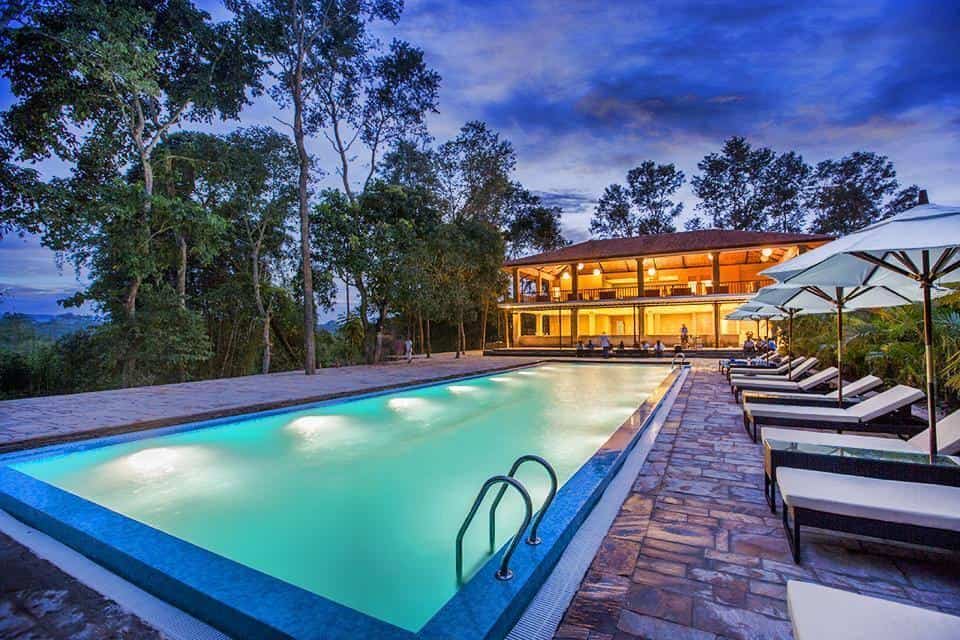
Barahi Jungle Lodge sits on the quiet banks of the Rapti River, directly across from Chitwan National Park. Rhinos are often seen wandering along the riverbank, sometimes right from the lodge. Its 35 thatched-roof rooms draw on local Tharu design and combine rustic charm with modern comforts such as air-conditioning and private balconies.

  • Dining: Continental and Nepali dishes made with locally grown produce, served poolside, on the veranda or in the restaurant.
  • Relaxation: An outdoor swimming pool with river views, a spa and a riverside bar.
  • Experiences: Expert naturalists guide your canoe ride, jungle walk, jeep safari and Tharu village visit.

Room Upgrades, Suites & Villas

Want even more space or a special touch? We can upgrade your stay at any point on the tour, subject to availability:

  • Kathmandu: Upgrade to a Junior, Executive or multi-level Royal Suite at Dwarika’s, or choose another five-star hotel.
  • Pokhara: Choose a lake-view Junior Suite or the Dorje’s Suite, or upgrade to another boutique luxury lodge or villa retreat.
  • Chitwan: Request a river-facing room, or upgrade to another premium safari lodge in the area.
  • Special occasions: For honeymoons, anniversaries and birthdays, we can arrange flower decorations, cakes, private dinners or spa packages on request.

Quick Tips

  • Book early for autumn and spring, as suites and lake-view rooms sell out fast.
  • Tell us about special occasions in advance so we can plan surprises with the hotels.
  • Try the Krishnarpan dinner at Dwarika’s. It’s worth reserving at least one evening for it.
  • Ask for a lake-view room in Pokhara to wake up to views over Phewa Lake.
  • Pack swimwear, as all three properties have pools.
  • Check-in times vary, but our team will request early check-in or late check-out where possible.

Dining & Meal Arrangements

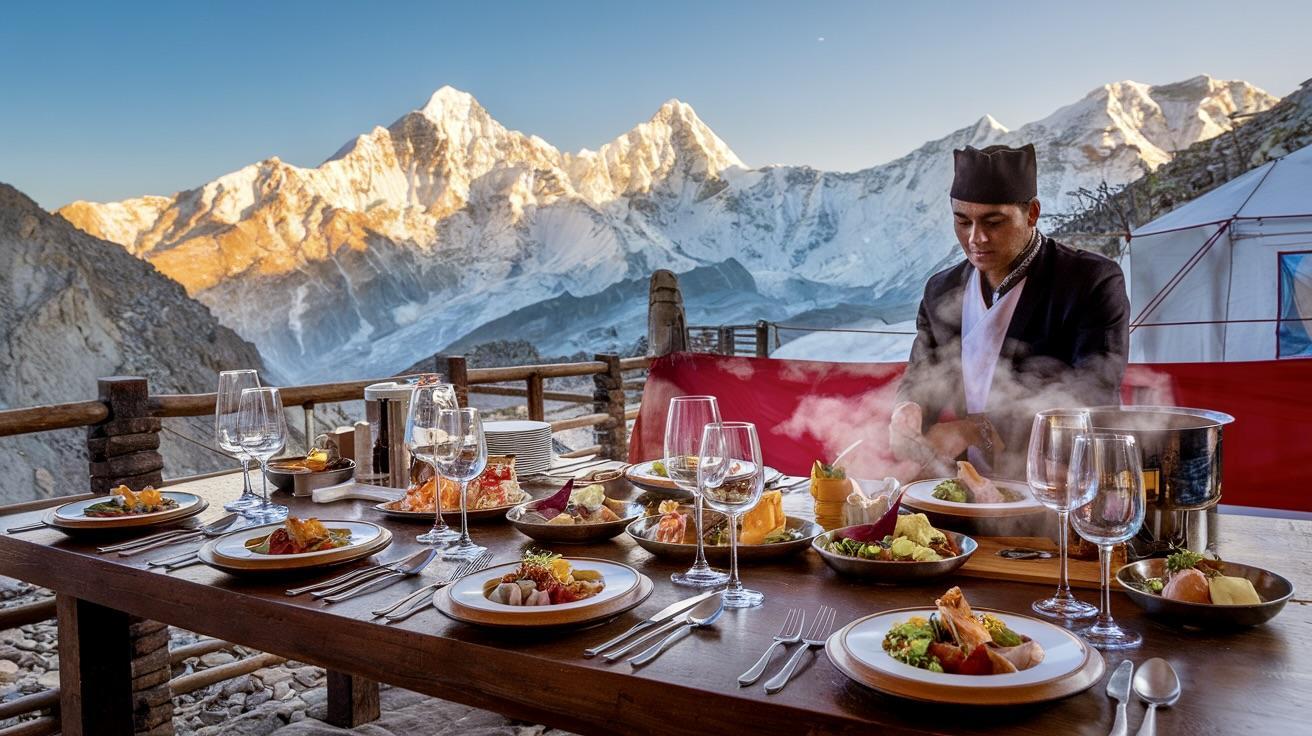
Food is one of the great pleasures of travelling in Nepal, from slow-cooked Newari feasts to fresh lakeside meals and home-style Tharu cooking in Chitwan. On the Nepal Luxury Tour, Nepal Trip Services includes the meals that matter most and leaves the rest open so you can explore and dine at your own pace.

Meals Included on the Tour

Day Destination Meals Included
Day 1 Kathmandu (arrival) —
Day 2 Kathmandu Breakfast
Day 3 Pokhara Breakfast
Day 4 Pokhara Breakfast
Day 5 Chitwan Breakfast, Lunch & Dinner
Day 6 Chitwan Breakfast, Packed Safari Lunch & Dinner
Day 7 Kathmandu Breakfast & Farewell Dinner
Day 8 Departure Breakfast
  • Breakfast is served every morning at your hotel, usually as a generous buffet or à la carte menu.
  • In Chitwan, all meals are included at the jungle lodge, along with a packed lunch on safari day.
  • On your last evening, you’ll enjoy a complimentary farewell dinner at a traditional Nepali restaurant, with a cultural performance.
  • Lunch and dinner in Kathmandu and Pokhara aren’t included, which gives you the freedom to choose where and what to eat.

Fine Dining in Kathmandu & Pokhara

In Kathmandu, the highlight is Krishnarpan at Dwarika’s Hotel, where you can enjoy a traditional Nepali feast of up to 22 courses served in a beautiful heritage setting. Thamel and the surrounding areas also offer everything from elegant Newari restaurants and garden cafés to French, Italian, Japanese and Indian cuisine.

In Pokhara, the lakeside is lined with restaurants and cafés where you can dine with views of Phewa Lake. Fresh lake fish, wood-fired pizza, Nepali thali sets and international dishes are all easy to find. Your guide will gladly recommend places that suit your taste.

Local dishes worth trying:

  • Dal bhat: Nepal’s national meal of rice, lentil soup, vegetables and pickles.
  • Momo: Steamed or fried dumplings, Nepal’s favorite snack.
  • Newari khaja set: A platter of beaten rice, spiced meat, beans and pickles.
  • Thakali thali: A flavorful set meal from the Mustang region, popular in Pokhara.
  • Tharu cuisine: Try local specialties such as dhikri (steamed rice-flour rolls) in Chitwan.

Vegetarian, Vegan & Special Diets

Nepal is one of the easiest countries in Asia for special diets. Vegetarian food is part of everyday life, and luxury hotels and good restaurants are used to catering to international guests.

  • Vegetarian: Widely available everywhere, including traditional dal bhat and most Nepali dishes.
  • Vegan: Easy to arrange. Just ask for dishes without ghee, butter, milk or paneer.
  • Gluten-free: Rice-based meals make this simple, and hotels can prepare gluten-free options on request.
  • Halal, Jain and kosher-style meals: These can be arranged with advance notice.
  • Food allergies: Let us know about any allergies when you book, and we’ll inform every hotel and your guide in advance.

Quick Tips

  • Reserve Krishnarpan in advance, especially in peak season, as tables are limited.
  • Drink only bottled, boiled or filtered water, and avoid ice in local street-side places.
  • Choose freshly cooked, hot meals, and be careful with raw salads outside of hotels and good restaurants.
  • Try dal bhat at least once. It’s tasty and filling, and refills are often free.
  • Share your dietary needs early, so we can plan meals smoothly across all three destinations.
  • Budget for lunch and dinner in Kathmandu and Pokhara, as these meals aren’t included.

Chitwan Jungle Safari Guide

Chitwan National Park is Nepal’s first national park, established in 1973, and a UNESCO World Heritage Site since 1984. Its grasslands, sal forests and slow-moving rivers make it one of the best places in Asia to see wildlife in the wild. On the Nepal Luxury Tour, you’ll spend two nights at a riverside lodge on the edge of the park, with expert naturalists from Nepal Trip Services guiding every activity.

Wildlife You May Spot

  • One-horned rhinoceros: Chitwan’s star attraction, often seen grazing in grasslands or bathing in the river. Sightings are very likely.
  • Bengal tiger: Chitwan has the largest tiger population in Nepal, but these big cats are shy and elusive, so a sighting is a rare and lucky moment.
  • Deer: Spotted deer, barking deer, hog deer and the large sambar deer are common throughout the park.
  • Crocodiles: Look for mugger crocodiles basking on the riverbanks, and the critically endangered, narrow-snouted gharial.
  • Other mammals: Wild boar, rhesus and grey langur monkeys, and, if you’re lucky, leopards, sloth bears or wild elephants.
  • Birds: More than 500 bird species, including kingfishers, hornbills, peafowl, storks, eagles and colorful migratory birds in winter.

Safari Activities at a Glance

Activity When What to Expect
Tharu Village Tour Day 5, afternoon Walk through a traditional Tharu village and learn about the local culture and lifestyle
Tharu Cultural Show Day 5, evening Lively traditional dances, including the famous stick dance
Canoe Ride on the Rapti River Day 6, early morning Glide quietly downstream in a traditional dugout canoe, spotting crocodiles and birds
Guided Jungle Walk Day 6, morning Explore the forest on foot with expert naturalists, reading animal tracks and signs
Elephant Breeding Center Day 6 Learn about elephant conservation and see baby elephants up close
Jeep Safari Day 6, after lunch Head deep into the park in an open jeep in search of rhinos, deer and tigers
Sunset by the Rapti River Day 6, evening Relax by the river as the sun sets over the jungle

All safari activities are included in your tour. The order may change depending on weather, park rules and wildlife movement.

What to Wear on Safari

  • Neutral colors: Wear khaki, olive, brown or beige. Avoid bright colors and white, which can disturb animals.
  • Long sleeves and trousers: These protect you from mosquitoes, sun and tall grass.
  • Comfortable closed shoes: Lightweight walking shoes or boots are best for the jungle walk.
  • Hat and sunglasses: These shield you from strong sun on jeep and canoe rides.
  • Warm layers in winter: From December to February, mornings are cold and foggy, so bring a fleece or light jacket.
  • Light rain jacket: Useful during the monsoon or on cloudy days.

Quick Tips

  • Bring binoculars and a camera with a zoom lens for the best wildlife viewing.
  • Use insect repellent, especially at dawn and dusk.
  • Stay quiet and follow your naturalist’s instructions at all times, particularly on the jungle walk.
  • Never feed or approach wild animals, and keep a respectful distance.
  • Spring (March–May) is the best time for sightings, as the tall grasses are cut back and animals gather near water.
  • Carry a reusable water bottle, sunscreen and a small daypack for your packed safari lunch.

Optional Add-Ons & Premium Experiences

The Nepal Luxury Tour already covers the essentials, but you can make your journey even more memorable with a few premium extras. These experiences aren't included in the tour price, and they can be added before you travel or arranged during your trip, subject to weather and availability.

Everest Base Camp Helicopter Flight

For many travelers, this is the highlight of a lifetime: seeing Mount Everest up close without weeks of trekking. Your helicopter flies from Kathmandu over the Himalayan foothills and up the Khumbu Valley, past Lukla and Namche Bazaar, to the foot of the world's highest mountain.

  • Duration: About 4 to 5 hours, round trip from Kathmandu.
  • Highlights: A landing at Kala Patthar (5,545 m) for close-up views of Everest, Lhotse, Nuptse and Ama Dablam, plus a fly-over of Everest Base Camp and the Khumbu Icefall.
  • Breakfast with a view: Many tours include breakfast at Hotel Everest View, one of the world's highest-placed hotels.
  • Best fit: Your Kathmandu sightseeing day (Day 2) or an extra day added to your trip.

Explore the options:

Annapurna Heli Tour & Pokhara Adventures

Pokhara is Nepal's adventure capital, and your free time there is perfect for adding something extraordinary.

  • Annapurna Base Camp heli tour: Fly from Pokhara into the heart of the Annapurna Sanctuary and land at Annapurna Base Camp (4,130 m), surrounded by Annapurna I, Machhapuchhre and Hiunchuli.
  • Mardi Himal heli tour: A shorter flight with a landing near Mardi Himal Base Camp and close-up views of the Fishtail peak.
  • Tandem paragliding: Take off from Sarangkot and glide over Phewa Lake with the Annapurna range in the background, flying with an experienced pilot.
  • Zip flying: Race down from Sarangkot on one of the world's longest and steepest zip lines.
  • Ultralight flight: Soar in an open-cockpit aircraft above the lake and toward the mountains.
  • Hot air balloon: Float gently over the Pokhara Valley for calm, sweeping Himalayan views.
  • Bungee jumping: For thrill-seekers, an optional day trip to Kushma offers one of the highest bungee jumps in the world.

More adventure ideas: Adventure Activities in Nepal | Helicopter Services

Spa, Wellness & Cultural Experiences

If you'd rather slow down, Nepal offers plenty of ways to relax and connect with local culture.

  • Himalayan spa treatments: Enjoy Ayurvedic massages, herbal therapies and full spa packages at your luxury hotel in Kathmandu or Pokhara.
  • Yoga and meditation: Join a private yoga session or guided meditation, either at your hotel or at a peaceful retreat in the Kathmandu Valley.
  • Singing bowl sound healing: Experience a calming session with traditional Himalayan singing bowls.
  • Nepali cooking class: Learn to make momo, dal bhat and other local dishes with a local chef.
  • Heritage day trips: Add a visit to the medieval cities of Bhaktapur and Patan, or watch the Himalayan sunrise from Nagarkot.
  • Thangka painting workshop: Discover the sacred art of Buddhist painting with skilled local artists.

Extend your cultural journey: Kathmandu Valley Tour | Kathmandu, Pokhara & Nagarkot Tour

Quick Tips

  • Book helicopter flights in advance, especially in autumn and spring, when demand is high.
  • Plan heli tours for early mornings, when skies are clearest and winds are calmer.
  • Keep a buffer day for weather-dependent activities such as helicopter flights, paragliding and ultralight flights.
  • Check your travel insurance to make sure it covers helicopter flights and adventure sports.
  • Book spa treatments ahead at popular hotels to secure your preferred time.
  • Ask us for a combined quote, as adding several experiences together is often easier to plan and better value.

Ready to personalize your trip? Use our Trip Planner or Contact Us to add any of these experiences to your Nepal Luxury Tour.

Travel Insurance & Health

A little preparation goes a long way toward a safe and relaxed holiday. The Nepal Luxury Tour is a low-altitude, comfortable trip, but good insurance and a few simple health habits will help you enjoy every day with peace of mind.

Recommended Travel Insurance Cover

Travel insurance isn’t included in the tour price, but Nepal Trip Services strongly recommends it for every traveler. Your policy should cover:

  • Medical treatment and hospital care, including doctor visits and medicines.
  • Emergency evacuation and repatriation, including helicopter rescue if needed.
  • Trip cancellation and interruption, in case you need to cancel or shorten your trip for covered reasons.
  • Flight delays and missed connections, which can happen with weather-dependent domestic flights.
  • Lost, stolen or damaged baggage and personal belongings.
  • Optional adventure activities such as paragliding, zip flying, ultralight flights or bungee jumping, if you plan to try them.
  • High-altitude helicopter landings: If you add the Everest Base Camp heli tour with a Kala Patthar landing (5,545 m), make sure your policy covers altitudes of at least 6,000 m.

Please bring a copy of your insurance policy and the emergency contact number, and share them with our team before you arrive.

Vaccinations & Health Advice

  • See a doctor or travel clinic about 4 to 6 weeks before your trip for personal advice.
  • Routine vaccines: Make sure your standard vaccinations, such as tetanus, diphtheria, measles and flu, are up to date.
  • Commonly recommended vaccines: Hepatitis A and typhoid are usually advised for Nepal. Your doctor may also suggest Hepatitis B, rabies or Japanese encephalitis depending on your health and plans.
  • Yellow fever: A vaccination certificate may be required if you’re arriving from a country with a risk of yellow fever.
  • Mosquito protection: Malaria risk is low on this tour, but dengue can occur in Kathmandu and the lowlands, especially during and after the monsoon. Use insect repellent, particularly in Chitwan.
  • Personal medicines: Bring enough prescription medicine for your whole trip, in original packaging, along with a copy of your prescriptions.
  • Medical care: Kathmandu and Pokhara have good private hospitals and clinics, and your guide can help you reach care quickly if needed.

Food & Drinking Water Safety

  • Drink only bottled, boiled or filtered water. Luxury hotels usually provide safe drinking water in your room.
  • Avoid tap water, including when brushing your teeth, and skip ice at small local eateries.
  • Eat freshly cooked, hot food, and choose busy, well-reviewed restaurants.
  • Be careful with raw salads and cut fruit outside your hotel. Fruit you peel yourself is the safest choice.
  • Wash or sanitize your hands before eating, especially after sightseeing.
  • Take it easy in the first few days, as your stomach adjusts to new spices and food.

Quick Tips

  • Pack a small first-aid kit with plasters, pain relief, antiseptic cream, rehydration salts and anti-diarrhea medicine.
  • Carry a reusable water bottle and refill it with filtered water at your hotel to reduce plastic waste.
  • Use sunscreen, sunglasses and a hat, as the sun can be strong, even on cool days.
  • Bring insect repellent with DEET or picaridin for Chitwan.
  • Tell us about any medical conditions or allergies in advance, so we can plan accordingly.
  • Keep your insurance details handy throughout the trip, both on paper and on your phone.

Money, Payments & Tipping

Handling money in Nepal is simple once you know the basics. Your Nepal Luxury Tour already covers hotels, flights, transfers, guiding and Chitwan activities, so you’ll mainly need money for meals in Kathmandu and Pokhara, entrance fees, shopping, optional extras and tips.

Nepali Currency & Exchange

  • Currency: The Nepali Rupee (NPR), often written as Rs. Notes commonly in use are 5, 10, 20, 50, 100, 500 and 1,000 rupees.
  • Where to exchange: You can exchange major currencies such as US dollars, euros, British pounds and Australian dollars at the airport, banks and licensed money changers in Kathmandu and Pokhara.
  • Rates: Licensed money changers in Thamel and Lakeside Pokhara often offer competitive rates. Compare a couple before you exchange.
  • Keep your receipts: Exchange receipts help if you want to change leftover rupees back before leaving.
  • Clean notes: Bring clean, undamaged foreign notes, as torn or marked notes are often refused.
  • Indian rupees: Indian notes of ₹100 and below are widely accepted, but rules for higher-value Indian notes have changed over time, so check before you travel.

ATMs & Card Payments

  • ATMs: These are easy to find in Kathmandu, Pokhara and Sauraha near Chitwan, and most accept Visa and Mastercard.
  • Withdrawal limits: Per-transaction limits are fairly low, and most banks charge a local fee on top of your home bank’s charges. Withdrawing larger amounts less often helps reduce fees.
  • Card payments: Luxury hotels, upscale restaurants, larger shops and travel agencies accept major credit cards. A surcharge of around 3 to 4% is common.
  • Cash is still king: Small shops, markets, temples, local cafés, taxis and tips usually need cash.
  • Tell your bank: Let your bank know you’re travelling to Nepal so your card isn’t blocked.
  • Tour payments: Payments to Nepal Trip Services can be made by bank transfer or credit card. Card payments may carry a bank charge of about 4%.

Tipping Guidelines

Tipping isn’t compulsory in Nepal, but it is a common and appreciated way to thank people for good service. The amounts below are general guidelines only, so please tip based on your own satisfaction.

Who Suggested Guideline
Tour guide Around US$10–20 per day (per group)
Driver Around US$5–10 per day (per group)
Chitwan naturalists A small tip at the end of your safari activities
Hotel porters NPR 100–200 per bag or per service
Restaurants Many add a 10% service charge, so an extra tip is optional
Spa therapists Around 10% of the treatment cost

Tips are best given at the end of the service, in an envelope or by hand, and either Nepali rupees or US dollars are welcome.

Quick Tips

  • Carry small notes of 100 and 500 rupees for tips, entrance fees and small purchases, as change can be hard to find.
  • Keep some cash in reserve in case an ATM is out of service.
  • Use a money belt or hotel safe for passports, cards and larger amounts of cash.
  • Check restaurant bills for VAT and service charges before adding a tip.
  • Budget for meals and extras in Kathmandu and Pokhara, as these aren’t included in the tour price.
  • Spend or exchange leftover rupees before departure, as Nepali currency is hard to exchange outside Nepal.

Internet, SIM Cards & Staying Connected

Staying in touch during your Nepal Luxury Tour is easy. Fast Wi-Fi is available at every hotel on the route, and mobile coverage is good across Kathmandu, Pokhara and Chitwan, so you can share your photos, make video calls and keep in touch with family back home.

Wi-Fi at Hotels & Lodges

  • Free Wi-Fi is available at all the hotels on this tour, including Dwarika’s Hotel in Kathmandu, Dorje’s Resort & Spa in Pokhara and Barahi Jungle Lodge in Chitwan.
  • Speeds are good in Kathmandu and Pokhara, and fine for browsing, messaging and video calls.
  • In Chitwan, Wi-Fi is usually strongest in the main lodge area and may be slower in rooms or during heavy rain.
  • Cafés and restaurants in Thamel and Lakeside Pokhara commonly offer free Wi-Fi for customers.
  • On safari, connection can be patchy deep inside the national park. It’s a good chance to enjoy the jungle without distractions.

Tourist SIM Cards & eSIM Options

Local SIM cards

Nepal has two main mobile networks, Nepal Telecom (NTC) and Ncell, and both offer good 4G coverage across the destinations on this tour.

  • Where to buy: At the counters in the arrival hall of Tribhuvan International Airport, or at official network outlets in Kathmandu and Pokhara.
  • What you need: Your passport, and sometimes a passport-size photo. The SIM is registered in your name.
  • Cost: The SIM is inexpensive, and data packs are very affordable, with options covering a few days to a month.
  • Setup: Staff at the counter will usually insert and activate the SIM for you.
  • Your phone: It must be unlocked to use a local SIM card.

eSIM options

If your phone supports eSIM, you can buy an international travel eSIM data plan online before you leave home and activate it as soon as you land. It’s a quick and convenient option, especially if you only need mobile data and want to keep your home number active for messages.

Quick Tips

  • Buy your SIM at the airport on arrival. Your guide can help you choose the right data pack.
  • Download offline maps and translation apps before you travel.
  • Bring a universal travel adapter. Nepal uses 230V power with Type C, D and M plugs.
  • Carry a power bank for long sightseeing days and safari trips.
  • Save our 24/7 emergency number in your phone as soon as you arrive.
  • Turn off roaming on your home SIM to avoid unexpected charges.

Cultural Etiquette & Temple Dress Code

Nepal is a deeply spiritual country where Hindu and Buddhist traditions are part of everyday life. A little respect for local customs goes a long way, and Nepali people warmly appreciate visitors who make the effort. Your Nepal Trip Services guide will help you along the way, but here are the key things to know before you go.

Respectful Dress at Religious Sites

  • Cover your shoulders and knees when visiting temples, monasteries and stupas. Long trousers, long skirts and tops with sleeves are ideal.
  • Avoid revealing clothing, such as shorts, short skirts, crop tops and sleeveless tops, at religious sites.
  • Remove your shoes before entering temples, monasteries and some shrines. Slip-on shoes make this much easier.
  • Remove your hat when entering sacred spaces.
  • Avoid leather items, such as belts and bags, inside some Hindu temples, where leather is considered impure.
  • Carry a light scarf or shawl, which is handy for covering your shoulders when needed.

Local Customs to Know

  • Greet with “Namaste”: Press your palms together at chest level with a slight bow. It’s the most respectful way to say hello and goodbye.
  • Walk clockwise around stupas, temples and prayer wheels, and spin prayer wheels with your right hand.
  • Use your right hand for eating, and for giving or receiving money, gifts and food. Using both hands shows extra respect.
  • Don’t touch anyone’s head, as it’s considered the most sacred part of the body.
  • Avoid pointing your feet at people, statues or altars, and don’t step over someone sitting on the floor.
  • Don’t touch offerings, statues or sacred objects unless invited.
  • Respect “jutho” customs: Avoid sharing food or drinks you’ve already touched with your mouth, and don’t put used utensils back into shared dishes.
  • Keep displays of affection private, as public kissing and hugging are uncommon in Nepal.
  • Respect sacred animals, such as cows, and never disturb them on the streets.
  • Ask before entering a home, and remove your shoes at the door.
  • Remember Pashupatinath’s rules: Only Hindus may enter the main temple, but all visitors can explore the complex and watch ceremonies respectfully from across the Bagmati River.

Photography & Drone Rules

  • Always ask before photographing people, especially monks, women, children and elders. Most people are happy to say yes when asked politely.
  • Follow “no photography” signs inside temples and monasteries, as photos of inner shrines and deities are often not allowed.
  • Be sensitive at cremation sites: At Pashupatinath, avoid close-up photos of cremations or grieving families.
  • Holy men (sadhus) at Pashupatinath often pose for photos but usually expect a small donation in return.
  • Camera and video fees may apply at some heritage sites.
  • Drones require official permission in Nepal. Flying them over heritage sites, national parks, airports and religious places without a permit isn’t allowed. Please contact us in advance if you plan to bring a drone.

Quick Tips

  • Wear slip-on shoes on sightseeing days to make temple visits easier.
  • Pack a light scarf for quick, respectful coverage at religious sites.
  • Learn a few Nepali words: “Namaste” (hello) and “Dhanyabad” (thank you) are always appreciated.
  • Carry small notes for donations at temples and monasteries.
  • Smile and stay patient. Life in Nepal moves at a gentle pace, and friendliness is always returned.
  • When in doubt, ask your guide, who will gladly explain local customs and traditions.

Packing List for a Comfortable Trip

The Nepal Luxury Tour doesn’t require any trekking gear, so you can pack light and comfortably. You’ll pass through three different climates, from the mild Kathmandu Valley and lakeside Pokhara to the warm, humid jungle of Chitwan, so smart layering is the key. Here’s what Nepal Trip Services recommends bringing.

Clothing by Season

Season Weather What to Pack
Autumn (Sep – Nov) Warm, sunny days with cool mornings and evenings Light cotton tops, long trousers, a light fleece or sweater, and a light jacket for evenings
Spring (Mar – May) Warm to hot, especially in Chitwan Breathable cotton or linen clothes, a sun hat, sunglasses, and a light layer for early mornings
Winter (Dec – Feb) Mild, sunny days, with cold mornings and nights and fog in Chitwan Warm layers, a down or padded jacket, a sweater, thermal underwear, a scarf and gloves
Monsoon (Jun – Aug) Hot, humid and rainy Quick-dry clothing, a rain jacket or poncho, a compact umbrella, and water-resistant sandals or shoes

Year-round clothing essentials:

  • Modest clothing that covers your shoulders and knees for temple visits.
  • Neutral-colored clothes (khaki, olive, brown or beige) for the Chitwan jungle safari.
  • Long-sleeved shirts and long trousers to protect against mosquitoes and the sun.
  • Comfortable walking shoes for sightseeing and the jungle walk.
  • Slip-on shoes or sandals for easy removal at temples.
  • Swimwear, as all the hotels on the tour have pools.
  • Smart-casual outfits for dinners at luxury hotels and the farewell dinner.
  • Sleepwear and comfortable loungewear for relaxing at your hotel.

Travel Essentials & Accessories

Documents and money

  • Passport, valid for at least 6 months, plus photocopies or digital copies.
  • Passport-size photos for your visa and SIM card.
  • Travel insurance documents and emergency contact numbers.
  • Cash in US dollars for your visa fee, plus credit and debit cards.
  • Your tour booking confirmation from Nepal Trip Services.

Health and personal care

  • Personal medicines, with copies of your prescriptions.
  • A small first-aid kit with plasters, pain relief and rehydration salts.
  • Insect repellent with DEET or picaridin for Chitwan.
  • Sunscreen (SPF 30 or higher) and lip balm with SPF.
  • Hand sanitizer and wet wipes.
  • Travel-size toiletries, although luxury hotels provide most basics.

Gadgets and accessories

  • A universal travel adapter. Nepal uses 230V power with Type C, D and M plugs.
  • Phone, charger and a power bank.
  • A camera with a zoom lens for wildlife and mountain views.
  • Binoculars for jungle safaris and bird watching.
  • Sunglasses and a sun hat or cap.
  • A small daypack for sightseeing and safari days.
  • A reusable water bottle.
  • A light scarf or shawl for temple visits and cool evenings.

Quick Tips

  • Pack light, in a soft duffel or suitcase, as domestic flights have baggage limits of around 15 to 25 kg.
  • Dress in layers, because mornings and evenings can be much cooler than afternoons.
  • Keep valuables and medicines in your hand luggage, along with power banks and spare batteries.
  • Leave extra luggage at your Kathmandu hotel while you travel to Pokhara and Chitwan.
  • Don’t overpack. Laundry service is available at all the hotels on the tour.
  • Buy what you forget in Kathmandu. Thamel has plenty of shops for clothing, accessories and travel gear.

Customize Your Luxury Nepal Itinerary

The Nepal Luxury Tour is a carefully designed 8-day journey, but it’s only a starting point. At Nepal Trip Services, every trip is private and flexible, so you can extend your stay, add new destinations or combine Nepal with Bhutan or Tibet. Simply tell us your interests, travel dates and budget, and we’ll shape the perfect itinerary around you.

Extend Your Stay

Add extra nights where you’d like to slow down and enjoy more:

  • Kathmandu: Spend an extra day exploring the medieval cities of Bhaktapur and Patan, taking a cooking class or enjoying a spa day at your heritage hotel.
  • Pokhara: Add a night to relax by Phewa Lake, try paragliding, or take a helicopter tour to Annapurna Base Camp.
  • Chitwan: Stay longer for more jeep safaris, bird watching, a visit to the gharial breeding center or simply relaxing at your riverside lodge.
  • Buffer day: Add a spare day in Kathmandu before your flight home in case of weather delays.
  • Everest experience: Add a dedicated day for an Everest Base Camp Helicopter Tour with a landing at Kala Patthar.

Add Nearby Destinations

Make your journey even richer with these popular additions:

  • Nagarkot: A hilltop retreat on the Kathmandu Valley’s rim, known for its sunrise views over the Himalayas, including Langtang and, on very clear days, Everest. See our Kathmandu, Pokhara & Nagarkot Tour.
  • Bandipur: A charming hilltop town between Kathmandu and Pokhara, with traditional Newari houses, quiet streets and wide mountain views.
  • Lumbini: The birthplace of Lord Buddha and a UNESCO World Heritage Site, home to the sacred Maya Devi Temple and monasteries built by Buddhist countries from around the world. See our Kathmandu, Pokhara, Chitwan & Lumbini Tour.
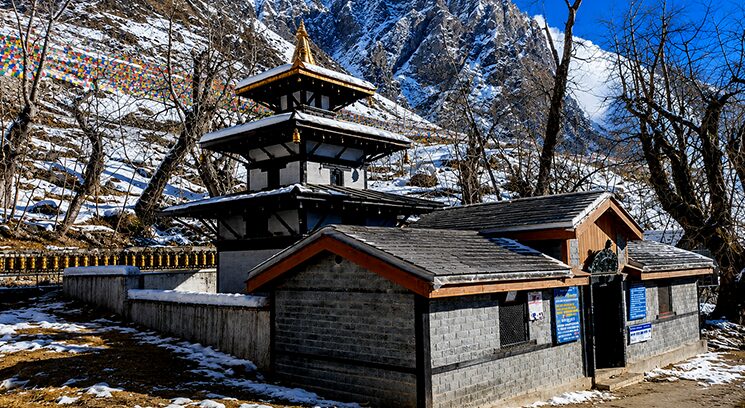
  • Muktinath: A sacred pilgrimage site for Hindus and Buddhists in the dramatic Mustang region, reached by a scenic flight from Pokhara to Jomsom. See our Muktinath Tour Package.
  • Short treks: Add a gentle trek such as the Poon Hill Trek near Pokhara or the Everest View Trek for close-up mountain views.

Quick Tips

  • Plan extensions early, especially for Bhutan and Tibet, as permits and visas take time to arrange.
  • Combine destinations wisely, for example, adding Lumbini after Chitwan, as the two are relatively close.
  • Keep your pace relaxed, and allow at least two nights in each new destination to enjoy it fully.
  • Check visa requirements if you’re adding Bhutan or Tibet, as each has its own entry rules.
  • Ask for a single combined quote, so all flights, hotels and permits are planned together.
  • Use our Trip Planner or Contact Us to start designing your personalized itinerary.

Safety, Support & Responsible Travel

Your safety and comfort come first on every Nepal Trip Services journey. From the moment you land in Kathmandu until your departure, you’ll be in the care of an experienced local team. We also believe in travelling in a way that respects Nepal’s people, culture and natural beauty.

Is Nepal Safe for Travelers?

Yes. Nepal is generally a safe and welcoming country for visitors, and Nepali people are known for their warmth, honesty and hospitality. The Nepal Luxury Tour adds extra peace of mind with private transport, trusted hotels and a dedicated guide throughout.

As with travel anywhere, a few sensible precautions help:

  • Petty theft: Pickpocketing can happen in crowded areas such as Thamel, busy temples and markets, so keep your valuables secure.
  • Road travel: Roads can be narrow and winding, which is why this tour uses domestic flights and experienced private drivers.
  • Protests and strikes: Political demonstrations or strikes occasionally take place, mainly in Kathmandu. Our team monitors local news closely and adjusts plans if needed.
  • Natural hazards: Nepal is an earthquake-prone country, and landslides can occur during the monsoon. Our hotels are well built, and our team keeps an eye on weather and road conditions.
  • Tourist Police: Kathmandu and Pokhara have dedicated Tourist Police units, reachable on the 1144 hotline.
  • Solo and female travelers: Nepal is a comfortable destination for solo and female travelers, especially on a private, fully guided tour like this one.

24/7 On-Trip Assistance

You’re never on your own during your trip. Our Kathmandu-based team is available around the clock to help with anything you need.

  • Airport welcome: A team member meets you on arrival and makes sure you’re settled at your hotel.
  • Pre-trip briefing: Your guide walks you through the itinerary, local customs and safety tips on Day 1.
  • Dedicated guide: An experienced, licensed guide stays with you throughout the trip.
  • Emergency support: In case of illness or an emergency, we’ll help you reach the best hospitals and clinics quickly and assist with insurance and evacuation arrangements.
  • Flexible changes: If flights are delayed or plans need to change, our team handles rebookings and alternatives for you.
  • Always reachable: You’ll receive our 24/7 emergency contact number before you travel.

Sustainable & Responsible Travel Practices

We want Nepal to stay as beautiful and welcoming for future travelers as it is today. That’s why we:

  • Support local communities by employing Nepali guides, drivers and staff and paying them fairly.
  • Work with locally owned hotels, lodges and businesses wherever possible, so tourism benefits the local economy.
  • Promote ethical wildlife experiences in Chitwan, focusing on jeep safaris, canoe rides and guided walks led by trained naturalists.
  • Encourage plastic-free travel by recommending reusable water bottles and refilling from safe, filtered water sources.
  • Respect local culture and traditions, and help our guests understand the customs of each region they visit.
  • Encourage buying local handicrafts directly from artisans and fair-trade shops.

Quick Tips

  • Keep copies of your passport, visa and insurance, both on paper and on your phone.
  • Use your hotel safe for passports, extra cash and valuables.
  • Save these emergency numbers: our 24/7 hotline, Tourist Police (1144), Police (100) and Ambulance (102).
  • Follow your guide’s advice, especially during safari activities and in crowded places.
  • Carry a reusable water bottle to reduce plastic waste.
  • Never feed or disturb wildlife, and always follow national park rules.
  • Leave only footprints, and take your litter with you wherever you go.

Frequently Asked Questions (FAQs)

1. What is the Nepal Luxury Tour?

The Nepal Luxury Tour is an 8-day private holiday that combines Nepal’s three most popular destinations: Kathmandu, Pokhara and Chitwan National Park. It is designed for travelers who want Nepal’s culture, mountain scenery and wildlife in comfort, with heritage and boutique hotels, domestic flights instead of long drives, private transport and a dedicated English-speaking guide throughout.

2. How many days is the tour, and what places does it cover?

The standard tour runs for 8 days and 7 nights. You spend three nights in Kathmandu, exploring UNESCO World Heritage Sites such as Pashupatinath, Boudhanath, Swayambhunath and Kathmandu Durbar Square. Next come two nights in Pokhara, with sunrise at Sarangkot, Phewa Lake, the World Peace Pagoda and more. The last two nights are in Chitwan, for jungle safaris, canoe rides and Tharu culture.

3. Who is this tour best suited for?

The tour suits almost anyone who enjoys comfortable travel: couples, honeymooners, families with children, friends traveling together, senior travelers and first-time visitors to Nepal. It involves no trekking and no high altitude, and the travel days are short, so you don’t need any special fitness or adventure experience to enjoy it.

4. Is this a private tour or a group tour?

It is a private tour only. You travel with your own family or group, not with strangers. Your guide, vehicle and schedule are dedicated to you, so you can move at your own pace, spend longer at places you love and skip anything that doesn’t interest you.

5. Can I join the tour as a solo traveler?

Yes, absolutely. Solo travelers are welcome, and you will still enjoy a fully private experience with your own guide and vehicle. The per-person cost for one traveler is higher than for a group, because transport, guiding and some hotel costs aren’t shared. A single room supplement may also apply at some hotels.

6. Can the itinerary be customized or extended?

Yes. The itinerary is a well-tested starting point, not a fixed package. You can add extra nights, change hotels, include destinations such as Bhaktapur, Patan, Nagarkot, Bandipur or Lumbini, or combine the tour with a short trek, an Everest helicopter flight or a trip to Bhutan or Tibet. Just tell us your interests, dates and budget, and our team will tailor the trip around you.

7. What kind of hotels will we stay in?

You’ll stay in some of the finest properties in each region. In Kathmandu, that means Dwarika’s Hotel or a similar luxury heritage hotel known for its traditional Newari architecture. In Pokhara, it means Dorje’s Resort & Spa or similar, a peaceful lakeside retreat. In Chitwan, it means Barahi Jungle Lodge or similar, a riverside lodge on the edge of the national park. If a listed hotel is fully booked, we’ll arrange one of equal standard.

8. Can I upgrade my rooms or choose different hotels?

Yes. We can arrange suites, premium rooms, villas or alternative five-star and boutique properties depending on availability and your preferences. Whether you’d like a mountain-view room, a private pool villa or a particular hotel brand, let us know when you enquire and we’ll adjust the quote.

9. Which meals are included in the package?

Breakfast is included every day. In Chitwan, all meals (breakfast, lunch and dinner) are included at the jungle lodge, along with a packed lunch on safari day. You’ll also enjoy a complimentary farewell dinner with a cultural show in Kathmandu. Lunches and dinners in Kathmandu and Pokhara aren’t included, which gives you the freedom to try the many excellent restaurants in both cities.

10. Can you cater to vegetarian, vegan or special dietary needs?

Yes. Vegetarian food is very common in Nepal, and luxury hotels and good restaurants can easily handle vegan, gluten-free, halal and allergy-friendly requests. Please share any dietary requirements or allergies when you book, and we’ll inform the hotels and your guide in advance.

11. How do we travel between Kathmandu, Pokhara and Chitwan?

You travel by domestic flights, which saves many hours on Nepal’s winding mountain roads. The flight from Kathmandu to Pokhara takes about 25 minutes. You then fly from Pokhara to Bharatpur and drive a short distance to your Chitwan lodge. The return flight from Bharatpur to Kathmandu takes about 30 minutes. All airport transfers and sightseeing are in a private, air-conditioned vehicle.

12. What happens if a domestic flight is delayed or cancelled?

Domestic flights in Nepal can occasionally be delayed by weather, especially during the monsoon and on foggy winter mornings. If this happens, our team will rebook you on the next available flight or arrange a comfortable private road transfer so your trip continues smoothly. We recommend not booking your international departure too tightly, and an extra buffer day in Kathmandu is always a good idea.

13. What is the maximum altitude, and is altitude sickness a concern?

The highest point on the tour is about 1,650 m (5,413 ft), around Sarangkot in Pokhara. Altitude sickness is not a concern at this height. Kathmandu sits at roughly 1,400 m, and Chitwan is in the lowlands, so the whole trip is comfortable for all ages. The only exception is the optional Everest Base Camp helicopter flight, which lands at high altitude for a short time only.

14. Do I need to be physically fit for this tour?

No special fitness is needed. The tour involves light walking around temples, heritage squares, viewpoints and villages, plus a gentle guided walk in the jungle. If you can walk comfortably for an hour or two at an easy pace, you’ll enjoy every part of it. Travelers with limited mobility should let us know so we can adjust the pace and plan accordingly.

15. When is the best time to do the Nepal Luxury Tour?

The best times are autumn, from September to December, and spring, from March to May. Autumn brings clear skies and the best mountain views of the year, while spring brings blooming rhododendrons, warm days and good wildlife sightings in Chitwan. That said, the tour can be done year-round, as all destinations are at low to moderate altitude.

16. Can I do the tour during the monsoon or winter?

Yes. In winter (December to February), days are usually sunny and clear, though mornings and nights are cold in Kathmandu and Pokhara, and fog can sometimes affect flights. During the monsoon (June to August), you’ll find lush green landscapes, fewer crowds and lower hotel rates, though mountain views can be hidden by cloud and some flights may be delayed. Parts of Chitwan’s jungle activities may also be limited in the peak monsoon.

17. What weather should I expect on the tour?

The weather varies by region and season. Kathmandu and Pokhara enjoy pleasant, mild days in spring and autumn, with cooler mornings and evenings. Chitwan is warmer and more humid, and it can get very hot from April to June. Winter brings cold nights to Kathmandu and Pokhara, while summer brings rain across the country. We’ll send you a detailed weather and packing note for your travel month after booking.

18. Do I need a visa to visit Nepal?

Most international visitors need a tourist visa, which you can get on arrival at Tribhuvan International Airport in Kathmandu or apply for online before you travel. Your passport should be valid for at least six months from your date of entry. Indian citizens don’t need a visa. Citizens of other SAARC countries receive a free 30-day visa, except for Afghan nationals, who pay the standard fee.

19. How much does the Nepal tourist visa cost?

Nepal’s multiple-entry tourist visa currently costs US$30 for 15 days, US$50 for 30 days and US$125 for 90 days. For the 8-day Nepal Luxury Tour, the 15-day visa is usually enough. Fees are best paid in cash in major currencies such as US dollars, euros or pounds. Visa fees can change, so we recommend checking with Nepal’s Department of Immigration shortly before you travel.

20. Is travel insurance required?

Travel insurance isn’t included in the tour price, but we strongly recommend it. Your policy should cover medical treatment, emergency evacuation, trip cancellation, lost baggage and flight delays. If you plan to take the Everest helicopter flight or try adventure activities such as paragliding, make sure your insurance covers those too.

21. Is the Everest helicopter flight included in the tour?

No, the Everest Base Camp helicopter flight is an optional add-on at extra cost. It is one of the most popular upgrades, as it takes you past Lukla and up the Khumbu Valley for close-up views of Mount Everest, with a landing at a viewpoint such as Kala Patthar or a stop near Base Camp, depending on conditions. It can be arranged on your Kathmandu sightseeing day or as an additional day, and it is weather-dependent. Ask us for current rates.

22. What other optional activities can I add?

Pokhara is Nepal’s adventure capital, so there’s plenty to add. Options include tandem paragliding over Phewa Lake, zip flying, hot air ballooning, ultralight flights, bungee jumping and a helicopter tour to Annapurna Base Camp or Mardi Himal Base Camp. In Kathmandu, you can also add an Everest mountain flight, a cooking class, a spa day or a visit to Bhaktapur and Patan.

23. What wildlife can I see in Chitwan National Park?

Chitwan is one of Asia’s best wildlife destinations and a UNESCO World Heritage Site. You have a very good chance of seeing the endangered one-horned rhinoceros, along with spotted deer, wild boar, monkeys, mugger crocodiles and hundreds of bird species. Bengal tigers, leopards and sloth bears also live here, but they are shy, so sightings require luck. Your jeep safari, canoe ride and guided jungle walk give you the best possible chances.

24. Can non-Hindus enter Pashupatinath Temple?

Non-Hindus can’t enter the main temple building at Pashupatinath, but you can still explore the wider temple complex, the riverside ghats and the surrounding shrines. From the opposite bank of the Bagmati River, you can respectfully watch the temple rituals and cremation ceremonies. Your guide will explain the history and traditions so you understand what you’re seeing.

25. Who will be our guide?

You’ll be accompanied by an experienced, government-licensed, English-speaking guide who knows Nepal’s history, religion, culture and wildlife in depth. In Chitwan, trained local naturalists lead the jungle activities. Guides in other languages, such as Spanish, French, German, Chinese or Japanese, can be arranged on request, subject to availability.

26. Is Nepal safe for tourists?

Yes, Nepal is generally a very safe and welcoming country for travelers, and Nepali people are known for their warmth and hospitality. As with travel anywhere, it’s wise to keep valuables secure, use hotel safes and stay aware in crowded areas. On this tour, you’ll always have a private vehicle, a trusted guide and reputable hotels, and our office team is on call 24/7 throughout your trip.

27. How much does the Nepal Luxury Tour cost?

The cost depends on your group size, travel dates, hotel choices and any optional add-ons. Larger groups pay less per person, because the vehicle, guide and flight-related costs are shared. Travelers who choose suites, premium hotels or helicopter flights will see a higher total. Contact Nepal Trip Services with your dates and group size, and we’ll send a clear, all-inclusive quote with no hidden charges.

28. How do I book the tour, and how can I pay?

Simply send us an enquiry or booking request with your preferred dates, number of travelers and any special requests. Once the itinerary is confirmed, you’ll pay a deposit to secure flights and hotels, and the balance is due before or on arrival. Payment can be made by bank transfer or credit card. Please note that card payments may carry a bank charge of about 4%.

29. What is your cancellation policy?

Our cancellation terms are explained clearly at the time of booking, and charges depend on how close to the departure date you cancel. Because luxury hotels and domestic flights often have their own cancellation rules, we strongly recommend travel insurance that covers trip cancellation. If you need to change your dates instead, we’ll do our best to reschedule with minimal or no charge.

30. What should I pack for the Nepal Luxury Tour?

Pack light, comfortable clothing in layers, plus a warm jacket or fleece for cool mornings and evenings, especially from October to March. Bring comfortable walking shoes, sunglasses, a sun hat, sunscreen and insect repellent for Chitwan. Neutral or earthy-colored clothes are best for the jungle safari. A light rain jacket, a reusable water bottle, a power adapter and a small daypack will also be useful.

31. Is there a dress code or etiquette for visiting temples?

Yes. When visiting temples and monasteries, wear modest clothing that covers your shoulders and knees. Remove your shoes and hat where required, and walk clockwise around stupas and prayer wheels. Avoid touching people’s heads or pointing your feet at sacred objects. Always ask before photographing people or rituals, and follow any “no photography” signs. Your guide will help you with local customs along the way.

32. What currency is used, and can I use cards and ATMs?

Nepal’s currency is the Nepali Rupee (NPR). ATMs are widely available in Kathmandu, Pokhara and Sauraha (near Chitwan), and luxury hotels, upscale restaurants and larger shops accept major credit cards. Smaller shops, local markets and tips are usually paid in cash, so it’s handy to carry some rupees. You can exchange money at the airport, banks and licensed money changers.

33. Will I have Wi-Fi and mobile network access?

Yes. All the hotels on this tour offer Wi-Fi, and mobile coverage is good across Kathmandu, Pokhara and Chitwan. If you’d like data on the go, you can buy a local tourist SIM card from Nepal Telecom or Ncell at the airport or in town by showing your passport. Many travelers also use eSIM plans for convenience.

34. What health precautions should I take?

There are no special health risks on this low-altitude tour, but we recommend visiting a travel clinic before your trip for advice on routine vaccinations and any recommended ones for Nepal. Drink only bottled, boiled or filtered water, eat freshly cooked food, and use insect repellent in Chitwan. Bring any personal medicines you need, along with a small first-aid kit.

35. Is tipping expected in Nepal?

Tipping isn’t compulsory, but it is a common and appreciated way to thank people for good service in Nepal’s tourism industry. Many travelers tip their guide, driver and hotel or lodge staff at the end of the trip. The amount is entirely at your discretion, based on your satisfaction. If you’d like guidance, our team will gladly suggest a fair range before you travel.


Save US$550 per person
Luxury Experience
Price From
US$ 2,649
per person (price varies by group size)
Special discounts are available based on the number of travelers in your group.
No. of People Price Per Person
1 Pax US$ 3,199
2 Paxes US$ 2,649
3-6 Paxes US$ 2,449
7-10 Paxes US$ 2,299
Note: Contact us for larger groups
Book This Trip
Labham
Speak to an Expert
Labham
Response Time 0-2 Hours | Response Rate 100%

Other Similar Tours

You may also like