

Head & Hands
- Warm wool or fleece hat (covering ears)
- Sun hat or cap for lower-altitude days
- Buff or neck gaiter
- Sunglasses with UV protection (category 3 or 4 for high altitude)
- Lightweight liner gloves
- Insulated, waterproof outer gloves or mittens

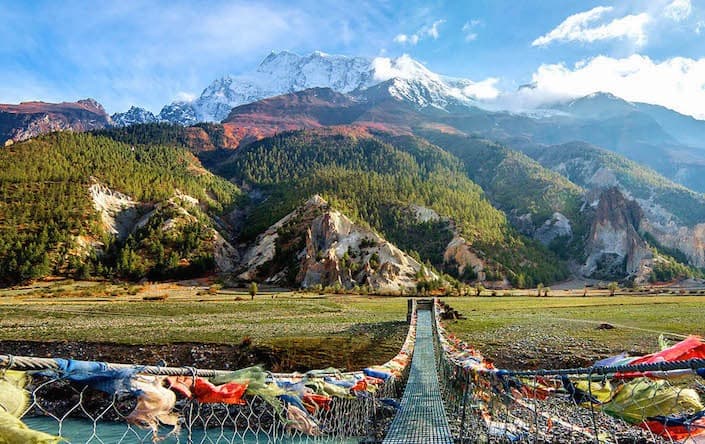
The Annapurna Circuit Trek is one of the most rewarding long-distance treks in the Nepal Himalaya, weaving through terraced farmland, dense rhododendron forest, and the high, arid villages of Manang before crossing the dramatic Thorong La Pass at 5,416 meters and descending into the sacred town of Muktinath. Spanning 13 days, this classic circuit rewards trekkers with an ever-changing landscape, warm Gurung and Thakali hospitality, and views of Annapurna, Manaslu, and Dhaulagiri along the way. Whether you're an experienced hiker chasing a bucket-list Himalayan pass or a first-timer looking for a well-supported adventure, Nepal Trip Services designs each Annapurna Circuit itinerary with proper acclimatization, licensed local guides, and comfortable teahouse stays, so you can focus on the journey rather than the logistics.
Choose the best time for your trek based on weather and trail conditions.
Mild and warming; generally dry with clear mornings
Clear, dry and stable; colder at high elevations
Cold and dry; snowfall and snow-blocked sections possible
If there's one trek that captures the full spectrum of Nepal's landscapes and culture in a single journey, it's the Annapurna Circuit Trek. In the span of two to three weeks, you'll move through subtropical rice terraces, dense rhododendron forests, arid Tibetan-influenced highlands, and finally the raw, high-altitude terrain of the Thorong La Pass — all without ever leaving the Annapurna massif's shadow. At Nepal Trip Services, we've refined our Annapurna Circuit itinerary over years of guiding to make sure trekkers experience this diversity at a pace that's both rewarding and safe.
The trek typically begins in the lush lowlands around Besisahar, where the trail winds along the Marsyangdi River past terraced farmland and traditional Gurung and Manangi villages. As you climb, the scenery shifts dramatically — forests give way to alpine meadows, and by the time you reach Manang, you're deep in a high desert landscape reminiscent of the Tibetan plateau. This gradual transformation is what makes the Annapurna Circuit one of the most varied trekking routes in the Himalayas, and frankly, one of the best treks in Nepal for anyone who wants more than just mountain views.
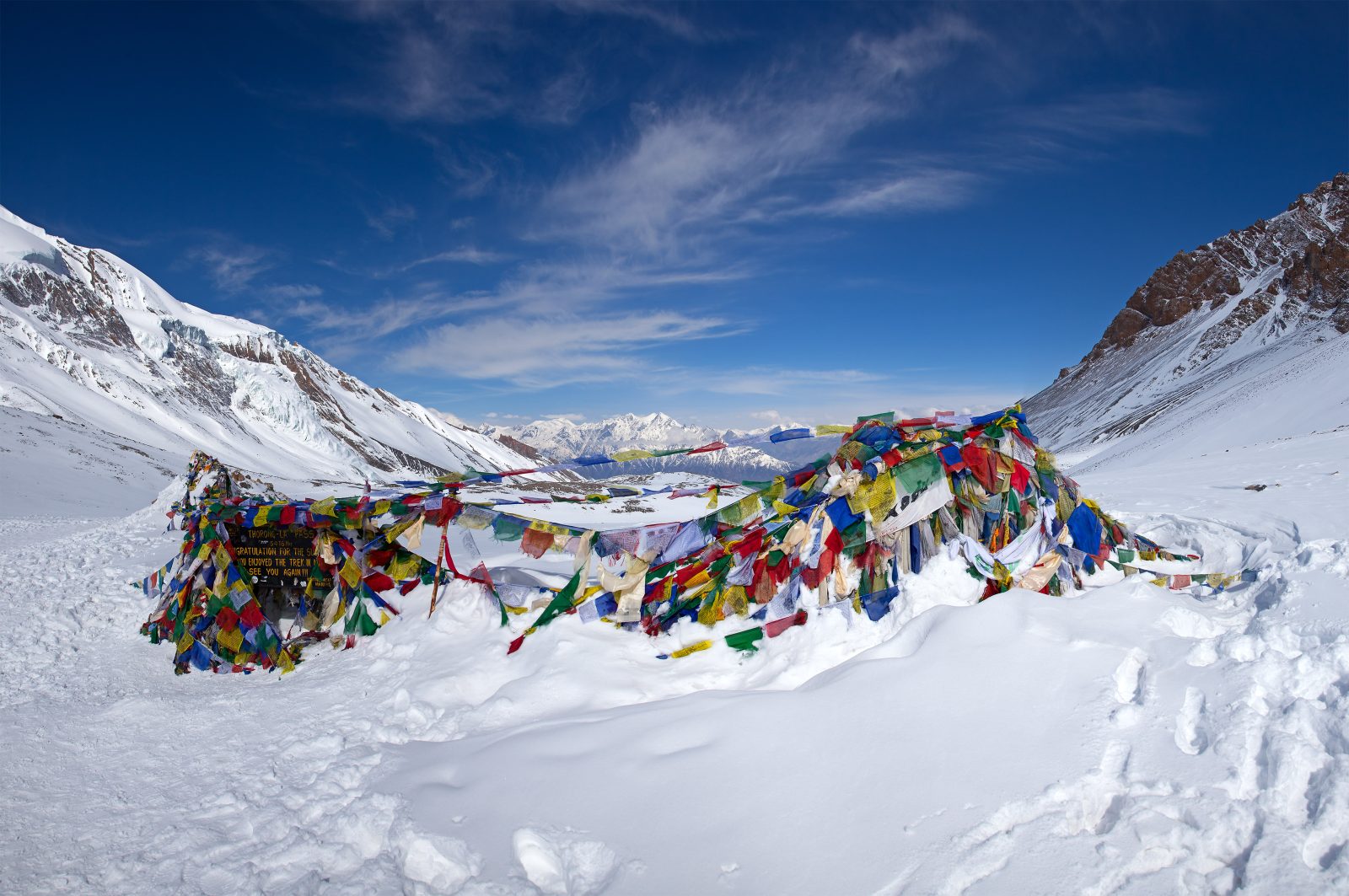
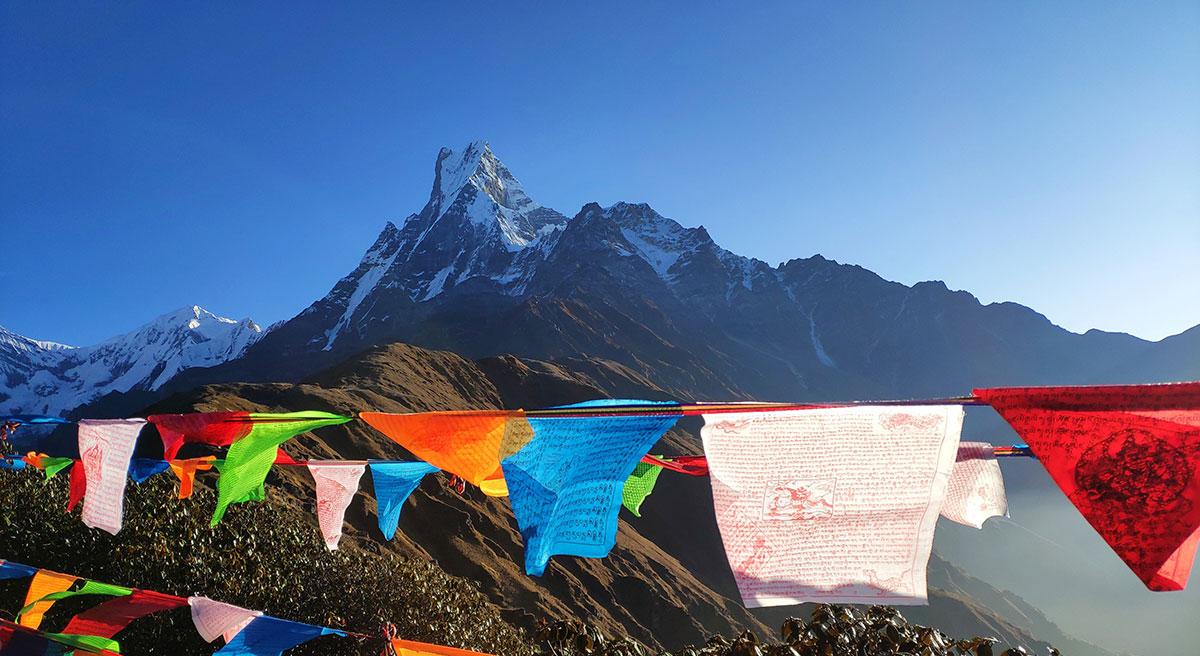
The heart of the trek — and its biggest test — is crossing Thorong La Pass, sitting at a formidable 5,416 meters. It's a long, cold, unforgettable day, and reaching the prayer-flag-draped summit before descending into the sacred pilgrimage town of Muktinath is one of those moments trekkers talk about for years. From there, the trail drops into the Kali Gandaki Gorge — the deepest gorge on Earth — passing through Marpha's apple orchards and the windswept trading town of Jomsom on the way back toward civilization.
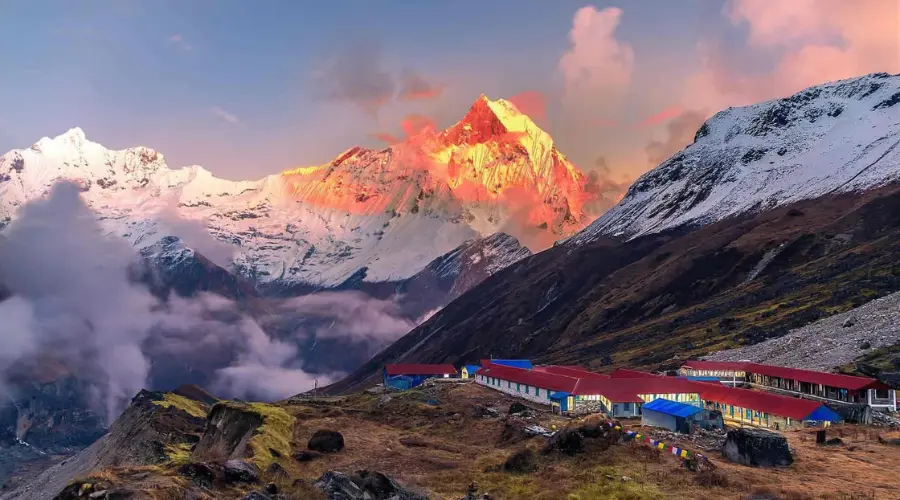
Acclimatization is built into every stage of this itinerary, with rest days positioned around Manang to help your body adjust before the pass. Along the route, you'll stay in cozy teahouses, share meals with fellow trekkers from around the world, and get up-close views of Annapurna I, Annapurna II, Gangapurna, Machapuchare (Fishtail), and Dhaulagiri — some of the highest peaks on the planet.
Culturally, the Annapurna Circuit is just as rich as it is scenic. You'll pass through villages shaped by Gurung, Thakali, and Manangi traditions, visit centuries-old monasteries, and get a genuine sense of how mountain communities have adapted to life in one of the world's most extreme environments.
With Nepal Trip Services handling your permits (ACAP and TIMS), accommodation, experienced local guides, and porter support, you can focus entirely on the trek itself — the switchbacks, the sunrises, the thin mountain air, and the quiet satisfaction of crossing one of the highest trekking passes on Earth. Whether you're a first-time high-altitude trekker or a seasoned adventurer, the Annapurna Circuit Trek offers a complete, unforgettable Himalayan experience.
Nothing on the Annapurna Circuit Trek quite prepares you for the moment you stand atop Thorong La Pass — at 5,416 meters, one of the highest trekking passes in the world. The climb begins in pre-dawn darkness, the cold biting and the air thin, as you wind through a stark, frozen landscape lit only by headlamps and the first hints of sunrise over the Annapurna range. It's a slow, demanding push, but every step feels earned, and when the summit's prayer flags finally come into view, the exhaustion gives way to something closer to awe. From the top, the views stretch across the Mustang region and down toward Muktinath, rewarding trekkers with a sense of accomplishment that few other trails in the world can match. For anyone tackling the Annapurna Circuit with Nepal Trip Services, crossing Thorong La isn't just the trek's toughest day — it's the moment the entire journey comes together.
The Annapurna Circuit Trek is often recommended as an achievable challenge for first-time high-altitude trekkers, provided you come in with a reasonable level of fitness and a realistic sense of what multi-day trekking involves. Unlike some of Nepal's more extreme routes, this trail eases you in gradually — starting at lower elevations and climbing steadily over several days — which gives your body genuine time to adapt before you approach the high point at Thorong La Pass. That said, "beginner-friendly" doesn't mean easy; long trekking days, unpredictable mountain weather, and the physical demands of altitude are all part of the experience. With proper preparation, a sensible pace, and the guidance of experienced local guides, most beginners with decent fitness and a determined mindset can successfully complete the Annapurna Circuit and walk away with one of the most rewarding achievements of their trekking life.
Trekking costs vary depending on trip duration, group size, season, and the level of service you choose. Below is a typical cost breakdown for the Annapurna Circuit Trek with Nepal Trip Services.
| Group Size | Price Per Person (USD) |
|---|---|
| 1 Person (Private) | $1,150 |
| 2 People | $1,100 |
| 3–6 People | $1,050 |
| 7–9+ People | $900 |
Note: Prices are indicative and may vary based on season, itinerary length, and customization. Contact Nepal Trip Services directly for an accurate, up-to-date quote tailored to your travel dates and group size.
The Annapurna Circuit Trek is generally rated as moderate to challenging, making it accessible to reasonably fit trekkers while still demanding genuine physical and mental stamina. Trekking days typically run five to seven hours, with steady ascents through varied terrain that gradually prepare your body for the trip's biggest hurdle — crossing Thorong La Pass at 5,416 meters. Altitude, rather than technical difficulty, is the main challenge here; thinner air, colder temperatures, and long summit-day hours test even experienced hikers, which is why a well-paced itinerary with proper acclimatization days matters more than raw fitness alone. With sensible preparation, a realistic training routine beforehand, and the support of experienced local guides, most trekkers with average fitness and a determined attitude find the Annapurna Circuit a demanding but entirely achievable adventure.
Getting to and from the trailhead is part of the adventure itself on the Annapurna Circuit Trek, involving a mix of road travel and a short scenic mountain flight. The journey typically begins with a 7 to 8-hour drive from Kathmandu to Dharapani, winding along winding mountain roads that offer early glimpses of the terraced hills you'll soon be trekking through. After completing the circuit and descending into Jomsom, you'll either catch a quick 20 to 25-minute flight to Pokhara — offering stunning aerial views of the Annapurna range — or opt for a longer scenic drive if flights are delayed due to weather, which is common in the mountains. From Pokhara, a final 6 to 7-hour drive returns you to Kathmandu, completing the loop. Nepal Trip Services arranges all transportation as part of the trekking package, handling the logistics of both road and air travel so you can focus entirely on the trek itself rather than transit planning.
| Day | Route Description | Altitude | Duration | Distance (approx.) |
|---|---|---|---|---|
| Day 1 | Arrival in Kathmandu (TIA), Nepal | 1,400m / 4,593ft | — | — |
| Day 2 | Drive from Kathmandu to Dharapani | 1,860m / 6,102ft | 7–8 hrs (Drive) | ~175 km |
| Day 3 | Trek from Dharapani to Chame | 2,610m / 8,890ft | 5–6 hrs (Trek) | ~15 km |
| Day 4 | Trek from Chame to Upper Pisang | 3,300m / 10,826ft | 5–6 hrs (Trek) | ~14 km |
| Day 5 | Trek from Upper Pisang to Manang | 3,540m / 11,614ft | 5–6 hrs (Trek) | ~12 km |
| Day 6 | Rest and Acclimatization Day in Manang | 3,540m / 11,614ft | 2–3 hrs (Optional Hike) | Short acclimatization hikes |
| Day 7 | Trek from Manang to Yak Kharka | 4,020m / 13,188ft | 3–4 hrs (Trek) | ~9 km |
| Day 8 | Trek from Yak Kharka to Thorong Phedi | 4,525m / 14,525ft | 3–4 hrs (Trek) | ~8 km |
| Day 9 | Trek from Thorong Phedi to Muktinath via Thorong La Pass | 5,416m / 17,756ft (Pass) → 3,760m / 12,631ft (Muktinath) | 7–9 hrs (Trek) | ~15 km |
| Day 10 | Trek from Muktinath to Jomsom | 2,700m / 8,858ft | 4–5 hrs (Trek) | ~16 km |
| Day 11 | Flight (or Drive) from Jomsom to Pokhara | 822m / 2,700ft | 20–25 mins (Flight) / 6–7 hrs (Drive Option) | ~140 km |
| Day 12 | Drive from Pokhara to Kathmandu | 1,400m / 4,593ft | 6–7 hrs (Drive) | ~200 km |
| Day 13 | Final Departure | 1,400m / 4,593ft | — | Transfer to airport |
Note: Trekking hours may vary depending on individual pace, weather conditions, and rest breaks. Distances are approximate and can shift slightly depending on the exact trail variation taken. This itinerary includes a dedicated acclimatization day in Manang to ensure a safe and gradual ascent before crossing Thorong La Pass. Nepal Trip Services can customize the duration or add extra buffer days upon request.
Throughout the Annapurna Circuit Trek, you'll stay in cozy teahouses and mountain lodges run by local families — a setup that's as much about cultural immersion as it is about comfort. Rooms are typically simple, twin-sharing setups with a bed, blankets, and shared bathroom facilities, though a few larger villages like Manang and Chame offer basic attached-bathroom options for a bit of extra comfort. As you climb higher toward Thorong Phedi and Muktinath, accommodations naturally become more rustic, but the warmth of Sherpa and Manangi hospitality more than makes up for the simplicity, and most lodges provide extra blankets and hot water bags to keep you comfortable through the colder nights.
Meals along the trail are hearty, energy-focused, and designed to fuel long trekking days at altitude. Breakfast usually includes options like porridge, eggs, pancakes, or Tibetan bread with honey, while lunch and dinner menus feature staples such as dal bhat (Nepal's traditional lentil, rice, and vegetable meal), noodles, soups, momos, and pasta dishes — most teahouses along the route offer similar menus with slight regional variations. Fresh vegetables and fruit become less common at higher elevations, but the food remains filling and well-suited to sustaining energy levels throughout the trek. With Nepal Trip Services, all standard meals and teahouse accommodation are arranged as part of your trekking package, so you can focus on the trail rather than logistics.
Trekking in the Annapurna region requires two mandatory permits. Both are essential for legal entry into the trekking route and are checked at multiple checkpoints along the trail.
| Permit Name | Full Form | Cost (Foreign Nationals) | Cost (SAARC Nationals) | Issued By |
|---|---|---|---|---|
| ACAP | Annapurna Conservation Area Permit | NPR 3,000 (~$23) | NPR 1,500 (~$11) | Nepal Tourism Board / ACAP Entry Point |
| TIMS Card | Trekkers' Information Management System | NPR 2,000 (~$15) | NPR 1,000 (~$8) | Nepal Tourism Board / TAAN |
| Detail | Information |
|---|---|
| Required Documents | Valid passport, passport-size photos (2–4 copies) |
| Where to Obtain | Nepal Tourism Board Office, Kathmandu or Pokhara |
| Validity | Valid for the entire duration of the trek (single entry) |
| Checkpoints | Checked at Besisahar/Chame entry point and Ghasa/Tatopani region |
| Solo Trekkers | TIMS Card now mandatory for both solo and guided trekkers |
| Arranged By | Nepal Trip Services (included in trekking package) |
Note: Permit fees are subject to change based on Nepal Tourism Board and ACAP regulations. Both permits are included in your trekking package cost when booking with Nepal Trip Services, and our team handles all paperwork and processing so you don't need to arrange anything separately before your trek.
Trekking the Annapurna Circuit with an experienced local guide transforms the journey from a simple hike into a genuinely enriching cultural and educational experience. Nepal Trip Services provides government-licensed, English-speaking guides who know the trail intimately — from the safest acclimatization pace to the subtle signs of altitude sickness that untrained eyes might miss. Beyond navigation and safety, guides bring the region to life, sharing insights into Gurung and Manangi traditions, local folklore, and the practical wisdom that comes from years of walking these same mountains. For solo trekkers especially, having a knowledgeable guide by your side adds both confidence and a deeper connection to the places you're passing through.
Porters, meanwhile, are the quiet backbone of a comfortable trek, carrying your heavier gear so you can focus your energy on the trail itself rather than the weight on your back. Typically, one porter is assigned per two trekkers, carrying up to 20–25 kg combined, which noticeably eases the physical strain of long trekking days and steep ascents toward Thorong La Pass. Hiring local porters isn't just a matter of convenience — it directly supports mountain communities and the regional economy that depends on trekking tourism. With Nepal Trip Services, both guides and porters are fairly paid, properly insured, and equipped for high-altitude conditions, reflecting our commitment to responsible and ethical trekking practices throughout the Annapurna region.
There's no strict age limit for the Annapurna Circuit Trek, and trekkers of a wide range of ages successfully complete it every season — from teenagers on family adventures to retirees in their sixties and beyond. What matters far more than a number on paper is genuine physical fitness, prior hiking experience, and a realistic understanding of what high-altitude trekking demands, since the trail's long days and thinning air at Thorong La Pass challenge the body regardless of age. Generally, Nepal Trip Services recommends the trek for trekkers between 10 and 65 years old, though younger children and older adults can still take part with proper preparation, a slower itinerary, and medical clearance where appropriate. For older or younger trekkers, we're happy to customize the pace, add extra acclimatization days, or arrange additional support to ensure the journey remains safe, enjoyable, and achievable for every member of the group.
Your Annapurna Circuit adventure begins the moment you land at Tribhuvan International Airport (TIA) in Kathmandu. A Nepal Trip Services representative will meet you at the airport and transfer you to your hotel. Depending on your arrival time, spend the rest of the day settling in, exchanging currency, and picking up any last-minute trekking gear from Thamel's outdoor shops. In the evening, join your guide for a pre-trek briefing covering your itinerary, packing checklist, and permit documentation.
An early start today as you leave the Kathmandu Valley behind on a scenic 7–8 hour drive along the Prithvi Highway and Marsyangdi River valley to Dharapani, gateway to the Annapurna Circuit. The road winds through terraced hillsides, past rushing rivers and small roadside villages, with the landscape turning progressively more mountainous as you gain altitude. Arriving in Dharapani, a traditional Gurung and Manangi village, marks your first proper taste of trekking country.
Distance: Approx. 180 km by road
Today marks your first full trekking day. The trail follows the Marsyangdi River through forests of pine, oak, and maple, passing traditional villages and mani walls along the way. As you approach Chame, the district headquarters of Manang, the valley narrows and your first close-up views of Annapurna II and Lamjung Himal come into view. Natural hot springs near Chame make for a welcome, muscle-soothing stop after a full day's walk.
Leaving Chame, the trail climbs through pine forest and past a striking curved rock face before opening into wider valley views. Choosing the Upper Pisang route rather than the lower trail rewards you with better mountain panoramas and a more authentic village experience, as Upper Pisang retains traditional stone-and-timber architecture. Expect your first real sense of high-altitude scenery today, with the Annapurna range beginning to dominate the skyline.
Distance: Approx. 15–16 km | Duration: 5–6 hours
Overnight: Teahouse in Upper Pisang
Today's trail is one of the most scenic on the entire circuit. Taking the upper route via Ghyaru and Ngawal offers sweeping views of Annapurna II, III, IV, and Gangapurna, along with a noticeably drier, high-desert landscape as trees thin out. Arriving in Manang, the trek's cultural and logistical hub, you'll find bakeries, monasteries, and a lively trekker atmosphere — a good sign of the rest day ahead.
Distance: Approx. 15 km | Duration: 5–6 hours
Overnight: Teahouse in Manang
A critical, non-negotiable day for altitude adjustment. Rather than resting entirely, Nepal Trip Services guides recommend an active acclimatization hike — options include the steep climb to Ice Lake (Kicho Tal) at over 4,600 m, or the shorter, easier walk to Gangapurna Lake. Both hikes follow the "climb high, sleep low" principle, helping your body adapt before pushing higher. Use the afternoon to explore Manang's monasteries, rest properly, and prepare gear for the higher, colder days ahead.
Overnight: Teahouse in Manang (second night)
Leaving Manang, the landscape shifts dramatically — trees disappear, and the trail enters open, high-altitude scrubland grazed by yaks and blue sheep. The walk is shorter today, deliberately paced to support gradual acclimatization as you cross the 4,000 m threshold. Keep an eye out for Himalayan wildlife along the exposed hillsides, and expect noticeably colder temperatures as evening sets in.
Distance: Approx. 9–10 km | Duration: 3–4 hours
Overnight: Teahouse in Yak Kharka
A shorter but important day, both in distance and altitude gain, as you move closer to Thorong La. The trail crosses a couple of exposed, sometimes landslide-prone sections before reaching Thorong Phedi ("Phedi" meaning "base of the hill"), the final major stop before the pass. Rest well and prepare your gear tonight — layers, headlamp, and water — as tomorrow begins early.
Distance: Approx. 7–8 km | Duration: 3–4 hours
Overnight: Teahouse in Thorong Phedi
The most demanding and rewarding day of the entire Annapurna Circuit. Departing well before sunrise — typically around 4:30–5:30 AM — to beat the afternoon winds, you'll make a steady, high-altitude climb to Thorong La Pass, the highest point of the trek at 5,416 m. Reaching the pass, marked by fluttering prayer flags and panoramic Himalayan views, is a genuine high point of the journey. From there, a long, steep descent leads down to Muktinath, the sacred pilgrimage site home to the revered Muktinath Temple.
Distance: Approx. 15–17 km | Duration: 7–9 hours
Overnight: Teahouse in Muktinath
A short, scenic morning flight from Jomsom to Pokhara caps off the trekking portion of your journey, offering aerial views of the Annapurna and Dhaulagiri ranges (weather permitting; flights operate early morning due to wind conditions). A road option is also available for those who prefer overland travel. Arriving in Pokhara, a relaxed lakeside city on Phewa Lake, gives you the chance to unwind, shower properly, and reflect on the trek over a well-earned meal.
Duration: 20-minute flight or 6–7 hour drive
Overnight: Hotel in Pokhara
A scenic 6–7 hour drive returns you to Kathmandu, following the Trishuli River and passing through the same lowland scenery you left nearly two weeks earlier — a fitting bookend to the trek. A domestic flight option is also available for those short on time. Spend your evening in Kathmandu picking up souvenirs, enjoying a farewell dinner, or simply resting after the journey.
Duration: 6–7 hours by road (or 25-minute flight)
Overnight: Hotel in Kathmandu
Your Annapurna Circuit journey concludes today. Depending on your flight schedule, enjoy a final morning in Kathmandu — perhaps a visit to Boudhanath Stupa or Durbar Square — before a Nepal Trip Services representative transfers you to the airport for your onward flight home.
Are you interested in planning a custom trip? It only takes 2 minutes.
Note: Having a clear picture of what's included and excluded makes it much easier to plan your trekking budget realistically. While the core package with Nepal Trip Services covers all the essentials, it's worth setting aside a daily allowance for extras like hot showers, Wi-Fi, and bottled water — prices for these tend to rise the higher you climb.
Essential packing and gear checklist tailored for this trek.


The Annapurna Circuit isn't just a trail — it's a journey through some of the most varied and memorable stops in the Nepal Himalaya. Here are the 15 places Nepal Trip Services recommends you don't rush past.
Besisahar is the traditional starting point of the Annapurna Circuit Trek, a bustling market town in the Marsyangdi Valley where paved roads give way to mountain trails. It's here that the transition from Nepal's warm lowlands into the high Himalaya truly begins, with your first glimpses of terraced hillsides and distant snow peaks.
Chame, the administrative headquarters of Manang district, is where the Annapurna Circuit starts to feel genuinely alpine. Set among pine forests along the Marsyangdi River, Chame offers your first close-up views of Annapurna II and Lamjung Himal, along with natural hot springs where trekkers often soak their legs after a long day's walk.
Upper Pisang is a traditional stone-and-timber village perched above the main trail, offering a quieter, more scenic alternative route toward Manang. Trekkers who take this higher path through Upper Pisang are rewarded with some of the earliest and most striking views of the Annapurna range, along with a closer look at authentic Manangi architecture and culture.
Braga is a centuries-old village just below Manang, home to one of the oldest and most revered monasteries in the region, Braga Gompa. Built into the cliffside above the village, this Buddhist monastery houses ancient statues and manuscripts, making Braga a quietly powerful cultural stop that many trekkers almost walk past without realizing.
Manang is the cultural and logistical heart of the entire Annapurna Circuit Trek. This high-altitude village, sitting at 3,540 m, is where trekkers spend a mandatory acclimatization day, exploring centuries-old monasteries, browsing local bakeries, and soaking in sweeping views of Annapurna III, Gangapurna, and Chulu ranges from its rooftops.
Gangapurna Lake is a striking glacial lake just below Manang, fed directly by meltwater from the Gangapurna Glacier above it. This short, easy side trip rewards visitors with turquoise water framed by ice cliffs and rock, making Gangapurna Lake one of the most photographed spots near Manang.
Ice Lake, also known as Kicho Tal, is a challenging but highly rewarding acclimatization hike from Manang. Reaching over 4,600 m, Ice Lake offers panoramic views across the Annapurna and Chulu ranges, and the demanding climb up to Ice Lake makes it one of the best natural ways to prepare your body for higher altitudes ahead.
Yak Kharka is a remote, high-altitude settlement above Manang where yaks graze freely across open scrubland. Passing through Yak Kharka marks a clear shift in the trek's character, as the landscape turns starker and the air noticeably thins with every step higher.
Thorong Phedi (4,450 m) and High Camp (4,850 m) are the final staging points before crossing Thorong La. These dramatic, wind-swept settlements are where trekkers rest, eat an early dinner, and sleep briefly before the pre-dawn push over the pass — Thorong Phedi and High Camp both offer basic but welcome shelter at this exposed altitude.
Thorong La Pass, at 5,416 m, is the undisputed highlight and highest point of the entire Annapurna Circuit Trek. Marked by fluttering prayer flags and cairns, Thorong La Pass rewards trekkers with sweeping, 360-degree Himalayan views on a clear day, making the long, cold ascent feel entirely worth it.
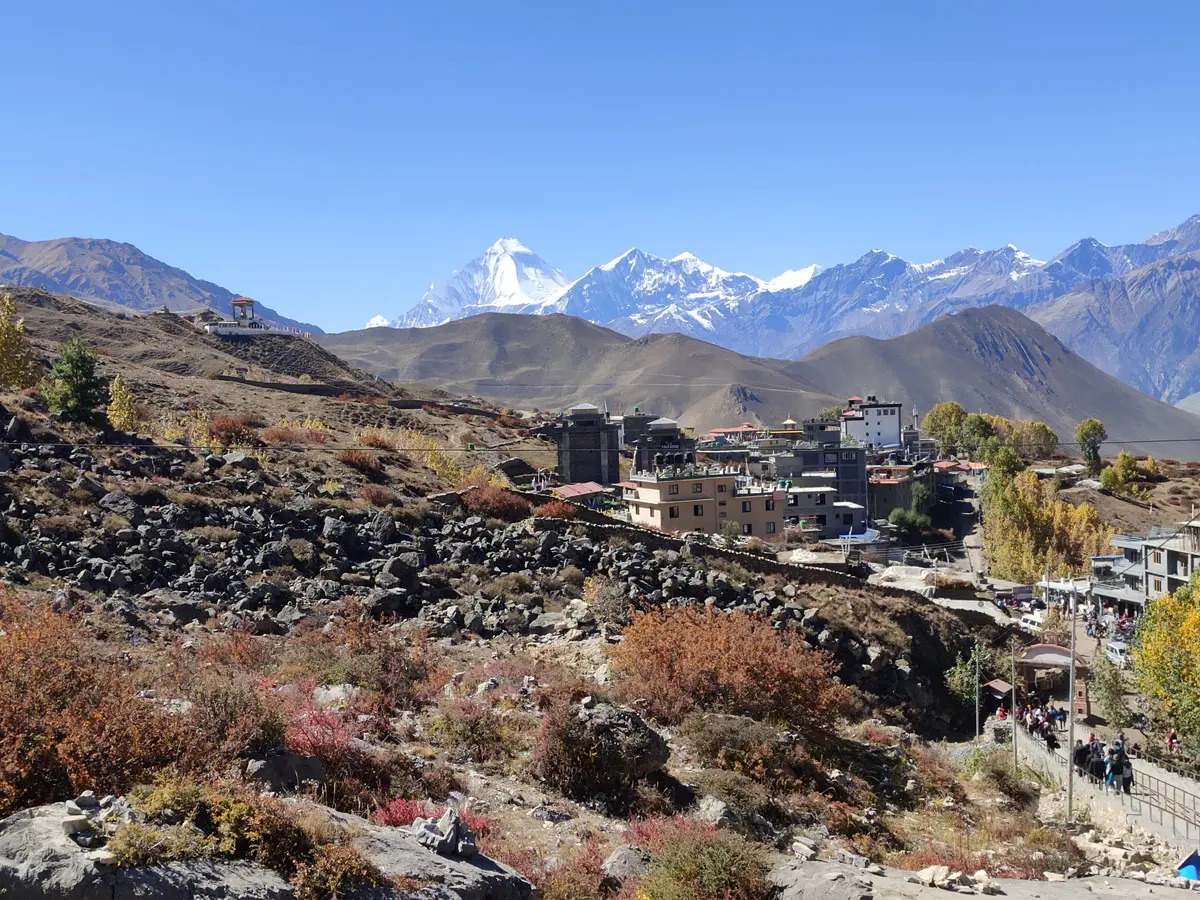
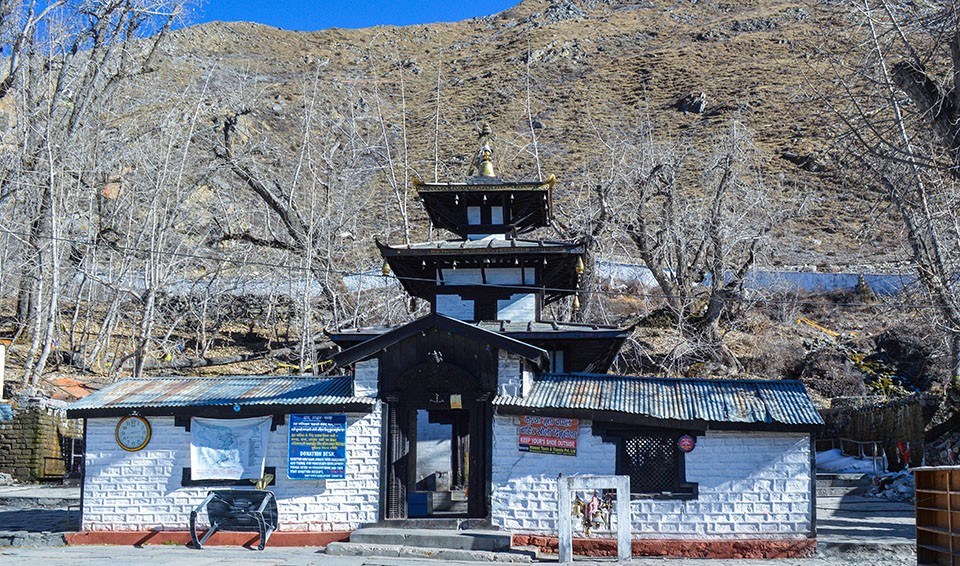
Muktinath is a sacred pilgrimage site revered by both Hindus and Buddhists, home to the Muktinath Temple and its famous 108 water spouts. Arriving in Muktinath after crossing Thorong La is a powerful moment on the trek, combining physical relief with deep cultural and spiritual significance.
Kagbeni is a striking medieval village at the gateway to Upper Mustang, with narrow stone alleys, ancient chortens, and crumbling monastery walls. The stark, desert-like landscape surrounding Kagbeni feels unlike anywhere else on the Annapurna Circuit, offering a glimpse into Mustang's Tibetan-influenced culture.
Marpha, known as Nepal's "apple capital," is an immaculately kept Thakali village famous for its whitewashed stone houses and locally distilled apple brandy. A stop in Marpha offers a welcome dose of charm, good food, and relaxed village life after days spent at high altitude.
Jomsom is the administrative center of Mustang and the trek's usual exit point, offering both flight and road connections onward to Pokhara. Most Annapurna Circuit itineraries end their walking days in Jomsom, from where trekkers can either fly out quickly or continue by road for more mountain scenery.
Pokhara is the scenic finale to the Annapurna Circuit Trek — a relaxed lakeside city where trekkers unwind with mountain views over Phewa Lake. After weeks on the trail, Pokhara's cafes, lake walks, and mountain panoramas offer a well-earned and comfortable end to the adventure.
Nepal Trip Services' tip: Don't rush past Braga — its ancient monastery is often overlooked in favor of Manang just next door, but it's one of the most atmospheric cultural stops on the entire circuit.
Understanding the daily distance and walking hours helps you mentally and physically prepare for what each stage of the Annapurna Circuit demands. Here's a detailed breakdown by trekking day.
| Route Section | Distance (approx.) | Walking Hours | Difficulty Level |
|---|---|---|---|
| Dharapani to Chame | ~15 km | 5–6 hrs | Moderate |
| Chame to Upper Pisang | ~14 km | 5–6 hrs | Moderate |
| Upper Pisang to Manang | ~12 km | 5–6 hrs | Moderate |
| Manang (Acclimatization) | 3–5 km (optional hike) | 2–3 hrs | Easy |
| Manang to Yak Kharka | ~9 km | 3–4 hrs | Moderate |
| Yak Kharka to Thorong Phedi | ~8 km | 3–4 hrs | Moderate to Hard |
| Thorong Phedi to Muktinath (via Thorong La Pass) | ~15 km | 7–9 hrs | Hard (Strenuous) |
| Muktinath to Jomsom | ~16 km | 4–5 hrs | Moderate |
| Metric | Details |
|---|---|
| Total Trekking Distance | Approximately 160–230 km (depending on starting point and route variation) |
| Total Trekking Days | 8–10 days of active trekking (within a 12–13 day itinerary) |
| Average Daily Walking Hours | 5–6 hours per day |
| Longest Trekking Day | Thorong Phedi to Muktinath (7–9 hrs, via Thorong La Pass) |
| Shortest Trekking Day | Manang Acclimatization Hike (2–3 hrs, optional) |
Note: Walking hours and distances are approximate and can vary based on individual pace, weather conditions, trail detours, and rest stops. Trekkers should expect these figures to shift slightly depending on fitness level and how many breaks are taken along the way. Nepal Trip Services designs each itinerary with realistic daily targets, ensuring a comfortable balance between distance covered and proper acclimatization.
The Annapurna Circuit Trek follows one of the most geographically diverse routes in the Nepal Himalayas, tracing a wide loop around the Annapurna massif rather than a simple there-and-back trail. The journey begins with a scenic drive from Kathmandu to Dharapani, entering the trail along the Marsyangdi River valley, where terraced farmland and dense forest gradually give way to higher, drier terrain as you pass through Chame, Upper Pisang, and into Manang — the region's cultural and acclimatization hub. From Manang, the route climbs steadily through Yak Kharka and Thorong Phedi, setting up for the trek's defining stage: the crossing of Thorong La Pass at 5,416 meters, followed by a long descent into the sacred town of Muktinath. From there, the trail continues down through the dramatic Kali Gandaki Gorge to Jomsom, before a short mountain flight (or scenic drive) connects you to Pokhara, and finally back to Kathmandu by road. This west-to-east loop is what makes the Annapurna Circuit so distinctive — trekkers experience an entire spectrum of Himalayan landscapes, climates, and cultures within a single continuous route, all carefully mapped out in Nepal Trip Services' standard itinerary for a smooth, well-paced journey from start to finish.
Kathmandu → Dharapani → Chame → Upper Pisang → Manang → Yak Kharka → Thorong Phedi → Thorong La Pass (5,416m) → Muktinath → Jomsom → Pokhara → Kathmandu
| Stage | Route Point | Altitude |
|---|---|---|
| 1 | Kathmandu (Start) | 1,400m / 4,593ft |
| 2 | Dharapani | 1,860m / 6,102ft |
| 3 | Chame | 2,610m / 8,890ft |
| 4 | Upper Pisang | 3,300m / 10,826ft |
| 5 | Manang | 3,540m / 11,614ft |
| 6 | Yak Kharka | 4,020m / 13,188ft |
| 7 | Thorong Phedi | 4,525m / 14,525ft |
| 8 | Thorong La Pass (Highest Point) | 5,416m / 17,756ft |
| 9 | Muktinath | 3,760m / 12,631ft |
| 10 | Jomsom | 2,700m / 8,858ft |
| 11 | Pokhara | 822m / 2,700ft |
| 12 | Kathmandu (End) | 1,400m / 4,593ft |
This west-to-east route sequence forms the core structure of the Annapurna Circuit Trek, taking trekkers from Kathmandu's lowlands through the Marsyangdi valley, over the high-altitude Thorong La Pass, and back through Pokhara to complete the loop. Nepal Trip Services follows this proven route sequence to ensure safe acclimatization and a logically paced journey at every stage.
Altitude sickness, medically known as Acute Mountain Sickness (AMS), is one of the most important safety considerations on the Annapurna Circuit Trek, given that the route climbs to 5,416 meters at Thorong La Pass — well within the range where reduced oxygen levels can genuinely affect the body. As you ascend above roughly 2,500 to 3,000 meters, your body needs time to adjust to thinner air, and pushing too high too fast is the single biggest risk factor for developing symptoms, regardless of age or fitness level. This is precisely why the itinerary includes a dedicated acclimatization day in Manang (3,540m) — a strategic pause that allows your body's oxygen-carrying capacity to catch up before continuing toward the higher, more demanding sections of the trail.
| Mild Symptoms | Moderate to Severe Symptoms |
|---|---|
| Headache | Severe headache unrelieved by medication |
| Fatigue or weakness | Shortness of breath at rest |
| Loss of appetite | Confusion or loss of coordination |
| Nausea or dizziness | Persistent vomiting |
| Difficulty sleeping | Fluid buildup in lungs or brain (HAPE/HACE) |
Note: Altitude sickness can affect anyone, regardless of age, fitness level, or previous trekking experience, which is why listening to your body and communicating symptoms early is critical. With proper acclimatization, pacing, and the support of experienced guides from Nepal Trip Services, the vast majority of trekkers cross Thorong La Pass safely and comfortably.
Proper physical preparation is one of the most important factors separating a genuinely enjoyable Annapurna Circuit experience from a grueling, exhausting one. While the trek doesn't require elite athletic ability or technical climbing skills, it does demand sustained cardiovascular endurance and leg strength, since you'll be walking 5 to 7 hours daily over consecutive days, often on uneven terrain and steady inclines. Building this kind of stamina takes consistent preparation — not a last-minute gym sprint — which is why starting your training routine 8 to 12 weeks before departure gives your body enough time to genuinely adapt.
| Timeframe | Focus Area | Suggested Activities |
|---|---|---|
| 10–12 weeks before | Base cardiovascular fitness | Brisk walking, jogging, cycling, swimming (3–4x/week) |
| 6–8 weeks before | Leg strength & endurance | Stair climbing, hill hikes, squats, lunges |
| 4–6 weeks before | Load-bearing practice | Hiking with a weighted daypack (8–10 kg) on hilly terrain |
| 2–4 weeks before | Trek simulation | Long-distance hikes (4–6 hrs), back-to-back walking days |
| 1–2 weeks before | Taper & recovery | Light activity, stretching, rest, gear testing |
Note: You don't need to be an elite athlete to complete the Annapurna Circuit Trek, but consistent preparation dramatically improves your comfort, reduces injury risk, and makes the overall experience far more enjoyable. Nepal Trip Services is happy to advise on a personalized training approach based on your current fitness level and trekking experience.
A trip is confirmed once we receive your completed booking form along with the required deposit (typically 20–30% of the total trip cost). A confirmation email with your booking reference, itinerary, and payment schedule will be sent within 24 hours.
The remaining balance is due no later than 15–30 days before departure, or in full at the time of booking for trips confirmed within that window. Payments can be made via bank transfer, credit/debit card, or approved online payment gateways. All prices are quoted in USD unless otherwise stated.
| Cancellation Notice | Refund |
|---|---|
| 30+ days before departure | Full refund minus deposit |
| 15–29 days before departure | 50% refund of total cost |
| 7–14 days before departure | 25% refund of total cost |
| Less than 7 days / no-show | No refund |
Deposits are non-refundable in all cases, as they cover permits, advance lodge bookings, and staff arrangements made on your behalf.
We reserve the right to modify itineraries, accommodations, or departure dates due to weather, trail conditions, government regulations, or safety concerns. Where possible, equivalent alternatives will be offered at no extra cost. In rare cases requiring significant changes, any cost difference will be communicated transparently before proceeding.
Comprehensive travel insurance is mandatory for all trekkers, covering high-altitude trekking (up to 6,000 m), emergency medical treatment, helicopter evacuation, and trip cancellation. Proof of insurance must be shared before departure. Nepal Trip Services does not provide insurance and is not liable for costs arising from inadequate coverage.
Trekkers are responsible for disclosing any pre-existing medical conditions and ensuring they are fit for high-altitude trekking. We recommend a medical check-up before booking. Our guides are trained in basic first aid and altitude sickness management, but Nepal Trip Services is not liable for health complications arising from undisclosed conditions.
Trekkers must hold a valid passport (minimum 6 months validity) and arrange their own Nepal visa, either on arrival or in advance. Nepal Trip Services arranges all trekking permits (ACAP, TIMS, etc.) as part of the package, provided accurate passport details and photos are submitted on time.
Nepal Trip Services acts as the organizer of trekking services and works with licensed guides, porters, and local partners. While every reasonable precaution is taken for your safety, we are not liable for injury, illness, loss, delay, or death arising from natural hazards, third-party services, or circumstances beyond our reasonable control.
Nepal Trip Services is not responsible for delays, cancellations, or itinerary changes caused by events beyond our control, including natural disasters, political unrest, flight cancellations, epidemics, or government-imposed restrictions. Any additional costs incurred due to such events are the responsibility of the trekker.
Trekkers are expected to respect local culture, environment, and community guidelines throughout the trek, including adherence to Leave No Trace principles in the Annapurna Conservation Area.
These terms are governed by the laws of Nepal. Any disputes will first be addressed through good-faith negotiation between the trekker and Nepal Trip Services.
One important note: since this becomes a legally binding document once published on your site, I'd strongly recommend having a lawyer in Nepal (or one familiar with Nepal's tourism regulations) review and finalize the actual percentages, liability language, and governing-law clause before it goes live — I've drafted this to reflect common industry-standard practice, not legal advice specific to your business.
Travel insurance is mandatory for every trekker booking the Annapurna Circuit with Nepal Trip Services. Since the trail crosses Thorong La at 5,416 meters, your policy must cover high-altitude trekking up to 6,000 m, emergency helicopter evacuation, medical treatment, and trip cancellation — standard travel policies often exclude these at high altitude.
The Manang-to-Muktinath stretch has no road access, so helicopter evacuation is often the only rescue option if altitude sickness strikes. Without proper coverage, you're personally liable for these costs.
We require proof of insurance before departure and recommend buying it as soon as you book. Reputable providers for Himalayan trekking include World Nomads, True Traveller, Global Rescue, and IMG — confirm altitude limits and evacuation terms directly with them.
Note: Nepal Trip Services does not sell insurance and is not liable for losses from inadequate coverage. Carrying valid, sufficient insurance is the trekker's responsibility.
The Annapurna Circuit climbs from 1,300 m to 5,416 m at Thorong La, making altitude the single biggest factor in a safe, successful trek — not fitness. Nepal Trip Services builds every itinerary around gradual ascent and proper acclimatization, following the "climb high, sleep low" principle wherever possible.
Acute Mountain Sickness can affect anyone above 2,500 m, regardless of age or fitness level. Common symptoms include:
Mild symptoms are common and usually pass with rest and hydration. Worsening symptoms — confusion, severe headache, or difficulty walking — require immediate descent.
If AMS symptoms worsen despite rest, immediate descent is the only reliable treatment. In serious cases, our guides coordinate helicopter evacuation directly with your travel insurance provider — another reason valid high-altitude coverage is mandatory for this trek.
Route conditions on the Annapurna Circuit vary dramatically along its length, shaped by altitude, season, and ongoing road development in the lower valleys. Nepal Trip Services monitors trail and weather updates closely and adjusts itineraries when needed to keep every trek safe and enjoyable.
This section follows the Marsyangdi River through terraced farmland, forest, and small villages. Much of the original trail now runs alongside a rough jeep road, so many trekkers opt to drive the first stretch to Jagat or Dharapani and begin walking from there. The path is well-maintained, with suspension bridges over the river and gentle-to-moderate gradients.
The trail climbs into pine and juniper forest with dramatic views of Annapurna II and Lamjung Himal. Paths are generally good but can be narrow and exposed in places, particularly around Pisang. This section sees a noticeable shift from lush greenery to drier, high-desert terrain as you approach Manang.
Conditions become more demanding above Manang. The trail to Yak Kharka and High Camp is rocky, steep in sections, and fully exposed to wind and weather, with no tree cover. Snow can appear even outside winter, especially early morning before the pass. The final push to Thorong La is the most physically and mentally demanding stretch of the entire trek — a long, cold ascent followed by a steep, knee-testing descent to Muktinath.
| Season | Trail Conditions |
|---|---|
| Spring (Mar–May) | Generally clear and stable; occasional afternoon showers |
| Autumn (Sep–Nov) | Best trail conditions of the year; dry and firm underfoot |
| Winter (Dec–Feb) | Thorong La may be snowbound or closed; ice on high sections |
| Monsoon (Jun–Aug) | Landslide risk on lower trail; muddy, slippery paths |
While the Annapurna Circuit is a well-established and generally safe trekking route, its remote, high-altitude terrain means emergencies can happen — and being prepared for one is a core part of how Nepal Trip Services runs every trek.
Helicopters can access most points along the circuit, including Manang, Yak Kharka, High Camp, Thorong La, and Muktinath — making rapid evacuation possible even from the trek's highest and most remote sections, weather permitting.
Note: Rescue operations depend on weather conditions — helicopters cannot always fly during storms or heavy cloud cover. This is one more reason our itineraries build in acclimatization time rather than rushing the ascent.
The Annapurna Circuit can be trekked comfortably without overspending if you plan ahead. Here's how Nepal Trip Services helps trekkers get the most value without cutting corners on safety.
Trekking in shoulder months (late March, late May, or early September) offers similar conditions to peak season at lower teahouse and transport rates, with fewer crowds competing for rooms.
Group departures split guide, porter, and transport costs across multiple trekkers, significantly lowering the per-person price compared to a private, solo trek.
Down jackets, sleeping bags, and trekking poles are widely available to rent in Kathmandu or Pokhara for a fraction of retail price — useful gear you may only need once.
ATMs disappear beyond Chame, and card payments aren't accepted in teahouses. Withdraw enough Nepali Rupees in Kathmandu or Pokhara before departure to avoid emergency exchange rates on the trail.
Dal bhat (rice, lentils, and vegetables) is filling, often unlimited on refills, and far cheaper than imported items like pizza, chocolate, or canned goods, which get pricier the higher you climb.
Arranging your ACAP permit, guide, and porter together through Nepal Trip Services avoids the higher daily rates and administrative delays of arranging each separately once in Nepal.
Booking early, especially for autumn departures, secures better teahouse availability and avoids the inflated last-minute rates that can appear during the busiest weeks of the season.
Bottom line: The biggest savings come from smart timing and trekking in a group — not from cutting spending on safety essentials like insurance, guides, or proper gear.
Electricity is available along most of the Annapurna Circuit, but it becomes less reliable — and more expensive — the higher you climb. Planning your charging strategy in advance helps you stay powered up without unnecessary costs or frustration on the trail.
Charging a phone or camera battery typically costs a small per-hour or per-device fee, rising with altitude — expect it to be cheapest near Besisahar and priciest around High Camp. Charging laptops or larger devices, where available, generally costs more.
Power outages and low solar output on cloudy or snowy days are common at higher altitudes. Treat charging access as a bonus, not a guarantee, especially from Manang onward — and always carry a fully charged power bank as backup.
The Annapurna Circuit is rated moderate to challenging — accessible to most reasonably fit trekkers, but demanding enough that preparation matters. The difficulty comes less from technical climbing and more from sustained daily walking, cumulative altitude gain, and the physical and mental push over Thorong La.
No technical mountaineering skills or climbing experience are required — this is a walking trek. It suits:
It's a poor fit for those seeking a short, easy walk, or anyone unable to commit to at least basic pre-trip fitness training.
8–12 Weeks Before Departure
4–8 Weeks Before Departure
1–2 Weeks Before Departure
Nepal Trip Services' take: You don't need to be an athlete to complete the Annapurna Circuit — you need consistent preparation, a slow and steady pace, and the discipline to respect altitude. Our guides pace every trek accordingly, regardless of group fitness level.
Few treks in Nepal offer the ecological range of the Annapurna Circuit. In a single journey, you pass through subtropical forest, temperate woodland, alpine meadow, and high-altitude desert — each zone home to its own distinct plant and animal life. For nature lovers, the Annapurna Circuit is as much a wildlife and botanical journey as it is a mountain trek.
Lower Trail (Besisahar to Chame) — Subtropical to Temperate
The lower valleys are lush and green, covered in rice terraces, bamboo groves, and forests of chestnut, oak, and sal. Rhododendron forests here burst into red, pink, and white blooms during spring (March–April), making this one of the most colorful stretches of the entire trek.
Mid-Trail (Chame to Manang) — Alpine Forest
As the trail climbs, forests shift to pine, fir, and juniper. Wildflowers, mosses, and lichen become more common along the trail, and the air noticeably cools as you move deeper into the Manang valley.
Upper Trail (Manang to Thorong La) — High-Altitude Desert & Alpine Scrub
Beyond Manang, tree cover disappears entirely. The landscape turns to dry alpine scrub, juniper bushes, and hardy grasses, resembling the high plateaus of Tibet more than tropical Nepal. This stark, wind-scoured terrain continues over Thorong La and down into the Mustang valley.
The Annapurna Conservation Area, the largest protected area in Nepal, shelters an impressive range of wildlife, though sightings require patience and often a bit of luck:
The Annapurna region is a haven for birdwatchers, with over 100 recorded bird species along the circuit, ranging from colorful sunbirds and minivets in the lower forests to eagles, vultures, and choughs soaring over the high passes.
The entire route falls within the Annapurna Conservation Area (ACA), Nepal's first and largest conservation area. Nepal Trip Services asks all trekkers to:
Nepal Trip Services' note: Bring a pair of lightweight binoculars — the open, tree-free terrain above Manang makes it one of the best stretches in Nepal for spotting distant wildlife like blue sheep and birds of prey.
A good guide and porter team can be the difference between a stressful trek and a genuinely enjoyable one. Nepal Trip Services provides licensed, experienced local staff on every Annapurna Circuit itinerary, handling logistics, safety, and cultural insight so you can focus on the trail.
| Role | Responsibility | Best For |
|---|---|---|
| Guide | Route planning, safety, permits, cultural insight | All trekkers, especially first-timers |
| Porter | Carries luggage only | Trekkers wanting lighter loads |
| Porter-Guide | Combines both roles at a lower cost | Budget-conscious solo or small groups |
Tipping is customary, though not mandatory, and reflects the physically demanding nature of their work. As a general guideline:
Tips are typically pooled and given as a group gesture at the end of the trek, often during a small closing ceremony.
Nepal Trip Services is committed to ethical employment practices, including fair pay, proper insurance, appropriate gear, and reasonable workloads for every guide and porter — reflecting international trekking guidelines and our own responsibility to the people who make your trek possible.
Understanding the distance, daily walking hours, and altitude gain on the Annapurna Circuit helps you prepare realistically for what each day on the trail actually involves. Nepal Trip Services designs every itinerary around manageable daily distances, so pace and altitude gain stay safe rather than rushed.
The Annapurna Circuit covers approximately 160–230 km in total, depending on your starting point (Besisahar vs. Jagat/Syange), chosen route variations (such as Upper Pisang), and any side trips like Tilicho Lake or Ice Lake.
Most days involve 5–7 hours of walking, broken up by meal stops, photo breaks, and rest. A few days are notably longer or shorter:
| Location | Altitude | Notes |
|---|---|---|
| Besisahar | 760 m | Starting point |
| Chame | 2,650 m | District headquarters |
| Pisang | 3,200 m | Views of Annapurna II begin |
| Manang | 3,540 m | Acclimatization day |
| Yak Kharka | 4,020 m | High-altitude scrubland begins |
| High Camp | 4,850 m | Final stop before the pass |
| Thorong La Pass | 5,416 m | Highest point of the trek |
| Muktinath | 3,760 m | Steep descent after the pass |
| Jomsom | 2,720 m | Trek's usual exit point |
Above 3,000 m, the general safety guideline is to avoid increasing sleeping altitude by more than 300–500 m per day, with a rest day for every 1,000 m gained. Nepal Trip Services itineraries follow this principle closely, particularly between Manang and High Camp, where the trail gains altitude quickly.
Nepal Trip Services' note: Don't judge trek difficulty by kilometers alone — a 15 km day at 5,000 m is far harder than a 20 km day at 2,000 m. Our itineraries are paced by altitude and terrain, not just distance.
After years of leading trekkers across the Annapurna Circuit, our local guides at Nepal Trip Services have picked up plenty of small, practical wisdom that guidebooks often miss. Here are their honest, on-the-ground tips.
"Bistari, bistari" — slowly, slowly — isn't just a phrase, it's the golden rule of this trek. Guides consistently note that the trekkers who struggle most are rarely the least fit; they're the ones who walk too fast in the first few days and pay for it in altitude symptoms later.
Don't spend your Manang rest day resting in bed. Guides recommend using acclimatization days actively — a walk up to Ice Lake or Gangapurna Lake helps the body adjust to altitude far more effectively than sitting still, following the "climb high, sleep low" principle.
Start the Thorong La crossing early — ideally between 4:30 and 5:30 AM. Local guides time this carefully, as winds typically pick up by late morning, making the pass considerably colder and more exposed later in the day.
Stick to dal bhat at higher altitudes. Guides often steer trekkers away from meat, dairy, and rich foods above Manang, since these are harder to digest at altitude and more likely to cause stomach upset far from any hospital.
Carry your down jacket in your daypack, not your duffel, from Manang onward. Weather above 3,500 m can shift quickly, and guides have seen too many trekkers caught out because their warm layers were packed away with the porter.
Always treat your water, even from taps that look clean. Guides recommend purification tablets or a filter over buying bottled water, both for cost and to avoid the mountain's growing plastic waste problem.
The best light on Thorong La and the Annapurna range is early morning, right after sunrise. Guides often plan short pauses at key viewpoints specifically for this — don't rush past a great photo spot just to keep to a schedule.
Always pass mani walls, chortens, and prayer wheels on your left, walking clockwise — a small gesture of respect for Buddhist tradition that locals genuinely appreciate when visitors observe it.
If a guide suggests turning back or resting an extra day, that's not a suggestion worth arguing with. Guides say their hardest job isn't the terrain — it's convincing determined trekkers that skipping acclimatization isn't worth the summit-day risk.
Nepal Trip Services' note: These tips come directly from the guides who walk this trail season after season — small habits that make a real difference to comfort, safety, and how much you actually enjoy the journey.
Completing the Annapurna Circuit successfully isn't about being the fastest or fittest trekker on the trail — it's about preparation, pacing, and respecting the mountain. Here's what Nepal Trip Services recommends to help you finish strong and actually enjoy every step.
Nepal Trip Services' final word: Every successful Annapurna Circuit trek comes down to the same formula — train beforehand, walk slowly, listen to your body, and trust your guide. The mountain isn't going anywhere; there's no reason to rush it.
We wish you all the very best for a safe, successful, and memorable Annapurna Circuit Trek.
5.0 out of 5 · 7 reviews
The full Annapurna Circuit Trek typically takes anywhere from 12 to 18 days, and the exact duration depends heavily on your starting point, walking pace, and whether you add optional side trips like Tilicho Lake or Nar-Phu Valley. Shorter itineraries usually start the trek closer to Manang by jeep, cutting out the lower valley walking days, while longer versions begin from Besisahar or even Kathmandu directly, giving you a fuller, more gradual acclimatization curve. Nepal Trip Services runs a well-balanced 13-day itinerary that covers the complete circuit — from Kathmandu to Dharapani, over Thorong La Pass, down to Jomsom, and back via Pokhara — striking a practical balance between trekking depth and time efficiency for most travelers.
This trek is rated moderate to challenging, sitting comfortably between an easy cultural walk and a full mountaineering expedition. No technical climbing skills, ropes, or crampons are required, but the trail demands genuine stamina — daily walks often run 5 to 7 hours over uneven terrain, river crossings, and steady elevation gain that culminates in the demanding Thorong La Pass crossing at 5,416 meters. The difficulty comes less from technicality and more from cumulative fatigue, altitude effects, and long summit-day hours, which is why pacing, sleep quality, and hydration matter just as much as raw physical fitness.
Autumn (September to November) and spring (March to May) are widely regarded as the two best trekking windows, thanks to stable weather patterns, minimal rainfall, and consistently clear mountain visibility. Autumn tends to offer the crispest air and most dramatic Himalayan panoramas right after the monsoon washes the skies clean, while spring brings milder temperatures and blooming rhododendron forests along the lower trail sections. Winter (December–February) is trekkable but demands serious cold-weather gear and carries the risk of Thorong La Pass closing due to heavy snowfall, while monsoon season (June–August) brings poor visibility, slippery trails, and leeches at lower elevations, making it the least recommended period.
Yes — with a reasonable baseline fitness level and realistic expectations, first-time high-altitude trekkers complete this route successfully every season. What makes it approachable for beginners is the trail's gradual elevation profile; rather than a sudden climb, you spend several days steadily gaining altitude through varied terrain, giving your cardiovascular system and lungs genuine time to adapt before facing the trek's toughest section. That said, beginners should still prepare with some pre-trek cardio training and go in understanding that "moderate difficulty" still means several genuinely demanding days on the trail.
Yes, it's considered one of the safer long-distance treks in Nepal's Himalayan region, largely because the trail is well-established, well-signed, and dotted with teahouses offering shelter, food, and emergency communication points throughout. Safety is further reinforced by trekking with a licensed guide who actively monitors group members for early signs of altitude sickness and can adjust pacing, arrange descent, or coordinate evacuation if needed. Nepal Trip Services builds dedicated acclimatization days directly into the itinerary — rather than treating them as optional — specifically to minimize altitude-related risk before the Thorong La Pass crossing.
Two permits are legally mandatory for anyone trekking the Annapurna Circuit: the ACAP (Annapurna Conservation Area Permit), which grants entry into the protected conservation region, and the TIMS Card (Trekkers' Information Management System), which registers your trek details for safety and tracking purposes. Both permits are checked at multiple checkpoints along the route, including near Besisahar and again around the Ghasa/Tatopani area, so carrying physical copies at all times is essential. Nepal Trip Services handles the entire application and paperwork process on your behalf, meaning both permits are already arranged and included before you even set foot on the trail.
Thorong La Pass sits at a formidable 5,416 meters (17,756 feet) above sea level, making it one of the highest trekking passes in the entire world and unquestionably the psychological and physical centerpiece of the Annapurna Circuit. The crossing day typically starts before sunrise from Thorong Phedi or High Camp, involves 7 to 9 hours of trekking through cold, thin air, and ends with a long, knee-testing descent into Muktinath. Reaching the summit — marked by fluttering prayer flags and sweeping views across the Mustang region — is widely described by trekkers as one of the most emotionally rewarding moments of the entire journey.
Accommodation throughout the trek consists of teahouses and family-run mountain lodges, typically offering simple twin-sharing rooms with a bed, pillow, and blankets, alongside shared bathroom facilities down the hall. In larger, more established villages like Manang and Chame, you'll find slightly more comfortable options, including some rooms with attached bathrooms and hot showers (usually for a small extra fee). As you climb higher toward Thorong Phedi and beyond, rooms become noticeably more basic and colder, though most lodges compensate with extra blankets, hot water bottles, and the genuine warmth of local hospitality that's become a hallmark of Himalayan trekking culture.
Teahouse menus along the Annapurna Circuit are surprisingly varied for such a remote setting, typically featuring dal bhat (Nepal's traditional lentil, rice, and vegetable meal — often available with unlimited refills), fried noodles, thukpa soup, momos (Tibetan-style dumplings), and various pasta and pizza options catering to international trekkers. Breakfast usually includes porridge, eggs cooked to order, pancakes, and Tibetan bread served with honey or jam. As elevation increases, fresh vegetables and fruit become scarcer and pricier since everything must be carried in by mule or porter, but portion sizes remain generous and calorie-dense — exactly what your body needs to fuel long trekking days at altitude.
Yes, comprehensive travel insurance is not just recommended but essential, and in many cases required by trekking agencies and permit regulations. Your policy should specifically cover high-altitude trekking up to at least 6,000 meters (to account for Thorong La Pass and any side excursions), along with emergency medical treatment and helicopter evacuation coverage, since rescue costs from remote mountain locations can run into thousands of dollars without insurance. This coverage is not included in standard trekking packages and must be purchased independently before your departure — ideally from a provider experienced in high-altitude adventure travel.
Yes, altitude sickness (Acute Mountain Sickness, or AMS) becomes a genuine physiological risk once you climb above roughly 3,000 meters, and the Annapurna Circuit takes you well beyond that threshold to 5,416 meters at Thorong La Pass. Symptoms can range from mild headaches and nausea to more serious complications if ignored, which is exactly why the itinerary includes a dedicated rest and acclimatization day in Manang — allowing your body's red blood cell production and oxygen efficiency to catch up with the altitude before pushing higher. Experienced guides are trained to recognize early warning signs and will not hesitate to slow the pace, recommend descent, or arrange emergency evacuation if a trekker's symptoms escalate.
Independent solo trekking without any guide has become significantly more restricted in recent years, with Nepali regulations now requiring a TIMS Card and, in many trekking areas including Annapurna, a licensed guide for foreign trekkers. This shift was largely introduced for safety reasons, following incidents involving unguided trekkers in remote sections of the trail. Nepal Trip Services accommodates solo travelers through both scheduled group departures — a great way to meet fellow trekkers — and fully private, customized treks for those who prefer a more personal, flexible itinerary with a dedicated guide.
Pricing typically ranges from approximately $850 to $1,350 per person, with costs decreasing as group size increases due to shared transportation and guide/porter expenses. A standard package generally includes ACAP and TIMS permits, a licensed English-speaking guide, porter service, teahouse accommodation, three daily meals during the trek, airport transfers, and Kathmandu-Pokhara-Jomsom transportation. Costs can shift based on season (peak autumn months sometimes carry slightly higher teahouse rates), trip duration, and whether you opt for additional services like private rooms or side-trip extensions to places like Tilicho Lake.
Yes, most teahouses along the route offer Wi-Fi access for a small daily fee (typically increasing the higher you climb), and Nepal Telecom's NTC network provides reasonably reliable mobile coverage through much of the trail, particularly in larger villages like Chame, Manang, and Jomsom. That said, connectivity becomes patchy or disappears entirely in the higher, more remote stretches near Thorong Phedi and the pass itself, so it's wise to inform family or friends in advance that you may be unreachable for a day or two during the crossing.
Group departures with Nepal Trip Services generally range from 2 to 12 trekkers, striking a balance that keeps the experience social without feeling overcrowded on narrow trail sections or in smaller teahouses. For those who prefer more flexibility — whether solo travelers, couples, or families — we also arrange fully private, customized treks where the itinerary, pace, and rest days can be tailored specifically to the group's fitness level and preferences, without needing to match a fixed departure schedule.
Essential packing items include a sleeping bag rated for sub-zero temperatures (crucial for high-altitude nights near Thorong Phedi), moisture-wicking layered clothing, a warm insulated down jacket, sturdy broken-in trekking boots, trekking poles for the steep descents, a reliable headlamp, sunglasses with UV protection, high-SPF sunscreen, and a basic personal first-aid kit with altitude medication like Diamox (consult your doctor beforehand). Nepal Trip Services provides a detailed, itemized packing checklist upon booking, and most specialized gear can also be rented affordably in Kathmandu's Thamel district if you'd rather not travel with bulky equipment.
While you don't need elite athletic fitness, a training period of 8 to 12 weeks focused on cardiovascular endurance (hiking, running, or stair climbing), leg strength training, and if possible, practice hikes with a loaded backpack will make a substantial difference to your comfort and enjoyment on the trail. Building stamina specifically for consecutive long walking days — rather than just single intense workouts — better mimics the actual demands of multi-day trekking, especially heading into the sustained climb toward Thorong La Pass.
ATMs are readily available in Kathmandu, Pokhara, and Besisahar, but become increasingly unreliable and eventually nonexistent as you move deeper into the mountain villages along the circuit. Some larger stops like Chame may have limited banking services, but you shouldn't count on them functioning consistently. It's strongly recommended to carry sufficient Nepali rupees in cash for the entire trekking duration, covering extras like snacks, hot showers, Wi-Fi, and tips, since card payments are essentially nonexistent once you leave the lower valley.
Tipping isn't mandatory or built into your package price, but it's a deeply ingrained part of Nepal's trekking culture and a meaningful way to recognize the hard physical work and dedication your guide and porter put into ensuring your trek goes smoothly. While the exact amount is a personal choice, many trekkers in a group pool tips together at the end of the journey, often guided by standard regional benchmarks that Nepal Trip Services can advise on if you're unsure what's appropriate.
There's no strict official age limit, and the trail regularly welcomes trekkers ranging from motivated teenagers on family adventures to determined retirees well into their sixties and beyond. Success at either end of the age spectrum comes down far more to genuine fitness, prior hiking experience, and realistic pacing than to age itself. For younger or older trekkers, Nepal Trip Services can customize the itinerary with a slower pace, additional acclimatization days, or extra logistical support to keep the experience both safe and enjoyable.
The Annapurna Circuit is often considered the more scenically diverse of the two, taking you through everything from subtropical rice terraces to high alpine desert within a single trek, while also involving a technically higher pass crossing at 5,416 meters. The Everest Base Camp Trek, by contrast, offers a more singular, focused build-up toward iconic Everest region views and the legendary base camp itself, with its highest point (Kala Patthar, 5,545m) being a viewpoint rather than a pass crossing. Both are iconic, moderately challenging treks, but trekkers seeking maximum landscape variety often lean toward Annapurna, while those chasing the mystique of the world's highest mountain gravitate toward Everest.
Yes, most foreign nationals require a Nepal entry visa, which is separate from and unrelated to your trekking permits (ACAP and TIMS). Visas can typically be obtained on arrival at Tribhuvan International Airport in Kathmandu through a straightforward on-the-spot application process, or arranged in advance through your nearest Nepali embassy or consulate if you prefer to have it sorted before travel. Visa fees vary by duration (15, 30, or 90 days) and are payable separately from your trekking package cost.
Every guide carries a comprehensive first-aid kit and is trained to recognize and manage common trekking issues, including early-stage altitude sickness, minor injuries, and general medical concerns that arise on the trail. In more serious situations, helicopter evacuation can typically be arranged and mobilized within hours from most points along the route, coordinated directly by your guide and the trekking agency — which is precisely why comprehensive rescue and medical insurance isn't optional but a genuine safety necessity for high-altitude trekking.
Yes, Kathmandu's Thamel district is packed with trekking gear rental and retail shops offering everything from down jackets and sleeping bags to trekking poles and duffel bags, often at prices considerably lower than buying new gear back home. This is a particularly practical and budget-friendly option for one-time trekkers who don't want to invest in specialized cold-weather equipment they may not use again, and most shops are well-versed in outfitting trekkers specifically for Annapurna and Everest region conditions.
Booking is straightforward — you can reach out directly through our website inquiry form, email, or phone to discuss your preferred travel dates, group size, and any specific customization requests. Once confirmed, our team handles all the logistics on your behalf, including permit applications, guide and porter arrangements, accommodation bookings, and transportation, while also providing you with a detailed pre-trek preparation guide covering packing, fitness tips, and what to expect day by day, ensuring you arrive fully prepared for the adventure ahead.
You may also like



Challenging At Times, But Worth Every Step
The Annapurna Circuit Was An Incredible Experience, Although Definitely More Challenging Than I Expected In Some Sections. Every Few Days, The Scenery Seemed To Change Completely, From Green Valleys And Small Villages To Dry Mountain Landscapes With Huge Peaks All Around. Crossing Thorong La Pass Was The Toughest Part For Me, Especially Because Of The Altitude, But Reaching The Top Felt Like A Real Achievement. I Also Enjoyed Visiting The Villages Along The Route And Seeing A Different Side Of Life In The Himalayas. The Teahouses Were Basic, But They Gave Us A Comfortable Place To Rest After Long Days Of Walking. This Trek Takes Some Preparation, But If You Enjoy Hiking And Don't Mind A Few Difficult Days, The Experience Is Absolutely Rewarding.
An Incredible Journey Through The Himalayas
The Annapurna Circuit Was One Of The Most Rewarding Trips I've Ever Taken. What I Enjoyed Most Was How Much The Landscape Changed Throughout The Trek. One Day We Were Walking Through Green Valleys And Villages, And Later We Were Surrounded By Dry Mountain Scenery With Snow-covered Peaks In The Distance. The Days Were Sometimes Long, And The Higher Sections Definitely Tested My Fitness, But There Was Always Something Beautiful To See Along The Trail. Reaching Thorong La Pass Was A Special Moment, Even Though I Had To Take It Slowly Because Of The Altitude. I Also Loved Meeting Other Trekkers And Spending Evenings In The Teahouses. It's Not An Easy Holiday, But For Anyone Who Enjoys Mountains And A Real Adventure, I Think It's An Experience Worth Having.
More Than Just A Trek, A Truly Special Experience
I Had Been Looking Forward To The Annapurna Circuit For A Long Time, And It Was Even Better Than I Imagined. The Best Thing About This Trek Was That It Never Felt The Same From One Day To The Next. We Passed Through Quiet Villages, Walked Along Beautiful Mountain Trails, And Watched The Scenery Change As We Gained Altitude. Crossing Thorong La Pass Was Definitely The Hardest Day, But The Feeling Of Making It Across Was Amazing. I Also Enjoyed The Slower Moments, Like Having Tea In A Small Teahouse And Chatting With Other Travelers After A Long Walk. The Trek Can Be Tiring, So Taking Time To Adjust To The Altitude Is Important, But The Overall Experience Was Unforgettable. I Came Away With Great Memories And A Much Deeper Appreciation For The Himalayas.
The Best Adventure Of My Trip To Nepal
The Annapurna Circuit Was An Amazing Experience From Start To Finish. I Loved How The Trail Took Us Through So Many Different Landscapes, From Green Hills And Rivers To Quiet Mountain Villages And The Rugged Scenery Around The Higher Passes. Some Days Were Physically Demanding, And The Cold Mornings Took A Little Getting Used To, But We Always Had Something Beautiful To Look Forward To. Crossing Thorong La Pass Was The Biggest Highlight For Me. I Felt Tired By The Time I Reached The Top, But The Views And The Sense Of Achievement Made It All Worthwhile. The Evenings In The Teahouses Were Simple And Relaxing, And Meeting Other Trekkers Along The Way Made The Journey Even More Enjoyable. This Trek Is Definitely A Challenge, But I Would Happily Do It Again For The Experience Of Being Surrounded By The Himalayas.
An Unforgettable Trek With Incredible Scenery
I Really Enjoyed The Annapurna Circuit Trek, Especially The Feeling Of Being Completely Away From Busy City Life For A While. Every Day Brought Something New, Whether It Was Walking Through Small Villages, Following Rivers, Or Seeing The Mountains Get Closer As We Climbed Higher. The Altitude Made Some Parts Harder Than Expected, So I Was Glad We Took Our Time And Didn't Rush. Reaching Thorong La Pass Was A Huge Highlight, And The Views Were Incredible. I Also Liked The Simple Routine Of Walking During The Day And Relaxing In Teahouses In The Evening With A Warm Meal. It Wasn't Always Comfortable, But That's Part Of What Made The Experience Feel So Rewarding. I'd Recommend This Trek To Anyone Who Enjoys Nature, Challenges, And Discovering A Different Side Of Nepal.