Upper Body
- Insulated down jacket (essential for the summit sunrise)
- Fleece jacket or warm mid-layer
- Thermal base layer tops (two)
- Waterproof and windproof shell jacket
- Quick-dry trekking T-shirts (two to three)

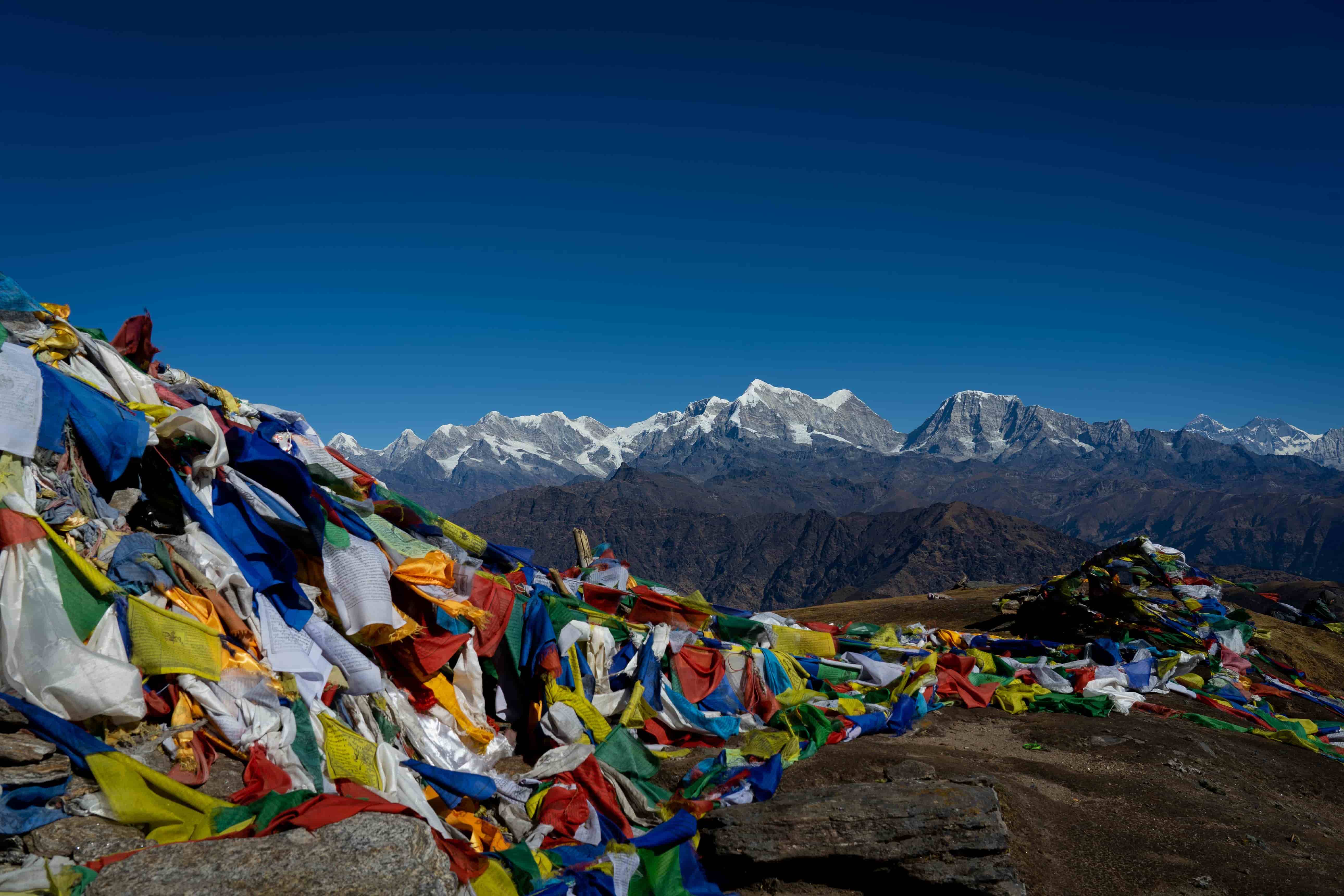
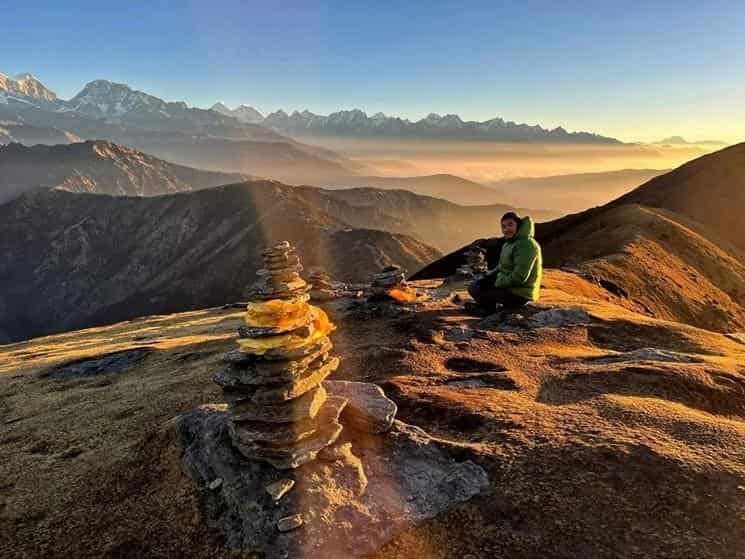
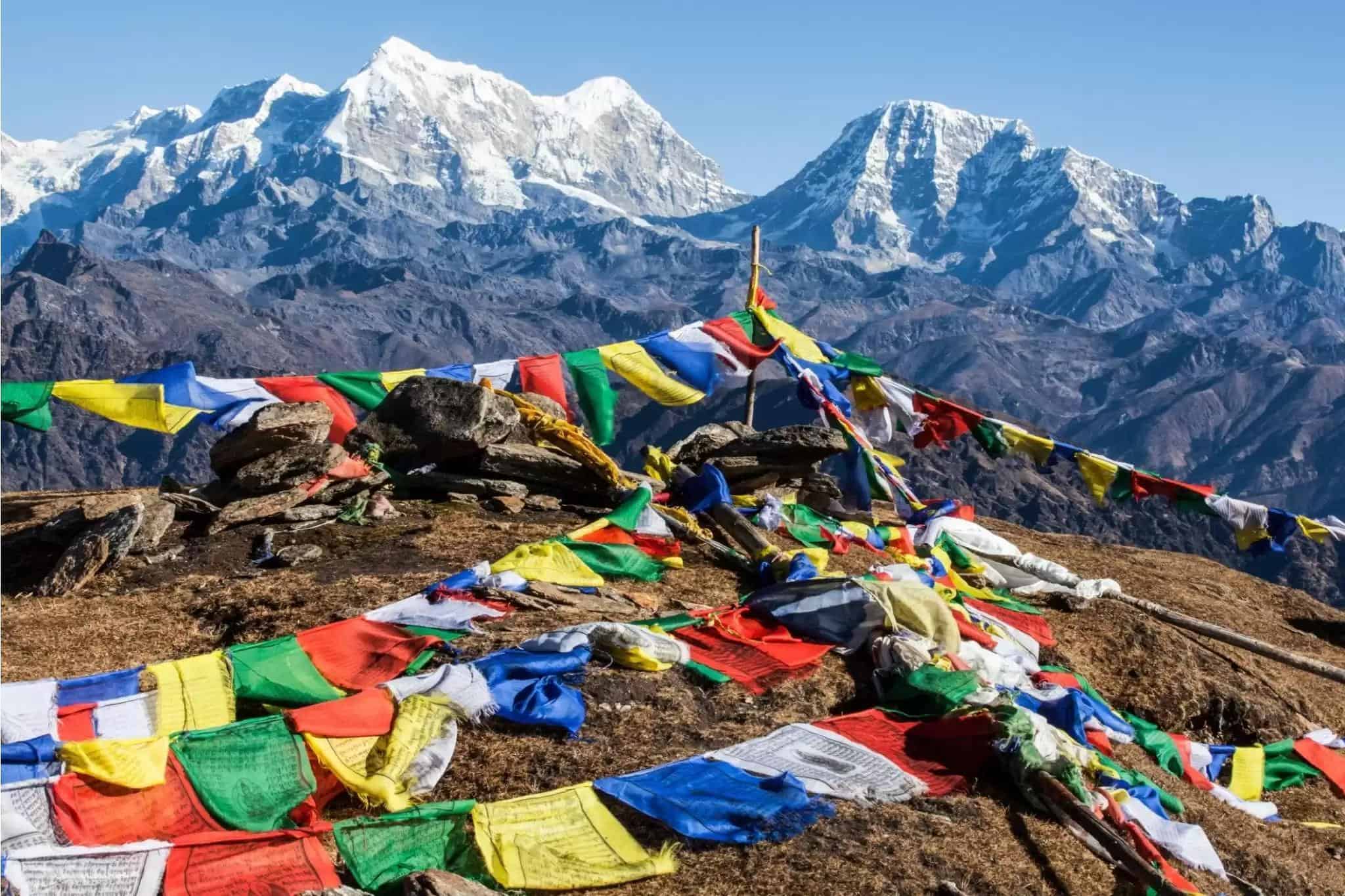
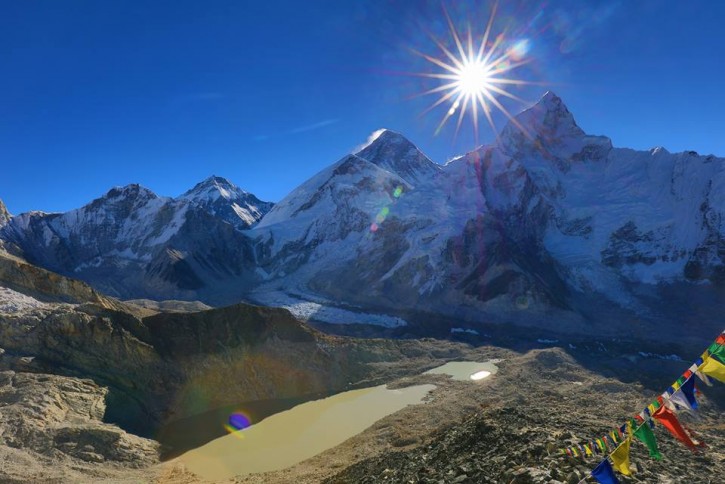
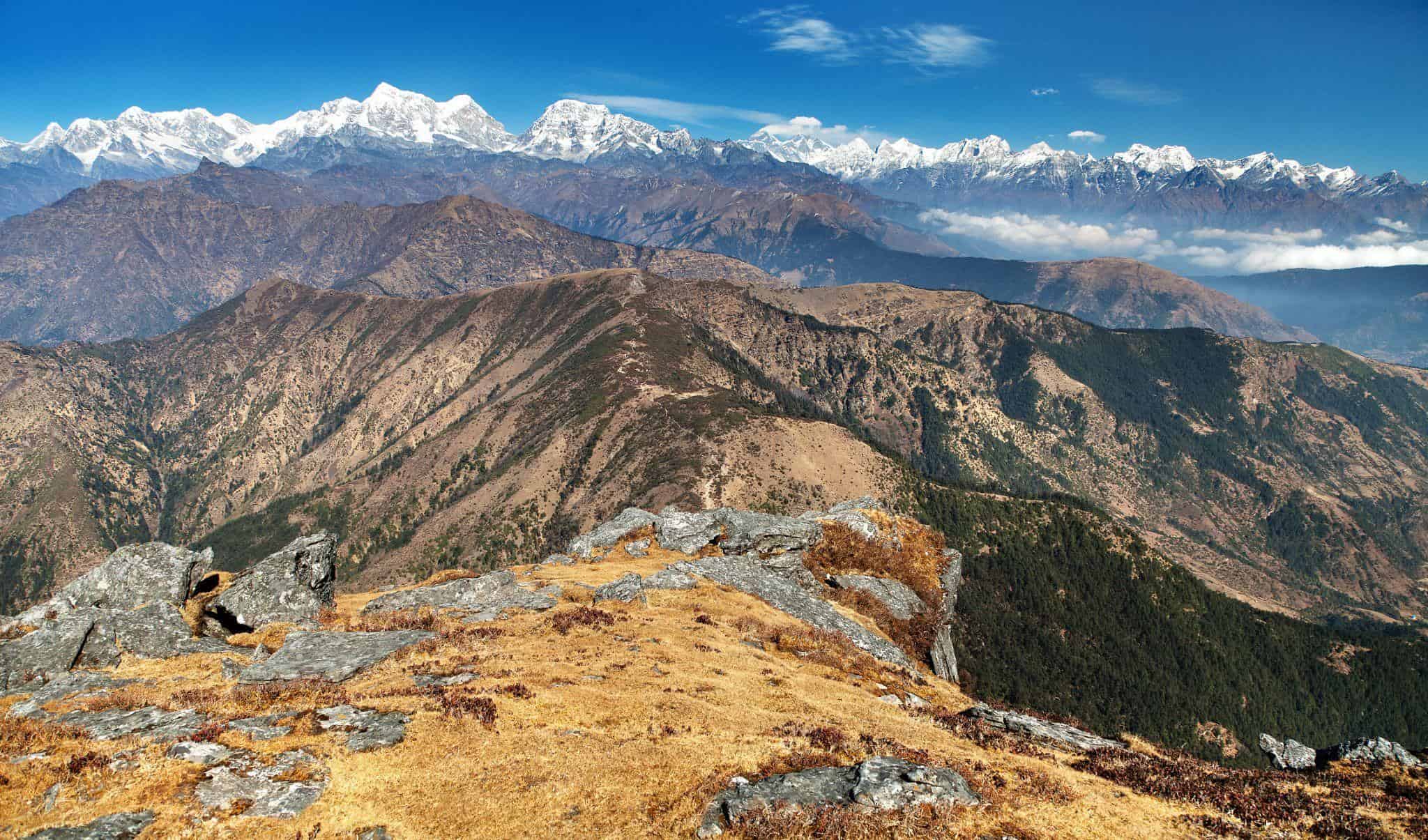
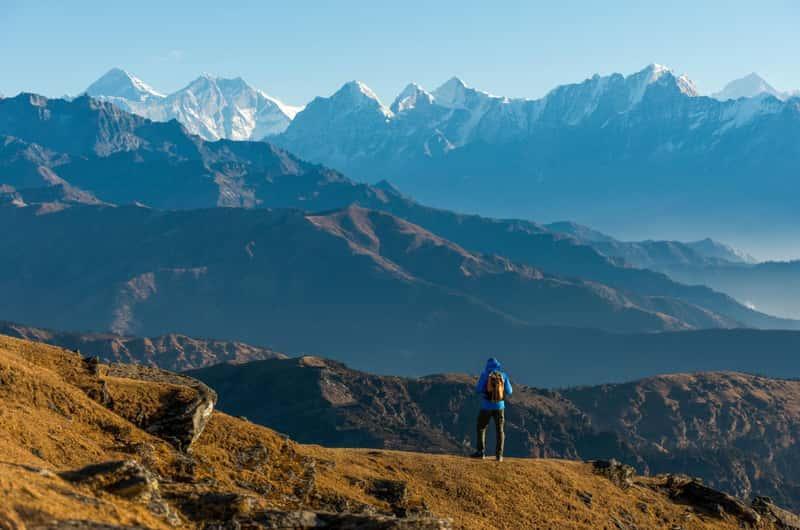
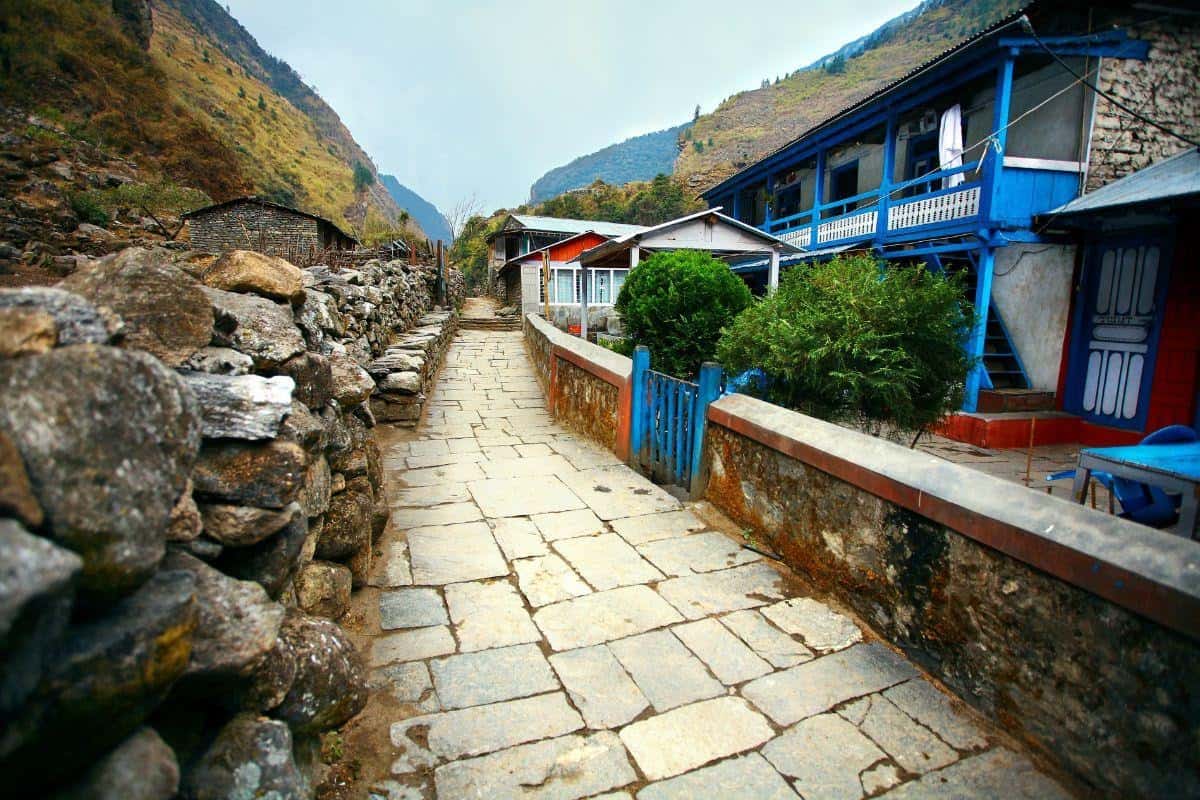
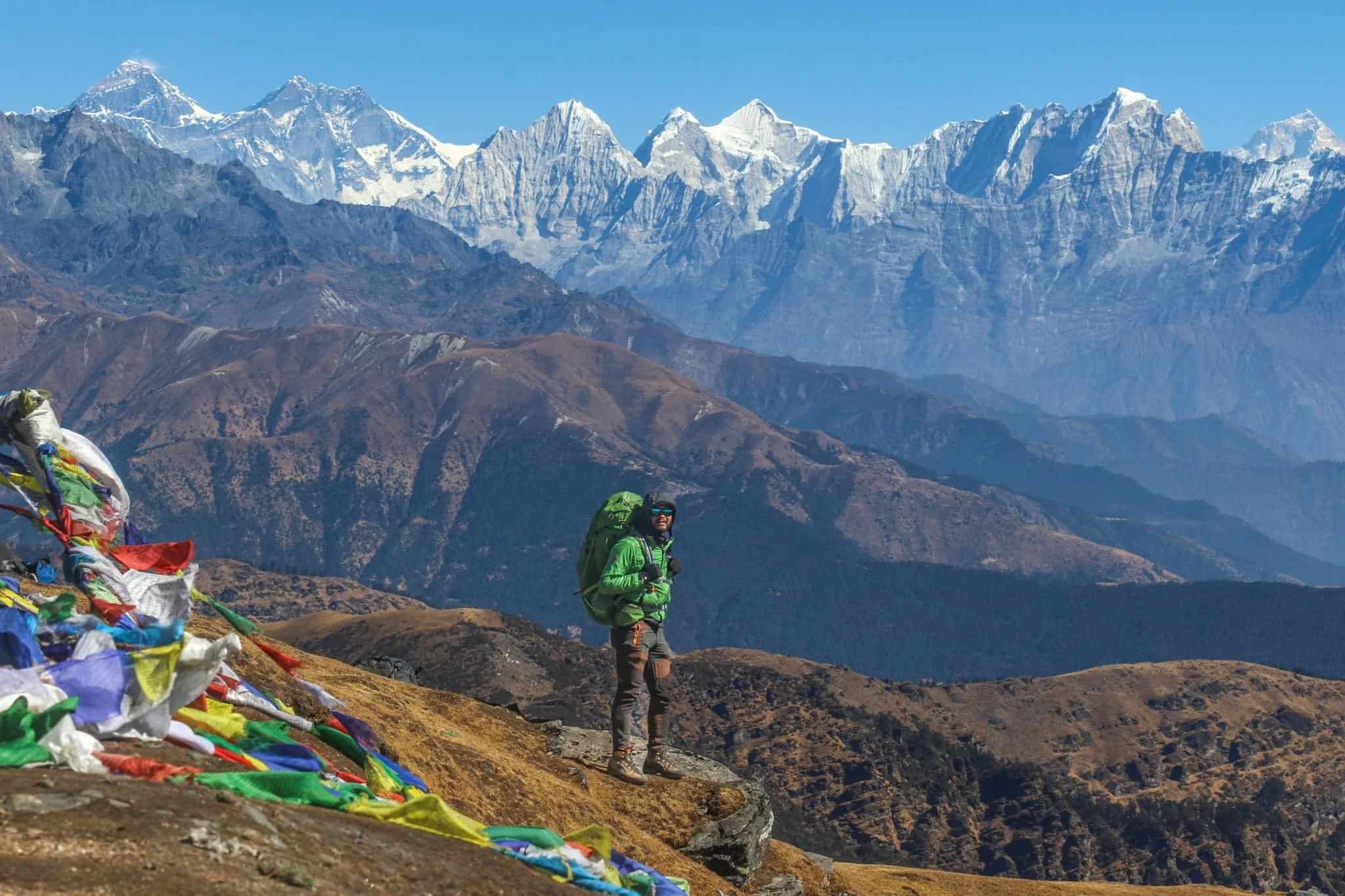
The Pikey Peak Trek is a short, quiet trek in Nepal’s lower Everest (Solukhumbu) region, leading to one of the finest Everest viewpoints in the Himalayas. From the summit of Pikey Peak (4,065m), said to be Sir Edmund Hillary’s favourite place to view Everest, you watch the sun rise over Everest, Makalu, Lhotse and Kanchenjunga. The journey starts with a scenic drive from Kathmandu, so there is no Lukla flight, and the trail winds through Sherpa villages, rhododendron forests and Buddhist monasteries. With lower altitude and fewer crowds than Everest Base Camp, this [X]-day Pikey Peak Trek with Nepal Trip Services suits beginners, families and anyone seeking Everest views on a peaceful trail.
Choose the best time for your trek based on weather and trail conditions.
Mild days, clear mornings for the summit sunrise, and rhododendron forests in full red and pink bloom. Haze can build in the afternoon, especially in May.
Warm and green, but rain, muddy trails, leeches and cloud often hide the mountains. Best for flexible trekkers who don’t mind missing the views.
The clearest skies and sharpest Himalayan views of the year, with dry, stable weather after the monsoon. October and November are the busiest months.
Crisp, clear views and very few trekkers. Nights near Pikey Base Camp are well below freezing, and snow can cover the upper trail, so warm gear is essential.
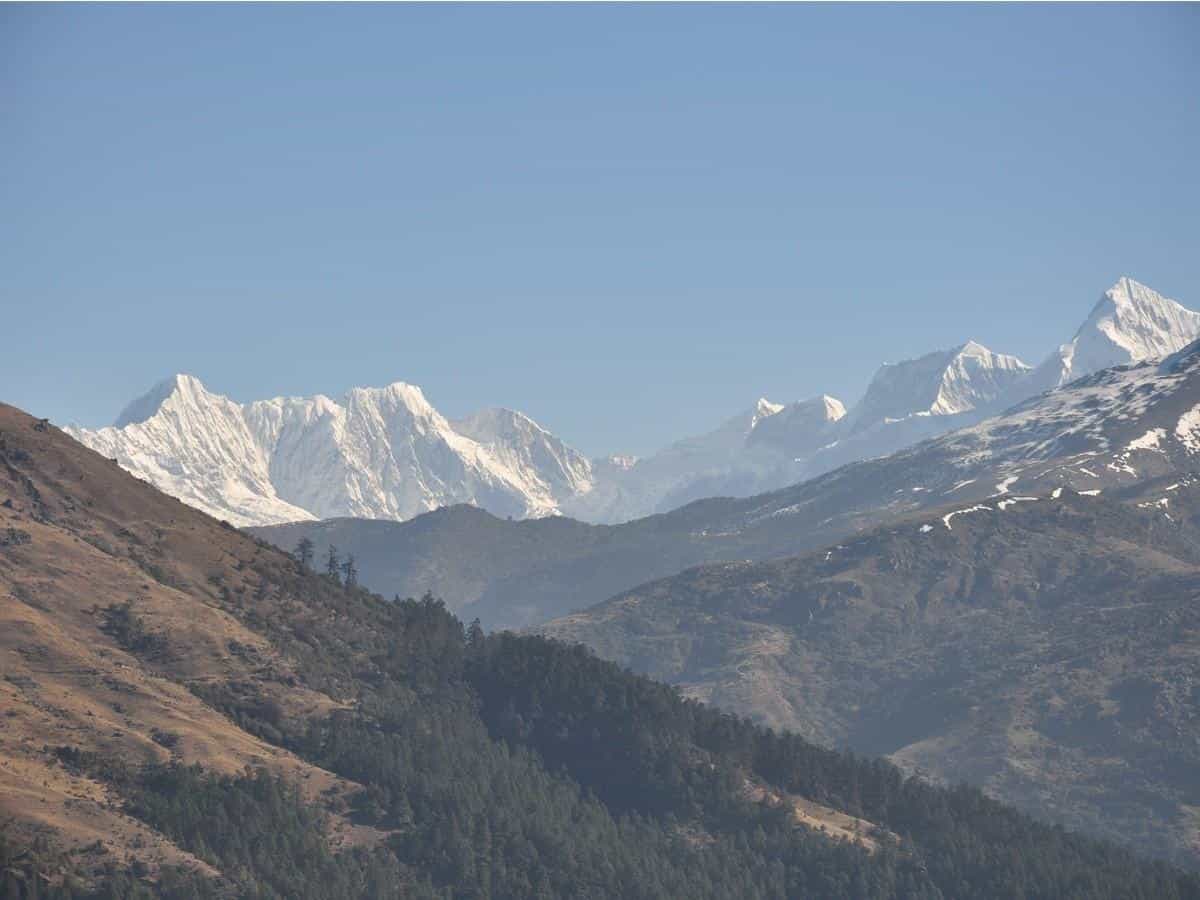
The Pikey Peak Trek is a short trek in Nepal's lower Everest region that reaches a 4,065m summit with one of the widest Himalayan panoramas in the country. In clear weather, you can see Everest, Makalu, Lhotse, Kanchenjunga and Cho Oyu from a single viewpoint, without the long climb, the Lukla flight or the crowds of Everest Base Camp.
Most Everest treks ask for two weeks and high-altitude nights. Pikey Peak gives you a sunrise over the world's highest mountains in about a week, with the highest overnight stop around 3,640m. The trail is still quiet, so you share teahouses with a handful of trekkers rather than hundreds.
Pikey Peak rises in the lower Solukhumbu district, south of the Khumbu valley and Sagarmatha National Park. The trek usually begins at Dhap, a long drive east of Kathmandu, and ends at Phaplu, the district's main town and airstrip.
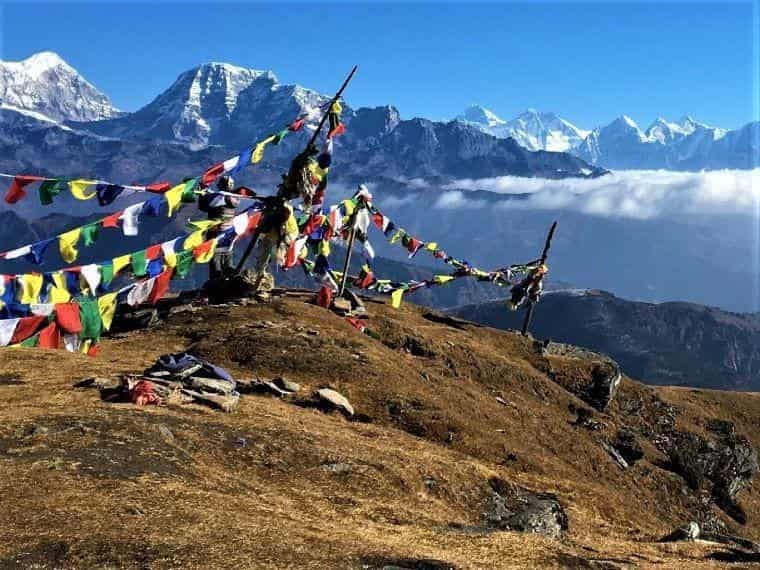
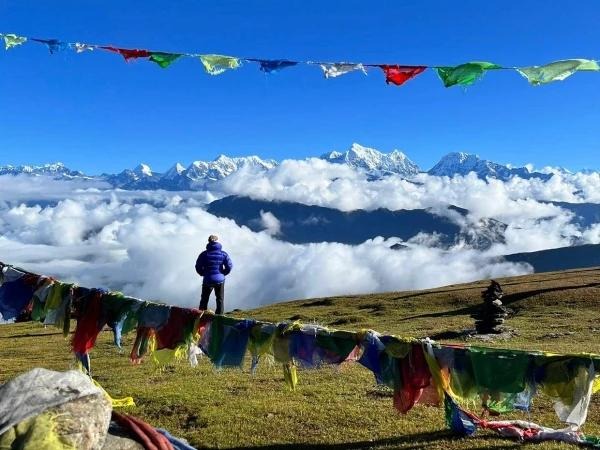
Pikey Peak is widely described as Sir Edmund Hillary's favourite place to view Everest. For local Sherpas, it is also a sacred hill, believed to be home to their clan deity. Prayer flags cover the summit, and local people gather there each summer to worship.
The classic route runs from Dhap to Phaplu: a road journey in, three or four trekking days over the ridge, then a drive or short flight back to Kathmandu.
The trek starts with a drive of about 7 to 8 hours from Kathmandu to Dhap (around 2,850m), through hill towns and river valleys. There is no flight to Lukla, so the start of your trek does not depend on mountain weather. At the end, you can drive back from Phaplu or take a short flight to Kathmandu, where available.
|
Stage |
Stop |
Altitude |
|---|---|---|
|
Drive |
Kathmandu to Dhap |
about 2,850m |
|
Trek |
Dhap to Jhapre |
about 2,820m |
|
Trek |
Jhapre to Pikey Base Camp, via the Bhulbhule ridge |
about 3,640m |
|
Summit |
Sunrise hike to Pikey Peak, then down to Junbesi |
4,065m, then about 2,680m |
|
Trek |
Junbesi to Phaplu |
about 2,380m |
|
Return |
Phaplu to Kathmandu by road or air |
1,400m |
The summit hike from base camp takes about an hour along a rocky ridge, starting before dawn. Some itineraries add a night at Jase Bhanjyang, Loding or Taksindu, or a rest day in Junbesi.
The trail climbs steadily from Dhap to Pikey Base Camp, peaks at the 4,065m summit, then descends to Junbesi and Phaplu. Add your route map and elevation chart here so trekkers can see the daily climbs at a glance.
The Pikey Peak Trek is easy to moderate. It needs no climbing skills, only reasonable fitness and comfort with long uphill and downhill walks on village trails and stone steps.
Expect about 4 to 7 hours of walking on most days, with the longest day usually being the summit sunrise followed by the descent to Junbesi. Regular walks, stair climbing or light hiking in the weeks before your trip will make the trail far more enjoyable. Some sections near Dhap follow a dirt road under construction, which can be dusty.
Altitude sickness is possible but uncommon on this trek. You sleep no higher than about 3,640m and spend only a short time at the 4,065m summit. Walk at a steady pace, drink plenty of water and tell your guide early about headaches, nausea or dizziness.
Yes. Its short length, moderate altitude and teahouse comfort make Pikey Peak one of the best first treks in the Everest region. Active families with older children and healthy older travellers can complete it at a relaxed pace, especially with an extra rest day.
The best seasons are autumn (September to November) and spring (March to May), when skies are clearest and trail conditions are most comfortable.
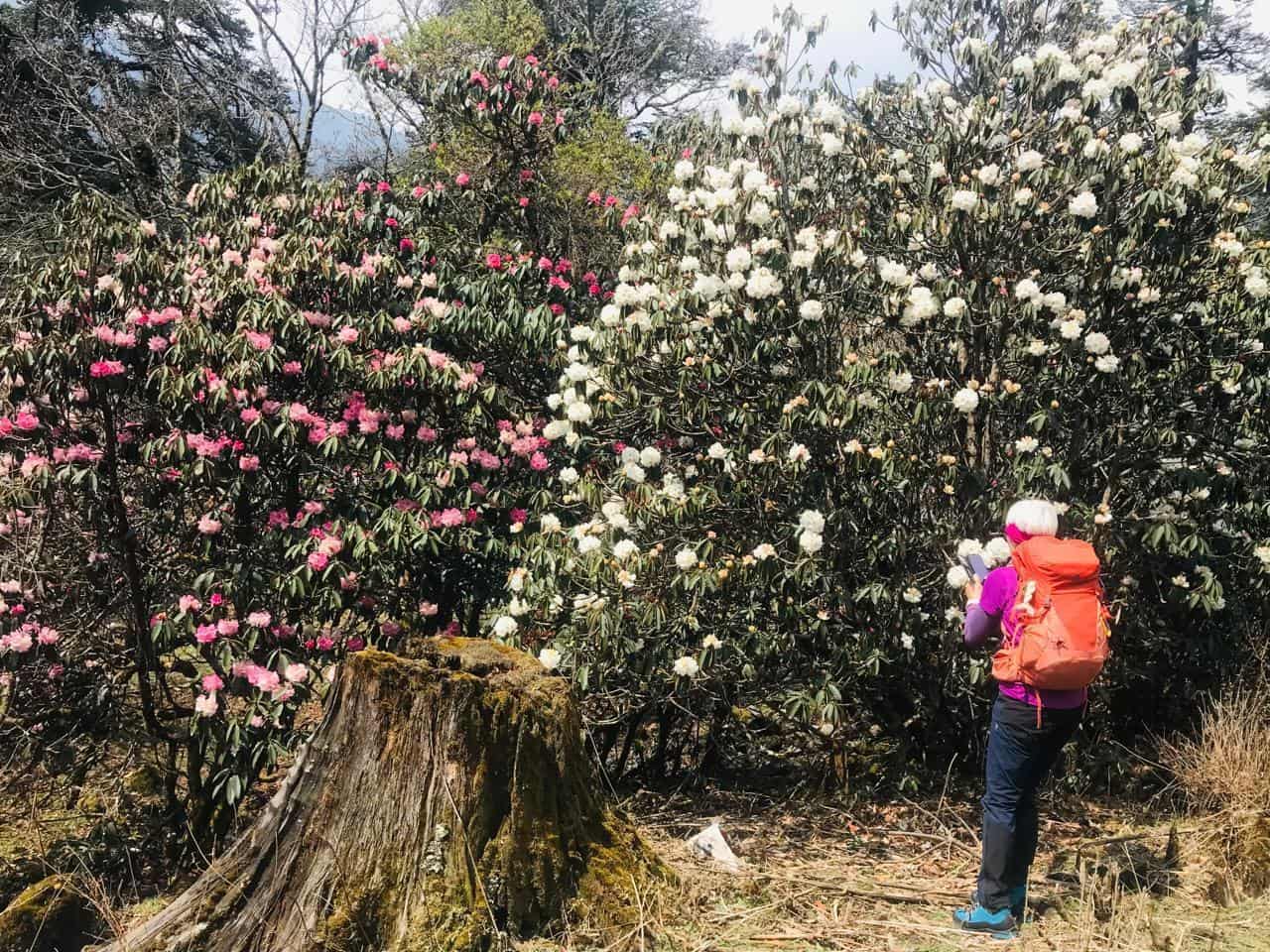
Spring brings mild days and rhododendron forests in full red and pink bloom along the trail. Mornings are usually clear for the summit sunrise, though haze and cloud can build later in the day.
Autumn offers the sharpest mountain views of the year, with dry, stable weather after the monsoon. October and November are the most popular months, so book teahouses and transport early.
Winter (December to February) brings crisp, clear views and very few trekkers, but nights near the summit are well below freezing and snow can cover the upper trail. The monsoon (June to August) means rain, leeches, muddy paths and clouded views, so it suits only flexible trekkers.
Choose Pikey Peak for Everest views in about a week at moderate altitude. Choose Everest Base Camp to walk into the heart of the Khumbu and stand at the foot of the world's highest mountain.
|
|
Pikey Peak Trek |
Everest Base Camp Trek |
|---|---|---|
|
Typical length |
About 7–10 days |
About 14 days |
|
Highest point |
4,065m |
About 5,545m at Kala Patthar |
|
Highest overnight stop |
About 3,640m |
About 5,160m at Gorakshep |
|
Getting there |
Drive from Kathmandu |
Flight to Lukla |
|
Crowds |
Few trekkers |
Busy in peak season |
|
Difficulty |
Easy to moderate |
Moderate to challenging |
From Pikey Peak, Everest appears as part of a wide eastern Himalayan skyline, alongside Makalu and Kanchenjunga. The trade-off is distance: you see Everest from afar rather than up close, but you avoid Lukla flight delays and high-altitude nights.
If you have one week, are new to trekking or want quiet trails, Pikey Peak is the better choice. If you have two weeks and want the full Khumbu experience, see our Everest Base Camp Trek. For a shorter taste of the Khumbu itself, compare the Everest View Trek.
You stay in simple, family-run teahouses every night of the trek. They are basic but warm and friendly, which is a big part of the trail's charm.
Most rooms are twin-share with wooden beds, blankets and a shared toilet. Facilities are simplest at Pikey Base Camp and more comfortable in larger villages such as Junbesi and Phaplu. Evenings centre on the dining room stove, where trekkers and hosts gather to stay warm.
Teahouse menus offer dal bhat (rice, lentils and vegetables), noodles, potatoes, soups, eggs, porridge and Tibetan bread. Dal bhat is the trekker's favourite, as refills are usually included. Bring a water bottle and purification tablets or a filter, rather than buying bottled water. Phone charging and Wi-Fi are available in many villages, sometimes for a small fee, but can be limited higher up.
Pikey Peak permits are inexpensive compared with the Everest Base Camp permits, and Nepal Trip Services arranges them all before your trek starts.
|
Permit |
When you need it |
Fee |
|---|---|---|
|
TIMS card |
All trekkers |
NPR 2,000 (foreign nationals), NPR 1,000 (SAARC nationals) |
|
Local area (rural municipality) permit |
Standard Dhap to Phaplu route |
Set locally, subject to change |
|
Gaurishankar Conservation Area Permit |
Only if your route starts from Jiri or Shivalaya |
Set by the conservation area, subject to change |
Since 2023, the Nepal Tourism Board has required trekkers on TIMS routes to walk with a licensed guide arranged through a registered trekking agency. A guided trek with Nepal Trip Services meets this rule. Bring your passport and a copy, and permit fees can change without notice.
Contact the team for an exact quote based on your dates, group size and preferred return option.
Nepal Trip Services is a local trekking company based in Thamel, Kathmandu, with 16 years of experience in Nepal tourism. We handle the details so you can focus on the trail.
Ready to plan your trek? Use the Nepal Trip Services trip planner or message us on WhatsApp.
| Altitude | Distance | Duration | Accommodation | Meals |
|---|---|---|---|---|
| 1,350m | – | – | Hotel in Kathmandu | – |
Welcome to Nepal. A Nepal Trip Services representative meets you at Tribhuvan International Airport and drives you to your hotel. After you check in and rest, your guide meets you for a short trek briefing to go over the itinerary, check your gear and permits, and answer any questions. If you need to rent a down jacket or sleeping bag, there’s time to visit the trekking shops of Thamel. Get an early night before tomorrow’s long drive.
| Altitude | Elevation Change | Distance | Duration | Accommodation | Meals |
|---|---|---|---|---|---|
| 2,850m | +1,500m | 240 km | About 8 hrs drive | Teahouse | Breakfast, Lunch, Dinner |
After an early breakfast, you leave Kathmandu by jeep and head east. The road passes Dhulikhel and Khurkot, then follows the Sunkoshi River valley towards Ghurmi. After lunch around Ghurmi or Okhaldhunga, the road climbs steadily for about three hours to Dhap Bazaar, with the first Himalayan views on clear afternoons. Dhap is the starting point of the trek, and the air is noticeably cooler here, so keep a warm layer handy.
| Altitude | Elevation Change | Distance | Duration | Accommodation | Meals |
|---|---|---|---|---|---|
| 2,815m | −35m | 14 km | 4–5 hrs walk | Teahouse | Breakfast, Lunch, Dinner |
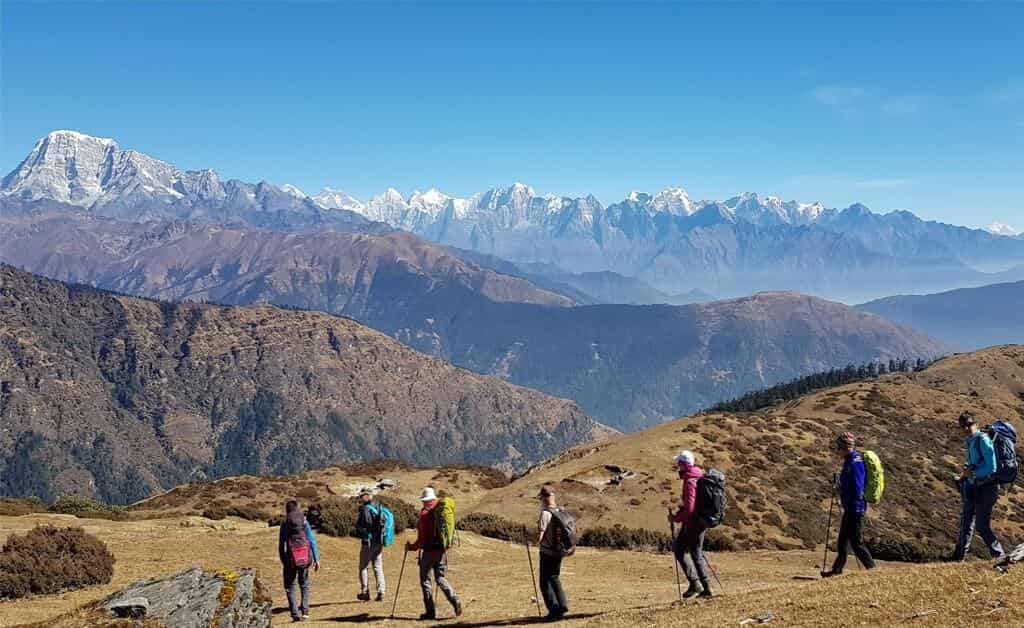
Your trek begins with an easy, gently rolling day, ideal for finding your rhythm. You walk towards Sigane, partly on a newly built dirt road, then continue along quieter forest paths and open ridges past small farms, chortens and prayer flags. On clear days, Numbur Himal and the distant Everest range appear to the north. You reach the peaceful Sherpa settlement of Jhapre by early afternoon.
| Altitude | Elevation Change | Distance | Duration | Accommodation | Meals |
|---|---|---|---|---|---|
| 3,640m | +825m | 13.73 km | 5–6 hrs walk | Teahouse | Breakfast, Lunch, Dinner |
Today is the biggest climb of the trek, so walk slowly and steadily. The trail climbs to the grassy Bhulbhule ridge, with views across the Everest range. Just past Bhulbhule, you turn right towards Pikey Peak, passing long mani walls and old yak huts before entering rhododendron forest, at its most colourful from March to April. About two hours after leaving the forest, you reach Pikey Base Camp, the highest and most basic overnight stop. Drink plenty of water and go to bed early.
| Altitude | Elevation Change | Distance | Duration | Accommodation | Meals |
|---|---|---|---|---|---|
| 4,065m (summit), 3,520m (overnight) | +425m, then −545m | About 5 km | 4–5 hrs walk | Teahouse | Breakfast, Lunch, Dinner |
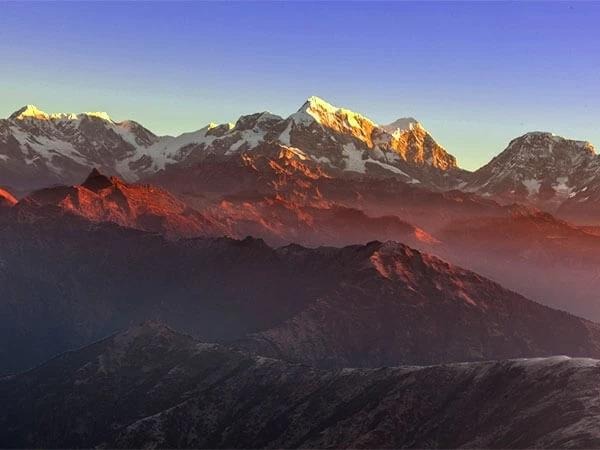
This is the highlight of the trek. You leave Pikey Base Camp before dawn by headlamp and climb about an hour along a rocky ridge to the summit of Pikey Peak (4,065m). From the prayer-flag-covered top, watch the sun rise over Everest, Lhotse, Makalu, Cho Oyu and Kanchenjunga. Pikey Peak is said to be Sir Edmund Hillary’s favourite place to view Everest, and it is sacred to local Sherpas. After 30 to 45 minutes on top, descend to base camp for breakfast, then continue down to Jase Bhanjyang for the night.
| Altitude | Elevation Change | Distance | Duration | Accommodation | Meals |
|---|---|---|---|---|---|
| 2,680m | −840m | 11.02 km | 5–6 hrs walk | Teahouse | Breakfast, Lunch, Dinner |
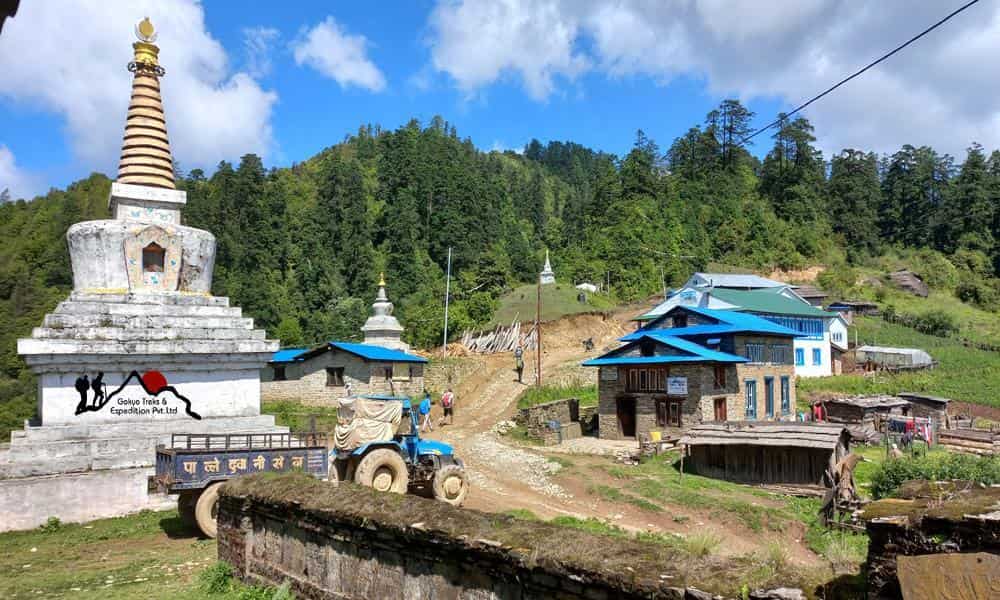
A long, steady descent leads through pine and rhododendron forest, past small settlements, mani walls and chortens, so trekking poles help. As you lose height, the landscape turns greener, with fields and stone houses. In the afternoon, you reach Junbesi, one of the oldest Sherpa villages in Solukhumbu, on the historic trail Hillary and Tenzing walked to Everest in 1953. If time allows, visit Tashi Thongmon Gompa, the oldest Sherpa monastery, or walk about an hour uphill to Thupten Choling Monastery.
| Altitude | Elevation Change | Distance | Duration | Accommodation | Meals |
|---|---|---|---|---|---|
| 2,380m | −300m | 13.26 km | 5–6 hrs walk | Teahouse or lodge | Breakfast, Lunch, Dinner |
The final trekking day follows the Junbesi Khola river through pine forest, farmland and small villages. Near Beni Ghat, you cross a steel suspension bridge, then climb gently to Phaplu, the main town of lower Solukhumbu, with an airstrip, shops, bakeries and a hospital built by Hillary’s Himalayan Trust. Celebrate the end of the trek with your guide and porter this evening.
| Altitude | Elevation Change | Distance | Duration | Accommodation | Meals |
|---|---|---|---|---|---|
| 1,350m | −1,030m | 280 km | 9–10 hrs drive | Hotel in Kathmandu | Breakfast, Lunch |
After an early breakfast, begin the long drive back through the hills of Solukhumbu and Okhaldhunga, with stops for tea and lunch along the way. You reach Kathmandu in the evening and transfer to your hotel. Enjoy a hot shower and a celebration dinner in Thamel.
| Altitude | Distance | Duration | Accommodation | Meals |
|---|---|---|---|---|
| – | – | – | – | Breakfast |
Your Pikey Peak Trek ends today. Depending on your flight time, enjoy a last stroll through Thamel or some souvenir shopping. A Nepal Trip Services representative drives you to Tribhuvan International Airport about three hours before your flight. Thank you for trekking with us!
Are you interested in planning a custom trip? It only takes 2 minutes.
Arrival and Transportation
Accommodation
Meals
Guide and Trekking Staff
Permits and Fees
Safety and Extras
International Travel and Visa
Kathmandu Expenses
Insurance and Emergencies
Permits Not Included
Personal Expenses on the Trek
Staff and Tips
Others
Essential packing and gear checklist tailored for this trek.


The Pikey Peak Trek is a 9-day journey through Nepal’s lower Everest region. It covers about 57 km of trekking from Dhap Bazaar to Phaplu, and its highest point is the Pikey Peak summit at 4,065m on Day 5.
Route: Kathmandu → Dhap Bazaar → Jhapre → Pikey Base Camp → Pikey Peak (4,065m) → Jase Bhanjyang → Junbesi → Phaplu → Kathmandu
| Day | Route | Altitude | Elevation Change | Distance | Duration |
|---|---|---|---|---|---|
| 1 | Arrival in Kathmandu | 1,350m | – | – | – |
| 2 | Drive Kathmandu to Dhap Bazaar | 2,850m | +1,500m | 240 km | About 8 hrs |
| 3 | Trek Dhap Bazaar to Jhapre | 2,815m | −35m | 14 km | 4–5 hrs |
| 4 | Trek Jhapre to Pikey Base Camp | 3,640m | +825m | 13.73 km | 5–6 hrs |
| 5 | Summit Pikey Peak (4,065m), then trek to Jase Bhanjyang | 3,520m | +425m, then −545m | About 5 km | 4–5 hrs |
| 6 | Trek Jase Bhanjyang to Junbesi | 2,680m | −840m | 11.02 km | 5–6 hrs |
| 7 | Trek Junbesi to Phaplu | 2,380m | −300m | 13.26 km | 5–6 hrs |
| 8 | Drive Phaplu to Kathmandu | 1,350m | −1,030m | 280 km | 9–10 hrs |
| 9 | Final departure | – | – | – | – |
Key points:
Add your route map and elevation chart image here, with alt text such as “Pikey Peak Trek route map and elevation profile from Dhap Bazaar to Phaplu”.
The Pikey Peak Trek covers about 57 km of walking over 5 trekking days, from Dhap Bazaar to Phaplu. Most days involve 4 to 6 hours on the trail. The highest point is the Pikey Peak summit (4,065m) on Day 5.
| Day | Stage | Altitude (Start → End) | Distance | Walking Hours | Terrain |
|---|---|---|---|---|---|
| 3 | Dhap Bazaar → Jhapre | 2,850m → 2,815m | 14 km | 4–5 hrs | Forest trails, ridges and some dirt road |
| 4 | Jhapre → Pikey Base Camp | 2,815m → 3,640m | 13.73 km | 5–6 hrs | Steady climb via the Bhulbhule ridge, forests and yak pastures |
| 5 | Pikey Base Camp → Pikey Peak (4,065m) → Jase Bhanjyang | 3,640m → 4,065m → 3,520m | About 5 km | 4–5 hrs | Pre-dawn summit hike on a rocky ridge, then a descent |
| 6 | Jase Bhanjyang → Junbesi | 3,520m → 2,680m | 11.02 km | 5–6 hrs | Long descent through forests and Sherpa villages |
| 7 | Junbesi → Phaplu | 2,680m → 2,380m | 13.26 km | 5–6 hrs | Riverside trail, suspension bridge, final climb to Phaplu |
At a glance:
Walking hours include short rest stops and vary with your pace, the weather and trail conditions. Your guide will set a comfortable pace for the group.
The drive from Kathmandu to Dhap Bazaar (2,850m) is the gateway to the Pikey Peak Trek. It covers about 240 km in roughly 8 hours by private vehicle. It is a long day, but a scenic one, and it replaces the Lukla flight, so your trek doesn’t depend on mountain flight weather.
Route: Kathmandu → Dhulikhel → Khurkot → Ghurmi → Okhaldhunga → Dhap Bazaar
| Section | Road Type | What to Expect |
|---|---|---|
| Kathmandu → Dhulikhel → Khurkot | Paved highway | Smooth, winding hill highway |
| Khurkot → Ghurmi | Paved mid-hill road | Follows the Sunkoshi River valley, with river views and small towns |
| Ghurmi → Okhaldhunga | Narrow hill road | More bends and climbs |
| Okhaldhunga → Dhap Bazaar | Mountain road | About 3 hours of steady climbing, with the first Himalayan views on clear days |
The road: The early hours follow a fairly comfortable highway built with Japanese help, and much of the route runs alongside the Sun Kosi River. From Okhaldhunga, the road climbs steadily to Dhap for about three hours, and that section is generally in reasonable condition. Expect some rough, bumpy and dusty stretches, especially in the higher sections.
Stops along the way:
Comfort tips:
Travel times depend on traffic, road works and weather. During the monsoon, landslides or temporary road closures can cause delays, so your team will check conditions before departure.
The summit hike on Day 5 is the highlight of the Pikey Peak Trek. You leave Pikey Base Camp (3,640m) before dawn and climb about 425m in roughly an hour to the Pikey Peak summit (4,065m), in time to watch the sun rise over the eastern Himalayas.
Start time by season
| Season | Wake-up | Leave Base Camp | Approx. Sunrise |
|---|---|---|---|
| Spring (Mar–May) | 4:00 AM | 4:30 AM | 5:15–6:00 AM |
| Autumn (Sep–Nov) | 4:30 AM | 5:00 AM | 5:45–6:20 AM |
| Winter (Dec–Feb) | 5:00 AM | 5:30 AM | 6:30–6:50 AM |
Your guide confirms the exact start time the evening before, based on the weather and the group’s pace.
The ridge path
The view from the summit
You usually spend 30 to 45 minutes on the summit for photos and views before descending. After that, the trail continues down to Jase Bhanjyang (3,520m) for the night.
Altitude profile, Dhap to Phaplu:
Dhap 2,850m → Jhapre 2,815m → Pikey Base Camp 3,640m → Pikey Peak 4,065m (summit) → Jase Bhanjyang 3,520m → Junbesi 2,680m → Phaplu 2,380m
Tips for the summit hike:
Sunrise times are approximate. Clear skies are most likely in autumn and spring mornings. If cloud covers the summit, your guide may wait a little or advise the safest plan.
The standard Pikey Peak Trek runs from Dhap to Phaplu in 9 days. If you have more time or want an even quieter trail, these alternative routes add history, culture or a sacred high-altitude lake.
| Route | Typical Length | Highest Point | Best For |
|---|---|---|---|
| Standard route: Dhap → Phaplu | 9 days | 4,065m | First-time trekkers and short trips |
| Jiri or Shivalaya route | About 10–13 days | 4,065m | History lovers and quiet trails |
| Dhap → Shivalaya loop | About 7 days | 4,065m | A short trip that ends on the historic route |
| Pikey Peak + Dudh Kunda extension | About 12–14 days | 4,560m | Experienced trekkers and pilgrims |
1. Jiri or Shivalaya Route: the Historic Everest Approach
This route follows the classic path to Everest used before the Lukla airstrip existed, which is the way Hillary and Tenzing walked in 1953. You drive from Kathmandu to Jiri, then about two hours more on a rough road to Shivalaya (1,770m). From there, the trail climbs through rhododendron and oak forests to the Deurali Pass (2,705m), with views of Numbur Himal and Pikey Peak, before descending to Bhandar (2,200m). It then continues to Pikey Peak and on to Junbesi and Phaplu.
2. Dhap → Shivalaya Loop: Short Trip, Classic Finish
This shorter option starts at Dhap as usual. After the summit, it descends west to Chaulakharka instead of heading to Junbesi, then climbs about 750m to Bhandar and crosses the Deurali Pass to Shivalaya. You drive back to Kathmandu from Shivalaya.
3. Pikey Peak + Dudh Kunda Extension: the Sacred Lake
Add 3 to 4 days to reach Dudh Kunda, a holy lake north of Ringmo at the foot of Numbur Himal. Dudh Kunda means “milky lake”, named for the glacial silt that colours its water. Hindus believe it is the home of Lord Shiva, who is said to have created it with his trident.
Which Route Should You Choose?
All routes can be tailored as private treks. Contact Nepal Trip Services to build the right itinerary for your time, fitness and interests.
The 9-day Pikey Peak Trek is available as a group joining trek or a private trek for your own group. Prices include permits, a licensed guide, teahouse accommodation, meals during the trek and road transport.
Group Joining Trek
| Option | Price |
|---|---|
| Group joining trek (fixed departure) | From US$[700] per person |
Private Trek: Price per Person
| Group Size | Price per Person |
|---|---|
| 1 person (solo) | US$[750] |
| 2 people | US$[730] |
| 3–4 people | US$[700] |
| 5–8 people | US$[ 680] |
| 9+ people | Contact us for a group rate |
The larger your group, the lower the cost per person.
What Affects the Price
How to Book Your Pikey Peak Trek
Booking Deposit
| Detail | Information |
|---|---|
| Deposit to confirm | [20]% of the total trek price |
| Balance due | On arrival in Kathmandu, before the trek |
| Last-minute bookings | Full payment may be required |
Payment Options
Book Now
Book 3 to 4 weeks ahead for October–November and March–May, when guides and teahouses fill quickly.
Choose a group joining trek to save money and meet other travellers on a fixed date. Choose a private trek to pick your own dates, pace and itinerary with only your group.
| Feature | Group Joining Trek | Private Trek |
|---|---|---|
| Price | Lower, paid per person | Higher for 1–2 people, better value for larger groups |
| Who you trek with | Other travellers from around the world | Only your family, friends or partner |
| Departure dates | Fixed departure dates | Any date you choose |
| Departure guarantee | Runs once the minimum group size is reached | Guaranteed for your booking |
| Itinerary | Standard 9-day Dhap to Phaplu route | Fully flexible, with extra rest days, the Jiri route or Dudh Kunda |
| Walking pace | Set for the whole group | Set by you |
| Guide | Shared with the group | Dedicated to your group |
| Transport | Shared jeep | Private jeep |
| Teahouse rooms | Twin-sharing, with possible room-sharing for solo travellers | Twin-sharing within your group |
| Best for | Solo travellers, budget trekkers, social travellers | Families, couples, friends, photographers, slower walkers |
Choose a group joining trek if you:
Choose a private trek if you:
Quick Decision Guide
| Your Situation | Best Option |
|---|---|
| Solo traveller on a budget | Group joining |
| Couple wanting a social trip | Group joining |
| Couple celebrating something special | Private |
| Family or group of 3+ | Private |
| Fixed travel dates | Private |
| Slower pace or first-time trekker | Private |
| Want a longer or custom route | Private |
Not sure which suits you? Message us on WhatsApp and we’ll recommend the best option for your group, dates and budget.
Booking your Pikey Peak Trek is simple and secure. Pay a small deposit to confirm your place, then pay the balance before your trek begins.
Accepted Payment Methods
| Method | Details |
|---|---|
| Credit or debit card | Visa, Mastercard, American Express, UnionPay |
| Online payment link | A secure link sent by email or WhatsApp |
| Bank transfer | International wire transfer (SWIFT) |
| Cash | USD or NPR, paid at our office in Thamel, Kathmandu |
| Nepali and Indian guests | eSewa, Khalti, Fonepay or bank QR |
A card processing fee of [3]% applies to card and online payments.
Booking Deposit
| Detail | Information |
|---|---|
| Deposit to confirm | [20]% of the total trek price |
| Balance due | On arrival in Kathmandu, before the trek starts |
| Last-minute bookings (within [3] days) | Full payment may be required |
| Private and custom treks | A higher deposit may apply in peak season |
How Payment Works
Good to Know
Book with Confidence
We keep our policy simple and fair. Please read it before booking your Pikey Peak Trek.
If We Cancel
If we cancel your trek before departure because of natural disasters, political unrest, road closures or safety concerns, you can choose:
| Option | Details |
|---|---|
| Free rescheduling | Move to any available date at no extra cost |
| Full refund | 100% refund of the amount paid (bank or card fees excluded) |
| Switch treks | Change to another Nepal Trip Services trek of equal value |
If You Cancel
| Notice Before the Trek Start Date | Cancellation Charge |
|---|---|
| [30+ days]+ days | [10]% of the trek price |
| [15]–[29] days | [25]% of the trek price |
| [7]–[14] days | [50]% of the trek price |
| Less than [7] days | [100]% of the trek price |
| No-show on the start date | 100% (no refund) |
Please send cancellations in writing by email or WhatsApp. The date we receive your message is your cancellation date.
Changing Your Dates
Changes During the Trek
How Refunds Work
Smart Tips
Suggested values if you haven’t set your terms yet. These follow common Nepal trekking practice, so adjust them to your own policy:
| Notice | Charge |
|---|---|
| 60+ days | Deposit only (non-refundable) |
| 30–59 days | 25% |
| 15–29 days | 50% |
| Less than 15 days | 100% |
The best months for the Pikey Peak Trek are October, November, March and April, when skies are clearest and the summit sunrise is most reliable. Use this table to plan your trek.
| Month | Daytime (Villages) | Night (Pikey Base Camp) | Weather and Views | Trek Rating |
|---|---|---|---|---|
| January | 5°C to 10°C | -15°C to -8°C | Very cold, clear skies, snow possible on the summit ridge | Good |
| February | 6°C to 12°C | -12°C to -6°C | Cold and clear, with occasional snow | Good |
| March | 10°C to 15°C | -8°C to -2°C | Warming days, rhododendrons begin to bloom | Excellent |
| April | 13°C to 18°C | -4°C to 2°C | Peak rhododendron season, some afternoon haze | Excellent |
| May | 15°C to 18°C | -2°C to 4°C | Warm, with clouds building later in the day before the monsoon | Very good |
| June | 16°C to 22°C | 3°C to 8°C | Monsoon begins, with rain and cloudy views | Fair |
| July | 17°C to 22°C | 5°C to 9°C | Heaviest rain, leeches, muddy trails | Low |
| August | 17°C to 22°C | 5°C to 9°C | Wet, with risk of landslides on roads | Low |
| September | 15°C to 20°C | 0°C to 6°C | Monsoon eases, and skies clear by late September | Good |
| October | 12°C to 16°C | -4°C to 2°C | Clearest skies of the year, dry and stable | Excellent |
| November | 8°C to 14°C | -8°C to -3°C | Crisp, clear and cold mornings | Excellent |
| December | 5°C to 10°C | -12°C to -6°C | Cold, clear and very quiet trails | Good |
Temperatures are approximate. Daytime figures are for villages such as Junbesi and Phaplu (about 2,400–2,700m). Night figures are for Pikey Base Camp (3,640m). The summit (4,065m) is colder at sunrise, especially with wind.
Quick Planning Guide
| If you want… | Best months |
|---|---|
| The clearest Everest views | October, November |
| Rhododendrons in bloom | March, April |
| Mild temperatures | April, May, October |
| Fewer trekkers | December, January, February |
| A trek on a budget | June to August, if you can accept rain |
Spring turns the Pikey Peak trail into one of the most colourful treks in the lower Everest region. From March to April, forests of rhododendron, called laliguras in Nepali and Nepal’s national flower, bloom in red, pink and white along the trail.
When the Forests Bloom
| Time | Where It Blooms | What to Expect |
|---|---|---|
| Early to mid-March | Lower forests around Dhap and Jhapre (about 2,800m) | The first red blooms appear |
| Late March to mid-April | Bhulbhule ridge and the forests to Pikey Base Camp (2,800–3,600m) | Peak bloom, with whole hillsides in colour |
| Late April to early May | Higher slopes near base camp and Jase Bhanjyang | Pink and white varieties higher up |
Bloom timing shifts by a week or two each year, depending on winter snow and spring temperatures. Flowers bloom first at lower altitudes and move uphill as spring warms.
Best Photo Spots on the Trail
Photo Tips
Plan Your Spring Trek
For the best mix of flowers and mountain views, plan your Pikey Peak Trek for late March to mid-April. This is a popular time, so book 3 to 4 weeks ahead.
Winter (December to February) is a quiet and rewarding time for the Pikey Peak Trek. You get crisp, clear skies, sharp mountain views and empty trails, but it is cold, and snow can cover the higher sections.
What to Expect in Winter
| Detail | Winter Conditions |
|---|---|
| Daytime (villages) | 5°C to 12°C |
| Night (Pikey Base Camp) | -15°C to -6°C |
| Summit at sunrise (4,065m) | Often below -15°C with wind chill |
| Skies | Usually clear and stable |
| Snow | Possible on the summit ridge and around base camp |
| Crowds | Very few trekkers |
Why Trek Pikey Peak in Winter?
Winter Challenges
Winter Packing Essentials
Tips for a Safe Winter Trek
Is Winter Right for You?
Winter suits trekkers who don’t mind the cold, want quiet trails and value clear mountain views. If you prefer milder weather, choose October–November or March–April instead.
Our team checks trail and weather conditions before every winter departure. Message us on WhatsApp for current conditions on the Pikey Peak trail.
The Pikey Peak Trek is a low-risk trek for altitude sickness. You never sleep higher than 3,640m at Pikey Base Camp and spend only a short time at the 4,065m summit. Altitude sickness can still affect anyone above about 2,500m, so it is worth knowing the signs and how to prevent it.
Altitude Profile
| Day | Overnight Stop | Altitude | Note |
|---|---|---|---|
| 3 | Jhapre | 2,815m | Gentle start |
| 4 | Pikey Base Camp | 3,640m | Biggest gain (+825m), so walk slowly |
| 5 | Summit, then Jase Bhanjyang | 4,065m, then 3,520m | Short summit stay, then descend |
| 6 | Junbesi | 2,680m | Lower altitude, quick recovery |
Know the Symptoms
| Mild (common) | Serious (rare): descend immediately |
|---|---|
| Headache | Severe headache that doesn’t improve with rest or painkillers |
| Nausea or loss of appetite | Vomiting |
| Tiredness | Confusion or unusual behaviour |
| Dizziness | Loss of balance or coordination |
| Poor sleep | Breathlessness even while resting |
| Mild breathlessness when walking | Persistent cough or chest tightness |
Mild symptoms often ease with rest and fluids. Never go higher with symptoms. Serious symptoms are an emergency and mean you must descend at once.
How to Prevent Altitude Sickness
What Your Guide Does
Travel Insurance
Make sure your insurance covers trekking up to at least 4,500m and emergency helicopter evacuation. Bring your policy number and your insurer’s 24-hour emergency contact.
This information is general guidance, not medical advice. Please consult your doctor before high-altitude travel, especially if you have health conditions.
Your safety comes first on every Pikey Peak Trek. Our trained local guides, clear safety procedures and constant communication make the trail safe and enjoyable for every trekker.
Our Safety Standards
| Safety Area | What We Ensure |
|---|---|
| Licensed guides | Every trek is led by a government-licensed trekking guide |
| Registered company | Nepal Trip Services is a registered trekking agency in Nepal |
| Permits | TIMS card and local permits arranged before departure |
| First aid | A first aid kit carried on every trek |
| Altitude care | Daily health checks and a safe, steady pace |
| Communication | Regular contact between your guide and our Kathmandu office |
| Emergency plan | Clear steps for descent and evacuation, by road or helicopter |
| Group size | Small groups for better care and attention |
Our Licensed Guides
First Aid and Health Support
Your guide carries a first aid kit with:
Please bring your own personal medication and tell us about any health conditions when you book.
Communication on the Trail
In an Emergency
Your Part in Staying Safe
Questions about safety on the Pikey Peak Trek? Message us on WhatsApp. We’re happy to help.
Serious emergencies on the Pikey Peak Trek are rare, but every trek follows a clear emergency plan. The trail is never far from roads, villages or a hospital, which makes evacuation faster than on many high Himalayan treks.
Medical Facilities Near the Trail
| Facility | Location | What It Offers |
|---|---|---|
| Phaplu Hospital | Phaplu, at the end of the trek | The district hospital for Solukhumbu, with general treatment, emergency care, a dental clinic and some surgical capability |
| Junbesi Health Post | Junbesi (Day 6 stop) | Basic first aid and treatment for minor illness |
| Kathmandu hospitals | Kathmandu | Full specialist care at government and private hospitals |
About Phaplu Hospital
Phaplu Hospital has a special link to the trek’s history. It opened in 1975, built by Sir Edmund Hillary’s Himalayan Trust. The Trust ran it until 1984, then handed it over to the Nepal government, and it became the Solukhumbu District Hospital. It is the nearest hospital to the Pikey Peak trail. Serious cases are transferred to Kathmandu.
Rescue and Evacuation Options
| Situation | Response |
|---|---|
| Mild illness or minor injury | First aid by your guide, rest, or a slower pace |
| Altitude symptoms | Immediate descent to a lower village |
| Moderate illness or injury | Jeep transfer to Phaplu Hospital or Kathmandu |
| Serious emergency | Helicopter evacuation to Kathmandu |
How Helicopter Evacuation Works
Helicopter rescue depends on weather and daylight. Please share your insurance details before the trek so we can act quickly if needed.
Travel Insurance Is Essential
Your policy should cover:
Bring your policy number and your insurer’s 24-hour emergency contact. Evacuation costs are paid by your insurance, not by Nepal Trip Services.
Your Safety Checklist
Questions about safety or insurance? Message us on WhatsApp.
Travel insurance is required for the Pikey Peak Trek. It protects you against medical emergencies, evacuation costs and unexpected changes to your trip. Please buy your policy as soon as you book.
What Your Insurance Must Cover
| Coverage | Why It Matters |
|---|---|
| Trekking up to at least 4,500m | The summit is at 4,065m, and many basic policies stop at lower altitudes |
| Emergency helicopter evacuation | Rescue flights from the Solukhumbu region can be very expensive without cover |
| Medical treatment and hospital stays | Covers altitude sickness, injuries and illness |
| Trip cancellation and interruption | Protects your money if you cancel or leave the trek early |
| Travel delays | Covers extra nights from road closures or weather |
| Lost or stolen belongings | Covers cameras, phones and luggage |
Altitude Cover: Check This First
Many standard travel policies only cover hiking up to 2,500m or 3,000m. On the Pikey Peak Trek:
Make sure your policy clearly states cover for trekking up to at least 4,500m. If you add the Dudh Kunda extension (4,560m), choose cover to 5,000m or higher.
Emergency Evacuation
If you have a serious illness or injury, a helicopter may be needed to fly you to Kathmandu. Your insurance should:
Trip Cancellation and Delays
Choose a policy that covers:
What to Check in Your Policy
What to Bring on the Trek
Please send us your insurance details before the trek starts.
How We Help
Nepal Trip Services does not sell travel insurance. Please buy cover from a trusted provider in your home country that specialises in adventure or trekking travel.
Pikey Peak is more than a viewpoint. For the Sherpa people of Solukhumbu, it is a sacred hill, and the trail to it passes through villages where Buddhist faith and mountain traditions are part of daily life.
The Clan Deity of Pikey
The name “Pikey”, sometimes spelled “Peekeye”, comes from a Sherpa clan deity believed to live on the peak. Local people see Pikey as the protector of the Solukhumbu region, and the deity is linked with the sky above the natural world. This is why the summit is treated with deep respect rather than as just a high point.
The Summer Festival
Each summer, local Sherpas hold celebrations to worship their clan god. The worship takes place in June or July, during the monsoon, with ceremonies led by Buddhist lamas and monks. Villagers climb the hill to pray, make offerings and hang new prayer flags.
Most trekkers visit in spring or autumn, so they won’t see the festival, but its prayer flags and offerings remain on the summit all year.
Prayer Flags on the Summit
Pikey’s summit is covered in colourful prayer flags, known as lungta or “wind horse”. Each colour stands for an element:
| Colour | Element |
|---|---|
| Blue | Sky and space |
| White | Air and wind |
| Red | Fire |
| Green | Water |
| Yellow | Earth |
Sherpas believe the wind carries the prayers printed on the flags across the mountains, spreading blessings, peace and good fortune.
Sherpa Culture Along the Trail
Respecting Local Customs
Want to hang your own prayer flags on Pikey Peak? Ask your guide. Flags can be bought in Kathmandu or local villages, and it’s a meaningful way to mark your summit.
Near the end of the Pikey Peak Trek, the trail descends to Junbesi (2,680m), one of the oldest and most attractive Sherpa villages in Solukhumbu. Just above it stands Thupten Choling, one of the largest Tibetan Buddhist monasteries in Nepal. Together they are the cultural highlight of the trek.
Junbesi: An Ancient Sherpa Village
Junbesi is considered the first permanent Sherpa settlement after the Sherpa people crossed over from Tibet in the early 16th century. It also lies on the old Everest trekking route, the same trail Hillary and Tenzing walked on their way to the first ascent in 1953.
What to see in Junbesi:
Thupten Choling Monastery
| Detail | Information |
|---|---|
| Founded | 1968 |
| Founder | Kyabje Trulshik Rinpoche (1923–2011) |
| Community | Several hundred monks and nuns, most of them Tibetan refugees |
| Known for | One of the largest Tibetan Buddhist nunneries in the Himalayas |
| Distance from Junbesi | About 1.5 km, roughly 1 hour uphill |
Its story: Trulshik Rinpoche, a revered master of the Nyingma tradition, fled Tibet in 1959 and crossed the Himalayas into Nepal with his followers. In 1968, he built Thupten Choling on donated land near Junbesi. The monastery was rebuilt from 2001 onwards. Today, monks and nuns study scripture, philosophy and meditation here.
What to experience:
How to Visit on Your Trek
On our itinerary, you reach Junbesi on Day 6 and continue to Phaplu on Day 7.
Ask us to add a Junbesi rest day when you book a private trek.
Monastery Etiquette
The Pikey Peak trail is still quiet and unspoiled. Keeping it that way depends on every trekker. A few simple habits protect the forests, respect Sherpa communities and keep the trail clean for those who follow.
Leave No Trace
Go Plastic-Free
| Instead of… | Try this |
|---|---|
| Bottled water | A reusable bottle plus purification tablets, drops or a filter |
| Single-use snack wrappers | Bulk snacks from Kathmandu in a reusable bag |
| Plastic bags | A cloth or dry bag for clothes and shopping |
| Disposable wet wipes | A small quick-dry towel and biodegradable soap |
| New batteries | A rechargeable power bank |
Most teahouses sell boiled or filtered water, which is cheaper than bottled water and creates no plastic waste.
Respect Local Customs
Support Local Communities
Save Energy and Water
Our Commitment
At Nepal Trip Services, we:
Help us keep the Pikey Peak trail beautiful. Trek light, respect local life and leave only footprints.
You need two permits for the standard Pikey Peak Trek from Dhap to Phaplu: a TIMS card and a local area permit. If your route starts from Jiri or Shivalaya, you also need a Gaurishankar Conservation Area Permit (GCAP). Nepal Trip Services arranges all permits for you before the trek begins.
Permit Fees by Nationality
| Permit | Foreign Nationals | SAARC Nationals | When Required |
|---|---|---|---|
| TIMS card | NPR 2,000 | NPR 1,000 | All routes |
| Local area permit | About NPR 2,000 | NPR [ ] | Standard Dhap to Phaplu route |
| Gaurishankar Conservation Area Permit | NPR 3,000 | NPR [ ] | Only on Jiri or Shivalaya routes |
Children under 10 travelling with trekkers do not need a TIMS card. Fees are set by the government and local authorities and can change without notice.
About the TIMS Card
Documents Needed
Good to Know
Why Permits Matter
Before publishing, confirm these points:
On the Pikey Peak Trek, you stay in family-run teahouses every night. They are simple, warm and welcoming, and the evenings around the dining room stove are a highlight of the trek.
Teahouses Along the Route
| Overnight Stop | Altitude | Facilities |
|---|---|---|
| Dhap Bazaar | 2,850m | Basic lodges, shared toilets |
| Jhapre | 2,815m | Simple teahouses, mountain views |
| Pikey Base Camp | 3,640m | The most basic stop, with limited rooms and shared facilities |
| Jase Bhanjyang | 3,520m | Small, simple teahouses |
| Junbesi | 2,680m | More comfortable lodges, some with attached bathrooms |
| Phaplu | 2,380m | The best facilities on the trek, with hot showers and Wi-Fi |
Room Types
In peak season, solo trekkers may need to share a room, or pay a single supplement where single rooms are available.
What’s on the Menu
| Meal | Typical Options |
|---|---|
| Breakfast | Tibetan bread, chapati, porridge, pancakes, eggs, muesli, toast |
| Lunch and dinner | Dal bhat, fried rice, noodles, pasta, momos, potatoes, soups |
| Drinks | Black or milk tea, ginger lemon honey tea, coffee, hot chocolate |
| Local favourites | Sherpa stew, Tibetan bread with honey, local potatoes |
Dal bhat, made of rice, lentil soup, vegetable curry and pickle, is the trekker’s favourite. Refills are usually free, and it gives steady energy for long walking days.
Three meals a day are included in your trek. Menus become simpler at higher stops like Pikey Base Camp.
Costs of Extras (Approximate)
| Extra | Typical Price |
|---|---|
| Hot shower | NPR 200–500 |
| Phone or camera charging | NPR 100–300 per device |
| Wi-Fi | NPR 200–500 |
| Boiled or filtered water (per litre) | NPR 100–200 |
| Bottled water (1 litre) | NPR 150–300 |
| Soft drinks | NPR 200–400 |
| Beer | NPR 500–800 |
| Chocolate bars and snacks | NPR 200–400 |
Prices usually rise at higher stops, because everything is carried in by porters or mules. Carry enough Nepali rupees, since there are few ATMs on the trail.
Tips for Teahouse Stays
Most stops on the Pikey Peak Trek offer drinking water, phone charging and some mobile signal. Facilities are best in Junbesi and Phaplu and most limited at Pikey Base Camp. Here’s what to expect at each stop.
Facilities at Each Stop
| Stop | Altitude | Drinking Water | Charging | Wi-Fi | Mobile Network |
|---|---|---|---|---|---|
| Dhap Bazaar | 2,850m | Boiled or filtered | Available | Usually available | Usually available |
| Jhapre | 2,815m | Boiled or filtered | Available | Limited | Usually available |
| Pikey Base Camp | 3,640m | Boiled | Limited, often solar | Rarely available | Weak or unreliable |
| Jase Bhanjyang | 3,520m | Boiled | Limited | Limited | Weak in places |
| Junbesi | 2,680m | Boiled or filtered | Available | Usually available | Good |
| Phaplu | 2,380m | Boiled, filtered or bottled | Available | Good | Good |
Availability can change with weather, power supply and season. Treat this table as a guide rather than a guarantee.
Drinking Water
Charging
Wi-Fi
Mobile Network
Stay Connected Tips
There are few or no ATMs on the Pikey Peak trail, and teahouses only accept cash in Nepali rupees (NPR). Withdraw or exchange enough money in Kathmandu before the trek. Since three meals a day are included in your trek, you only need cash for extras and tips.
ATMs and Money Exchange
| Place | ATMs | Money Exchange |
|---|---|---|
| Kathmandu (Thamel) | Many | Many exchange counters and banks |
| Dhap, Jhapre, Pikey Base Camp, Jase Bhanjyang | None | None |
| Junbesi | None or unreliable | None |
| Phaplu and nearby Salleri | A few, but not always working | Limited |
Don’t rely on ATMs after Kathmandu. Teahouses on the trail do not accept cards.
Daily Budget for Extras
| Extra | Approx. Cost per Day |
|---|---|
| Boiled or filtered water (2–3 litres) | NPR 300–600 |
| Phone and camera charging | NPR 100–300 |
| Wi-Fi | NPR 200–500 |
| Hot shower (occasional) | NPR 200–500 |
| Snacks, chocolate and soft drinks | NPR 300–800 |
| Total per day | About NPR 1,500–3,000 |
How Much Cash to Carry
| Purpose | Suggested Amount |
|---|---|
| Extras for 5 trekking days | NPR 8,000–15,000 |
| Drive days (snacks, tea, toilets) | NPR 1,000–2,000 |
| Emergency reserve | NPR 5,000 |
| Total for the trail (excluding tips) | About NPR 15,000–22,000 |
Add more if you plan to buy souvenirs, drink beer or make donations at monasteries.
Tips for Your Guide and Porter
Tipping is customary in Nepal and is given at the end of the trek.
| Staff | Suggested Tip |
|---|---|
| Trekking guide | US$10–15 per day, per group |
| Porter | US$8–12 per day, per group |
| Driver | US$5–10 per trip |
Tips are optional and depend on your satisfaction. Many groups pool their tips and hand them over at a farewell dinner.
Money Tips
A porter carries your main bag, so you walk the Pikey Peak trail with only a light daypack. This makes the steep climbs and descents much easier, and hiring a porter supports local families in Solukhumbu.
Porter Ratio and Weight Limit
| Detail | Information |
|---|---|
| Porter ratio | 1 porter for every 2 trekkers |
| Weight per trekker | Up to [10–12] kg in your duffel bag |
| Total load per porter | Up to [20–25] kg (two trekkers’ bags combined) |
| Your daypack | About 5–7 kg, carried by you |
| Solo trekker | One porter for your bag, or a shared porter on group treks |
Please pack within the weight limit. It protects your porter’s health and safety on steep mountain trails.
What Goes Where
| Porter Bag (Duffel) | Your Daypack |
|---|---|
| Sleeping bag | Water bottles |
| Spare clothes and thermals | Down jacket and rain jacket |
| Toiletries and towel | Snacks and energy bars |
| Extra shoes or sandals | Camera, phone and power bank |
| Items you won’t need until evening | Sunscreen, sunglasses and hat |
| Passport, permits, cash and medication |
Your porter may walk at a different pace, so keep everything you need during the day in your daypack.
Luggage Storage in Kathmandu
Leave anything you don’t need on the trek, such as city clothes, extra shoes, laptops or souvenirs, in Kathmandu:
Duffel Bag
We provide a [duffel bag] for your porter to carry, which is returned after the trek. Bring a daypack of 25–35 litres for yourself.
Our Porter Care Commitment
Tips for Packing Light
Tipping is a customary and much-appreciated part of trekking in Nepal. It thanks your guide, porter and drivers for their hard work, care and support on the trail. Tips are optional and depend on your satisfaction.
Suggested Tip Amounts
| Staff | Suggested Tip | Basis |
|---|---|---|
| Trekking guide | US$10–15 per day | Per group |
| Porter | US$8–12 per day | Per porter, per group |
| Driver | US$5–10 per trip | Per vehicle |
Larger groups usually tip at the higher end, since the work increases with group size.
Example: 9-Day Pikey Peak Trek
Your guide and porter are with you from Day 2 to Day 8 (7 days), with two long drives.
| Staff | Calculation | Total per Group |
|---|---|---|
| Guide | 7 days × US$10–15 | US$70–105 |
| Porter | 7 days × US$8–12 | US$56–84 |
| Drivers | 2 trips × US$5–10 | US$10–20 |
| Total | About US$136–209 per group |
For a group of two sharing one porter, that works out to about US$68–105 per person.
When to Tip
How to Tip
Other Ways to Show Thanks
Tips are an important part of income for guides and porters in Nepal, especially after the trekking season ends.
Sunrise from Pikey Peak (4,065m) is the photo moment of the trek. Everest, Makalu, Lhotse and Kanchenjunga glow pink and gold as the first light hits them. A little preparation makes the difference between a blurry snapshot and a photo you’ll keep for life.
Timing Your Shots
| Time | Light | What to Shoot |
|---|---|---|
| 30–40 min before sunrise | Blue hour, deep blue sky | Mountain silhouettes and the starry sky |
| 10–20 min before sunrise | Pink and orange glow | Alpenglow on the snow peaks, the best moment |
| Sunrise | Golden light | Everest and the panorama, plus prayer flags in the foreground |
| 30–60 min after sunrise | Clear, bright light | Wide panoramas and group photos |
Reach the summit before the first glow. Your guide will plan the start time for the season.
Camera Settings (DSLR or Mirrorless)
| Setting | Recommendation |
|---|---|
| Mode | Manual (M) or aperture priority (A/Av) |
| Aperture | f/8 – f/11 for sharp landscapes |
| ISO | 100–400, or higher if handheld in low light |
| Shutter speed | Slow on a tripod, 1/250 sec or faster handheld |
| Focus | Manual focus set to infinity on the mountains |
| File format | RAW, for more detail in shadows and highlights |
| White balance | Daylight or cloudy, to keep the warm sunrise colours |
| Exposure | Bracket 3 to 5 shots, or use HDR |
Best Lenses
Smartphone Tips
Protecting Batteries from the Cold
Summit temperatures can drop well below freezing, and cold drains batteries very fast.
Avoiding Condensation
Composition Ideas
Respect the Summit
Don’t spend the whole sunrise behind the lens. Take a few minutes just to watch.
Make the most of your time in Nepal by pairing the Pikey Peak Trek with a cultural tour, a helicopter flight or a lakeside break. Here are our favourite combinations.
1. Pikey Peak + Kathmandu Valley Tour
Explore Kathmandu’s UNESCO World Heritage Sites before or after your trek: ancient temples, royal squares and Buddhist stupas.
2. Pikey Peak + Everest Helicopter Tour with Breakfast
See Everest from far away on the Pikey summit, then fly up the Khumbu Valley for a close-up view and breakfast at Hotel Everest View (3,880m).
3. Pikey Peak + Kathmandu Pokhara Tour
Follow your trek with Pokhara’s lakes, caves and Annapurna views, the perfect place to rest tired legs.
More Ideas
Sample Combined Itineraries
| Trip Length | Combination |
|---|---|
| 10–11 days | Pikey Peak Trek + Everest Helicopter Tour with Breakfast |
| 12–14 days | Pikey Peak Trek + Kathmandu Valley Tour |
| 14–15 days | Pikey Peak Trek + Kathmandu Pokhara Tour |
| 17–18 days | Pikey Peak Trek + Kathmandu, Pokhara & Chitwan Tour |
Tips for Combining Trips
Want a custom combination? Use our trip planner or message us on WhatsApp, and we’ll design the perfect Nepal itinerary for you.
Pikey Peak is in the lower Solukhumbu district of eastern Nepal, often called the lower Everest region. It sits south of the Khumbu valley and outside Sagarmatha National Park. The nearest main town is Phaplu, the district's hub with an airstrip and a hospital.
Pikey Peak stands at 4,065m (13,336 ft) above sea level. On the standard route, the highest place you sleep is Pikey Base Camp, at about 3,640m. You reach the summit on a short hike before dawn and descend the same morning.
Most Pikey Peak Trek itineraries take about 7 to 10 days from Kathmandu and back. That includes a long drive to Dhap, three or four trekking days and the return from Phaplu. Shorter 5 to 6 day versions skip rest days, while longer routes add Junbesi, Taksindu or a side trip to Dudh Kunda.
The classic route starts at Dhap (about 2,850m) and ends at Phaplu (about 2,380m). Along the way, you pass Jhapre, the Bhulbhule ridge, Pikey Base Camp and Junbesi. Some routes begin in Jiri or Shivalaya instead, which adds extra days and a different permit.
You drive from Kathmandu to Dhap, which takes about 7 to 8 hours by jeep through hill towns and river valleys. There is no flight to Lukla, so weather in the high mountains rarely delays your start. At the end, you either drive back from Phaplu or take a short flight to Kathmandu where it operates.
The best seasons are autumn (September to November) and spring (March to May). Autumn gives the clearest mountain views of the year, while spring adds mild days and blooming rhododendron forests. Winter is possible with warm gear, but the monsoon (June to August) brings rain, leeches and cloudy views.
The Pikey Peak Trek is easy to moderate and needs no climbing skills. Expect about 4 to 7 hours of walking a day on village trails, forest paths and stone steps, with some steep climbs and descents. The longest day is usually the summit sunrise followed by the walk down to Junbesi.
Yes. Pikey Peak is one of the best first treks in the Everest region, thanks to its short length, moderate altitude and comfortable teahouses. If you can walk for several hours on hilly ground, you can complete it at a steady pace with a guide.
Altitude sickness is possible but uncommon. You sleep no higher than about 3,640m and spend only a short time at the 4,065m summit. Walk slowly, drink plenty of water, avoid alcohol and tell your guide early if you get a headache, nausea or dizziness.
Start training four to six weeks before your trip. Regular brisk walks, stair climbing, cycling or day hikes with a loaded daypack will build the leg strength and stamina you need. Break in your trekking boots during training to avoid blisters on the trail.
Yes, active families with older children and fit senior travellers can enjoy this trek. Choose an itinerary with an extra rest day, keep the pace gentle and hire a porter to carry the main bags. Anyone with heart, lung or blood pressure conditions should see a doctor before booking.
You can join as a solo traveller, but you cannot trek without a guide. Since 2023, the Nepal Tourism Board has required trekkers on TIMS routes to walk with a licensed guide arranged through a registered agency. Booking with Nepal Trip Services gives solo trekkers a guide, company and support on the trail.
Yes. On a clear morning, Everest (8,848.86m) appears on the skyline to the north-east as part of a wide Himalayan panorama. You see it from a distance rather than up close, but the summit view is one of the widest in the Everest region.
In clear weather, the view takes in Everest, Lhotse, Makalu, Cho Oyu and Kanchenjunga, along with Numbur, Gaurishankar and many lesser peaks. Few short treks let you see this many of the world's highest mountains from one spot.
Most groups leave Pikey Base Camp before dawn, often between 4:30 and 5:30 AM depending on the season. The hike along the rocky ridge takes about an hour. Bring a headlamp, a down jacket and gloves, since it is the coldest hour of the trek.
Pikey Peak is widely described as Sir Edmund Hillary's favourite place to view Everest. Hillary spent many years working with Sherpa communities in Solukhumbu, and the story has helped make Pikey famous among trekkers. Today it is one of the trek's best-known selling points.
The trail passes Sherpa villages, mani walls, chortens and prayer flags. Near Junbesi, you can visit Thupten Choling, one of the largest Buddhist monasteries in Solukhumbu. Pikey Peak itself is sacred to local Sherpas, who believe their clan deity lives there and gather to worship each summer.
On the standard Dhap to Phaplu route, you need a TIMS card and a local area (rural municipality) permit. If your route starts from Jiri or Shivalaya, you also need a Gaurishankar Conservation Area Permit. Nepal Trip Services arranges all permits before your trek, so you only need to bring your passport.
The TIMS card costs NPR 2,000 for foreign nationals and NPR 1,000 for SAARC nationals. It is now issued electronically through registered trekking agencies, and permit fees can change without notice.
Yes. Since May 2023, the Nepal Tourism Board has required trekkers on TIMS routes to be accompanied by a licensed guide through a registered agency. A local guide also helps with route-finding where trails split, teahouse bookings and your safety.
Guided Pikey Peak Trek packages from Nepali operators commonly range from about US$600 to US$1,000 per person. The price depends on trip length, private or shared transport, a drive or flight back from Phaplu, group size and whether a porter is included. Contact Nepal Trip Services for an exact quote for your dates.
Travel insurance is strongly recommended and is often required by trekking companies. Choose a policy that covers trekking up to at least 4,500m, medical treatment and emergency helicopter evacuation. Also check that it covers trip cancellation and delays.
You stay in simple family-run teahouses every night of the trek. Rooms are usually twin-share with wooden beds, blankets and a shared toilet. Facilities are most basic at Pikey Base Camp and more comfortable in larger villages such as Junbesi and Phaplu.
Teahouse menus include dal bhat (rice, lentil soup and vegetables), noodles, fried rice, potatoes, soups, eggs, porridge and Tibetan bread. Dal bhat is the best value, as refills are usually free, and it gives steady energy for walking. Choices become simpler at higher stops.
Tap and stream water should not be drunk untreated. Carry a reusable bottle and use purification tablets, drops or a filter, or buy boiled water from teahouses. This is cheaper than bottled water and cuts plastic waste on the trail.
Mobile signal and teahouse Wi-Fi are available in many villages, especially Junbesi and Phaplu, though Wi-Fi may cost a small fee. Coverage can be weak or missing near Pikey Base Camp and on the ridge. Download offline maps and tell family when you may be out of contact.
Most teahouses offer charging, sometimes for a small fee, but power can be limited higher up, so carry a power bank. ATMs are rare on the trail, so bring enough Nepali rupees from Kathmandu for snacks, drinks, charging, Wi-Fi and tips.
A porter is optional but makes the trek far more comfortable, especially on steep climbs and descents. Porters usually carry the main bag for two trekkers, while you carry only a daypack. Hiring one also supports local jobs in the Solukhumbu region.
It depends on your time, fitness and goals. Pikey Peak gives wide Everest views in about a week, with a highest point of 4,065m, a drive instead of the Lukla flight and far fewer crowds. The 14-day Everest Base Camp Trek takes you into the heart of the Khumbu to the foot of Everest, but it is longer, higher and busier.
Send us your preferred dates, group size and whether you want a private or group trek. We confirm availability, share your itinerary and price, and secure your booking with a deposit. Plan your trip with the Nepal Trip Services trip planner, or message us on WhatsApp at +977 9828696557.
You may also like