Milarepa's Caves In Nepal: A Pilgrim's Guide To The Himalayan Yogi's Sacred Trail
By Nepal Trip Services On 16 Oct 2026

By Nepal Trip Services On 16 Oct 2026
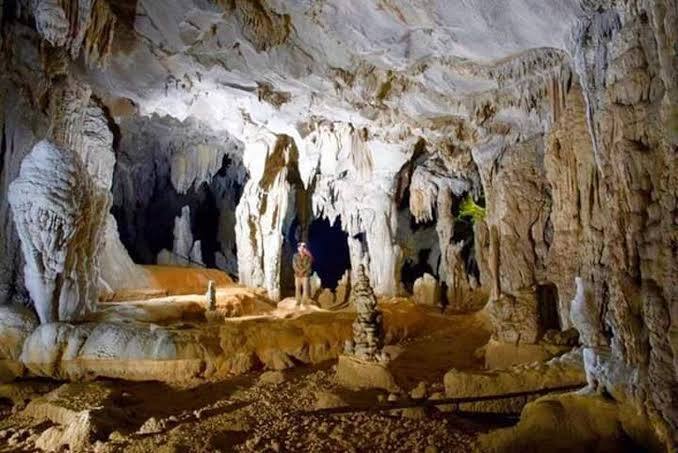
Nine hundred years ago, a Tibetan yogi in a cotton robe walked south over the Himalaya and sat down in caves that most people would not shelter a goat in. His name was Milarepa, and the caves he chose in what is now Nepal are still visited by monks, nuns, pilgrims and curious trekkers today.
This guide covers the four best-known Milarepa caves in Nepal: Piren Phu in Tsum Valley, the Milarepa Cave near Manang on the Annapurna Circuit, the sacred caves of Lapchi on the Tibetan border, and the hermitage caves of Yolmo (Helambu) north of Kathmandu. For each one you will find the legend, the location, the altitude, how to get there, and which trek takes you closest.
If you want the most complete Milarepa pilgrimage in a single journey, the Tsum Valley Trek is the place to start. Its route passes directly by Piren Phu, the valley's revered "Pigeon Cave," on the way to Mu Gompa near the Tibetan border.
Jetsun Milarepa (traditionally dated c. 1040–1123) is Tibet's most loved poet-saint and a founding figure of the Kagyu school of Tibetan Buddhism. His story is told across the Himalaya, and it explains why his caves matter so much to pilgrims.
After his father died, relatives seized the family's land and left Milarepa, his mother and sister in poverty. Urged on by his mother, he learned black magic and, according to his biography, caused a house to collapse during a wedding feast, killing many people. Overcome with regret, he went looking for a teacher who could help him undo that harm.
He found the translator Marpa Lotsawa, who made him build and tear down stone towers again and again before giving him any teaching. Buddhists see these trials as a way of purifying his past actions. Only then did Marpa pass on the meditation practices that Milarepa would spend the rest of his life perfecting.
Marpa told him to meditate in remote mountains rather than monasteries. Milarepa lived for years in caves, famously surviving on wild nettles until, the stories say, his skin turned green. He taught through spontaneous songs, later collected as The Hundred Thousand Songs of Milarepa. His student Gampopa went on to found the monastic Kagyu tradition, which is why Milarepa's caves remain active places of practice today.
In Milarepa's time, valleys such as Tsum and Lapchi sat in the borderlands between Tibet and Nepal. Marpa named Yolmo Gangra in Nepal as one of the places his student should meditate, and Milarepa's songs mention retreats across this frontier. As a result, several of the caves linked to him now lie inside Nepal's northern districts.
Four cave areas in Nepal carry the strongest links to Milarepa. Two sit on established trekking routes with teahouses; the other two are remote pilgrim valleys that need special planning.
|
Cave / site |
Region & district |
Approx. altitude |
Best trek to reach it |
Access level |
|---|---|---|---|---|
|
Piren Phu (Pigeon Cave) |
Upper Tsum Valley, Gorkha |
Above 3,000 m |
Moderate; restricted-area permit |
|
|
Milarepa Cave, Manang |
Manang, Annapurna region |
About 4,100 m |
Side hike from Bhraka/Manang |
|
|
Lapchi caves |
Lapchi Valley, Dolakha (Nepal–Tibet border) |
High Himalayan valley |
Custom pilgrimage trek |
Remote; special permits |
|
Yolmo caves (Takphu Senge Dzong) |
Helambu, Sindhupalchok |
Mid-mountain forest zone |
Custom Helambu itinerary |
Easier; close to Kathmandu |
Altitudes are approximate and vary by source. Other famous Milarepa caves, such as those at Nyalam and Kyirong, lie across the border in Tibet.
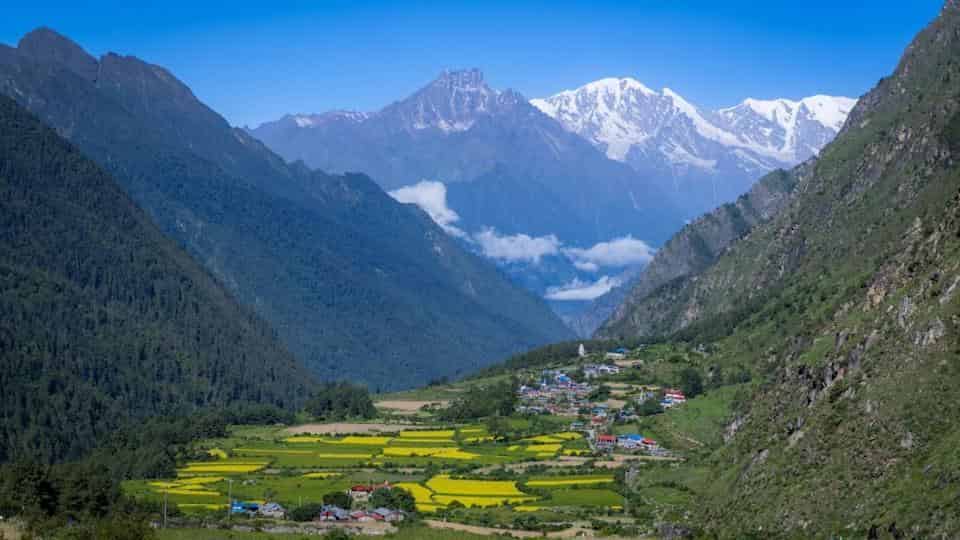
Piren Phu is the best-known Milarepa cave in Nepal and the spiritual high point of the Tsum Valley Trek. It sits in Upper Tsum, a sacred hidden valley (beyul) known as Kyimolung, the "Valley of Happiness," in northern Gorkha District.
According to tradition, Milarepa came to Tsum after meditating in Yolmo. A pigeon is said to have led him to the rock where he settled, and he later taught a group of gods who had taken the form of pigeons. That story gives the cave its name, Piren Phu or "Pigeon Cave."
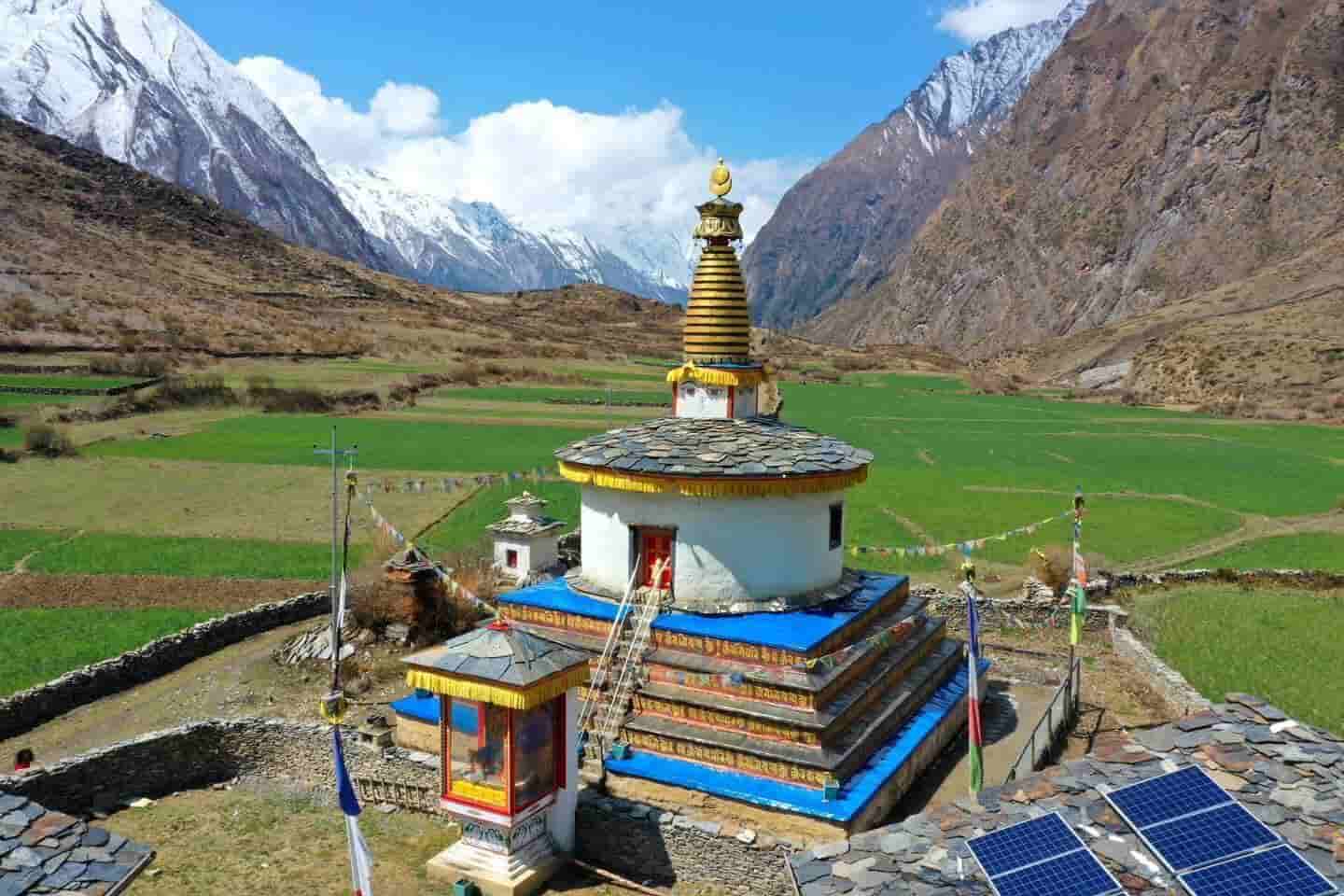
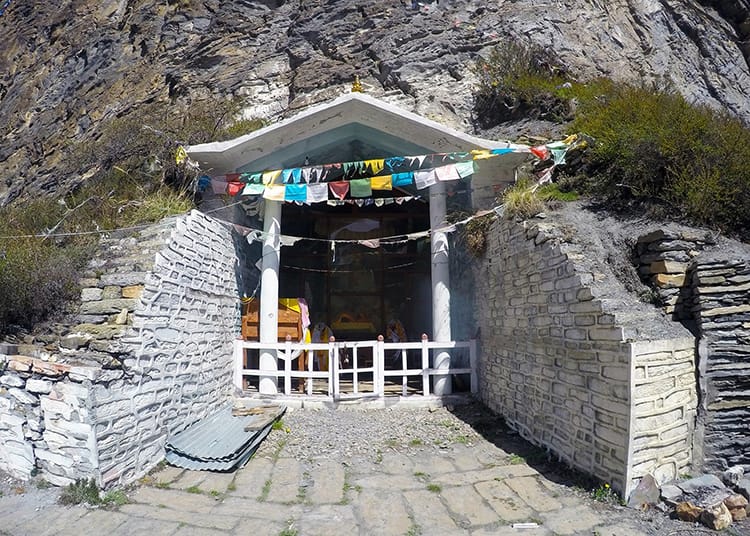
Today a small monastery building is built into the rock beside the cave, with chortens, prayer flags and mani stones around it. It is an active shrine rather than a ruin, and local Tsumba people still come here to pray and make offerings.
The cave lies on the trail between Chhokang Paro (3,031 m) and Nile, close to the villages of Lamagaon and Burji in Upper Tsum. From the cave, you look across barley fields and stone villages toward the peaks of the Ganesh Himal and Sringi Himal ranges.
On the 13-day itinerary run by Nepal Trip Services, you reach the cave on Day 8, one of the most meaningful days of the trek.
For daily distances, altitudes and walking hours, see our Tsum Valley Trek itinerary guide. Trekkers with extra time can add Ganesh Himal Base Camp or continue onto the Manaslu Circuit Trek.
The second famous Milarepa cave in Nepal sits at about 4,100 m on the slopes below Annapurna III, just outside Manang. It is one of the most rewarding side trips on the Annapurna Circuit Trek, and many trekkers walk past without knowing it exists.
Local tradition places one of Milarepa's best-known stories here. A deer, chased by a hunting dog and a hunter, ran to the place where Milarepa sat in meditation. Milarepa protected the animal, and the angry hunter shot arrows at him. Instead of fighting back, Milarepa sang to the hunter about compassion and the results of our actions. The hunter gave up killing and became his disciple.
That teaching survives as Milarepa's Song to the Hunter. Locals say a bow kept near the cave belonged to that hunter.
The trail starts near Bhraka (Braga), the village just before Manang. Expect about 2 hours of climbing from Bhraka to the cave, and roughly 3–4 hours for the round trip from Manang, depending on your pace.
The Nepal Trip Services Annapurna Circuit itinerary includes a rest and acclimatization day in Manang (3,540 m). Ice Lake and Gangapurna Lake are the standard hikes that day, and you can ask your guide to plan the Milarepa Cave instead. It suits the "climb high, sleep low" principle before you head toward Thorong La Pass and Muktinath.
Tip: Start early. Clouds often build in the afternoon, and the scree near the cave is easier when the ground is firm.
Lapchi is the most important Milarepa site in Nepal for serious practitioners, and the hardest to reach. The area lies mostly inside Nepal, in Dolakha District, right on the border with Tibet north-east of Kathmandu.
In Tibetan Buddhism, Lapchi is one of three great holy mountain ranges believed to be the abode of the deity Chakrasamvara, alongside Mount Kailash and Tsari. Milarepa spent long periods here, and tradition counts twelve caves in Lapchi, eight of which he used for meditation.
The most famous is Dudul Phugmoche, the "Great Cave of Subduing Mara." According to his biography, heavy snow fell for eighteen days and nights while he was inside, cutting him off for months. He survived on a single small store of tsampa (roasted barley flour). For centuries, lamas of the Drikung Kagyu school have looked after Lapchi.
Nepal Trip Services does not list a fixed Lapchi package, but our team can discuss a tailored pilgrimage through the trip planner.
Yolmo, better known to trekkers as Helambu, lies north of the Kathmandu Valley in Sindhupalchok District. It is the most accessible Milarepa site in Nepal and a good choice for travelers with limited time.
Marpa named Yolmo Gangra as one of the holy places where Milarepa should meditate. Milarepa followed that instruction and stayed at a cave known as Takphu Senge Dzong, the "Tiger Cave Lion Fortress." In his songs, he also describes meditating in many other caves around Yolmo, some well known and some hidden. After his time here, tradition says he moved on to Tsum, which links Yolmo and Piren Phu in a single pilgrim story.
Yolmo works well as a short pilgrimage on its own, or as a warm-up before Tsum Valley. Ask us about a custom Helambu itinerary through our contact page.
The best time to visit Milarepa's caves in Nepal is autumn (September–November) or spring (March–May). Both seasons bring stable weather, open trails and clear mountain views.
Read more in our guides to autumn trekking in Nepal and spring trekking in Nepal.
|
Route |
Permits required |
Key rules |
|---|---|---|
|
Tsum Valley Trek (Piren Phu) |
Tsum Valley Restricted Area Permit (RAP) + Manaslu Conservation Area Permit (MCAP) |
Minimum two trekkers; licensed guide; issued through a registered agency |
|
Annapurna Circuit (Manang cave) |
Annapurna Conservation Area Permit (ACAP) + TIMS card |
Guide recommended; permits checked at several checkpoints |
|
Lapchi |
Special permits for the border area |
Confirm current rules before booking |
|
Yolmo / Helambu |
National park entry where the route enters protected areas |
No restricted-area permit on standard routes |
For Tsum Valley, the RAP costs around USD 40 per person for the first 7 days in September–November and around USD 30 in December–August, plus a daily fee after that. The MCAP is about NPR 3,000. Fees are set by the Government of Nepal and can change, so Nepal Trip Services confirms current rates when you book.
Altitude sickness can affect anyone above roughly 2,500–3,000 m. Walk slowly, drink 3–4 liters of water a day, avoid alcohol and tell your guide about any headache or nausea early. Our Tsum Valley altitude sickness guide explains the warning signs and how the itinerary is paced. Travel insurance that covers helicopter evacuation is mandatory.
Milarepa's caves are working shrines, so behave as you would inside a monastery. A few simple habits show respect and make local people glad to welcome you.
A simple greeting of "Tashi Delek" goes a long way in Tsum and Manang. Your guide can also explain the meaning of the shrines, so you understand what you are looking at.
Reaching Piren Phu legally means trekking with a licensed guide through a registered agency, and that is where we come in. Our 13-day Tsum Valley Trek is built around the valley's sacred sites, with time at Piren Phu, Mu Gompa and Rachen Gompa.
What the package includes:
Flexible options:
You can explore all our Manaslu region treks or read what past travelers say on our reviews page.
The four best-known sites are Piren Phu in Upper Tsum Valley (Gorkha), the Milarepa Cave near Manang on the Annapurna Circuit, the caves of Lapchi in Dolakha on the Tibetan border, and the Yolmo caves in Helambu, north of Kathmandu. Piren Phu and the Manang cave are the easiest to combine with a standard trek, while Lapchi needs a custom pilgrimage.
Piren Phu, meaning "Pigeon Cave," is the cave in Upper Tsum where Milarepa is believed to have meditated. Legend says a pigeon guided him to the spot. A small monastery is built into the rock beside it, and local people still visit to pray. It lies on the route of the Tsum Valley Trek.
You drive from Kathmandu to Machha Khola, then trek through Jagat and Lokpa into Tsum Valley. On the 13-day Nepal Trip Services itinerary, you visit Piren Phu on Day 8, walking from Chhokang Paro past Lamagaon to the cave before continuing to Mu Gompa. No extra days are needed, because the cave sits on the main trail.
The standard itinerary is 13 days from Kathmandu to Kathmandu, including about 9 days of walking. You can extend it by 2–3 days for Ganesh Himal Base Camp or join the Manaslu Circuit for a longer journey of three weeks or more.
Yes. Tsum is a restricted area, so you need the Tsum Valley Restricted Area Permit and the Manaslu Conservation Area Permit. Permits are issued only through a registered Nepali trekking agency, for groups of at least two trekkers with a licensed guide. Nepal Trip Services arranges all of this for you.
Not independently. Restricted-area rules require at least two trekkers and a licensed guide. Solo travelers can still go by joining a group departure, and our team can help match you with other trekkers so you meet the permit rule.
The Manang cave sits at about 4,100 m (13,450 ft), although some sources give a slightly higher figure. That is higher than Manang village (3,540 m), so the hike also works as an acclimatization climb before Thorong La.
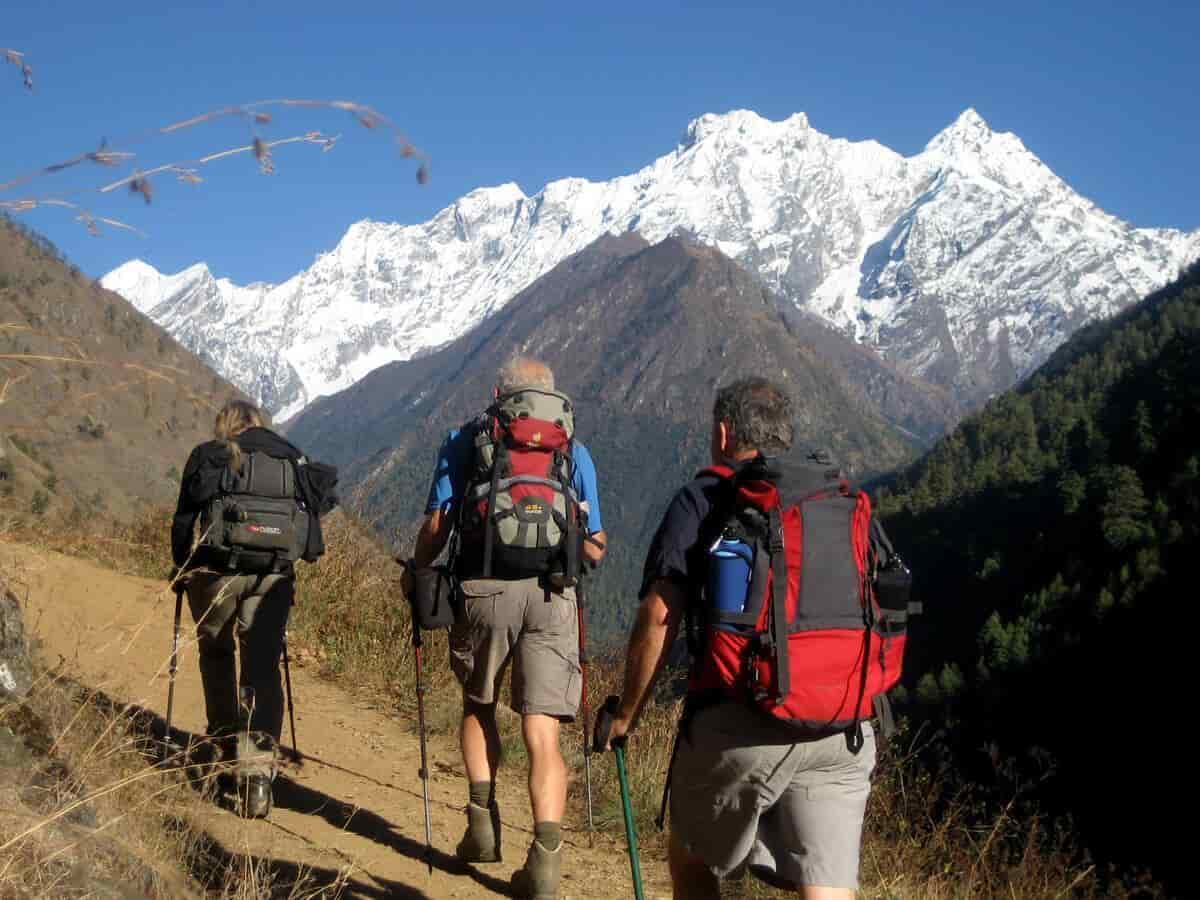
Allow roughly 2 hours of climbing from Bhraka to the cave and 3–4 hours for the round trip from Manang. The last part crosses steep scree, so start early, wear good boots and use trekking poles.
A deer, chased by a hunter and his dog, ran to where Milarepa was meditating. Milarepa protected it and sang to the hunter about compassion and the results of actions. The hunter gave up hunting and became his student. Locals in Manang say this happened near their cave, and the teaching is known as Milarepa's Song to the Hunter.
Milarepa (c. 1040–1123) was a Tibetan yogi and poet who turned from black magic to Buddhist practice under his teacher Marpa. He reached realization through years of meditation in mountain caves, and his songs are still sung today. He is a central figure of the Kagyu school, and his life is a classic story of transformation.
Autumn (September–November) is the best overall, with clear skies and dry trails. Spring (March–May) is the second-best choice and brings rhododendron blooms. Winter is very cold in Upper Tsum and Manang, and the monsoon (June–August) brings rain and landslide risk.
Yes, for beginners with good fitness. The trek is rated moderate, with 5–7 hours of walking a day and a maximum altitude of 3,700 m at Mu Gompa. There is no high pass, but the trails are rugged and facilities are basic. Training for 6–8 weeks beforehand makes the trip far more enjoyable.
Yes. Visitors of every faith are welcome, as long as they behave respectfully. Walk clockwise around shrines, remove your shoes where asked, ask before taking photos and leave a small donation if you wish. Many trekkers find the visit meaningful whatever their beliefs.
Yes, with a longer or custom itinerary. A common plan is Piren Phu on the Tsum Valley Trek, followed by the Manaslu Circuit and a continuation toward Manang. Another option is a short Yolmo (Helambu) pilgrimage before or after Tsum. Contact us to plan a route that fits your time and fitness.
Lapchi can be visited, but it is remote, has very basic facilities and sits in a sensitive border area, so special permits apply. It suits experienced trekkers and committed pilgrims. For most travelers, Piren Phu in Tsum Valley offers the most accessible way to visit a Milarepa cave in Nepal.
Milarepa's caves are more than places on a map. They mark the path of a man who turned a life of harm into one of compassion, and the people of Tsum, Manang, Lapchi and Yolmo still keep that story alive.
For most travelers, the clearest way to walk this sacred trail is the Tsum Valley Trek. In 13 days you pass Piren Phu, sleep near Mu Gompa, visit the nuns of Rachen Gompa and see village life that has changed little in generations.
Ready to begin? View the full itinerary and dates for the Tsum Valley Trek, build your own route with our trip planner, or contact Nepal Trip Services to plan your Milarepa pilgrimage.
Discover more articles that match your interests! Explore these similar blogs packed with insights, tips, and stories to keep you inspired.
How hard is the Tsum Valley trek? Altitude (3,700 m), daily hours, trail conditions, hardest days, permits and training ...
Stay safe on the Tsum Valley trek. Learn the altitude profile to Mu Gompa (3,700 m), early signs of AMS, and proven accl...
Plan your Tsum Valley trek with our 13-day itinerary: daily routes, altitudes, walking hours and highlights from Machha ...
Discover Mu Gompa, Tsum Valley\'s highest monastery at 3,700 m: its history, what to see, how to get there, where to sta...
Visit Rachen Gompa, the Tsum Valley nunnery founded in 1905. Learn its history, the nuns\' daily life, how to get there ...
Visit Piren Phu, Milarepa\'s sacred Pigeon Cave in Tsum Valley. Legend, location, how to reach it on the Tsum Valley Tre...