Tsum Valley Trek Itinerary: Day-by-day Route Guide
By Nepal Trip Services On 13 Oct 2026

By Nepal Trip Services On 13 Oct 2026
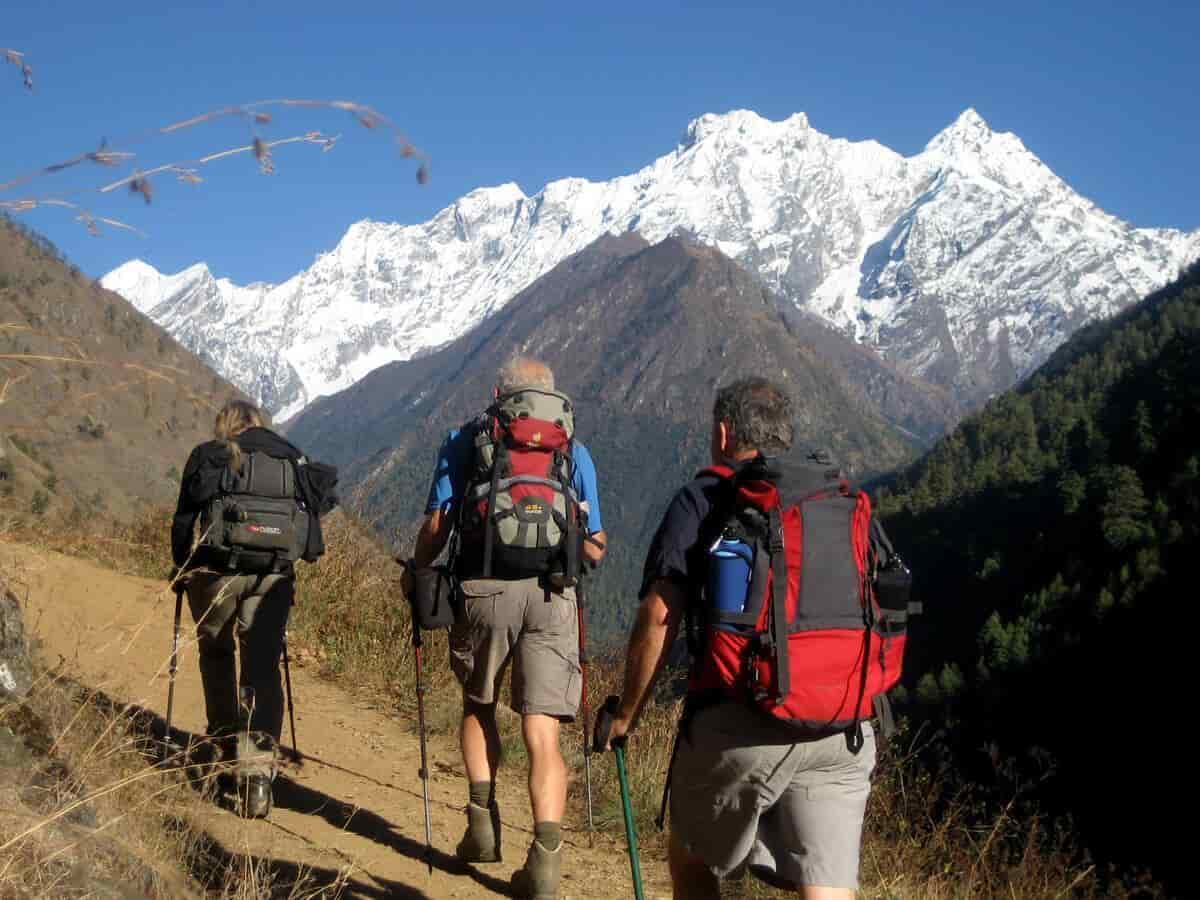
Tsum Valley sits in a quiet corner of the Manaslu region, tucked against the Tibetan border and closed to outsiders until 2008. It's a land of chortens, long mani walls, centuries-old monasteries and Buddhist villages where daily life still follows the old rhythms. This guide walks you through our 13-day Tsum Valley trek itinerary day by day: where you sleep, how far you walk, how high you climb, and what you'll see along the way.
Use it to understand the route, prepare your body, and decide whether the trip suits you. For prices, dates and booking, see our Tsum Valley Trek page.
|
Detail |
Information |
|---|---|
|
Duration |
13 days, Kathmandu to Kathmandu |
|
Trekking days |
8 (Days 4–11) |
|
Trek start and end |
Machha Khola (start), Tatopani/Jagat (end) |
|
Highest point |
Mu Gompa, about 3,700 m |
|
Total walking distance |
About 120–130 km |
|
Daily walking |
4–7 hours |
|
Difficulty |
Moderate |
|
Accommodation |
Hotel in Kathmandu; teahouses, homestays and a monastery guesthouse on the trek |
|
Permits |
Tsum Valley Restricted Area Permit and Manaslu Conservation Area Permit |
|
Guide rules |
Licensed guide and minimum two trekkers required |
|
Best seasons |
March–May and September–November |
|
Day |
Route |
Overnight altitude |
Distance |
Time |
|---|---|---|---|---|
|
1 |
Arrive in Kathmandu |
1,400 m |
— |
— |
|
2 |
Kathmandu sightseeing and trek preparation |
1,400 m |
— |
— |
|
3 |
Drive Kathmandu → Machha Khola |
930 m |
~160 km |
8–9 hrs drive |
|
4 |
Machha Khola → Jagat |
1,340 m |
22 km |
6–7 hrs |
|
5 |
Jagat → Lokpa |
2,240 m |
17 km |
6–7 hrs |
|
6 |
Lokpa → Chumling |
2,386 m |
9 km |
4–5 hrs |
|
7 |
Chumling → Chhokang Paro |
3,031 m |
11 km |
5–6 hrs |
|
8 |
Chhokang Paro → Mu Gompa |
~3,700 m |
13 km |
5–6 hrs |
|
9 |
Mu Gompa → Chhokang Paro via Rachen Gompa |
3,031 m |
13 km |
5–6 hrs |
|
10 |
Chhokang Paro → Lokpa |
2,240 m |
20 km |
6–7 hrs |
|
11 |
Lokpa → Jagat |
1,340 m |
17 km |
6–7 hrs |
|
12 |
Drive Tatopani → Kathmandu |
1,400 m |
~170 km |
8–9 hrs drive |
|
13 |
Final departure |
— |
— |
— |
Our team meets you at Tribhuvan International Airport and drives you to your hotel, a 30–45 minute ride. In the evening you meet your guide over a welcome dinner and get a first look at the plan for the days ahead.
Overnight: hotel, Kathmandu · Meals: welcome dinner
Spend the morning at four of Kathmandu's UNESCO-listed sites: Pashupatinath Temple, Boudhanath Stupa, Swayambhunath (the Monkey Temple) and Kathmandu Durbar Square. In the afternoon your guide holds a trek briefing, checks your gear and finalises the Tsum Valley Restricted Area Permit and Manaslu Conservation Area Permit. Use the free time in Thamel to buy or rent anything you're missing.
Overnight: hotel, Kathmandu · Meals: breakfast
Distance: about 160 km · Time: 8–9 hours
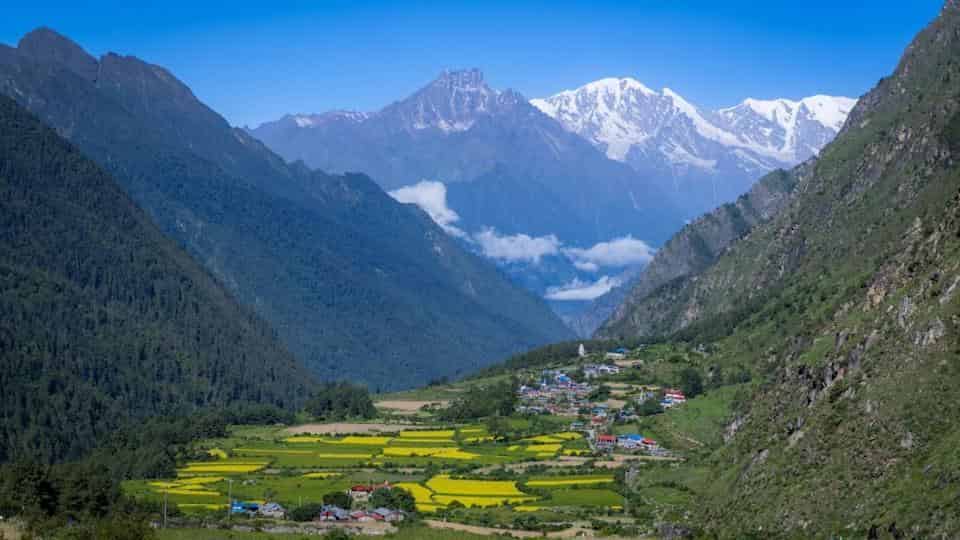
The drive follows the Prithvi Highway along the Trishuli River, then turns north through Dhading Besi and Arughat. Beyond Arughat the road becomes a rough track beside the Budhi Gandaki River, passing Soti Khola, terraced fields, waterfalls and Gurung villages before reaching Machha Khola ("Fish River").
Tip: take motion-sickness tablets if you need them, and keep snacks and water handy; it's a long, bumpy day.
Overnight: teahouse · Meals: breakfast, lunch, dinner
Distance: 22 km · Time: 6–7 hours · Gain: +410 m
Your first trekking day follows a narrow trail along the Budhi Gandaki gorge. You cross the Tharo Khola, pass Khorlabesi, and reach Tatopani, where natural hot springs make a good rest stop. A suspension bridge leads to Doban, then stone steps climb through forest to Jagat, a paved village where your Manaslu Conservation Area permit is checked.
Overnight: teahouse · Meals: breakfast, lunch, dinner
Distance: 17 km · Time: 6–7 hours · Gain: +900 m
This is the biggest climb of the trek. The trail rises through Salleri and Sirdibas, crosses a long suspension bridge to Philim, a large Gurung village, and continues to Ekle Bhatti. Here you leave the Manaslu Circuit and turn north into the Tsum Valley, climbing through pine forest to Lokpa, the valley's gateway.
Tip: set a slow, steady pace from the start; the climb after Ekle Bhatti is long.
Overnight: teahouse · Meals: breakfast, lunch, dinner
Distance: 9 km · Time: 4–5 hours
The shortest day of the trek. You drop to the Lungwa Khola, then climb steeply through pine and rhododendron forest above the Shiar Khola gorge, passing Gumlung before reaching Chumling. This village of stone houses looks out to Sringi Himal. In the afternoon, visit the old Chumling Gompa.
Overnight: teahouse or homestay · Meals: breakfast, lunch, dinner
Distance: 11 km · Time: 5–6 hours · Gain: +645 m
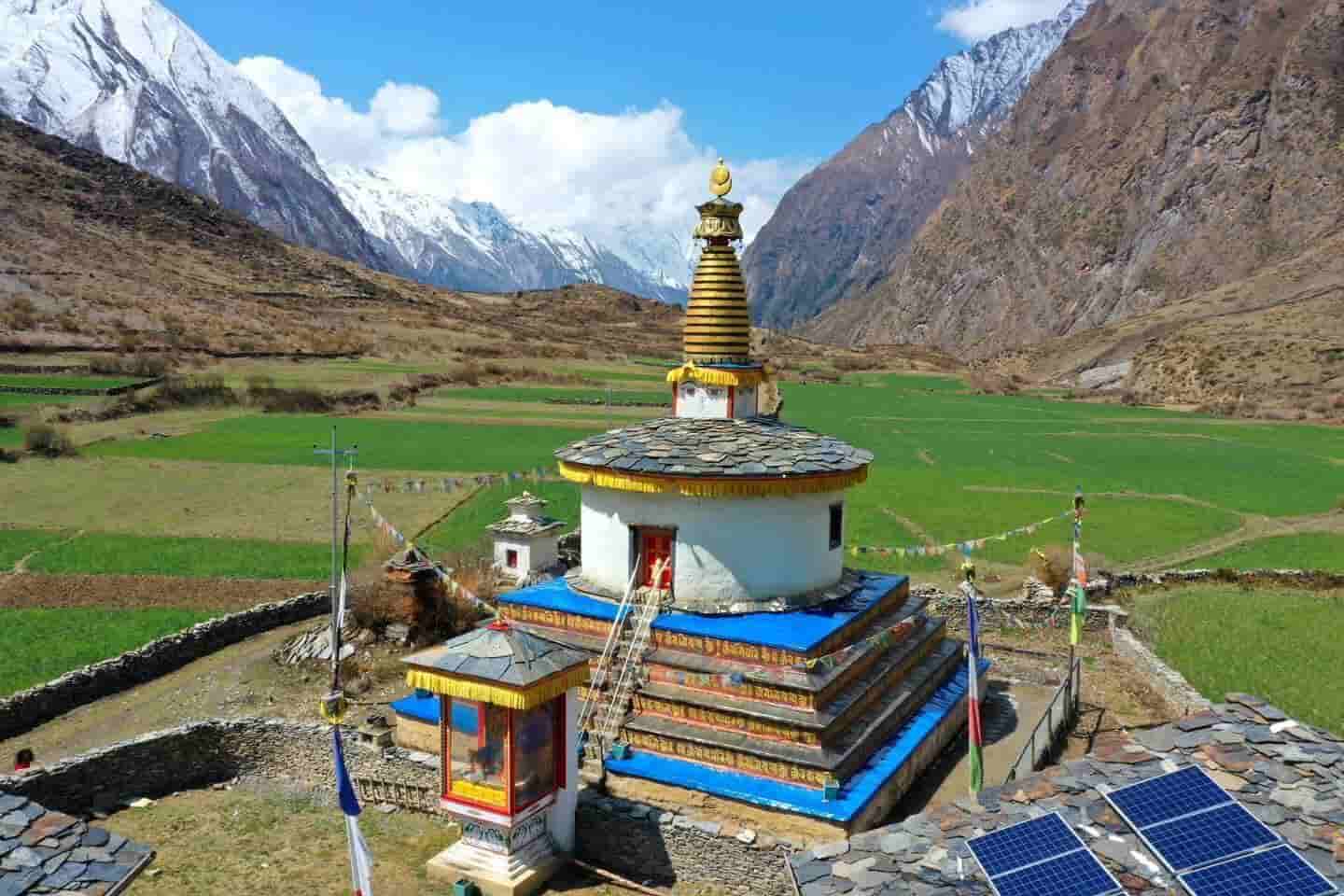
Cross a suspension bridge and follow the trail past Rainjam and the Serpu Khola, with Ganesh Himal in view. As you enter Upper Tsum, the landscape changes: Tibetan-style villages, long mani walls, chortens and barley fields. Climb past Gho to Chhokang Paro, set on a wide plateau with views of Himalchuli.
Tip: you're now above 3,000 m. Walk slowly, drink well, and tell your guide about any headache.
Overnight: teahouse or homestay · Meals: breakfast, lunch, dinner
Distance: 13 km · Time: 5–6 hours · Gain: +669 m
The cultural heart of the trek. Pass Lamagaon and visit Milarepa's Cave (Piren Phu), where the 11th-century Tibetan saint is said to have meditated. Continue through Burji, Phurbe and Pangdun, then Chhule and Nile, the last villages before the Tibetan border. A final climb brings you to Mu Gompa, the largest and highest monastery in the valley.
Overnight: monastery guesthouse or teahouse · Meals: breakfast, lunch, dinner
Distance: 13 km · Time: 5–6 hours
Wake for sunrise over the high valley and, if timing allows, join the morning prayers at Mu Gompa. Then descend and cross to Rachen Gompa, a peaceful Buddhist nunnery, before returning to Chhokang Paro.
Tip: ask before photographing monks, nuns or ceremonies, and walk clockwise around chortens and mani walls.
Overnight: teahouse or homestay · Meals: breakfast, lunch, dinner
Distance: 20 km · Time: 6–7 hours · Loss: −791 m
Retrace your steps through Gho, Rainjam and Chumling, then descend through forest along the Shiar Khola gorge, past waterfalls and small hamlets, back to Lokpa. It's a long day with plenty of downhill, so trekking poles help.
Overnight: teahouse · Meals: breakfast, lunch, dinner
Distance: 17 km · Time: 6–7 hours
Descend to Ekle Bhatti, rejoin the main Budhi Gandaki trail, and walk back through Philim, Sirdibas and Salleri. The air warms and terraced farmland returns. In Jagat, celebrate the end of the trek with your guide and porters.
Overnight: teahouse · Meals: breakfast, lunch, dinner
Distance: about 170 km · Time: 8–9 hours
Walk or drive down to Tatopani and board a jeep back via Soti Khola and Arughat. Arrive in Kathmandu in the evening for a farewell dinner with cultural performances.
Overnight: hotel, Kathmandu · Meals: breakfast, lunch, farewell dinner
Enjoy free time for last-minute shopping or sightseeing. Our team transfers you to the airport about three hours before your flight.
Meals: breakfast
|
Option |
Extra time |
Why choose it |
|---|---|---|
|
Acclimatization night at Chhokang Paro |
+1 day |
Splits the two big climbs above 3,000 m; recommended for older trekkers or anyone with past altitude problems |
|
Ganesh Himal Base Camp side trip |
+2–3 days |
Glacier views at about 4,200 m via the Gumba Lungdang nunnery |
|
Continue onto the Manaslu Circuit |
20+ days in total |
Cross the Larkya La (5,106 m) after Tsum; see our Manaslu Circuit Trek |
|
Buffer day in Kathmandu |
+1 day |
Cover road delays on the long drives |
|
Private trek |
Same length |
Set your own pace and dates |
Tsum Valley is a restricted area. You need a licensed guide, at least two trekkers, and both permits arranged through a registered agency:
Fees are taken from our trip page and can change; both are arranged for you in the Tsum Valley Trek package. Permits are checked at Jagat and at checkpoints along the route.
|
Season |
Months |
Trail conditions |
|---|---|---|
|
Autumn |
September–November |
Best: dry trails, clear views, stable weather |
|
Spring |
March–May |
Very good: warmer, rhododendrons in bloom, some haze |
|
Monsoon |
June–August |
Difficult: landslides, road blocks, leeches |
|
Winter |
December–February |
Cold, snow possible at Mu Gompa, some lodges closed |
On the trek you'll stay in simple teahouses, family homestays in Upper Tsum, and a monastery guesthouse at Mu Gompa. Rooms are basic, usually twin beds with shared toilets, and get cold above Chhokang Paro, so bring a warm sleeping bag. Meals are hearty and simple: dal bhat, Tibetan bread, potatoes, noodles, soup and butter tea. Hot showers, charging and Wi-Fi are limited and cost extra; carry cash in Nepalese rupees, as there are no ATMs past Arughat.
Our 13-day Tsum Valley Trek takes care of the logistics so you can focus on the trail:
Questions about dates or pace? Chat with us on WhatsApp; we usually reply within two hours.
Our standard itinerary takes 13 days from Kathmandu to Kathmandu, including 8 trekking days, 2 long drive days and 2 days in Kathmandu. Add 1 day for an acclimatization night, 2–3 days for Ganesh Himal Base Camp, or about a week more to continue onto the Manaslu Circuit.
The trek starts at Machha Khola (930 m), reached by an 8–9 hour drive from Kathmandu via Arughat and Soti Khola. It ends at Jagat, and you take a jeep back to Kathmandu from Tatopani, just below Jagat.
Mu Gompa, at about 3,700 m, reached on Day 8. It's the largest and highest monastery in the valley, close to the Tibetan border.
Between 9 km and 22 km, usually 4–7 hours. The shortest day is Lokpa to Chumling (9 km), and the longest is Machha Khola to Jagat (22 km). The total trekking distance is about 120–130 km.
Day 5, Jagat to Lokpa, climbs about 900 m over 17 km and is the toughest for most people. Days 7 and 8 are harder for altitude, as each gains more than 600 m above 2,400 m.
The standard 13-day itinerary has no dedicated rest day, as the route stays below about 3,700 m and descends right after Mu Gompa. We can add an acclimatization night at Chhokang Paro if you'd like extra safety.
Milarepa's Cave (Piren Phu), Mu Gompa, Rachen Gompa nunnery, Chumling Gompa, the Tibetan-style villages of Upper Tsum such as Chhule and Nile, long mani walls and chortens, the Budhi Gandaki gorge, the Tatopani hot springs, and views of Ganesh Himal, Himalchuli and Sringi Himal.
Yes. It's an optional side trip that adds about 2–3 days and reaches about 4,200 m via the Gumba Lungdang nunnery. Read our Ganesh Himal Base Camp guide for details.
Yes. After Tsum, you return to the main trail and continue around Manaslu over the Larkya La (5,106 m). The combined trip takes 20 days or more. It requires the Manaslu restricted permit as well as the Tsum permits.
Yes. Tsum Valley is a restricted area, so you must trek with a government-licensed guide, in a group of at least two trekkers, with permits arranged by a registered agency. Solo travellers can join a group departure.
Two nights in a Kathmandu hotel at the start and one at the end; on the trek, teahouses in Machha Khola, Jagat and Lokpa, teahouses or homestays in Chumling and Chhokang Paro, and a monastery guesthouse or teahouse at Mu Gompa.
The first part follows the paved Prithvi Highway. After Arughat the road becomes a rough, unpaved track along the Budhi Gandaki, and in the monsoon it can be blocked by landslides. Expect 8–9 hours and a bumpy ride.
Autumn (September–November) and spring (March–May). Trails are dry and views are clearest. In the monsoon, landslides can block the road and trail; in winter, snow and closed lodges in Upper Tsum can force changes.
Signal and Wi-Fi are available in lower villages like Machha Khola and Jagat, but become patchy or absent in Upper Tsum. Some lodges offer paid Wi-Fi. Let family know you may be offline for a few days.
The 13 days are already fairly tight. You can skip the Day 2 sightseeing if you've already seen Kathmandu, but we don't recommend cutting trekking days, as it means steeper altitude gains. Private treks can be adjusted to your pace; ask us when you book.
The Tsum Valley trek itinerary packs a lot into 13 days: the wild Budhi Gandaki gorge, the climb into a hidden Buddhist valley, Milarepa's Cave, Mu Gompa near the Tibetan border, and nights in village homestays few trekkers ever see. The route stays below about 3,700 m, the daily walking is steady rather than extreme, and the reward is a side of Nepal that still feels untouched. Go in spring or autumn, take the climbs slowly, and consider an extra night at Chhokang Paro if you want more margin. When you're ready, check dates and book the Tsum Valley Trek with Nepal Trip Services.
Discover more articles that match your interests! Explore these similar blogs packed with insights, tips, and stories to keep you inspired.
How hard is the Tsum Valley trek? Altitude (3,700 m), daily hours, trail conditions, hardest days, permits and training ...
Stay safe on the Tsum Valley trek. Learn the altitude profile to Mu Gompa (3,700 m), early signs of AMS, and proven accl...
Discover Mu Gompa, Tsum Valley\'s highest monastery at 3,700 m: its history, what to see, how to get there, where to sta...
Visit Rachen Gompa, the Tsum Valley nunnery founded in 1905. Learn its history, the nuns\' daily life, how to get there ...
Explore Milarepa’s caves in Nepal, from Piren Phu on the Tsum Valley Trek to Manang, Lapchi and Yolmo. Legends, routes...
Visit Piren Phu, Milarepa\'s sacred Pigeon Cave in Tsum Valley. Legend, location, how to reach it on the Tsum Valley Tre...