Ganesh Himal Base Camp: Location, Views & Trekking Connection
By Nepal Trip Services On 12 Oct 2026

By Nepal Trip Services On 12 Oct 2026
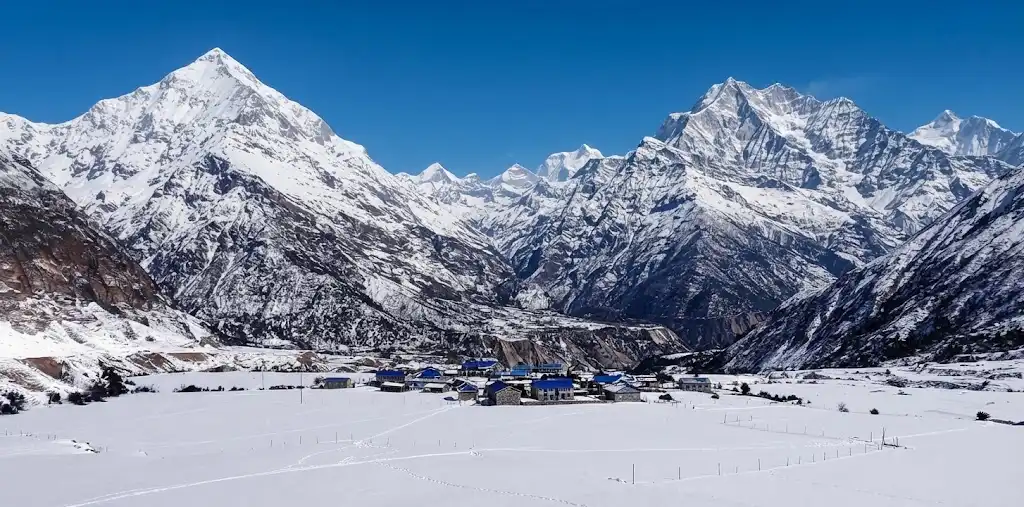
Rising like a crown of ice above Nepal’s remote Manaslu region, the Ganesh Himal range is one of the most striking yet least-visited mountain massifs in the Himalayas. For trekkers exploring the sacred Tsum Valley Trek, a side trip to Ganesh Himal Base Camp offers a rare chance to stand face-to-face with towering glaciers and icy peaks, far from the crowds of Everest and Annapurna. Quiet trails, Buddhist nunneries, and breathtaking alpine scenery make this hidden base camp a true reward for adventurous travelers from around the world.
The Ganesh Himal range stretches along the Nepal–Tibet border, bordered by the Budhi Gandaki River to the west and the Trishuli River to the east, spanning parts of Gorkha, Dhading, and Rasuwa districts. The base camp described here sits on the northern side of the range, reached from Upper Tsum Valley in Gorkha District, making it a natural extension of the Tsum Valley Trek.
| Detail | Information |
|---|---|
| Location | Upper Tsum Valley, Gorkha District, Nepal |
| Region | Manaslu Conservation Area |
| Base Camp Altitude | Approx. 4,200m |
| Highest Peak | Ganesh I (Yangra), 7,422m |
| Starting Point | Chhokang Paro / Dumje in Tsum Valley |
| Extra Days Needed | 2–3 days |
| Difficulty | Moderate to Challenging |
| Best Seasons | March–May and September–November |
| Permits | Covered by Tsum Valley RAP and MCAP |
Altitudes are approximate and may vary by source.
The range is named after Lord Ganesh, the elephant-headed Hindu god of wisdom and good fortune. Locals say the shape of the main peak resembles the god’s head and trunk. In the Tibetan Buddhist communities of Tsum, the highest peak is known as Yangra, and the mountains are deeply respected as sacred guardians of the valley.
| Peak | Local Name | Approx. Altitude |
|---|---|---|
| Ganesh I | Yangra | 7,422m |
| Ganesh II | Lapsang Karbo | 7,118m |
| Ganesh IV | Pabil | 7,104m |
| Ganesh III | Salasungo | 7,043m |
| Ganesh V | — | 6,950m |
| Ganesh VI | — | 6,480m |
Ganesh I was first climbed in 1955 by a French-Swiss expedition, but the range remains rarely climbed and lightly trekked today.
The base camp rewards trekkers with some of the most dramatic close-up mountain scenery in the region:
Ganesh Himal Base Camp is not a standalone trek from Tsum. Instead, it is a rewarding side trip added to the 13-Day Tsum Valley Trek. After visiting Mu Gompa and Rachen Gompa, trekkers branch off toward the peaceful Gumba Lungdang nunnery, which serves as the base for the climb to the camp.
Kathmandu → Machha Khola → Jagat → Lokpa → Chumling → Chhokang Paro → Mu Gompa → Rachen Gompa → Dumje → Gumba Lungdang → Ganesh Himal Base Camp → Gumba Lungdang → Lokpa → Jagat → Kathmandu
| Day | Route | Altitude | Approx. Walking Time | Highlights |
|---|---|---|---|---|
| Day A | Chhokang Paro / Rachen Gompa to Dumje | 2,460m | 4–5 hrs | Descent through Tsum villages |
| Day B | Dumje to Gumba Lungdang | 3,200m | 5–6 hrs | Steep forest climb, nunnery visit |
| Day C | Gumba Lungdang to Ganesh Himal Base Camp and back | 4,200m | 7–8 hrs | Glaciers and close-up Ganesh Himal views |
| Day D | Gumba Lungdang to Lokpa | 2,240m | 6–7 hrs | Descent to rejoin the main trail |
This extension adds about 2–3 days to the standard Tsum Valley Trek itinerary, bringing the total trip to around 15–16 days.
Perched on a forested ridge at about 3,200m, Gumba Lungdang is a small Buddhist nunnery where resident nuns follow a life of prayer and meditation. Trekkers often stay overnight here, and attending the evening puja (prayer ceremony) is one of the most moving experiences of the journey. Accommodation is very simple, but the peaceful atmosphere and mountain views make it unforgettable.
The base camp extension is more demanding than the standard Tsum Valley route:
Good fitness, proper acclimatization, and prior trekking experience are recommended. Read our guide on Tsum Valley Trek Difficulty Level and Altitude Sickness and Acclimatization Tips to prepare well.
| Season | Months | Conditions | Recommendation |
|---|---|---|---|
| Spring | March – May | Mild weather, rhododendron blooms, good views | ⭐⭐⭐⭐⭐ |
| Autumn | September – November | Clear skies, stable weather, best visibility | ⭐⭐⭐⭐⭐ |
| Winter | December – February | Heavy cold, snow on upper trail | ⭐⭐ |
| Monsoon | June – August | Rain, clouds, slippery trails, leeches | ⭐ |
Learn more in our Best Time to Trek Tsum Valley and Tsum Valley Weather and Temperature by Month guides.
Carry snacks, a warm sleeping bag, and enough water for the long base camp day. See our Packing List and Trekking Gear Rental in Kathmandu for details.
It’s worth noting there are two main ways to experience the Ganesh Himal range:
This guide focuses on the north-side base camp connected to the Tsum Valley Trek.
Ganesh Himal Base Camp (north side) is located in Upper Tsum Valley, Gorkha District, within the Manaslu Conservation Area of Nepal. It sits beneath the northern flank of the Ganesh Himal range, close to the Nepal–Tibet border, and is reached via the Gumba Lungdang nunnery.
The north-side base camp reached from Tsum Valley sits at approximately 4,200m above sea level. It is the highest point on the Tsum Valley Trek when this extension is included, rising above Mu Gompa (3,700m).
The highest peak is Ganesh I, also known as Yangra (7,422m). Other major summits include Ganesh II (7,118m), Ganesh IV or Pabil (7,104m), and Ganesh III or Salasungo (7,043m).
The range is named after Lord Ganesh, the elephant-headed Hindu god of wisdom and good fortune, because the main peak is said to resemble an elephant’s head and trunk. In local Tibetan Buddhist communities, the highest peak is called Yangra.
After visiting Mu Gompa and Rachen Gompa, trekkers descend to Dumje, climb to Gumba Lungdang (3,200m), and then make a full-day round trip to the base camp before descending to Lokpa to rejoin the main trail toward Jagat.
The extension usually adds 2–3 days, turning the standard 13-day Tsum Valley Trek into a 15–16 day journey. Extra time for acclimatization or weather can also be included.
It is graded moderate to challenging. The steep climb to Gumba Lungdang, a long 7–8 hour round trip to the base camp, rocky moraine terrain, and higher altitude make it tougher than the standard Tsum Valley route.
Expect dramatic close-up views of Ganesh I (Yangra), along with sweeping glaciers, icefalls, and surrounding snow peaks of the Ganesh range. Clear mornings also reveal distant panoramas of Sringi Himal and parts of the Manaslu region.
No additional permits are usually needed. The Tsum Valley Restricted Area Permit (RAP) and the Manaslu Conservation Area Permit (MCAP) cover the extension. As it lies in a restricted area, you must trek with a licensed guide in a group of at least two.
The best seasons are autumn (September–November) for clear skies and spring (March–May) for mild weather and blooming rhododendrons. Winter brings heavy cold and snow, while the monsoon brings rain, clouds, and slippery trails.
No, there are no teahouses or lodges at the base camp itself. Trekkers stay at the simple Gumba Lungdang nunnery guesthouse and visit the base camp as a day hike.
Fit beginners can reach the base camp with good preparation, a slow pace, and proper acclimatization. However, prior hiking experience is strongly recommended due to the steep terrain, long walking day, and altitude.
Yes. At around 4,200m, the risk of Acute Mountain Sickness (AMS) is higher than on the main Tsum Valley trail. Walking slowly, staying hydrated, following a gradual itinerary, and descending if symptoms worsen are essential.
The Tsum Valley route approaches from the north side of the range via Gumba Lungdang, combining Tibetan Buddhist culture with glacier views. The Ganesh Himal (Ruby Valley) Trek approaches from the south through Dhading and Rasuwa districts, known for Tamang villages and the Pangsang Pass.
Yes. Experienced trekkers can combine Tsum Valley, Ganesh Himal Base Camp, and the Manaslu Circuit with the Larkya La Pass (5,106m) for an epic 24+ day Himalayan adventure. Nepal Trip Services can design a fully customized itinerary, arrange all permits, and provide experienced guides for this extended journey.
Adding Ganesh Himal Base Camp to your Tsum Valley Trek turns a beautiful cultural journey into a truly complete Himalayan experience, blending sacred monasteries, peaceful nunneries, and up-close glacier views in one unforgettable trip. Nepal Trip Services designs customized and private Tsum Valley Trek options with expert local guides, permits, and complete logistics handled for you.
👉 Ready to explore the hidden glaciers of Ganesh Himal? Contact Nepal Trip Services today and start planning your extended Tsum Valley adventure.
Discover more articles that match your interests! Explore these similar blogs packed with insights, tips, and stories to keep you inspired.
Plan your Ulleri visit: climb the famous stone staircase, meet Magar culture & enjoy Annapurna views on the way to Ghore...
Suggested Meta Description: Explore Ghorepani (2,874 m), gateway to Poon Hill sunrise. Discover its history, teahouses, ...
Plan your Poon Hill trek: sunrise at 3,210 m over Dhaulagiri & Annapurna, routes, itineraries, permits, best time, diffi...
Explore Tadapani (2,630 m), a forest village with Machhapuchhre & Annapurna South sunrise views. Routes, teahouses, best...
Explore Tikhedhunga (1,540 m), riverside gateway to Ulleri\'s stone steps & Poon Hill. Routes from Nayapul, teahouses, b...
Discover the Magar people of Nepal: history, languages, festivals, Gurkha heritage, food, dress & where to experience Ma...