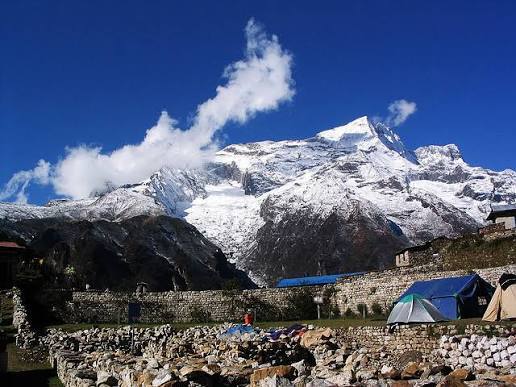
Namche Saturday Market, Nepal: Complete Travel & Cultural Guide
By Nepal Trip Services On 06 Oct 2026

By Nepal Trip Services On 06 Oct 2026

Most trekkers pass through Namche Bazaar in a blur of cafés, gear shops and breathless climbing. Those who happen to be there on a Saturday morning see something different. Porters, farmers and traders spread their goods across stone terraces, Sherpa lodge owners stock up for the week, and the whole Sherpa capital hums with trade.
The Namche Saturday Market is one of the most authentic cultural experiences in the Everest region, and it fits easily into a short trek. This guide explains what it is, what is sold, how to time your visit, and how to include it in a 7-day journey.
| Detail | Information |
|---|---|
| Name | Namche Saturday Market (weekly haat bazaar) |
| Location | Terraces at the edge of Namche Bazaar (3,440 m), Khumbu region |
| Day | Every Saturday |
| Best time | Early morning, shortly after sunrise, as the market winds down by mid-morning |
| What's sold | Vegetables, rice, spices, yak cheese, household goods, clothing, shoes, blankets and some gear |
| Who comes | Traders and villagers from lower valleys, plus Sherpa lodge owners from higher villages |
| Entry fee | None |
| Time needed | About 1–2 hours |
| Best seasons | March–May and September–November (a market is held year-round, but monsoon weather can affect it) |
Timings and traders can vary by season and weather, so confirm details with your guide.
Namche Bazaar has been a trading hub for centuries. Historically, traders from the Tibetan side exchanged salt and other goods for grain and other supplies from the lower valleys of Nepal. Today the weekly market carries that tradition forward. It is a living reminder that Namche is a real market town long before it is a trekking stop.
The market is not staged for tourists. Locals buy their weekly supplies, traders negotiate prices, and Sherpa hotel owners, some descending from higher villages, stock up on food and household goods. For visitors, it is a rare chance to watch everyday mountain commerce up close.
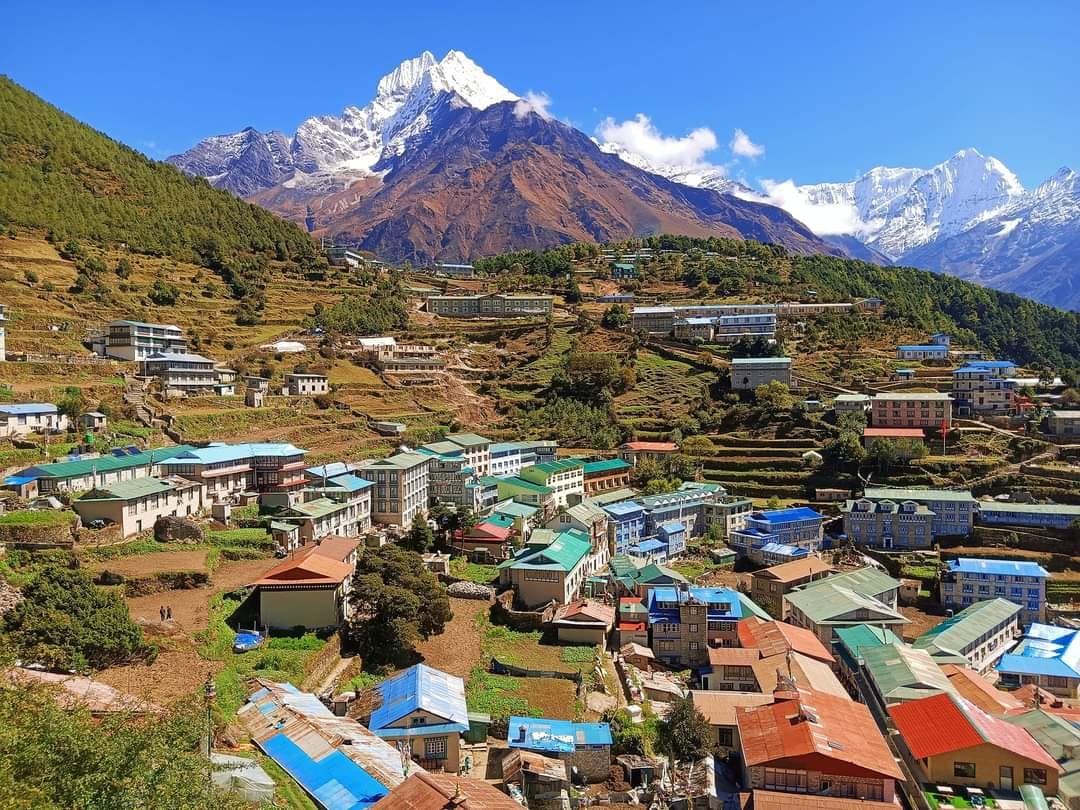
Namche Bazaar sits at 3,440 m in a horseshoe-shaped bowl inside Sagarmatha National Park, a UNESCO World Heritage Site. You reach it by flying from Kathmandu (or Ramechhap in peak season) to Lukla, then trekking along the Dudh Koshi River via Phakding. Learn more in our guide to Namche Bazaar, and read about the flight in our Kathmandu to Lukla flight guide.
The market is practical rather than polished. Typical goods include:
Check any trekking equipment carefully before you buy. For essentials such as boots, sleeping bags and down jackets, Kathmandu's Thamel district offers wider choice, and your trek package may already include a duffel, down jacket and sleeping bag on loan.
Outside market day, Namche still offers bakeries, cafés, gear shops, handicraft stalls, a small museum and the last reliable ATMs on the trail. Combine your market visit with a coffee, a fresh pastry and a stroll through the lanes.
Spend a few minutes simply watching, and you will learn more about Khumbu life than any guidebook can teach.
Timing matters. Because the market is busiest early on Saturday morning, you should plan to wake up in Namche on a Saturday.
On our 7-day Everest View Trek, you reach Namche on Day 3 and spend Day 4 acclimatising. If you want to catch the market:
| Trek Day | Suggested Calendar Day | Activity |
|---|---|---|
| Day 1 | Wednesday | Arrive in Kathmandu |
| Day 2 | Thursday | Fly to Lukla, trek to Phakding |
| Day 3 | Friday | Climb to Namche Bazaar |
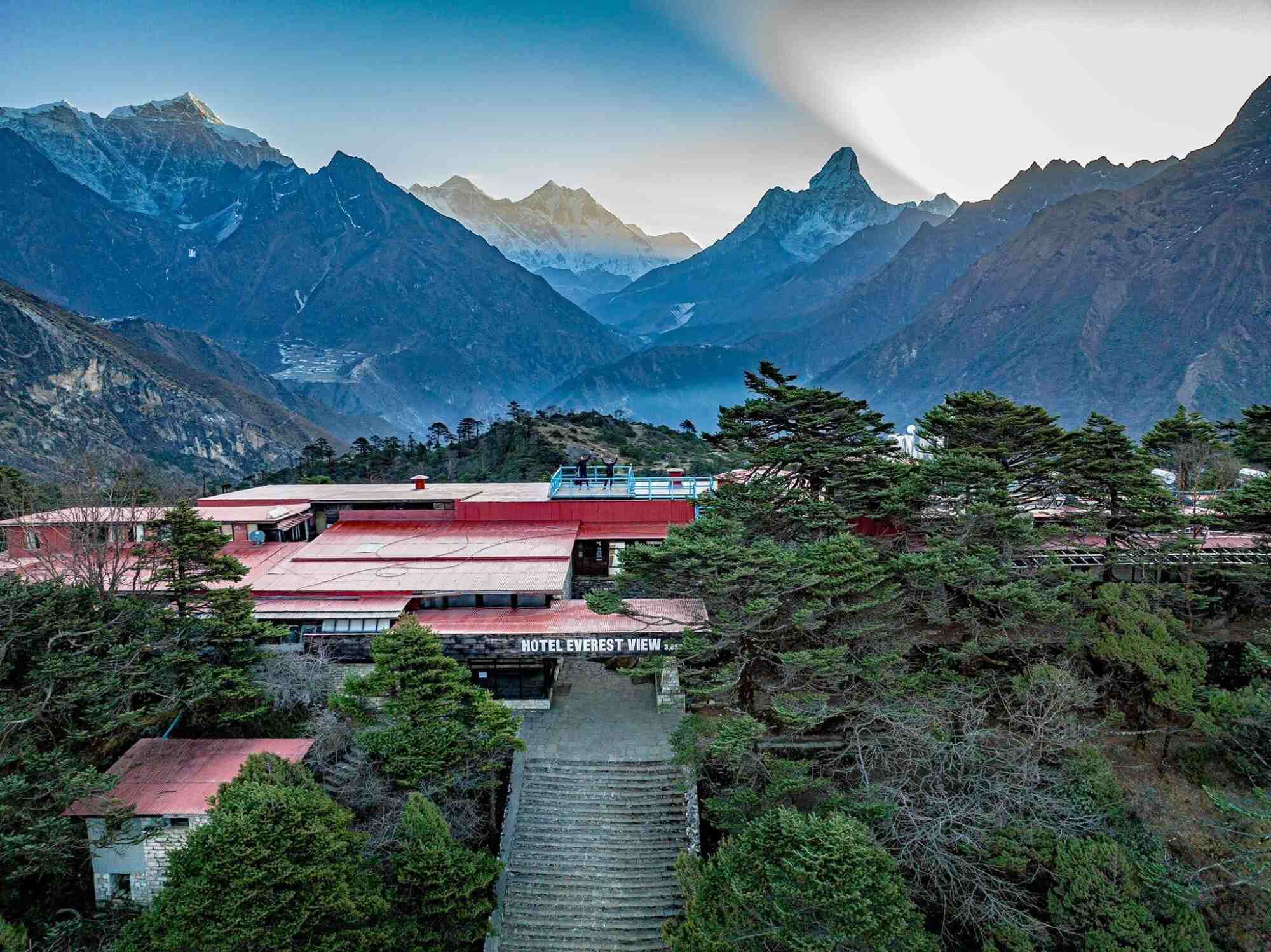
| Day 4 | Saturday | Visit the market early, then hike to the Everest View Hotel and Khumjung |
| Day 5 | Sunday | Descend to Lukla |
| Day 6 | Monday | Fly to Kathmandu |
| Day 7 | Tuesday | Departure |
This schedule is a suggestion, not a guarantee, because Lukla flights are weather-dependent. Add a buffer day, and ask our team to adjust your dates through the Trip Planner.
| Season | Months | What to Expect |
|---|---|---|
| Autumn | Sep–Nov | Clear, stable weather. See autumn trekking in Nepal. |
| Spring | Mar–May | Mild days and rhododendrons. See spring trekking in Nepal. |
| Winter | Dec–Feb | Cold and quiet, with clear skies. |
| Monsoon | Jun–Aug | Rain, cloud and Lukla flight delays. |
Autumn and spring give the best combination of weather and atmosphere.
Namche sits above 3,400 m, so altitude sickness is possible, even though the Everest View route is relatively low. Use your acclimatisation day well:
Buy insurance that covers trekking to at least 4,000 m and emergency helicopter evacuation. For a flexible schedule or flight backup, ask about helicopter services.
The market is just one highlight of the Khumbu. If you have more time, compare longer routes on our Everest Region Treks page:
It is a weekly market held in Namche Bazaar, the Sherpa capital of the Everest region. Traders and villagers gather to sell fresh food, household goods, clothing and more, and it remains an important part of local life.
It takes place every Saturday. It is busiest in the early morning and winds down later in the morning, so arrive soon after sunrise.
It is held on terraces at the edge of Namche Bazaar (3,440 m). Your guide or lodge owner can point you to the right spot, and it is only a short walk from most teahouses.
Expect vegetables, rice, spices, yak cheese, soap, blankets, clothing, shoes and some trekking items. It is mainly a local market, so prices are modest and goods are practical.
No. The market is free to enter. You only pay for what you buy.
Plan on about one to two hours. That is enough to look around, take photos and chat with traders.
Yes, especially for culture lovers. It shows everyday Sherpa and mountain life far better than a tourist shop, and it costs nothing to visit.
Yes, if your dates line up. On the 7-day trek you reach Namche on Day 3 and acclimatise on Day 4, so arriving in Kathmandu on a Wednesday puts you in Namche on Saturday morning. We can adjust your dates, but flights can change.
You can still enjoy Namche's cafés, bakeries, museum, shops and views. The weekly market is a bonus, not the only attraction.
Some gear is sold, but quality varies. Buy essentials such as boots, sleeping bags and down jackets in Kathmandu, or use the loan items in your trek package.
Gentle bargaining is normal, but prices are already modest. Be polite, smile and avoid pushing too hard for small savings.
Cash. Carry small Nepali rupee notes, because cards are rarely accepted at market stalls. The last reliable ATMs are in Namche, but they can be offline, so withdraw cash in Kathmandu.
Yes, but always ask permission before photographing people. Respect a "no," and avoid blocking narrow paths.
September to November and March to May offer the clearest weather. Winter is quiet and cold, and the monsoon brings rain, cloud and flight delays.
Send an enquiry through our website or message us on WhatsApp at +977-9828696557. A deposit confirms your booking, and we recommend booking 1–2 months ahead for peak seasons to secure Lukla flights.
Namche Bazaar is more than a staging post on the way to Everest. On a Saturday morning, it is a working market town where Himalayan trade continues much as it has for generations. Add one early morning to your itinerary, and you will return home with stories that go beyond mountain views.
Ready to plan? Explore the Everest View Trek, browse all Everest Region Treks, or design a custom trip with the Trip Planner. For personal advice, contact our team.
Discover more articles that match your interests! Explore these similar blogs packed with insights, tips, and stories to keep you inspired.
Discover Khumjung, Nepal — the Khumbu\\'s most beautiful village, home to the Yeti scalp & Hillary\\'s first school. C...
Plan your Namche Bazaar acclimatization day: best hikes, Everest View Hotel, Khumjung, altitude tips, a sample schedule,...
Discover Everest View Hotel at 3,880 m: views, history, how to reach it from Namche, stay vs visit tips, best time, and ...
Explore Mount Everest in Nepal: height, history, best time, treks to Base Camp and Everest View, permits, altitude safet...
Plan your Kongde Ri trip: height, best views from Namche, best time, permits, 7-day itinerary, climbing facts, costs and...
Lhotse (8,516 m) is the world\'s 4th highest peak. Learn its height, location, climbing history, routes, best views and ...