Khumjung, Nepal: Complete Travel & Trekking Guide
By Nepal Trip Services On 23 Sep 2026

By Nepal Trip Services On 23 Sep 2026
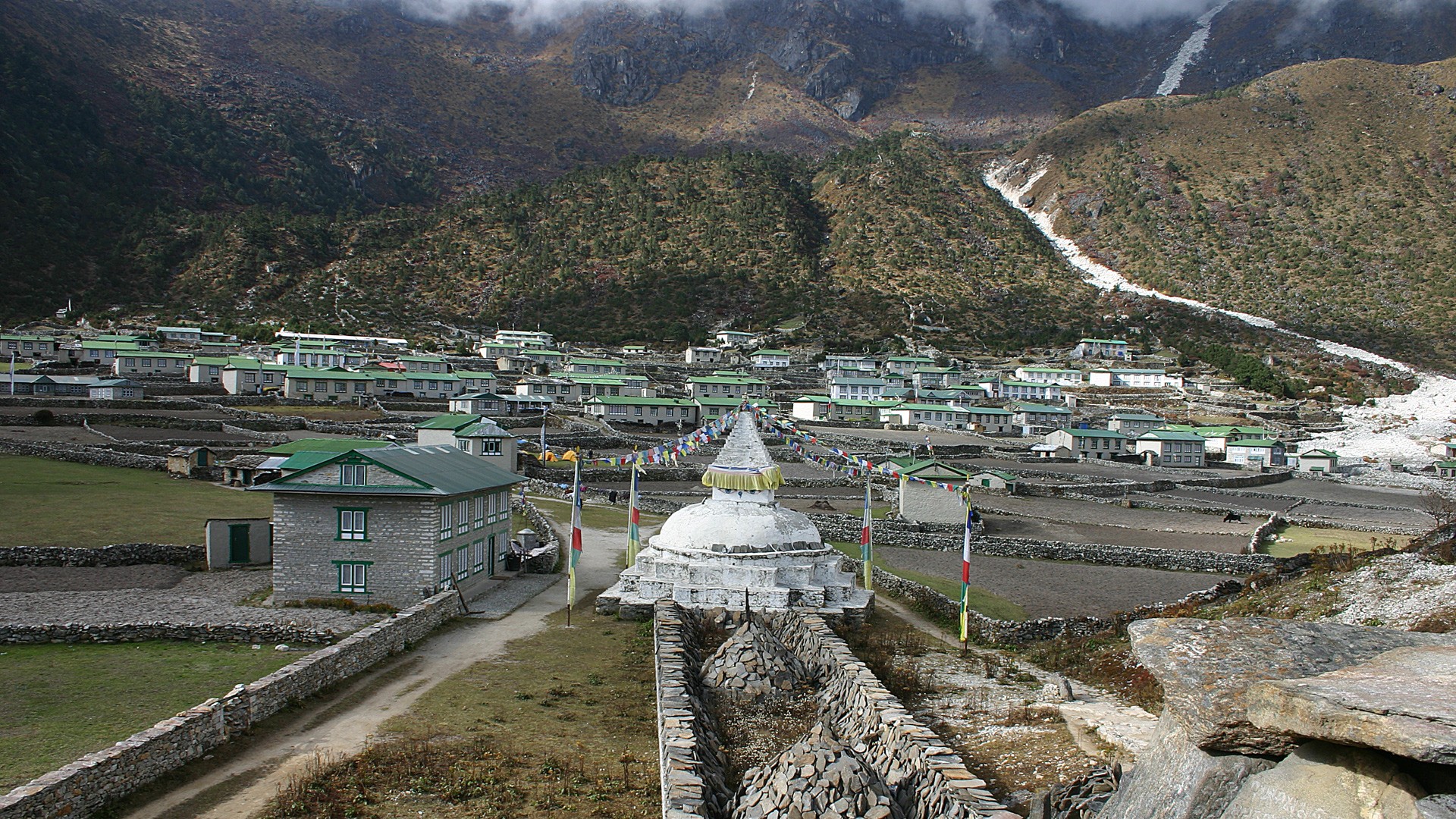
Tucked into a broad, horse-shaped valley beneath the sacred peak of Khumbila, Khumjung is often called the most beautiful village in the entire Khumbu, a quiet, authentic alternative to busier stops on the Classic Everest Base Camp Trek. Its uniformly green-roofed houses blend so seamlessly into the surrounding fir and rhododendron forest that it's hard to imagine the landscape any other way, while the village's deep ties to Everest's mountaineering history, including its connection to Tenzing Norgay, add genuine weight to every stone house and prayer flag along its quiet paths.
Khumjung is also a highlight of the short, beginner-friendly 7-day Everest View Trek, and it appears on many other Everest region treks as an often-overlooked stop on your Namche acclimatization day. This complete guide covers everything you need to know about this remarkable Sherpa village, from its history and culture to practical trekking information.
Khumjung sits at 3,790 meters (12,430 feet) in the Solukhumbu District of northeastern Nepal, within Sagarmatha National Park, roughly an hour's walk from Namche Bazaar. It's situated near the sacred peak of Mount Khumbila, in a broad, horse-shaped valley surrounded by fir and rhododendron forest.
| Detail | Information |
|---|---|
| Altitude | 3,790m / 12,430ft |
| Coordinates | 27°49′N, 86°43′E |
| District | Solukhumbu, Sagarmatha Zone |
| Municipality | Khumbu Pasang Lhamu Rural Municipality |
| Population (1991) | 1,809 |
| Ethnic Community | Predominantly Sherpa, with some Gurung |
| From Namche Bazaar | ~1 hour walk |
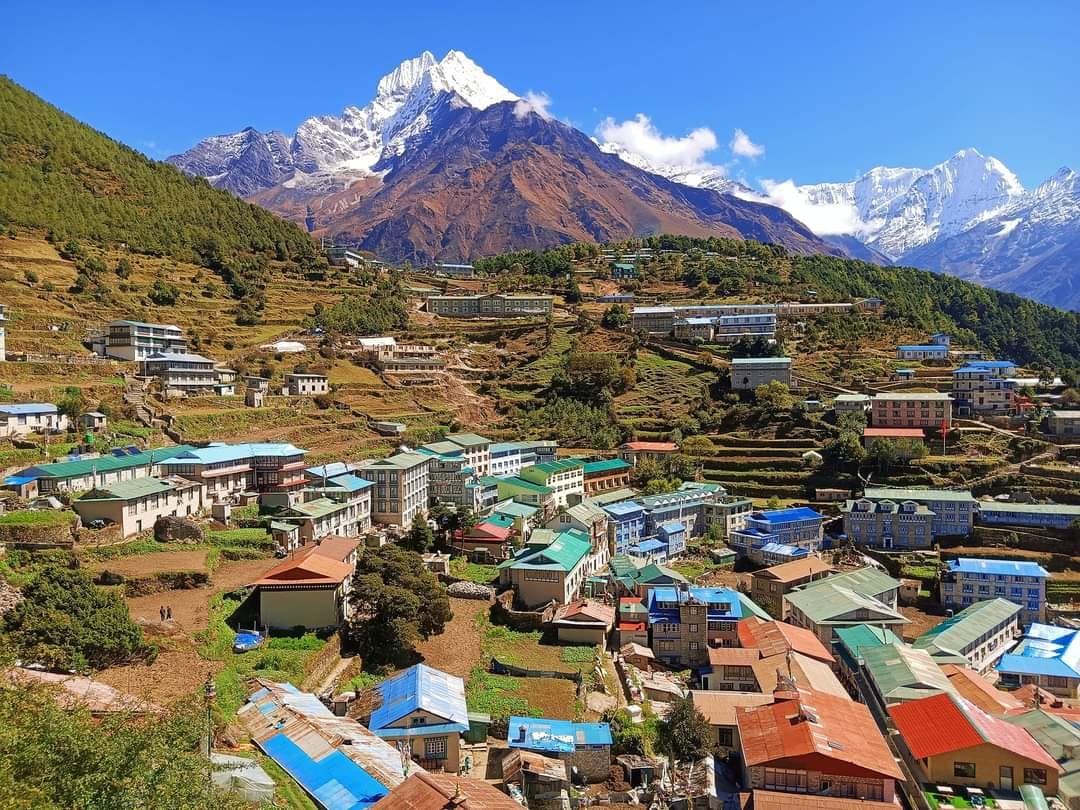
Khumjung's uniformly green-roofed houses blend seamlessly with the surrounding landscape, dominated by Khumbila to the north, in a valley shaped roughly like a horse and surrounded by fir and rhododendron forest, including one of the few places to see the rare yellow variety of rhododendron.
Sir Edmund Hillary chose Khumjung for his very first development project in the region: Khumjung Secondary School, established in 1961. What began as a humble two-classroom structure has grown to serve over 350 students, now part of the Himalayan Trust and standing as a lasting symbol of Hillary's legacy in the Everest region.
Khumjung Monastery (Khumjung Gompa) houses one of the Khumbu's most famous curiosities, a purported Yeti scalp, kept under lock and key inside a glass-fronted box. Visitors can view this mysterious relic for a small entrance fee, though photography inside the monastery itself is restricted (photographing the scalp alone is typically permitted).
Khumjung has played a vital role in the history of Himalayan mountaineering, with many legendary Sherpa climbers, including Tenzing Norgay, the first to summit Everest alongside Sir Edmund Hillary, connected to this region. It's said that at least one family member from nearly every household here has worked as a climbing guide, many having reached Everest's summit themselves.
High above Khumjung sits a sacred cave where Padmasambhava (Guru Rinpoche), the founder of Tibetan Buddhism, is said to have meditated for several days after completing practices at Maratika in eastern Nepal. The cave features a miraculously arisen Sanskrit character on its outer wall, along with a handprint attributed to an accomplished yogi.
Khumjung is one of the easiest Sherpa villages to include in an Everest itinerary, because it sits just above Namche Bazaar and is usually visited as part of the acclimatization day.
| Trek | How Khumjung Fits |
|---|---|
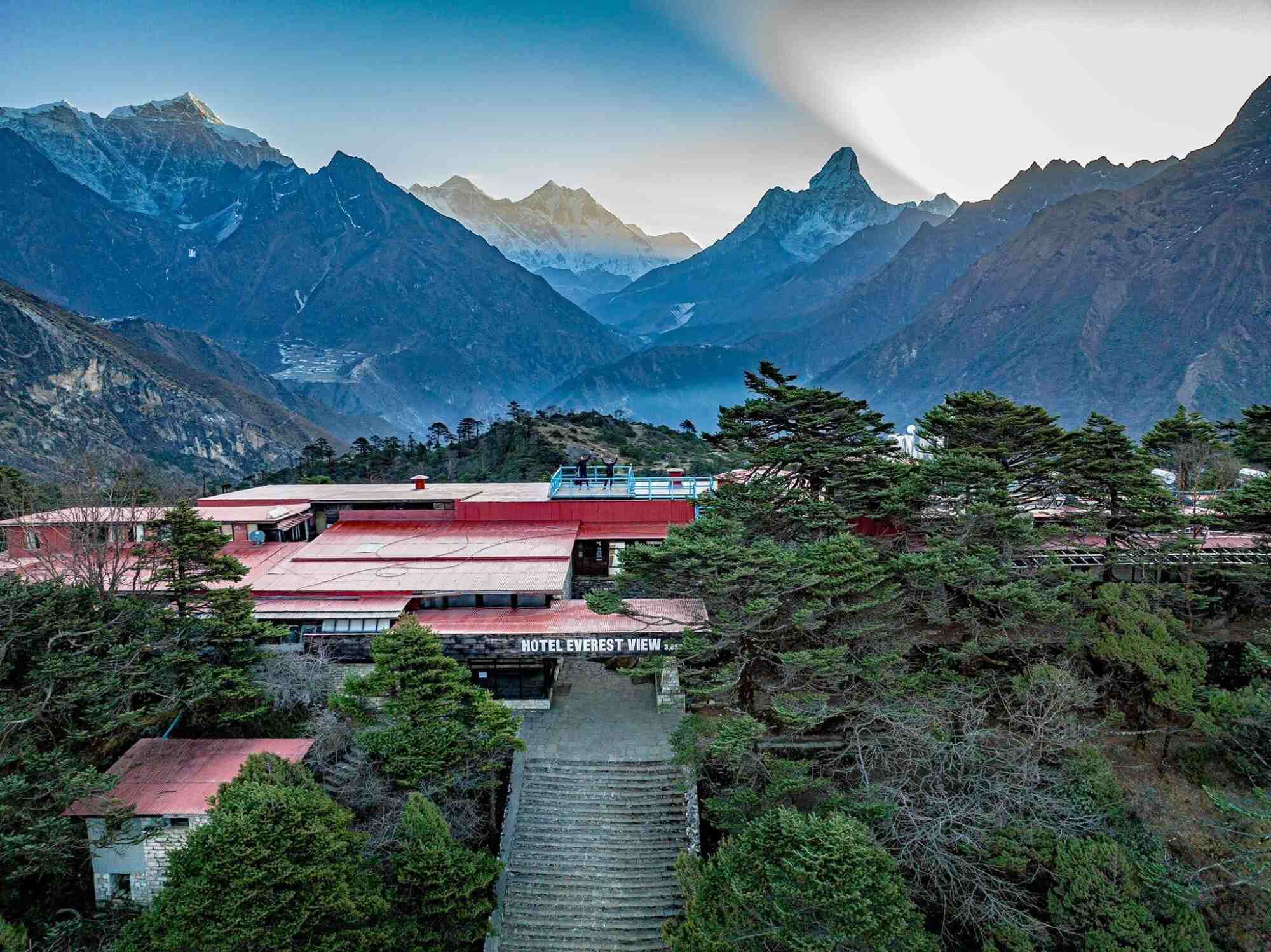
| Everest View Trek (7 days) | Day 4 combines a hike to the Everest View Hotel (about 3,880 m) with an optional visit to Khumjung, then a return to Namche to sleep |
| Classic Everest Base Camp Trek | A popular acclimatization side trip from Namche, before continuing higher |
| Other Everest region treks | Often included or offered as an optional add-on day, depending on the route |
If you are short on time or new to high-altitude trekking, the Everest View Trek is the simplest way to see Khumjung, Namche Bazaar, and a classic Everest panorama in about a week. To compare longer routes such as Everest Base Camp, Gokyo Lakes, and the Three High Passes, browse all Everest region treks.
Khumjung is typically visited as part of the Namche Bazaar acclimatization day:
Total walking time from Namche: Approximately 1-1.5 hours each way
| Season | Conditions | Recommendation |
|---|---|---|
| Autumn (Sep-Nov) | Stable, clear skies | Best mountain visibility |
| Spring (Mar-May) | Mild, rhododendron blooms | Excellent for the yellow rhododendron |
| Winter (Dec-Feb) | Cold but often clear | Quieter visit |
| Monsoon (Jun-Aug) | Wet, poor visibility | Not recommended |
Khumjung sits at 3,790 meters (12,430 feet) in the Solukhumbu District of northeastern Nepal, within Sagarmatha National Park, roughly an hour's walk from Namche Bazaar near the sacred peak of Mount Khumbila.
Khumjung's uniformly green-roofed houses blend seamlessly with the surrounding landscape, set in a broad, horse-shaped valley dominated by Khumbila and surrounded by fir and rhododendron forest, including a rare yellow rhododendron variety.
Khumjung Monastery houses a purported Yeti scalp, kept under lock and key inside a glass-fronted box, viewable by visitors for a small entrance fee, though photography inside the monastery is generally restricted.
Sir Edmund Hillary established Khumjung Secondary School in 1961 as his first development project in the region, growing from a humble two-classroom structure into a school now serving over 350 students under the Himalayan Trust.
Khumjung is typically reached via an arduous initial climb out of Namche, followed by a relatively flat stretch near the Shyangboche airstrip and a final gentle descent into the village, taking approximately 1 to 1.5 hours each way.
Yes, Khumjung has deep mountaineering roots, with many legendary Sherpa climbers connected to the region, including Tenzing Norgay, the first person to summit Everest alongside Sir Edmund Hillary.
High above the village sits a sacred cave where Padmasambhava (Guru Rinpoche), the founder of Tibetan Buddhism, is said to have meditated for several days, featuring a Sanskrit character and a yogi's handprint carved into the stone.
No, there are no lodges along the direct route from Namche to Khumjung, so trekkers should carry sufficient water for the round-trip walk.
Khumjung is home predominantly to Sherpa people, with some Gurung residents, reflecting the broader ethnic makeup of the Khumbu region.
Yes, Khumjung is most commonly visited during the Namche Bazaar acclimatization day, often combined with a visit to the neighboring village of Khunde. It is built into Day 4 of the 7-day Everest View Trek, and many other Everest region treks include it too.
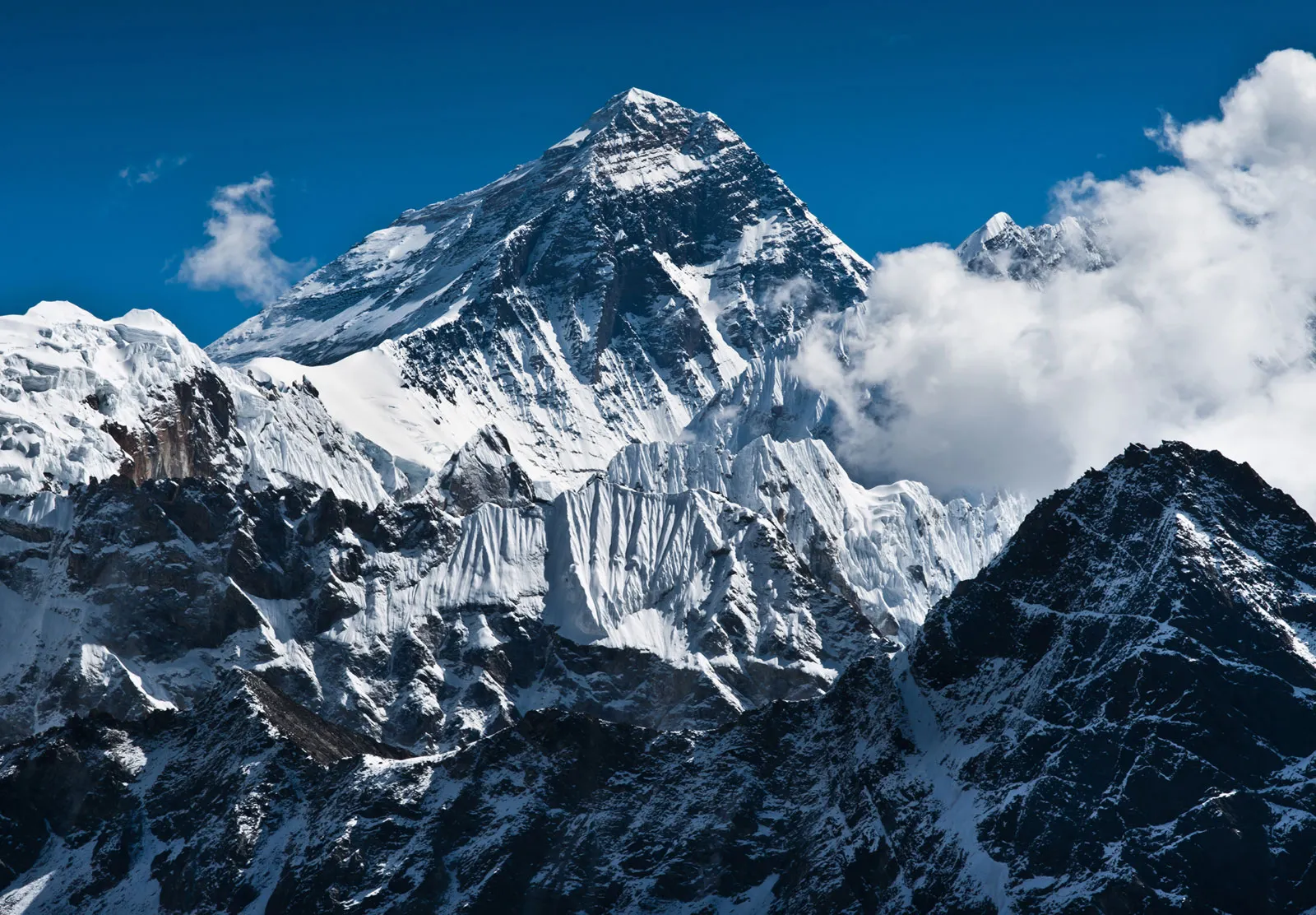
On clear days, Khumjung offers views extending to Mount Everest, Lhotse, and Ama Dablam, visible behind the sacred peak of Khumbila that rises directly above the village.
Mingma Norbu Sherpa was a renowned conservationist with WWF and a graduate of Khumjung School, honored with a memorial bust located on the path toward nearby Khunde village.
Khumjung became part of Khumbu Pasang Lhamu Rural Municipality on March 10, 2017, following Nepal's administrative restructuring.
Autumn (September-November) offers the most stable weather and clearest mountain views, while spring (March-May) is ideal for witnessing the village's rare yellow rhododendron blooms. For a short trip, the Everest View Trek is a great way to visit Khumjung, while longer routes are listed on our Everest region treks page.
Yes, a small entrance fee is required to view the Yeti scalp at Khumjung Monastery, which supports the upkeep of this historic religious site.
Khumjung offers something increasingly rare on the well-trodden Everest Base Camp route: genuine, unhurried village life paired with remarkable mountaineering history and a touch of Himalayan mystery. Between Hillary's legacy school, Tenzing Norgay's ancestral connections, and the enigmatic Yeti scalp housed in its ancient monastery, Khumjung rewards trekkers willing to take the short detour from Namche Bazaar with one of the most memorable and authentic experiences on the entire trail.
Ready to experience Khumjung for yourself? Join the short and scenic 7-day Everest View Trek, explore the complete Classic Everest Base Camp Trek itinerary, or browse every route on our Everest region treks page with Nepal Trip Services and discover this hidden gem of the Khumbu on your acclimatization day.
Discover more articles that match your interests! Explore these similar blogs packed with insights, tips, and stories to keep you inspired.
Plan your Namche Bazaar acclimatization day: best hikes, Everest View Hotel, Khumjung, altitude tips, a sample schedule,...
Discover Everest View Hotel at 3,880 m: views, history, how to reach it from Namche, stay vs visit tips, best time, and ...
Explore Mount Everest in Nepal: height, history, best time, treks to Base Camp and Everest View, permits, altitude safet...
Plan your Kongde Ri trip: height, best views from Namche, best time, permits, 7-day itinerary, climbing facts, costs and...
Lhotse (8,516 m) is the world\'s 4th highest peak. Learn its height, location, climbing history, routes, best views and ...
Visit the Namche Saturday Market in the Everest region. Learn what\'s sold, the best time to go, how to plan your trek a...