Gurung People Of Nepal: Complete Culture & Lifestyle Guide
By Nepal Trip Services On 28 Sep 2026

By Nepal Trip Services On 28 Sep 2026
On the green, terraced slopes below the great Annapurna wall, smoke rises from stone-and-slate houses, bells ring on the necks of grazing sheep, and villagers gather in the evening to sing and dance. This is the homeland of the Gurung people, or Tamu, one of Nepal's best-known indigenous communities. Famous for their warm hospitality, their shamanic traditions, their honey hunters, and their long history of service as Gurkha soldiers, the Gurungs have shaped the culture of central Nepal for centuries.
For trekkers heading out on the Annapurna Circuit Trek, the Poon Hill route, or the Mardi Himal trail, Gurung culture is part of the scenery. It is present in the villages you walk through, the homestay meals you eat, and the festivals you may stumble upon. This complete guide covers their history, beliefs, lifestyle, traditions, and modern challenges, so your journey through the Annapurna foothills is richer and more respectful.
The Gurung, who call themselves Tamu, are a Tibeto-Burman-speaking ethnic group living on the hills and mountain slopes of Gandaki Province in central Nepal. According to Nepal's 2021 census, 543,790 people in Nepal identify as Gurung, with significant populations in Manang, Parbat, Lamjung, Mustang, Gorkha, Kaski, Tanahun, Syangja, and Dolpa. Large diaspora communities also live in India, the United Kingdom, and the United States.
Origins are debated. Many accounts suggest the ancestors of the Gurungs may have migrated from Tibet about 2,000 years ago, and oral tradition tells of movements down from the north into the Himalayan foothills. Sources also explain the name differently, with one linking "Gurung" to a Tibetan word for farmers and "Tamu" to horsemen, so you may see both meanings in guidebooks.
| Feature | Details |
|---|---|
| Also known as | Tamu |
| Homeland | Annapurna and Machhapuchhre foothills, Gandaki Province |
| Key districts | Kaski, Lamjung, Manang, Mustang, Gorkha, Parbat, Syangja |
| Population (Nepal, 2021) | About 543,790 |
| Language | Gurung (Tibeto-Burman), plus Nepali |
| Religion | Buddhism, Bon and shamanism, Hindu influences |
| Traditional livelihood | Farming, sheep herding, military service, tourism |
| Famous for | Gurkha soldiers, honey hunting, hospitality, Rodhi tradition |
| Best-known festival | Tamu Lhosar (Gurung New Year) |
| Famous villages | Ghandruk, Chhomrong, Sikles, Ghalegaun, Bhujung |
For generations, Gurung communities lived by mixing crop farming with animal husbandry, especially sheep herding on high pastures. Villages sit at very different heights, so lifestyles vary. One source notes that the highland Gurungs remain closely tied to older traditions, depending on high-altitude pastoralism and strong Buddhist culture, while southern Gurungs have a cereal-based economy with greater Hindu influence.
Gurungs are also widely known through their service in the Gurkha regiments of the British and Indian armies. Large numbers of Gurungs have served in Gurkha regiments, and army incomes have contributed greatly to the economy of their region. This tradition explains why so many Gurung families have ties to Pokhara, Hong Kong, Brunei, and the United Kingdom, and why remittances have long supported village life.
Gurung society is organized around clans. One cultural guide describes a system of four upper clans and sixteen lower clans (the Sora Jat), traditionally farmers and shepherds. Community life revolves around the village, extended family, and shared festivals, and hospitality toward guests is a point of pride.
A signature institution is the Rodhi, a traditional gathering where young people of similar age meet to sing, dance, and socialize, guided by adult supervision. Rodhi songs represent Gurung culture, and dances such as Sorathi, Ghado, and Ghatu are performed on many occasions. Ghatu is often described as the best-known Gurung dance drama.
Gurung spiritual life is layered. Recent census data shows a mix of faiths: 54.4% of Gurungs identified as Buddhist, 34.9% as Hindu, and 10.7% as Bon. In practice, these traditions often overlap. Key elements include:
The Pachyu is often described as the everyday shaman, who heals, communicates with spirits, and performs rites for births, weddings, and funerals.
| Festival | Approx. Timing | What to Expect |
|---|---|---|
| Tamu Lhosar | 15 Poush (about 30 December) | Gurung New Year, with traditional dress, music, dance, and feasting |
| Dashain | September–October | Nepal's biggest festival, widely observed in Gurung homes |
| Tihar | October–November | The festival of lights, celebrated across the foothills |
| Ghatu season | After Shree Panchami | Dance-drama and Rodhi gatherings in villages |
| Honey-hunting seasons | Spring and autumn | Cliff harvests, with ritual and community involvement |
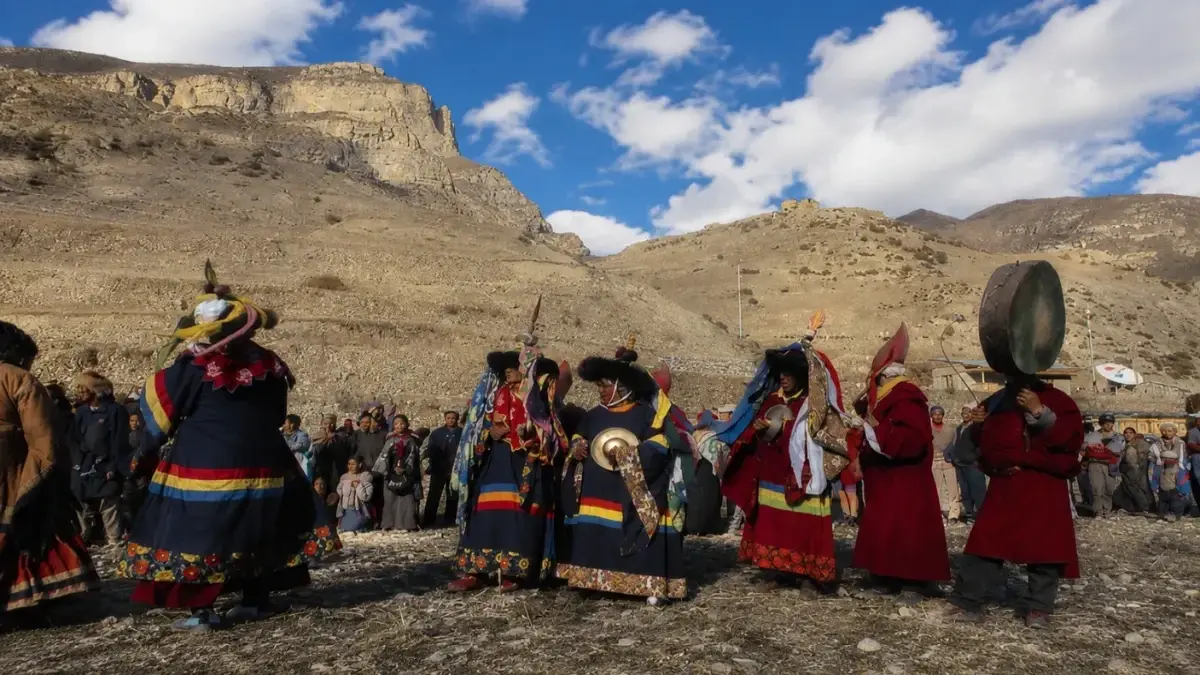
Tamu Lhosar is the most important. One study describes it as celebrated on the 15th of Poush in the Nepali calendar, roughly 30 December, welcoming the new year and marking a major cultural festival. Young people often wear traditional dress, which shows how strongly the celebration connects generations.
Gurung meals reflect the hills: simple, filling, and made from local crops. Trekkers staying in homestays will commonly meet these dishes.
| Food | Description |
|---|---|
| Dhindo | A thick porridge of millet or buckwheat, a hill staple |
| Dal bhat | Rice and lentil soup with vegetables, the everyday Nepali meal |
| Gundruk | Fermented leafy greens with a tangy flavor |
| Roti and potatoes | Common breakfast and trail foods in higher villages |
| Local honey and dairy | Seasonal specialties, depending on the village |
| Tea and local spirits | Offered as a sign of welcome |
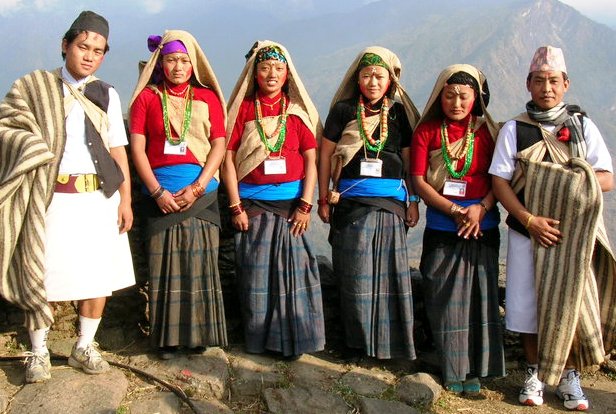
Traditional dress varies by region and occasion. Women often wear a velvet blouse, wrapped cloth, and heavy gold jewelry at festivals, while men may carry the kukri, a curved knife long associated with Gurkha identity. Everyday wear in modern villages is often simple, with traditional clothes reserved for celebrations.
Historically, Gurung life relied on several linked activities suited to steep terrain:
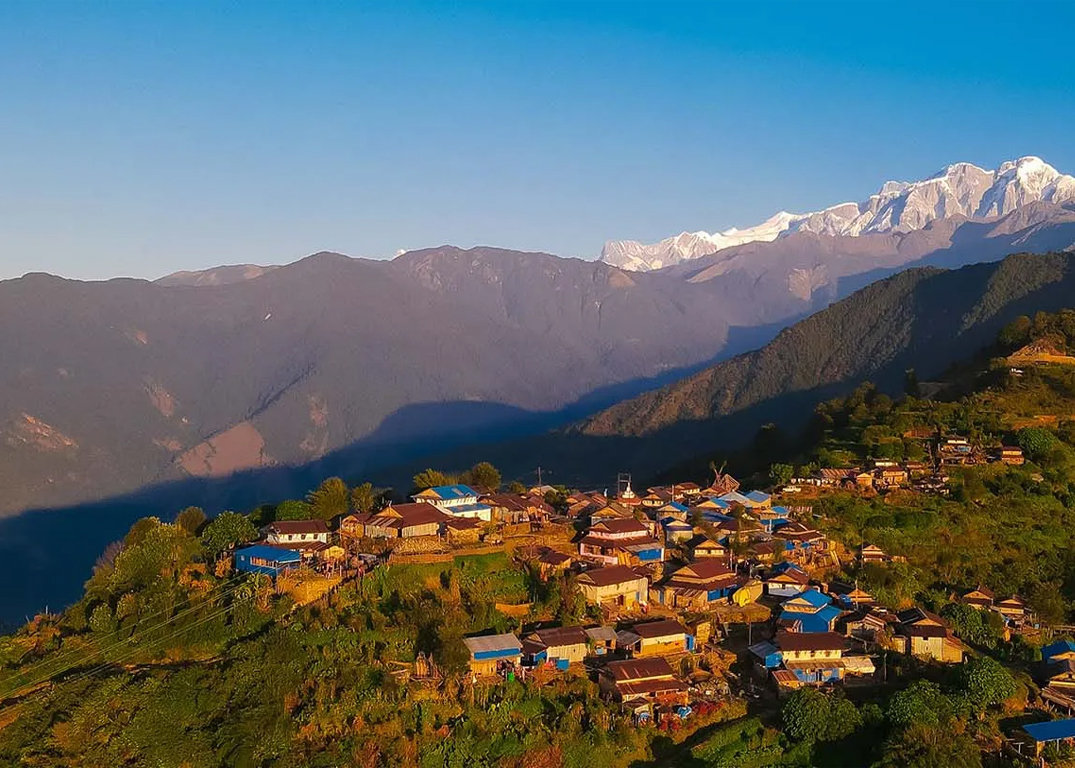
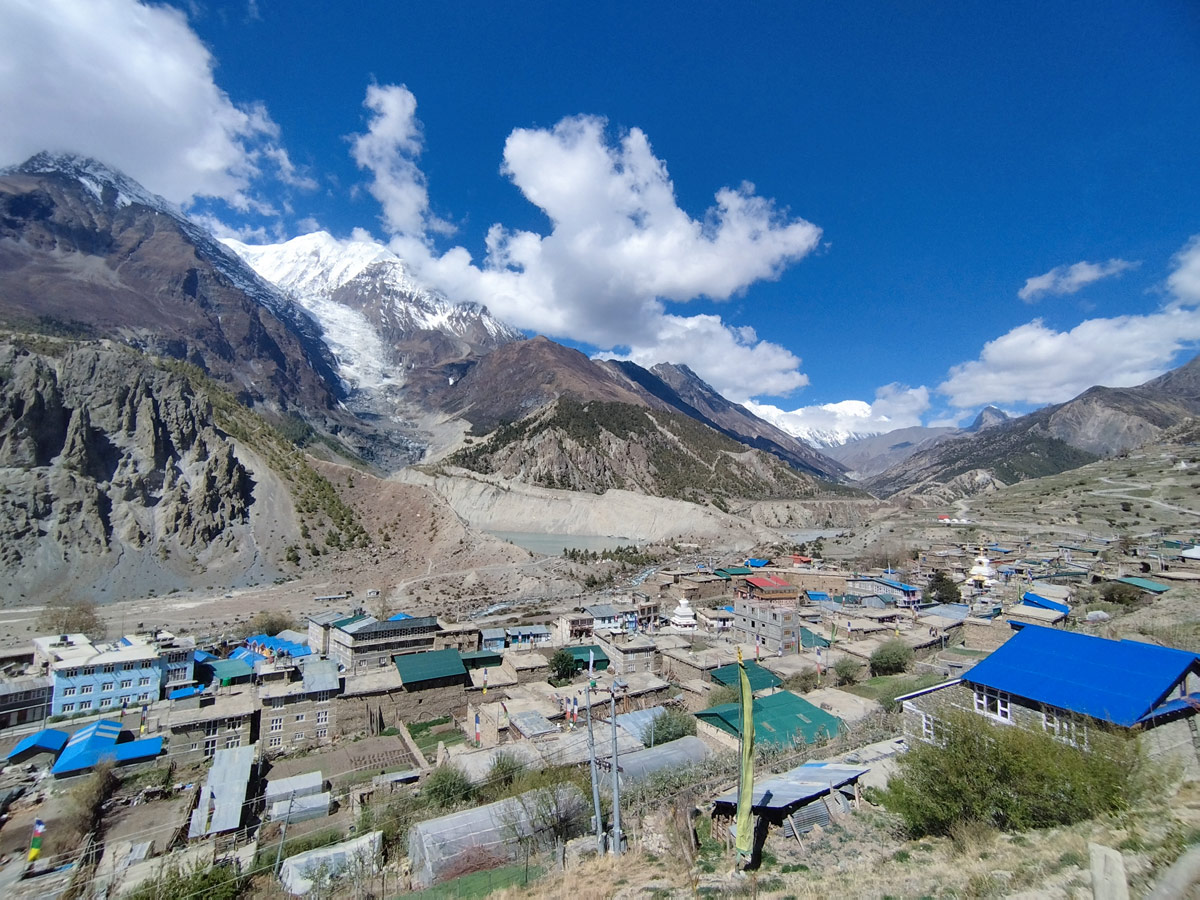
Gurung villages typically cling to hillsides above terraced fields, often with views of Machhapuchhre or the Annapurna range. Traditional houses are built of stone with slate roofs, arranged in tight clusters along stone-paved paths, with courtyards used for drying grain and chili peppers. Many villages also keep a Rodhi house, a prayer wall, or a small shrine.
One of the best-known settlements is Ghandruk. Gurung communities make up the major population of the village, which is home to the Gurung Cultural Museum. Other villages often visited include Chhomrong and Landruk on the Annapurna Base Camp side, and Sikles, Ghalegaun, and Bhujung in the Lamjung and Kaski hills.
Honey hunting is one of the most dramatic Gurung traditions. Hunters use handmade rope ladders and bamboo poles to reach giant Himalayan bee hives on steep cliffs. The practice is done twice a year, in spring and autumn, and yields a reddish "mad honey" containing grayanotoxins from rhododendron nectar. Lamjung and the village of Ghalegaun in Kaski are among the best-known places to see it. Ghalegaun is often called a model village for community-based cultural tourism.
If you want to see the tradition, choose community-run tours held during the natural harvest seasons. Reports warn that commercialization threatens authenticity, with some agencies staging hunts out of season, damaging hives and cliffs.
Gurung life has changed quickly over the past few decades:
The lower trails of the Annapurna Circuit Trek begin in Lamjung, a district with a strong Gurung presence. Farther up the valley in Manang, you meet the Manangi people, a distinct Himalayan community. For the deepest Gurung experience, many travelers also visit the Ghandruk, Chhomrong, and Mardi Himal areas. Here are respectful ways to engage:
Permit and guide rules change, so confirm the current requirements with a licensed agency before you trek.
The Gurung, also called Tamu, are an indigenous ethnic group of central Nepal who live mainly in the foothills and mountains of Gandaki Province. They are known for their hospitality, shamanic and Buddhist traditions, honey hunting, and Gurkha service.
Tamu is the name the Gurungs use for themselves. Sources give different explanations for its meaning, including a link to horsemen and, in some accounts, to thunder and sky, so it is best to treat any single meaning with caution.
They are concentrated in Kaski, Lamjung, Manang, Mustang, Gorkha, Parbat, and Syangja districts. Villages such as Ghandruk, Chhomrong, Sikles, Ghalegaun, and Bhujung are well known. Many Gurungs also live in Pokhara, Kathmandu, India, the United Kingdom, and elsewhere.
Nepal's 2021 census counted about 543,790 people as Gurung. Numbers differ between census years, and overseas communities add to the total.
They speak Gurung, a Tibeto-Burman language, and most also speak Nepali. Younger generations often use Nepali or English more, which is one of the challenges for language preservation.
Gurung religion blends Tibetan Buddhism, Bon and shamanism, and Hindu influences. In the 2021 census, most Gurungs identified as Buddhist, with large groups identifying as Hindu or Bon, and many families practice more than one tradition.
They are the three traditional Gurung priests. The Pachyu is the shaman who heals and communicates with spirits, the Khlepree conducts rituals for the dead, and the Bonpo Lama is the Gurung lama. They recite ancient myths and lead ceremonies.
Tamu Lhosar is the Gurung New Year, celebrated around 30 December (15 Poush in the Nepali calendar). It is the community's most important festival, marked by traditional dress, music, dance, and feasting, and it is a national holiday in Nepal.
Rodhi is a traditional gathering of young people who meet to sing, dance, and socialize under adult supervision. It has long been an important way for young Gurungs to learn songs, dances, and social customs.
Many Gurungs have served in the Gurkha regiments of the British and Indian armies for generations. Military income has been a major part of the local economy, and the tradition remains a source of pride for many families.
Honey hunting is the traditional harvest of wild cliff honey from giant Himalayan bee hives, done with rope ladders and bamboo poles twice a year, in spring and autumn. Lamjung and Ghalegaun are among the best-known areas, and community-run tours let visitors observe it responsibly.
Common foods include dhindo, dal bhat, gundruk, roti, potatoes, and local dairy or honey, depending on the village. Homestays in the Annapurna region usually serve simple hill meals with tea.
Ghandruk, Chhomrong, Landruk, Sikles, Ghalegaun, and Bhujung are popular options. The lower sections of the Annapurna Circuit Trek also pass through Lamjung's foothill villages, and many treks around Pokhara include Gurung homestays.
Ask before taking photographs, dress modestly, stay in locally owned lodges, and follow local customs at shrines and ceremonies. Avoid staged or out-of-season cultural shows, and support community-run initiatives.
It turns a scenic walk into a cultural journey. Knowing the story of the terraced fields, stone houses, and festivals you pass helps you connect with the people who shaped the landscape, and it makes your time in the Annapurna foothills more meaningful.
The Gurung people offer a living example of how tradition and change can coexist in the Himalayan foothills. Their shamanic and Buddhist beliefs, their Rodhi songs and Ghatu dances, their honey hunters and soldiers, and their warm village hospitality all reflect a culture that has adapted for centuries without losing its identity. For travelers, meeting the Gurungs is one of the best parts of trekking in Nepal. Stay in a local homestay, share a meal, listen to a story, and treat every village with respect, and you will leave with a deeper appreciation of the people who have shaped this landscape, a perspective that adds lasting value to any journey along the Annapurna Circuit Trek.
Discover more articles that match your interests! Explore these similar blogs packed with insights, tips, and stories to keep you inspired.
Everything on Thorong La Pass — altitude, difficulty, weather, route & crossing times. Complete guide for the Annapurn...
Complete guide on how to prepare for the Annapurna Circuit Trek — training, gear, permits, insurance & mental readines...
Discover Besisahar, Nepal — the official gateway to the Annapurna Circuit Trek. Complete guide to altitude, history & ...
Discover the Marsyangdi River — the Annapurna Circuit\'s raging river. Complete guide to its geography, origins & trek...
Discover Manang, Nepal — Annapurna Circuit\\'s key acclimatization village with monasteries, glacial lakes & Thorong L...
Explore Manangi culture in Nepal — Tibetan Buddhist heritage, trans-Himalayan trading history & unique lifestyle of th...