
Is The Everest Helicopter Tour Better Than The Everest Base Camp Trek?
By Nepal Trip Services On 15 Oct 2026

By Nepal Trip Services On 15 Oct 2026
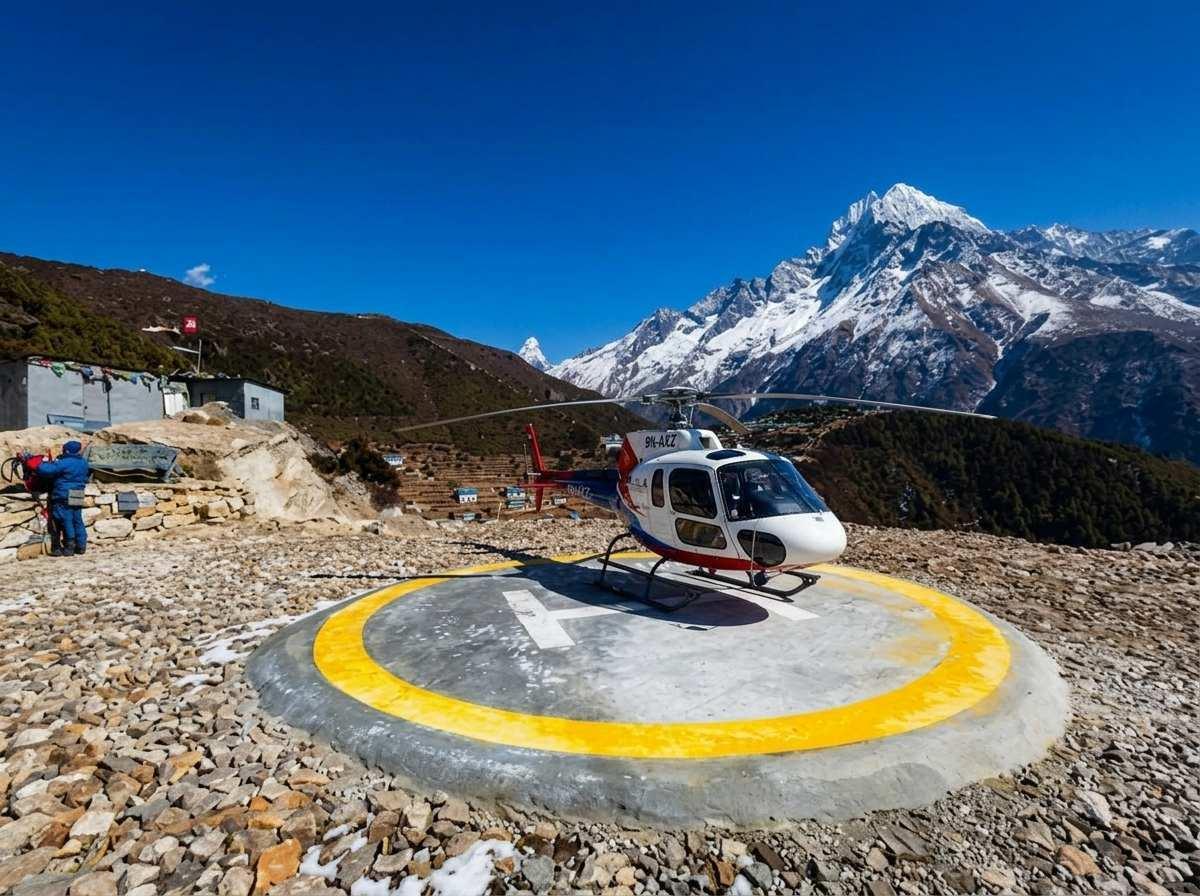
The Everest helicopter tour is better if you are short on time, cannot trek at high altitude, or are traveling with children or seniors. The Everest Base Camp trek is better if you have two weeks, good fitness and want the culture and achievement of walking there yourself. Neither is better for everyone. The right choice depends on your time, body and reason for going.
One of the most common questions our Kathmandu team hears is simple: "Should I fly or should I walk?" Both trips take you to Kala Patthar, the viewpoint that looks straight at Everest's summit. But one takes a morning and the other takes 14 days.
This post is not a sales pitch for either. We run both the Everest Base Camp Helicopter Tour and the Everest Base Camp Trek, so we have no reason to push you one way. Below, we explain honestly when each one wins, what each one costs you, and the myths that lead people to the wrong choice.
Answer these honestly before you book. Your answers will point clearly to one option.
The trek needs 14 days, plus 1 or 2 spare days for Lukla flight delays. If your Nepal trip is a week or less, the trek is not realistic. The helicopter tour takes 4 to 5 hours.
The trek covers about 130 km on rocky trails, with steep climbs and long descents. If you have knee, back or heart problems, or you have never done a multi-day hike, the helicopter is the safer choice.
On the trek, you sleep as high as Gorak Shep (5,160 m) for a night. On the helicopter, you stand at 5,545 m for only 5 to 10 minutes. If you have had serious altitude sickness before, the short exposure of the helicopter is gentler.
If you want the view, both trips deliver it. If you want the journey, only the trek delivers it: teahouse evenings, monasteries, Sherpa villages and the pride of arriving on foot.
Young children, grandparents and mixed-fitness groups are much easier to take by helicopter. A group of 4 or 5 can also split a private helicopter, bringing the cost to about US$1,000 each.
Mostly short on time, fitness or comfort? The helicopter is better for you. Mostly after the journey and the challenge? The trek is better for you.
The helicopter wins whenever time, fitness or comfort is the limit. In about 4 to 5 hours, you fly from Kathmandu over Lukla and Namche, pass above Everest Base Camp, land at Kala Patthar (5,545 m) and eat breakfast at Hotel Everest View (3,880 m).
See what is included on the Everest Base Camp Helicopter Tour page, and how the price breaks down in our Everest Base Camp Helicopter Tour Cost 2026/27 guide.
The trek wins whenever the journey matters as much as the view. Over 14 days, you walk from Lukla through Namche Bazaar, Tengboche and Dingboche to Everest Base Camp (5,364 m), then climb Kala Patthar for sunrise on Everest.
See the full 14-day itinerary on our Everest Base Camp Trek page.
It doesn't. The helicopter flies over base camp and lands at Kala Patthar (5,545 m). That is actually the better view, because Everest's summit cannot be seen from base camp itself.
You see the same summit from the same viewpoint as trekkers. What you miss is the journey, not the mountain. For many people with limited time or health, the helicopter is the only way to see it at all.
For one or two people, yes: US$1,500 a seat versus US$1,250 for the trek. But a group of 5 sharing a private helicopter pays about US$1,000 each. And the trek also costs 14 days of holiday.
You don't. No climbing skills are needed, and fit beginners complete it every season. Eight to twelve weeks of hiking, stair and leg training is enough for most healthy people.
The risk is low, not zero. Going from 1,400 m to 5,545 m in about 90 minutes can cause mild dizziness or a headache. Move slowly at Kala Patthar and tell the pilot right away if you feel unwell.
Fitness does not protect you from altitude sickness. It can affect anyone above about 2,500 m. What helps is a slow pace, rest days, plenty of water and an experienced guide who checks your oxygen levels daily.
For many travelers, the best answer is not one or the other. It is both.
Walk to Everest Base Camp and Kala Patthar, then return by helicopter from Gorak Shep or Lukla. You keep the culture, the acclimatization and the achievement of the climb. You skip two or three long days of walking back down the same trail, and you avoid a possible Lukla flight delay on the way home.
The helicopter return is an optional add-on to our Everest Base Camp Trek. Ask our team for a price on your dates.
Neither is better for everyone. The helicopter tour is better if you are short on time, cannot trek at high altitude, or are traveling with children or seniors. The Everest Base Camp trek is better if you have two weeks, good fitness, and want the culture, teahouse life and achievement of walking to base camp yourself. Both take you to Kala Patthar, the viewpoint that looks straight at Everest’s summit. The real difference is how you get there.
The Everest Base Camp Helicopter Tour takes about 4 to 5 hours. Hotel pick-up is around 5:30 AM, and you are back in Kathmandu by late morning or midday. The Everest Base Camp Trek takes 14 days from Kathmandu to Kathmandu, including 11 trekking days. For either trip, keep 1 to 2 spare days in case of weather delays.
For solo travelers and couples, the trek is cheaper. With Nepal Trip Services, fixed-departure treks start at US$1,250 per person, including Lukla flights, permits, a guide, porters and trail meals. A shared helicopter seat starts at US$1,500 per person. For groups, the helicopter can be cheaper: a private charter for up to 5 people costs from US$5,000, or about US$1,000 each. For a full breakdown, see our Everest Base Camp Helicopter Tour Cost 2026/27 guide.
No. The helicopter flies over Everest Base Camp (5,364 m) and the Khumbu Icefall, then lands at Kala Patthar (5,545 m), weather permitting. Kala Patthar is actually the better viewpoint, because Everest’s summit cannot be seen from base camp itself. Trekkers walk into base camp on foot and then climb Kala Patthar the next morning for sunrise.
You get about 5 to 10 minutes on the ground. The stop is kept short on purpose, because the air at 5,545 m holds roughly half the oxygen of sea level. After Kala Patthar, the helicopter descends to Hotel Everest View (3,880 m), where you have 45 to 60 minutes for breakfast with views of Everest and Ama Dablam.
The helicopter tour needs no fitness. You only need to get in and out of the helicopter and walk a few steps on rocky ground. The trek is graded moderate to challenging. You walk 5 to 7 hours a day for 11 days, covering about 130 km of mountain trails with steep climbs and long descents. No climbing skills are needed, but you should train for 8 to 12 weeks with hiking, stair climbing and leg-strength exercises.
The trek has the higher risk. You sleep as high as Gorak Shep (5,160 m), and acute mountain sickness can affect anyone above about 2,500 m, however fit they are. Our trek itinerary includes rest days in Namche and Dingboche, and guides check your oxygen levels daily with a pulse oximeter. On the helicopter tour, the risk is low because you stay at the top for only minutes. Some passengers still feel mild dizziness or a headache, which usually fades as you descend. Emergency oxygen is carried on board.
Helicopter tour: Children aged 2 to 12 can join with a parent or guardian, and a doctor’s advice is recommended. Infants under 2 are not recommended. There is no strict upper age limit, and a medical check-up is recommended for travelers over 65.
Trek: Fit teenagers and fit seniors complete it regularly, but the long walking days and altitude make it harder for young children and travelers with health conditions. Talk to your doctor before booking either trip.
Both reach the same viewpoint, Kala Patthar, so the summit view is the same. The helicopter adds aerial views trekkers never get: the Khumbu Glacier, the icefall and the whole valley from above. The trek adds time. Everest grows closer over several days, and you watch sunrise light up the summit from Kala Patthar. The helicopter gives the widest views; the trek gives the longest time with the mountains.
You miss the journey itself. That includes the Hillary Suspension Bridge, the Sherpa town of Namche Bazaar, Tengboche Monastery, teahouse evenings with other trekkers, and the pride of reaching base camp on foot. You also miss standing inside Everest Base Camp, since the helicopter flies over it rather than landing there.
Both trips depend on mountain weather. If we cancel a helicopter flight for weather or safety, you can reschedule for free, switch to another tour, or take a full refund (minus bank fees). If conditions change in the air, the pilot may choose another safe landing point. On the trek, weather mainly affects Lukla flights at the start and end, which is why we recommend 1 to 2 buffer days. For month-by-month weather, read Best Time for an Everest Helicopter Tour.
Autumn (September to November) and spring (March to May) are the best seasons for both, with the clearest skies. Winter (December to February) suits the helicopter well, with crisp, clear mornings and easier booking. Winter is harder for trekking, with snow possible and some high lodges closed. The monsoon (June to August) brings cloud and frequent delays for both.
Yes, and many travelers say it is the best of both. You trek up through Namche, Tengboche and Dingboche, reach base camp and Kala Patthar, then return by helicopter from Gorak Shep or Lukla. You keep the culture, acclimatization and achievement of the climb, but skip two or three days of walking down the same trail. The helicopter return is an optional add-on to our Everest Base Camp Trek. Contact us for a price on your dates.
Both trips need two permits: the Sagarmatha National Park entry permit and the Khumbu Pasang Lhamu Rural Municipality permit. Nepal Trip Services includes both in each package. For the trek, travel insurance covering trekking up to 6,000 m and helicopter evacuation is mandatory. For the helicopter tour, insurance is strongly recommended. Check that your policy covers high altitude and helicopter sightseeing flights.
A private helicopter tour is usually the better choice. You have the helicopter to yourselves, flexible timing within the morning weather window, and breakfast on a terrace facing Everest. Couples who love adventure sometimes choose the trek instead, sharing two weeks of effort and a sunrise on Kala Patthar. Ask our team about celebration add-ons when you book.
The Everest helicopter tour is not better than the trek, and the trek is not better than the helicopter. They solve different problems.
The helicopter is better when your limit is time, fitness, health or family. It gives you Everest's best viewpoint in one morning, with almost no physical effort.
The trek is better when your goal is the journey. It gives you base camp underfoot, sunrise on Everest, and two weeks among the Sherpa villages of the Khumbu.
If you want a bit of both, trek up and fly back.
Tell us your dates, fitness level and who you are traveling with. Our Kathmandu team will recommend the option that fits you best.
Discover more articles that match your interests! Explore these similar blogs packed with insights, tips, and stories to keep you inspired.
Explore Nepal festivals month by month: Dashain, Tihar, Holi, Indra Jatra, Buddha Jayanti and more. 2026-2027 dates, tra...
Everest helicopter tour or 14-day EBC trek? Compare cost, time, fitness, altitude risk and views to choose the right Eve...


