Everest Helicopter Tour Vs Everest Base Camp Trek: Which Is Right For You?
By Nepal Trip Services On 15 Oct 2026

By Nepal Trip Services On 15 Oct 2026

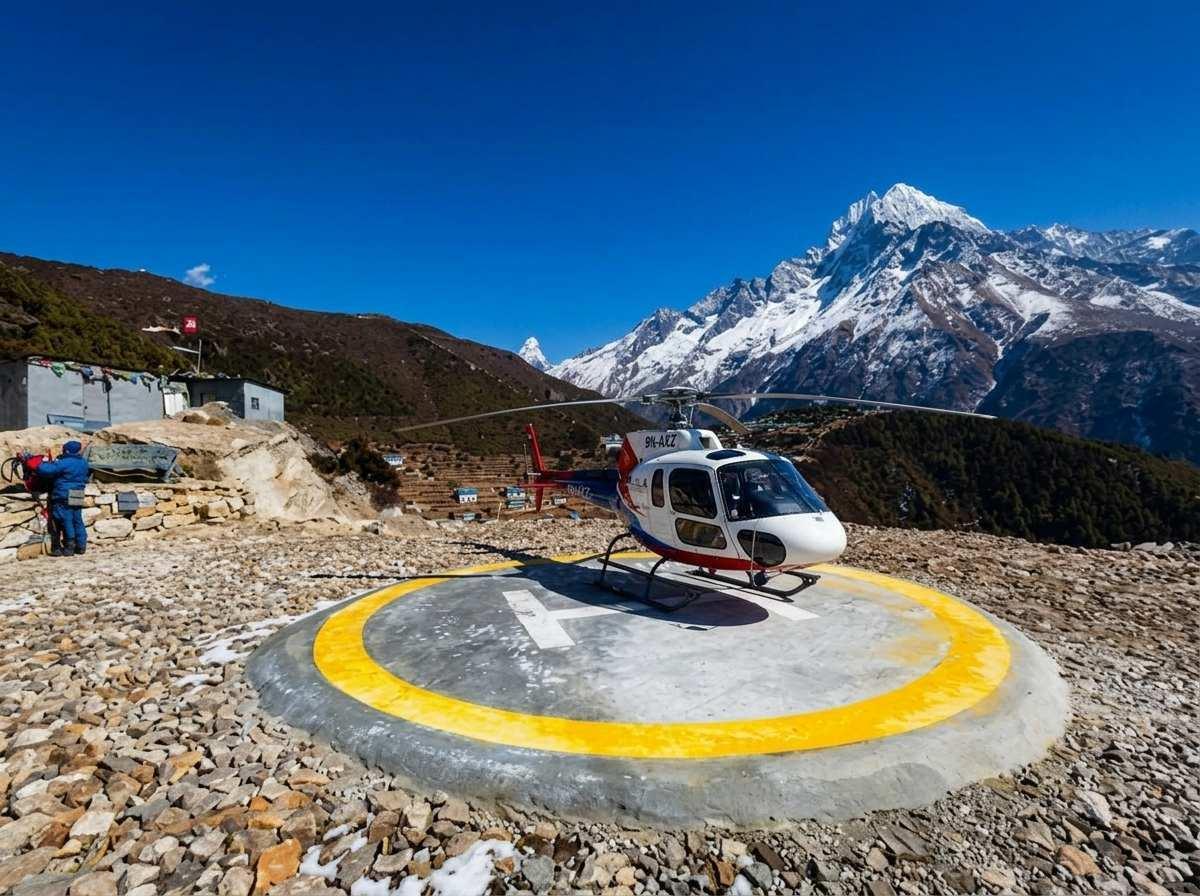
There are two ways to stand in front of Mount Everest. You can walk there over two weeks, or you can fly there before breakfast. Both take you to Kala Patthar, the famous viewpoint that looks straight at the summit. But they are very different trips.
The Everest Base Camp Trek is a 14-day journey through Sherpa villages, monasteries and glacier valleys. The Everest Base Camp Helicopter Tour with Kala Patthar Landing & Breakfast does the same headline view in about 4 to 5 hours, with a same-day return to Kathmandu.
This guide compares both options on cost, time, fitness, altitude, comfort and experience. By the end, you will know which one suits your body, your budget and your calendar.
Both options are run by our team at Nepal Trip Services, a local Kathmandu operator with 16 years of Himalayan experience.
The helicopter saves you 13 days; the trek gives you the whole journey for a lower price per person.
|
Factor |
Everest Base Camp Helicopter Tour |
Everest Base Camp Trek |
|---|---|---|
|
Duration |
4–5 hours, same-day return |
14 days (11 trekking days) |
|
Price with Nepal Trip Services |
From US$1,500 per person (shared) or US$5,000 per helicopter (private, up to 5) |
From US$1,250 per person (fixed group departures) |
|
Highest point |
Kala Patthar landing, 5,545 m |
Kala Patthar sunrise hike, 5,545 m |
|
Everest Base Camp (5,364 m) |
Seen from the air |
Reached on foot |
|
Time at the top |
5–10 minutes at Kala Patthar |
Sunrise climb plus a full day at base camp |
|
Fitness needed |
None |
Good; 5–7 hours of walking a day |
|
Difficulty |
Easy |
Moderate to challenging |
|
Total walking |
A few steps |
About 130 km from Lukla and back |
|
Altitude risk |
Low; short stop, quick descent |
Real; managed with 2 acclimatization days |
|
Accommodation |
Your Kathmandu hotel |
11 nights in teahouses, 2 in a Kathmandu hotel |
|
Meals |
Breakfast at Hotel Everest View (3,880 m) |
Three meals a day on the trail |
|
Culture |
Sherpa villages seen from above |
Namche, Tengboche Monastery, Khumjung, teahouse life |
|
Weather risk |
Flight may be delayed; keep 1–2 spare days |
Lukla flights may be delayed; keep 1–2 spare days |
|
Best for |
Short on time, can't trek, families, seniors, celebrations |
Adventurers, fit beginners, culture lovers |
Prices are Nepal Trip Services starting rates for the 2026/27 season and can change. Check the live price on each trip page before booking.
Your day starts with a 5:30 AM hotel pick-up in Kathmandu. The helicopter takes off around 6:30 AM and flies east over terraced hills to Lukla for a refuelling stop.
From Lukla, you fly up the Khumbu Valley over Namche Bazaar, Tengboche Monastery and the Khumbu Glacier. You pass above Everest Base Camp and the Khumbu Icefall, then land at Kala Patthar (5,545 m).
You get 5 to 10 minutes on the ground, facing Everest, Lhotse, Nuptse and Pumori. The stop is short on purpose, because the air holds about half the oxygen of sea level.
The helicopter then drops to Syangboche for breakfast at Hotel Everest View (3,880 m), a terrace famous for its Everest and Ama Dablam views. You are back at your Kathmandu hotel by late morning.
Good to know:
Read the full step-by-step plan in our Everest Base Camp Helicopter Tour With Kala Patthar Landing and Breakfast: Complete Guide.
The trek begins with a short, thrilling flight from Kathmandu to Lukla (2,860 m). From there, you walk about 130 km over 11 trekking days, following the Dudh Koshi River into Sagarmatha National Park.
You cross the Hillary Suspension Bridge, climb to Namche Bazaar and visit Tengboche, the largest monastery in the Khumbu. Rest days in Namche and Dingboche help your body adjust to the altitude.
On day 9, you reach Everest Base Camp (5,364 m) beside the Khumbu Icefall. The next morning, you climb Kala Patthar by headlamp to watch sunrise light up Everest's summit. Then you walk back down to Lukla and fly to Kathmandu.
Good to know:
See the day-by-day plan on our Everest Base Camp Trek page.
Per person, the trek is cheaper. A fixed-departure trek starts at US$1,250, while a shared helicopter seat starts at US$1,500.
The gap closes for groups. A private helicopter for 5 people costs from US$5,000, or about US$1,000 each. That is less per person than the trek.
Also count the hidden cost of time. The trek needs about 14 days of holiday, plus hotel nights, meals in Kathmandu and tips for guides and porters. The helicopter needs one morning.
For a full price breakdown, read our Everest Base Camp Helicopter Tour Cost 2026/27 guide.
Winner: the trek for solo travelers and couples; the private helicopter for groups of 4–5.
The helicopter tour takes 4 to 5 hours. You can fly in the morning and visit Kathmandu's temples in the afternoon.
The trek takes 14 days from arrival to departure. Add 1 or 2 spare days for possible Lukla flight delays.
Winner: the helicopter, by a wide margin.
The helicopter tour needs no fitness at all. You only need to climb in and out of the helicopter and walk a few steps at Kala Patthar.
The trek is graded moderate to challenging. You walk 5 to 7 hours a day, with steep climbs like the 800 m ascent to Namche. The longest day, Namche to Lukla, covers about 19 km.
Most healthy people can complete the trek with 8 to 12 weeks of training. Hiking, stair climbing and leg-strength work help most.
Winner: the helicopter for anyone with limited fitness or mobility.
Altitude is the biggest challenge on the trek. You sleep as high as Gorak Shep (5,160 m), and acute mountain sickness can affect anyone above about 2,500 m.
The trek manages this with slow daily gains and rest days in Namche and Dingboche. Even so, headaches, poor sleep and breathlessness are common.
On the helicopter tour, the risk is low because you stay at 5,545 m for only 5 to 10 minutes. Some people still feel mild dizziness from the sudden climb, but it usually eases as you descend. Emergency oxygen is carried on every flight.
People with heart or lung conditions, high blood pressure or pregnancy should consult a doctor before either trip.
Winner: the helicopter for lower altitude risk.
Both trips reach the same viewpoint: Kala Patthar, which looks straight at Everest's summit. You cannot see the summit from base camp itself.
The helicopter adds aerial views that trekkers never get. You see the Khumbu Glacier, the icefall and the whole valley from above.
The trek adds time. You watch Everest grow closer for days, see sunrise from Kala Patthar and stand inside base camp among prayer flags. In spring, you may see expedition tents on the glacier.
Winner: a tie. The helicopter gives the widest views; the trek gives the deepest experience.
This is where the trek is unbeatable. You sleep in family-run teahouses, eat dal bhat with Sherpa hosts and visit monasteries such as Tengboche and Khumjung.
You also earn every view. Many trekkers say reaching base camp on foot is one of the proudest moments of their lives.
The helicopter shows you Sherpa villages from the air, but you do not meet the people who live there.
Winner: the trek.
On the helicopter tour, you sleep in your own Kathmandu hotel and eat breakfast at Hotel Everest View.
On the trek, lodges in Lukla, Phakding and Namche are comfortable. Higher up, at Lobuche and Gorak Shep, rooms are basic and unheated, with shared toilets. A warm sleeping bag is essential.
Winner: the helicopter.
Both trips depend on the weather. Helicopter flights can be delayed by morning fog in Kathmandu, low cloud or strong winds. Trekkers face the same risk on Lukla flights.
The difference is scale. A delayed helicopter tour usually moves to the next morning. A delayed Lukla flight can shift a 14-day plan.
For either trip, keep 1 to 2 spare days in your Nepal schedule.
Winner: the helicopter, because a delay costs you less.
Match your situation to the right trip in a few seconds.
|
Your situation |
Best choice |
Why |
|---|---|---|
|
You have less than a week in Nepal |
Helicopter tour |
The trek alone needs 14 days |
|
You are fit and have two weeks free |
EBC trek |
You get the full journey at a lower price per person |
|
Traveling with children or grandparents |
Helicopter tour |
No walking and low altitude exposure |
|
You have knee, back or mobility issues |
Helicopter tour |
No long descents or rocky trails |
|
You love culture, villages and monasteries |
EBC trek |
Teahouse nights and Sherpa hospitality |
|
Planning a proposal or anniversary |
Private helicopter tour |
Your own helicopter, breakfast facing Everest |
|
Serious photographer |
Either |
Aerial shots by helicopter; sunrise and golden light on the trek |
|
Solo traveler on a budget |
EBC trek |
From US$1,250, with a group and a guide |
|
Group of 4–5 friends or family |
Private helicopter tour |
About US$1,000 each when split five ways |
|
You want a personal challenge |
EBC trek |
Few experiences match walking to base camp |
|
Fit, but short on time |
Trek up, helicopter down |
Full experience in fewer days |
If the full trek feels too long but you still want to walk, try the 7-day Everest View Trek. It is a shorter, lower-altitude way to see Everest on foot.
If you want the helicopter without the high landing, our Everest Helicopter Tour With Hotel Everest View Breakfast is a gentler choice.
You do not have to choose just one. Many travelers trek to Everest Base Camp and Kala Patthar, then fly back by helicopter.
The walk up is the part that matters most. It gives you acclimatization, culture and the achievement of reaching base camp. The walk down retraces the same trail over two or three long days.
A helicopter return from Gorak Shep or Lukla cuts those days out. You also get an aerial view of the valley you just walked.
Why it works:
The helicopter return is an optional add-on to our Everest Base Camp Trek. Ask our team for a price on your dates, or build your own plan with the trip planner.
Autumn (September–November) and spring (March–May) are the best seasons for both. Winter suits the helicopter much better than the trek.
|
Season |
Months |
Helicopter tour |
EBC trek |
|---|---|---|---|
|
Autumn |
Sep–Nov |
Best: clearest skies of the year |
Best: dry, stable trails; busiest in October |
|
Spring |
Mar–May |
Great: expedition tents visible at base camp |
Great: rhododendrons bloom; afternoon cloud by May |
|
Winter |
Dec–Feb |
Great: crisp mornings, easier booking, very cold at Kala Patthar |
Challenging: snow possible, some high lodges close |
|
Monsoon |
Jun–Aug |
Fair: frequent cloud and delays |
Possible but wet: slippery trails, hidden peaks |
For month-by-month advice on flying, read our Best Time for an Everest Helicopter Tour guide.
Neither is better for everyone. The helicopter is better if you are short on time, cannot trek or want comfort. The trek is better if you want culture, a physical challenge and more time in the mountains.
No, not per person. A shared helicopter seat starts at US$1,500, while the trek starts at US$1,250. For a group of 5, a private helicopter costs about US$1,000 each, which is cheaper than the trek.
No. The helicopter flies over Everest Base Camp and lands at Kala Patthar (5,545 m) instead. Kala Patthar gives a much better view of Everest's summit than base camp itself.
Yes, it is the same viewpoint. Trekkers usually see it at sunrise, after a pre-dawn climb. Helicopter passengers see it in mid-morning light, with 5 to 10 minutes on the ground.
Yes. Fit beginners complete the trek every season. No climbing skills are needed, but you should train for 8 to 12 weeks and be ready to walk 5 to 7 hours a day.
Yes. There is no strict upper age limit, and many seniors take this tour because no trekking is needed. Children aged 2 and above can join with a parent, though a doctor's advice is recommended. Infants under 2 are not recommended.
The risk is low, because you spend only 5 to 10 minutes at 5,545 m. Some passengers feel mild dizziness or a headache, which usually fades as the helicopter descends. Emergency oxygen is carried on board.
Our trek takes 14 days from Kathmandu to Kathmandu. That includes 11 trekking days, about 130 km of walking and two acclimatization days.
Yes. A helicopter return from Gorak Shep or Lukla is an optional add-on to our Everest Base Camp Trek. It saves several days of walking downhill.
If we cancel for weather or safety, you can reschedule for free, switch to another tour or take a full refund, minus bank fees. Keep 1 to 2 spare days in your Nepal plans.
For the trek, insurance covering trekking up to 6,000 m and helicopter evacuation is mandatory. For the helicopter tour, it is strongly recommended. Check that your policy covers helicopter sightseeing flights.
Both are excellent. The helicopter gives aerial shots of the Khumbu Glacier and icefall. The trek gives sunrise on Everest, village life and many more hours of light.
If you have two weeks and good fitness, walk. The Everest Base Camp Trek gives you the mountains, the Sherpa culture and a memory you earned step by step.
If you have one morning, fly. The helicopter tour puts you face to face with Everest at Kala Patthar, with breakfast at Hotel Everest View, and you are back in Kathmandu before lunch.
And if you want both, trek up and fly back.
Not sure which suits you? Message our Kathmandu team with your dates, fitness level and group size. We will help you choose the right way to see Everest.
Discover more articles that match your interests! Explore these similar blogs packed with insights, tips, and stories to keep you inspired.
Explore Nepal festivals month by month: Dashain, Tihar, Holi, Indra Jatra, Buddha Jayanti and more. 2026-2027 dates, tra...
Helicopter or trek to Everest? An honest look at who each one is better for, what you gain, what you miss, and the myths...