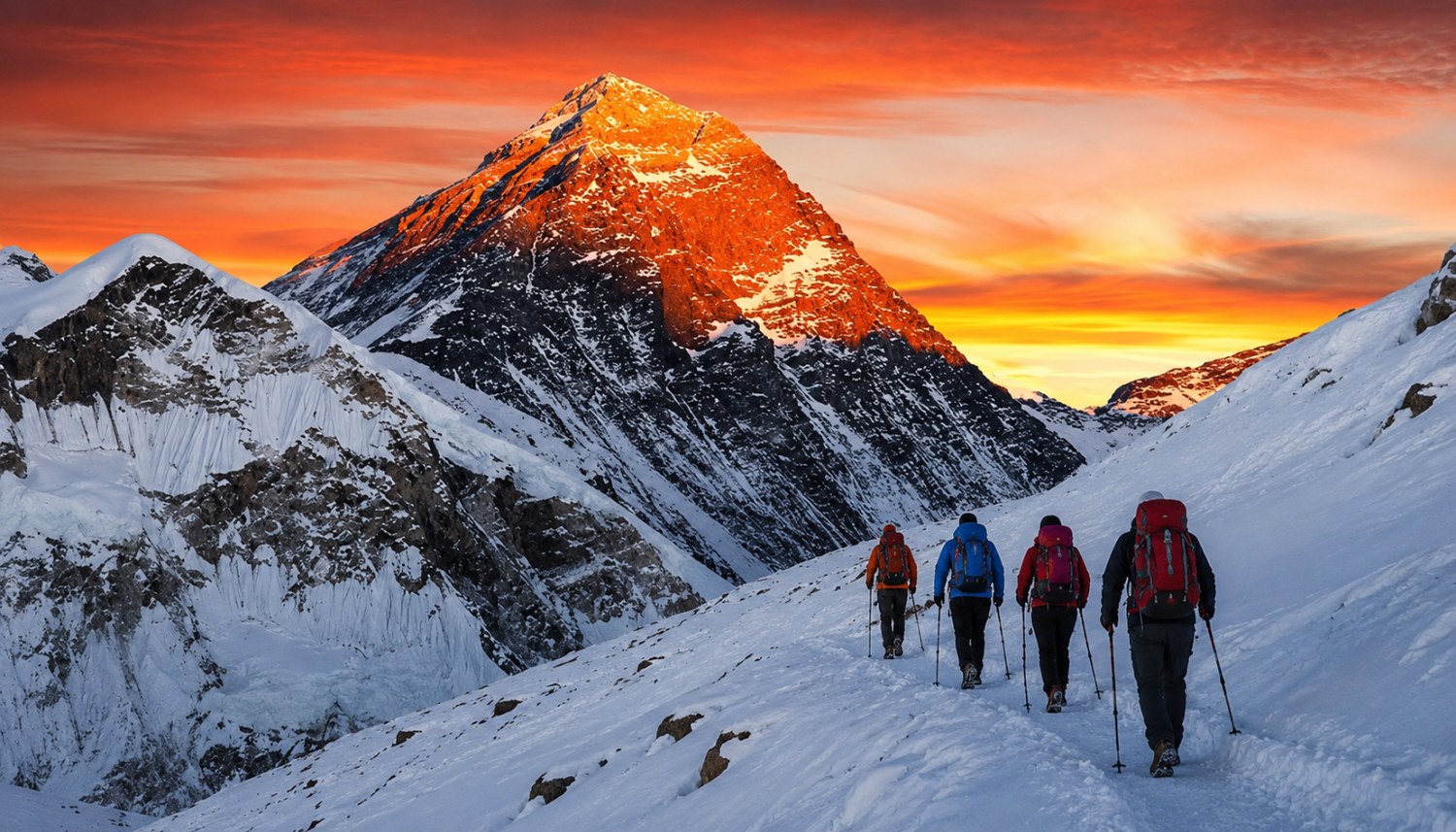
Everest Base Camp, Nepal: Complete Travel & Trekking Guide
By Nepal Trip Services On 21 Sep 2026

By Nepal Trip Services On 21 Sep 2026
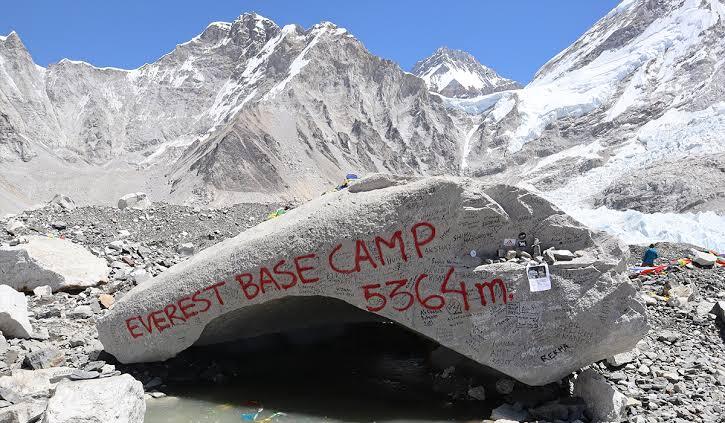
Few destinations on Earth carry the mythic weight of Everest Base Camp — the legendary staging point at the foot of the world's highest mountain, and the ultimate goal of the Classic Everest Base Camp Trek. Sitting at 5,364 meters on the shifting moraine of the Khumbu Glacier, this remote outpost has served as the launching point for nearly every successful Everest summit attempt since Hillary and Norgay's historic 1953 ascent, drawing both world-class mountaineers and everyday trekkers into its shadow each year. This complete guide covers everything you need to know about this iconic destination, from its exact location and history to practical trekking information, helping you understand exactly what awaits at the end of this legendary Himalayan journey.
Everest Base Camp (South) sits at 5,364 meters (17,598 feet) on the right lateral moraine of the Khumbu Glacier, within Sagarmatha National Park, Solukhumbu District, Nepal. This is distinct from the North Base Camp in Tibet, which sits lower at 5,150 meters and is reached by road rather than on foot.
| Detail | Information |
|---|---|
| Altitude | 5,364m/17,598ft |
| Location | Khumbu Glacier moraine, Sagarmatha National Park |
| Coordinates | 28.0025°N, 86.8528°E |
| Percentage of Everest's height | ~60.6% |
| Terrain | Glacial moraine, rocky ground |
| Typical Visit | Day 9 of Classic EBC itinerary |
Many first-time researchers get confused between the two base camps, so here's a clear comparison:
| Factor | South Base Camp (Nepal) | North Base Camp (Tibet) |
|---|---|---|
| Altitude | 5,364m/17,598ft | 5,150m/16,900ft |
| Access | Trek only (no road) | Road accessible |
| Terrain | Moving glacier | Stable ground |
| Starting point | Lukla | Rongbuk Valley |
When people refer to "trekking to Everest Base Camp," they almost always mean the Nepal (South) side — the destination reached via the Classic Everest Base Camp Trek.
Base Camp serves as the essential launching point for mountaineers attempting to summit Everest, where climbers acclimatize, organize equipment, and prepare before pushing toward the treacherous Khumbu Icefall.
Right outside Base Camp lies the notorious Khumbu Icefall, the first major obstacle for any Everest summit attempt, leading up toward the Western Cwm — also known as the "Valley of Silence" — between the peaks of Lhotse and Nuptse.
For trekkers, simply reaching Base Camp represents a profound physical and emotional milestone — standing at the foot of the world's highest mountain after days of demanding, high-altitude trekking through the Khumbu.
During spring climbing season (March–May), Base Camp transforms into a bustling tent city, with expedition teams from around the world preparing for summit attempts, adding a genuinely exciting atmosphere for trekkers passing through.
Everest Base Camp can only be reached on foot, requiring:
Total trekking distance: Approximately 130 kilometers (round trip)
Typical duration: 12–14 days
| Stop | Altitude | Significance |
|---|---|---|
| Lukla | 2,860m | Starting point |
| Namche Bazaar | 3,440m | First acclimatization stop |
| Tengboche | 3,860m | Largest monastery in Khumbu |
| Dingboche | 4,410m | Second acclimatization stop |
| Lobuche | 4,910m | Final village before Base Camp |
| Gorak Shep | 5,160m | Launching point for EBC and Kala Patthar |
| Everest Base Camp | 5,364m | Final destination |
Everest Base Camp holds deep historical significance as the starting point for nearly every successful Everest summit attempt since Sir Edmund Hillary and Tenzing Norgay's historic 1953 ascent. The site has also witnessed genuine tragedy — most notably during the devastating April 2015 earthquake, which triggered an avalanche off Mount Pumori that swept through Base Camp, claiming at least 19 lives and damaging trails throughout the region, later rebuilt and reopened to trekkers.
Everest Base Camp (South) sits at 5,364 meters (17,598 feet) on the right lateral moraine of the Khumbu Glacier, within Sagarmatha National Park, Solukhumbu District, Nepal, at the foot of the world's highest mountain.
No, Everest's actual summit is not visible from Base Camp itself, since the mountain's own shape and surrounding ridgeline block the view. Kala Patthar, a short hike away, offers the unobstructed summit view most trekkers are looking for.
South Base Camp in Nepal sits at 5,364m and is trek-only, while North Base Camp in Tibet sits lower at 5,150m and is accessible by road, making the Nepal side the trekking destination most people mean by "Everest Base Camp."
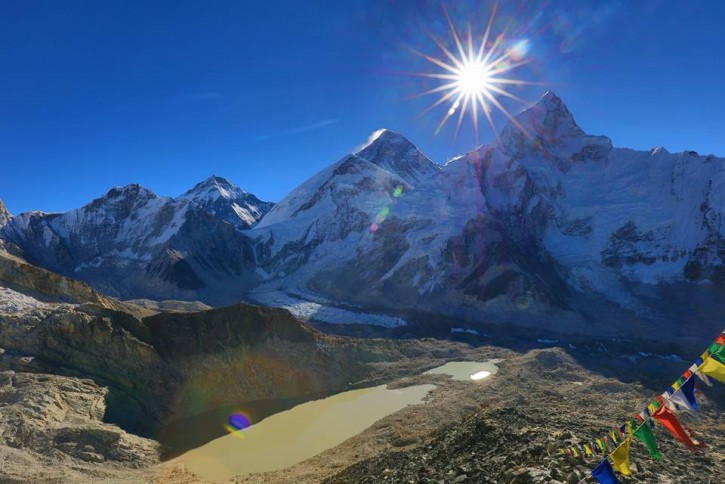
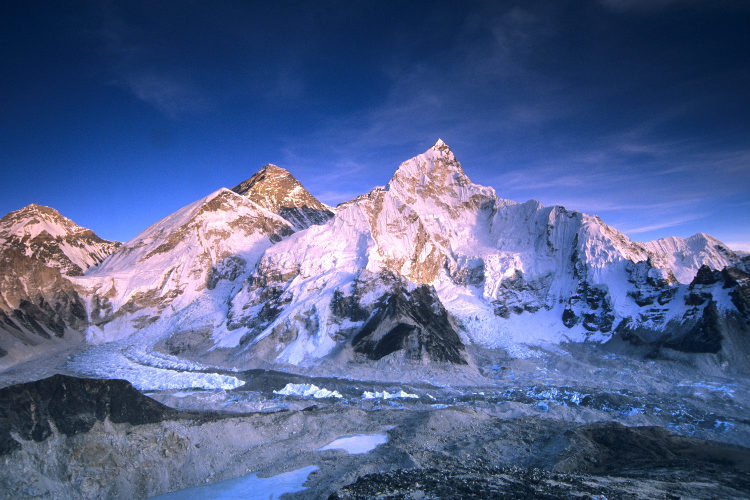
Trekkers at Base Camp enjoy views of Nuptse, Pumori, Khumbutse, and the dramatic Khumbu Icefall, along with the Khumbu Glacier itself, though not Everest's summit.
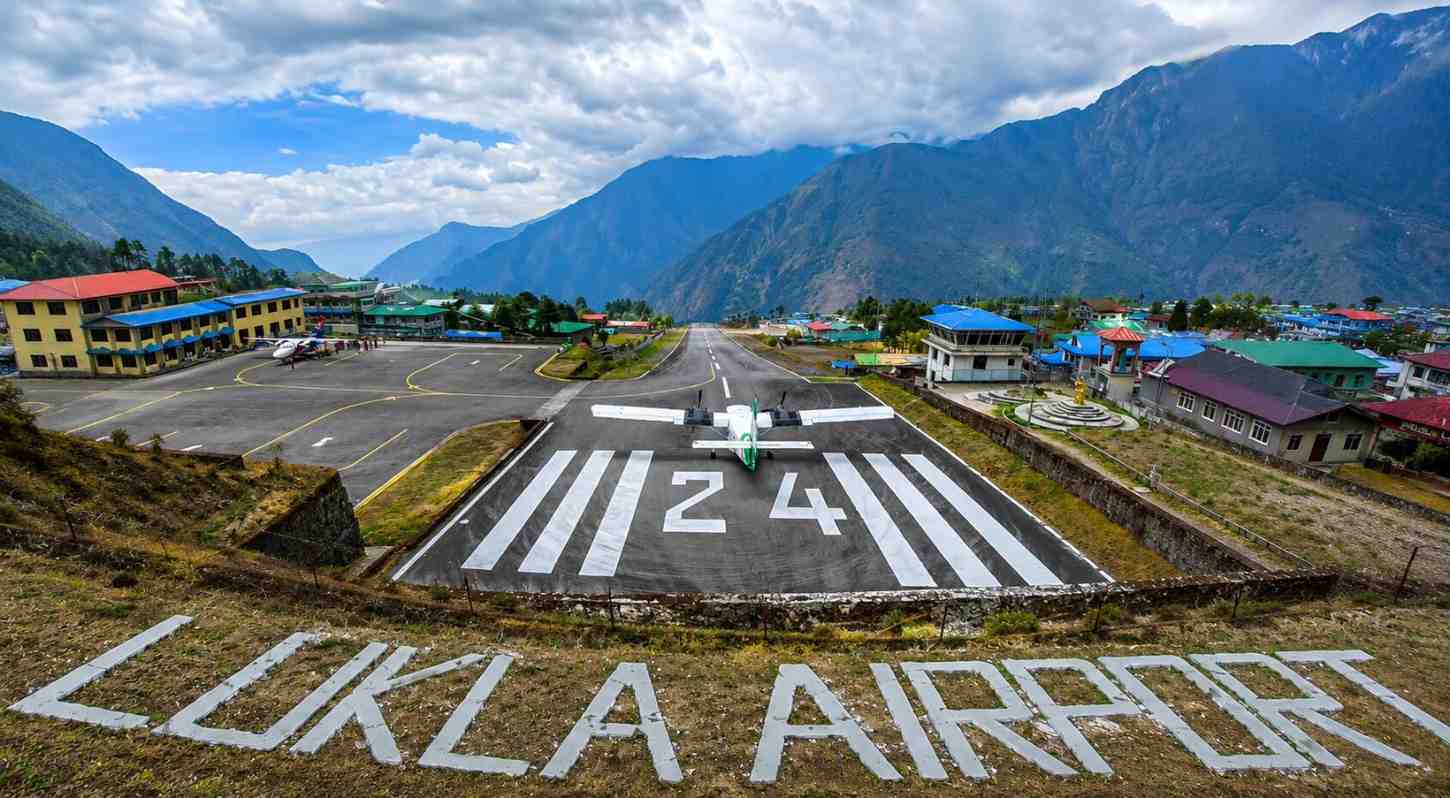
Everest Base Camp can only be reached on foot, typically via a flight from Kathmandu to Lukla followed by a 12–14 day trek through Namche Bazaar, Tengboche, Dingboche, Lobuche, and Gorak Shep.
Most itineraries include two dedicated acclimatization days — one in Namche Bazaar and one in Dingboche — essential for safely adjusting to the significant altitude gain before reaching Base Camp.
The round-trip distance from Lukla to Everest Base Camp and back covers approximately 130 kilometers (80 miles), typically walked over 8 to 9 active trekking days.
The Khumbu Icefall is the first major obstacle for any Everest summit attempt, a treacherous, constantly shifting section of glacier that climbers must cross en route to the Western Cwm, also known as the "Valley of Silence."
The April 2015 earthquake triggered a deadly avalanche off Mount Pumori that swept through Base Camp, killing at least 19 people and damaging trails throughout the region, which were later rebuilt and reopened to trekkers.
Spring (March–May) coincides with Everest's main climbing season, when Base Camp transforms into a bustling tent city of expedition teams preparing for summit attempts, adding genuine excitement for passing trekkers.
Autumn (September–November) offers the most stable weather and clearest mountain views, with spring serving as a strong second choice, while monsoon season is best avoided due to poor visibility.
At 5,364 meters, Everest Base Camp reaches approximately 60.6% of Mount Everest's total summit elevation of 8,849 meters.
Yes, Everest Base Camp lies within Sagarmatha National Park, Nepal's first natural UNESCO World Heritage Site, designated in 1979 for its exceptional mountain scenery and unique ecosystem.
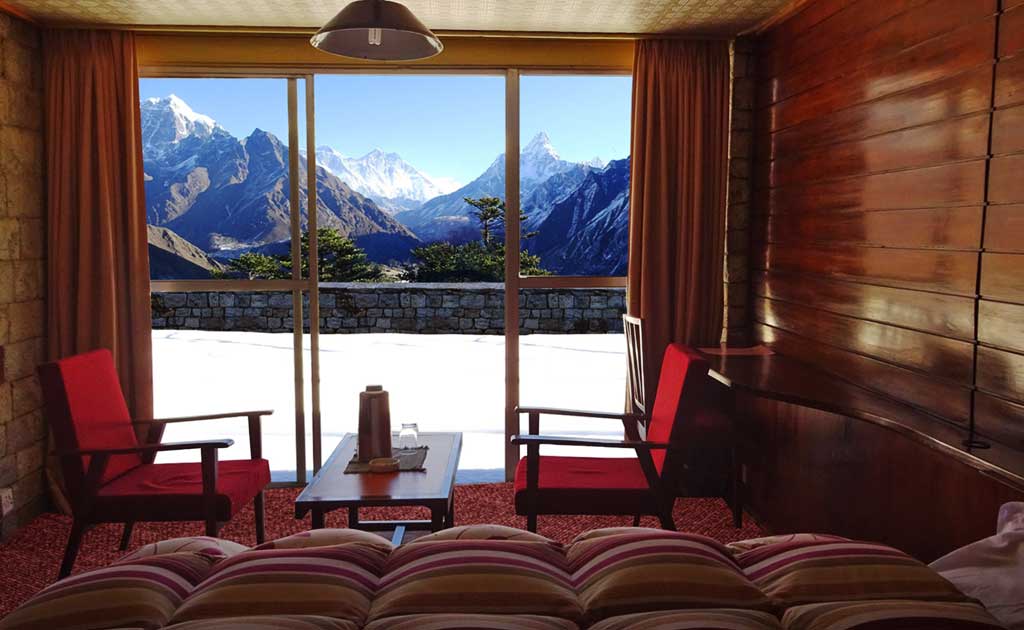
Trekkers typically stay in Gorak Shep, the last inhabited settlement on the route, since there are no teahouses directly at Base Camp itself.
Yes, most trekkers visit both — Base Camp offers the iconic, symbolic destination and close-up glacier views, while Kala Patthar delivers the unobstructed view of Everest's summit that Base Camp itself cannot provide.
Everest Base Camp represents far more than a geographic coordinate on a map — it's the culmination of a demanding, deeply rewarding journey through some of the most spectacular terrain on Earth, and the staging ground for humanity's ongoing quest to stand atop the world's highest peak. For trekkers who complete the journey, standing on the Khumbu Glacier's moraine, surrounded by towering icefalls and mountaineering history, delivers a sense of achievement that few other travel experiences can match.
Ready to stand at the base of the world's highest mountain? Explore the complete Classic Everest Base Camp Trek itinerary with Nepal Trip Services and start planning your journey to this legendary destination.
Discover more articles that match your interests! Explore these similar blogs packed with insights, tips, and stories to keep you inspired.
Everything on Classic Everest Base Camp Trek permits for 2026–2027 — costs, requirements, where to get them & recent...
Discover the best season for the Classic Everest Base Camp Trek. Compare autumn, spring, winter & monsoon weather, views...
Explore the Classic Everest Base Camp Trek itinerary with detailed day-by-day routes, altitudes, trekking hours & acclim...
Discover what you\\\'ll eat and where you\\'ll sleep on the Classic Everest Base Camp Trek. Complete guide to teahouses,...
Discover the full cost breakdown of the Classic Everest Base Camp Trek — permits, flights, guides, porters, meals & ac...
Is the Classic Everest Base Camp Trek hard? Complete guide to difficulty level, altitude challenges, fitness needs & tra...