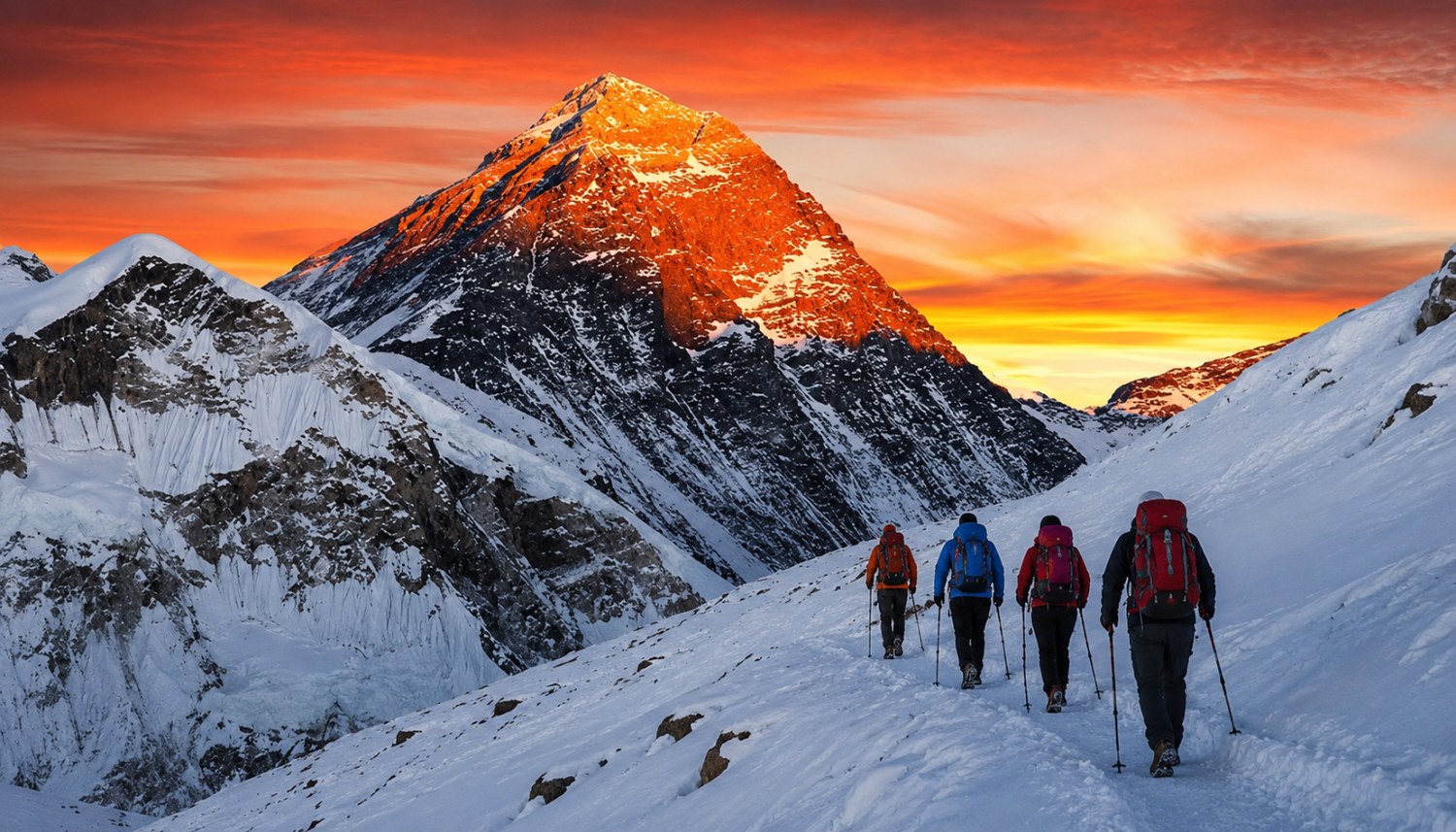
Tengboche, Nepal: Complete Travel & Trekking Guide
By Nepal Trip Services On 22 Sep 2026

By Nepal Trip Services On 22 Sep 2026
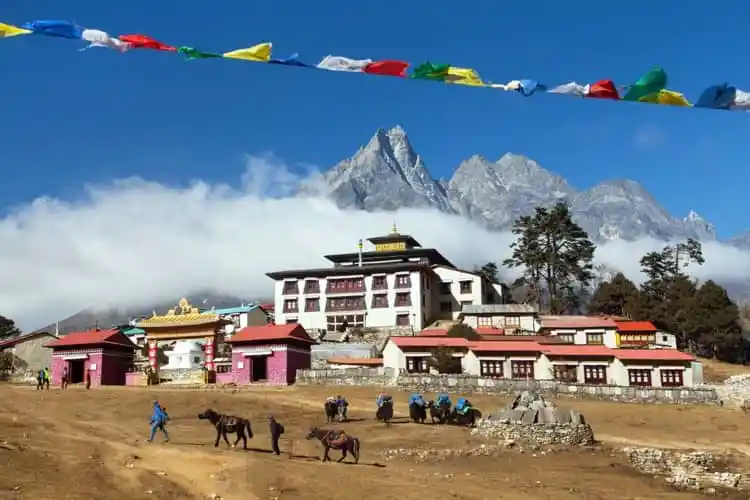
Perched on a forested ridge above the confluence of two rushing rivers, Tengboche is home to the largest and most sacred monastery in the entire Khumbu region — a mandatory stop on the Classic Everest Base Camp Trek that many trekkers remember longer than Base Camp itself. Rebuilt twice after devastating disasters — an earthquake in 1934 and a fire in 1989 — this resilient gompa has stood as a spiritual anchor for the Sherpa community for over a century, framed by an almost unbelievable panorama of Everest, Lhotse, Nuptse, and Ama Dablam rising directly behind it. This complete guide covers everything you need to know about this legendary village and monastery, from its history and significance to practical trekking information, helping you appreciate this sacred stop for everything it offers beyond simply another night on the trail.
Tengboche sits at 3,867 meters (12,687 feet) in the Solukhumbu District of Khumbu Pasanglhamu Rural Municipality, positioned on a high ridge above the confluence of the Dudh Koshi and Imja Khola rivers, within Sagarmatha National Park. It's located between Namche Bazaar and Dingboche on the standard Everest Base Camp route.
| Detail | Information |
|---|---|
| Altitude | 3,867m/12,687ft |
| Coordinates | 27.8336°N, 86.6999°E |
| District | Solukhumbu, Koshi Province |
| National Park | Sagarmatha National Park (UNESCO World Heritage Site) |
| From Namche Bazaar | 11 km/6.8 miles, 5–6 hours |
| To Dingboche | 12 km/7.5 miles, 5–6 hours |
| Entrance Fee | NPR 300 per person |
| Resident Monks | Approximately 60 |
Tengboche Monastery (also known as Dawa Choling Gompa) was originally built in 1916 by Lama Gulu, with deep historical ties to its mother monastery, Rongbuk Monastery in Tibet. The monastery has faced remarkable adversity throughout its history:
Khumbu came under Buddhist influence roughly 350 years ago, and Tengboche has since become one of the region's most sacred and important religious sites.
Tengboche Monastery holds the distinction of being the largest gompa in the entire Khumbu region, making it a genuine spiritual and cultural landmark for trekkers passing through.
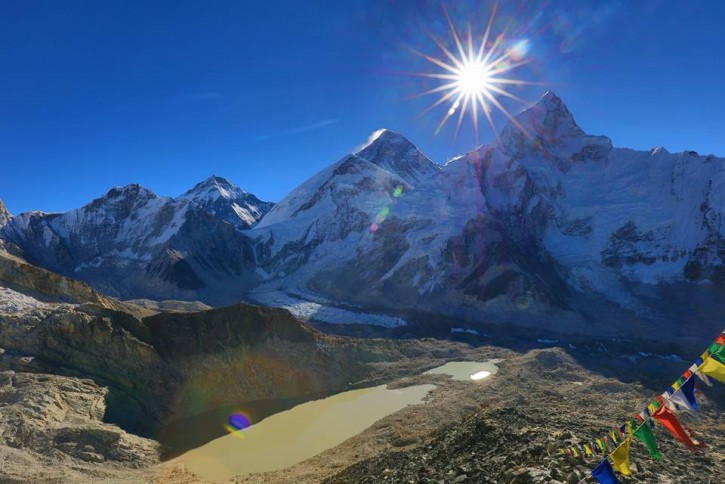
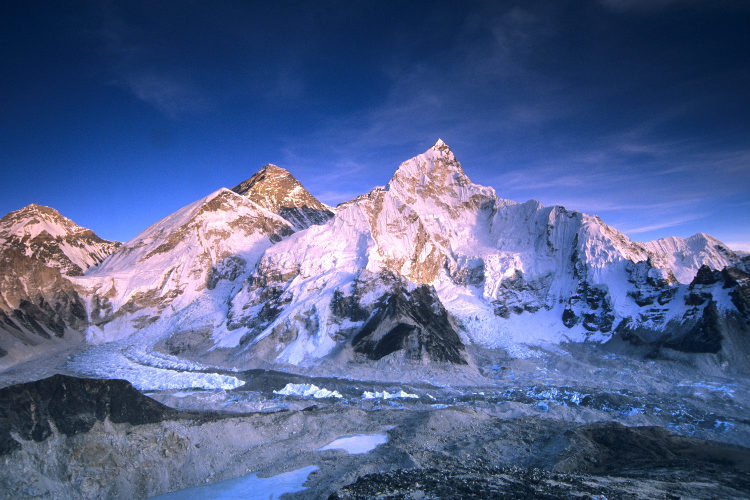
Few places along the entire Everest Base Camp route offer views quite like Tengboche. From this ridge, trekkers can see Tawache, Everest, Nuptse, Lhotse, Ama Dablam, and Thamserku — an extraordinary concentration of legendary peaks in a single panorama.
Tengboche serves as the culminating point of Sagarmatha National Park's "Sacred Sites Trail Project," a circular trail connecting 10 monasteries throughout the Khumbu, drawing pilgrims and trekkers alike to this final, revered destination.
Reflecting the Vajrayana Buddhist belief that spiritual practice doesn't distinguish between sexes, a nunnery was also established at Tengboche alongside the main monastery.
Visit the Monastery's Sanctum — Explore the interior, adorned with intricate religious artwork and Buddhist artifacts, open to respectful visitors.
Attend the Evening Prayer Ceremony — If timing allows, witnessing monks chanting during evening prayers is a genuinely moving cultural experience.
Photograph the Mountain Panorama — Capture Everest, Lhotse, Nuptse, and Ama Dablam framed dramatically behind the monastery.
Experience the Mani Rimdu Festival (October) — If your trek coincides with this major Buddhist festival, you'll witness elaborate masked dances and ceremonies unique to Tengboche.
Walk the Sacred Sites Trail — For those with extra time, this circular route connects 10 monasteries throughout the region, ending at Tengboche.
Tengboche is reached exclusively on foot as part of the Everest Base Camp Trek:
The descent-then-steep-climb pattern is the defining physical characteristic of this trekking day.
| Season | Conditions | Recommendation |
|---|---|---|
| Autumn (Sep–Nov) | Stable, clear skies | Best mountain visibility |
| Spring (Mar–May) | Mild, blooming rhododendrons | Strong second choice |
| Winter (Dec–Feb) | Cold but often clear | Quieter visit |
| Monsoon (Jun–Aug) | Poor visibility, wet trails | Not recommended |
| October (Mani Rimdu) | Festival season | Special cultural experience |
Accommodation in Tengboche consists of teahouses offering:
Tengboche sits at 3,867 meters (12,687 feet) in the Solukhumbu District of Khumbu Pasanglhamu Rural Municipality, positioned on a high ridge above the confluence of the Dudh Koshi and Imja Khola rivers within Sagarmatha National Park.
Tengboche Monastery holds the distinction of being the largest gompa in the entire Khumbu region, serving as a major spiritual center for the Sherpa community and a mandatory stop on the Everest Base Camp route.
Tengboche Monastery was originally built in 1916 by Lama Gulu, with deep historical ties to its mother monastery, Rongbuk Monastery, located across the border in Tibet.
Yes, the monastery was destroyed by an earthquake in 1934 and again by a devastating fire in 1989, both times rebuilt with the help of volunteers and international assistance.
From the Tengboche ridge, trekkers can see an extraordinary panorama including Tawache, Everest, Nuptse, Lhotse, Ama Dablam, and Thamserku, all visible in a single sweeping view.
The trek from Namche Bazaar to Tengboche covers 11 km (6.8 miles) over 5 to 6 hours, descending to Phunki Tenga before climbing steeply through rhododendron forest to the monastery ridge.
Yes, the entrance fee is NPR 300 per person, which contributes to the upkeep and preservation of this historic religious site.
Mani Rimdu is a major Buddhist festival held annually at Tengboche Monastery in October, featuring elaborate masked dances and ceremonies that draw both pilgrims and trekkers.
Yes, reflecting the Vajrayana Buddhist belief that spiritual practice doesn't distinguish between sexes, a nunnery was also established at Tengboche alongside the main monastery.
Approximately 60 monks currently reside at Tengboche Monastery, maintaining its daily religious practices and ceremonies.
The Sacred Sites Trail Project is a circular trail within Sagarmatha National Park connecting 10 monasteries throughout the Khumbu region, with Tengboche serving as its culminating destination.
Yes, if timing allows, witnessing the evening prayer ceremony with chanting monks is a genuinely moving cultural experience open to respectful visitors.
Autumn (September–November) offers the most stable weather and clearest mountain views, with spring (March–May) serving as a strong second choice, while October also offers the unique Mani Rimdu Festival.
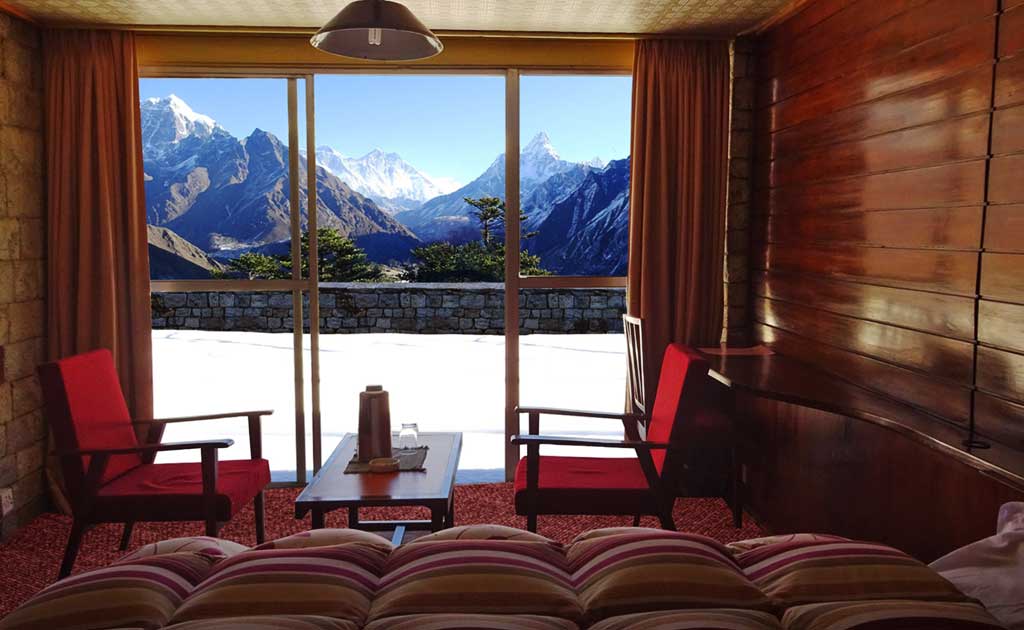
Accommodation consists of teahouses offering basic twin-sharing rooms, communal dining halls often with direct monastery views, and a noticeably quieter atmosphere than busier stops like Namche Bazaar.
After Tengboche, trekkers continue toward Dingboche (4,410m), covering approximately 12 km (7.5 miles) over 5 to 6 hours as the trail heads deeper into higher-altitude terrain.
Tengboche isn't simply a stopover on the way to Everest Base Camp — it's a genuine spiritual and scenic highlight of the entire journey, offering the largest monastery in the Khumbu alongside one of the most spectacular mountain panoramas found anywhere on the trail. For many trekkers, the memory of standing before this sacred gompa, framed by Everest, Ama Dablam, and Lhotse, remains just as vivid as reaching Base Camp itself.
Ready to experience Tengboche for yourself? Explore the complete Classic Everest Base Camp Trek itinerary with Nepal Trip Services and discover this legendary monastery on your journey to the Himalaya.
Discover more articles that match your interests! Explore these similar blogs packed with insights, tips, and stories to keep you inspired.
Everything on Classic Everest Base Camp Trek permits for 2026–2027 — costs, requirements, where to get them & recent...
Discover the best season for the Classic Everest Base Camp Trek. Compare autumn, spring, winter & monsoon weather, views...
Explore the Classic Everest Base Camp Trek itinerary with detailed day-by-day routes, altitudes, trekking hours & acclim...
Discover what you\\\'ll eat and where you\\'ll sleep on the Classic Everest Base Camp Trek. Complete guide to teahouses,...
Discover the full cost breakdown of the Classic Everest Base Camp Trek — permits, flights, guides, porters, meals & ac...
Is the Classic Everest Base Camp Trek hard? Complete guide to difficulty level, altitude challenges, fitness needs & tra...