Gokyo, Nepal: Complete Travel & Trekking Guide
By Nepal Trip Services On 05 Oct 2026

By Nepal Trip Services On 05 Oct 2026

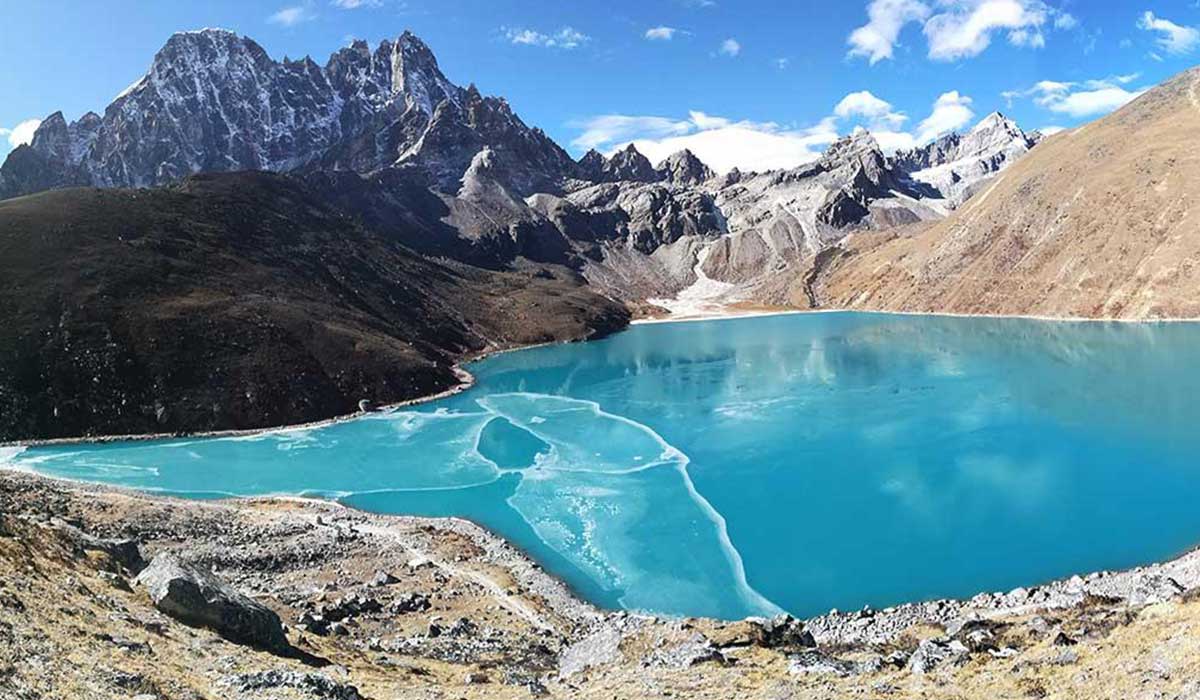
Gokyo is a small Sherpa settlement at about 4,790 m in Nepal's Everest (Khumbu) region, set on the shore of a glowing turquoise lake beneath the 8,188 m summit of Cho Oyu. It is the base for the Gokyo Lakes Trek, one of the most scenic routes in the Himalayas and a quieter alternative to Everest Base Camp.
What makes Gokyo special is the combination you find nowhere else in Nepal. Six sacred glacial lakes sit between roughly 4,700 m and 5,000 m. The Ngozumpa Glacier, Nepal's largest at around 36 km, runs right beside the village. Above it all, Gokyo Ri (5,357 m) offers a single panorama of four 8,000 m peaks: Everest, Lhotse, Makalu and Cho Oyu.
This guide covers everything travellers and trekkers need to plan a trip to Gokyo: how to get there, the lakes and viewpoints, a sample itinerary, seasons, permits, costs, difficulty, altitude safety, teahouses and packing.
|
Detail |
Information |
|---|---|
|
Location |
Gokyo Valley, Sagarmatha National Park, Solukhumbu District, Koshi Province, Nepal |
|
Altitude of Gokyo village |
About 4,790 m (15,715 ft) |
|
Highest viewpoint |
Gokyo Ri, 5,357 m (17,575 ft) |
|
Famous for |
Six turquoise lakes, Ngozumpa Glacier, Everest panorama |
|
Protected status |
Sagarmatha National Park (UNESCO World Heritage Site); Gokyo lakes are a Ramsar Wetland of International Importance |
|
Gateway |
Lukla (2,860 m), reached by a short mountain flight |
|
Standard trek length |
12 days Kathmandu to Kathmandu (9 days of walking) |
|
Trek grade |
Moderate to challenging (no technical climbing) |
|
Best seasons |
Spring (March–May) and autumn (September–November) |
|
Accommodation |
Teahouses (family-run mountain lodges) |
|
Permits |
Sagarmatha National Park permit + Khumbu Pasang Lhamu Rural Municipality permit |
|
Package price |
From US$ 1,250 per person with Nepal Trip Services, depending on group size |
Gokyo lies in the upper Gokyo Valley, west of the main Everest Base Camp trail and directly south of Cho Oyu on the Nepal–Tibet border. There is no road to Gokyo. Every visitor arrives on foot, or by helicopter for a short sightseeing landing.
|
Option |
Duration |
Best for |
Notes |
|---|---|---|---|
|
Classic Gokyo Lakes Trek |
12 days |
Most trekkers |
Acclimatisation in Namche and Machhermo; book here |
|
Gokyo + Renjo La Pass loop |
13–15 days |
Fit trekkers wanting a circuit |
Crosses Renjo La (5,360 m) to Thame |
|
Gokyo + Cho La + Everest Base Camp |
15–18 days |
Experienced trekkers |
Combines Gokyo Ri, Kala Patthar and EBC |
|
Gokyo helicopter tour |
1 day |
Short-on-time visitors |
Brief landing only, because of the altitude; arrange via our helicopter services |
Tip: Keep one or two buffer days at the end of your trip. Lukla flights depend on clear weather and are sometimes delayed.
The Gokyo Lakes are a chain of six glacier-fed lakes strung along the western edge of the Ngozumpa Glacier. Together they form one of the highest freshwater lake systems on Earth and are protected as a Ramsar Wetland of International Importance. Their colour shifts from milky jade to deep turquoise depending on the light and the season.
The lakes are sacred to both Hindus and Buddhists. Every August, during the Janai Purnima full-moon festival, pilgrims walk up to bathe in their icy water. Visitors are asked not to swim, wash or throw anything into the lakes.
|
Lake |
Local name |
Approx. altitude |
What to expect |
|---|---|---|---|
|
First Lake |
Longponga Tsho |
~4,690 m |
Small lake you pass on the way up from Machhermo |
|
Second Lake |
Taujung (Taboche) Tsho |
~4,740 m |
Calm water reflecting the surrounding peaks |
|
Third Lake |
Dudh Pokhari (Gokyo Cho) |
~4,790 m |
The largest lake; Gokyo village sits on its shore |
|
Fourth Lake |
Thonak Tsho |
~4,840 m |
Quiet half-day hike; close views of Cho Oyu |
|
Fifth Lake |
Ngozumpa Tsho |
~4,990 m |
Near "Scoundrel's Viewpoint", a famous Everest view across the glacier |
|
Sixth Lake |
Gyazumpa Tsho |
~5,000 m |
Remote and rarely visited; needs an extra day |
Altitudes vary slightly between maps and sources.
The Ngozumpa Glacier flows about 36 km south from the slopes of Cho Oyu, making it the largest glacier in Nepal. From Gokyo, a short walk to the lateral moraine ridge shows a grey sea of rubble, ice cliffs and meltwater ponds. The classic route follows its moraine; trekkers continuing to Cho La cross the glacier itself, where you can hear the ice creak and shift underfoot.
Gokyo Ri is the rocky peak rising directly above Gokyo village. The climb gains about 570 m and usually takes 2–3 hours up and 1–1.5 hours down on a steep, zig-zag trail. No climbing skills are needed, only a slow, steady pace.
From the top, many trekkers rate the view above Kala Patthar on the EBC route. You see:
Sunrise or sunset? Sunrise brings the clearest skies but temperatures often below -15°C, with Everest backlit. Afternoon climbs are warmer and the light falls directly on Everest, though clouds can build, especially in spring. Our itinerary climbs on the afternoon of arrival, with the option of a sunrise climb the next morning.
The 12-day itinerary below is the one Nepal Trip Services runs on the Gokyo Lakes Trek. It builds in two acclimatisation stops and spends only one night at Gokyo before descending.
|
Day |
Route |
Overnight altitude |
Walking time |
|---|---|---|---|
|
1 |
Arrive in Kathmandu, trek briefing, welcome dinner |
1,338 m |
— |
|
2 |
Fly to Lukla, trek to Phakding |
2,610 m |
3–4 hrs |
|
3 |
Phakding to Namche Bazaar via Hillary Bridge |
3,440 m |
5–6 hrs |
|
4 |
Acclimatisation day: Everest View Hotel & Khumjung |
3,440 m |
3–4 hrs |
|
5 |
Namche to Dole via Mong La |
4,040 m |
5–6 hrs |
|
6 |
Dole to Machhermo |
4,470 m |
4–5 hrs |
|
7 |
Machhermo to Gokyo, afternoon climb of Gokyo Ri (5,357 m) |
4,790 m |
4–5 hrs + 3–4 hrs |
|
8 |
Hike to the Fourth Lake, descend to Machhermo |
4,470 m |
6–7 hrs |
|
9 |
Machhermo to Namche Bazaar |
3,440 m |
6–7 hrs |
|
10 |
Namche Bazaar to Lukla |
2,860 m |
6–7 hrs |
|
11 |
Fly to Kathmandu, farewell dinner |
1,338 m |
— |
|
12 |
Final departure |
— |
— |
Want more time at the lakes? Add a second night in Gokyo to visit the Fifth Lake and Scoundrel's Viewpoint, or extend over Renjo La or Cho La. Our team can tailor the plan through the trip planner.
The best months to visit Gokyo are October–November and March–April, when skies are clearest and trails are dry. Nights at Gokyo drop below freezing in every season, so warm layers are essential year-round.
|
Season |
Months |
Day / night at Gokyo (approx.) |
Views |
Verdict |
|---|---|---|---|---|
|
Autumn |
September–November |
5–12°C / -10 to -5°C |
Crystal-clear, most stable |
Best |
|
Spring |
March–May |
5–15°C / -8 to 0°C |
Very good; rhododendrons bloom lower down |
Excellent |
|
Winter |
December–February |
-5 to 5°C / down to -20°C |
Clear but harsh; lakes freeze |
For experienced trekkers |
|
Monsoon |
June–August |
10–15°C / 0 to 5°C |
Often cloudy; frequent flight delays |
Least suitable |
Seasonal tips:
Every foreign visitor to Gokyo needs two permits. A TIMS card is not required in the Everest region.
|
Permit |
Fee for foreign nationals |
Where it is checked |
|---|---|---|
|
Sagarmatha National Park Entry Permit |
NPR 3,000 + 13% VAT (NPR 3,390) |
Monjo park gate; available in Kathmandu or Monjo |
|
Khumbu Pasang Lhamu Rural Municipality Permit (Trek Card) |
NPR 3,000 |
Lukla checkpoint |
A guided 12-day Gokyo Lakes Trek with Nepal Trip Services costs from US$ 1,250 to US$ 1,380 per person, depending on group size. The price covers flights, permits, guide, porter, teahouses and meals on the trek.
|
Group size |
Price per person |
|---|---|
|
1 person |
US$ 1,380 |
|
2 people |
US$ 1,340 |
|
3–6 people |
US$ 1,300 |
|
7–10 people |
US$ 1,250 |
Money tip: The last ATMs are in Lukla and Namche Bazaar, and they are not always reliable. Withdraw enough Nepalese rupees in Kathmandu.
The Gokyo trek is graded moderate to challenging. It needs no technical skills, but altitude, 5–7 hour walking days and rocky moraine make it harder than lower treks such as Poon Hill. Fit beginners who train well can complete it. For a deeper look, read our Gokyo Lakes Trek difficulty guide.
|
Factor |
Detail |
Rating |
|---|---|---|
|
Maximum altitude |
Gokyo Ri, 5,357 m |
High |
|
Highest sleeping point |
Gokyo, about 4,790 m |
Moderate–high |
|
Daily walking |
4–7 hours |
Moderate |
|
Terrain |
Stone steps, steep climbs, glacial moraine |
Moderate–challenging |
|
Technical skills |
None required |
Easy |
|
Total distance |
Roughly 90–95 km from Lukla and back |
Moderate |
Altitude is the biggest risk on the way to Gokyo. Acute Mountain Sickness (AMS) can affect anyone above about 2,500 m, regardless of fitness. A slow ascent with rest days prevents most problems.
Common symptoms of mild AMS:
Descend immediately if you notice: a severe headache that doesn't ease, confusion or loss of balance, breathlessness at rest, or a wet cough. These may signal HACE or HAPE, which are medical emergencies.
Prevention checklist:
Gokyo has a handful of family-run teahouses along the lakeshore, many with dining-room windows facing Dudh Pokhari. Rooms are simple twin-sharing spaces with beds and blankets. Bedrooms are unheated, so a four-season sleeping bag is essential.
|
Facility |
Lower villages (Lukla, Namche) |
Higher villages (Machhermo, Gokyo) |
|---|---|---|
|
Rooms |
Twin-sharing; some attached bathrooms |
Basic twin-sharing; shared bathrooms |
|
Heating |
Dining-room stove |
Dining-room stove only |
|
Hot shower |
Available, small fee |
Limited, higher fee |
|
Charging |
Available, small fee |
Solar power, higher fee |
|
Wi-Fi |
Good, often paid |
Paid prepaid cards; can be slow |
|
ATM |
Yes |
No |
What to eat: Dal bhat (rice and lentils with free refills) is the best trekking fuel. Teahouses also serve momo, noodles, fried rice, pasta, garlic soup, Tibetan bread and porridge. Above Namche, vegetarian meals are fresher and safer, since meat is carried up without refrigeration.
Drinking water: Refill with boiled or filtered water and use purification tablets. It is cheaper than bottled water and keeps plastic out of the mountains.
Pack light: Lukla flights allow about 15 kg in total per person (10 kg checked + 5 kg hand luggage).
Down jackets and sleeping bags are provided on loan with our package if you need them.
Choose Gokyo if you want quieter trails, turquoise lakes and arguably the better Everest panorama. Choose Everest Base Camp if standing at the foot of Everest and seeing the Khumbu Icefall matters most. Strong trekkers can do both by crossing the Cho La Pass.
|
Feature |
Gokyo Lakes Trek |
Everest Base Camp Trek |
|---|---|---|
|
Duration |
12 days |
14 days |
|
Highest point |
Gokyo Ri, 5,357 m |
Kala Patthar, about 5,545 m |
|
Highest overnight |
Gokyo, about 4,790 m |
Gorak Shep, about 5,160 m |
|
Crowds |
Fewer |
Busy in peak season |
|
Signature sights |
Six lakes, Ngozumpa Glacier, 4 × 8,000 m peaks |
Base camp, Khumbu Icefall, Tengboche Monastery |
|
Price with Nepal Trip Services |
From US$ 1,250 |
From US$ 1,350 |
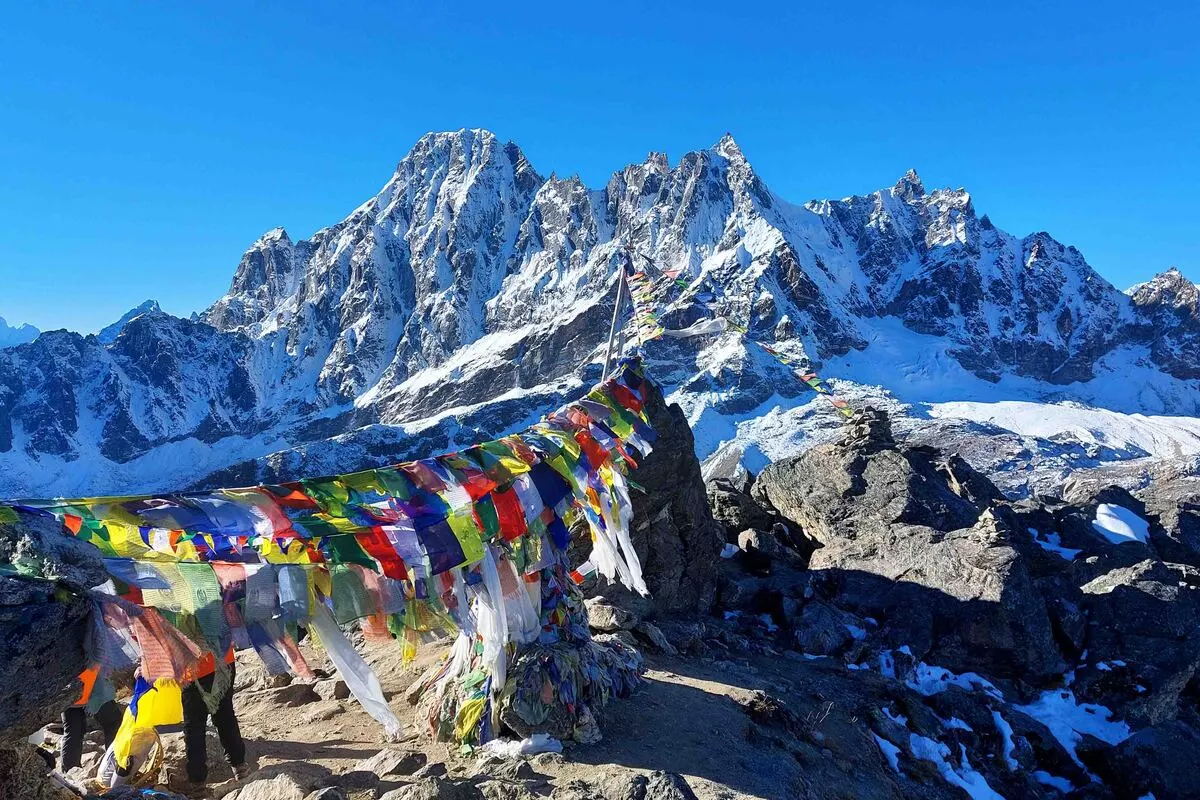
The trail to Gokyo passes through Sherpa country, where Tibetan Buddhism shapes daily life. Expect mani walls carved with prayers, spinning prayer wheels, chortens and strings of colourful prayer flags on every bridge.
Sagarmatha National Park shelters Himalayan tahr, musk deer, pika and the Himalayan monal (Danphe), Nepal's colourful national bird. Snow leopards live in the region but are very rarely seen.
Gokyo's lakes and glacier are fragile, and every visitor leaves a mark. Simple habits keep the valley clean and support local families:
Nepal Trip Services Pvt. Ltd. is a Kathmandu-based operator with 16 years of experience in the Himalayas, associated with the Nepal Tourism Board and the Trekking Agencies' Association of Nepal (TAAN).
Gokyo is in the Gokyo Valley of Sagarmatha National Park, Solukhumbu District, in Nepal's Everest region. It lies west of the Everest Base Camp trail, below Cho Oyu.
Gokyo village sits at about 4,790 m (15,715 ft). Gokyo Ri, the viewpoint above it, reaches 5,357 m (17,575 ft).
The standard trip takes 12 days from Kathmandu to Kathmandu. Allow 13–15 days with Renjo La, or 15–18 days to add Cho La and Everest Base Camp.
Yes. Gokyo Ri offers one of the finest views of Everest, along with Lhotse, Makalu and Cho Oyu. The Fifth Lake's Scoundrel's Viewpoint is another famous Everest view.
It is similar or slightly easier. Gokyo sleeps lower (about 4,790 m vs 5,160 m at Gorak Shep) and is shorter, but Gokyo Ri is a steep climb.
Yes, with 6–8 weeks of training, a sensible pace and a guide. Previous hiking experience helps but is not essential.
October–November and March–April offer the clearest views and most stable weather.
Yes, the lakes usually freeze partly or fully in winter (December–February). They show their brightest turquoise colour in autumn and late spring.
A licensed guide is strongly recommended and now the standard for trekking in Nepal. Guides manage navigation, acclimatisation, safety and bookings.
You need the Sagarmatha National Park permit and the Khumbu Pasang Lhamu Rural Municipality permit. Both are included in our package.
Most teahouses offer paid Wi-Fi via prepaid cards. Mobile signal is patchy above Namche, so expect slow or interrupted connections.
Yes. A helicopter tour can land briefly near Gokyo for views of the lakes and Everest. Stays are short because of the risk of altitude sickness.
Gokyo rewards every step with turquoise lakes, Nepal's largest glacier and a sunrise view of four of the world's highest mountains. With the right timing, steady acclimatisation and an experienced local team, it is one of the most memorable journeys in the Himalayas.
Ready to go? View the full itinerary, inclusions and group prices on our Gokyo Lakes Trek – 12 Days page, or plan a custom trip.
Prices, permit fees and visa fees are current as of October 2026 and may change
Discover more articles that match your interests! Explore these similar blogs packed with insights, tips, and stories to keep you inspired.
Explore Nepal\'s Gokyo Valley: sacred turquoise lakes, Gokyo Ri, Ngozumpa Glacier, Sherpa villages, routes, best time, p...
Discover the Dudh Koshi River, Nepal\'s "Milk River" of Everest: its source, bridges, villages, trekking routes, best ti...
Explore Dole (4,040 m), the first stop in Nepal\'s Gokyo Valley. Discover routes, teahouses, mountain views, altitude ti...
Explore Machhermo (4,470 m), the key acclimatisation stop before Gokyo. Discover routes, teahouses, Cho Oyu views, altit...
Discover Nepal\'s sacred Gokyo Lakes: all six lakes explained, Gokyo Ri, routes, best time, permits, altitude tips & how...
Climb Gokyo Ri (5,357 m) for one of Nepal\\'s best Everest panoramas. Route, timing, difficulty, sunrise tips, views, pe...