Gokyo Valley, Nepal: Complete Travel & Trekking Guide
By Nepal Trip Services On 01 Oct 2026

By Nepal Trip Services On 01 Oct 2026

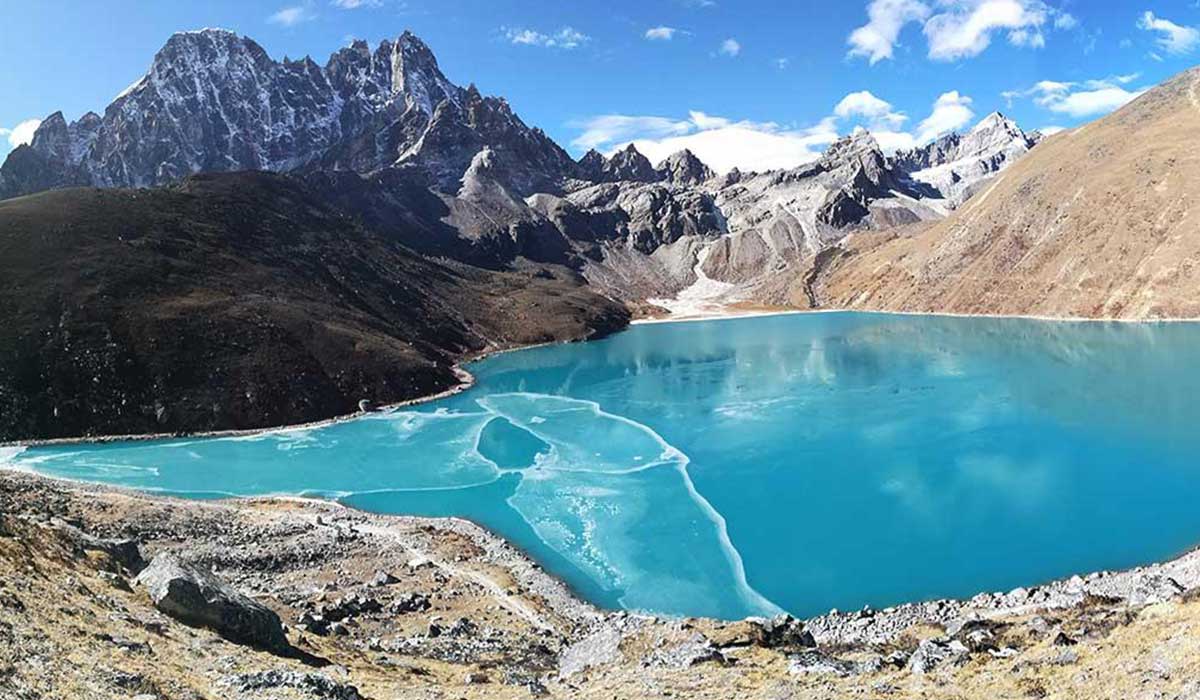
Imagine walking along a high Himalayan valley where the silence is broken only by the bells of grazing yaks and the wind sweeping off the glaciers. Ahead, a lake appears, its water an impossible shade of turquoise, mirroring snow-capped peaks. Then another lake, and another. Beside them stretches a vast river of ice and rock, and above it all rises Cho Oyu, the world's sixth-highest mountain. This is the Gokyo Valley, one of the most spectacular and peaceful corners of Nepal's Everest region. This complete guide from Nepal Trip Services covers everything you need to know about the valley: its lakes, glacier, viewpoints, villages, trekking routes, best time to visit and practical tips for planning your Gokyo Lakes Trek.
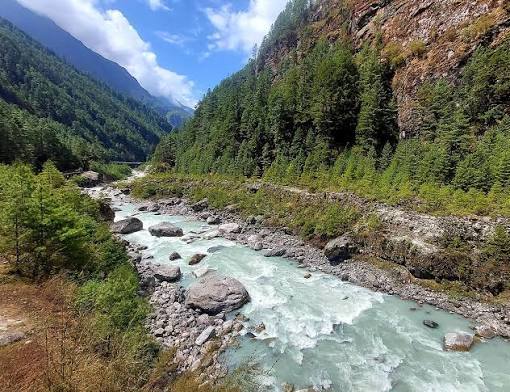
The Gokyo Valley is a high Himalayan valley in the Khumbu (Everest) region of northeastern Nepal, inside Sagarmatha National Park, a UNESCO World Heritage Site. It lies west of the main Everest Base Camp trail, stretching north from the Dudh Koshi River toward the slopes of Cho Oyu (8,188 m).
The valley is famous for its chain of sacred glacial lakes, the mighty Ngozumpa Glacier and the panoramic summit of Gokyo Ri (5,357 m), which offers views of four of the world's 8,000-metre peaks. Compared with the busy EBC route, the Gokyo Valley is quieter, wilder and, for many trekkers, even more beautiful.
| Detail | Information |
|---|---|
| Location | Solukhumbu District, Sagarmatha National Park, Nepal |
| Main Village | Gokyo (about 4,790–4,800 m) |
| Highest Viewpoint | Gokyo Ri – 5,357 m (17,575 ft) |
| Famous Lakes | Six main lakes between 4,700 and 5,000 m |
| Largest Lake | Dudh Pokhari (Gokyo Cho), about 43 hectares |
| Glacier | Ngozumpa Glacier, Nepal's largest |
| Protected Status | Ramsar Wetland of International Importance (2007) |
| Mountain Views | Everest, Lhotse, Makalu, Cho Oyu and more |
| Main Trek | Gokyo Lakes Trek |
| Best Time | March–May & September–November |
The Gokyo Valley is home to the highest freshwater lake system in the world, a chain of glacial lakes fed by the Ngozumpa Glacier and surrounding streams. In September 2007, Gokyo and its associated wetlands, covering 7,770 hectares, were designated a Ramsar site, recognising their global ecological importance.
| Lake | Name | Approx. Altitude | Highlight |
|---|---|---|---|
| First Lake | Longponga | ~4,690 m | Small lake marking the entrance to the lake system |
| Second Lake | Taboche Tsho | ~4,740 m | Calm, reflective waters |
| Third Lake | Dudh Pokhari (Gokyo Cho) | ~4,750–4,790 m | Largest and most famous, with Gokyo village on its shore |
| Fourth Lake | Thonak Tsho | ~4,830 m | Quiet lake with close-up views of Cho Oyu |
| Fifth Lake | Ngozumpa Tsho | ~4,950–4,990 m | Near the famous Scoundrel's Viewpoint of Everest |
| Sixth Lake | Gyazumpa Tsho | ~5,000 m | Remote lake near the base of Cho Oyu |
The largest, Dudh Pokhari, covers about 42.9 hectares, with Gokyo village on its eastern shore.
The Gokyo Lakes are sacred to both Hindus and Buddhists. During the Janai Purnima festival (usually in August), pilgrims travel to the lakes to bathe in their icy waters. Visitors are asked to respect the lakes by not swimming, washing or littering.
Running alongside the Gokyo Lakes is the Ngozumpa Glacier, the largest glacier in Nepal. It stretches around 36 km from the slopes of Cho Oyu, a vast river of ice covered in rock and rubble.
From the moraine ridge near Gokyo, you can look down on its grey, rocky surface, dotted with meltwater ponds and ice cliffs. Crossing the glacier is part of the route to the Cho La Pass and Everest Base Camp.
The glacier also poses a risk: researchers monitor the possibility of glacial lake outbursts, highlighting the effects of climate change in the Himalaya.
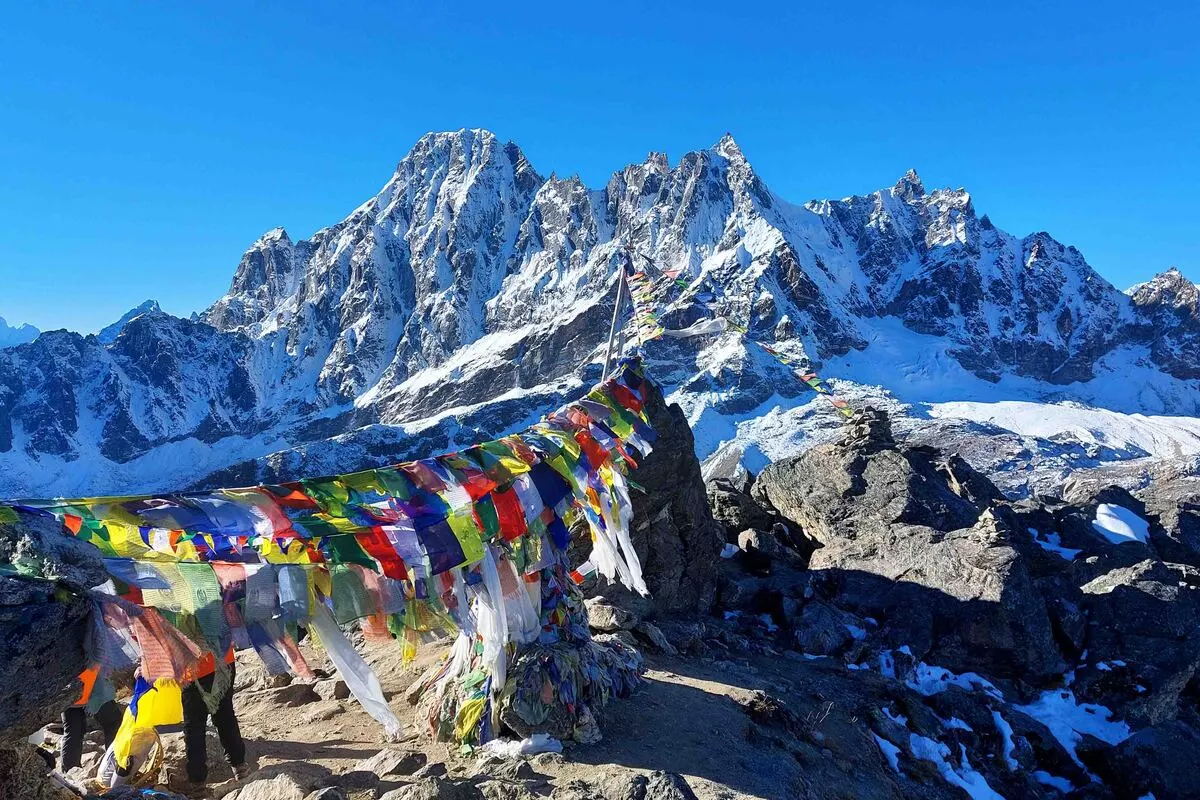
Rising above Gokyo village, Gokyo Ri (5,357 m) offers one of the most spectacular viewpoints in the Himalayas.
| Mountain | Height |
|---|---|
| Mount Everest | 8,849 m |
| Lhotse | 8,516 m |
| Makalu | 8,485 m |
| Cho Oyu | 8,188 m |
| Gyachung Kang | 7,952 m |
| Nuptse | 7,861 m |
| Cholatse & Taboche | ~6,440–6,500 m |
The climb takes 2–3 hours from Gokyo, gaining about 570 metres on a steep, rocky trail. Many trekkers consider the view even better than Kala Patthar, because it combines four 8,000-metre peaks, turquoise lakes and a giant glacier in one panorama.
| Village | Altitude | Highlights |
|---|---|---|
| Namche Bazaar | 3,440 m | Sherpa capital, gateway to the valley |
| Mong La | ~3,975 m | Ridge-top viewpoint with Ama Dablam views |
| Phortse Thanga | ~3,680 m | Riverside stop in the Dudh Koshi valley |
| Dole | ~4,040 m | Small settlement in birch and rhododendron forest |
| Luza | ~4,360 m | Quiet stop among yak pastures |
| Machhermo | ~4,470 m | Acclimatisation stop with seasonal health post |
| Gokyo | ~4,790 m | Lakeside village beside Dudh Pokhari |
| Thangnak (Dragnag) | ~4,700 m | Gateway to the Cho La Pass |
Many of these settlements began as summer yak-herding pastures and now host teahouses run by Sherpa families. Machhermo is also known for a famous local yeti legend, adding a touch of mystery to your trek.
The Gokyo Valley's alpine ecosystem supports remarkable wildlife:
In the lower valley, forests of rhododendron, birch and juniper bloom in spring, while higher up, the landscape gives way to alpine meadows, moraines and glaciers.
The valley is part of the Sherpa homeland, and Sherpa culture shapes daily life:
Always walk clockwise around mani walls and chortens, and greet locals with "Namaste" or "Tashi Delek".
| Step | Details |
|---|---|
| 1. Fly to Lukla | 35-minute flight from Kathmandu (or Ramechhap in peak seasons) |
| 2. Trek to Namche Bazaar | Via Phakding and Monjo, 2 days |
| 3. Acclimatise in Namche | Rest and hike to the Everest View Hotel |
| 4. Head into the Gokyo Valley | Via Mong La, Dole and Machhermo to Gokyo |
| Route | Highlights |
|---|---|
| Via Renjo La Pass (5,360 m) | From Thame and Lungden; spectacular views of Everest and the lakes |
| Via Cho La Pass (5,420 m) | Connects Gokyo with Everest Base Camp via the Ngozumpa Glacier |
| Via Phortse | A quieter route linking the Gokyo and Pangboche/EBC trails |
The best way to explore the valley is on our Gokyo Lakes Trek, a 12-day journey from Kathmandu.
| Day | Route | Highlights |
|---|---|---|
| 1 | Arrival in Kathmandu | Welcome and briefing |
| 2 | Fly to Lukla, trek to Phakding | Scenic mountain flight |
| 3 | Trek to Namche Bazaar | Hillary Bridge, first Everest view |
| 4 | Acclimatisation in Namche | Everest View Hotel, Khumjung |
| 5 | Trek to Dole | Mong La ridge, forest trails |
| 6 | Trek to Machhermo | Yak pastures, Cho Oyu views |
| 7 | Trek to Gokyo + Gokyo Ri | Lakes, glacier, Everest panorama |
| 8 | Fourth Lake hike, trek to Machhermo | Cho Oyu close-ups |
| 9 | Trek to Namche Bazaar | Valley descent |
| 10 | Trek to Lukla | Farewell celebration |
| 11 | Fly to Kathmandu | Farewell dinner |
| 12 | Departure | — |
👉 See the full itinerary, costs and inclusions on our Gokyo Lakes Trek page.
| Feature | Gokyo Valley | Everest Base Camp |
|---|---|---|
| Max Altitude | 5,357 m (Gokyo Ri) | ~5,545 m (Kala Patthar) |
| Highest Sleeping Point | ~4,790 m (Gokyo) | ~5,160 m (Gorak Shep) |
| Crowds | Quieter, peaceful | Busy in peak season |
| Unique Features | Turquoise lakes, Ngozumpa Glacier | Khumbu Icefall, Everest Base Camp |
| Everest Views | Panoramic with four 8,000 m peaks | Close-up from Kala Patthar |
| Difficulty | Moderate to Challenging | Challenging |
Verdict: Choose Gokyo for peace, lakes and panoramic views, or combine both via the Cho La Pass for the ultimate Khumbu experience.
| Season | Months | Conditions | Rating |
|---|---|---|---|
| Autumn | September – November | Clear, dry, stable skies | Best |
| Spring | March – May | Mild days, rhododendron blooms lower down | Excellent |
| Winter | December – February | Very cold, frozen lakes, few trekkers | Challenging |
| Monsoon | June – August | Rain, clouds, flight delays | Difficult |
| Season | Day | Night |
|---|---|---|
| Spring | 5°C – 15°C | -8°C – 0°C |
| Monsoon | 10°C – 15°C | 0°C – 5°C |
| Autumn | 5°C – 12°C | -10°C – -5°C |
| Winter | -5°C – 5°C | -20°C – -15°C |
Temperatures are approximate. Nights are below freezing year-round.
| Permit | Foreign Nationals |
|---|---|
| Sagarmatha National Park Entry Permit | NPR 3,000 |
| Khumbu Pasang Lhamu Rural Municipality Permit | NPR 3,000 |
Both permits are included in our Gokyo Lakes Trek package.
The Gokyo Valley has a network of Sherpa-run teahouses offering:
Popular meals include dal bhat, Sherpa stew, garlic soup, noodles, momo and Tibetan bread. Choose vegetarian meals at higher altitudes for freshness.
The Gokyo Valley lies at high altitude, so acclimatisation is essential:
Discover the beauty of the Gokyo Valley on our 12-day Gokyo Lakes Trek, where turquoise lakes, the mighty Ngozumpa Glacier and the breathtaking Gokyo Ri panorama await. Looking for more Himalayan adventures? Explore the Everest Region with the iconic Classic Everest Base Camp Trek, take on the ultimate challenge of the Everest Three High Passes Trek across Kongma La, Cho La and Renjo La, or enjoy a shorter, easier journey on the Everest View Trek for stunning views of Everest and Sherpa culture without high-altitude demands. Whatever your pace or experience level, our expert local guides will make your journey safe and unforgettable. Plan your perfect adventure with our Trip Planner.
The Gokyo Valley is in the Khumbu (Everest) region of northeastern Nepal, inside Sagarmatha National Park. It lies west of the main Everest Base Camp trail and stretches north toward Cho Oyu. The valley is reached by trekking from Lukla via Namche Bazaar. It's part of Solukhumbu District.
The Gokyo Valley is famous for its sacred turquoise lakes, the Ngozumpa Glacier and the panoramic Gokyo Ri viewpoint. From Gokyo Ri, you can see Everest, Lhotse, Makalu and Cho Oyu. The valley is also quieter than the Everest Base Camp route. Its combination of lakes, glacier and peaks is unique.
There are six main Gokyo Lakes, lying between about 4,700 and 5,000 metres. Some sources count additional smaller lakes and ponds in the wider wetland system. The largest is Dudh Pokhari, the Third Lake, beside Gokyo village. Together, they form the world's highest freshwater lake system.
Gokyo village sits at about 4,790–4,800 metres above sea level. It's the highest overnight stop on the Gokyo Lakes Trek. Nights here are very cold year-round. Proper acclimatisation before arriving is essential.
Gokyo Ri stands at 5,357 metres (17,575 ft) above sea level. The climb from Gokyo takes about 2–3 hours. It's the highest point of the standard Gokyo Lakes Trek. The summit offers one of the best mountain panoramas in Nepal.
The Gokyo Lakes are sacred to both Hindus and Buddhists. Pilgrims visit during the Janai Purnima festival to bathe in their waters. Local Sherpa communities also consider the lakes spiritually important. Visitors should respect them by not swimming, washing or littering.
The Ngozumpa Glacier is the largest glacier in Nepal, stretching about 36 km from the slopes of Cho Oyu. It runs alongside the Gokyo Lakes and is covered in rock and debris. Trekkers can view it from the moraine ridge near Gokyo. Crossing it is part of the route to the Cho La Pass.
The standard Gokyo Lakes Trek takes about 12 days from Kathmandu to Kathmandu. This includes flights to Lukla, acclimatisation days and time to explore the lakes and Gokyo Ri. Longer itineraries add the Renjo La or Cho La passes. Our Gokyo Lakes Trek covers all the highlights.
The trek is graded moderate to challenging, mainly due to high altitude. Daily walks last 5–7 hours on rocky trails. No technical climbing skills are needed. Good fitness, preparation and proper acclimatisation are essential.
Many trekkers find Gokyo more scenic and peaceful than Everest Base Camp. Gokyo offers turquoise lakes, a giant glacier and panoramic Everest views from Gokyo Ri. EBC lets you stand at the foot of Everest and see the Khumbu Icefall. You can combine both via the Cho La Pass.
The best seasons are autumn (September–November) and spring (March–May). Autumn offers the clearest skies, while spring brings warmer days and blooming rhododendrons lower down. Winter is very cold, with frozen lakes. The monsoon brings clouds, rain and flight delays.
Yes, you need the Sagarmatha National Park entry permit and the Khumbu Pasang Lhamu Rural Municipality permit. Both currently cost NPR 3,000 for foreign nationals. Permits are checked at Lukla and Monjo. Our trek package includes both.
Altitude sickness is possible, as the valley lies above 4,000 metres. Gradual ascent, acclimatisation days and good hydration reduce the risk. Watch for symptoms like headache, nausea and dizziness. Descend immediately if symptoms worsen.
You may see Himalayan tahr, musk deer, the colourful Danphe pheasant and ruddy shelducks on the lakes. Pikas are common among the rocks. Snow leopards live in the region but are very rarely seen. Spring and autumn are good times for wildlife spotting.
Yes, you can combine Gokyo with Everest Base Camp by crossing the Cho La Pass (5,420 m). This route takes around 15–18 days. You can also cross the Renjo La Pass for a loop via Thame. These extensions suit experienced, well-acclimatised trekkers.
The Gokyo Valley is one of the Himalaya's most breathtaking hidden treasures. Here, sacred turquoise lakes shimmer beneath towering peaks, the Ngozumpa Glacier carves its way through the mountains, and Gokyo Ri reveals a panorama of the world's highest summits. Away from the crowds of the main Everest trail, the valley offers peace, wild beauty and warm Sherpa hospitality, making it a dream destination for trekkers who want to experience the Himalayas at their most magical.
Prepare well, acclimatise carefully and take time to soak in every view. Whether you're standing beside Dudh Pokhari or watching Everest glow from Gokyo Ri, the memories will last a lifetime. To experience it all safely and comfortably, join our Gokyo Lakes Trek and let Nepal Trip Services guide you into the heart of the Gokyo Valley.
Discover more articles that match your interests! Explore these similar blogs packed with insights, tips, and stories to keep you inspired.
Discover the Dudh Koshi River, Nepal\'s "Milk River" of Everest: its source, bridges, villages, trekking routes, best ti...
Explore Dole (4,040 m), the first stop in Nepal\'s Gokyo Valley. Discover routes, teahouses, mountain views, altitude ti...
Explore Machhermo (4,470 m), the key acclimatisation stop before Gokyo. Discover routes, teahouses, Cho Oyu views, altit...
Discover Nepal\'s sacred Gokyo Lakes: all six lakes explained, Gokyo Ri, routes, best time, permits, altitude tips & how...
Climb Gokyo Ri (5,357 m) for one of Nepal\\'s best Everest panoramas. Route, timing, difficulty, sunrise tips, views, pe...
Explore the Ngozumpa Glacier, the longest in the Himalaya. Discover its size, Spillway Lake, viewpoints, glacier crossin...