Best Season For Gokyo Lakes Trek: Weather & Trekking Guide
By Nepal Trip Services On 07 Oct 2026

By Nepal Trip Services On 07 Oct 2026

Gokyo is not a place where you can ignore the calendar. The village sits at about 4,790 m, the Gokyo Ri viewpoint reaches 5,357 m, and the six turquoise lakes sit between roughly 4,700 and 5,000 m. At that height, the season decides how blue the lakes look, whether Everest, Lhotse, Makalu and Cho Oyu stand out from Gokyo Ri, how cold your nights are and whether your Lukla flights run on schedule.
This guide explains each season for the Gokyo Lakes Trek, with Gokyo-specific temperatures, a month-by-month breakdown, advice on frozen lakes and snow, packing tips by season and 15 detailed FAQs.
The best seasons for the Gokyo Lakes Trek are autumn (late September to November) and spring (March to May). For the clearest skies and sharpest views from Gokyo Ri, aim for October to mid-November. For warmer days and flowering rhododendron forests on the lower trail, go in late March to April. Winter is possible for well-equipped trekkers, but it is very cold and the lakes freeze. The monsoon is the least reliable time for views and flights.
| Season | Months | Gokyo daytime | Gokyo nights | Views | Overall |
|---|---|---|---|---|---|
| Autumn | Late Sep to Nov | About 5 to 12°C | About -10 to -5°C | Crystal clear | Best |
| Spring | Mar to May | About 5 to 15°C | About -8 to 0°C | Very good, afternoon haze by May | Excellent |
| Winter | Dec to Feb | About -5 to 5°C | About -20 to -15°C | Clear but harsh | Challenging |
| Monsoon | Jun to Aug | About 10 to 15°C | About 0 to 5°C | Often hidden by cloud | Difficult |
Temperatures are approximate for Gokyo village (about 4,790 m). Nights are below freezing in most seasons, and conditions vary daily.
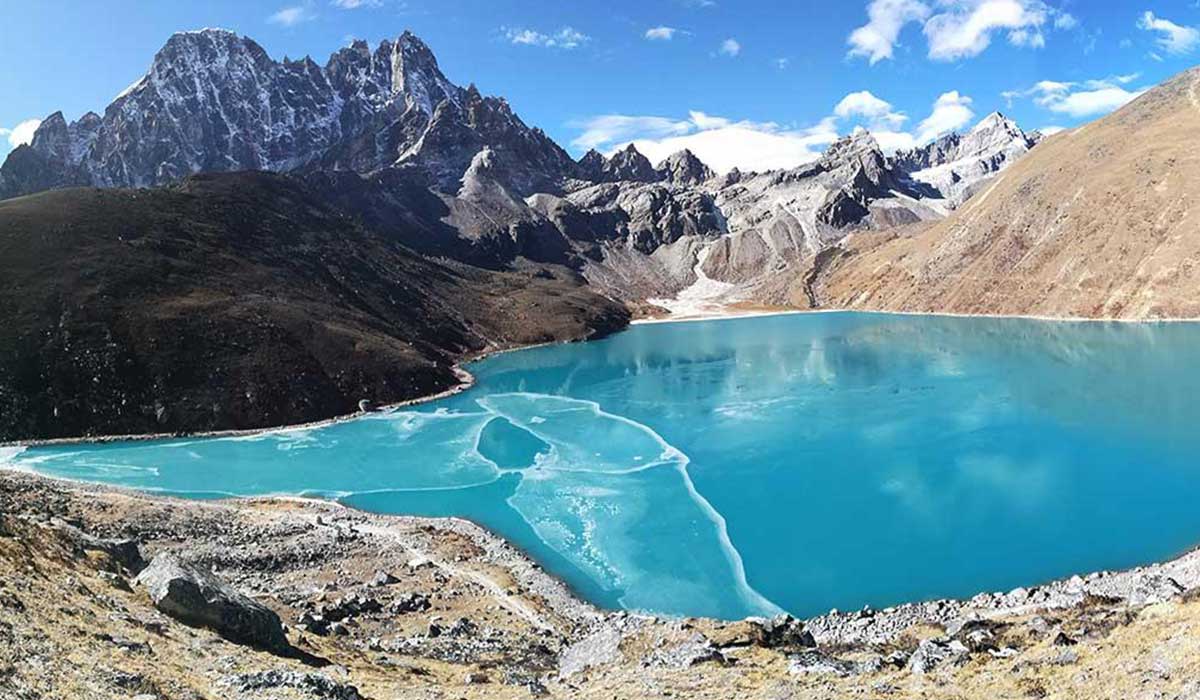
After the monsoon washes the air clean, autumn brings dry, stable weather and crystal-clear mountain views. The lakes glow their deepest turquoise under a deep-blue sky, and the sunrise and sunset light on Cho Oyu, Everest and the Ngozumpa Glacier is at its best.
Why go:
What to know:
Spring is the second-best season. Days are warmer than in autumn, the forests between Lukla and Namche burst with rhododendron blooms in March and April, and the lakes begin to thaw as the season progresses. Mornings are usually clear, but afternoon clouds and haze build, especially in May.
Why go:
What to know:
Winter is realistic for experienced, well-equipped trekkers. The air is very clear and the trails are quiet, but conditions are harsh. Nights at Gokyo can fall to about -15 to -20°C, the lakes freeze, and snow can cover the trail. Some higher lodges operate on a reduced basis, so confirm availability in advance.
Why go:
What to know:
The monsoon brings heavy rain to the lower valleys, slippery trails and frequent cloud over the peaks. Lukla flight delays and cancellations are common, and the lakes and mountains are often hidden. Higher up the weather is milder, but views cannot be counted on.
Why go:
Why avoid it:
If your dates are fixed in the monsoon, add several buffer days and treat the views as a bonus.
| Month | Weather and views | Notes |
|---|---|---|
| January | Very cold and clear, with snow possible | Coldest month; lakes frozen |
| February | Cold, with improving visibility | Still freezing at night |
| March | Cool, clear mornings; rhododendrons begin lower down | Busy from mid-month; some ice on lakes |
| April | Warmer days, flowering forests, good visibility | Excellent all-round month |
| May | Warmest pre-monsoon month, with afternoon cloud and haze | Go early in the day for views |
| June | Monsoon begins, with rain and cloud | Not recommended |
| July | Wettest month | Frequent flight problems |
| August | Monsoon continues | Janai Purnima pilgrimage, typically this month |
| September | Late-monsoon showers early, improving by the end | Good by the last week |
| October | Clearest skies and most stable weather | Best views and busiest month |
| November | Clear and dry, with colder nights | Very good; quieter by late month |
| December | Clear but very cold | Quiet; heavy winter gear needed |
The trip page lists February to June and September to December as workable months, with March to May and September to November as the main windows. The shoulder months simply carry more weather risk.
Temperatures fall sharply as you climb from Lukla to Gokyo. These approximate year-round ranges are drawn from the trip page, and the coldest figures occur in winter.
| Location | Altitude | Daytime | Night / early morning |
|---|---|---|---|
| Lukla | 2,860 m | 5 to 22°C | -5 to 10°C |
| Namche Bazaar | 3,440 m | 2 to 18°C | -10 to 6°C |
| Dole | 4,040 m | 0 to 15°C | -14 to 3°C |
| Machhermo | 4,470 m | -2 to 13°C | -16 to 1°C |
| Gokyo | 4,790 m | -5 to 12°C | -20 to 0°C |
| Gokyo Ri summit | 5,357 m | -10 to 8°C | Down to about -25°C with wind chill |
Weather sources vary, and conditions change quickly, so always pack for colder weather than you expect. See the Gokyo Valley and Gokyo village guides for more.
| Season | Gokyo Lakes | Gokyo Ri views |
|---|---|---|
| Autumn | Deep turquoise, fully liquid and often mirror-calm in the morning | Sharpest panorama of Everest, Lhotse, Makalu and Cho Oyu |
| Spring | Thawing through April and May; vivid colors as the ice retreats | Very good, with clearer mornings and afternoon haze |
| Winter | Frozen over, with a stark white landscape | Very clear air, but extreme cold at the top |
| Monsoon | Often hidden by cloud and rain | Unreliable |
Best time of day: Early morning for clear views and calm lake reflections, or afternoon for soft light on Everest. On the trip itinerary, you climb Gokyo Ri on the afternoon of arrival (Day 7), and your guide can switch to a sunrise climb on Day 8 depending on weather and energy.
Approximate sunrise times at Gokyo:
| Season | Sunrise | Leave Gokyo |
|---|---|---|
| Spring | 5:15 to 6:00 AM | 3:00 to 4:00 AM |
| Autumn | 5:30 to 6:15 AM | 3:30 to 4:15 AM |
| Winter | 6:30 to 6:50 AM | 4:15 to 4:45 AM |
| Season | Flight reliability | What to expect |
|---|---|---|
| Autumn and spring | Best | Mostly on time; peak-season flights often depart from Ramechhap (Manthali), with an early-morning 4 to 5 hour drive |
| Winter | Moderate | Mornings often clear, but fog and wind cause delays |
| Monsoon | Poor | Frequent delays and cancellations |
Add 1 to 2 buffer days to your schedule, do not book your international flight home on the same day as your Lukla return and keep a helicopter backup in mind. See our Kathmandu to Lukla flight guide and Helicopter Services.
Gokyo is quieter than the Everest Base Camp route in every season, but peak months still fill the lodges.
The Gokyo trek can be extended over the Renjo La (about 5,360 m) or Cho La (about 5,420 m) to join Everest Base Camp or the Everest Three High Passes Trek. Pass crossings are best in October to November and April to May, when snow and ice are most manageable. Avoid winter and the monsoon unless you have a very experienced guide, proper equipment and flexibility. Compare these options on the Everest Region Treks page.
| If you want... | Choose |
|---|---|
| The clearest Everest and Cho Oyu views | October to mid-November |
| Flowers and warmer days | Late March to April |
| Fewer people | December to February, or the shoulder weeks of late September and late November |
| The most reliable flights | October, November, April |
| A frozen-lake landscape | January to February, for experienced winter trekkers |
| A first Gokyo trek | October or April |
| Photography | October to November for clarity, April for color and light |
| Season | Key extras |
|---|---|
| Autumn | Warm down jacket, thermals, insulated gloves and hat, sun protection |
| Spring | Layers, fleece, down jacket, sun hat, sunscreen |
| Winter | Heavy down jacket, -20°C sleeping bag, microspikes, gaiters, insulated boots |
| Monsoon | Waterproof jacket and pants, pack cover, quick-dry clothes, leech socks |
Keep your total luggage under about 15 kg for the Lukla flights. A duffel bag, down jacket and sleeping bag are available on loan with the package, if needed. For the full gear list, see the Gokyo Lakes Trek page.
Late September to November and March to May are the best seasons. Autumn gives the clearest skies, most stable weather and sharpest views from Gokyo Ri, while spring adds warmer days and flowering rhododendrons on the lower trail. If you can choose a single window, October to mid-November is the safest bet for views and flights.
October is usually the best for visibility, stable weather and fully liquid, deep-turquoise lakes, though it is also the busiest. November is a close second, with clear, dry days but colder nights. April is the best spring month, with warmer days, blooming forests and good visibility. For fewer people and still excellent views, try late October or early November.
Autumn is better for clarity and stability, with the sharpest mountain views and the most reliable flights. Spring is better for warmth and flowers, with more comfortable days and rhododendron forests in March and April, though afternoon haze builds by May and some lakes are still thawing. Choose autumn for photography and views, and spring for milder weather and color.
Yes, but only if you are prepared. Skies are often very clear and trails are quiet, but nights at Gokyo can drop to about -15 to -20°C, the lakes freeze and snow can cover the trail. Some higher lodges may have limited availability. You need a four-season sleeping bag, a heavy down jacket, insulated boots, gaiters and microspikes, and an experienced guide. The trip page rates winter as challenging.
It is possible but not recommended. Rain, cloud, slippery trails, leeches at lower elevations and frequent Lukla flight delays make it a difficult season, and the lakes and peaks are often hidden. If your dates are fixed, add several buffer days and bring waterproof gear. The monsoon does have a cultural highlight: pilgrims visit the sacred lakes around Janai Purnima, which typically falls in August.
The lakes are at about 4,700 to 5,000 m, so they freeze in the cold months. They are fully or largely frozen in deep winter (January and February), thaw gradually through spring and are fully liquid in the monsoon and autumn. The exact timing varies each year. For the classic turquoise colour, visit in autumn or from April onward, and for a frozen landscape choose mid-winter.
It depends on the season. According to the trip page, Gokyo nights are roughly -10 to -5°C in autumn, -8 to 0°C in spring, and as low as -20 to -15°C in winter, with daytime highs from about -5 to 15°C depending on the season. On the summit of Gokyo Ri, wind chill can bring conditions down to about -25°C. Nights are below freezing in most seasons, so pack a warm four-season sleeping bag.
Snow is most likely from December to February, and it can occasionally fall in late autumn or early spring. The steep, rocky path up Gokyo Ri can become icy after snowfall, so lightweight microspikes and trekking poles are recommended in winter or after a recent storm. Ask your guide on the day, and bring gaiters if the snow is deep.
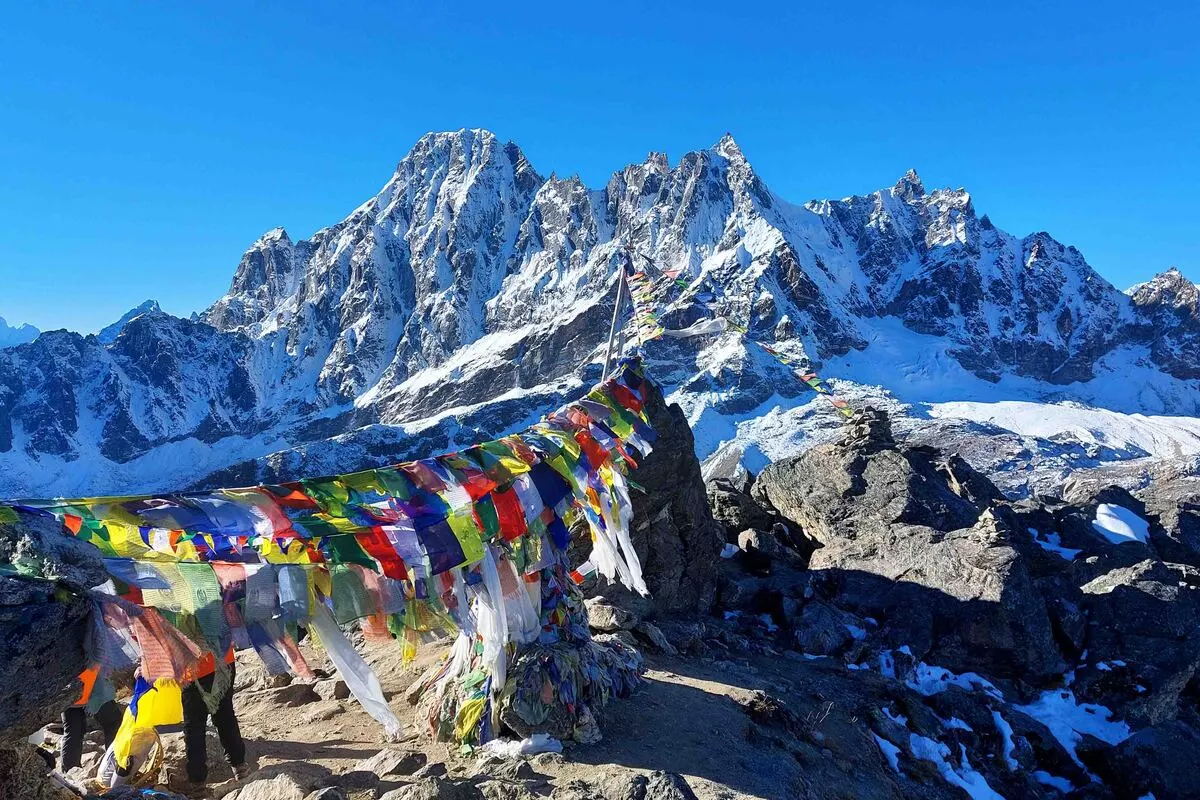
October to mid-November has the crispest air, followed by April and the cold, clear days of winter. In any season, early morning gives the clearest skies, while the afternoon brings soft light on Everest. Spring afternoons often cloud over, so go early. From the summit you can see Everest, Lhotse, Makalu and Cho Oyu, plus the lakes and the Ngozumpa Glacier below.
Yes. Flights are most reliable in autumn and spring, moderately reliable in winter, when fog and wind cause delays, and least reliable in the monsoon. In peak seasons many flights depart from Ramechhap (Manthali), adding an early-morning drive of 4 to 5 hours. Add 1 to 2 buffer days, and avoid booking your international flight on the same day as your Lukla return.
December to February and the monsoon are the quietest, but both come with harsher conditions. For a balance of good weather and fewer people, consider late September, late November or early March. Gokyo is quieter than the Everest Base Camp trail in every season, but October, November and April still fill the lodges, so book early.
Lodges in lower villages like Phakding, Namche and Lukla generally stay open, but some higher lodges in Dole, Machhermo and Gokyo may have limited availability in deep winter. Facilities are simpler at altitude, and bedrooms are unheated. Confirm your lodges with your operator before you book. Nepal Trip Services reserves your rooms in advance.
The best windows are October to November and April to May, when snow and ice are most manageable. Avoid deep winter and the monsoon unless you have an experienced guide, the right equipment and a flexible schedule. Cho La involves glacier sections, so microspikes are useful, and weather can force delays. See our Everest Three High Passes Trek for a full pass route.
For every season, bring layers, a warm down jacket, a waterproof shell, broken-in waterproof boots, a four-season sleeping bag, a warm hat, gloves, sunglasses and sunscreen. In winter, add insulated boots, gaiters and microspikes. In spring, pack a sun hat and light layers for warm afternoons. In the monsoon, add waterproof pants, a pack cover and leech socks. Keep luggage under about 15 kg for the Lukla flights.
The Gokyo Lakes Trek is listed from US$1,340 per person, with group pricing from US$1,250 to US$1,380. Availability and flights are tighter in peak months, so book 2 to 3 months ahead for October, November and April. Weather delays in winter and the monsoon can add extra hotel nights or helicopter costs, so make sure your insurance covers trip delays and helicopter evacuation up to at least 5,500 m.
The best season for the Gokyo Lakes Trek depends on what you want from Gokyo. For crystal-clear views and deep-turquoise lakes, choose October to mid-November. For warmer days and flowers, pick April. For a quiet, frozen landscape, go in mid-winter with the right gear. Avoid the monsoon unless your dates are fixed.
Whatever the month, the rewards are the same: six sacred lakes, the vast Ngozumpa Glacier and a sunrise or sunset from Gokyo Ri that many trekkers rate above Kala Patthar. Ready to choose your dates? View the Gokyo Lakes Trek page, compare routes on the Everest Region Treks page, read our Gokyo Lakes Trek difficulty guide, use the Trip Planner or message Nepal Trip Services on WhatsApp at +977-9828696557 or by email at info@nepaltripservices.com.
Discover more articles that match your interests! Explore these similar blogs packed with insights, tips, and stories to keep you inspired.
Explore Nepal\'s Gokyo Valley: sacred turquoise lakes, Gokyo Ri, Ngozumpa Glacier, Sherpa villages, routes, best time, p...
Discover the Dudh Koshi River, Nepal\'s "Milk River" of Everest: its source, bridges, villages, trekking routes, best ti...
Explore Dole (4,040 m), the first stop in Nepal\'s Gokyo Valley. Discover routes, teahouses, mountain views, altitude ti...
Explore Machhermo (4,470 m), the key acclimatisation stop before Gokyo. Discover routes, teahouses, Cho Oyu views, altit...
Discover Nepal\'s sacred Gokyo Lakes: all six lakes explained, Gokyo Ri, routes, best time, permits, altitude tips & how...
Climb Gokyo Ri (5,357 m) for one of Nepal\\'s best Everest panoramas. Route, timing, difficulty, sunrise tips, views, pe...