Magar People Of Nepal: Complete Culture & Lifestyle Guide
By Nepal Trip Services On 01 Oct 2026

By Nepal Trip Services On 01 Oct 2026
Climb the stone steps to Ulleri, stay overnight in Ghorepani, or watch the sunrise from Poon Hill, and you're walking through the homeland of the Magar people. Their warm smiles greet you at teahouse doors, their terraced fields shape the hillsides, and their proud history echoes in the stories of legendary Gurkha soldiers. As Nepal's largest indigenous community, the Magars have shaped the country's history, culture and military traditions for centuries. This complete guide from Nepal Trip Services explores Magar history, language, religion, festivals, food, dress and daily life, and shows where travellers can experience Magar culture firsthand, including on our popular Poon Hill Trek.
The Magars, also spelled Mangar or Mongar, are a Tibeto-Burman ethnic group native to Nepal and Northeast India, making up 6.9% of Nepal's population according to the 2021 census. They are Nepal's largest indigenous (Janajati) group and the third-largest caste/ethnic group overall.
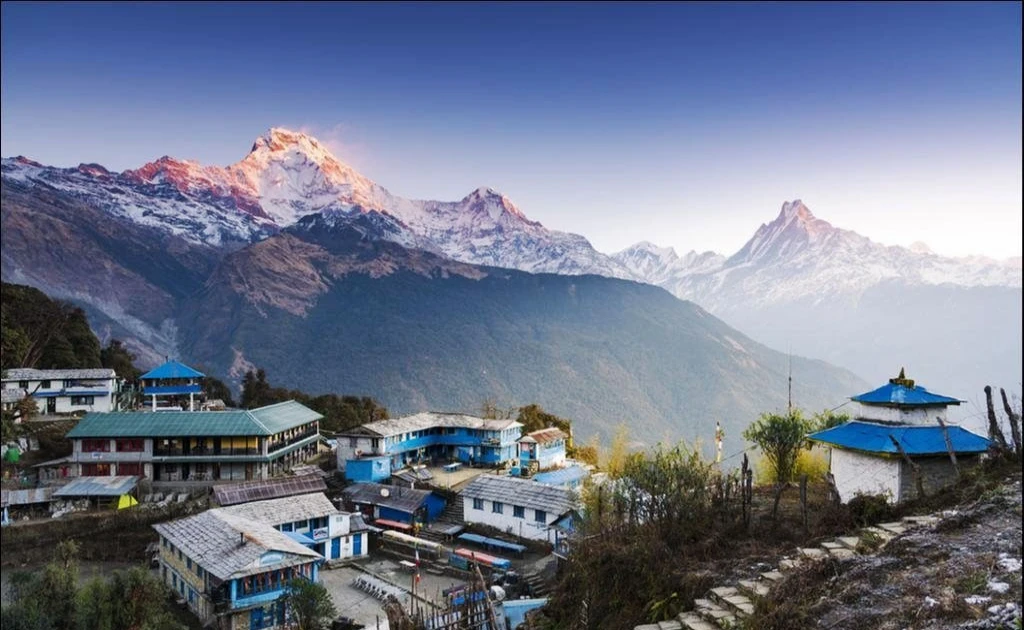
Traditionally, Magars lived in the mid-hills of western and central Nepal, farming terraced fields and raising livestock. Today, they live across the country and abroad, but their heartland remains the hills of Gandaki, Lumbini and Karnali provinces, including the Annapurna foothills around Ulleri, Ghorepani and Poon Hill.
| Detail | Information |
|---|---|
| Population in Nepal | 2,013,498 (2021 census), about 6.9% of the population |
| Group | Indigenous (Janajati), Tibeto-Burman |
| Languages | Magar Dhut, Magar Kham, Magar Kaike, plus Nepali |
| Religion | Hinduism, Buddhism, Prakriti (nature worship), shamanism |
| Historic Homeland | Magarat (Bahra Magarat & Athara Magarat) |
| Famous For | Gurkha military service, festivals, dances, hospitality |
| Major Festival | Maghe Sankranti (Maghi) |
| Common Clans | Thapa, Rana, Ale, Pun, Budha, Gharti, Roka, Shrish |
| Where to Experience | Annapurna foothills, Palpa, Syangja, Rolpa, Rukum, Dolpa |
The Magars have deep roots in Nepal's hills. During the medieval period, the whole area from Palpa to Rukum and Rolpa was known as the Magarat, a region settled and inhabited by Magars. Magar society was historically organised into two main confederations:
The first written records of the Magar people date back to around 1100 CE.
Magar soldiers played a crucial role in the armies of the Gorkha kingdom during the unification of Nepal in the 18th century. Their bravery and loyalty earned them an important place in Nepal's military history.
Lakhan Thapa Magar is honoured as Nepal's first national martyr. In the 19th century, he led a rebellion against the autocratic Rana regime and was executed for his resistance. Today, he remains a symbol of courage and social justice for Magars and all Nepalis.
The Magars are one of the main Gurkha communities. For over 200 years, Magar soldiers have served with distinction in the British Gurkhas, Indian Gorkha Rifles and the Nepal Army, earning worldwide fame for their bravery.
Magars speak several distinct Tibeto-Burman languages, though many also speak Nepali as their first language.
| Language | Speakers (2021) | Main Areas |
|---|---|---|
| Magar Dhut | 810,315 | Bahra Magarat regions (Palpa, Syangja, Tanahun, Gorkha, Nawalparasi) |
| Magar Kham | 91,753 | Athara Magarat regions (Rukum, Rolpa, Baglung, Myagdi) |
| Magar Kaike | 1,225 | Dolpa District |
Interestingly, language often follows clan lines. For example, Rana, Ale and Thapa clans are traditionally Magar Dhut speakers, while Budhathoki, Pun, Roka and Gharti clans speak Magar Kham.
Useful greeting: Magars commonly greet visitors with "Namaste" or "Bhet Ghat", and appreciate travellers who show interest in their language and culture.
Magar spiritual life blends several traditions. According to the 2021 census, Magars follow Hinduism (78.8%), Buddhism (15.6%) and Prakriti, or nature worship (3.3%), with smaller numbers following Bon.
Bhume Puja is one of the most important Magar rituals, dedicated to the earth deity. Celebrated before the planting season, it honours the land and prays for good harvests, protection from disasters and community well-being.
| Festival | Time | What Happens |
|---|---|---|
| Maghe Sankranti (Maghi) | Mid-January | The biggest Magar festival, marking the new season with feasts, songs, dances and family gatherings |
| Bhume Puja | Before planting (June/July) | Worship of the earth deity for good harvests |
| Dashain | September/October | Family reunions, blessings from elders, feasts |
| Tihar | October/November | Festival of lights, honouring animals and siblings |
| Chandi Purnima | Spring full moon | Worship of nature and ancestral deities in some communities |
Celebrated in mid-January, Maghe Sankranti is the most important festival for Magars. Families prepare special foods such as sweet potatoes, yams, ghee, chaku (molasses) and til (sesame) laddoos. Villages come alive with traditional dances, music and gatherings, and it's a time to honour elders and strengthen community bonds.
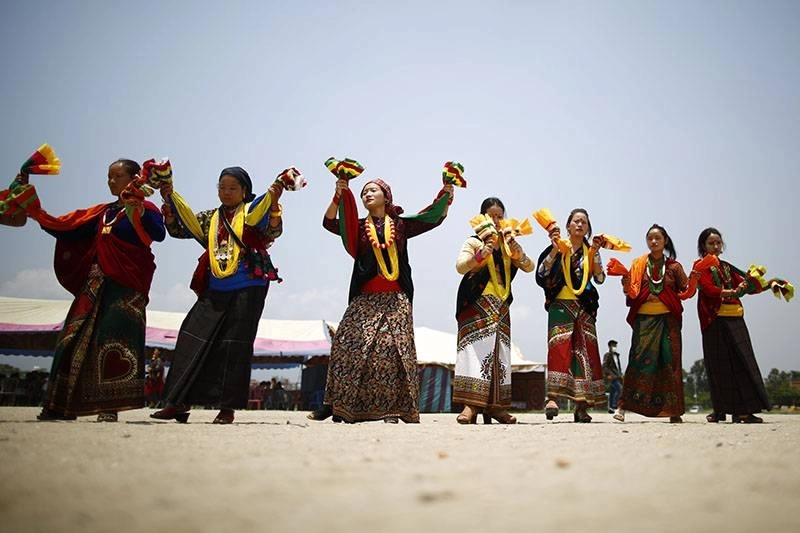
Magar culture is rich in music and dance, often performed during festivals and celebrations:
Traditional instruments include the madal (drum), murchunga (mouth harp) and flutes.
Magar women are known for their beautiful gold jewellery, often worn during festivals and weddings:
Magar food is simple, nourishing and closely connected to the land.
| Dish | Description |
|---|---|
| Dhindo | Thick porridge made from millet, maize or buckwheat flour |
| Gundruk | Fermented leafy greens, used in soups and pickles |
| Kodo roti | Bread made from millet flour |
| Ghonga | Freshwater snails, a traditional delicacy in some Magar communities |
| Sukuti | Dried, spiced meat |
| Makai & bhatmas | Roasted maize and soybeans, a popular snack |
| Sel roti | Ring-shaped rice bread, made during festivals |
| Raksi & Jaand | Home-brewed millet or rice alcohol, used in rituals and celebrations |
On the Poon Hill trail, you'll mostly enjoy dal bhat, but staying in a Magar homestay may offer a chance to taste traditional dishes.
Magar houses are usually built of stone and mud, often two storeys high, with slate or thatched roofs. Many are painted in earthy red and white tones and have wooden balconies and verandas facing the fields.
Magar society is organised into clans (thar), each with its own sub-clans and traditions. The major clans include:
Marriage traditionally takes place outside one's own clan, and cross-cousin marriage has been practised in some communities. Elders are highly respected and play an important role in decision-making and rituals.
Here's a fascinating link for trekkers: Poon Hill is really "Pun Hill", named after the Pun, a Magar sub-group native to the Ghorepani area. When you climb Poon Hill for sunrise, you're quite literally standing on a hill named after a Magar clan.
| Place | Region | What to Experience |
|---|---|---|
| Ulleri | Annapurna (Poon Hill Trek) | Large Magar village with stone houses and Gurkha heritage |
| Ghorepani | Annapurna (Poon Hill Trek) | Pun Magar teahouses and hospitality |
| Banthanti & Nangethanti | Annapurna (Poon Hill Trek) | Small Magar settlements in rhododendron forests |
| Palpa (Tansen) | Lumbini Province | Historic Magar heartland and Dhaka weaving |
| Syangja | Gandaki Province | Magar villages and homestays |
| Rolpa & Rukum | Western Nepal | Kham Magar culture and traditions |
| Dolpa | Karnali Province | Remote Kaike Magar communities |
The easiest way for travellers to meet Magar communities is on the Poon Hill Trek. Along the trail, you'll:
| Do | Don't |
|---|---|
| Greet with a smile and "Namaste" | Enter homes or kitchens without permission |
| Ask before taking photos | Photograph rituals without consent |
| Accept food or tea with your right hand | Touch religious objects or shrines |
| Remove shoes before entering homes | Point your feet at people or altars |
| Dress modestly | Show public displays of affection |
| Show interest in local stories and traditions | Give money or sweets to children |
Like many indigenous communities, Magars face modern challenges, including migration for work abroad, the gradual loss of native languages and changes in traditional lifestyles. Organisations such as the Nepal Magar Association work to preserve Magar language, culture and identity through education, festivals and community programmes. Responsible tourism, such as staying in local teahouses and homestays, also helps support Magar communities.
Experience Magar culture, Himalayan sunrises and rhododendron forests on our 7-day Poon Hill Trek. Explore more adventures in the Annapurna Region, or discover Nepal's cultural diversity on our Cultural Tours. Plan your own journey with our Trip Planner.
The Magars are an indigenous Tibeto-Burman ethnic group native to Nepal and parts of Northeast India. They make up about 6.9% of Nepal's population, making them the country's largest indigenous community. Magars are known for their rich culture, festivals and proud Gurkha military history. Their traditional homeland lies in the mid-hills of western and central Nepal.
According to the 2021 census, there are 2,013,498 Magars in Nepal. This represents about 6.9% of the total population. They live mainly in the hills of Gandaki, Lumbini and Karnali provinces. Many Magars also live in other parts of Nepal and abroad.
Magars speak several Tibeto-Burman languages, mainly Magar Dhut, Magar Kham and Magar Kaike. Magar Dhut is the most widely spoken, with over 810,000 speakers. Many Magars also speak Nepali as their first language. Language often varies by clan and region.
Most Magars follow Hinduism, while many also practise Buddhism. Traditional nature worship, ancestral rituals and shamanism remain important in many communities. Local healers called jhankri or dhami play key roles in spiritual life. Bhume Puja, honouring the earth deity, is a major ritual.
Maghe Sankranti, celebrated in mid-January, is the most important Magar festival. It features feasts, traditional foods like sweet potatoes and sesame sweets, songs and dances. Families gather to honour elders and celebrate the new season. Dashain and Tihar are also widely celebrated.
Magarat refers to the historic homeland of the Magar people in Nepal's mid-hills. It was organised into Bahra Magarat (Twelve Magarat) and Athara Magarat (Eighteen Magarat) confederations. The region stretched roughly from Palpa to Rukum and Rolpa. Today, the term symbolises Magar identity and heritage.
Yes, Magars are one of the main Gurkha communities. For over two centuries, Magar soldiers have served in the British Gurkhas, Indian Gorkha Rifles and the Nepal Army. They are renowned worldwide for their bravery and loyalty. Many Magar villages have long traditions of military service.
Lakhan Thapa Magar is honoured as Nepal's first national martyr. He led a rebellion against the Rana regime in the 19th century and was executed for his resistance. He remains a powerful symbol of courage and justice. Magars and many Nepalis celebrate his legacy today.
Common Magar surnames include Thapa, Rana, Ale, Pun, Budha, Gharti, Roka and Shrish. These names represent clans with their own traditions and histories. Some clans are associated with particular languages or regions. Clan identity plays an important role in social life and marriage.
Poon Hill is really "Pun Hill", named after the Pun, a Magar sub-group living around Ghorepani. The Pun Magar community has lived in this area for generations. Many still run teahouses in Ghorepani today. Trekkers who visit Poon Hill are experiencing Magar heritage firsthand.
Traditional Magar food includes dhindo, gundruk, millet bread, sukuti and seasonal vegetables. Some communities enjoy freshwater snails (ghonga) as a delicacy. Home-brewed millet drinks like raksi and jaand are used in rituals and celebrations. On trekking routes, dal bhat is the most common meal.
Magar men traditionally wear a kachhad, bhoto and bhangra, often with a dhaka topi. Women wear the guniu-cholo with a patuka belt and shawl. Magar women are famous for gold jewellery such as madwari earrings and naugedi necklaces. Traditional dress is especially seen during festivals and weddings.
Tourists can experience Magar culture in Ulleri, Ghorepani and other villages on the Poon Hill Trek. Palpa, Syangja, Rolpa, Rukum and Dolpa are also important Magar regions. Staying in local teahouses or homestays offers the best cultural insight. Festivals like Maghe Sankranti are great times to visit.
Yes, the Poon Hill Trek passes through Magar villages like Ulleri, Banthanti, Nangethanti and Ghorepani. You'll stay in Magar-run teahouses and see traditional houses and farming life. Many families have Gurkha heritage and fascinating stories. It's one of the easiest ways to experience Magar culture.
Greet people politely, ask before taking photos and dress modestly. Remove shoes before entering homes and avoid touching religious objects. Support local businesses by staying in teahouses and buying local products. Showing genuine interest in Magar traditions is always appreciated.
The Magar people are woven into the very fabric of Nepal. From the ancient kingdoms of Magarat to the legendary bravery of Gurkha soldiers, from the joyful dances of Maghe Sankranti to the warm welcome of a teahouse in Ulleri, Magar culture reflects resilience, community and deep connection to the land. Their traditions, languages and festivals add rich colour to Nepal's diverse cultural landscape.
For travellers, meeting Magar communities is one of the most rewarding parts of trekking in the Annapurna foothills. Walk the stone steps of Ulleri, share a meal in a Magar-run teahouse in Ghorepani and watch the sunrise from Poon Hill, a viewpoint named after a Magar clan. To experience it all, join our Poon Hill Trek, and let Nepal Trip Services guide you through the landscapes and cultures that make Nepal truly unforgettable.
Discover more articles that match your interests! Explore these similar blogs packed with insights, tips, and stories to keep you inspired.
Plan your Ulleri visit: climb the famous stone staircase, meet Magar culture & enjoy Annapurna views on the way to Ghore...
Suggested Meta Description: Explore Ghorepani (2,874 m), gateway to Poon Hill sunrise. Discover its history, teahouses, ...
Plan your Poon Hill trek: sunrise at 3,210 m over Dhaulagiri & Annapurna, routes, itineraries, permits, best time, diffi...
Explore Tadapani (2,630 m), a forest village with Machhapuchhre & Annapurna South sunrise views. Routes, teahouses, best...
Explore Tikhedhunga (1,540 m), riverside gateway to Ulleri\'s stone steps & Poon Hill. Routes from Nayapul, teahouses, b...
Plan your Kathmandu to Pokhara flight: airlines, daily schedule, ticket prices, baggage allowance, best seats for mounta...