Swayambhunath, Kathmandu: Complete Travel & Cultural Guide
By Nepal Trip Services On 28 Sep 2026

By Nepal Trip Services On 28 Sep 2026
High on a forested hilltop in western Kathmandu, gold and white against a sweeping view of the valley, stands Swayambhunath, one of the oldest and most sacred religious sites in Nepal. Known worldwide as the Monkey Temple for its lively resident macaques, this UNESCO World Heritage Site is far more than a photogenic viewpoint. It is a living center of worship where Buddhists and Hindus pray side by side, prayer wheels spin, incense drifts through the air, and ancient legends still shape daily ritual. This complete guide from Nepal Trip Services covers the temple's history, symbolism, main attractions, entry details, and practical tips for your visit. To explore Swayambhunath as part of a wider cultural journey through Nepal, discover the Kathmandu, Pokhara, Chitwan & Lumbini Tour by Nepal Trip Services.
Swayambhunath, also spelled Swayambhu, is an ancient Buddhist stupa complex perched on a hill about 3 km west of central Kathmandu, overlooking the whole valley. The name means "self-arisen" or "self-existent," and it reflects the belief that the site was not built by humans but manifested itself spontaneously.
The complex is sacred to both Buddhists and Hindus, and reflects Nepal's tradition of religious harmony. It is one of the most visited attractions in Kathmandu and a favorite among first-time visitors, photographers, and pilgrims alike.
| Detail | Information |
|---|---|
| Location | Hilltop in western Kathmandu, about 3 km from the city center |
| Also Known As | Monkey Temple, Swayambhu |
| Religion | Buddhism and Hinduism (sacred to both) |
| UNESCO Status | World Heritage Site since 1979 |
| Main Access | 365 stone steps (east entrance) or road to the west entrance |
| Entry Fee (Foreign Visitors) | About NPR 200 (Nepali nationals free) |
| Typical Hours | Generally daylight hours, roughly 7:00 AM – 6:00 PM (confirm locally) |
| Best Times to Visit | Early morning and late afternoon |
| Recommended Time | 1.5 – 3 hours |
Fees and timings can change, so confirm current details at the ticket booth or with your guide.
According to legend, the Kathmandu Valley was once a vast lake. The bodhisattva Manjushri is said to have seen a lotus flower glowing on its surface, radiating the light of the self-arisen Buddha. To let people worship it, he cut a gorge in the surrounding hills and drained the water, revealing the valley. The lotus became the hilltop on which Swayambhunath now stands.
Historians believe the site has been sacred for well over 1,500 years, and early inscriptions link it to the Licchavi period around the 5th century. Over the centuries, kings, devotees, and communities added shrines, monasteries, and structures to the complex. The site was damaged in the 2015 earthquake, and restoration work has since helped return the complex to its full grandeur.
The temple's nickname comes from the many rhesus macaques that roam the grounds. Local tradition holds that they are sacred and are protected as part of the temple's spiritual heritage. Legend even links them to Manjushri, saying they arose from the lice in his hair. Whatever the origin, they are now one of the temple's best-known features.
Every part of Swayambhunath's main stupa carries meaning:
The traditional way to reach the stupa is by climbing the long stone stairway from the east, lined with Buddha statues, prayer wheels, and colorful flags. The climb is steep but rewarding, and many pilgrims treat it as an act of devotion.
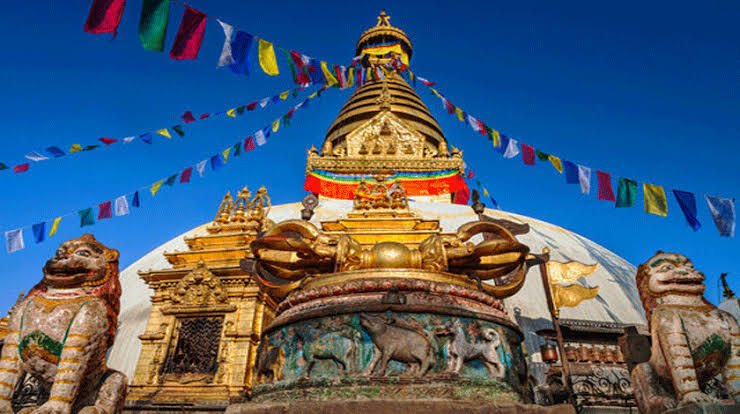
At the summit, the stupa's whitewashed dome and golden spire, with the painted eyes of the Buddha, is a striking and unforgettable sight. Walk around it clockwise, spinning the prayer wheels along the way.
From the top, the whole valley spreads out below you, a patchwork of rooftops, temples, and hills, with the Himalayas visible on clear days. It is one of the best viewpoints in the city, especially at sunrise or sunset.
Near the main stupa you'll find a large, gilded vajra (thunderbolt scepter), a Buddhist symbol of indestructible wisdom, as well as smaller shrines, carved stones, and statues that reflect Nepal's blended religious traditions.
A small shrine dedicated to Hariti, the goddess of smallpox and protector of children, sits beside the stupa and is visited by local devotees seeking blessings for their families.
Ringing the base of the stupa are rows of prayer wheels that visitors are invited to spin. Lighting a butter lamp is another simple, meaningful way to take part in local tradition.
The resident macaques are a huge draw, and watching them play, groom, and bounce around the temple is entertaining. They are wild animals, though, so keep a respectful distance.
Around the complex you'll find small monasteries, shops selling singing bowls, thangka paintings, and prayer beads, and cafés with terrace views over the valley.
| Entrance | Access | Best For |
|---|---|---|
| Eastern Stairway | 365 steep steps | Traditional pilgrimage experience, atmosphere along the climb |
| Western Entrance | Road access by taxi or car, shorter walk | Visitors who prefer an easier approach |
Most taxis drop visitors at the eastern entrance, while the western approach is convenient for those with limited mobility or limited time.
| Festival | Approx. Timing | What to Expect |
|---|---|---|
| Buddha Jayanti | April/May | Special prayers and offerings marking the Buddha's birth, enlightenment, and passing |
| Losar (Tibetan New Year) | February/March | Cultural celebrations, prayers, and gatherings |
| Swayambhu Purnima (Full Moon) | Various | Higher devotion and larger crowds |
| Daily rituals | Year-round | Circumambulation, chanting, and butter lamp offerings |
| Season | Months | Conditions |
|---|---|---|
| Autumn | September – November | Clear skies, best views of the valley and Himalayas |
| Spring | March – May | Warm and colorful, ideal for sightseeing |
| Winter | December – February | Cool, crisp air and fewer crowds |
| Monsoon | June – August | Rain and cloud, but lush greenery and quieter visits |
For the best experience, visit early in the morning to see devotees at prayer and enjoy softer light, or in the late afternoon for golden views over the valley.
Swayambhunath lies west of central Kathmandu and is easy to reach from Thamel, usually within 15–25 minutes:
Swayambhunath is one highlight of a country rich in culture, nature, and spirituality. Beyond Kathmandu, Nepal offers the serene lakes of Pokhara, thrilling wildlife safaris in Chitwan National Park, and the birthplace of Lord Buddha in Lumbini. Nepal Trip Services weaves these experiences together in the Kathmandu, Pokhara, Chitwan & Lumbini Tour, a well-planned journey for first-time visitors, culture seekers, and nature lovers alike.
Swayambhunath is an ancient Buddhist stupa complex on a hilltop in western Kathmandu, sacred to both Buddhists and Hindus. It is nicknamed the Monkey Temple because of the many rhesus macaques that live on the grounds. Local tradition treats them as sacred, and legend even links them to the bodhisattva Manjushri.
Swayambhunath sits on a forested hill about 3 km west of central Kathmandu, overlooking the entire valley. It is easily reached from Thamel by taxi in roughly 15 to 25 minutes, or on foot in about 30 to 40 minutes.
The name means "self-arisen" or "self-existent," reflecting the belief that the site was not built by human hands but appeared spontaneously. According to legend, a lotus glowing with divine light appeared on the lake that once filled the Kathmandu Valley, and the hilltop formed where it rested.
Historians believe the site has been sacred for well over 1,500 years, with early inscriptions linking it to the Licchavi period around the 5th century. Over time, kings, devotees, and communities added shrines and structures, and restoration work after the 2015 earthquake has helped preserve it.
The traditional eastern stairway has 365 steep stone steps leading to the stupa at the summit. Along the way, you will pass Buddha statues, prayer wheels, and colorful prayer flags. Those who prefer an easier route can take the western entrance, which is accessible by road and leaves a much shorter walk.
Foreign visitors currently pay approximately NPR 200, while Nepali nationals enter free. Ticket booths are located at both the eastern and western entrances. Fees can change, so confirm the current rate at the gate or with your tour operator, such as Nepal Trip Services.
The site is generally open during daylight hours, commonly from around 7:00 AM to 6:00 PM, although timings can vary and some reports suggest more flexible access. Early morning is when devotees begin their prayers, so it is worth confirming current hours locally before your visit.
Early morning offers peaceful atmosphere, soft light, and devotees at prayer, while late afternoon gives golden views over the valley. Autumn (September to November) and spring (March to May) provide the clearest skies and best visibility of the Himalayas, though the temple is open year-round.
The painted eyes on the golden cube symbolize the wisdom and compassion of the Buddha, watching over the world in all directions. The mark between them, resembling the Nepali numeral for "one," represents unity and the single path to enlightenment. The 13 rings above stand for stages toward enlightenment.
The macaques are wild animals and can be mischievous or even aggressive if they see food or loose items. Keep a respectful distance, avoid feeding or teasing them, keep snacks hidden, and secure sunglasses, bags, and phones. If a monkey approaches, stay calm and avoid direct eye contact or sudden movements.
Highlights include the main stupa and its Buddha eyes, the large gilded vajra, the Hariti (Ajima) temple, rows of prayer wheels, small monasteries, and panoramic views of Kathmandu. Many visitors also light butter lamps, browse local shops selling singing bowls and thangkas, and relax at hilltop cafés.
Dress modestly, covering your shoulders and knees, out of respect for the sacred setting. Wear comfortable, sturdy shoes for the steep steps, and remember to remove your shoes before entering temples or shrines. A hat, sunscreen, and water are helpful in warm weather.
Most visitors spend between 1.5 and 3 hours, including the climb, time at the stupa, viewpoints, and a short café break. If you plan to explore the surrounding monasteries, shops, and quieter corners, or to watch the sunset, allow a little extra time.
Yes, with a little planning. The eastern climb of 365 steps can be tiring for young children or older visitors, but the western entrance lets you drive close to the top and avoid most of the climb. Watch children closely near the monkeys, and take breaks and carry water as needed.
Yes, Swayambhunath fits naturally into a broader cultural itinerary. Nepal Trip Services offers the Kathmandu, Pokhara, Chitwan & Lumbini Tour, which combines Kathmandu's heritage sites with Pokhara's lakes and mountain views, wildlife experiences in Chitwan, and the birthplace of Lord Buddha in Lumbini, all with expert local guidance.
Swayambhunath is a place where legend, faith, and everyday life meet in one of the most beautiful settings in Kathmandu. The climb, the golden spire, the watchful eyes of the Buddha, the spinning prayer wheels, and even the mischievous monkeys all add to an experience that is both spiritually meaningful and endlessly photogenic.
Whether it's your first day in Nepal or the highlight of a longer trip, a visit here offers a memorable introduction to Kathmandu's living heritage. With Nepal Trip Services, you can explore Swayambhunath and the rest of Nepal with expert local guidance and thoughtfully planned itineraries. Discover more with the Kathmandu, Pokhara, Chitwan & Lumbini Tour and let Nepal's timeless traditions leave their mark on your journey.
Discover more articles that match your interests! Explore these similar blogs packed with insights, tips, and stories to keep you inspired.
Explore Pashupatinath Temple, Nepal\'s sacred Shiva shrine. Learn history, entry rules, aarati, festivals & visiting tip...
Discover Boudhanath Stupa in Kathmandu — history, kora, festivals, entry tips & etiquette. Plan your visit with Nepal ...
Explore Kathmandu Durbar Square — Kumari Ghar, Hanuman Dhoka, temples, entry fee & tips. Plan your heritage visit with...
Explore Phewa Lake in Pokhara — boating prices, Tal Barahi Temple, best time to visit & top tips. Plan your trip with ...
Discover Sarangkot in Pokhara — Himalayan sunrise views, paragliding, hiking routes & tips. Plan your visit with Nepal...