World Peace Pagoda Pokhara: Complete Travel Guide (history, Hike & Best Time)
By Nepal Trip Services On 25 Oct 2026

By Nepal Trip Services On 25 Oct 2026
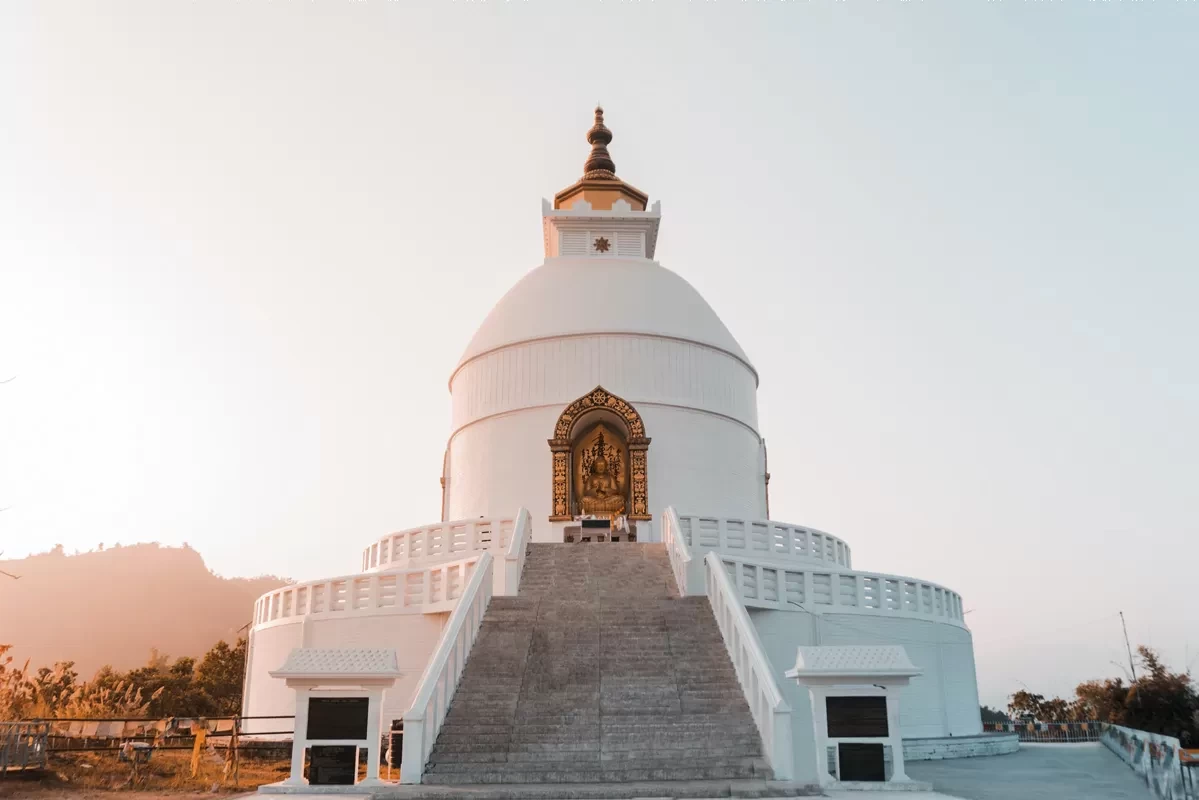
High on a forested ridge above the southern shore of Phewa Lake, a brilliant white dome catches the light from almost anywhere in Pokhara. This is the World Peace Pagoda, also known as the Shanti Stupa, and it is one of Nepal's most peaceful and photogenic places. On a clear day, you can stand on its terrace and take in the whole scene at once: the shimmering lake below, the city spread along its shore, and the snowcapped Annapurna range rising behind it all.
Whether you're a spiritual traveler, a keen hiker, a photographer chasing golden light or simply looking for the best view in Pokhara, this guide covers everything you need to know: the pagoda's remarkable history, the best routes to reach it, when to go and how to make the most of your visit.
| Detail | Information |
|---|---|
| Local name | Shanti Stupa (Shanti means "peace" in Sanskrit) |
| Location | Anadu Hill, on the southern side of Phewa Lake, Pokhara |
| Altitude | About 1,100 m (3,609 ft) |
| Height of the stupa | About 115 ft (35 m) |
| Built by | Monks of the Japanese Buddhist order Nipponzan Myohoji |
| Inaugurated | 30 October 1999 |
| Entry fee | Free |
| Hike from Phewa Lake | About 45 minutes to 1 hour (uphill) |
| Drive from Lakeside | About 25–30 minutes, plus a short walk |
| Best time to visit | October to November and March to April; early morning or late afternoon |
The story of the World Peace Pagoda is one of patience, faith and a dream that refused to fade.
The pagoda was the vision of Nichidatsu Fujii, a Japanese Buddhist monk and founder of the Nipponzan Myohoji order. Fujii was a friend of Mahatma Gandhi, and after the devastation of the Second World War, he made it his life's mission to build "Peace Pagodas" around the world as symbols of non-violence and unity among people of all nations. Around 80 Peace Pagodas now stand across Asia, Europe and North America, and the one in Pokhara is counted as the 71st built by the order.
Fujii laid the foundation stone in Pokhara on 12 September 1973, placing sacred relics of the Buddha at its base. Construction was led by a Japanese monk, Morioka Sonin, together with local supporters. Among them was Min Bahadur Gurung, who donated the land, and a statue of him now stands in front of the stupa.
Work progressed until the structure reached about 35 feet, when the government of the time ordered it to stop and the partly built stupa was torn down over security concerns, since the project had never received official approval. Supporters faced arrests and setbacks, but they never gave up on the dream.
After nearly two decades, the project was finally revived. On 21 May 1992, Prime Minister Girija Prasad Koirala re-laid the foundation stone, and construction began again. Seven years later, on 30 October 1999, the World Peace Pagoda was formally inaugurated in Koirala's presence.
Today, it stands as the first Peace Pagoda in Nepal. It's one of two in the country; the other is in Lumbini, the birthplace of the Buddha. The pagoda remains a powerful reminder that peace often takes patience to build.
The World Peace Pagoda is simple and elegant, and every detail carries meaning.
| Statue | Gifted By | Represents |
|---|---|---|
| Dharmachakra Buddha | Japan | The Buddha's first teaching |
| Bodh Gaya Buddha | Sri Lanka | The Buddha's enlightenment |
| Kushinagar Buddha | Thailand | The Buddha's passing into nirvana |
| Lumbini Buddha | Nepal | The Buddha's birth |
Beside the stupa, a small Dhamma Hall (prayer hall) holds a Buddha statue, where monks perform daily prayers, often accompanied by the steady beat of a drum. Larger ceremonies take place on full-moon days and other important dates in the Buddhist calendar.
There are three main ways to reach the pagoda. Many visitors combine two of them, for example by hiking up from the lake and taking a taxi back down.
This is the classic and most rewarding route.
If you prefer to stay on land, you can start from the Damside (Pardi) area at the southern end of Phewa Lake. Cross the dam and follow the trail up through the forest. It's a quieter route that takes about 1 to 1.5 hours to the top.
For a relaxed visit, take a taxi or private vehicle from Lakeside via the Chhorepatan area. The drive takes about 25–30 minutes. From the parking area, a short walk of about 10–15 minutes up a series of steps brings you to the stupa. This is the best option for families with young children, senior travelers or anyone short on time.
On our Pokhara tours, Nepal Trip Services arranges private transport, so you can choose to hike, drive or combine both.
The hike up from Phewa Lake is part of the experience. After stepping off the boat, the trail climbs steadily through cool, shaded forest. Along the way, you'll pass small farms, simple village homes and a few local teahouses where you can stop for a cold drink or a cup of Nepali milk tea.
As you climb higher, the trees begin to open up, and glimpses of the lake appear between the branches. Just before the top, a few cafés with open terraces offer wide views across Pokhara, perfect for a short break. A final set of steps leads you to the stupa itself, and the view from the top makes the climb worthwhile.
Hiking tips:
| Season | Months | What to Expect |
|---|---|---|
| Autumn | September – November | Clear skies, crisp air and the best views of the Annapurna range. This is the top season to visit. |
| Spring | March – May | Warm weather, blooming rhododendrons and good views, especially in the morning. Haze can build later in the season. |
| Winter | December – February | Sunny, clear days and fewer crowds, but cool mornings and evenings. |
| Monsoon | June – August | Lush green scenery and quiet trails, but mountains are often hidden by clouds and trails can be muddy. |
The World Peace Pagoda is an active religious site, so please keep these rules in mind:
Combine your visit with some of Pokhara's other highlights:
No. Entry to the World Peace Pagoda is free. You'll only need to pay for your boat ride or taxi to get there.
From the boat landing on the southern shore of Phewa Lake, the hike takes about 45 minutes to 1 hour. From Damside, allow about 1 to 1.5 hours.
Yes. A taxi or private car from Lakeside takes about 25–30 minutes, followed by a short walk of 10–15 minutes up the steps.
It's a moderate hike. The trail is steep in parts, with steps and uneven ground, but anyone with average fitness can manage it at a comfortable pace.
October and November offer the clearest mountain views. Within the day, sunrise and sunset are the best times to visit for views and photography.
It was built by monks of the Japanese Buddhist order Nipponzan Myohoji, under the vision of its founder, Nichidatsu Fujii, with the help of local supporters. It was inaugurated in 1999.
Absolutely. Families and senior travelers can take the road to the top, which involves only a short walk up the steps.
The World Peace Pagoda is included or easily added on many of our Pokhara journeys, with private transport, an experienced guide and the flexibility to hike, drive or combine both. Explore some of our most popular tours:
The World Peace Pagoda is more than a viewpoint. It's a place that tells a story of perseverance and hope, built by people who believed that peace was worth working for, even when the odds were against them. Add in the sweeping views of Phewa Lake and the Annapurna range, the gentle sound of prayers drifting from the hall, and the soft golden light at sunset, and it's easy to see why so many travelers call it the highlight of their time in Pokhara.
Whether you hike up through the forest or drive to the top, take your time, slow down and enjoy the calm. Ready to plan your trip to Pokhara? Use our Trip Planner or Contact Us, and the Nepal Trip Services team will help you design the perfect journey.
Discover more articles that match your interests! Explore these similar blogs packed with insights, tips, and stories to keep you inspired.
Explore Kathmandu, Nepal — UNESCO sites, temples, food, festivals & travel tips. Plan your perfect Kathmandu visit wit...
Plan your Pokhara trip with this complete guide to Phewa Lake, Sarangkot sunrise, paragliding, Annapurna treks, food, co...
Plan your Chitwan trip with this complete guide to jungle safaris, rhinos, tigers, Tharu culture, costs, the best time t...
Explore Lumbini, Buddha\\'s birthplace: Maya Devi Temple, Ashoka Pillar, monasteries, costs, best time to visit & how to...
Visit Maya Devi Temple, Buddha\'s birthplace in Lumbini. Explore its history, the Marker Stone, visitor rules, opening h...
Plan your Nagarkot trip: Himalayan sunrise views, View Tower, hikes to Changu Narayan & Dhulikhel, best time, hotels, ho...