
World Peace Pagoda Lumbini: History, Design & Visitor Guide
By Nepal Trip Services On 26 Oct 2026

By Nepal Trip Services On 26 Oct 2026
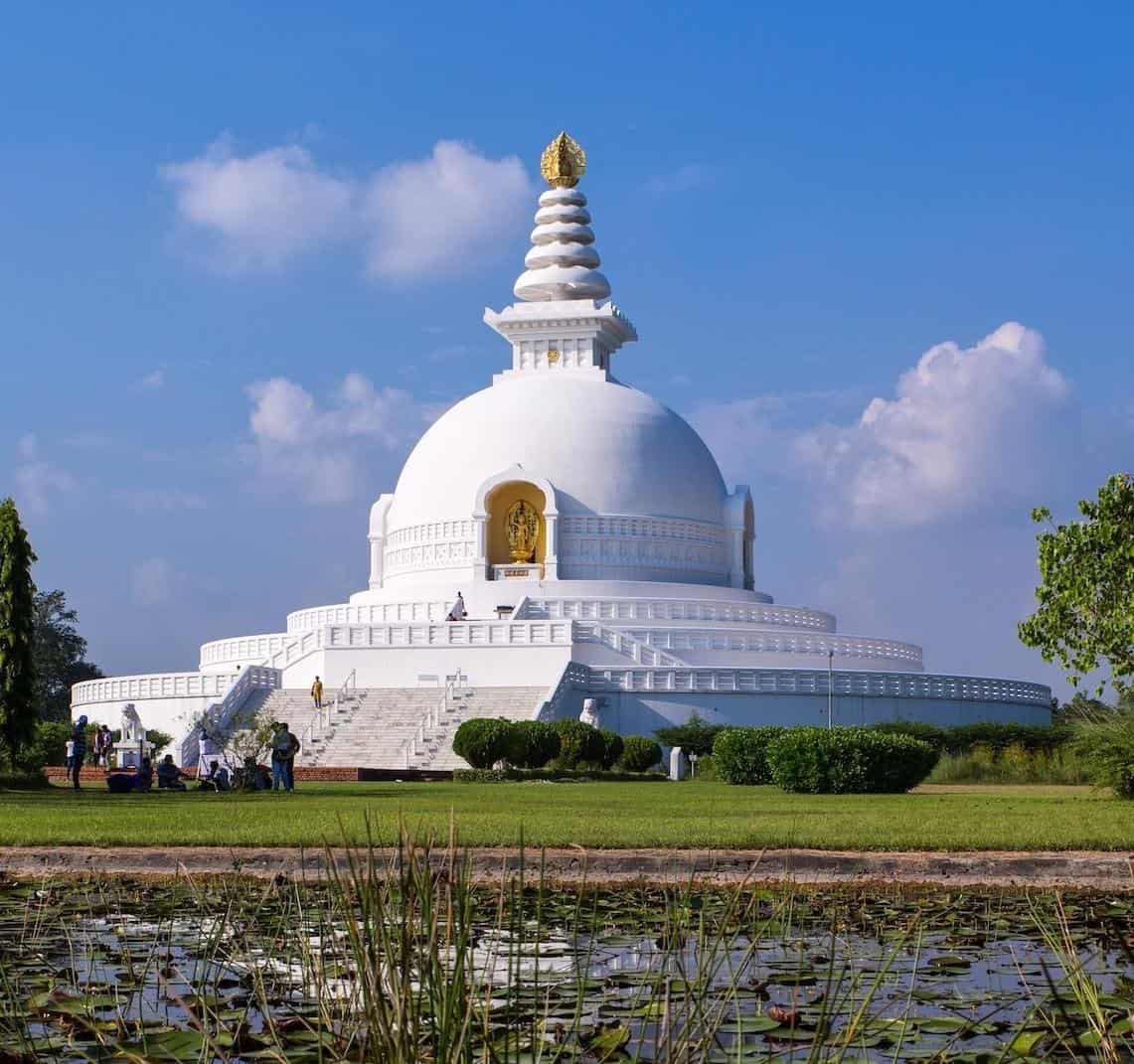
At the northern end of Lumbini’s long sacred axis, a brilliant white dome rises above green fields and quiet wetlands. Gleaming in the Terai sunlight and crowned with a golden spire, the World Peace Pagoda is one of Lumbini’s most striking landmarks. It was built by Japanese Buddhists as a gift of peace to the world, in the land where the Buddha was born.
For pilgrims, it’s a place to pray for harmony among all people. For travelers, it’s a peaceful spot to admire beautiful architecture, watch the sunset and spot rare sarus cranes in the fields nearby. This guide covers the pagoda’s history, design, what to see, how to get there and practical tips for your visit.
| Detail | Information |
|---|---|
| Also known as | Japan Peace Stupa, Nipponzan Peace Pagoda, Vishwa Shanti Stupa |
| Location | Northern end of the Lumbini Master Plan area, Lumbini, Nepal |
| Distance from Maya Devi Temple | About 3.2 km north |
| Built by | The Japanese Buddhist order Nipponzan Myohoji |
| Completed | November 2001 |
| Construction cost | About US$1 million |
| Height | About 41 m |
| Base diameter | About 59 m |
| Entry fee | Free |
| Time needed | 45 minutes to 1 hour |
| Best time to visit | Early morning or late afternoon, from October to March |
The story of the World Peace Pagoda begins with Nichidatsu Fujii, a Japanese Buddhist monk and founder of the Nipponzan Myohoji order. In 1931, Fujii met Mahatma Gandhi in India and was deeply inspired by his message of non-violence. After the destruction of the Second World War, including the atomic bombings of Hiroshima and Nagasaki, Fujii dedicated his life to spreading peace. From 1947 onward, he began building Peace Pagodas around the world as symbols of unity among all nations, races and religions.
Today, around 80 Peace Pagodas stand across Asia, Europe and North America. Nepal has two: the World Peace Pagoda in Lumbini, and the hilltop World Peace Pagoda (Shanti Stupa) in Pokhara.
Building a Peace Pagoda in Lumbini, the birthplace of the Buddha, held special meaning. Construction was carried out by the Nipponzan Myohoji order over several years, with support from Buddhist donors in Japan and Nepal. The pagoda was designed by Japanese architects, with structural planning by engineers from Kathmandu. It was completed in November 2001, at a cost of around US$1 million.
Sacred relics of the Buddha are said to be enshrined in the foundation and at the top of the stupa. These relics make it a place of worship, not just a monument.
Near the base of the pagoda lies the grave of a Japanese monk who lost his life in the area. It’s a quiet reminder of the dedication of the people who worked to build this symbol of peace.
The World Peace Pagoda sits at the northern starting point of the central axis of the Lumbini Master Plan, the long, carefully designed layout created by the renowned Japanese architect Kenzo Tange. The axis runs south past the Eternal Peace Flame and the Monastic Zone to the Maya Devi Temple, about 3.2 km away. That position links the pagoda symbolically with the birthplace of the Buddha.
The World Peace Pagoda follows the classic Japanese Peace Pagoda style. It’s simple, elegant and full of symbolism.
Start by walking around the base of the stupa clockwise, then climb the stairs to the upper walkway. Here, you can see the golden Buddha statues up close and enjoy wide views over the surrounding fields, wetlands and the northern end of the Lumbini Master Plan area.
From the upper level, you can look out over the open Terai landscape. On clear days, especially in winter, the flat plains stretch as far as the eye can see. It’s a beautiful place to watch the sunset, when the white dome glows soft gold and pink.
A peaceful pond near the pagoda, often filled with lilies, adds to the calm atmosphere. Reflections of the white stupa in the water make for lovely photos.
At the base of the pagoda, take a moment to visit the memorial grave of the Japanese monk who lost his life in the area.
The land around and north of the pagoda is protected for wildlife, especially the endangered sarus crane, the world’s tallest flying bird. Look out for these graceful grey birds with red heads in the nearby fields and wetlands, particularly in the early morning or late afternoon.
The pagoda is about 3.2 km north of the Maya Devi Temple and the Sacred Garden. You can get there by:
The World Peace Pagoda is included in our Nepal Buddhist & Lumbini Pilgrimage Tour, along with the Maya Devi Temple, the Monastic Zone, Tilaurakot and more.
Hours may change, so please check locally before you visit.
| Season | Months | What to Expect |
|---|---|---|
| Autumn | October – November | Pleasant, sunny weather and clear skies |
| Winter | December – February | Mild days and good bird watching, but foggy, cool mornings |
| Spring | March – May | Warm in March, very hot from April. Buddha Jayanti falls in April or May |
| Monsoon | June – September | Hot, humid and rainy, but green and quiet |
No. Entry to the World Peace Pagoda is free.
It was built by the Japanese Buddhist order Nipponzan Myohoji, following the vision of its founder, Nichidatsu Fujii. It was completed in November 2001.
It’s about 3.2 km north of the Maya Devi Temple, at the northern end of the Lumbini Master Plan’s central axis.
Both were built by the Nipponzan Myohoji order as symbols of world peace. The Pokhara pagoda stands on a hilltop above Phewa Lake with Himalayan views, while the Lumbini pagoda stands on the flat Terai plains near the Buddha’s birthplace. Read our guide to the World Peace Pagoda in Pokhara to learn more.
Around 45 minutes to 1 hour is enough to explore the stupa, enjoy the views and visit the nearby crane area.
October to March offers the most comfortable weather. Early morning and sunset are the best times of day to visit.
Explore Lumbini’s sacred sites with our guided Buddhist journeys:
The World Peace Pagoda in Lumbini is a powerful symbol of hope. Built by Japanese Buddhists after the horrors of war, and placed near the birthplace of the Buddha, it carries a simple but timeless message: peace is possible when people choose compassion over conflict. As the sun sets behind its gleaming white dome and the sarus cranes call across the fields, it’s easy to feel that message deeply.
Ready to visit Lumbini? Plan your journey with our Trip Planner or Contact Us, and the Nepal Trip Services team will help you create a meaningful Buddhist pilgrimage in Nepal.
Discover more articles that match your interests! Explore these similar blogs packed with insights, tips, and stories to keep you inspired.
Celebrate Buddha Jayanti in Nepal, the full-moon festival of the Buddha’s birth. Discover its meaning, rituals and the...

