Clothing Essentials
- Moisture-wicking base layers
- Fleece or light insulated mid-layer
- Down jacket for cold nights
- Waterproof and windproof jacket and pants
- Quick-dry trekking trousers
- Trekking socks (4 to 5 pairs)

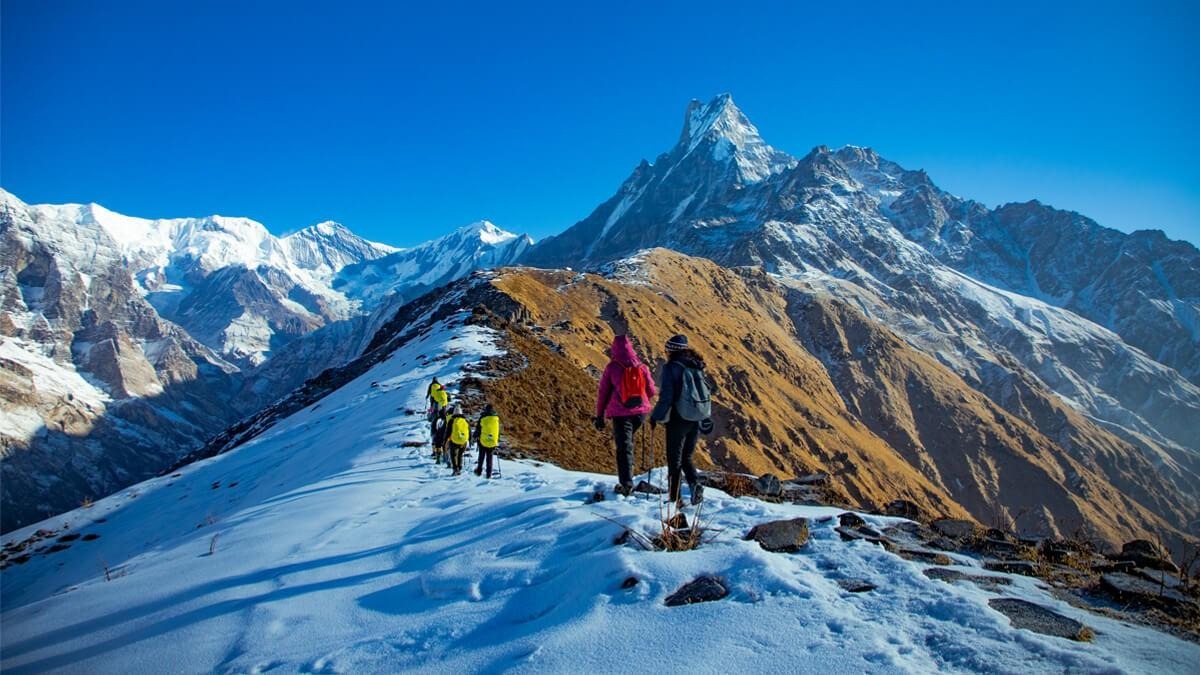
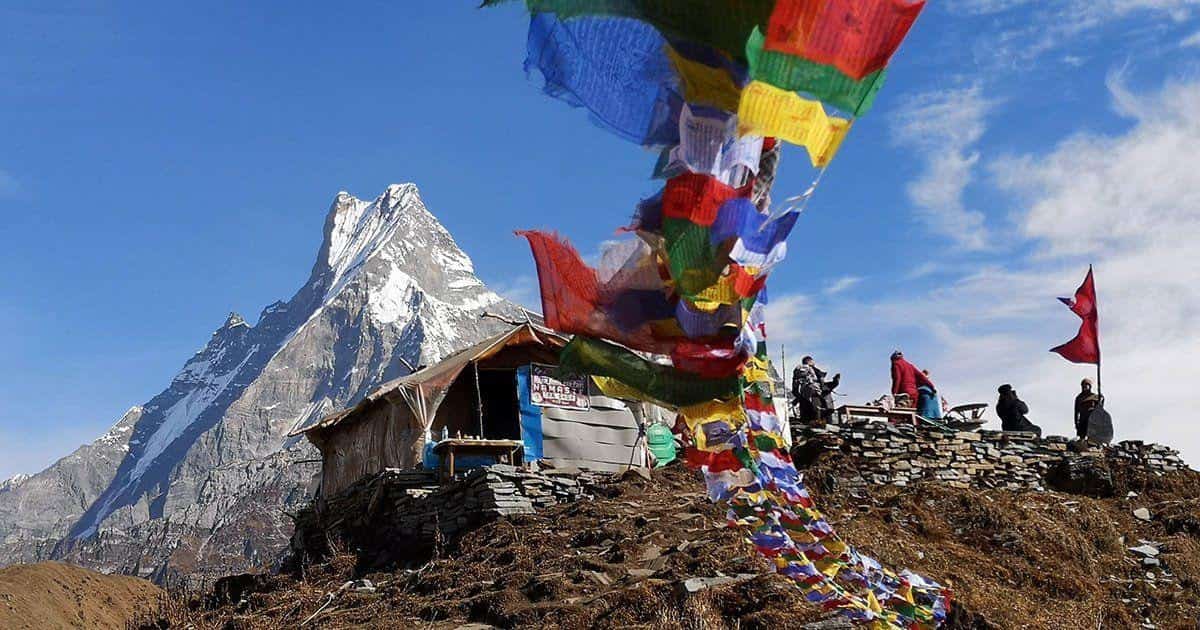
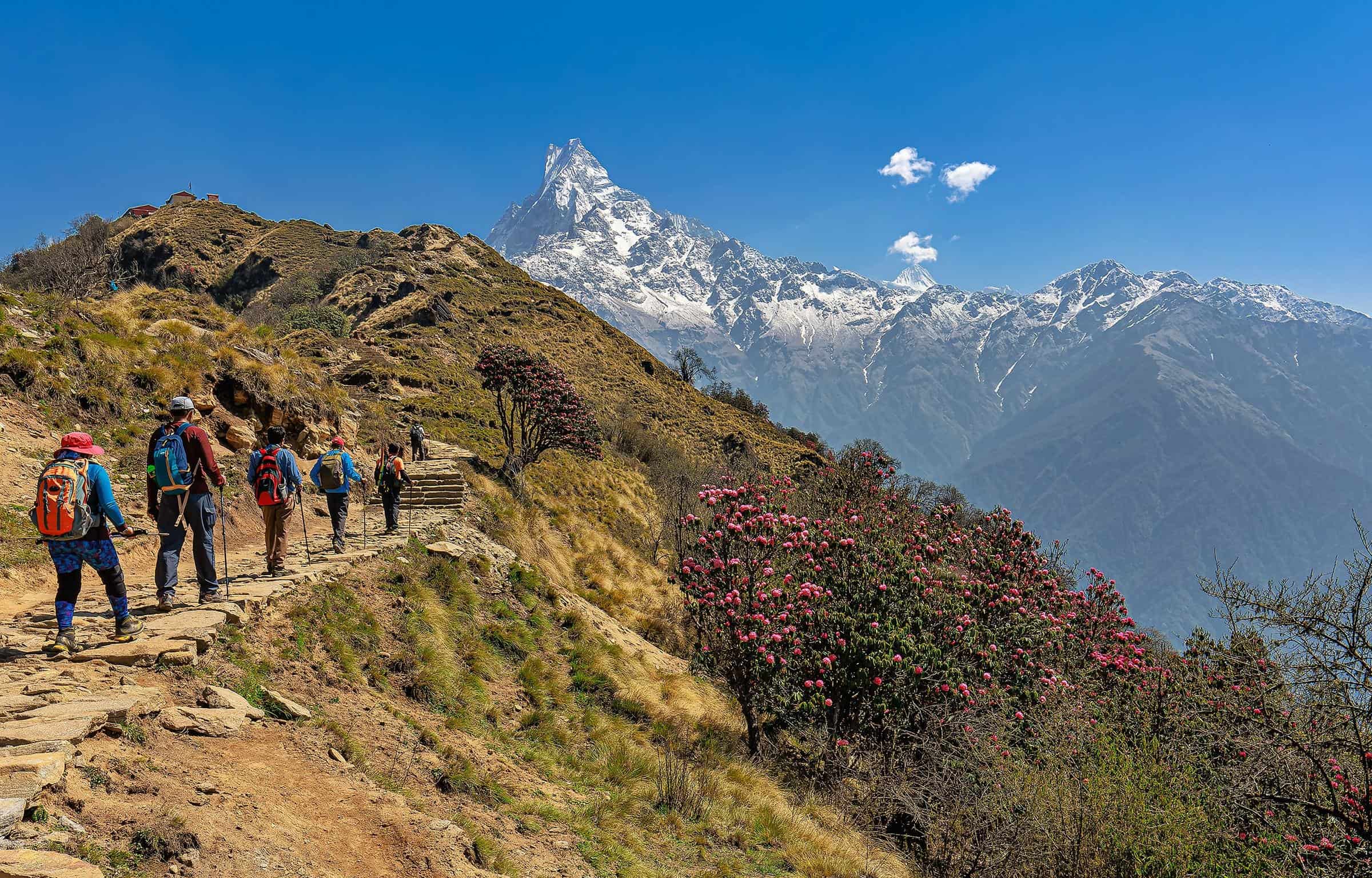
The Mardi Himal Group Trek is one of Nepal’s best short Himalayan adventures, taking you from Pokhara through rhododendron and oak forests onto a high, open ridge with close views of Machhapuchhre (Fishtail), Annapurna South and Hiunchuli. Away from the busier Annapurna trails, this route is quiet and scenic, and it climbs gradually to Mardi Himal Base Camp at about 4,500 m. Joining a group means an experienced local guide, arranged permits and teahouse stays, shared costs and the company of fellow trekkers, so you can enjoy the mountains without planning the logistics. It suits first-time Himalayan trekkers and active hikers with moderate fitness, and the best seasons are spring (March to May) and autumn (September to November).
Choose the best time for your trek based on weather and trail conditions.
One of the best seasons for Mardi Himal Trek. Enjoy clear mountain views, blooming rhododendron forests, pleasant temperatures and colorful landscapes.
Warm and rainy, with cloudy skies, slippery trails and possible leeches. Lush green forests and fewer trekkers make it quieter, but mountain views can be limited.
Another excellent season with stable weather, clear skies, spectacular Himalayan panoramas and comfortable trekking conditions.
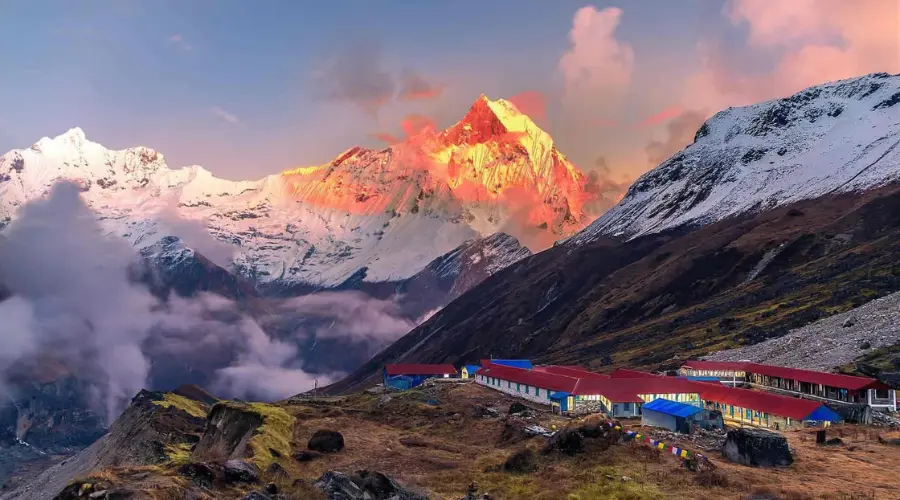
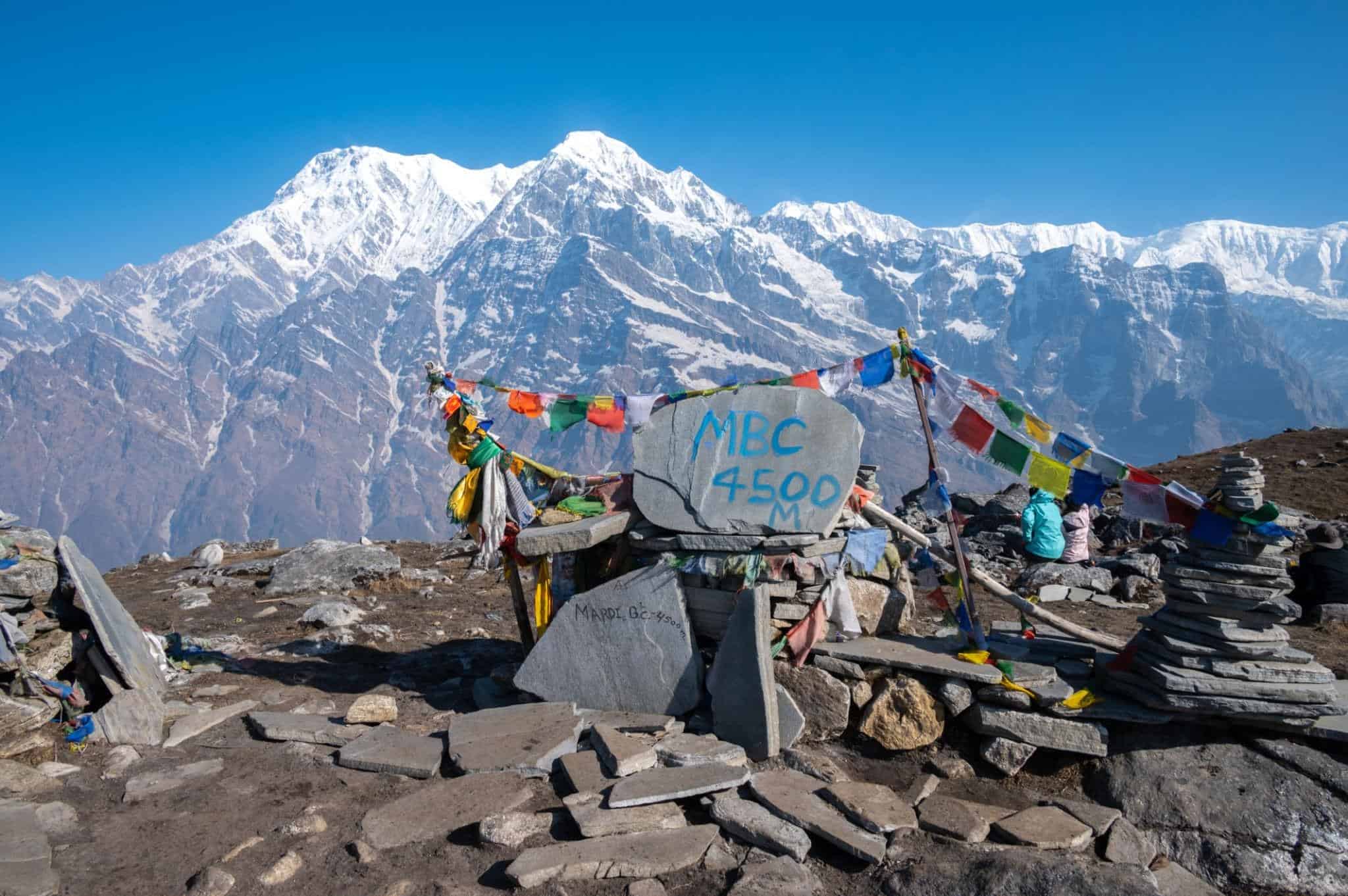
The Mardi Himal Group Trek is a scenic Himalayan adventure in the Annapurna region of Nepal. The trail climbs a quiet ridge through rhododendron and oak forest and open high pastures, and ends at Mardi Himal Base Camp (about 4,500 m / 14,763 ft). Along the way, you get close views of Machhapuchhre (Fishtail), Annapurna South, Hiunchuli, Annapurna III and Gangapurna.
The trek starts and ends in Pokhara, so no domestic flight is needed. It is shorter and quieter than the Annapurna Base Camp and Poon Hill routes, which makes it an excellent choice for travellers with limited time who still want a true high-mountain experience.
On our group departures, you walk with a licensed local guide, porter support and like-minded trekkers. The gradual pace helps with acclimatisation and keeps the trek achievable for first-time Himalayan hikers with reasonable fitness. Stay in friendly mountain teahouses, wake up to sunrise at High Camp and enjoy Gurung hospitality in the villages along the trail.
Whether you are a first-time trekker, a solo traveller looking for company, or a photographer chasing Himalayan light, the Mardi Himal Group Trek offers one of Nepal’s most rewarding short treks.
Far from the crowded trails, the Mardi Himal Group Trek takes you into one of Nepal’s best-kept mountain secrets. The route climbs a narrow, windswept ridge through mossy rhododendron forest, open pastures and high viewpoints, and ends at Mardi Himal Base Camp (about 4,500 m / 14,763 ft).
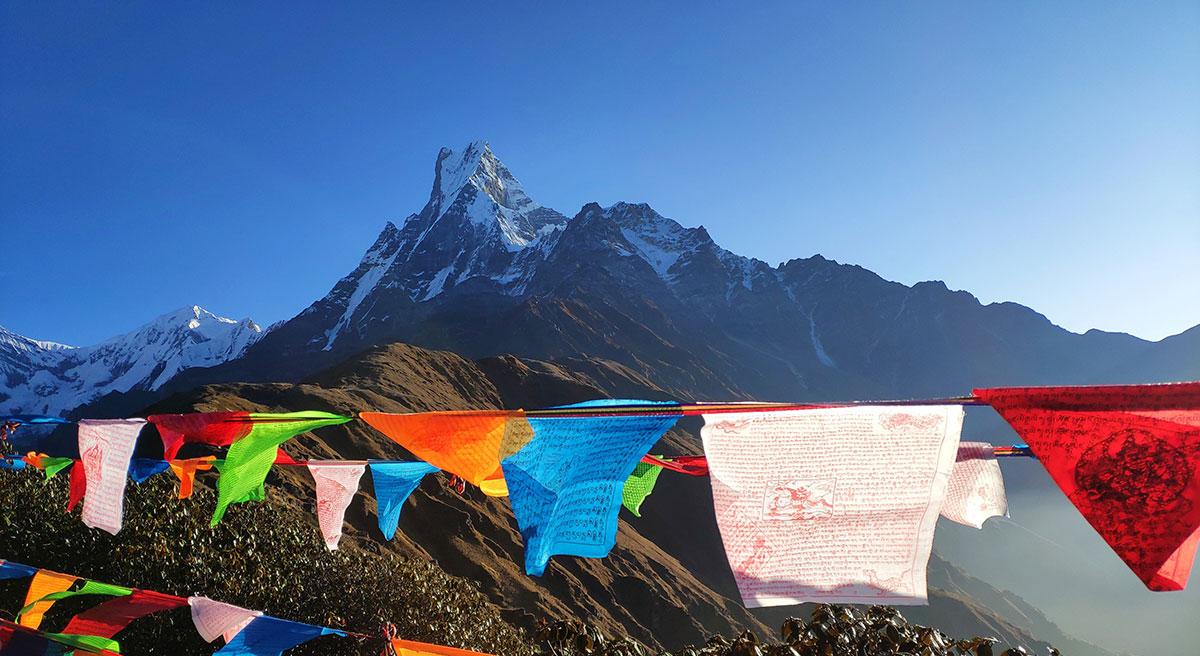
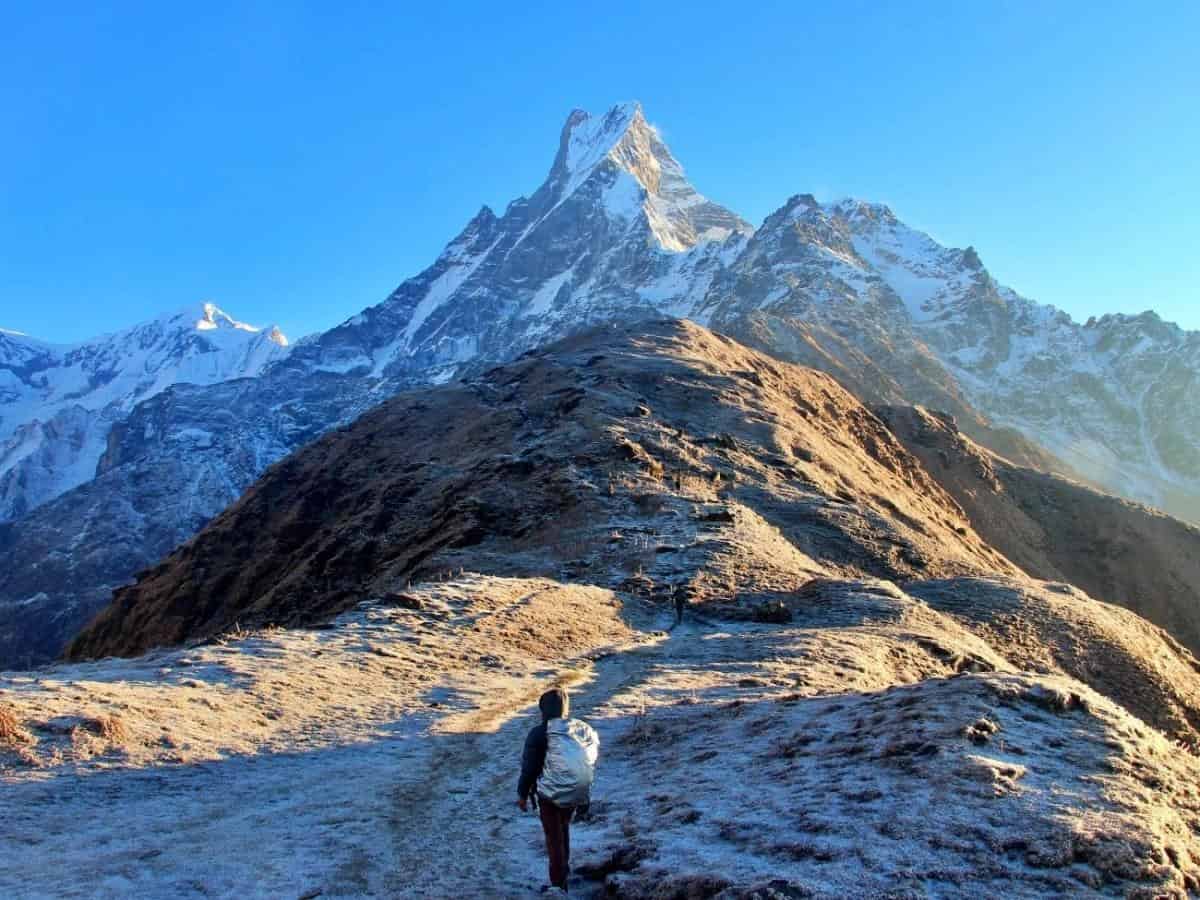
Here, the Annapurna range stands right in front of you. Machhapuchhre (Fishtail), Annapurna South, Hiunchuli, Annapurna III and Gangapurna fill the horizon, and on clear days the view feels close enough to touch.
Our small-group departures take care of the details so you can focus on the mountains. You walk with a licensed local guide, porter support and like-minded trekkers, at a gradual pace that helps with acclimatisation. Permits, teahouse stays and trail logistics are arranged for you.
It is an ideal choice for first-time Himalayan trekkers, solo travellers, photographers and anyone with 6 to 8 days to spare in Nepal.
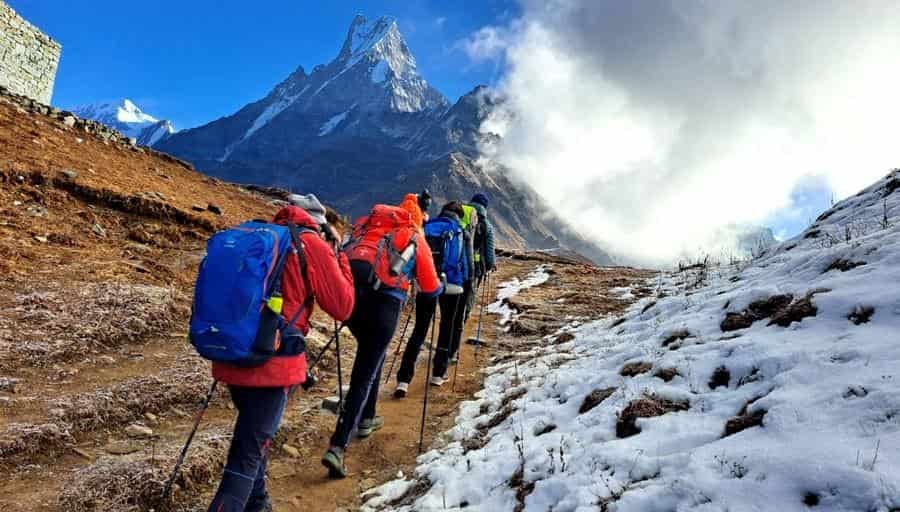
The Mardi Himal Group Trek is rated easy to moderate. It suits first-time Himalayan trekkers with reasonable fitness, because the route needs no technical climbing, ropes or mountaineering experience. The main challenges are steady uphill walking, long stone staircases in the forest, and a narrow, exposed ridge above High Camp.
With a gradual pace, an experienced guide and a well-planned itinerary, most healthy trekkers complete the trek comfortably.
| Factor | Details |
|---|---|
| Overall Difficulty | Easy to moderate |
| Technical Skills Needed | None |
| Walking Time | About 4 to 7 hours per day |
| Trail Type | Forest staircases, ridge walking, high pasture |
| Toughest Section | High Camp to Mardi Himal Base Camp (steep, exposed ridge) |
| Fitness Level | Basic to good cardiovascular fitness |
| Altitude Risk | Low to moderate near High Camp and Base Camp |
The trail gains height steadily from subtropical forest to open alpine ridge. Approximate altitudes are:
| Location | Approx. Altitude |
|---|---|
| Pokhara | 822 m / 2,697 ft |
| Forest Camp | 2,550 m / 8,366 ft |
| Low Camp | 2,970 m / 9,744 ft |
| Badal Danda (Upper viewpoint) | 3,230 m / 10,597 ft |
| High Camp | 3,580 m / 11,745 ft |
| Mardi Himal Base Camp | 4,500 m / 14,763 ft |
| Mardi Himal View Point | About 4,200 m / 13,780 ft |
Altitude sickness (Acute Mountain Sickness, AMS) can affect anyone above about 2,500 m, regardless of age or fitness. On this trek, the highest risk is around High Camp and Mardi Himal Base Camp.
Common symptoms: headache, nausea, dizziness, loss of appetite, poor sleep and unusual tiredness.
How our group treks reduce the risk:
Tips to stay safe:
Please consult your doctor before the trek if you have heart, lung or blood-pressure conditions.
| Trek | Difficulty | Max Altitude |
|---|---|---|
| Mardi Himal Trek | Easy to moderate | About 4,500 m |
| Poon Hill Trek | Easy | About 3,210 m |
| Annapurna Base Camp Trek | Moderate | About 4,130 m |
Mardi Himal reaches a higher point than Poon Hill and Annapurna Base Camp, but its gradual ridge route keeps the difficulty manageable.
The Mardi Himal Group Trek is a teahouse trek, so there is no need to carry a tent or cooking gear. Each night you stay in a family-run mountain lodge and eat freshly cooked meals prepared by local hosts. It is simple, warm and a big part of the cultural experience.
Along the route, lodges are found at Forest Camp, Low Camp, Badal Danda and High Camp. Most are run by local Gurung and Magar families, and the standard improves year by year.
| Feature | What to Expect |
|---|---|
| Room type | Twin-sharing rooms with two single beds |
| Bedding | Mattress, pillow and blanket provided |
| Bathrooms | Mostly shared toilets; attached bathrooms are limited and more common at lower camps |
| Hot water | Usually available for an extra charge; limited at High Camp |
| Electricity | Charging for phones and cameras, often paid per device |
| Wi-Fi | Limited or unavailable, especially above Low Camp |
| Heating | Dining hall stove or heater; bedrooms are not heated |
| Single rooms | Limited, so not guaranteed on busy dates |
Teahouse menus are similar across the route and focus on filling, energy-rich food.
Breakfast
Lunch and Dinner
Snacks and Drinks
Dal bhat is nutritious, freshly prepared and often comes with unlimited refills. It gives sustained energy on long uphill days, which is why local guides and porters eat it daily.
Transfer: 20-40 minutes | Meals: Welcome dinner | Stay: Hotel, Thamel
Arrive at Tribhuvan International Airport, where our representative greets you outside the arrivals hall holding a company signboard. A private vehicle takes you to your hotel in Thamel, the main traveller district.
After check-in and some rest, you meet your trek guide and fellow group members for a pre-trek briefing. The guide covers the route, daily schedule, altitude safety, packing and trail etiquette. This is also the time to:
The evening ends with a welcome dinner featuring Nepali dishes. Sleep early, as tomorrow is a long travel day.
Tip: Keep a small daypack ready. Extra luggage can be stored safely at the hotel while you trek.
Distance: About 200 km / 6-7 hours | Meals: Breakfast, dinner | Stay: Hotel, Lakeside Pokhara
After breakfast, set off by tourist bus or private vehicle along the Prithvi Highway. The road follows the Trishuli and Marsyangdi rivers, passing terraced hillsides, small bazaars and river valleys. There are regular stops for tea and lunch (lunch is at your own expense on this day).
You reach Pokhara by mid-afternoon. Once settled, walk along the Phewa Lake promenade, watch the sunset over the water, and enjoy Lakeside’s cafés and restaurants. On clear evenings, Machhapuchhre is visible from the lakefront, giving you a preview of the mountain you are about to approach.
Optional: A 25-minute domestic flight from Kathmandu is available for an additional cost. It saves time and offers mountain views from the plane.
Drive: About 1 hour | Trek: About 9 km / 6-7 hours | Altitude gain: About 780 m from Kande | Meals: Breakfast, lunch, dinner | Stay: Teahouse, Forest Camp
After an early breakfast, drive to Kande (1,770 m) and begin the trek. The route follows a well-defined trail:
The forest is rich in birdlife, and in spring the trail is lined with rhododendron blooms. The climb is steady, with many stone steps, so walk slowly and take breaks. Lunch is taken at a teahouse along the way.
Arrive at Forest Camp in the afternoon, wash up, enjoy tea and a hot dinner, and rest in your teahouse.
Trek: About 5 km / 4-5 hours | Altitude gain: About 680 m | Meals: Breakfast, lunch, dinner | Stay: Teahouse, Badal Danda (or Low Camp)
Begin with a hearty breakfast and climb through mossy forest on an uphill trail. After roughly two hours, you reach Low Camp (about 2,970 m), a ridge settlement with lodges and the first wide views of the Annapurna range.
From Low Camp, the trail continues up the ridge. The trees thin out and the landscape opens. Before long you reach Badal Danda (about 3,230 m), a quiet viewpoint with a front-row look at Machhapuchhre, Annapurna South and Hiunchuli.
You arrive by early afternoon. Rest, drink plenty of water, and enjoy the sunset on the peaks. This is a good moment to watch for early signs of altitude effects, such as headache or poor appetite, and to tell your guide.
Note: Depending on lodge availability and group pace, the overnight stop may be Low Camp or Badal Danda.
Trek: About 3 km / 3-4 hours | Altitude gain: About 350 m | Meals: Breakfast, lunch, dinner | Stay: Teahouse, High Camp
A short, deliberate day designed for acclimatisation. The trail follows an open ridge with Mardi Himal and Machhapuchhre growing larger with every step, and the scenery turns fully alpine.
You pass the Mardi Himal Viewpoint area and reach High Camp by early afternoon. After lunch, rest and let your body adjust. If you feel well, take an optional short walk to a nearby viewpoint for sunset. The Annapurna range glows in the evening light.
High Camp has the simplest lodges and coldest nights of the trek. Wear warm layers, keep your headlamp ready, and go to bed early for tomorrow’s pre-dawn start.
Trek: About 10-11 km round trip / 8-9 hours | Altitude gain: About 920 m | Meals: Early tea or snack, breakfast, lunch, dinner | Stay: Teahouse, High Camp (or Low Camp)
This is the highlight of the Mardi Himal Group Trek. You start very early, around 3:30-4:00 am, with headlamps, warm gloves, a hat and a down jacket.
The route:
At the top, you are rewarded with 360-degree views of Machhapuchhre, Mardi Himal, Annapurna South, Hiunchuli, Gangapurna and Annapurna III, with sunrise colouring the whole range. Spend time taking photographs and resting, then descend carefully to High Camp for breakfast or lunch.
In good conditions, the group may continue down to Low Camp in the afternoon to shorten tomorrow’s long descent. Your guide decides based on weather, energy levels and everyone’s health.
Safety: The ridge is narrow and windy. Walk single file, watch your footing and turn back if weather or symptoms worsen.
Trek: About 12 km / 6-7 hours (longer if starting from High Camp) | Drive: About 1.5 hours | Altitude loss: About 1,830 m | Meals: Breakfast, lunch, farewell dinner | Stay: Hotel, Pokhara
Start after breakfast and descend through Low Camp and Forest Camp, retracing your steps through the forest. Instead of returning to Kande, the route turns down to the village of Siding, passing terraced fields, Gurung homes and farmland with a very different feel from the high ridge.
The descent is long and steep in places, which can tire the knees. Trekking poles make a big difference. At Siding, a private vehicle takes you to Pokhara in about 1.5 hours.
In the evening, celebrate with a farewell dinner in Lakeside, with time for a hot shower, a good meal and trek stories with your group.
Distance: About 200 km / 6-7 hours | Meals: Breakfast | Stay: Hotel, Kathmandu
After breakfast, take a tourist bus, private vehicle or domestic flight back to Kathmandu. The rest of the day is free for souvenir shopping, sightseeing in Thamel or Patan, or a relaxed massage. You may also want to visit a bakery or café and enjoy a well-earned rest day.
Meals: Breakfast
Our representative transfers you to Tribhuvan International Airport about three hours before your international flight. We wish you a safe journey and hope to welcome you back to Nepal for another Himalayan adventure.
Are you interested in planning a custom trip? It only takes 2 minutes.
Essential packing and gear checklist tailored for this trek.


Difficulty Level: Moderate. The Mardi Himal Group Trek suits beginners with good health as well as experienced hikers. No technical climbing or prior high-altitude experience is needed.
Trek Duration and Daily Walking: Expect 5 to 7 trekking hours per day on forested trails, stone steps, and steep ridge sections. The final push to Mardi Himal Base Camp is the most demanding stretch.
Maximum Altitude: Mardi Himal Base Camp sits at 4,500 m (14,760 ft). Gradual ascent and a planned acclimatization schedule lower the risk of altitude sickness.
Fitness Requirements:
Best Preparation Tips:
Best Season: March to May and September to November offer stable weather, clear mountain views, and safer trail conditions.
Group Trek Advantage: Experienced guides, a steady group pace, and built-in safety support make this trek easier and more enjoyable for first-time Himalayan trekkers.
Experience Needed: No prior trekking or mountaineering experience is required. The Mardi Himal Trek is open to first-time trekkers, families, and solo travelers who are in good health and comfortable walking for several hours a day.
Technical Skills: None. The trail uses well-marked paths, forest steps, and ridge walks, so no ropes, crampons, or climbing gear are needed.
Physical Preparation:
Altitude Preparation:
Gear Preparation:
Documents and Permits:
Health Check: Consult your doctor before the trek, especially if you have heart, lung, or blood pressure conditions. Inform your guide of any medication or health concerns.
Mental Preparation: Expect simple teahouse stays, shared rooms, and basic facilities. A flexible attitude and steady pace matter as much as fitness.
Why Join a Group: A guided group trek provides experienced leaders, porter support, and a safe, steady pace, which is ideal for first-time Himalayan trekkers.
Maximum Altitude: Mardi Himal Base Camp reaches 4,500 m (14,760 ft). Many trekkers also stop at the Mardi Himal View Point at about 4,200 m (13,780 ft), which is the highest point on shorter itineraries.
Starting Point: The trek begins near Pokhara (about 822 m) and moves up through Kande, Australian Camp, or Phedi, depending on your route.
Key Elevation Points:
Total Elevation Gain: Around 2,700 to 3,000 m of ascent from the trailhead to Base Camp, spread across 4 to 5 trekking days. The trail then descends by a different route, giving a full loop experience.
Daily Elevation Gain: On average 500 to 900 m per day. The steepest climb is the section from High Camp to View Point and Base Camp, usually done as a day hike.
Altitude Sickness Risk: Low to moderate. Because the trek climbs above 3,500 m, headache, nausea, and fatigue can appear. A gradual ascent, steady pace, and enough water reduce the risk.
Safety Tips:
Why It Matters for Group Trekkers: A guided group trek follows a safe acclimatization plan, which keeps the altitude gain manageable for beginners.
Average Daily Walking: 5 to 7 hours per day, with the longest and toughest day being the High Camp to Base Camp round trip (about 7 to 8 hours).
Total Trek Distance: Around 35 to 45 km (22 to 28 miles) for the full route, depending on the itinerary length and the start and end points you choose.
Sample Daily Breakdown (5-Day Route):
Pace and Rest Stops: Group treks move at a steady pace with tea breaks and lunch stops, so the walking time includes rest. Trekking hours are for walking only; actual days on the trail may feel longer.
Terrain Overview:
Tips for Managing Daily Distance:
Seasonal Impact: Walking times may increase by 1 to 2 hours in monsoon or after snowfall, as trails become muddy or icy.
Why Group Trekking Helps: A guide sets a realistic pace and manages timings, which makes daily distances comfortable even for beginners.
Age Limit: There is no strict minimum or maximum age for the Mardi Himal Trek. Children from about 8 to 10 years old and seniors in their 60s and 70s have completed it, provided they are healthy and walk comfortably for 5 to 7 hours a day.
Recommended Age Range: 12 to 65 years is the most comfortable range for group departures. Trekkers outside this range should check with the trekking agency and a doctor first.
Trekking With Children:
Trekking for Seniors (60+):
Common Health Considerations:
Medical Conditions to Discuss With Your Doctor:
Health Preparation Tips:
Emergency Support: Group treks provide trained guides with first-aid knowledge, communication with the agency, and helicopter evacuation arrangements when needed. Make sure your travel insurance covers evacuation up to 4,500 m.
Why Join a Group: A guide monitors each trekker’s health daily and adjusts the pace, which makes the trek safer for all ages.
Packing Tip: Pack light, around 8 to 10 kg for your main bag (porter-carried) and 5 to 7 kg for your daypack. Layering is the key to handling warm days in the forest and freezing nights at High Camp.
Clothing:
Footwear:
Headwear and Handwear:
Trekking Gear:
Health and Hygiene:
Documents and Money:
Electronics and Extras:
Seasonal Additions:
What You Can Rent or Buy Locally: Sleeping bags, down jackets, trekking poles, and boots are available in Pokhara and Kathmandu at reasonable prices, so you can save luggage space.
Group Trek Advantage: Your trekking agency usually provides a porter, a first-aid kit, and basic group gear, so you only need to carry your daypack essentials.
Permits Required: Every foreign trekker needs an Annapurna Conservation Area Permit (ACAP). A TIMS card is often listed alongside it, but its status varies by source, so confirm with your agency before departure.
ACAP (Annapurna Conservation Area Permit):
TIMS Card (Trekkers’ Information Management System):
Local Municipality Fee: Some operators report a small Machhapuchhre Rural Municipality fee of about NPR 500 per person. Your agency can confirm whether it applies.
Estimated Total Permit Cost: Roughly USD 25 to 45 per person, depending on which fees apply on your dates.
Documents Needed to Apply:
Where to Get Permits:
Checkpoints: Permits are checked at points such as Kande or Phedi at the start of the trail. Keep digital and paper copies on you at all times.
Restricted Area Permit: Not needed. Mardi Himal is not a restricted region, so no special permit or minimum group size is required.
Climbing Permit: The standard trek to Base Camp needs no climbing permit. A separate peak permit applies only to summit expeditions.
Group Trek Advantage: Your agency arranges permits, handles paperwork, and avoids the double checkpoint fee, so you only need to share your passport details in advance.
Note: Permit fees and rules in Nepal change often, and sources differ on TIMS. Verify current rates with your trekking agency or the Nepal Tourism Board before you travel.
Main Starting Points: Most Mardi Himal treks begin at Kande or Phedi, both on the Pokhara-Baglung highway. Some itineraries start at Siding Village or Lwang for a different route or a loop.
Distance and Travel Time:
Transport Options:
Estimated Cost (approximate):
Best Departure Time: Leave Pokhara by 6:00 to 7:00 AM to start trekking early, enjoy clearer views, and reach your first overnight stop before afternoon clouds.
Kathmandu to Pokhara (If Starting from Kathmandu):
Road Conditions: The highway to Kande is paved, but the final sections to Phedi, Siding, and Lwang can be bumpy or muddy. Monsoon rains (June to August) may cause delays or landslides, so allow extra time.
Travel Tips:
Group Trek Advantage: Your agency arranges private transport, a driver, and timing, so you avoid price negotiation and can focus on the trek.
Note: Fares and road conditions change with season and fuel prices, so confirm current rates with your trekking agency before departure.
Accommodation Type: The Mardi Himal Trek uses simple teahouses (mountain lodges) run by local families. Facilities are basic but clean, and they get more limited as you climb higher.
Typical Teahouse Stops:
Room Facilities:
Bathrooms and Showers:
Food and Drinks:
Water:
Electricity and Charging:
Wi-Fi and Mobile Network:
Heating: Common dining rooms may have a wood or gas heater in the evening, but bedrooms are unheated. A warm sleeping bag rated to -10°C is recommended.
Estimated Costs (approximate):
Booking Tips:
Group Trek Advantage: Your agency pre-books rooms, coordinates meals, and ensures everyone has a bed, so you avoid last-minute searching after a long day of walking.
Note: Prices and facilities vary by season and lodge, so confirm current rates and services with your trekking agency before departure.
Meal Style: Meals are freshly cooked at teahouses along the trail, and group trek packages usually include three meals a day: breakfast, lunch, and dinner, plus tea or coffee. Menus are simple, hearty, and designed to fuel long walking days.
Breakfast Options:
Lunch Options:
Dinner Options:
Snacks and Drinks:
Vegetarian and Special Diets:
Meat Advice: Avoid meat at higher altitudes. Supplies are carried up for days without refrigeration, so vegetarian meals are safer and fresher.
Drinking Water:
Food Hygiene Tips:
Alcohol: Avoid alcohol while trekking, as it increases the risk of dehydration and altitude sickness.
Estimated Cost (if paying separately):
Group Trek Advantage: Your guide coordinates meal timing, choices, and hygiene, so food is ready when you reach each stop and dietary needs are managed in advance.
Note: Menus and prices vary by lodge and season, so confirm what is included in your package with your trekking agency.
Drinking Water Sources: Teahouses along the route provide boiled water, filtered water, and bottled water. Natural streams and taps exist on the trail, but untreated water is not safe to drink.
Safe Water Options:
Hydration Tips:
Water Safety Tips:
Wi-Fi Availability:
Mobile Network Coverage:
Buying a SIM Card:
Charging Your Devices:
Staying Connected and Safe:
Digital Detox Benefit: Limited connectivity helps you focus on the mountain views, the trail, and your group.
Group Trek Advantage: Your guide manages safe water, informs you about the best connection spots, and keeps emergency communication available, so you can trek with less worry.
Note: Prices and network coverage change with season, weather, and provider, so confirm current details with your trekking agency before departure.
Electricity Availability: Lower teahouses at Pothana, Deurali, and Forest Camp usually have grid or solar power. Supply becomes limited and less reliable at Low Camp and High Camp, where lodges depend on small solar systems.
Charging Facilities:
Power Supply Details:
Battery Care in Cold Weather:
What to Carry:
Hot Shower Facilities:
Shower Tips:
Alternatives to Showering:
Heating and Warmth: Bedrooms are not heated, though dining rooms often have a stove or heater in the evening. Carry a warm sleeping bag and thermal layers for cold nights.
Estimated Cost Summary (approximate):
Group Trek Advantage: Your guide helps you find the best charging spots, arranges earlier arrival for hot water, and plans stops with the best facilities, so you stay comfortable and prepared.
Note: Services and prices vary by lodge, season, and weather, so confirm current availability with your trekking agency before departure.
Altitude Sickness Risk: Low to moderate. The trek climbs from about 1,800 m to 4,500 m at Base Camp, and symptoms most often appear above 3,000 m, around Low Camp and High Camp. Healthy trekkers who ascend gradually usually manage well.
What Is Altitude Sickness (AMS)? Acute Mountain Sickness occurs when your body struggles to adjust to lower oxygen levels at high elevation. It can affect anyone, regardless of age or fitness.
Early Symptoms of AMS:
Serious Warning Signs (Descend Immediately):
These may signal severe conditions such as HAPE (fluid in the lungs) or HACE (swelling of the brain), which are medical emergencies.
Key Acclimatization Rules:
Sample Acclimatization Plan:
Prevention Tips:
Medication: Some trekkers use acetazolamide (Diamox) to help prevent AMS. Consult your doctor before the trip about whether it suits you and what dose to take. Medication does not replace gradual ascent.
What to Do If Symptoms Appear:
Emergency Support:
Who Should Take Extra Care: Children, seniors, and anyone with heart, lung, or blood pressure conditions. Pregnant women should consult a doctor before trekking at altitude.
Group Trek Advantage: A guide monitors each trekker daily, keeps a safe pace, follows a planned acclimatization schedule, and makes the descent decision when needed, so the trek is safer for beginners.
Note: This is general information, not medical advice. Consult a doctor before your trek and follow your guide’s instructions on the trail.
Why Insurance Is Essential: Mardi Himal reaches 4,500 m in a remote mountain area. Medical care on the trail is limited, and helicopter evacuation is expensive, so comprehensive travel insurance is strongly recommended and is often required by trekking agencies.
What Your Policy Should Cover:
Check the Fine Print:
Documents to Carry:
Emergency Helicopter Rescue Process:
Where Rescue Is Possible: Helicopter pickups are generally feasible from higher camps and landing areas near the route, but weather decides everything. Clouds, wind, and low visibility can delay flights, especially in the afternoon and during monsoon.
Approximate Evacuation Cost: Without insurance, a helicopter evacuation in Nepal can cost several thousand US dollars, depending on the location and the number of passengers. Insurance protects you from this large, unexpected expense.
Common Reasons for Evacuation:
Fraud Awareness: Nepal has had reports of inflated rescue claims, so stay in contact with your insurer, confirm the evacuation is medically necessary, and keep records of everything. A reputable agency and guide help prevent problems.
Practical Tips:
Group Trek Advantage: Your guide carries a first-aid kit, monitors your health daily, and coordinates directly with the agency and rescue services, so help is organized quickly if needed.
Note: Policies, costs, and evacuation procedures vary by insurer and situation, so confirm details with your insurance provider and trekking agency before departure. This is general information, not insurance or medical advice.
Why Hire a Guide and Porter: A licensed guide and porter make the trek safer, easier, and more enjoyable. Guides handle navigation, safety, and logistics, while porters carry your heavy luggage so you can walk comfortably with a light daypack.
Trekking Guide Services:
What to Look for in a Guide:
Porter Services:
Porter-Guide Option: Some agencies offer a porter-guide who combines both roles. This is cheaper, but a dedicated guide gives better safety, support, and attention for larger groups.
Typical Group Ratios:
Estimated Costs (approximate):
Tipping Guidelines:
Ethical Trekking Tips:
Solo or Independent Trekkers: You can hire a guide or porter in Pokhara through a licensed agency, usually a day before the trek. Ask for the agreed price, route, and duties in writing.
Group Trek Advantage: Cost sharing makes guide and porter services more affordable, and the guide manages the pace, safety, and logistics so everyone enjoys a smooth trek.
Note: Rates, rules, and tipping practices change by agency and season, so confirm current details with your trekking operator before departure.
High Camp Altitude: About 3,580 m (11,745 ft). Weather here changes quickly, with sunny mornings, afternoon clouds, and very cold nights.
Overall Weather Pattern:
Seasonal Temperatures at High Camp (approximate):
Best Seasons: March to May and October to November offer the most stable weather, clear skies, and comfortable trekking conditions.
Sunrise and Sunset Conditions:
Weather Risks:
What to Wear at High Camp:
Sleeping Comfort: Rooms are unheated, so expect cold nights. Use a warm sleeping bag, a liner, and a hot water bottle if available, and keep your electronics inside the bag to protect the batteries.
Planning Tips:
Group Trek Advantage: Your guide monitors weather changes, adjusts the schedule when needed, and makes safe decisions about the Base Camp day hike, so you trek with more confidence.
Note: Mountain weather is unpredictable and temperatures are approximate. Confirm current conditions with your trekking agency before departure.
Safety First: The Mardi Himal Trek is moderate, but mountain conditions change quickly. Preparation, a steady pace, and good decisions keep the trek safe and enjoyable for everyone.
Trail Safety Tips:
Health and Altitude Safety:
Weather Safety:
Food and Hygiene Safety:
Personal Safety and Security:
Responsible Travel Guidelines:
Cultural Respect:
Support Local Communities:
Porter Welfare: Do not overload porters, offer them warm clothing or gear where possible, and treat them as valued members of the team.
Emergency Preparedness:
Group Trek Advantage: A guide leads safe route choices, monitors health and weather, enforces eco-friendly practices, and connects you with local culture, so you travel safely and responsibly.
Note: Conditions and local rules can change, so confirm current guidance with your trekking agency and follow your guide’s instructions throughout the trek.
Cash Is Essential: There are no ATMs, banks, or card payment facilities on the Mardi Himal trail. Teahouses and shops accept only Nepali rupees (NPR) in cash, so withdraw and carry enough money before you start trekking.
Where to Get Cash:
ATM Tips:
Currency Exchange:
Estimated Personal Expenses (approximate, if not included in your package):
Suggested Daily Budget:
Tipping Budget: Set aside cash for guides and porters, and add a small amount for your trek leader. A tip at the end of the trek is customary and appreciated.
Other Costs to Plan For:
Safe Money Handling:
Money-Saving Tips:
Group Trek Advantage: Your package usually covers permits, accommodation, meals, guide, and porter, so you only need cash for personal extras, tips, and souvenirs, which makes budgeting simple.
Note: Exchange rates, ATM limits, and local prices change often. Confirm current details with your trekking agency and bank before departure.
Typical Group Size: Most Mardi Himal group treks run with 2 to 12 trekkers. Small groups keep the pace comfortable, the experience personal, and the impact on trails and teahouses low.
Minimum Participants:
Maximum Group Size:
Guide and Porter Ratios:
Benefits of a Small Group:
What Happens If the Minimum Is Not Met:
Joining Solo: Solo travelers are welcome. You can join a fixed departure, share a room with another trekker of the same gender, or pay a single supplement for a private room where available.
Families and Private Groups:
Pricing and Group Size: Cost per person generally decreases as group size grows, since guide, transport, and logistics costs are shared. Smaller private groups cost more per person but offer greater flexibility.
Booking Tips:
Group Trek Advantage: A well-sized group gives you the best of both worlds: the safety and savings of a team, with the comfort and attention of a small, guided experience.
Note: Group size policies vary by agency and season. Confirm the minimum participants, guide ratios, and refund terms with your trekking operator before booking.
Quick Answer: Neither is better for everyone. A group trek suits budget-conscious, solo, and social travelers, while a private trek suits families, couples, and trekkers who want full control of their schedule. Both follow the same trail and offer the same mountain views.
Group Mardi Himal Trek
Pros:
Cons:
Private Mardi Himal Trek
Pros:
Cons:
Side-by-Side Comparison:
| Feature | Group Trek | Private Trek |
|---|---|---|
| Cost per person | Lower | Higher |
| Dates | Fixed departures | Fully flexible |
| Pace | Set by the group | Set by you |
| Itinerary | Standard | Customizable |
| Privacy | Shared rooms | More private |
| Social experience | High | Limited to your party |
| Best for | Solo, budget travelers | Families, couples, seniors |
Choose a Group Trek If:
Choose a Private Trek If:
Safety Comparison: Both options include a licensed guide, permits, and emergency support. Private treks allow more individual monitoring and flexible decisions, while groups benefit from multiple people watching each other.
Cost Tip: Private treks cost more per person, but the difference narrows when you travel as a pair or a small group of friends, since expenses are split among your party.
Middle-Ground Option: Some agencies offer small-group departures of 2 to 6 trekkers, which combine lower costs, a friendly atmosphere, and a more personal pace.
Final Verdict: Pick a group trek for value and social connection, and a private trek for flexibility and comfort. Whichever you choose, a licensed guide, good preparation, and realistic expectations matter most.
Note: Pricing, policies, and inclusions vary by agency. Compare itineraries and confirm details with your trekking operator before booking.
Default Room Arrangement: Group treks use twin-sharing rooms in teahouses and hotels. Two trekkers share a room with two single beds, and solo travelers are usually paired with a same-gender trekker from the group.
What Is a Single Supplement? A single supplement is an extra fee for a private room when you do not want to share. It covers the full cost of a room that would otherwise be split between two people.
Single Supplement Costs (approximate):
Room-Sharing Arrangements by Location:
Peak Season Reality: On busy dates, teahouses may not have enough single rooms, especially at High Camp. Even with a single supplement, a private room cannot always be guaranteed on the trail. Ask your agency for its honest policy.
Solo Traveler Options:
Couples, Families, and Friends:
Tips for Comfortable Sharing:
Bathrooms: Toilets and showers are mostly shared. Attached bathrooms are available at some lower teahouses and city hotels, but are rare at higher camps.
What to Ask Your Agency Before Booking:
Money-Saving Tip: If you do not mind sharing, twin-sharing is the cheapest option and a great way to meet fellow trekkers.
Group Trek Advantage: Your guide pre-books rooms, arranges fair pairings, and manages teahouse allocation, so you avoid last-minute searching after a long day of trekking.
Note: Supplement fees and room availability vary by agency, season, and lodge. Confirm current rates and policies with your trekking operator before booking.
Simple Booking Process: Booking a Mardi Himal group trek is quick and takes just a few steps. Most agencies confirm your seat within 24 to 48 hours of receiving your deposit.
Step-by-Step Booking Process:
Information Needed From You:
Typical Payment Terms (confirm with your agency):
Accepted Payment Methods:
Price Inclusions to Verify:
Common Exclusions:
Cancellation and Refund Policy (typical, varies by agency):
Date Changes and Rescheduling: Many agencies allow one free date change with advance notice. Late changes may involve a fee.
Booking Tips:
Group Trek Advantage: Fixed departures make booking easy, with clear pricing, set dates, and guaranteed logistics once the group is confirmed, so you can plan flights and leave with confidence.
Note: Deposit amounts, payment methods, and refund terms vary by agency. Confirm all terms in writing with your trekking operator before making any payment.
Flexible and Fair Policy: Plans change, so a clear cancellation and rescheduling policy protects both you and the trekking agency. The terms below are typical for Nepal trekking operators, and you should replace them with your own confirmed policy before publishing.
Cancellation by the Trekker (Typical Terms):
Cancellation by the Agency:
Trip Rescheduling Policy:
Weather, Natural Disasters and Delays:
Cancellation During the Trek:
Non-Refundable Items (Typical):
How to Request a Cancellation or Change:
Protect Yourself With Travel Insurance:
Tips Before You Book:
Group Trek Advantage: Scheduled departures with clear terms make rescheduling simpler, since you can move to another confirmed date and keep your booking value.
Note: The percentages and timelines above are typical examples, not fixed rules. Every agency sets its own policy, so confirm the exact terms in writing with your trekking operator before booking.
Trail Highlights: The Mardi Himal Trek is known for its quiet ridge walk, close views of Machhapuchhre (Fishtail), and a mix of forest, village, and alpine scenery. Few other short treks in the Annapurna region combine such dramatic views with so little crowding.
Top Mountain Views:
Key Viewpoints and Stops:
Natural Attractions:
Cultural Attractions:
Best Time for Views:
Photography Tips:
Don’t Miss: Sunrise at High Camp, the ridge walk above Low Camp, and the Base Camp day hike for the grandest close-up Himalayan scenery.
Group Trek Advantage: Your guide knows the best viewpoints and timing, helps you start early for clear skies, and points out peaks, wildlife, and local stories along the way.
Note: Visibility depends on the weather and season, and altitudes are approximate. Confirm the itinerary highlights with your trekking agency.
Panoramic Highlights: The Mardi Himal ridge offers some of the closest and most dramatic views of the Annapurna Sanctuary peaks, without the long walk to Annapurna Base Camp. On clear days, the whole skyline opens up along the upper trail.
Machhapuchhre (Fishtail, 6,993 m):
Annapurna South (7,219 m):
Annapurna I (8,091 m):
Hiunchuli (6,441 m):
Mardi Himal (5,587 m):
Other Peaks Visible:
Best Viewpoints on the Trail:
Best Time to See the Mountains:
Photography Tips:
What to Expect: Clouds can roll in quickly, so enjoy the views when they appear. A flexible schedule and an early start improve your chances of a clear sunrise.
Group Trek Advantage: Your guide identifies each peak, knows the best viewpoints, and times the day for the clearest skies, so you see more and understand what you are looking at.
Note: Peak elevations are approximate, and visibility depends on weather and season. Confirm viewpoint timing with your trekking agency.
Cultural Richness: The Mardi Himal region sits in the Annapurna foothills, home to the Gurung people and neighboring communities. Along the trail you meet living traditions, terraced farmland, and warm mountain hospitality that make the trek as rewarding culturally as it is scenic.
The Gurung People:
Villages Along the Route:
Traditional Homes and Architecture:
Daily Life and Livelihoods:
Local Food to Try:
Festivals and Traditions:
Religion and Sacred Sites:
Cultural Etiquette:
Supporting Local Communities:
Cultural Experience Highlights:
Group Trek Advantage: Your local guide explains traditions, translates conversations, and introduces you to village life respectfully, which turns the trek into a richer cultural journey.
Note: Festival dates and local customs vary by year and community. Confirm cultural activities and homestay options with your trekking agency.
Biodiversity Overview: The Annapurna Conservation Area (ACAP), which includes the Mardi Himal route, is one of Nepal’s richest natural regions. Within a few days of walking, you pass from warm subtropical farmland to cool alpine slopes. This gives a wide range of habitats and wildlife in a small area.
Habitat Zones Along the Mardi Himal Trail:
Key Plants and Trees:
Wildlife You May See or Hear:
Birdlife Highlights:
Best Time for Nature Viewing:
Seasonal Landscape Changes:
Conservation Efforts:
Responsible Wildlife and Nature Tips:
Photography and Birdwatching Tips:
Group Trek Advantage: Your guide knows the habitats, helps spot wildlife, and explains local plants and conservation rules, so you see and understand more of the natural landscape.
Note: Species, bloom times, and sightings depend on season, weather, and luck. Confirm current conservation rules with your trekking agency.
Photographer’s Paradise: The Mardi Himal Trek offers dramatic ridge scenery, close Himalayan peaks, misty forests, and authentic village life within a short trekking window. Quiet trails and flexible viewpoints give you room to compose shots without the crowds found on busier routes.
Top Photography Locations:
Best Times of Day:
Best Seasons:
Subjects to Capture:
Recommended Gear:
Cold-Weather Battery Tips:
Composition Tips:
Smartphone Photography Tips:
Drone Rules: Drones need permission in protected areas and may be restricted. Ask your agency about current rules before bringing one, and never fly near wildlife, villages, or religious sites without approval.
Photography Etiquette:
Group Trek Advantage: Your guide knows the best viewpoints and timing, helps you start early for clear skies, and can adjust the pace for photo stops when the light is best.
Note: Light, visibility, and weather vary by season and day. Drone and camera rules can change, so confirm current regulations with your trekking agency.
Why It Matters: The Mardi Himal trail passes through the Annapurna Conservation Area, home to fragile forests, alpine slopes, wildlife, and mountain communities. Growing trekker numbers make careful, low-impact travel more important every season.
Core Principle: Leave No Trace
Waste Management:
Reduce Plastic:
Protect Water Sources:
Protect Forests and Vegetation:
Respect Wildlife:
Energy and Resource Use:
Support Community-Based Conservation:
Ethical Porter and Guide Practices:
Cultural Respect as Conservation:
Climate-Smart Trekking Tips:
Simple Eco Checklist:
Group Trek Advantage: Your guide enforces eco-friendly rules, manages group waste, points out sensitive areas, and works with local lodges that follow sustainable practices, so the whole group trekks responsibly.
Note: Local rules and conservation programs can change, so confirm current regulations and waste policies with your trekking agency before departure.
It is a guided small-group trek in the Annapurna region of Nepal. The trail follows a quiet ridge through rhododendron forest to Mardi Himal Base Camp (about 4,500 m / 14,763 ft), with close views of Machhapuchhre (Fishtail), Annapurna South, Hiunchuli and Annapurna III.
It is in the Kaski district near Pokhara, in the eastern part of the Annapurna Conservation Area. The route starts at a trailhead close to Pokhara, so no domestic flight is needed for the trek itself.
Most group itineraries run 9 days from Kathmandu arrival to departure, including 5 trekking days. If you start from Pokhara, the trek can be done in 6 to 7 days.
Mardi Himal Base Camp, at about 4,500 m (14,763 ft). Altitude figures vary slightly between sources.
Walking distances are roughly 3 to 12 km per day, and the full trek is around 35 to 45 km depending on the route, with the Base Camp day being the longest at high altitude. Timings are approximate.
A group trek gives you a licensed guide, porter support, arranged permits and lodging, shared costs, safety in numbers and good company. It removes planning stress so you can focus on the mountains.
It is rated easy to moderate. There is no technical climbing, but you face steady uphill walking, long stone staircases and a narrow, exposed ridge near the top.
Yes, if you are reasonably fit and comfortable walking 4 to 7 hours a day. Many first-time Himalayan trekkers complete it successfully.
The day from High Camp to Base Camp and back. It begins around 3:30-4:00 am, reaches the highest altitude and uses a steep, windy ridge.
Start 6 to 8 weeks ahead with brisk walking, hiking, stair climbing, cycling or swimming. Practise with a loaded daypack and break in your boots to avoid blisters.
Many fit trekkers of different ages complete this route. Consult a doctor first, especially for children, older adults or anyone with heart, lung or blood-pressure conditions.
Spring (March to May) and autumn (September to November) offer the best weather and views. Spring brings blooming rhododendrons, while autumn gives crisp air and clear skies.
Yes, but it is cold, especially at High Camp, where temperatures can fall well below freezing. Snow may affect the upper trail, so a warm sleeping bag and proper gear are essential.
Generally no. June to August brings rain, slippery trails, leeches and cloudy views, so the mountains are often hidden.
Daytime is comfortable at lower camps, but nights at High Camp can be freezing, particularly outside peak season. Pack layers and a warm sleeping bag.
You need a TIMS card and an Annapurna Conservation Area Permit (ACAP). Our team arranges both. Check current requirements, as rules and fees can change.
A valid passport, passport-size photos and your trekking dates. You hand these over during the pre-trek briefing in Kathmandu.
Most nationalities need a visa, which can be obtained on arrival at Tribhuvan International Airport or online in advance. Check the current rules for your nationality.
Yes, mainly around High Camp (3,580 m) and Base Camp (4,500 m). The itinerary includes a gradual ascent and a short acclimatisation day to reduce the risk.
Headache, nausea, dizziness, loss of appetite, poor sleep and unusual tiredness. Tell your guide immediately if you feel any of these.
Walk slowly, drink 3 to 4 litres of water daily, avoid alcohol and smoking, eat well and report symptoms early. Descent is the only reliable treatment for serious cases.
It is considered a safe route when done with a guide in suitable seasons. Your guide monitors weather, trail conditions and everyone’s health, and makes safety-first decisions.
Yes. Choose a policy that covers trekking up to at least 4,500 m, medical costs and emergency evacuation, including helicopter rescue.
Mobile signal is patchy and may be missing at higher camps. Your guide carries communication tools, and helicopter evacuation can be arranged in emergencies, usually through your insurance.
In simple teahouses and mountain lodges at Forest Camp, Low Camp, Badal Danda and High Camp, usually on a twin-sharing basis. Hotels are used in Kathmandu and Pokhara.
Menus include dal bhat, noodle soup, fried rice, momos, pasta, eggs, porridge and tea. Vegetarian options are available everywhere.
Boiled or filtered water is sold at teahouses, and prices rise with altitude. Carrying purification tablets or a filter saves money and reduces plastic waste.
Hot showers and device charging are usually available for an extra fee at lower camps and limited higher up. Wi-Fi is unreliable or unavailable above Low Camp.
Essentials include broken-in trekking boots, warm layers, a down jacket, waterproof jacket, gloves, hat, sunglasses, sunscreen, headlamp, reusable water bottle and trekking poles.
We strongly recommend one with a comfort rating of around -10°C for High Camp. You can bring your own or rent one in Kathmandu or Pokhara. Confirm whether your package includes it.
Yes. Down jackets, sleeping bags and trekking poles can be rented in Kathmandu’s Thamel area and in Pokhara, usually at affordable daily rates.
The price depends on group size, season, hotel level and inclusions. Group departures are generally more cost-effective than private treks. Contact us for the current price of your preferred date.
Typically included are airport transfers, hotels, ground transport, permits, a licensed guide, porter support and teahouse meals. Usually excluded are international flights, visas, insurance, tips, personal expenses and extra drinks.
Choose a departure date, send your details and pay the booking deposit. Cancellation terms depend on the notice given, so review our policy before confirming.
Tipping is not mandatory but is appreciated and is a normal part of the trekking culture. A common approach is to pool a group tip at the end of the trek and share it between the guide and porters.
You may also like