Upper Body Clothing
- Thermal base layer
- Fleece jacket or warm mid-layer
- Insulated down jacket

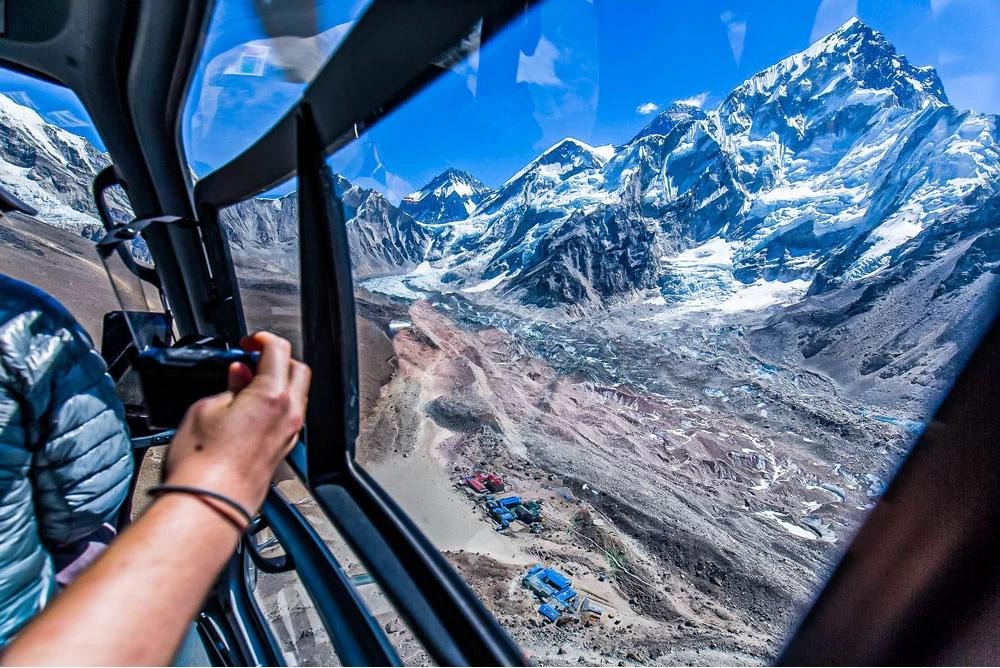
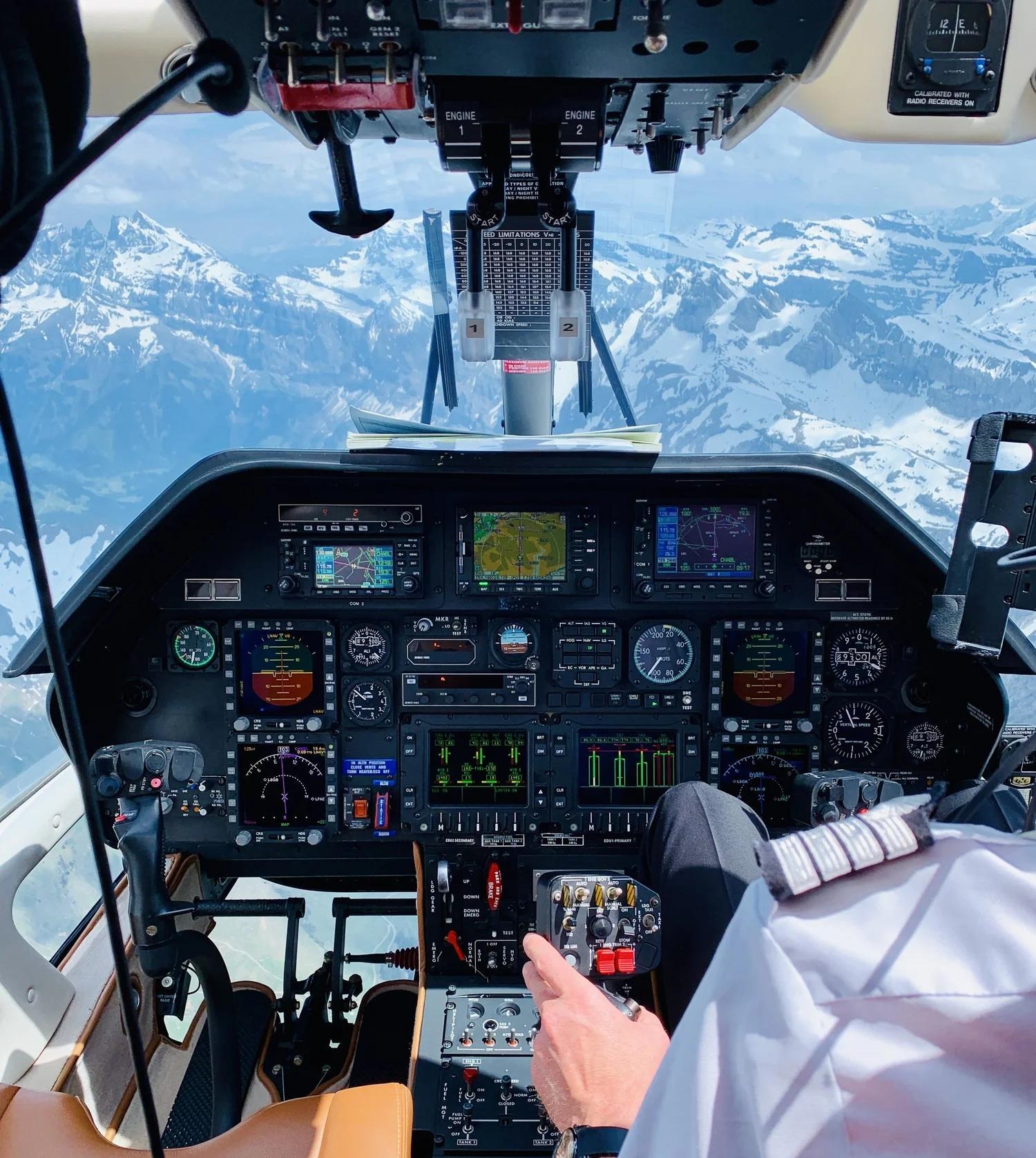
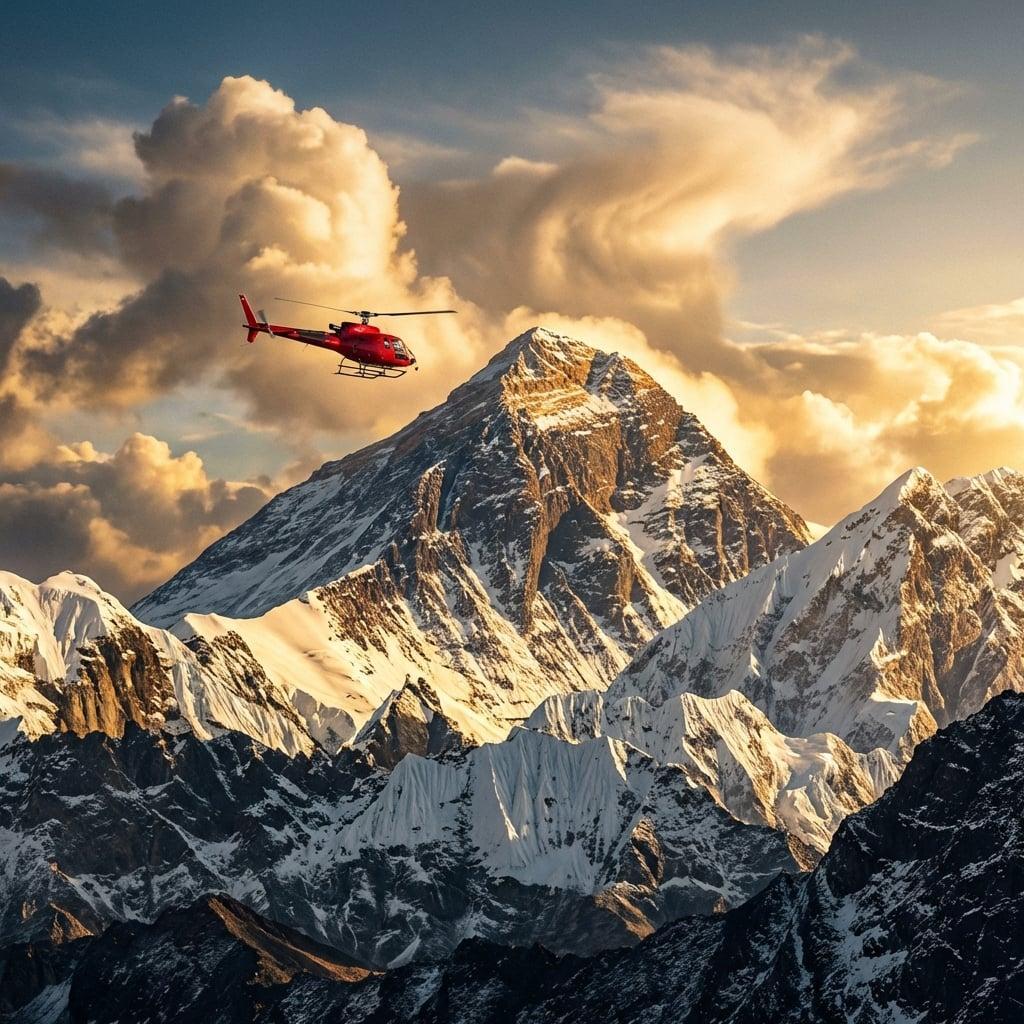
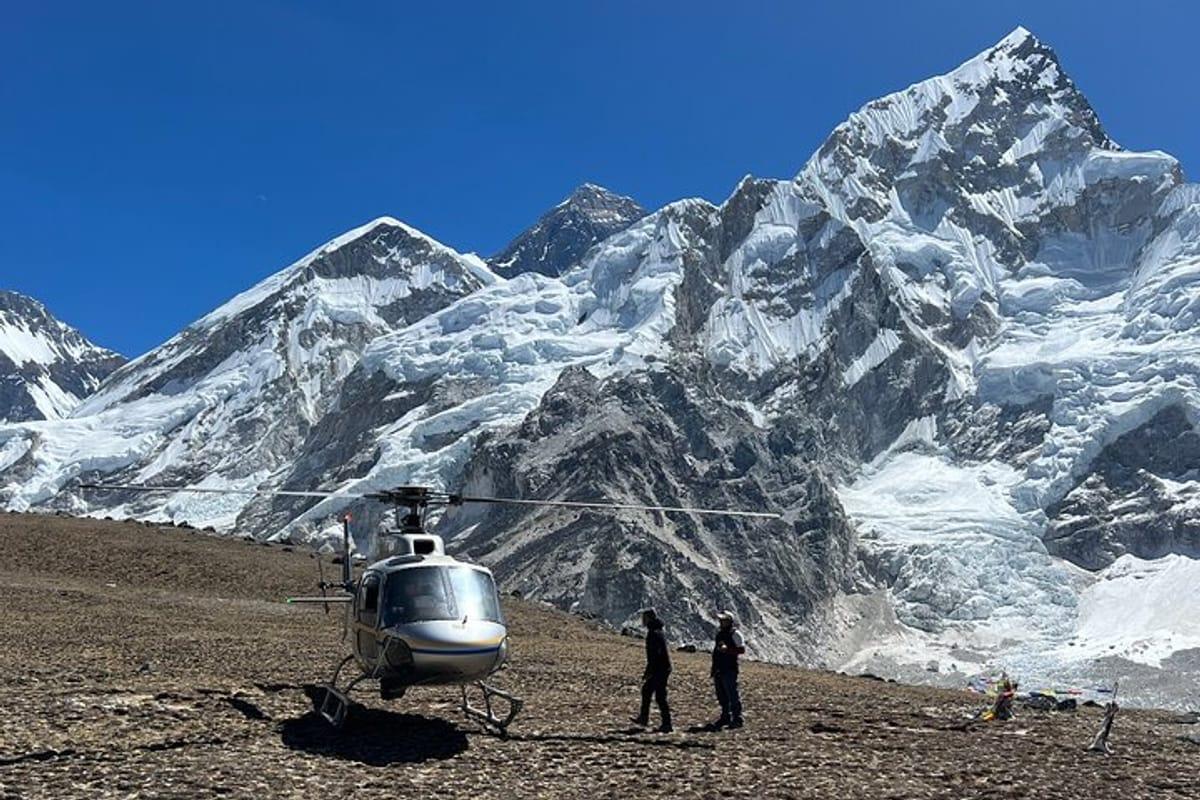
Skip the two-week trek and see Everest in a single morning. The Private Everest Base Camp Helicopter Tour takes you from Kathmandu on a scenic flight over the Khumbu Valley, past Sherpa villages, glaciers and the Himalaya’s tallest peaks, with a landing at Kala Patthar for close views of Everest, Lhotse and Nuptse. Because the helicopter is exclusively yours, you choose your departure time, share the cabin only with your own group and enjoy a window seat for every photo. A Himalayan breakfast with mountain views completes the experience. Fast, comfortable and unforgettable, it is the best way to reach Everest Base Camp for travelers short on time, trekking fitness or both.
Choose the best time for your trek based on weather and trail conditions.
One of the best seasons for helicopter tours, with clear morning skies, improving temperatures, and excellent Himalayan views
Cloud, rain, and reduced visibility can affect flights. Early morning departures offer better chances, but delays and cancellations are possible
Excellent mountain visibility, crisp weather, and generally stable mornings. October and November are popular months
Cold temperatures, occasional snowfall, and spectacular clear mountain views. Flights depend on weather and operating conditions
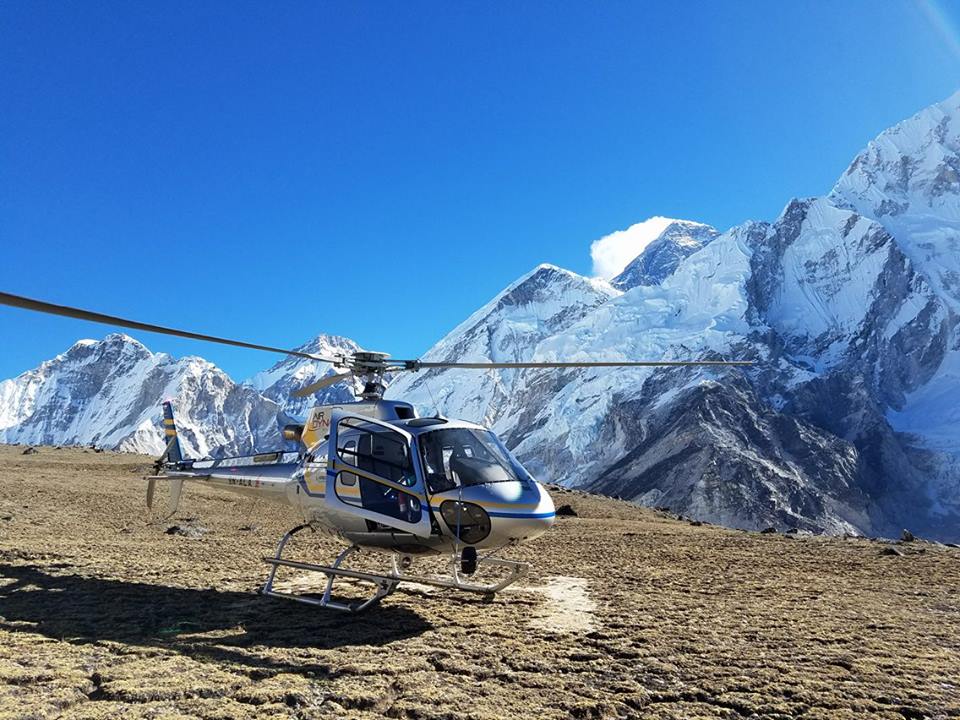
Imagine standing beneath the world’s highest mountain without a single day of trekking. The Private Everest Base Camp Helicopter Tour with Nepal Trip Services lifts off from Kathmandu and flies you into the heart of the Khumbu in 4 to 5 hours. You pass over Lukla, Namche Bazaar and Tengboche, cross the Khumbu Glacier and fly above Everest Base Camp (5,364 m). Then you touch down at Kala Patthar (5,545 m) for close views of Mount Everest, Lhotse and Nuptse. On the way back, you enjoy breakfast at Hotel Everest View before returning to Kathmandu the same day. The helicopter is reserved for your group, so the schedule, the seats and the memories are yours alone.
The classic Everest Base Camp trek takes 12 to 14 days and demands fitness, time and acclimatization. A private helicopter gives you the same world-famous scenery in one morning. You choose your date, travel only with your own group and keep the pace relaxed from hotel pick-up to drop-off. It is the most comfortable and time-efficient way to experience Everest, and it suits families, couples, seniors, photographers and helicopter lovers.
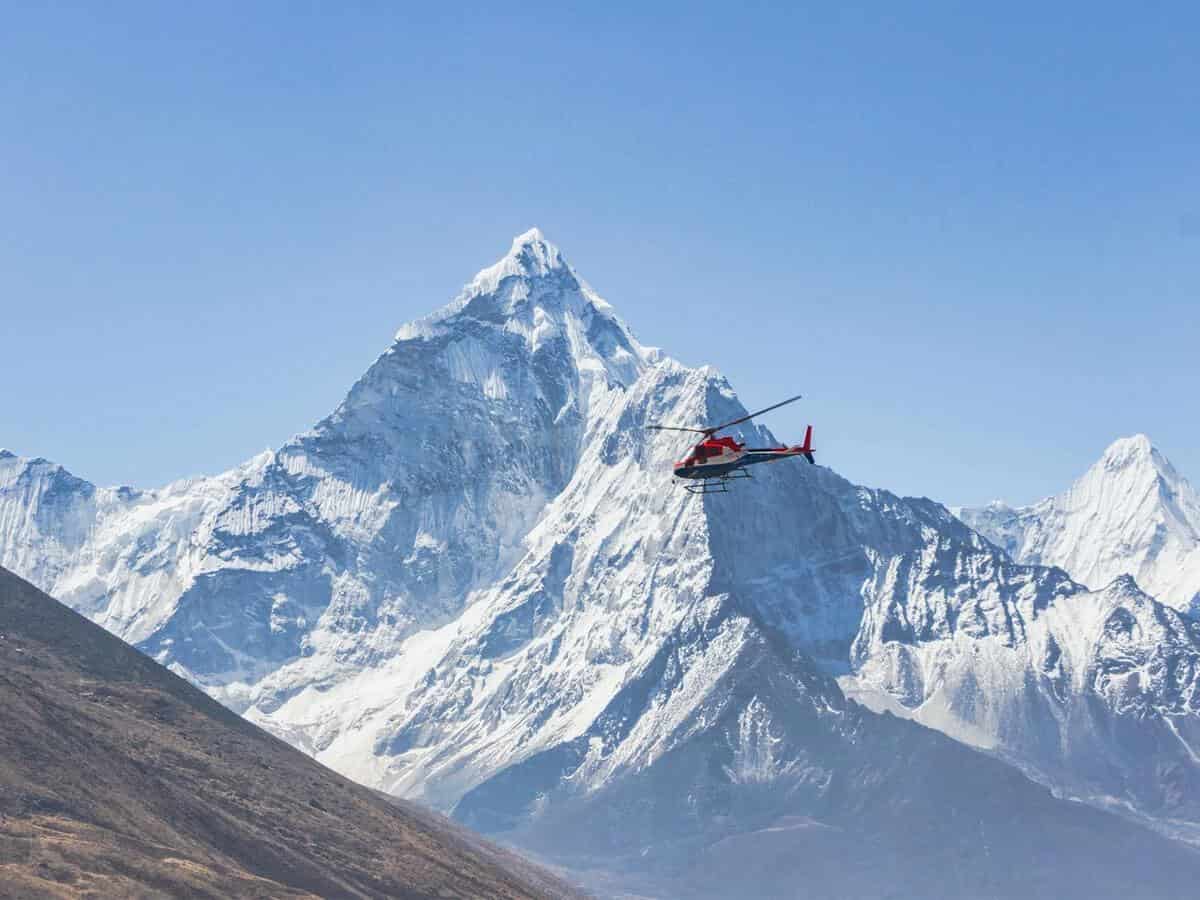
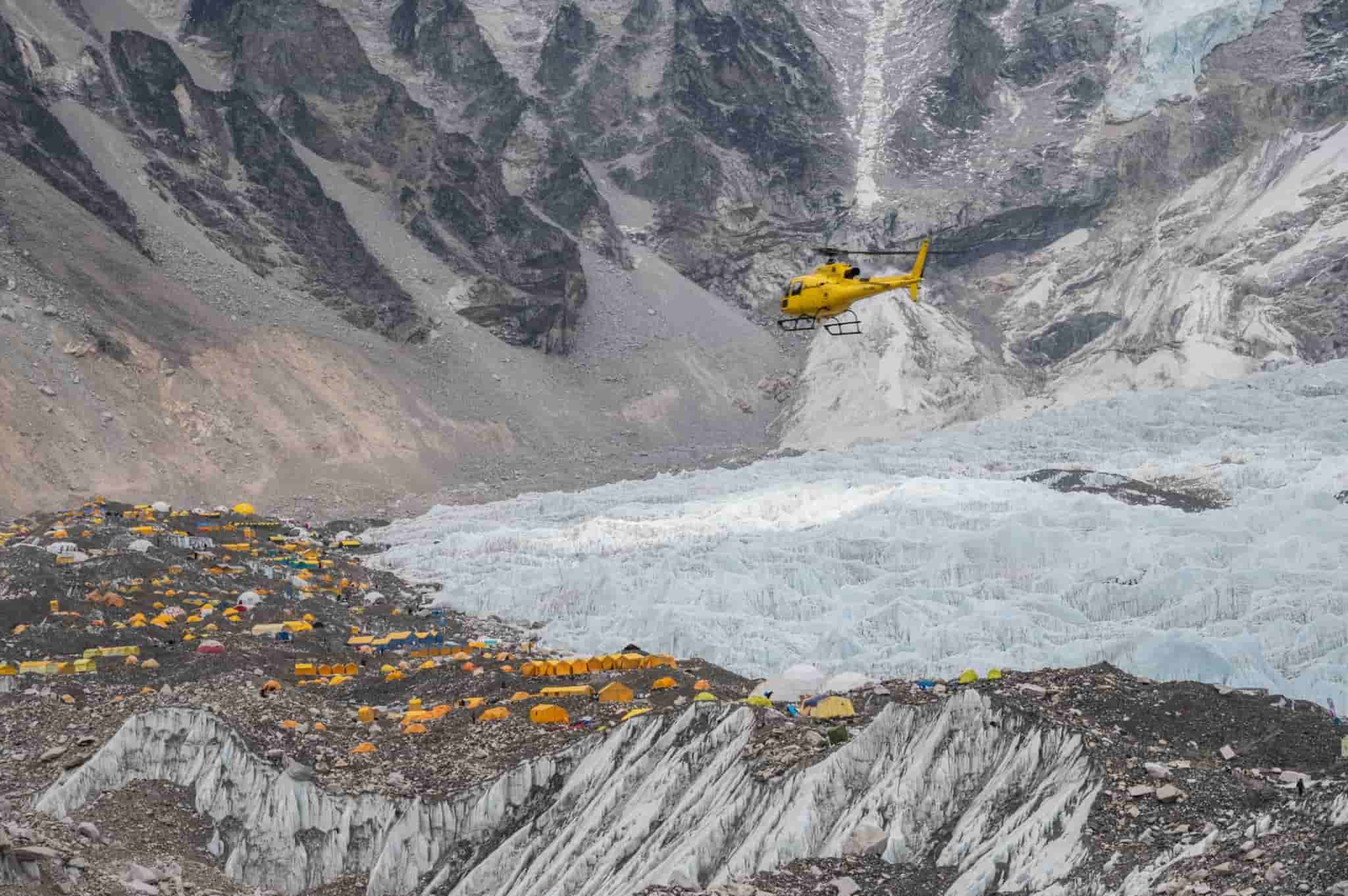
Soon after takeoff, the Kathmandu Valley gives way to terraced hills, river gorges and traditional villages. After a short refuelling stop at Lukla, the gateway to Everest, the helicopter climbs up the Khumbu Valley past Namche Bazaar and Tengboche Monastery. It then follows the Khumbu Glacier toward the Himalayan giants. On clear mornings, Ama Dablam, Pumori, Cho Oyu, Lhotse and Everest line up outside your window like a living postcard.
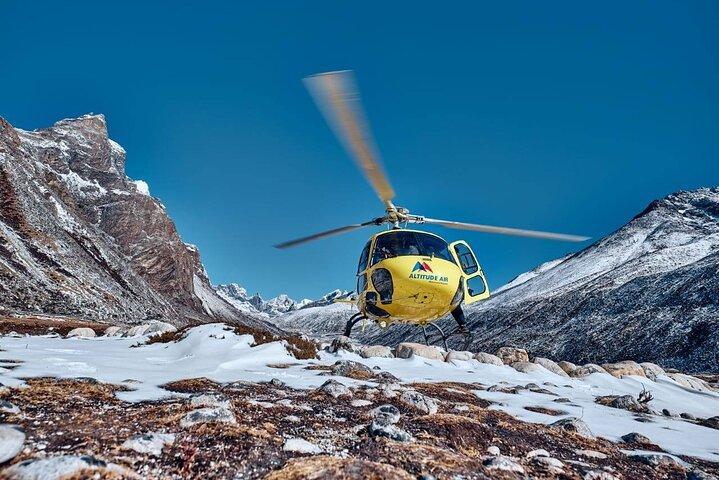
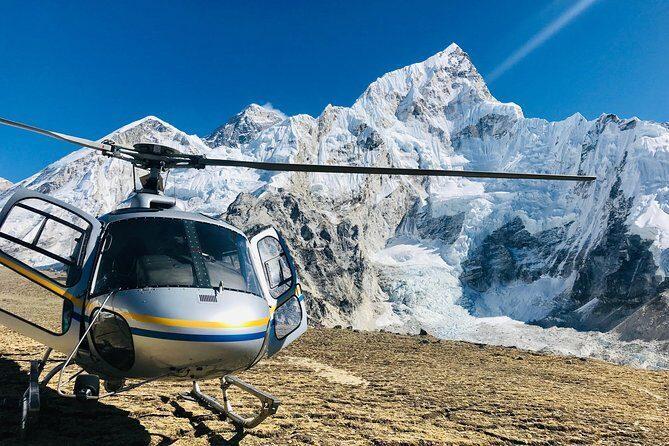
The landing is the heart of the trip. At Kala Patthar, one of the finest viewpoints in the Himalaya, you step out into thin, crisp air and look straight at Everest, Lhotse and Nuptse. Everest Base Camp and the Khumbu Icefall lie below. Because of the extreme altitude, ground time is usually 5 to 10 minutes, which is enough for photos and a memory that lasts a lifetime. The landing depends on the weather, so the pilot may choose another safe viewpoint if conditions change.
After the landing, the helicopter descends to Syangboche (3,880 m) for breakfast at Hotel Everest View, famous as one of the world’s highest hotels. Enjoy hot drinks and a hearty meal on the terrace, with Everest and Ama Dablam rising in front of you. The lower altitude also lets your body recover after the high landing. Read more on our Everest Helicopter Tour with Hotel Everest View breakfast page.
Each helicopter carries a maximum of 5 passengers plus one experienced Himalayan pilot. There is one front seat beside the pilot and four rear seats. On a private charter, your group has the whole aircraft and more freedom to choose seats and rotate for the best views. The pilot makes the final seating decision to keep the helicopter balanced and safe.
Weight matters at high altitude because thin air reduces a helicopter’s lifting power. The pilot sets the total load based on passenger weight, fuel, temperature and altitude, and the guideline is up to 100 kg per passenger. If a group is heavier, the pilot may fly you to Kala Patthar in two short shuttles, and every passenger still gets the landing. Baggage is limited to one small daypack per person, so leave large luggage at your Kathmandu hotel, where most hotels store it for free. When you book, please share each passenger’s approximate weight. It is used only for safety planning.
This tour suits families, couples, honeymooners, seniors, photographers and anyone short on time or trekking fitness. It also works well as a day trip added to a Kathmandu, Pokhara or Chitwan itinerary, such as our Nepal Highlights Tour.
Autumn (September to November) and spring (March to May) offer the clearest skies and sharpest mountain views. Winter mornings are crisp and clear but very cold at altitude, while the monsoon often brings cloud and delays. Early morning departures give the best visibility in every season. Keep one or two spare days in your Nepal schedule in case weather delays the flight.
You travel with experienced Himalayan pilots, hotel pick-up and drop-off, and a local team that manages every permit and detail. Whether you want a bucket-list moment, a proposal or a family adventure, we shape the day around you. View the standard Everest Base Camp Helicopter Tour page or contact us to reserve your private flight.
|
Number of Passengers |
Price Per Person |
Total Charter |
|---|---|---|
|
1 Person |
US$5,000 |
US$5,000 |
|
2 People |
US$2,500 |
US$5,000 |
|
3 People |
US$1,667 |
US$5,000 |
|
4 People |
US$1,250 |
US$5,000 |
|
5 People |
US$1,000 |
US$5,000 |
Duration: 4 to 5 hours (same-day return) | Maximum altitude: 5,545 m (Kala Patthar) | Aircraft: Airbus H125 (AS350 B3e) or similar high-altitude helicopter | Passengers: up to 5 | Meals: breakfast at Hotel Everest View
| Time (approx.) | Activity | Altitude |
|---|---|---|
| Day before | Booking confirmation and weather briefing | n/a |
| 5:30 AM | Hotel pick-up in Kathmandu | 1,400 m |
| 6:00 AM | Airport check-in and pilot safety briefing | 1,400 m |
| 6:30 AM | Helicopter takeoff | 1,400 m |
| 7:20 AM | Lukla refuelling stop | 2,860 m |
| 7:45 AM | Flyover of Namche Bazaar, Tengboche, Khumbu Glacier and Everest Base Camp | 3,440 to 5,364 m |
| 8:00 AM | Kala Patthar landing | 5,545 m |
| 8:25 AM | Breakfast at Hotel Everest View, Syangboche | 3,880 m |
| 9:30 AM | Return flight via Lukla | 2,860 m |
| 10:30 AM | Landing in Kathmandu and hotel drop-off | 1,400 m |
Times are approximate. On a private charter, your pilot and our team can adjust them to suit your group, the weather and air traffic.
In the evening, our team calls or messages you to confirm your pick-up time and the weather forecast. This is also when you share each passenger's passport details and approximate weight if you have not already. Lay out warm layers, charge your camera, phone and power bank, and go to bed early.
Helicopter lover's note: weather decides everything in the Himalaya, so we watch the forecast with the same care as the pilot.
A Nepal Trip Services representative meets you in your hotel lobby and drives you by private vehicle to Tribhuvan International Airport. Kathmandu's streets are quiet at this hour, so the drive is short. Bring your passport, and eat lightly because breakfast is waiting at Everest View.
At the domestic terminal, our team handles the check-in formalities and permits. You meet your pilot and walk out to the helicopter for a short pre-flight safety briefing covering:
Passenger weights are checked, and the pilot assigns seats for weight and balance. On a private charter, you have more say in seating.
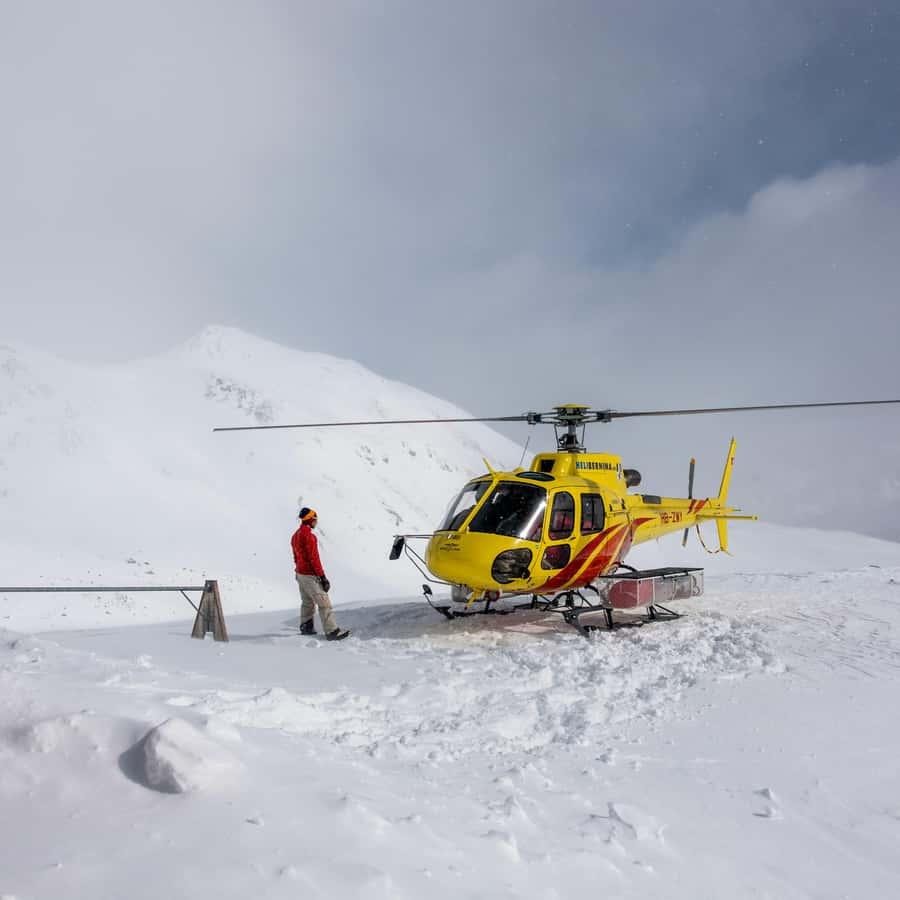
Helicopter lover's note: this is the best moment to see the aircraft up close. Ask the pilot about the high-altitude engine and the wide panoramic windows built for Himalayan flying.
Your helicopter lifts off over the Kathmandu Valley and turns east toward the Everest region. Over roughly 45 to 50 minutes, you fly above:
Tip: sit on the left side for the best mountain views on the way out.
The helicopter lands at Tenzing-Hillary Airport in Lukla, the legendary gateway to Everest, known for its short sloping runway. The stop takes about 10 to 15 minutes while the pilot refuels and adjusts the load for high-altitude flying. Step out, stretch and watch trekkers and aircraft come and go.
Helicopter lover's note: this is a rare chance to see one of the world's most famous airstrips at work from the ground.
Now comes the most spectacular stretch. The helicopter climbs up the Khumbu Valley, passing:
You also see Everest, Lhotse, Nuptse, Pumori and Ama Dablam rise ahead as the cabin fills with light.
This is the highlight of the day. The helicopter touches down at Kala Patthar, the best viewpoint in the Everest region, which looks directly at the summit of Mount Everest (8,848.86 m). Step out to a 360-degree panorama of Everest, Lhotse, Nuptse, Pumori and Changtse, with Base Camp and the glacier below.
You have about 5 to 10 minutes on the ground:
Shuttle landings: on heavier loads, the pilot may fly passengers to Kala Patthar in two short trips for safety. This is normal practice in the Everest region, and every passenger still gets the landing.
Helicopter lover's note: a helicopter touching down above 5,500 m is the real thing for aviation fans. Thin air makes every kilogram of load matter, which is why the pilot plans weight and fuel so carefully.
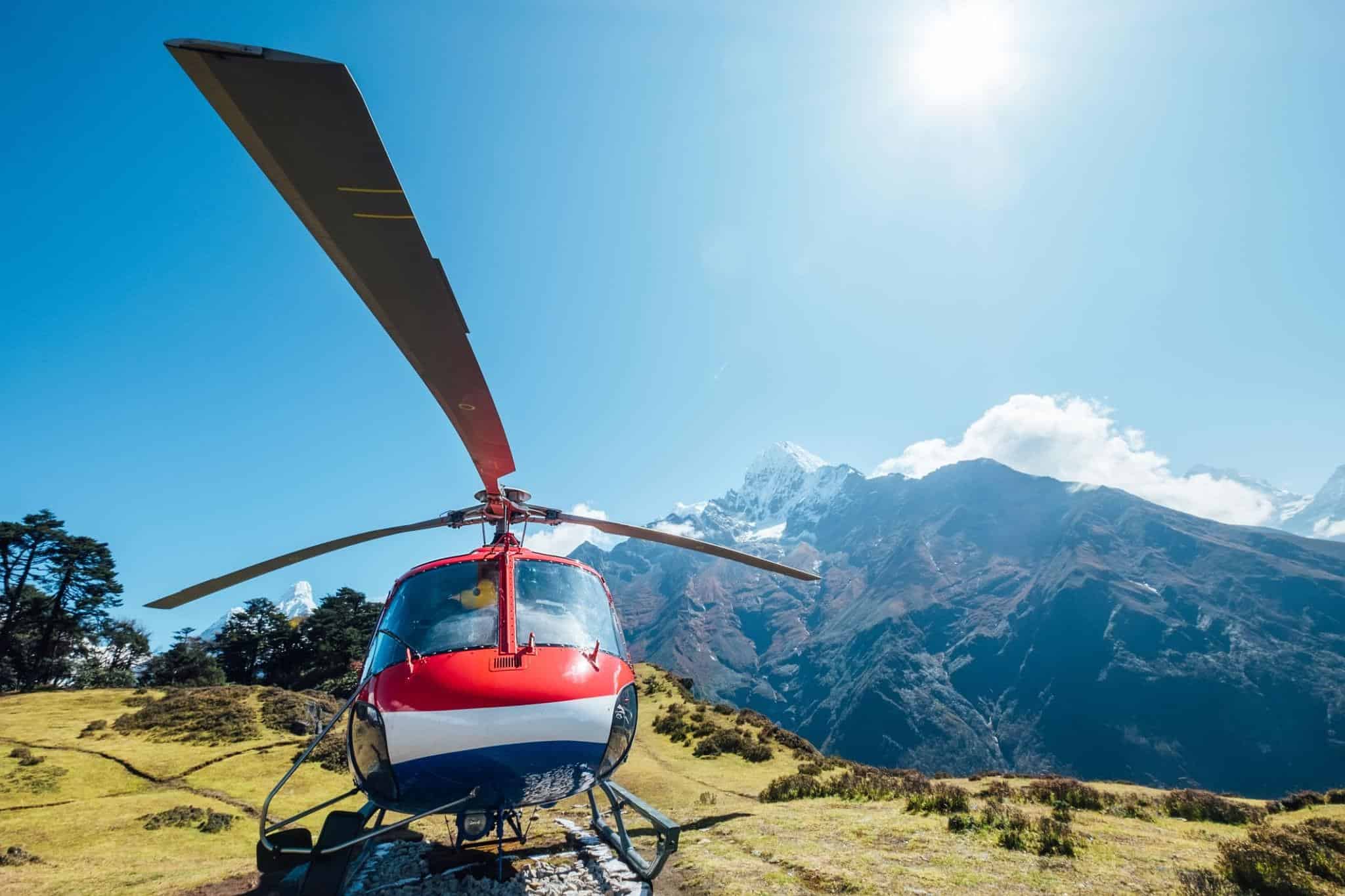
The helicopter descends to Syangboche, a short walk from Hotel Everest View, once listed by Guinness World Records as the highest-placed hotel. Spend 45 to 60 minutes enjoying hot drinks and a set breakfast on the terrace, with Everest, Ama Dablam, Thamserku and Kangtega in view. The lower altitude gives your body time to recover, and the terrace is a great place for photos of the helicopter parked against the mountains.
Celebrating something? A proposal, anniversary or birthday can be arranged here on request.
After breakfast, the helicopter flies back down the valley for a quick refuelling stop at Lukla, with one last look at the Khumbu peaks. Keep your camera ready, because the return light on the hills and river valleys is just as beautiful.
You land at Tribhuvan International Airport, where our team meets you and drives you back to your hotel. You are back by late morning, with the rest of the day free to explore Kathmandu.
Book your private flight with Nepal Trip Services on WhatsApp at +977-9828696557 or email info@nepaltripservices.com. You can also view the standard Everest Base Camp Helicopter Tour page.
Are you interested in planning a custom trip? It only takes 2 minutes.
Essential packing and gear checklist tailored for this trek.


Total time: 4 to 5 hours, same-day return | Departure: about 6:30 to 7:00 AM from Kathmandu (1,400 m)
Route: Kathmandu → Lukla → Everest Base Camp → Kala Patthar → Syangboche (Hotel Everest View) → Lukla → Kathmandu
| Stage | Route | Altitude | Approx. time |
|---|---|---|---|
| 1 | Kathmandu to Lukla (refuelling stop) | 2,860 m | 45 to 50 min flight |
| 2 | Lukla to Everest Base Camp (flyover) | 5,364 m | 20 to 25 min flight |
| 3 | Kala Patthar landing | 5,545 m | 5 to 10 min on the ground |
| 4 | Kala Patthar to Syangboche | 3,880 m | 10 to 15 min flight |
| 5 | Breakfast at Hotel Everest View | 3,880 m | 45 to 60 min |
| 6 | Syangboche to Lukla (refuelling stop) | 2,860 m | 5 to 10 min flight |
| 7 | Lukla to Kathmandu | 1,400 m | 45 to 50 min flight |
Good to know
A private charter is priced per helicopter, not per person. You pay one price for the whole aircraft, so the more passengers share it, the lower the cost per person.
Starting price: from US$5,000 per helicopter (up to 5 passengers)
| Passengers | Approx. cost per person |
|---|---|
| 1 | US$5,000 |
| 2 | US$2,500 |
| 3 | US$1,667 |
| 4 | US$1,250 |
| 5 | US$1,000 |
Figures divide the starting price equally. Your final quote may vary.
What affects the price
Group sharing alternative: shared seats on the standard tour are listed from US$1,500 per person, so a private charter of 4 or 5 is often better value, with full flexibility.
For an exact quote, send your date, number of passengers and approximate weights through our contact page or WhatsApp at +977-9828696557.
Both options fly the same route to Kala Patthar and Hotel Everest View. The difference is price, flexibility and who is in the cabin.
| Feature | Private Charter | Group Sharing Tour |
|---|---|---|
| Price | Paid per helicopter, from US$5,000 | Paid per person, from US$1,500 |
| Cost per person | From US$1,000 with 5 passengers | Fixed per seat |
| Passengers | Only your group, up to 5 | Shared with other travelers |
| Departure time | Flexible, chosen by you | Fixed early-morning schedule |
| Date availability | Any day, weather permitting | Depends on filling the seats |
| Seating | More flexibility, and seats can be rotated | Assigned by the pilot, front seat not guaranteed |
| Photo time | More freedom for photos | Standard schedule |
| Breakfast | Private table | Shared table |
| Best for | Families, groups, photographers, proposals | Solo travelers, couples, budget travelers |
Which should you choose?
Compare both on our helicopter services page, or see the standard Everest Base Camp Helicopter Tour.
A private charter is built around your group. The pilot always makes the final call on safety, but within that, you can shape the day in these ways.
Date and departure time
Seating
Extra stops and timing
Celebration add-ons
Combine with other plans
How to customize: tell us your date, group size, passenger weights and wishes through the Trip Planner or WhatsApp at +977-9828696557. We confirm what is possible and quote any extras.
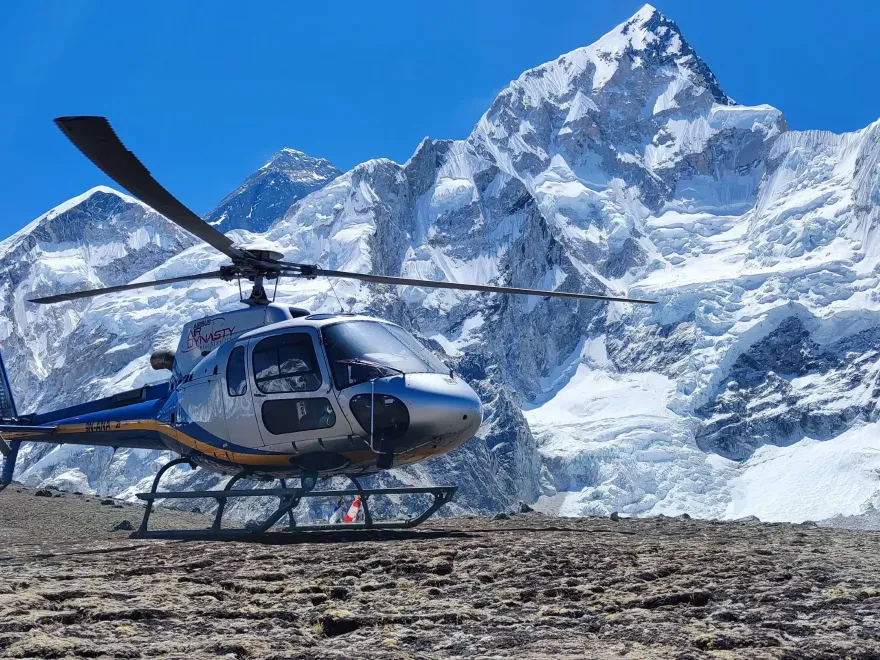
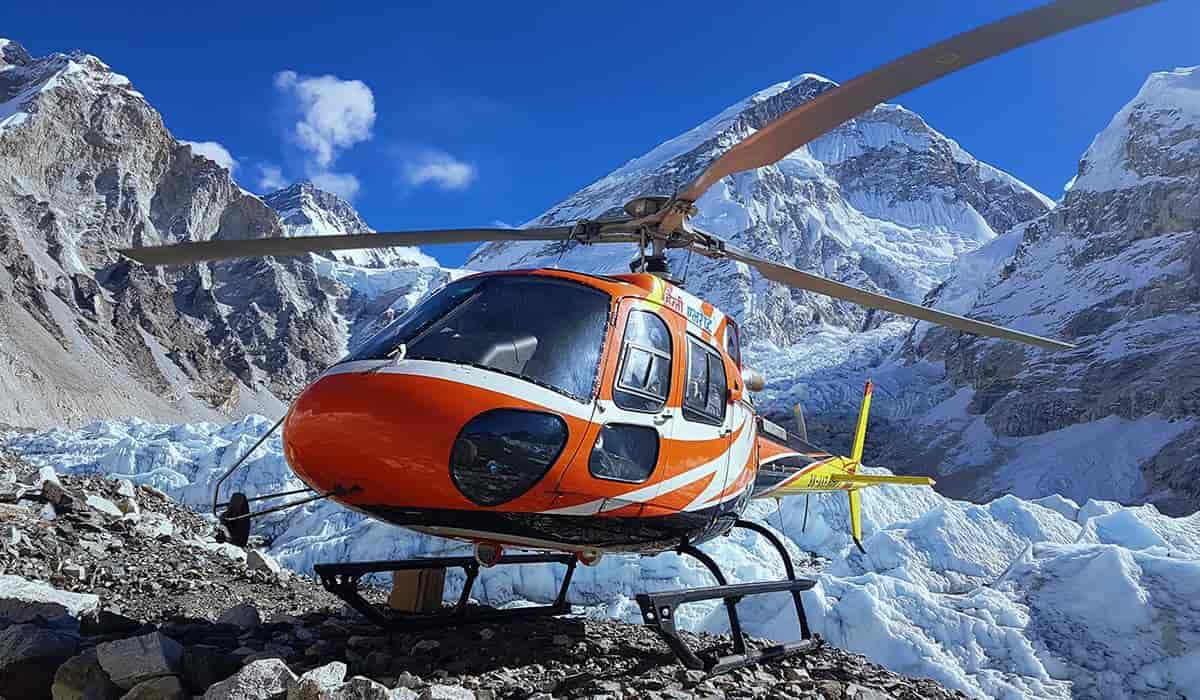
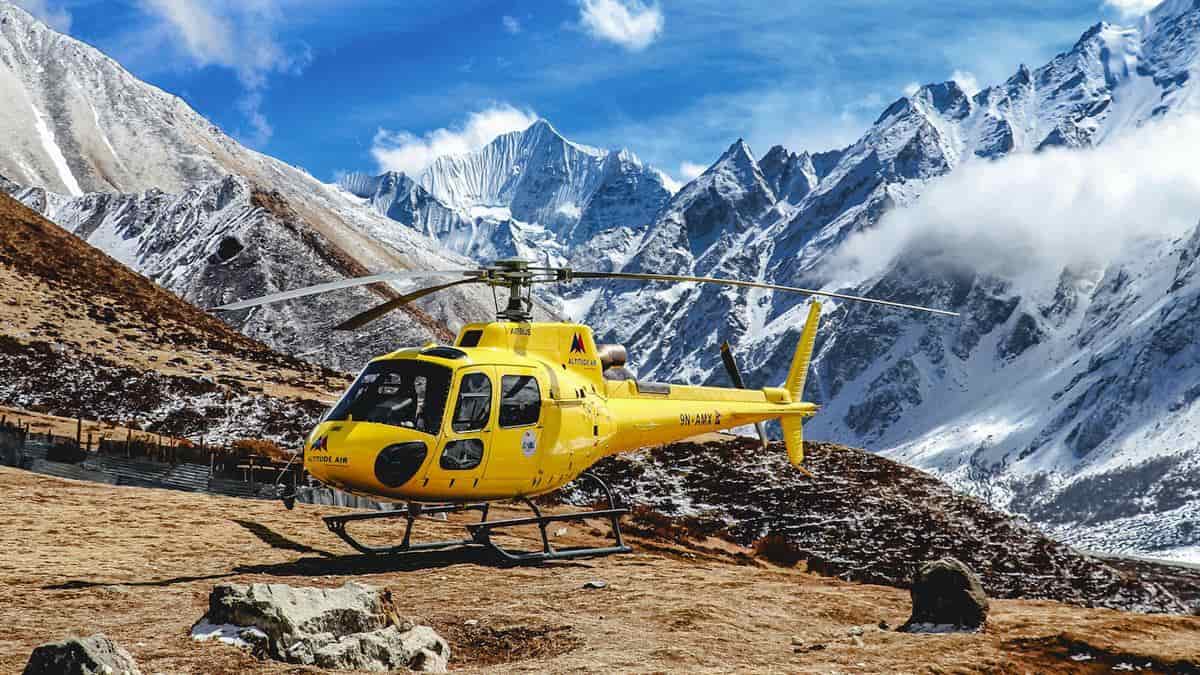
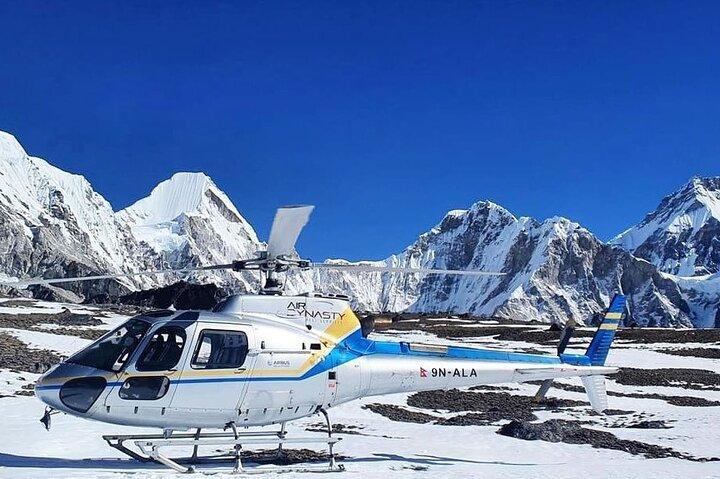
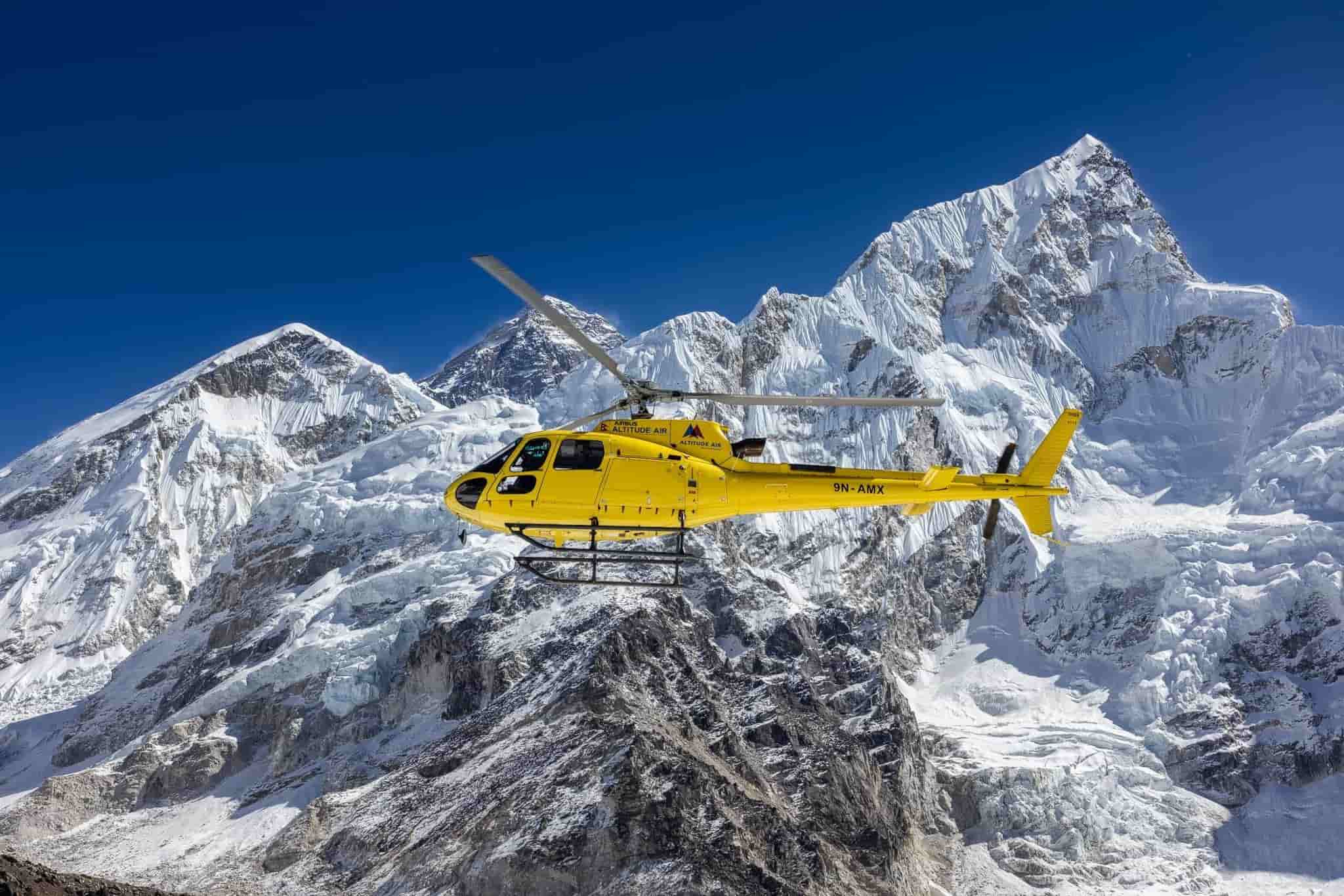
If you love aviation, this is the aircraft that makes the flight possible. The Airbus H125 (AS350 B3e) is the helicopter most trusted for high-altitude work in the Himalaya, and it is the standard choice for Everest tours, mountain rescues and expedition support in Nepal.
Engine: power for thin air
Windows: made for the view
High-altitude record
Why it suits our tour
| Strength | Benefit to you |
|---|---|
| High-altitude power | Safe landing at Kala Patthar |
| Panoramic windows | Better views and photos |
| Proven mountain record | Trusted by Himalayan pilots and rescue teams |
| Seats up to 5 passengers on our tour | A private charter for your whole group |
Fun fact for fans: at altitude, every kilogram counts, so pilots plan fuel and passenger weight carefully, which is why a Lukla refuelling stop is part of the route.
The exact helicopter can vary by operator and availability, but every aircraft used is approved for high-altitude flying.
See the Everest Base Camp Helicopter Tour page for route details.
Flying near Everest is one of the hardest jobs in aviation, and every part of this tour is planned around it. Four factors shape each flight.
Thin air
Load limits
Fuel planning
Why shuttle landings happen
Weather and judgment
In short: the pilot balances air, weight, fuel and weather on every leg, and that planning is what makes a landing near the roof of the world routine.
Learn more about the aircraft in our Airbus H125 section, or view the Everest Base Camp Helicopter Tour page.
Your helicopter makes a short refuelling stop at Tenzing-Hillary Airport in Lukla, one of the most famous airstrips in the world. It is the main gateway for Everest trekkers, and seeing it up close is a highlight for any aviation fan.
Quick facts
| Detail | Information |
|---|---|
| Altitude | 2,860 m |
| Named after | Tenzing Norgay and Sir Edmund Hillary, the first climbers to summit Everest in 1953 |
| Runway | Very short and sloped, about 530 m, with a mountain at one end and a steep drop at the other |
| Stop time | About 10 to 15 minutes, on the way out and again on the way back |
| Purpose | Refuelling and load adjustment for the high-altitude sections |
Why we stop here
What you see during the stop
Tips
On heavier loads, the pilot may use the Lukla stop to adjust the passenger plan for the Kala Patthar landing.
Return to the Everest Base Camp Helicopter Tour page for the full route.
Kala Patthar is the high point of your flight and the best Everest viewpoint reachable by helicopter. A little preparation helps you make the most of the few minutes you have there.
Key facts
| Detail | Information |
|---|---|
| Altitude | 5,545 m (18,192 ft) |
| Ground time | 5 to 10 minutes |
| Oxygen level | About half of sea level |
| Temperature | Often -20°C to -5°C in the morning, colder with wind |
| Landing time | Mid-morning, about 1.5 hours after leaving Kathmandu |
| Height above Base Camp | About 180 m higher than Everest Base Camp (5,364 m) |
Some sources list Kala Patthar’s height slightly differently, but 5,545 m is the most widely used figure.
What you see
Why the stop is short
Tips for stepping out
Please note
See the full route on our Everest Base Camp Helicopter Tour page.
After the Kala Patthar landing, your helicopter descends to Syangboche for a warm breakfast at Hotel Everest View, one of the most famous mountain hotels in the world.
Quick facts
| Detail | Information |
|---|---|
| Location | Syangboche, above Namche Bazaar |
| Altitude | 3,880 m (12,730 ft) |
| Stop time | 45 to 60 minutes |
| Meal | Set breakfast with hot drinks, included in your package |
| Seating | Terrace or indoor dining room, depending on the weather |
Hotel history
What’s on the menu
Menus vary by season, and vegetarian options are available on request.
Terrace views
What to do during the stop
Good to know
See the full route on our Everest Base Camp Helicopter Tour page, or read about the Everest Helicopter Tour with Hotel Everest View breakfast.
The Khumbu is home to some of the most famous mountains on Earth. Use this quick guide to name them as they appear outside your window.
| Peak | Height | How to spot it | Best seen from |
|---|---|---|---|
| Mount Everest | 8,848.86 m | A dark, pyramid-shaped summit that often sits behind the long Nuptse-Lhotse wall, sometimes with a plume of wind-blown snow | Kala Patthar and Hotel Everest View |
| Lhotse | 8,516 m | The huge wall of rock and ice joined to Everest by the South Col, standing just to its right | Kala Patthar |
| Nuptse | 7,861 m | A long, jagged ridge in front of Everest and Lhotse, so it looks tall though it is lower | Flight toward Base Camp and Kala Patthar |
| Ama Dablam | 6,812 m | A sharp, graceful peak with steep side ridges and a hanging glacier, often called the Matterhorn of the Himalaya | Tengboche flyover and Hotel Everest View |
| Pumori | 7,161 m | A clean, pyramid-shaped peak right beside Kala Patthar, often described as Everest’s daughter | Kala Patthar |
| Cho Oyu | 8,188 m | A broad, snowy massif standing apart to the west of Everest, on the Nepal-Tibet border | Flight up the Khumbu and Kala Patthar |
Also look for
Spotting tips
Plan your flight with our Everest Base Camp Helicopter Tour page.
The best months for the Everest helicopter tour are October to November and March to May, and the best hour to fly is early morning, from about 6:00 to 9:00 AM.
Season guide
| Season | Months | Views | Weather | Rating |
|---|---|---|---|---|
| Autumn | September to November | Excellent, crystal-clear skies | Stable, dry and mild | Best |
| Winter | December to February | Very clear mornings | Very cold but stable | Great |
| Spring | March to May | Good, with rhododendrons in bloom | Warm, with some afternoon haze | Great |
| Monsoon | June to August | Often cloudy | Rain and frequent delays | Fair |
Season highlights
Why early morning is best
That is why flights leave Kathmandu at about 6:30 to 7:00 AM. On a private charter, you can discuss the departure time with us, but we recommend the earliest slot your pilot approves.
Tips
For a month-by-month breakdown, read our Best Time for an Everest Helicopter Tour guide, or view the Everest Base Camp Helicopter Tour page.
Weather decides every Himalayan flight, so a delay is normal and not a sign that anything has gone wrong. Planning for it keeps your trip stress-free.
Common causes of delay
What our team does
| Situation | What we do |
|---|---|
| Short delay | You wait at the airport or hotel until the weather clears |
| Cancelled on the day | We reschedule to the next available day |
| Weather changes in the air | The pilot may choose another safe landing point |
| Repeated cancellations | A refund or a switch to another tour, under our policy |
Why keep spare days
Your Plan B checklist
For related options, see our Nepal Highlights Tour or the Everest Base Camp Helicopter Tour page.
Both take you to the foot of the world’s highest mountain. The helicopter gives you the view in one morning, while the trek gives you the journey on foot.
| Feature | Private Helicopter Tour | Everest Base Camp Trek |
|---|---|---|
| Time | 4 to 5 hours, same-day return | About 12 to 14 days |
| Cost | Private charter from US$5,000 per helicopter, or shared seats from US$1,500 per person | Varies by itinerary and group size, so check the trek page for current pricing |
| Fitness needed | None, with no trekking | Good fitness and stamina for long days of walking |
| Altitude exposure | 5 to 10 minutes at Kala Patthar (5,545 m), then a quick descent | Days spent gaining height, with acclimatization stops |
| Views | Aerial panorama of the Khumbu Glacier, Base Camp and Everest, plus a Kala Patthar landing | Ground-level views that build gradually along the trail |
| Experience | Fast, comfortable and scenic, with breakfast at Hotel Everest View | Sherpa villages, monasteries, lodges and the satisfaction of walking there |
| Weather risk | Flights can be delayed or rescheduled by weather | Weather affects comfort and visibility, but the trek continues |
| Best for | Short on time, limited mobility, seniors, families, photographers and helicopter lovers | Adventurers who want the full Himalayan journey and have two weeks to spare |
Which should you choose?
Explore the Everest Base Camp Trek, or view the Everest Base Camp Helicopter Tour page.
Safety comes before everything else on this tour. The pilot always has the final say, and we never fly when conditions are unsafe.
| Safety area | What we ensure |
|---|---|
| Approved operators | Flights run only by helicopter companies approved by the Civil Aviation Authority of Nepal (CAAN) |
| Aircraft | High-altitude helicopters such as the Airbus H125 (AS350 B3e) |
| Maintenance | Regular inspections and servicing to international standards |
| Weather checks | Conditions checked before every flight, with no flying in unsafe weather |
| Weight control | Passenger weight balanced for safe high-altitude performance |
| Pre-flight briefing | A safety briefing before takeoff |
| On-board oxygen | Emergency oxygen carried on every flight |
| Communication | Constant contact with air traffic control during the flight |
Experienced Himalayan pilots
Your pre-flight briefing covers
Passenger safety rules
See the Everest Base Camp Helicopter Tour page for the full route.
The risk of altitude sickness on this tour is low, because you spend only 5 to 10 minutes at Kala Patthar (5,545 m) and descend quickly. Still, the climb from Kathmandu (1,400 m) is sudden, so a little preparation helps.
Symptoms to know
| Mild (common) | Serious (rare on this tour) |
|---|---|
| Light headache | Severe headache |
| Dizziness | Confusion |
| Shortness of breath | Loss of balance |
| Tiredness | Chest tightness |
| Mild nausea | Vomiting |
Mild symptoms usually ease once the helicopter descends. Tell the pilot immediately if you feel unwell.
Precautions
Who should see a doctor first
Not recommended for
Age guidelines
| Age group | Can join? | Notes |
|---|---|---|
| Under 2 years | Not recommended | Infants are more sensitive to high altitude |
| 2 to 12 years | Yes | With a parent or guardian, and a doctor’s advice is recommended |
| 13 to 17 years | Yes | With a parent or guardian |
| 18 to 65 years | Yes | No special requirements for healthy adults |
| 65+ years | Yes | A medical check-up is recommended before booking |
There is no strict upper age limit, and many seniors enjoy this tour because no trekking is needed.
Mobility: passengers must be able to get in and out of the helicopter with little help. The ground at Kala Patthar is rocky and uneven, so some passengers may prefer to stay close to the helicopter. Wheelchair users should contact us to discuss options.
What we ask: share any medical conditions and each passenger’s approximate weight when you book.
This is general guidance only. Please consult your doctor if you have any health concerns before high-altitude travel.
See the Everest Base Camp Helicopter Tour page for the full route.
Few flights give you better material than this one. A few simple habits turn good shots into great ones.
Best seats for photos
Camera settings
| Setting | Recommendation |
|---|---|
| Shutter speed | 1/1000 sec or faster to beat vibration |
| Mode | Shutter priority (S/Tv) or Auto |
| ISO | Auto, or 100 to 400 in bright light |
| Focus | Continuous autofocus, or manual focus set to infinity |
| Drive mode | Burst mode for moving shots |
| Lens | Wide (16 to 35 mm) for landscapes, zoom (70 to 200 mm) for peaks |
Smartphone tips
Shooting through the window
Cold weather care
At Kala Patthar (5 to 10 minutes)
Helicopter lover’s shots
No-drone note: drones are not allowed on this tour. Flying one in the Everest region needs several government approvals, and drones are unsafe near helicopters. Use a handheld action camera, smartphone video or a wide-angle lens instead. For professional filming, contact us well in advance.
Photography rules
See the Everest Base Camp Helicopter Tour page for the full route.
Few backdrops match Mount Everest. A private charter keeps the moment personal, because only your group is on board and the schedule can bend around you.
Perfect for
Where the moment happens
| Location | Why it works | Time available |
|---|---|---|
| Kala Patthar (5,545 m) | Everest, Lhotse and Nuptse stand right in front of you | 5 to 10 minutes, so keep it short and simple |
| Hotel Everest View (3,880 m) | A calm terrace, warmer air and Everest and Ama Dablam behind you | 45 to 60 minutes, ideal for a relaxed celebration |
Our recommendation: plan the main moment at Hotel Everest View, where you have more time, more oxygen and a warm place to sit. Keep Kala Patthar for the photo of a lifetime, such as a ring shot or a banner photo.
Celebration ideas
Planning tips
How to arrange it: share your date, group size and wishes through the Trip Planner or WhatsApp at +977-9828696557, and we confirm what is possible and quote any extras.
See the full route on our Everest Base Camp Helicopter Tour page, or the Everest Helicopter Tour with Hotel Everest View breakfast.
Your flight takes you into Sagarmatha National Park, a UNESCO World Heritage Site. Two permits are required, and Nepal Trip Services arranges both for you as part of the package.
Permits needed
| Permit | Purpose | Arranged by |
|---|---|---|
| Sagarmatha National Park entry permit | Entry to the protected national park | Nepal Trip Services |
| Khumbu Pasang Lhamu Rural Municipality entry fee | Local entry fee for the Khumbu region | Nepal Trip Services |
| TIMS card | Not required for the Everest region | n/a |
Permit fees (per person)
| Permit | Foreign nationals | SAARC nationals | Nepali citizens |
|---|---|---|---|
| Sagarmatha National Park | NPR 3,000 | NPR 1,500 | NPR 100 |
| Khumbu Pasang Lhamu Rural Municipality | NPR 3,000 | NPR 2,000 | To be confirmed |
Fees are set by the Government of Nepal and local authorities and may change without notice. Both permits are included in your tour price.
What you need to do
How the fees help
Travel responsibly
Trekking after your flight? The same permits can cover an Everest trek, so ask us about combining plans, and see the Everest Base Camp Trek.
See the Everest Base Camp Helicopter Tour page for the full route.
How to Book
Booking your Private Everest Base Camp Helicopter Tour with Nepal Trip Services is simple and convenient.
Choose Your Tour: Select a private helicopter charter or group-sharing flight.
Send Your Details: Provide your preferred travel date, number of passengers, full names as shown on passports, and approximate individual weights.
Receive Your Confirmation: Our team checks helicopter availability and sends you the final quotation.
Pay the Deposit: Pay a 30% advance deposit to secure your booking.
Receive Your Booking Voucher: We send your official booking confirmation and payment receipt by email.
Pay the Remaining Balance: Complete your outstanding payment at least 7 days before departure.
Receive Flight Details: Your airport reporting time, hotel pick-up schedule and flight instructions will be provided the evening before departure.
Booking Advice: We recommend booking at least 2–4 weeks in advance during peak seasons (March–May and October–November) to secure your preferred departure date.
Payment Methods
Nepal Trip Services offers the following payment options:
| Payment Method | Details |
|---|---|
| Credit or Debit Card | Visa, Mastercard, American Express and UnionPay |
| Bank Transfer | International bank transfer (SWIFT) |
| Cash Payment | USD or NPR at our Kathmandu office |
| Online Payment | Secure online payment arrangements confirmed by our booking team |
All tour prices are quoted in US dollars (USD), unless otherwise stated. Any applicable card processing fees will be communicated before payment. International bank transfer charges are the responsibility of the sender.
Deposit and Payment Schedule
| Payment Details | Payment Terms |
|---|---|
| Booking Deposit | 30% of the total tour cost |
| Remaining Balance | 70% of the total tour cost |
| Final Payment Deadline | At least 7 days before departure |
| Last-Minute Bookings | 100% payment at the time of confirmation for bookings within 7 days |
| Private Helicopter Charter | 30% advance deposit, subject to the operator's charter agreement |
An official payment receipt and booking confirmation will be issued for every confirmed reservation. Your booking is secured once the required deposit has been received and written confirmation has been provided.
Cancellation by Nepal Trip Services (Weather or Safety Reasons)
Helicopter flights in the Everest region depend on weather conditions, visibility, wind speed, aircraft availability and aviation safety regulations. The pilot-in-command has the final authority to delay, modify or cancel a flight.
If your helicopter tour is cancelled by the operator due to unfavorable weather, technical problems or safety concerns, we will offer the following options:
| Available Option | Details |
|---|---|
| Free Rescheduling | Reschedule your helicopter tour to the next available suitable date without an additional booking fee |
| Full Refund | Receive a 100% refund of the amount paid if the flight cannot be operated and you choose not to reschedule |
| Alternative Tour | Switch to another available Nepal Trip Services tour of equivalent value, subject to mutual agreement |
Refunds and rescheduling are subject to the confirmed helicopter operator's terms and conditions.
Cancellation by the Customer
If you need to cancel your Private Everest Base Camp Helicopter Tour, the following recommended cancellation schedule applies, subject to the final written charter agreement:
| Notice Before the Flight | Cancellation Charge |
|---|---|
| 30 or more days | 10% of the total tour cost |
| 15–29 days | 30% of the total tour cost |
| 7–14 days | 60% of the total tour cost |
| 3–6 days | 90% of the total tour cost |
| 0–2 days | 100% of the total tour cost |
| No-show on the flight day | 100% of the total tour cost |
All cancellation requests must be submitted in writing through our official email or WhatsApp.
Rescheduling by the Customer
Date changes requested at least 7 days before departure are free of Nepal Trip Services' administrative charges, subject to helicopter availability.
Changes requested less than 7 days before departure may incur additional charges depending on the helicopter operator's rescheduling policy.
Any difference in helicopter rates, permits or operational charges resulting from a date change must be paid by the customer.
If the Flight Turns Back or the Itinerary Changes
If weather conditions prevent a planned landing at Kala Patthar, the pilot may select an alternative safe viewpoint or modify the flight route.
If the helicopter returns to Kathmandu early due to weather or safety concerns, any applicable partial refund will be determined according to the operator's agreement and the services actually delivered.
Changes to the itinerary, landing locations or flight duration for safety reasons do not automatically qualify for a full refund.
Passengers must follow the pilot's instructions throughout the journey.
Refund Processing
Approved refunds will be processed within 7–14 working days.
Refunds will normally be issued through the original payment method.
Bank transfer and payment gateway processing charges, where non-refundable, will be deducted from the applicable refund.
The processing time for international bank transfers may vary depending on the receiving bank.
Protect Your Trip
We strongly recommend keeping one or two additional days in your Nepal travel itinerary to accommodate possible weather delays or flight cancellations. Passengers should also purchase comprehensive travel insurance covering helicopter flights, medical emergencies, emergency evacuation, trip interruption and weather-related cancellations.
Ready to Book Your Private Everest Helicopter Tour?
Contact Nepal Trip Services through our Contact Us page or WhatsApp at +977-9828696557.
For complete itinerary details, inclusions, exclusions and pricing, visit our Everest Base Camp Helicopter Tour page.
The Everest flight takes only a morning, so it fits easily into a longer Nepal trip. Because weather can delay it, book the flight early in your trip, ideally right after you arrive in Kathmandu, and keep a spare day or two.
Easy pairings
| Pair it with | How it fits | Explore |
|---|---|---|
| Kathmandu sightseeing | Fly in the morning, back by late morning, then visit temples and heritage squares in the afternoon | Kathmandu Valley Tour (5 days) |
| Kathmandu and Pokhara | Add the flight before heading west for lakes and Annapurna sunrises | Kathmandu Pokhara Tour (6 days) |
| Culture, mountains and wildlife | Add the flight to the classic route through Kathmandu, Pokhara and Chitwan | Nepal Highlights Tour (10 days) |
| Chitwan and Lumbini | Fly first, then continue to the jungle and the Buddha’s birthplace | Kathmandu, Pokhara, Chitwan & Lumbini Tour (10 days) |
| Romantic trip | Make the flight a proposal or anniversary highlight | Nepal Honeymoon Tour (8 days) |
| Premium comfort | Pair the flight with upgraded stays | Nepal Luxury Tour (8 days) |
Sample plan with the Nepal Highlights Tour
Other helicopter services
Trek lovers
Planning tips
Build your trip with our Trip Planner or WhatsApp at +977-9828696557.
It is a same-day helicopter flight from Kathmandu to the Everest region, chartered for your group alone. You fly over Lukla, Namche Bazaar and the Khumbu Glacier, pass above Everest Base Camp, land at Kala Patthar (5,545 m) for close views of Mount Everest, and enjoy breakfast at Hotel Everest View before returning to Kathmandu.
The tour takes about 4 to 5 hours from hotel pick-up to hotel drop-off. Most flights leave Kathmandu between 6:30 and 7:00 AM and return in the late morning, which leaves the rest of your day free.
It starts and ends at your hotel in Kathmandu. A private vehicle takes you to Tribhuvan International Airport, where you meet your pilot, and brings you back after landing.
No. The helicopter flies over Everest Base Camp (5,364 m) and the Khumbu Icefall, but the high landing is at Kala Patthar (5,545 m). Kala Patthar sits higher than Base Camp and has a far better view of the Everest summit, which is why it is the standard landing point for this tour.
Kala Patthar looks directly at the summit of Mount Everest (8,848.86 m) and also gives views of Lhotse, Nuptse, Pumori and Changtse. From there you can also see Base Camp and the Khumbu Icefall below you, so it combines the best of both sights in one stop.
Ground time is usually 5 to 10 minutes. The air at 5,545 m holds about half the oxygen of sea level, so the stop is kept short to reduce the risk of altitude sickness. It is enough time for photos, a group picture and a moment to take in the view.
Views depend on the weather and cannot be guaranteed, but early-morning flights in autumn and spring have the best chances. Clear skies are most common from about 6:00 to 9:00 AM, which is why flights leave early.
Up to 5 passengers plus one pilot. There is one front seat beside the pilot and four rear seats. You can book the whole helicopter for a group of 2, 3, 4 or 5 travelers.
Yes. At high altitude, thin air reduces lifting power, so the pilot sets the total load based on passenger weight, fuel, temperature and altitude. Our guideline is up to 100 kg per passenger. Please share each passenger’s approximate weight when you book, because it is used only for safety planning.
The pilot may fly passengers to Kala Patthar in two short shuttles, with the first group waiting briefly at a lower point. This is normal practice in the Everest region, and every passenger still gets the landing.
The tour normally uses an Airbus H125 (AS350 B3e), the most trusted helicopter for high-altitude flying in the Himalaya. It has a powerful engine for thin air and large windows for photography. The exact aircraft depends on operator availability, but all helicopters used are approved for high-altitude flights.
Flights are flown by licensed Himalayan pilots with extensive mountain and high-altitude experience, many of whom also fly rescue missions in the Everest region. The pilot has the final decision on every flight, landing and seating arrangement.
Safety comes first. Flights use approved operators, well-maintained aircraft, pre-flight weather checks, weight balancing, a safety briefing and emergency oxygen on board. The pilot never flies in unsafe conditions and may change the landing point or reschedule when the weather requires it.
A private charter is priced per helicopter, so the cost per person falls as more passengers share it. Group-sharing seats on the standard tour are listed from US$1,500 per person. Contact us with your date and group size for the exact private price, because it varies by season and fuel costs.
The price includes the private helicopter charter, Kathmandu hotel pick-up and drop-off, the Kala Patthar landing (weather permitting), aerial views of Base Camp and the Khumbu Glacier, breakfast at Hotel Everest View, an experienced pilot, the Lukla refuelling stop, Sagarmatha National Park and local entry fees, taxes, emergency oxygen and a tour certificate.
International flights, visa fees, Kathmandu hotel nights, travel insurance, excess baggage, personal expenses, extra costs from weather delays, additional landings or flying time, and tips.
Send us your preferred date, the number of passengers, each person’s full name as on the passport and approximate weight. We check availability and confirm the price, and a deposit secures your date. Contact us through our contact page or WhatsApp at +977-9828696557. In peak seasons, book at least 1 to 2 weeks ahead.
A private charter reserves the whole helicopter for your group, so you choose the date and departure time, have more flexibility with seating and photos, and travel only with people you know. A group-sharing flight costs less per person but runs on a fixed schedule once enough seats are filled. Compare options on our helicopter services page.
Expect tea, coffee or hot chocolate, toast with butter and jam, eggs, and options such as pancakes or porridge, with seasonal fruit or juice. Menus vary by season, and vegetarian options are available on request. Breakfast is included in your package.
Built at Syangboche (3,880 m) in 1971, it was once listed by Guinness World Records as the highest-placed hotel in the world. Its terrace looks across to Everest, Lhotse, Ama Dablam and Thamserku. Read more on our Everest Helicopter Tour with Hotel Everest View breakfast page.
The route runs from Kathmandu to Lukla (refuelling stop), then over Namche Bazaar, Tengboche, the Khumbu Glacier and Everest Base Camp to the Kala Patthar landing. It then continues to Syangboche for breakfast, returns via Lukla and flies back to Kathmandu.
Lukla (2,860 m) is the refuelling point, which keeps the helicopter light for the high-altitude sections. The stop takes about 10 to 15 minutes, and it lets you see the famous Tenzing-Hillary Airport up close.
September to November and March to May are best, with the clearest skies and sharpest mountain views. Winter mornings can also be bright and crisp but are very cold at altitude. The monsoon (June to August) often brings cloud and delays.
Mornings usually have the clearest skies and calmest winds, while clouds tend to build later in the day. An early start also gives you the best light for photography.
The pilot may delay the flight, choose another safe landing point or reschedule it. If we cancel for weather or safety reasons, you can move to the next available date, switch to another tour or request a refund under our policy.
Yes. Keep one or two spare days in your Nepal itinerary, and book the tour early in your trip rather than on your last day. This gives you a backup if weather delays the flight.
The risk is low because you spend only 5 to 10 minutes at Kala Patthar and descend quickly. Some passengers may feel mild dizziness, a light headache or shortness of breath, which usually fade after descending. Emergency oxygen is carried on board, and you should tell the pilot at once if you feel unwell.
There is no strict upper age limit, and many senior travelers enjoy this tour because no trekking is needed. Children aged 2 and over can join with a parent or guardian, and a doctor’s advice is recommended. Infants under 2 are not recommended because of the high altitude.
Anyone with heart or lung disease, high blood pressure, anemia, a recent surgery or illness, or a history of severe altitude sickness. The tour is not recommended during pregnancy or with a recent cold or chest infection.
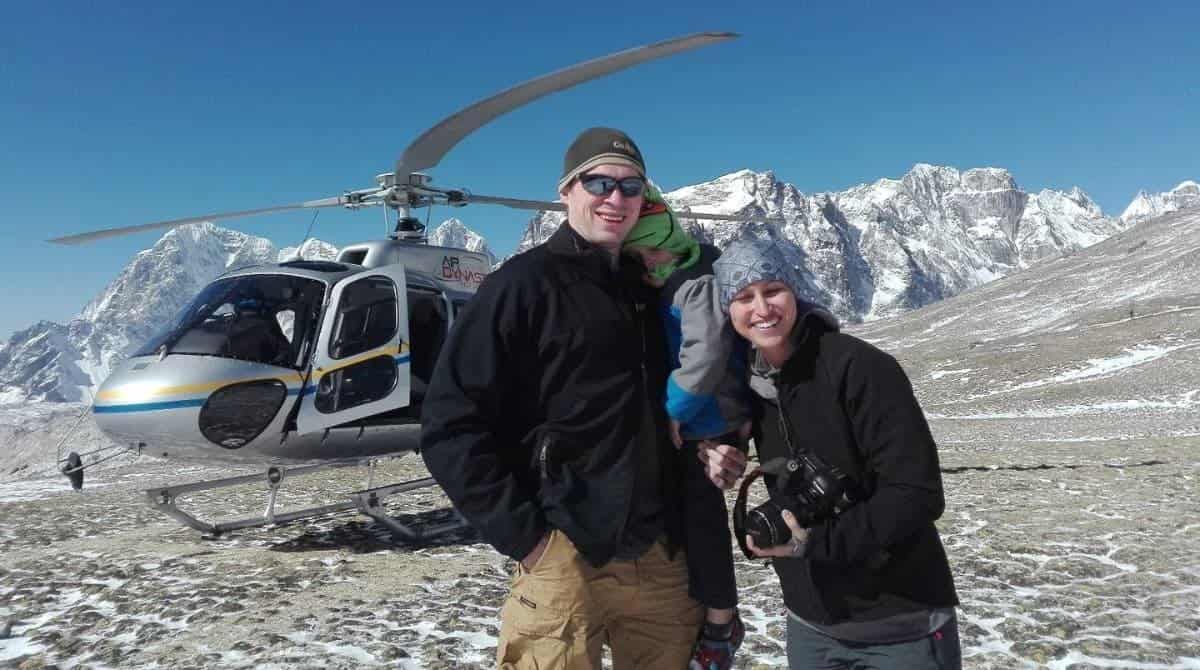
Dress in layers: a thermal base layer, fleece, insulated down jacket, warm hat, gloves, scarf and sunglasses, plus warm socks and closed shoes with good grip. Kathmandu may feel mild, but Kala Patthar is often well below freezing, with strong wind. Wear your warm clothes instead of packing them, and avoid loose hats or scarves near the rotor blades.
Bring your passport, booking details, camera or phone, a power bank, spare batteries, sunscreen, lip balm and personal medicine. Baggage is limited to one small daypack per person because every kilogram matters at altitude. Leave large luggage at your Kathmandu hotel.
No. Drone flying in the Everest region needs several government approvals and is unsafe around helicopters. Use a handheld action camera, smartphone video or a wide-angle lens instead.
Yes, but our team arranges both required permits for you: the Sagarmatha National Park entry permit and the Khumbu Pasang Lhamu Rural Municipality entry fee. You only need to send a passport copy and your details in advance and carry your original passport on the day.
It is not mandatory but strongly recommended. Choose a policy that covers helicopter flights, altitudes of at least 5,545 m, emergency evacuation and trip cancellation or delays.
Yes. A private charter can be tailored for proposals, anniversaries, honeymoons and birthdays, and the breakfast stop is a popular spot for a special moment. You can also add the flight to a Kathmandu, Pokhara and Chitwan journey such as our Nepal Highlights Tour, or pair it with the Everest Base Camp Trek. Plan a custom combination with our Trip Planner.
You may also like