Lumbini, Nepal: Complete Travel & Cultural Guide
By Nepal Trip Services On 28 Sep 2026

By Nepal Trip Services On 28 Sep 2026
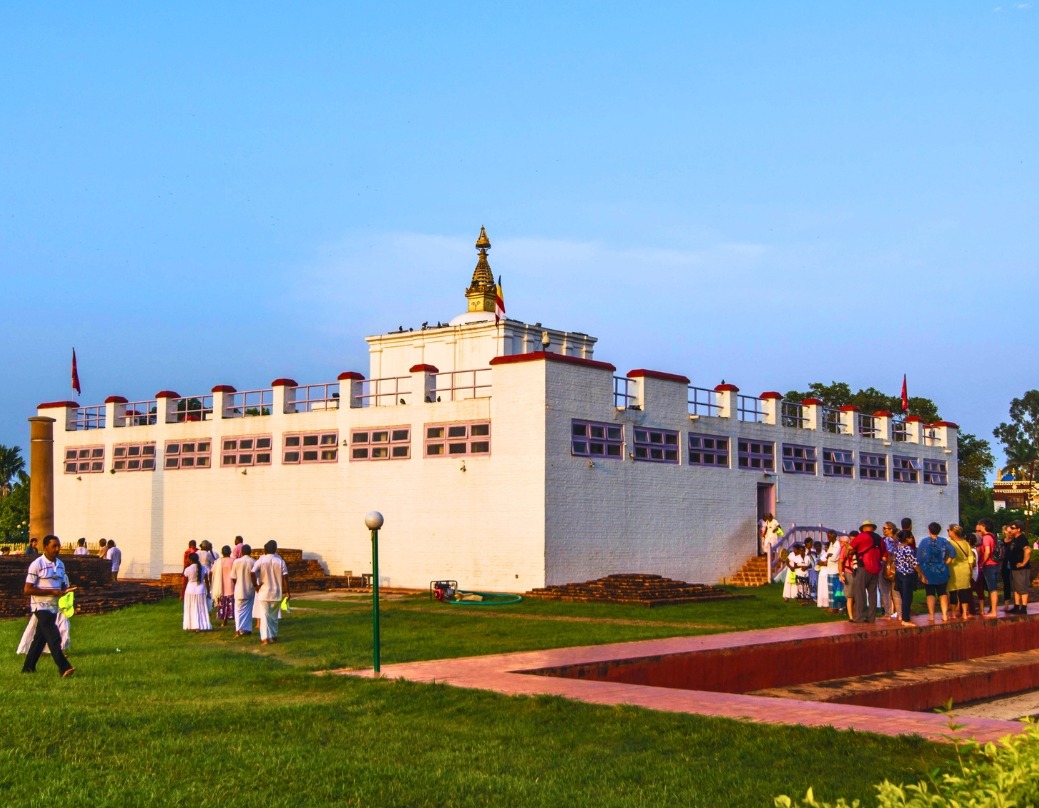
Most places of pilgrimage announce themselves with noise. Lumbini does it with quiet. Early in the morning, before the heat rises, monks in saffron and maroon walk slowly along the canal, pilgrims sit beneath a spreading tree, and a low chant carries across brick paths and lotus ponds. This flat, green corner of southern Nepal is one of the most important places in the Buddhist world, because it is where Siddhartha Gautama, later known as the Buddha, was born around 563 BCE.
Lumbini rewards more than religious travelers. It is a place to slow down, learn history, and see how Buddhist traditions from across Asia have built their own temples side by side. This guide covers the history, the main sites, costs, the best season, how to get there, and how to visit with respect, so you can plan a trip that is both meaningful and practical.
| Detail | Information |
|---|---|
| Location | Rupandehi District, southern Nepal, near the Indian border |
| Known for | Birthplace of Siddhartha Gautama (the Buddha) |
| UNESCO status | World Heritage Site since 1997 |
| Main areas | Sacred Garden, Monastery Zone, World Peace Pagoda |
| Nearest airport | Gautam Buddha International Airport, Bhairahawa |
| Best months | October–March |
| Recommended stay | 1 full day minimum, 2–3 days for a relaxed visit |
| Good for | Pilgrims, history lovers, cyclists, meditation seekers |
According to Buddhist tradition, Queen Maya Devi was traveling to her parents' home when she stopped in a grove at Lumbini and gave birth to Siddhartha. He grew up in the nearby Shakya kingdom, left his life of privilege as a young man, and after years of searching attained enlightenment, becoming the Buddha.
Centuries later, in 249 BCE, the Mauryan emperor Ashoka visited Lumbini as a pilgrim and raised a stone pillar to mark the site. The inscription on that pillar is the strongest historical evidence tying this place to the Buddha's birth. For many centuries after, Lumbini faded into the forest and was largely forgotten. It was rediscovered in the late 19th century, and in the 20th century it was developed into the pilgrimage landscape you see today. In recent decades, archaeologists have also reported evidence of early timber structures beneath the Maya Devi Temple, which adds to the site's age and importance.
The main Lumbini area is a protected development zone, roughly 4.8 km long and 1.6 km wide, and it is organized into three parts.
| Zone | What You'll Find | Time Needed |
|---|---|---|
| Sacred Garden | Maya Devi Temple, Ashoka Pillar, Puskarini pond, ancient Bodhi tree | 2–3 hours |
| Monastery Zone | More than 20 international monasteries, split into an eastern (Theravada) and western (Mahayana and Vajrayana) side, divided by a central canal | Half to full day |
| World Peace Pagoda | A large white stupa at the northern end | 45 minutes |
The monasteries in the two wings reflect Buddhist traditions from countries such as Myanmar, Thailand, China, Vietnam, Germany, and Japan, each with its own architecture.
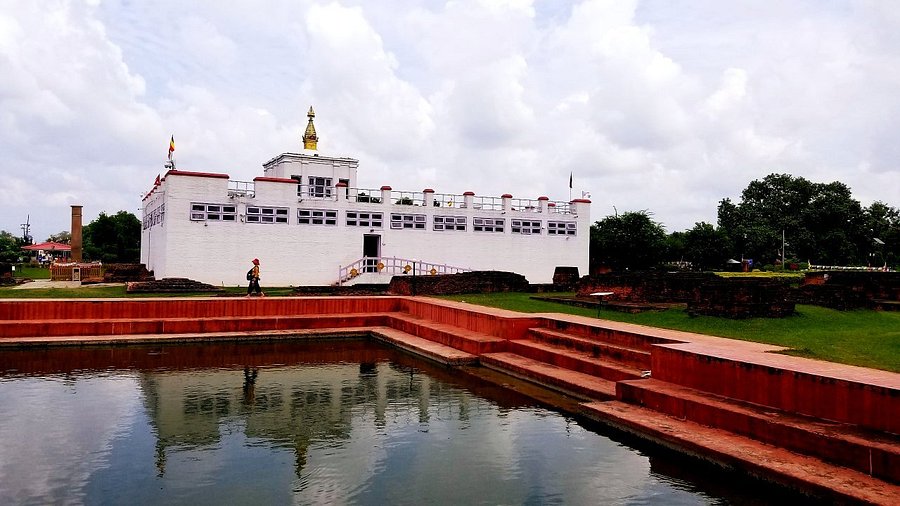
Maya Devi Temple is the spiritual heart of Lumbini. Inside, a marker stone identifies the traditional spot of the Buddha's birth, and ancient brick foundations surround it. Visitors remove their shoes before entering, keep their voices low, and should allow at least 30 to 45 minutes to move through slowly. A cloakroom is provided at the entrance gate.
Ashoka Pillar stands beside the temple and was erected by Emperor Ashoka in 249 BCE. Its inscription, in the ancient Brahmi script, records his pilgrimage and identifies Lumbini as the Buddha's birthplace. It is one of the most historically significant monuments in South Asia.
Puskarini, the sacred pond, is where tradition says Queen Maya Devi bathed before giving birth. Today it is a peaceful place for reflection, and many pilgrims sit quietly along its edge.
The Sacred Bodhi Tree and Eternal Peace Flame stand close to the main temple area. The old Bodhi tree, hung with prayer flags, draws pilgrims who come to meditate and make offerings. The Eternal Peace Flame, lit as a symbol of harmony, burns within the wider development zone.
The Monastery Zone (East) is the wing that houses Theravada monasteries, including well-known temples such as the golden Myanmar temple and the Royal Thai Monastery. Their gilded roofs and carved details make this a rewarding stretch for photography and slow walking.
The Monastery Zone (West) covers the Mahayana and Vajrayana traditions. The Chinese, Vietnamese, and German temples, along with the large Lotus Stupa, show how differently the same faith can be expressed in architecture.
World Peace Pagoda is a white stupa built by Japanese devotees at the north end of the zone. It makes a good final stop, and the walk or ride there gives you time to appreciate the wide, tree-lined grounds.
Lumbini Museum and Research Institute holds Buddhist artifacts, manuscripts, and archaeological finds, and it helps place the site in context. It suits history lovers and anyone who wants a deeper understanding of what they have just seen.
Lumbini Crane Sanctuary and the surrounding nature areas are home to many birds, including sarus cranes. The gardens and wetlands around the zone offer a gentle nature experience beside the pilgrimage sites.
Day trips to ancient Kapilvastu take you to ruins linked to the Buddha's early life. Tilaurakot, about 27 km west of Lumbini, is traditionally identified with the ancient city where Siddhartha grew up, and other archaeological sites such as Ramagrama and Gotihawa can be added if you have time.
Lumbini is a working pilgrimage site, so behavior matters. Follow these guidelines:
Many monasteries welcome quiet visitors, and some offer meditation sessions or short retreats. Ask politely at the entrance and give a small donation if you join.
The biggest celebration is Buddha Jayanti (Buddha Purnima), held on the full moon in April or May. It marks the Buddha's birth, enlightenment, and passing, and the town fills with pilgrims, prayers, processions, and offerings. It is atmospheric, but it is also crowded, so book accommodation well ahead if you plan to go.
| Season | Months | What to Expect |
|---|---|---|
| Cool, dry season | October–March | Pleasant weather, ideal for walking and cycling |
| Hot season | April–June | Very hot days, best for early-morning visits, Buddha Jayanti crowds |
| Monsoon | July–September | Hot, humid, and rainy, though green and quiet |
October to March is the most comfortable window. In the hot months, start at dawn, rest at midday, and return in the late afternoon.
Gautam Buddha International Airport in Bhairahawa is the nearest airport, and it has been an international airport since May 2022. Flights from Kathmandu take roughly 30 to 35 minutes, and the airport is about a 30-minute drive from Lumbini. Regular international service is still limited, with some flights aimed at Buddhist pilgrims, so most travelers connect through Kathmandu.
Lumbini is roughly 280 km from Kathmandu, and the bus ride takes around seven hours. Tourist buses and private cars also run from Pokhara and Chitwan, and you can cross overland from India near the border town of Sonauli.
| Option | Best For |
|---|---|
| Monastery guesthouses | Simple, quiet stays, often with basic vegetarian meals |
| Hotels near the Sacred Garden gate | Easy early-morning access |
| Bhairahawa or Butwal hotels | More choice and nightlife, but farther from the site |
| Meditation-focused lodges | Retreats and longer stays |
Rates at pilgrim lodges inside the monastery zone have been reported at roughly NPR 1,500–3,000 a night, with rooms that are simple but clean. Book early during Buddha Jayanti and the peak winter months.
Fees change, and guides do not agree on the exact price, so confirm at the ticket office.
| Item | Approximate Cost |
|---|---|
| Sacred Garden entry (foreign visitors) | Around NPR 500 in recent guides, though some sources list different figures |
| Monastery Zone | Free to walk through, with small optional donations at some temples |
| Rickshaw half-day loop | About NPR 700–1,000 |
| Pilgrim lodge | About NPR 1,500–3,000 per night |
| Tilaurakot ruins (separate ticket) | Around NPR 500 |
Combine Lumbini with Chitwan for wildlife and Pokhara for lakes and mountain views, either as part of a wider Nepal journey or as a west-to-east loop.
A popular route starts in Kathmandu for temples and old-city culture, then continues to Pokhara for lakeside relaxation and Himalayan sunrises. From there, travelers head south to Lumbini for a calm, reflective day among the monasteries, and finish in Chitwan for jungle safaris before returning to Kathmandu. The reverse order works just as well, and short domestic flights or tourist buses connect each stop. Allow at least two nights in each place, and travel between October and March for the most comfortable weather across all four destinations.
Lumbini is in the Rupandehi District of southern Nepal, close to the Indian border. It is famous as the traditional birthplace of Siddhartha Gautama, who became the Buddha, around 563 BCE. The site has been a UNESCO World Heritage Site since 1997 and is one of the most important pilgrimage destinations in the Buddhist world. Visitors come to see the Maya Devi Temple, the Ashoka Pillar, the sacred pond, and the international monasteries built around them.
One full day is enough to see the Sacred Garden, cycle through the monasteries, and reach the World Peace Pagoda. Two days is more comfortable, especially in the hot months, because it lets you rest at midday and visit early and late when the weather is kinder. If you also want to explore nearby ancient sites such as Tilaurakot, or join a meditation session, plan two to three days.
The Maya Devi Temple is the spiritual center, with a marker stone that identifies the traditional spot of the Buddha's birth. Beside it stand the Ashoka Pillar, raised in 249 BCE, the Puskarini sacred pond, and an old Bodhi tree. Beyond the Sacred Garden, the Monastery Zone holds more than 20 international temples, divided into an eastern wing for Theravada traditions and a western wing for Mahayana and Vajrayana traditions. The white World Peace Pagoda at the northern end and the Lumbini Museum round out the main sights.
October to March is the best period, with pleasant temperatures that make walking and cycling comfortable. April to June is very hot, so plan to sightsee in the early morning and late afternoon, and note that Buddha Jayanti in April or May brings large crowds. The monsoon from July to September is hot, humid, and rainy, though it is greener and much quieter. Most travelers find the cooler months easiest.
The quickest option is a flight from Kathmandu to Bhairahawa, which takes roughly 30 to 35 minutes, followed by a drive of about 30 minutes to Lumbini. The alternative is a bus or private car, which takes around seven hours over roughly 280 km of road. Both options work well, and flying suits travelers with limited time, while the road trip lets you see more of the Nepali countryside. Check airline schedules before booking, since flight times can change.
Yes. Gautam Buddha International Airport in Bhairahawa is the nearest airport, and it became an international airport in May 2022. Most passengers currently use it for domestic flights from Kathmandu and Pokhara, while international service is still limited, with some flights aimed at Buddhist pilgrims. Airport managers have said they want to expand international routes, so it is worth checking the current schedule when you plan your trip.
Recent guides commonly report an entry fee of around NPR 500 for foreign visitors to the Sacred Garden, with lower rates for SAARC nationals and free or very low prices for Nepali citizens. Sources do not fully agree, and older guides list different figures, so confirm the current amount at the ticket office near the Maya Devi Temple gate. The monasteries are generally free to enter, though some temples accept small voluntary donations. Nearby sites such as Tilaurakot usually charge a separate fee.
Dress modestly by covering your shoulders and knees, and choose light, breathable clothing, since the weather can be hot. You will need to remove your shoes at the Maya Devi Temple and at many monasteries, so wear shoes and socks that are easy to take off. Bring a hat, sunglasses, and sunscreen for the open paths, and carry a light layer for cooler winter mornings. Avoid clothing with offensive slogans or images, out of respect for the site's sacred character.
The zone is large, about 4.8 km long and 1.6 km wide, so most visitors use a bicycle, rickshaw, or e-rickshaw. Cycling is the most popular and enjoyable option because the terrain is flat and the roads are shaded in places. A half-day rickshaw loop typically costs around NPR 700 to 1,000, and bargaining politely is normal. Walking works well for the Sacred Garden but becomes tiring if you try to cover the full monastery area on foot.
Absolutely. Lumbini welcomes visitors of all backgrounds, and many travelers come for history, architecture, and the peaceful atmosphere rather than for religious reasons. The main requirement is respect. Remove your shoes where asked, speak quietly, do not climb on ancient structures, and ask before photographing monks or people at prayer. Many monasteries also welcome guests for short meditation sessions if they ask politely.
Buddha Jayanti, also called Buddha Purnima, is the main festival at Lumbini. It falls on the full moon in April or May and marks the Buddha's birth, enlightenment, and passing. The town fills with pilgrims, prayers, processions, and offerings, which makes for a moving and colorful experience. It also means crowds, higher demand for rooms, and hot weather, so book accommodation and transport well in advance if you want to visit then, or choose a quieter time if you prefer calm.
You have several choices. Simple pilgrim lodges and monastery guesthouses inside or near the zone are quiet and inexpensive, and rates have been reported at roughly NPR 1,500 to 3,000 per night with basic vegetarian meals. Hotels near the Sacred Garden gate make early-morning visits easy. If you want more variety in food and services, Bhairahawa and Butwal offer larger hotels, though they are farther from the site. Book ahead in winter and during Buddha Jayanti.
Food is simple and often vegetarian, especially in monastery guesthouses, where meals commonly include rice, lentils, vegetables, and tea. Restaurants near the entrance and in Lumbini Bazaar serve Nepali dal bhat, momos, Indian dishes, and Tibetan-style noodles. Because the sacred zone is treated as a place of restraint, check local rules on meat, alcohol, and smoking within the grounds. Carry drinking water and stick to bottled, filtered, or boiled water.
The wider region contains archaeological sites linked to the Buddha's early life and the ancient Shakya kingdom. Tilaurakot, about 27 km west of Lumbini, is traditionally identified with the city where Siddhartha grew up, and Ramagrama and Gotihawa are other sites often added to day trips. These are quieter and less developed than the main zone, so they suit travelers with a strong interest in archaeology. A local guide can help explain what you are seeing, since many of the remains are low brick foundations.
Yes, and it is a natural fit. Lumbini pairs well with Chitwan for wildlife and Pokhara for lakes and mountain views, and all three can be linked by road or short domestic flights. Many travelers add Lumbini to a Kathmandu and Pokhara route to include Nepal's spiritual heritage alongside its natural highlights. A common plan is to travel from Kathmandu to Chitwan, continue to Lumbini, and finish in Pokhara, or to reverse the order depending on your flights.
Lumbini does not compete for attention. It asks you to slow down. The best moments are simple: a sunrise walk to the Maya Devi Temple, the sound of chanting drifting from a monastery, a cup of tea in the shade after a long ride through the gardens. Whether you come as a pilgrim, a history lover, or a traveler who wants a quieter side of Nepal, Lumbini offers a chance to step away from the rush and see where one of the world's great traditions began.
What stays with you afterward is rarely a single monument. It is the feeling of the place as a whole. The wide, flat grounds give you room to think, and the mix of temples from so many countries shows how one story has traveled across borders and centuries. Standing beside the ancient Ashoka Pillar, you are reminded that people have been making this journey for more than two thousand years, and that many of them came with the same simple hope of seeing the place for themselves.
Lumbini is also easy to visit well. Give it at least a full day, and ideally two, so you are never hurrying between sites. Start early while the air is cool and the paths are quiet, rest during the hottest hours, and return in the late afternoon when the light softens over the monasteries. Travel between October and March for the most comfortable weather, dress modestly, and treat every shrine and prayer hall with the respect it deserves. A guide or a few minutes in the museum can turn what looks like a peaceful garden into a much richer story.
It also fits naturally into a longer journey. After the mountains of Pokhara or the wildlife of Chitwan, Lumbini adds a calmer, more reflective chapter, and it shows a side of Nepal that many visitors never see. You do not need to be religious to feel that. You only need to arrive with patience and an open mind.
Leave without a rushed checklist, and you will carry home something quieter and longer lasting: a sense of stillness, a deeper understanding of Nepal's spiritual heritage, and the memory of a place where the world seemed to slow down for a while.
Discover more articles that match your interests! Explore these similar blogs packed with insights, tips, and stories to keep you inspired.
Explore Kathmandu, Nepal — UNESCO sites, temples, food, festivals & travel tips. Plan your perfect Kathmandu visit wit...
Plan your Pokhara trip with this complete guide to Phewa Lake, Sarangkot sunrise, paragliding, Annapurna treks, food, co...
Plan your Chitwan trip with this complete guide to jungle safaris, rhinos, tigers, Tharu culture, costs, the best time t...
Visit Maya Devi Temple, Buddha\'s birthplace in Lumbini. Explore its history, the Marker Stone, visitor rules, opening h...
Plan your Nagarkot trip: Himalayan sunrise views, View Tower, hikes to Changu Narayan & Dhulikhel, best time, hotels, ho...
Visit Changu Narayan, Nepal\\'s oldest Hindu temple near Bhaktapur. Explore history, sculptures, entry fee, how to get t...