Everest View Trek Tips For First-time Trekkers: The Complete Guide
By Nepal Trip Services On 07 Oct 2026

By Nepal Trip Services On 07 Oct 2026
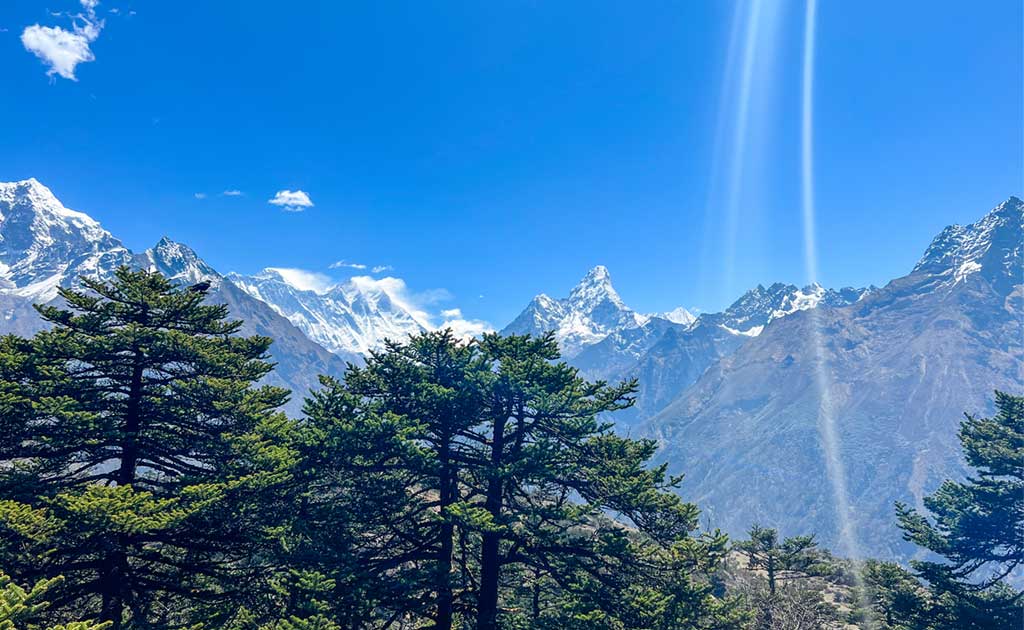
Standing on a terrace at 3,880 metres, coffee in hand, watching Everest, Lhotse and Ama Dablam glow in the morning light is one of the most memorable moments a traveller can have in Nepal. The best part? You do not need to be a mountaineer, or have two weeks to spare, to experience it.
The Everest View Trek is a short, scenic walk in the Khumbu region that gives first-time trekkers a real Himalayan experience in just one week. But even a gentle trek rewards good preparation. These Everest View Trek tips for first-time trekkers come from the trail itself: how to train, when to go, how to handle the Lukla flight, how to avoid altitude problems, and what to pack.
If you are still comparing options, browse all Everest region treks offered by Nepal Trip Services, or jump straight to the 7-day Everest View Trek itinerary.
|
Detail |
Information |
|---|---|
|
Duration |
7 days (Kathmandu to Kathmandu) |
|
Trekking days |
About 4 days |
|
Difficulty |
Easy to moderate |
|
Maximum altitude |
About 3,880 m (Everest View Hotel) |
|
Highest overnight stay |
Namche Bazaar, 3,440 m |
|
Daily walking |
Roughly 4 to 7 hours |
|
Accommodation |
Hotel in Kathmandu, teahouses on the trail |
|
Best seasons |
March to May and September to November |
|
Starting price |
From US$870 per person (varies by group size) |
The Everest View Trek is not an Everest Base Camp trek. You will not stand at the foot of the Khumbu Icefall or climb Kala Patthar. Instead, you fly to Lukla, walk through Sherpa villages and forests to Namche Bazaar, spend an acclimatization day, and hike up to the famous Everest View Hotel for a sweeping panorama before returning.
That makes it ideal if you:
If you later want the full adventure, the Classic Everest Base Camp Trek (14 days), the Gokyo Lakes Trek (12 days) and the Everest Three High Passes Trek (19 days) are natural next steps.
Timing shapes your views, comfort and flight reliability.
|
Season |
Months |
What to Expect |
|---|---|---|
|
Autumn |
September to November |
Dry, stable weather and the clearest mountain views. Busiest in October. |
|
Spring |
March to May |
Warm days, rhododendrons in bloom (March and April), some afternoon haze. |
|
Winter |
December to February |
Cold but often very clear and quiet. Pack serious warm layers. |
|
Monsoon |
June to August |
Rain, cloud, slippery trails and flight delays. Not ideal if views are the goal. |
First-timer tip: For the best balance of views and comfort, choose autumn (late September to November) or spring (March to May). Because this trek stays below about 3,900 m, winter is also a realistic option, which is rare in the Everest region. Book two to three months ahead for October and April departures.
You do not need to be an athlete, but you should be comfortable walking 4 to 6 hours a day on hilly ground. The trail is not technical, yet it climbs and descends steadily. Read more about the Everest View Trek difficulty before you decide how hard to train.
A simple plan:
Altitude sickness (Acute Mountain Sickness, or AMS) can affect anyone above roughly 2,500 m, regardless of fitness. This trek is lower than Base Camp, so the risk is far smaller, but it is not zero. Namche Bazaar sits at 3,440 m and the Everest View Hotel at about 3,880 m.
How to acclimatize well:
Know the danger signs. Breathlessness at rest, confusion, loss of balance, a persistent wet cough or a severe headache that does not ease mean you should descend immediately. Never ascend with worsening symptoms. If you are considering medication such as acetazolamide, speak to your doctor before you travel.
The flight to Lukla (about 2,827 m) is a highlight in itself, with Himalayan views from the window and a landing on one of the world's most famous mountain airstrips. It is also the most weather-sensitive part of the trip. Learn more on the Kathmandu to Lukla flight page.
Most first-timers find Day 3, Phakding to Namche Bazaar, the hardest. You gain about 830 m, cross the high Hillary Suspension Bridge, enter Sagarmatha National Park, then face a long, steep climb into Namche Bazaar.
The other demanding day is the return from Namche to Lukla, which is long (around 7 to 8 hours) but mostly downhill. Trekking poles will protect your knees.
Mornings and nights are cold, afternoons can be warm, and weather changes quickly. Layering is the secret.
Essentials:
Packing tip: Most bulky gear can be rented or bought in Thamel, Kathmandu, so do not overpack. Keep your passport, medicines, valuables and camera in your daypack, not the duffel.
Permits. The trek takes place inside Sagarmatha National Park and the Khumbu Pasang Lhamu Rural Municipality, so you need two permits: the Sagarmatha National Park entry permit (about NPR 3,000) and the Khumbu Pasang Lhamu Rural Municipality permit (about NPR 3,000). No TIMS card is needed for the Everest region. When you book with Nepal Trip Services, both permits are arranged and included.
Visa. Tourist visas are available on arrival in Kathmandu. Fees listed on the trip page are US$30 for 15 days, US$50 for 30 days and US$125 for 90 days. Always check current rules before you travel, as fees and requirements can change.
Insurance. Travel insurance is essential. Choose a policy that covers trekking up to at least 4,000 m, medical treatment, trip delays and emergency helicopter evacuation. Declare any pre-existing conditions honestly, and keep digital and paper copies of your policy and the insurer's 24-hour emergency number.
Some first-timers wonder whether a guide is necessary on a short trek. A licensed guide monitors you for altitude symptoms, sets a sustainable pace, handles permits and lodges, explains Sherpa culture and arranges evacuation if needed. A porter carries your duffel (typically around 10 to 12 kg per trekker with a shared porter), so you walk with only a light daypack.
The Nepal Trip Services package includes a government-licensed English-speaking guide, a porter for every two trekkers, a pulse oximeter and a first-aid kit. Browse recent traveller reviews to see what past trekkers say.
Build a little time into each day to enjoy the places you walk through:
The Khumbu is a living Sherpa homeland and a fragile mountain environment.
|
Day |
Plan |
Altitude |
|---|---|---|
|
1 |
Arrive in Kathmandu, trek briefing, gear check |
1,400 m |
|
2 |
Fly to Lukla, trek to Phakding |
2,610 m |
|
3 |
Phakding to Namche Bazaar |
3,440 m |
|
4 |
Acclimatization day: hike to Everest View Hotel and Khumjung |
3,440 m (sleep) |
|
5 |
Namche Bazaar to Lukla |
2,827 m |
|
6 |
Fly Lukla to Kathmandu |
1,400 m |
|
7 |
Final departure |
1,400 m |
Not the right fit? You can always plan a custom trip and adjust the length or add extra days.
The Nepal Trip Services Everest View Trek starts from US$870 per person, with group discounts depending on the number of travellers. The package includes domestic flights, airport transfers, two nights in a 3-star Kathmandu hotel, teahouse accommodation, meals on the trek, a licensed guide, porter service, both permits and a first-aid kit.
Not included: international flights, Nepal visa, travel insurance, lunches and dinners in Kathmandu (apart from welcome and farewell dinners), drinks, hot showers, charging, Wi-Fi and tips. Prices and inclusions can change, so check the Everest View Trek page for the latest details and a written quote.
|
Feature |
Everest View Trek |
Everest Base Camp Trek |
|---|---|---|
|
Duration |
7 days |
14 days |
|
Highest point |
About 3,880 m |
5,364 m (Kala Patthar about 5,545 m) |
|
Difficulty |
Easy to moderate |
Moderate to challenging |
|
Altitude sickness risk |
Lower |
Higher |
|
Best for |
Beginners, families, short holidays |
Adventure seekers with more time |
Choose the Everest View Trek if time, budget or altitude are concerns. Choose the Classic Everest Base Camp Trek if you want to stand at the foot of the world's highest mountain. Explore the full range on the Everest region treks page or see the Top 10 Treks in Nepal.
Yes. It is one of the best treks in Nepal for beginners. Walking days are short, the highest point is about 3,880 m, teahouses provide hot meals and beds, and a built-in acclimatization day helps your body adjust. No previous trekking or technical experience is needed, only reasonable fitness and a positive attitude.
The Nepal Trip Services itinerary is 7 days from Kathmandu back to Kathmandu, with about 4 days of walking. Other itineraries run 7 to 9 days, depending on whether they add Khumjung overnights or extra villages such as Tengboche. Always add a buffer day for possible Lukla flight delays.
It is graded easy to moderate. Daily walks last about 4 to 7 hours on well-marked trails with stone steps and suspension bridges. The steep climb to Namche Bazaar and the long descent back to Lukla are the most demanding sections. Training for 4 to 8 weeks makes the trek much more comfortable.
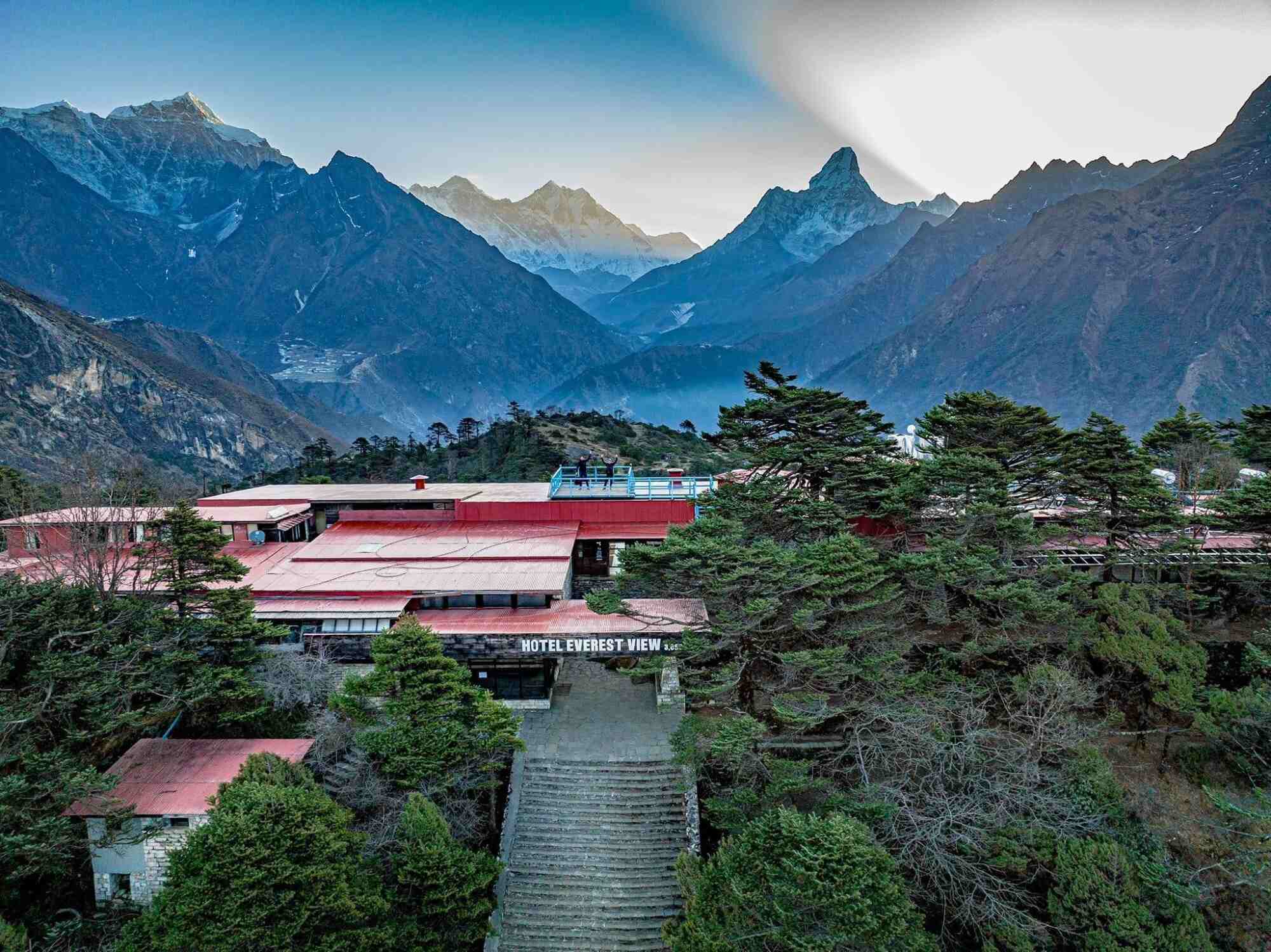
Yes, on clear days. The best views come from the Everest View Hotel terrace above Namche Bazaar, where Everest, Lhotse, Ama Dablam, Thamserku and Kongde Ri appear in one panorama. Mornings usually offer the clearest skies, so start your viewpoint hike early.
The highest point is the Everest View Hotel at about 3,880 m (12,730 ft). Your highest overnight stay is in Namche Bazaar at 3,440 m (11,286 ft). That is far lower than Everest Base Camp at 5,364 m.
The risk is lower than on longer Everest treks but it is not zero, since symptoms can appear above 2,500 m. Walk slowly, drink 3 to 4 litres of water daily, avoid alcohol, use your acclimatization day, and report headaches, nausea or dizziness to your guide at once. Severe symptoms require immediate descent.
Autumn (September to November) and spring (March to May) are best, with clear skies and stable weather. October offers the best visibility but is busiest. Winter (December to February) is cold but clear and quiet, while the monsoon (June to August) brings clouds, rain and flight delays.
Yes. Because the trek stays below about 3,900 m, winter is a viable option with crisp, clear views and few trekkers. Expect cold mornings and nights, so pack a warm sleeping bag, a down jacket and thermal layers. Microspikes can help if snow or ice is on the trail.
You need the Sagarmatha National Park entry permit (about NPR 3,000) and the Khumbu Pasang Lhamu Rural Municipality permit (about NPR 3,000). No TIMS card is required. Nepal Trip Services arranges both permits for you. Fees are set by the authorities and may change, so confirm the current rates before travelling.
The Nepal Trip Services package starts from US$870 per person, with discounts for larger groups. It includes flights to and from Lukla, hotels and teahouses, meals on the trek, a licensed guide, porter service and permits. International flights, visa, insurance, drinks, charging, Wi-Fi and tips are extra. Check the trip page for current prices.
A licensed guide is strongly recommended, especially for first-timers. Guides handle permits and logistics, monitor altitude symptoms, set a safe pace and arrange emergency support. Rules for trekking in Nepal are also tightening, so confirm the latest requirements with your trekking company before you travel.
Start 4 to 8 weeks before departure. Walk or hike three to four times a week, add stair climbing and hill walks with a 4 to 6 kg daypack, and practise long downhill sections. Break in your boots on every training walk. Cycling and swimming build useful stamina as well.
Pack warm layers, a down jacket, a waterproof shell, broken-in waterproof boots, wool socks, a warm hat, gloves, sunglasses, sunscreen, a daypack, a soft duffel, trekking poles, a headlamp, a reusable water bottle with purification tablets, and a power bank. Keep total baggage under 15 kg for the Lukla flight.
Lukla flights depend on weather and visibility, so delays are common. Nepal Trip Services will rebook the next available flight and can arrange a helicopter option at extra cost. Add one or two buffer days to your plans, and choose travel insurance that covers delays and emergency evacuation.
Often yes. Active children and fit seniors regularly complete the trek with a slower pace, rest breaks and porter support. A helicopter return from Lukla or Syangboche can also be arranged for added comfort. Check with your doctor first, especially if you have heart, lung or blood pressure concerns.
The Everest View Trek proves you do not need two weeks or elite fitness to see the roof of the world. With a sensible training plan, the right season, a flexible schedule and a respect for altitude, even first-time trekkers can enjoy Sherpa villages, Himalayan sunrises and the unforgettable Everest panorama from Namche and the Everest View Hotel.
Ready to plan your adventure? View the full Everest View Trek itinerary and prices, explore more Everest region treks, or contact Nepal Trip Services to speak with a local trekking expert. You can also read more travel guides on the Nepal Trip Services blog.
Discover more articles that match your interests! Explore these similar blogs packed with insights, tips, and stories to keep you inspired.
Explore the Hillary Suspension Bridge on the Everest trail: location, height, history, best time, safety tips, and how t...
How hard is the Everest View Trek? Daily walking times, altitude, toughest days, fitness needs, training plan, and tips ...
Everest View Trek in 7 days: fly to Lukla, explore Namche, and see Everest from the Everest View Hotel. Itinerary, cost,...
Everest View Trek from US$870: 7-day itinerary, what the price includes, difficulty, permits and best season to go. Plan...
Follow the 7-day Everest View Trek itinerary day by day: Lukla flight, Namche, Everest View Hotel, Khumjung, altitudes, ...
Everest View Trek cost from US$870: what\'s included, group prices, Lukla flights, permits, extras, tips and budget savi...