Everest Base Camp Vs Annapurna Base Camp Trek: Which Is Better?
By Nepal Trip Services On 09 Oct 2026

By Nepal Trip Services On 09 Oct 2026
Both are world-class Himalayan treks, and neither is simply "better". The right choice depends on your time, fitness and what you want to experience.
|
Factor |
Everest Base Camp (EBC) |
Annapurna Base Camp (ABC) |
|---|---|---|
|
Region |
Khumbu, Sagarmatha National Park |
Annapurna Conservation Area |
|
Duration (Kathmandu to Kathmandu) |
14 days |
11 days |
|
Trekking days |
11 |
7 |
|
Highest point |
Kala Patthar, 5,550 m |
Annapurna Base Camp, 4,130 m |
|
Base camp altitude |
5,364 m |
4,130 m |
|
Highest overnight |
Gorak Shep, 5,160 m |
Annapurna Base Camp, 4,130 m |
|
Nights above 4,000 m |
5 |
1 |
|
Trekking distance |
About 130 km |
About 75 km |
|
Daily walking |
5–7 hours |
4–7 hours |
|
Difficulty |
Moderate to challenging |
Moderate |
|
Access |
Mountain flight to Lukla |
Road to Pokhara and the trailhead |
|
Signature view |
Sunrise over Everest from Kala Patthar |
360° amphitheatre of Annapurna I and Machhapuchhre |
|
Culture |
Sherpa villages and Tibetan Buddhist monasteries |
Gurung and Magar villages |
|
Bonus |
Everest Base Camp and the Khumbu Icefall |
Natural hot springs at Jhinu Danda |
|
Permits |
Sagarmatha National Park + Khumbu municipality |
ACAP + TIMS card |
|
Licensed guide |
Not required locally, but strongly recommended |
Required |
|
Best seasons |
March–May & September–November |
March–May & September–November |
Figures are based on Nepal Trip Services' standard itineraries and are approximate.
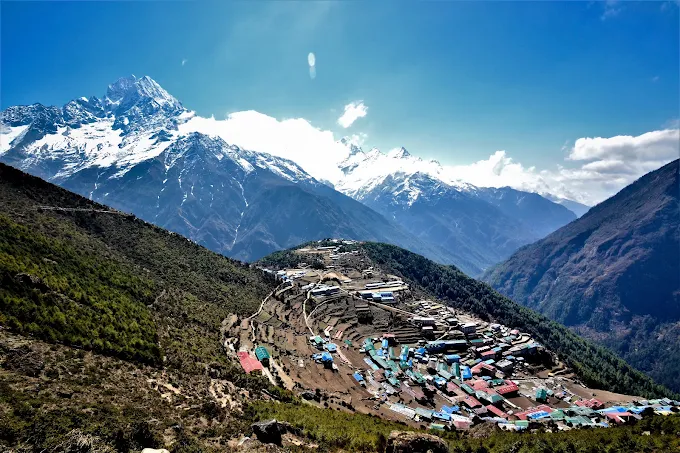
The Everest Base Camp Trek begins with a thrilling flight to Lukla and follows the Dudh Koshi Valley through Sagarmatha National Park, a UNESCO World Heritage Site. You'll stay in lively Namche Bazaar, visit Tengboche Monastery and acclimatize in Dingboche before climbing beside the Khumbu Glacier to Everest Base Camp (5,364 m). The highlight is sunrise over Everest from Kala Patthar (5,550 m).
Best known for: standing at the foot of Everest, the Khumbu Icefall, Sherpa culture and the iconic Lukla flight.
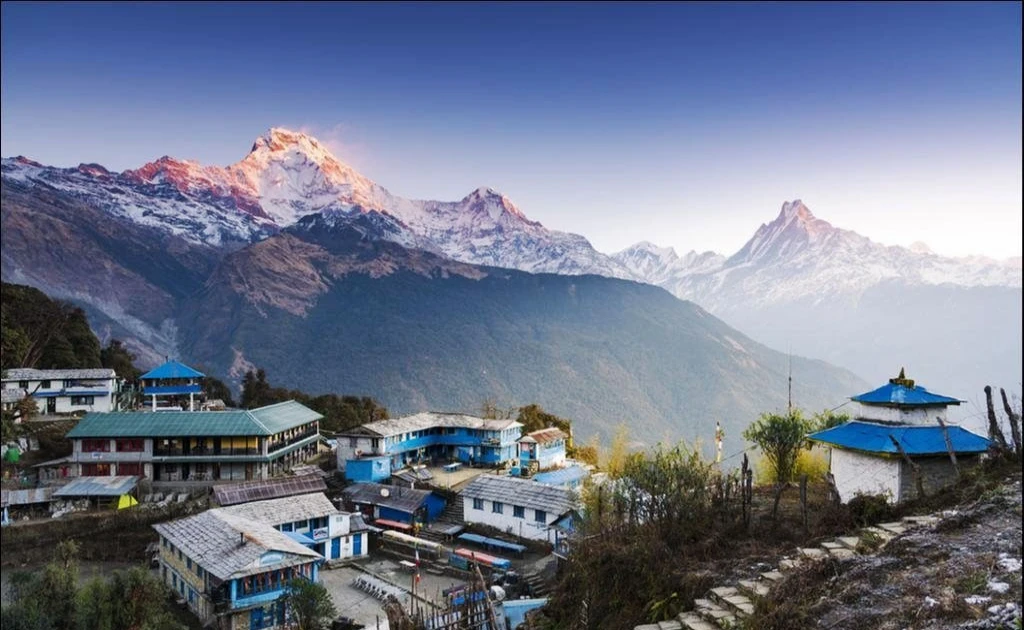
The Annapurna Base Camp Trek starts in lakeside Pokhara and winds through terraced hillsides, Gurung villages and rhododendron and bamboo forest along the Modi Khola river. Passing Ghandruk, Chhomrong and Machhapuchhre Base Camp, you enter the Annapurna Sanctuary, a glacial basin ringed by Annapurna I (8,091 m), Machhapuchhre (Fishtail), Hiunchuli and Annapurna South. On the way down, you can soak in the natural hot springs at Jhinu Danda.
Best known for: sleeping inside a ring of giant peaks, varied landscapes, Gurung culture and a shorter, more accessible itinerary.
Altitude is the biggest difference between the two treks.
|
|
Everest Base Camp |
Annapurna Base Camp |
|---|---|---|
|
Highest sleeping point |
Gorak Shep, 5,160 m |
Annapurna Base Camp, 4,130 m |
|
Highest point reached |
Kala Patthar, 5,550 m |
Annapurna Base Camp, 4,130 m |
|
Acclimatization days |
2 (Namche Bazaar and Dingboche) |
None needed on a standard itinerary |
|
Altitude sickness risk |
Moderate to high |
Low to moderate |
On the Everest trail, you spend several nights above 4,000 m and walk above 5,000 m, so two acclimatization days are built in. The Annapurna route stays much lower, reaching 4,000 m only on the day you arrive at base camp and sleeping there just one night. Altitude sickness is still possible on both, but the risk is noticeably lower on the Annapurna side.
Winner for altitude-sensitive trekkers: Annapurna Base Camp.
|
Factor |
Everest Base Camp |
Annapurna Base Camp |
|---|---|---|
|
Overall grade |
Moderate to challenging |
Moderate |
|
Main challenge |
Thin air above 4,500 m and long days at altitude |
Thousands of stone steps, especially around Chhomrong |
|
Terrain |
Stone trails, steep climbs, rocky glacial moraine |
Stone staircases, forest trails, steep ups and downs |
|
Technical skills |
None |
None |
|
Recommended training |
8–12 weeks |
4–8 weeks |
EBC is harder mainly because of its altitude and length. ABC is lower and shorter, but don't underestimate it: its endless stone staircases and steep river crossings make for tough, knee-testing days. For a closer look, see our Annapurna Base Camp Trek difficulty guide.
Winner for beginners: Annapurna Base Camp, though fit beginners complete both every season.
|
|
Everest Base Camp |
Annapurna Base Camp |
|---|---|---|
|
Total trip |
14 days |
11 days |
|
Trekking days |
11 |
7 |
|
Trekking distance |
About 130 km |
About 75 km |
|
Buffer days needed |
1–2, for Lukla flight delays |
Usually none |
If you have less than two weeks, ABC fits far more easily into your holiday. EBC needs around two weeks plus a spare day or two, because weather often delays Lukla flights.
Winner for short holidays: Annapurna Base Camp.
|
|
Everest Base Camp |
Annapurna Base Camp |
|---|---|---|
|
Main peaks |
Everest (8,849 m), Lhotse, Nuptse, Ama Dablam, Pumori, Makalu |
Annapurna I (8,091 m), Machhapuchhre, Hiunchuli, Annapurna South, Gangapurna |
|
Landscape |
High alpine valleys, glaciers and moraine |
Terraced farmland, subtropical and rhododendron forest, then a glacial basin |
|
Signature moment |
Sunrise over Everest from Kala Patthar |
Sunrise lighting up the peaks all around you at base camp |
|
Glacier experience |
Khumbu Glacier and Icefall |
Annapurna South Glacier from the sanctuary |
|
Variety of scenery |
High mountain scenery from Day 3 onwards |
Changes dramatically from jungle to snow in a few days |
EBC delivers raw, high-altitude drama and the thrill of seeing the world's highest summit up close. One surprise for many trekkers: Everest's summit isn't visible from base camp itself, only from Kala Patthar and viewpoints along the way. ABC offers something different: a complete 360° amphitheatre of peaks right outside your teahouse door, plus far more varied scenery on the way up.
Winner for Everest views: Everest Base Camp. Winner for variety and close-up surroundings: Annapurna Base Camp.
|
|
Everest Base Camp |
Annapurna Base Camp |
|---|---|---|
|
Main communities |
Sherpa |
Gurung and Magar |
|
Religion |
Tibetan Buddhism |
Hindu and Buddhist traditions |
|
Cultural highlights |
Tengboche and Pangboche monasteries, mani walls, prayer flags, mountaineering history |
Ghandruk's stone villages, Gurkha heritage, terraced farms |
|
Famous village |
Namche Bazaar |
Ghandruk |
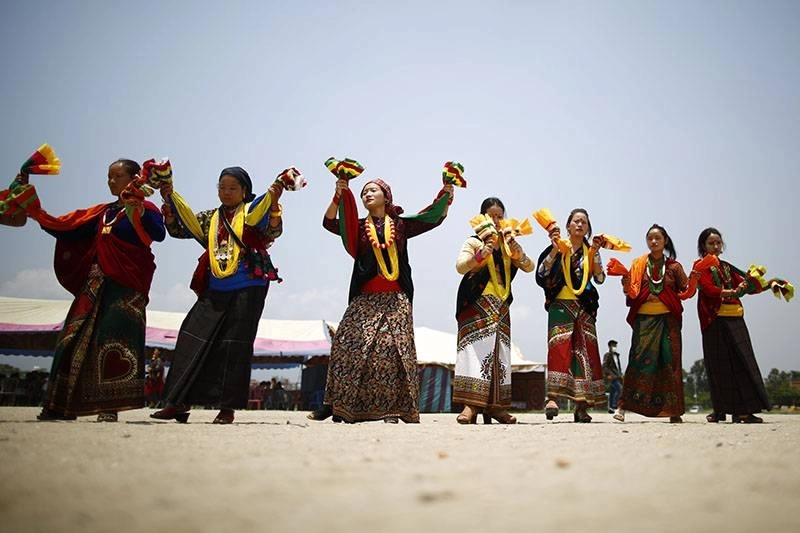
On the Everest trail, you'll walk among monasteries, prayer wheels and the homes of legendary Sherpa climbers. On the Annapurna side, Gurung and Magar villages, many with strong traditions of Gurkha service, offer a warm look at Himalayan farming life. Both are rich cultural experiences; the choice depends on which culture interests you most.
|
|
Everest Base Camp |
Annapurna Base Camp |
|---|---|---|
|
Lower villages |
Very good in Lukla, Phakding and Namche (bakeries, cafés, some attached bathrooms) |
Good in Ghandruk, Chhomrong and Jhinu Danda |
|
Higher stops |
Basic and cold at Lobuche and Gorak Shep |
Simple but less extreme at Deurali, MBC and ABC |
|
Prices |
Higher, rising steeply with altitude |
Generally lower |
|
Food |
Dal bhat, momos, noodles; vegetarian recommended above Namche |
Dal bhat, pasta, momos; meat isn't served in the upper sanctuary out of respect for the sacred mountains |
Winner for comfort and value: Annapurna Base Camp. Winner for the best single village stop: Namche Bazaar on the Everest trail.
|
|
Everest Base Camp |
Annapurna Base Camp |
|---|---|---|
|
Package price (per person) |
From around US$1,200 (group) to US$1,390 (solo) |
From US$970 (group) to US$1,170 (solo) |
|
Biggest cost driver |
Return flights to Lukla |
Road transport to Pokhara and the trailhead |
|
Permits |
Sagarmatha National Park (NPR 3,390 incl. VAT) + Khumbu municipality (NPR 3,000) |
Annapurna Conservation Area Permit (NPR 3,000) + TIMS card (NPR 2,000) |
|
Daily extras on the trail |
About US$20–30 |
About US$15–25 |
Packages with Nepal Trip Services include permits, transport, a licensed guide, porters, teahouses and meals on the trek. Prices vary by group size and season; check each trip page for current rates.
Winner for budget: Annapurna Base Camp, which typically costs a few hundred dollars less, mainly because it doesn't need Lukla flights.
|
|
Everest Base Camp |
Annapurna Base Camp |
|---|---|---|
|
Start |
Lukla, by 25–35 minute flight from Kathmandu (or from Ramechhap in peak season) |
Pokhara, by 6–7 hour drive or 25-minute flight from Kathmandu |
|
To the trailhead |
Trek starts at the airport |
Short drive from Pokhara to Ghandruk |
|
Reliability |
Weather often delays Lukla flights |
Roads can be affected by monsoon landslides |
|
Thrill factor |
One of the world's most famous mountain airstrips |
A scenic road through Nepal's middle hills |
Read more about flights in our Kathmandu to Lukla Flight Guide.
Both treks are among Nepal's most popular. The Everest trail is busiest in October and April, especially around Namche Bazaar and base camp. The Annapurna trail also gets busy in peak months, with many domestic trekkers joining international visitors at weekends and during festivals. Starting early each day and choosing late November or early April helps you avoid the biggest crowds on either route.
|
Season |
Everest Base Camp |
Annapurna Base Camp |
|---|---|---|
|
Autumn (Sep–Nov) |
Best: clear skies and stable weather |
Best: clear skies and lush, green valleys |
|
Spring (Mar–May) |
Excellent: warmer, Everest climbing season |
Excellent: rhododendrons in full bloom |
|
Winter (Dec–Feb) |
Very cold; some high lodges close |
Cold, with avalanche risk between Deurali and MBC after heavy snow |
|
Monsoon (Jun–Aug) |
Cloudy, with frequent Lukla flight delays |
Rain, leeches and occasional road landslides |
For both treks, mid-October to November and March to May offer the best conditions.
👉 Explore the Everest Base Camp Trek
👉 Explore the Annapurna Base Camp Trek
|
Your priority |
Best choice |
|---|---|
|
Seeing Mount Everest |
Everest Base Camp |
|
Shortest trip |
Annapurna Base Camp |
|
Lowest altitude risk |
Annapurna Base Camp |
|
Biggest bragging rights |
Everest Base Camp |
|
Most varied landscapes |
Annapurna Base Camp |
|
Sherpa culture |
Everest Base Camp |
|
Lowest cost |
Annapurna Base Camp |
|
Most dramatic close-up surroundings |
Annapurna Base Camp |
|
Highest altitude challenge |
Everest Base Camp |
Absolutely. Many trekkers start with the Annapurna Base Camp Trek to build confidence and altitude experience, then return for Everest Base Camp on a later trip. With around four weeks, fit trekkers can even do both in one visit, starting with ABC and finishing with EBC, when they're already fit and partly acclimatized. Our team can build a combined itinerary through our trip planner.
Everest Base Camp is harder overall. It's longer (14 vs 11 days), reaches a much higher altitude (5,550 m vs 4,130 m) and spends more nights above 4,000 m. Annapurna Base Camp has its own challenge, though: thousands of steep stone steps, especially around Chhomrong.
Annapurna Base Camp is usually better for first-time trekkers, thanks to its lower altitude, shorter duration and road access. That said, fit beginners complete the Everest Base Camp Trek every season with good training and a well-paced itinerary.
It depends on what you want. EBC offers close-up views of Everest, Lhotse, Nuptse and Ama Dablam, with the iconic sunrise from Kala Patthar. ABC surrounds you with a 360° amphitheatre of peaks, including Annapurna I and Machhapuchhre, right from base camp.
No. Annapurna Base Camp is in a different region, roughly 300 km west of Everest. To see Everest up close, you need to trek in the Khumbu region.
Annapurna Base Camp is usually cheaper, mainly because it doesn't require flights to Lukla. With Nepal Trip Services, the ABC trek starts from around US$970 per person, while the EBC trek starts from around US$1,200, depending on group size.
Our Everest Base Camp Trek takes 14 days from Kathmandu to Kathmandu, plus 1–2 recommended buffer days. Our Annapurna Base Camp Trek takes 11 days, with no flight buffer usually needed.
Everest Base Camp, because you sleep as high as 5,160 m and climb to 5,550 m. On the Annapurna Base Camp Trek, you sleep above 4,000 m for only one night. Both treks require sensible pacing and attention to symptoms.
A licensed guide is required for the Annapurna Base Camp Trek. In the Everest region, local rules have allowed independent trekking, but a guide is strongly recommended for safety, navigation and altitude monitoring. Both of our packages include a licensed guide.
Both are busy in peak season. The Everest trail is busiest in October and April near Namche and base camp, while the Annapurna trail sees many domestic and international trekkers, especially at weekends. Late November and early April are quieter on both.
For EBC, you need the Sagarmatha National Park permit and the Khumbu Pasang Lhamu Rural Municipality permit. For ABC, you need the Annapurna Conservation Area Permit (ACAP) and a TIMS card. All permits are included in our packages.
Lukla's short, sloping runway is famously dramatic, but flights are operated by experienced pilots and only fly in clear, calm weather. The main issue is delays rather than safety, which is why we recommend 1–2 buffer days for the Everest trek.
The Annapurna route generally offers more comfortable, better-value teahouses throughout. The Everest route has excellent lodges in Namche and Lukla, but the highest stops, such as Lobuche and Gorak Shep, are very basic and cold.
Autumn (September–November) and spring (March–May) are best for both. Autumn brings the clearest views, while spring offers warmer days and rhododendron blooms, which are especially beautiful on the Annapurna trail.
Yes, with about four weeks in Nepal. Starting with ABC, then flying to Lukla for EBC, helps you build fitness and partial acclimatization before the higher trek. We can create a combined itinerary for you.
If you're new to high-altitude trekking, start with Annapurna Base Camp to build confidence and experience. If seeing Everest is your lifelong dream and you're fit and well prepared, go straight for the Everest Base Camp Trek.
There's no wrong answer. The Everest Base Camp Trek is the ultimate Himalayan bucket-list adventure, taking you to the foot of the world's highest mountain through the heart of Sherpa country. The Annapurna Base Camp Trek is shorter, gentler and more varied, ending in one of the most spectacular mountain amphitheatres on Earth. Choose Everest for the legend and the challenge; choose Annapurna for time, variety and accessibility. Better still, do both.
With 16 years of Himalayan experience, Nepal Trip Services runs both treks with the same care and attention to safety:
Ready to decide? Explore the full itinerary, inclusions and departure dates for each trek:
Still not sure? Browse our Everest Region Treks and Annapurna Region Treks, or plan a custom trip and our team will recommend the best fit.
Discover more articles that match your interests! Explore these similar blogs packed with insights, tips, and stories to keep you inspired.
Plan your Ulleri visit: climb the famous stone staircase, meet Magar culture & enjoy Annapurna views on the way to Ghore...
Suggested Meta Description: Explore Ghorepani (2,874 m), gateway to Poon Hill sunrise. Discover its history, teahouses, ...
Plan your Poon Hill trek: sunrise at 3,210 m over Dhaulagiri & Annapurna, routes, itineraries, permits, best time, diffi...
Explore Tadapani (2,630 m), a forest village with Machhapuchhre & Annapurna South sunrise views. Routes, teahouses, best...
Explore Tikhedhunga (1,540 m), riverside gateway to Ulleri\'s stone steps & Poon Hill. Routes from Nayapul, teahouses, b...
Discover the Magar people of Nepal: history, languages, festivals, Gurkha heritage, food, dress & where to experience Ma...