Is The Everest Base Camp Trek Worth It? Honest Pros And Cons
By Nepal Trip Services On 09 Oct 2026

By Nepal Trip Services On 09 Oct 2026
Yes, for most trekkers, the Everest Base Camp Trek is absolutely worth it. Few journeys on Earth combine this much scenery, culture and sense of achievement in two weeks of walking, with no climbing skills required.
But it isn't for everyone. The trek means two weeks at high altitude, basic and cold teahouses near the top, possible flight delays and busy trails in peak season. Go in knowing both sides, and you're far more likely to love every step.
In short, it's worth it if you:
It might not be the right fit if you:
|
Detail |
Information |
|---|---|
|
Duration |
14 days, Kathmandu to Kathmandu (11 trekking days) |
|
Start / end |
Lukla (2,860 m), by flight from Kathmandu or Ramechhap |
|
Everest Base Camp |
5,364 m |
|
Highest point |
Kala Patthar, 5,550 m |
|
Total distance |
About 130 km round trip from Lukla |
|
Daily walking |
5–7 hours |
|
Difficulty |
Moderate to challenging; no technical skills needed |
|
Accommodation |
Teahouses on the trail, hotel in Kathmandu |
|
Best seasons |
March–May and September–November |
See the full day-by-day itinerary on our Everest Base Camp Trek page.
Reaching Everest Base Camp (5,364 m), beside the towering seracs of the Khumbu Icefall, is a moment few people ever experience. It's one of the most iconic trekking goals on the planet, and the feeling of arriving there after days of effort is hard to describe.
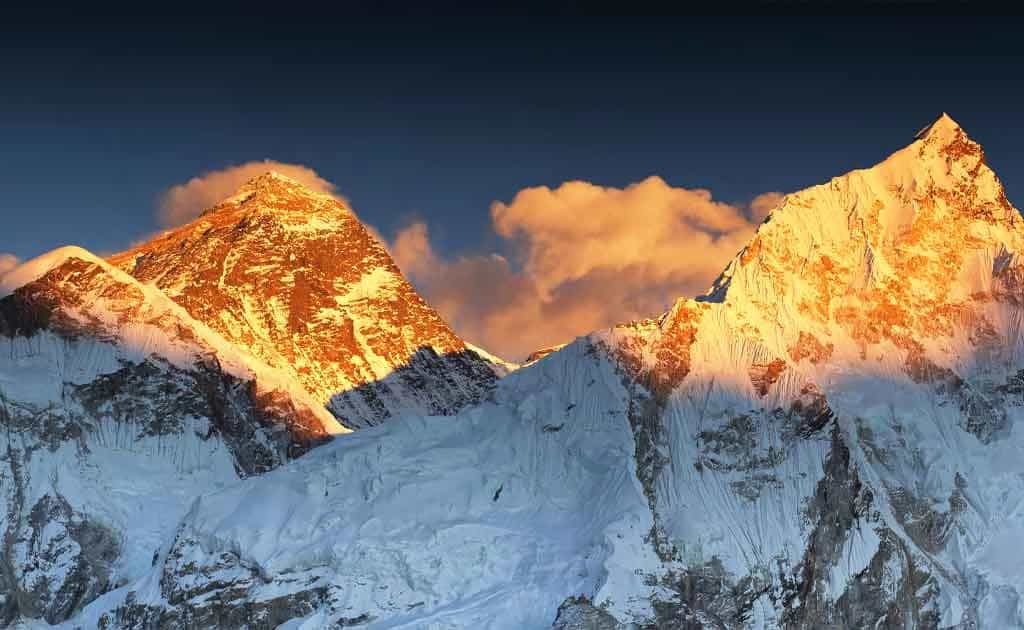
The best view of Everest isn't from base camp; it's from Kala Patthar (5,550 m), the highest point of the trek. Watching the first light touch Everest's summit, with Nuptse, Lhotse and Pumori glowing around it, is the moment most trekkers remember for the rest of their lives.
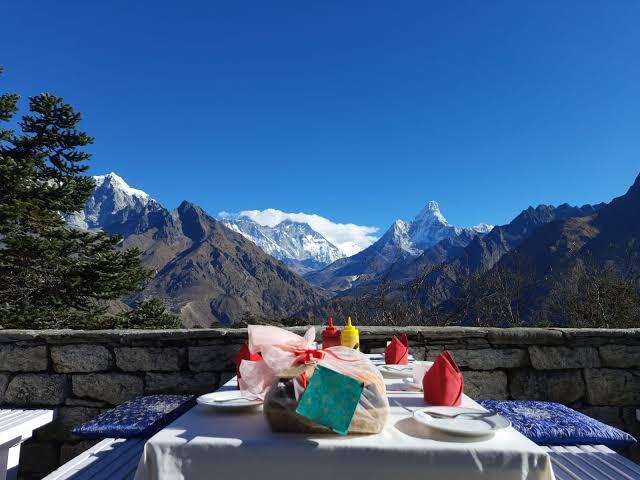
From the climb to Namche onwards, the views rarely let up. You'll see three of the world's five highest mountains (Everest, Lhotse and Makalu), along with Ama Dablam, often called one of the most beautiful peaks on Earth.
Despite the altitude, the trek involves no ropes, ice axes or technical skills. It's a long walk on well-used trails, which puts this world-famous destination within reach of fit beginners.
The trail passes through the homeland of the Sherpa people, with prayer flags, carved mani stones and spinning prayer wheels at every turn. Visiting Tengboche Monastery, the largest in the Khumbu, and sharing evenings with Sherpa hosts adds a depth that pure wilderness treks can't match.
Namche Bazaar (3,440 m), the Sherpa capital, is a horseshoe of lodges, bakeries and gear shops clinging to a mountainside. Few places in the world let you enjoy fresh apple pie and coffee with a Himalayan view.
The trek begins with a short flight to Lukla's Tenzing-Hillary Airport, weaving between mountains before landing on a short, sloping runway. For many trekkers, it's an adventure before the adventure even starts.
The route lies inside Sagarmatha National Park, a UNESCO World Heritage Site since 1979. Rhododendron forests, glaciers, wildlife such as Himalayan tahr and the colourful Danphe pheasant, and the Khumbu Glacier make it a journey through some of the planet's most extraordinary terrain.
Teahouses offer warm dining rooms, hot meals and a bed every night, so there's no need to camp. Helicopter rescue, a high-altitude aid post at Pheriche and experienced guides add a safety net that few remote mountain regions can offer.
Walking for days, adapting to thin air and finally standing beneath Everest builds confidence that lasts long after the trek. Many trekkers describe it as life-changing, and the friendships made on the trail often last for years.
No trek is perfect. These are the challenges trekkers mention most, with practical ways to deal with each one.
You'll sleep as high as Gorak Shep (5,160 m), where the air holds only about half the oxygen of sea level. Headaches, poor sleep and breathlessness are common, and altitude sickness is the main reason trekkers turn back.
How to handle it: choose an itinerary with rest days in Namche and Dingboche, walk slowly, drink 3–4 litres of water a day and tell your guide about any symptoms straight away.
With 14 days from Kathmandu to Kathmandu, plus a buffer day or two for flights, the trek is a big time commitment, especially from abroad.
How to handle it: if you're short on time, consider a shorter Everest trek, or a helicopter return from Gorak Shep, which saves two or three days of walking back.
Flights only operate in clear weather, so delays and cancellations are common, particularly in the monsoon and winter. In peak seasons, flights usually leave from Ramechhap, which means a pre-dawn drive of 4–5 hours from Kathmandu.
How to handle it: add 1–2 buffer days before your international flight home, and travel in spring or autumn, when the weather is most stable.
Lodges in Lukla and Namche are comfortable, but higher up at Lobuche and Gorak Shep, rooms are unheated, toilets are shared and showers are rare or expensive.
How to handle it: bring a warm sleeping bag (rated to about -15°C), a down jacket, wet wipes and a positive attitude. The cosy dining-room stove makes up for a lot.
In October and April, the busiest months, popular stretches near Namche and base camp see steady streams of trekkers, porters and yak trains.
How to handle it: trek in late November, early March or late May for quieter trails, start walking early each day and step to the mountain side when yaks pass.
Many first-time trekkers are surprised that the summit is hidden by the Khumbu Icefall and the Nuptse ridge at base camp. Outside the spring climbing season, base camp is a quiet, rocky glacier rather than a tent city.
How to handle it: set your expectations, and treat the Kala Patthar sunrise as the real highlight. That's where the famous Everest view is.
Prices rise with altitude, as everything is carried up by porters and yaks. Hot showers, charging, Wi-Fi, snacks and boiled water all cost extra.
How to handle it: bring enough cash from Kathmandu, carry a power bank and water purification tablets, and buy snacks before you fly.
The cold, dry, dusty air causes a persistent dry cough in many trekkers, known locally as the Khumbu cough.
How to handle it: wear a buff over your nose and mouth, drink plenty of warm fluids and carry throat lozenges.
The return route largely retraces the way up, apart from the detour via Pheriche, which some trekkers find repetitive.
How to handle it: enjoy the familiar villages with fresh, acclimatized legs, or, for a completely different landscape, consider the Gokyo Lakes Trek, which explores the turquoise lakes on the other side of the Khumbu.
|
Pros |
Cons |
|---|---|
|
Stand at the foot of the world's highest mountain |
Altitude makes the final days tough |
|
Iconic sunrise over Everest from Kala Patthar |
Takes around two weeks, plus buffer days |
|
Daily views of Everest, Lhotse, Makalu and Ama Dablam |
Lukla flights are often delayed by weather |
|
No climbing skills needed |
Teahouses become basic and cold up high |
|
Rich Sherpa culture and monasteries |
Busy trails in October and April |
|
Thrilling Lukla flight |
Everest's summit isn't visible from base camp itself |
|
UNESCO World Heritage scenery |
Extras like showers and charging get expensive |
|
Good safety network and teahouse comfort |
Dry air causes the Khumbu cough |
|
A life-changing personal achievement |
The return route retraces much of the way up |
It's one of the most affordable bucket-list adventures in the world for what you get. Here's a realistic budget for your time in Nepal, excluding international flights.
|
Expense |
Typical cost (per person) |
Notes |
|---|---|---|
|
Trek package |
From around US$1,200 |
Lukla flights, permits, guide, porter, teahouses, meals on the trek and Kathmandu hotel |
|
Nepal visa |
US$50 |
30-day tourist visa on arrival |
|
Travel insurance |
US$100–250 |
Must cover trekking to 6,000 m and helicopter rescue |
|
Gear |
US$100–500 |
Less if you rent in Kathmandu or use our loan down jacket and sleeping bag |
|
Trail extras |
US$250–350 |
Showers, charging, Wi-Fi, snacks, drinks and boiled water |
|
Tips |
US$100–200 |
Your share for the guide and porter team |
|
Total in Nepal |
About US$1,800–2,750 |
Varies with group size, season and personal spending |
Package prices vary by group size and season. Check the Everest Base Camp Trek page for current rates.
Spread over 14 days, that works out at roughly US$130–200 a day, covering two mountain flights, two weeks of guiding and porter support, permits, three meals a day on the trail and a bed every night. That's less per day than many other bucket-list treks, such as a guided Kilimanjaro climb.
Verdict: if seeing Everest is on your list, the trek offers outstanding value for money.
|
Traveller |
Is it worth it? |
Our advice |
|---|---|---|
|
Bucket-list adventurers |
Absolutely |
It's the classic Himalayan journey; plan for spring or autumn |
|
Fit beginners |
Yes |
Train for 8–12 weeks and choose an itinerary with two rest days |
|
Experienced hikers |
Yes |
Consider adding Gokyo or a high pass for an extra challenge |
|
Photographers |
Absolutely |
Autumn's clear skies and the Kala Patthar sunrise are unbeatable |
|
Culture lovers |
Yes |
Time your trek with a festival like Mani Rimdu at Tengboche |
|
Families with teenagers |
Yes, with care |
A private trek lets everyone set their own pace |
|
Travellers with limited time |
Maybe not |
A shorter Everest trek or a helicopter tour may suit you better |
|
People with heart or lung conditions |
Check first |
Get medical advice before planning any high-altitude trek |
|
Trek |
Duration |
Max altitude |
Best for |
|---|---|---|---|
|
7 days |
~3,880 m |
Everest views and Sherpa culture in a week, without high altitude |
|
|
12 days |
5,357 m (Gokyo Ri) |
Turquoise lakes, quieter trails and an arguably better Everest viewpoint |
|
|
19 days |
5,535 m (Kongma La) |
Experienced trekkers wanting the ultimate Khumbu circuit, including base camp |
|
|
11 days |
4,130 m |
A shorter, lower trek into a dramatic ring of peaks, with no mountain flights |
|
|
Everest helicopter tour |
1 day |
Kala Patthar or Everest View Hotel landings |
Seeing Everest up close without trekking; see our Helicopter Services |
Explore every option on our Everest Region Treks page.
October and November bring the clearest skies, while March to May adds warmer days, rhododendron blooms and the buzz of the Everest climbing season at base camp. Trekking in these windows gives you the best chance of the views you came for.
A well-paced 14-day itinerary with rest days in Namche and Dingboche greatly improves your chances of reaching base camp feeling good. Shortcut itineraries may save a few days but raise the risk of altitude sickness and turning back.
The fitter you are, the more you'll enjoy the journey instead of just getting through it. Start 8–12 weeks ahead with hill walks, stair climbing and back-to-back hiking days.
An experienced local guide handles flights, permits and teahouses, monitors your health at altitude and shares the stories behind every monastery and mani wall. It turns a long walk into a much richer experience.
|
Regret |
How to avoid it |
|---|---|
|
"I booked my flight home too soon." |
Add 1–2 buffer days for Lukla flight delays |
|
"I didn't train enough." |
Start training 8–12 weeks before departure |
|
"I rushed the ascent and got sick." |
Choose an itinerary with two acclimatization days and walk slowly |
|
"I packed too much." |
Stay within the 15 kg Lukla baggage limit and rent bulky gear in Kathmandu |
|
"I went in the wrong season." |
Trek in spring or autumn for the clearest views |
|
"I skipped Kala Patthar." |
Save energy for the sunrise climb: it's the best view of the whole trek |
|
"I ran out of cash." |
Withdraw enough Nepalese rupees in Kathmandu before flying to Lukla |
Yes. Fit beginners complete the trek every season. With 8–12 weeks of training, a well-paced itinerary and a good guide, it's an achievable and deeply rewarding first big trek.
Some trekkers are surprised that base camp itself is a rocky glacier and that Everest's summit isn't visible from there. Knowing this in advance, and treating the Kala Patthar sunrise and the journey as the real highlights, means very few people leave disappointed.
Yes, many times. Your first glimpse comes on the climb to Namche, with great views from the Everest View Hotel, Tengboche and, best of all, Kala Patthar at sunrise.
It's graded moderate to challenging. The walking itself isn't technical, but long days of 5–7 hours and the high altitude make it a genuine physical test.
Most trekkers say the Kala Patthar sunrise, closely followed by arriving at base camp, the views from Tengboche and the atmosphere of Namche Bazaar.
For many, it's the cold, basic nights at Lobuche and Gorak Shep, combined with the effects of altitude. These are short-lived, and most trekkers say the views more than make up for them.
Expect roughly US$1,800–2,750 for your time in Nepal, including the trek package, visa, insurance, gear, trail extras and tips. International flights are extra.
October and April are busy, especially around Namche and base camp. Trekking in late November, early March or late May means noticeably quieter trails.
Lukla flights are operated by experienced pilots and fly only in good weather. The main downside is delays rather than danger, so build in 1–2 buffer days.
Our itinerary takes 14 days from Kathmandu to Kathmandu, including two acclimatization days. We recommend adding 1–2 buffer days for possible flight delays.
You don't need to choose: our itinerary includes both. Base camp offers the thrill of the Khumbu Icefall, while Kala Patthar gives the best view of Everest's summit.
Yes. A guide handles logistics, monitors your health at altitude and adds cultural insight, making the trek safer and far more enjoyable, especially for first-timers.
Winter (December–February) brings clear skies and very quiet trails, but it's very cold, especially at night, and some high lodges close. It's worth it for experienced, well-equipped trekkers who don't mind freezing temperatures.
Neither is better; they're different. EBC is higher, longer and centred on Everest and Sherpa culture, while the Annapurna Base Camp Trek is shorter, lower and more varied.
Many do. Some come back to tackle the Gokyo Lakes or the Three High Passes, having fallen in love with the Khumbu on their first visit.
The Everest Base Camp Trek isn't easy, comfortable or quick. You'll face thin air, cold nights, simple lodges and the occasional flight delay. But you'll also walk through Sherpa villages, sleep beneath some of the highest mountains on Earth, stand at the foot of Everest and watch the sun rise over its summit from Kala Patthar.
For most trekkers, that trade is easily worth it. Prepare well, choose the right season and give yourself enough time, and the Everest Base Camp Trek can be one of the greatest journeys of your life.
With 16 years of Himalayan experience, Nepal Trip Services makes the trek safe, well-organized and unforgettable:
Ready to see Everest for yourself? Explore the full itinerary, inclusions and departure dates on our Everest Base Camp Trek page, or plan a custom trip with extra rest days, a helicopter return or a Gokyo extension.
Discover more articles that match your interests! Explore these similar blogs packed with insights, tips, and stories to keep you inspired.
Complete Everest Base Camp packing list: clothing layers, sleeping bag, boots, first aid & a printable checklist for Luk...
Learn how to prevent altitude sickness on the Everest Base Camp Trek: acclimatization rules, symptoms, Diamox, oxygen le...
Is there an age limit for the Everest Base Camp Trek? See the minimum and maximum age advice, tips for kids, teens and s...