Damodar Kunda, Nepal: Complete Travel & Pilgrimage Guide
By Nepal Trip Services On 25 Sep 2026

By Nepal Trip Services On 25 Sep 2026
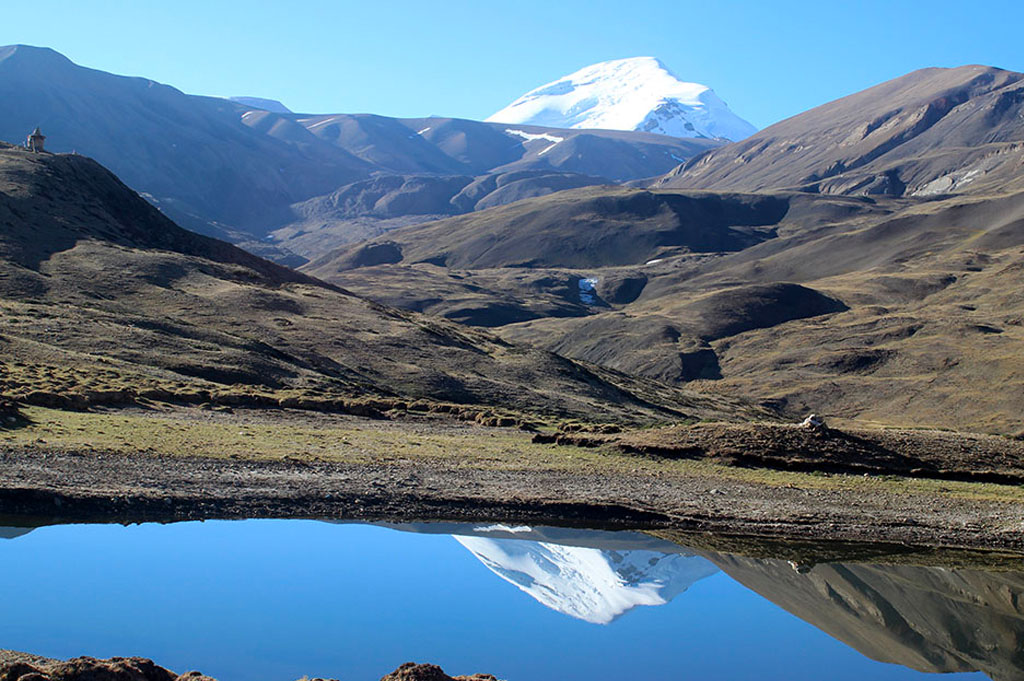
Hidden deep within the remote trans-Himalayan desert of Upper Mustang, Damodar Kunda is one of the most sacred and geographically extreme pilgrimage sites in all of Nepal. Resting at nearly 4,890 meters and revered by Hindus, Buddhists, and Kirats alike, this icy-blue alpine lake is believed to offer liberation from the cycle of rebirth to those who complete the demanding journey to its shores. For pilgrims and adventurous trekkers exploring the region beyond the Annapurna Circuit Trek, Damodar Kunda represents one of the most profound and physically challenging spiritual destinations in the entire Himalayas. This complete guide covers everything you need to know before attempting this remarkable pilgrimage.
Damodar Kunda, sometimes referred to as Damodar Kund or Charang Lake, is a sacred high-altitude lake complex located in the restricted region of Upper Mustang, near the Nepal-Tibet border. Resting within a basin in the Damodar Himal mountain range, the site actually consists of three sacred lakes surrounded by rocky mountains and snow-covered ridges, forming a powerful spiritual and natural setting revered across multiple religious traditions.
| Feature | Details |
|---|---|
| Elevation | Approximately 4,890 meters (16,043 feet) |
| Location | Upper Mustang, Mustang District, Gandaki Province |
| Mountain Range | Damodar Himal |
| Number of Lakes | Three interconnected sacred lakes |
| Religious Significance | Sacred to Hindus, Buddhists, and Kirats |
| Associated Deity | Lord Vishnu |
| Nearby Landmarks | Kagbeni, Muktinath, Lo Manthang |
| Access Type | Restricted area; special permit required |
Damodar Kunda holds a uniquely elevated place within Hindu religious geography, closely tied to the sacred Kali Gandaki River system. According to the Barah Purana, an important Hindu religious text, the entire course of the Kali Gandaki River is understood as representing the body of Lord Vishnu, with each sacred site along its length corresponding to a specific part of his form:
This elaborate symbolic mapping, drawn from one of Hinduism's most auspicious texts, underscores just how central Damodar Kunda is to the broader spiritual identity of the entire Kali Gandaki river system, including the sacred Shaligram stones found further downstream. For a deeper look at these fossils and their meaning, see our complete guide to Saligrams in Nepal.
Reaching Damodar Kunda is considered one of the most meaningful spiritual achievements available within Nepal's pilgrimage traditions, for several key reasons:
Reaching Damodar Kunda requires a demanding, multi-day trekking expedition through some of the most remote terrain in Nepal, as the site lies well beyond standard trekking infrastructure.
| Stage | Route Segment |
|---|---|
| Kathmandu/Pokhara to Jomsom | Flight or overland travel to the Mustang region |
| Jomsom to Kagbeni | Trek north along the Kali Gandaki River |
| Kagbeni to Lo Manthang | Multi-day trek through Chuksang, Samar, Gelin, Ghami, and Tsarang |
| Lo Manthang to Yara | Continued trek deeper into Upper Mustang |
| Yara to Ghuma Thanti | Remote trail through barren, high-altitude terrain, crossing a pass around 5,100 meters |
| Ghuma Thanti to Damodar Kunda | Final push to the sacred lake at 4,890 meters |
Most full itineraries covering this journey, including transportation to and from Kathmandu, take approximately 22 to 25 days to complete, reflecting both the distance involved and the need for careful altitude acclimatization.
For those unable to commit to the multi-week trekking expedition, helicopter tours offer a faster, though significantly more expensive, way to visit Damodar Kunda in a single day. These tours typically depart from Kathmandu or Pokhara, flying over dramatic valleys, the Kali Gandaki gorge, and the barren desert landscapes of Upper Mustang before landing near the sacred lake complex. While this option sacrifices the traditional pilgrimage experience of the overland journey, it provides access to travelers with limited time who still wish to witness this remote and sacred site.
Damodar Kunda remains one of the least-visited major pilgrimage sites in Nepal, largely due to the significant physical demands involved:
Despite its physical challenges, the journey to Damodar Kunda rewards travelers with some of the most dramatic scenery available anywhere in Nepal:
| Season | Months | Conditions |
|---|---|---|
| Spring | March – May | Stable weather, good visibility for high-altitude trekking |
| Autumn | September – November | Clearest skies, considered the most favorable season overall |
| Winter | December – February | Extremely cold, generally not recommended due to snow and access difficulty |
| Monsoon | June – August | Coincides with the traditional full moon pilgrimage in August, though weather can be less predictable |
Most trekking agencies recommend spring and autumn as the safest and most reliable windows for attempting this demanding journey.
Because the trek passes through restricted Upper Mustang, travelers must arrange the following in advance:
Damodar Kunda, sometimes called Damodar Kund or Charang Lake, is a sacred high-altitude lake complex located in the restricted region of Upper Mustang, near the Nepal-Tibet border. It actually consists of three sacred lakes resting within a basin in the Damodar Himal, revered by Hindus, Buddhists, and Kirats alike.
The lake rests at an elevation of approximately 4,890 meters (16,043 feet), situated within the Damodar Himal mountain range in Upper Mustang, Mustang District. It lies in one of the most remote and stark trans-Himalayan desert landscapes in all of Nepal, near the Tibetan border.
According to the Barah Purana, an important Hindu religious text, the entire Kali Gandaki river system is understood as representing the body of Lord Vishnu, with Damodar Kunda regarded as his head and the source of this sacred river. This symbolic significance places the lake at the very origin of one of Hinduism's most revered river systems.
Damodar Kunda is revered across multiple faiths, including Hinduism, Buddhism, and the indigenous Kirat tradition, making it a rare site of shared spiritual significance. This multi-faith reverence reflects the broader pattern seen throughout the Mustang region, where Hindu and Buddhist traditions often intersect.
Pilgrims believe that reaching the lake and bathing in its sacred waters offers liberation from the cycle of rebirth, known as moksha in Hindu tradition. Many devotees specifically travel during the full moon of August to take part in this ritual bathing practice.
The Barah Purana maps several sacred sites along the Kali Gandaki as symbolic body parts of Lord Vishnu, with Damodar Kunda as the head, Muktinath as the mouth, and the area where sacred Shaligram fossils are found as the chest. To learn more about these fossils and their spiritual significance, see our complete guide to Saligrams in Nepal.
Reaching Damodar Kunda requires a demanding multi-day trek starting from Jomsom, passing through Kagbeni, Lo Manthang, Yara, and Ghuma Thanti before finally arriving at the lake. Most full itineraries, including travel to and from Kathmandu, take approximately 22 to 25 days to complete.
Yes, helicopter tours departing from Kathmandu or Pokhara offer a faster way to reach Damodar Kunda in a single day, flying over the Kali Gandaki gorge and the barren landscapes of Upper Mustang. While significantly more expensive, this option suits travelers with limited time who still wish to witness the sacred lake.
The journey involves extreme altitude exposure near 4,890 meters, high mountain passes exceeding 5,100 meters, and largely undeveloped trail infrastructure compared to more popular routes. These factors make it one of the most physically demanding pilgrimage treks available in Nepal.
Travelers need a Restricted Area Permit for Upper Mustang, along with a standard Annapurna Conservation Area Permit (ACAP). These restricted area permits typically cannot be obtained independently and must be arranged through a registered trekking agency.
The trekking route passes through the ancient walled city of Lo Manthang, the capital of Upper Mustang, as well as Luri Gompa, a historic cave monastery. Trekkers also enjoy panoramic views of Annapurna I, Dhaulagiri, Nilgiri Himal, and the barren trans-Himalayan desert landscape along the way.
Spring (March to May) and autumn (September to November) are generally considered the most favorable seasons, offering stable weather and the clearest visibility for high-altitude trekking. Many pilgrims also specifically travel during the August full moon, despite less predictable monsoon weather, to participate in traditional ritual bathing.
While not part of the standard route, Damodar Kunda can be reached as an extended pilgrimage journey beyond the Annapurna Circuit Trek, typically accessed via Jomsom and Kagbeni before heading deep into restricted Upper Mustang. It represents a significant detour requiring additional time, permits, and preparation.
Essential items include high-altitude cold weather gear, sturdy trekking boots, camping equipment (since teahouses are largely unavailable along this remote route), altitude sickness medication, and sufficient cash reserves, as no banking services exist along the trail.
Damodar Kunda offers a rare combination of extreme physical challenge and deep multi-faith spiritual significance, believed by pilgrims to offer liberation from the cycle of rebirth. Its role as the symbolic head of Lord Vishnu within the broader Kali Gandaki river system connects it directly to other sacred sites throughout the region, making the journey a profound and unforgettable spiritual undertaking for those who complete it.
Damodar Kunda stands as one of the most spiritually profound and physically demanding pilgrimage destinations in the entire Himalayas, offering a rare convergence of Hindu, Buddhist, and Kirat religious devotion set against one of Nepal's most remote and dramatic landscapes. Its symbolic role as the sacred head of Lord Vishnu within the broader Kali Gandaki river system connects it directly to other revered sites throughout the region, from Muktinath to the sacred Shaligram stones found downstream. For travelers seeking more than a conventional trekking experience, journeying to Damodar Kunda, whether as an extension beyond the Annapurna Circuit Trek or as a dedicated pilgrimage in its own right, offers an unforgettable encounter with one of Nepal's most sacred and untouched corners.
Discover more articles that match your interests! Explore these similar blogs packed with insights, tips, and stories to keep you inspired.
Everything on Thorong La Pass — altitude, difficulty, weather, route & crossing times. Complete guide for the Annapurn...
Complete guide on how to prepare for the Annapurna Circuit Trek — training, gear, permits, insurance & mental readines...
Discover Besisahar, Nepal — the official gateway to the Annapurna Circuit Trek. Complete guide to altitude, history & ...
Discover the Marsyangdi River — the Annapurna Circuit\'s raging river. Complete guide to its geography, origins & trek...
Discover Manang, Nepal — Annapurna Circuit\\'s key acclimatization village with monasteries, glacial lakes & Thorong L...
Explore Manangi culture in Nepal — Tibetan Buddhist heritage, trans-Himalayan trading history & unique lifestyle of th...