Can Beginners Do The Manaslu Circuit Trek? Difficulty & Preparation Guide
By Nepal Trip Services On 27 Sep 2026

By Nepal Trip Services On 27 Sep 2026
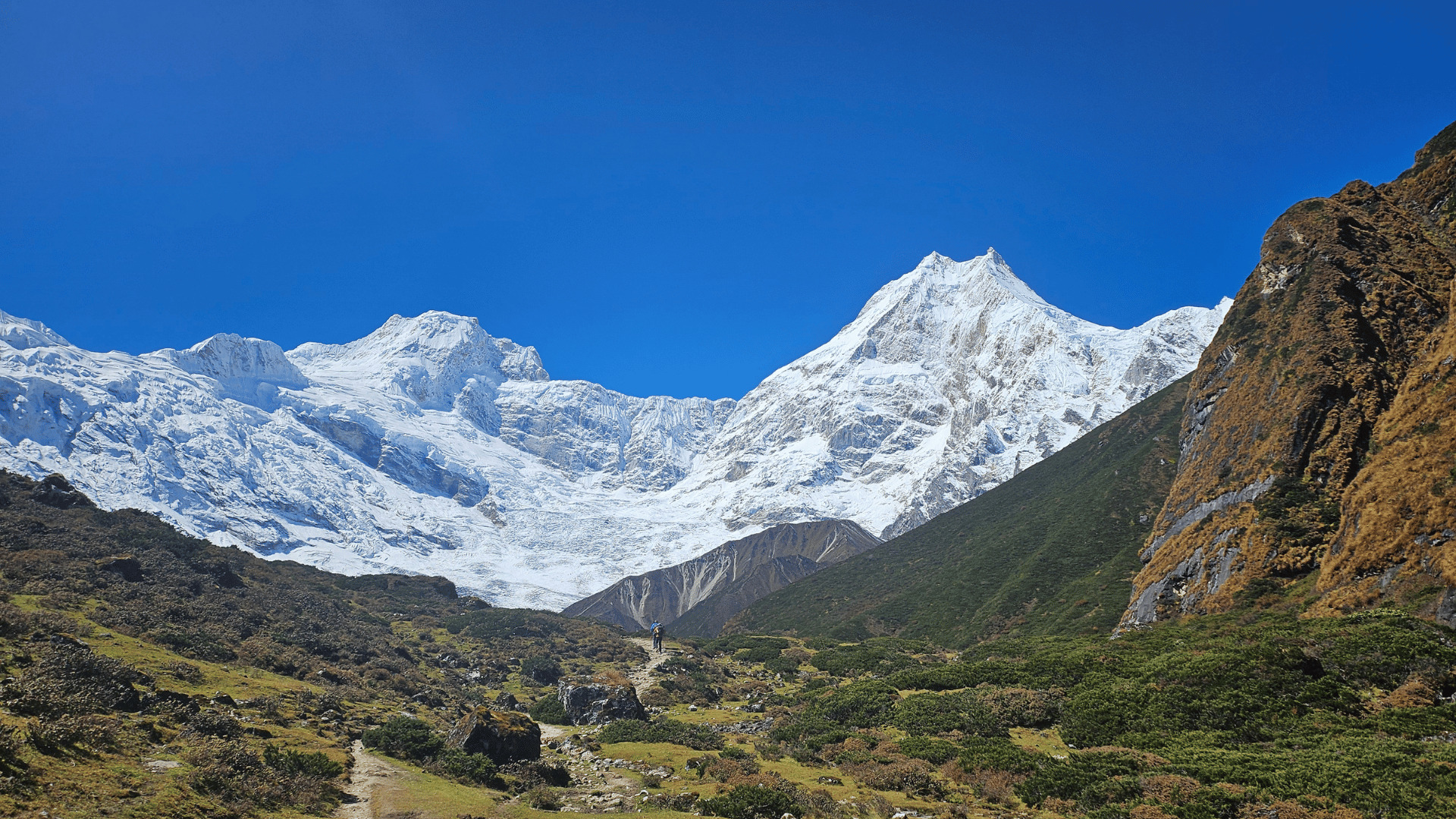
The Manaslu Circuit Trek has quietly become one of the most talked-about adventures in Nepal, drawing trekkers who are looking for the raw, untouched beauty of the Himalayas without the heavy crowds found on more popular routes like Classic Everest Base Camp or Annapurna. Circling the world's eighth-highest mountain through remote valleys, Tibetan-influenced villages, and dramatic alpine landscapes, it offers a sense of genuine wilderness that's becoming harder to find elsewhere in Nepal. But one question comes up again and again from first-time trekkers: can a beginner realistically take on this trek? The honest answer is yes — with the right preparation, the right mindset, and the right support on the ground. This complete guide from Nepal Trip Services breaks down exactly how difficult the Manaslu Circuit Trek really is, what specifically makes it challenging for first-timers — from altitude to the long Larke Pass crossing — and how beginners can prepare properly, step by step, to reach the top of Larke Pass with confidence and come home with a story they'll tell for years.
The Manaslu Circuit Trek is a classic teahouse trek that circles Mount Manaslu (8,163 m), the eighth-highest mountain in the world, through a remote and restricted region of Nepal. The route follows the Budhi Gandaki River through subtropical valleys before climbing through Tibetan-influenced villages and alpine terrain, culminating in a crossing of the dramatic Larke (Larkya) La Pass at approximately 5,106 meters.
Opened to trekkers in 1991, the trail remains far quieter than Everest Base Camp or the Annapurna Circuit, offering a genuine sense of wilderness and cultural immersion. If you're considering this adventure, the Manaslu Circuit Trek offered by Nepal Trip Services is designed with beginner-friendly pacing and full logistical support built in.
The Manaslu Circuit Trek carries an official difficulty rating of moderate to strenuous, placing it above the Annapurna Base Camp trek but generally comparable to, or slightly more demanding than, Everest Base Camp in terms of remoteness and pass-crossing difficulty.
| Trek | Overall Grade | Highest Altitude | Hardest Section | Remoteness |
|---|---|---|---|---|
| Manaslu Circuit | Moderate to Strenuous | 5,106 m | Larke La crossing (9–11 hrs) | High, restricted area |
| Classic Everest Base Camp | Moderate to Strenuous | 5,364 m | Kala Patthar sunrise climb | Moderate, well-trafficked |
| Annapurna Base Camp | Moderate | 4,130 m | Final push to base camp | Low, busy trail |
This "difficult" classification isn't meant to scare beginners away — it simply reflects the trek's genuine demands: sustained high altitude, several consecutive long trekking days, and one seriously challenging pass crossing near the end.
Altitude is the single biggest challenge on this trek — more significant than distance or terrain difficulty. The trail climbs from around 900 meters at Machha Khola to 5,106 meters at Larke La, giving your body a substantial elevation gain to adjust to over the course of the journey.
Most days involve 5–7 hours of walking, with some sections stretching to 6–8 hours over rugged, uneven terrain including steep ascents and descents through river valleys and forested hillsides.
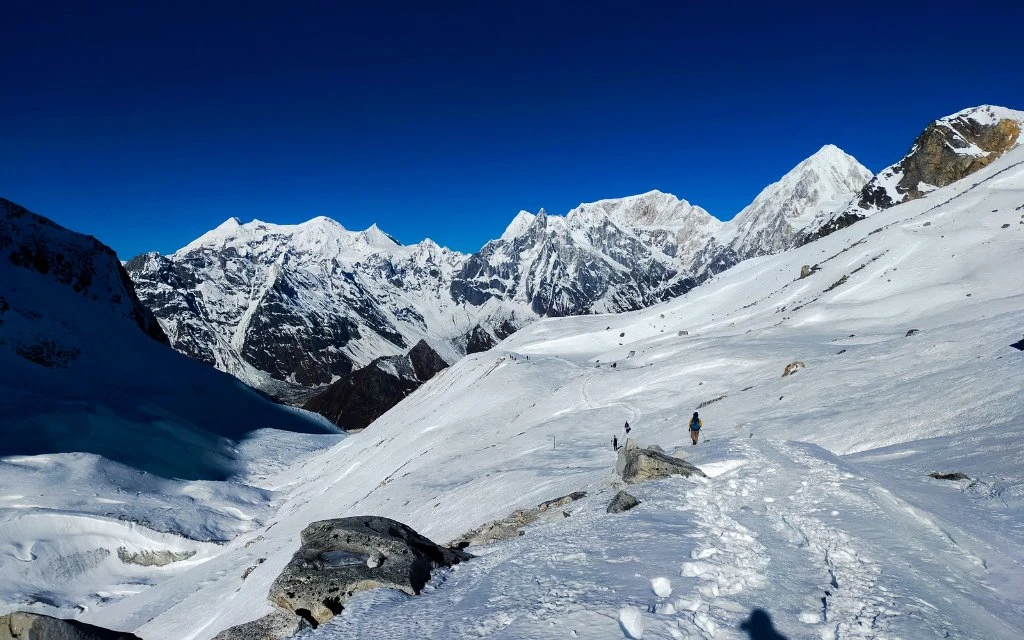
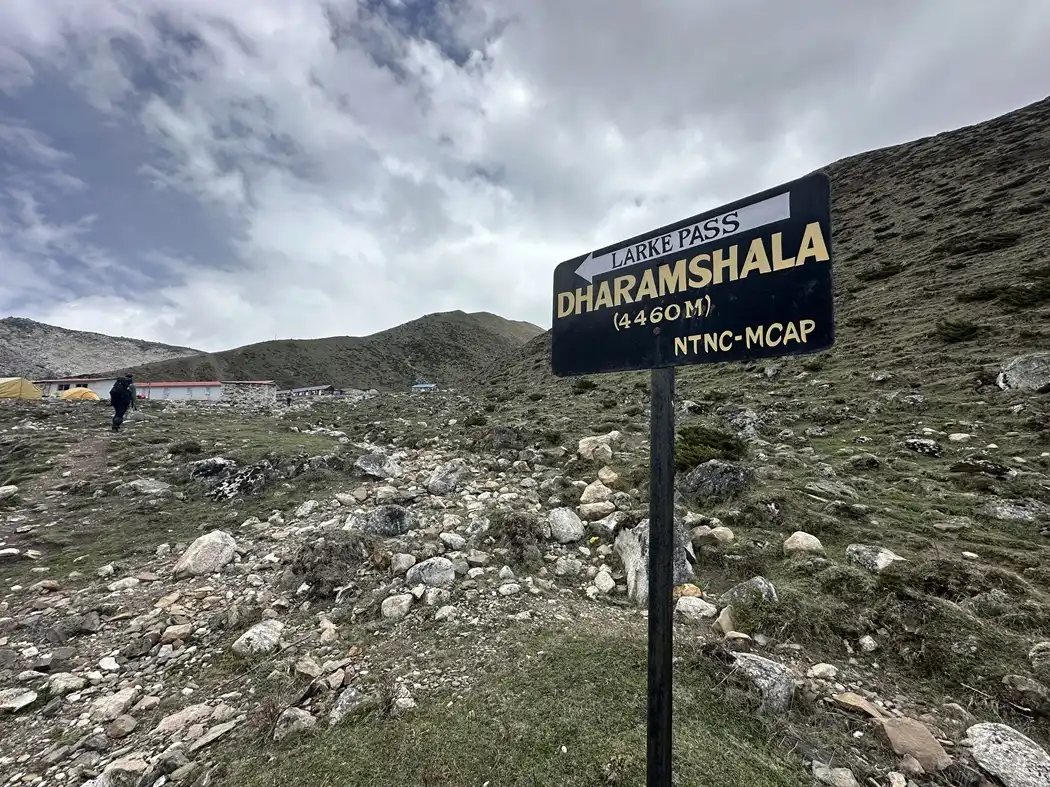
The single hardest day of the entire trek is the crossing of Larke La Pass itself, often taking 9 to 11 hours from Dharmasala (Larke Phedi) to Bimthang. This long, high-altitude day combines early starts, cold temperatures, and sustained physical effort — making it the trek's true test of endurance.
Unlike Everest Base Camp, which sees tens of thousands of trekkers annually, the Manaslu Circuit remains a restricted area with far fewer visitors each year. This means less medical infrastructure, fewer rescue options, and a greater need for self-sufficiency and proper guiding support.
While the trail has improved significantly in recent years, teahouse availability and comfort levels remain more basic than on Nepal's busier routes, particularly in the higher villages near Samdo and Dharmasala.
Yes — complete trekking beginners have successfully completed the Manaslu Circuit Trek, including first-timers with no prior high-altitude experience. What separates successful beginners from those who struggle typically comes down to two things:
Beginners who train adequately, respect acclimatization days, and trek with experienced guides consistently report a challenging but deeply rewarding experience — proving that "beginner" doesn't have to mean "unprepared."
The standard Manaslu Circuit itinerary is thoughtfully structured to support first-time high-altitude trekkers:
| Day | Route | Altitude | Duration/Notes |
|---|---|---|---|
| 1 | Arrival in Kathmandu | 1,400 m / 4,593 ft | Airport transfer, hotel check-in |
| 2 | Preparation & permit processing in Kathmandu | 1,400 m / 4,593 ft | Briefing, gear check, permits |
| 3 | Drive from Kathmandu to Machha Khola | 930 m / 3,051 ft | ~7–8 hrs drive |
| 4 | Trek from Machha Khola to Jagat | 1,340 m / 4,396 ft | ~6–7 hrs walk |
| 5 | Trek from Jagat to Deng | 1,860 m / 6,102 ft | ~6–7 hrs walk |
| 6 | Trek from Deng to Namrung | 2,630 m / 8,629 ft | ~5–6 hrs walk |
| 7 | Trek from Namrung to Lho Village | 3,240 m / 10,630 ft | ~4–5 hrs walk |
| 8 | Trek from Lho Village to Samagaun | 3,540 m / 11,610 ft | ~4–5 hrs walk |
| 9 | Acclimatization day in Samagaun | 3,540 m / 11,610 ft | Rest day, optional side hike |
| 10 | Trek from Samagaun to Samdo | 3,860 m / 12,660 ft | ~3–4 hrs walk |
| 11 | Trek from Samdo to Dharamsala | 4,500 m / 14,764 ft | ~4–5 hrs walk |
| 12 | Trek from Dharamsala to Bimthang via Larkya La Pass | 5,140 m / 16,864 ft | ~9–11 hrs walk (longest day) |
| 13 | Trek from Bimthang to Dharapani | 1,960 m / 6,430 ft | ~6–7 hrs walk |
| 14 | Drive from Dharapani to Kathmandu | 1,350 m / 4,429 ft | ~8–9 hrs drive |
| 15 | Final departure | 1,400 m / 4,593 ft | Airport transfer |
Your Manaslu adventure begins with your arrival at Tribhuvan International Airport in Kathmandu, where a representative from Nepal Trip Services will greet you and transfer you to your hotel. Depending on your arrival time, you may have the rest of the day free to relax, explore nearby Thamel, or simply recover from your flight before the trek preparations begin.
Today is dedicated to final trek preparations. Your guide will conduct a pre-trek briefing covering the route, safety protocols, and what to expect at high altitude, while the necessary permits — including the Manaslu Restricted Area Permit (MRAP), Manaslu Conservation Area Project (MCAP) permit, and Annapurna Conservation Area Project (ACAP) permit — are processed. This is also a good opportunity to rent or purchase any last-minute trekking gear in Kathmandu's outdoor equipment shops.
The trek officially begins with a scenic but long drive from Kathmandu to Machha Khola, winding through hillside roads and river valleys via Arughat. The journey takes approximately 7 to 8 hours, passing through changing landscapes from urban Kathmandu to increasingly rural, forested terrain as you approach the starting point of the trail.
The first trekking day takes you along the Budhi Gandaki River, crossing suspension bridges and passing through small villages and terraced farmland. The trail involves several short ascents and descents over roughly 6 to 7 hours, offering an easy introduction to the trekking rhythm ahead.
Continuing along the Budhi Gandaki Gorge, today's trail passes through dense forests, rice terraces, and traditional villages, with the landscape gradually becoming more rugged. Expect around 6 to 7 hours of walking, with a noticeable shift in scenery as you move deeper into the Manaslu Conservation Area.
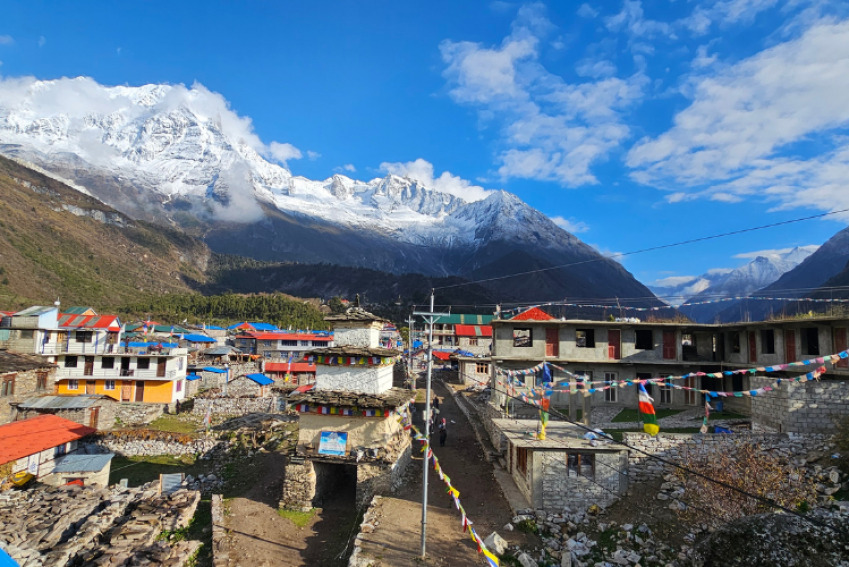
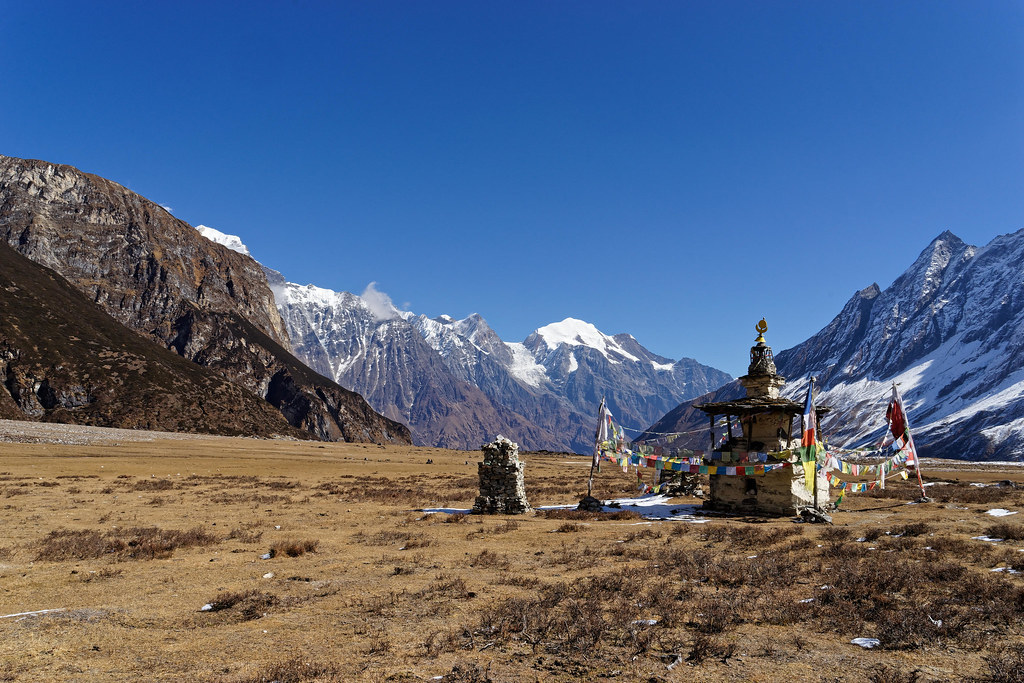
This section marks the entry into the more culturally distinct upper Manaslu region, where Tibetan-influenced villages, mani walls, and prayer flags become increasingly common. The trek takes roughly 5 to 6 hours and includes a steady elevation gain as the trail climbs toward Namrung.
As you continue upward, the forest begins to thin, revealing your first dramatic close-up views of Manaslu and surrounding peaks. The walk to Lho Village takes approximately 4 to 5 hours and brings you into a beautiful traditional settlement featuring a prominent monastery with sweeping mountain views.
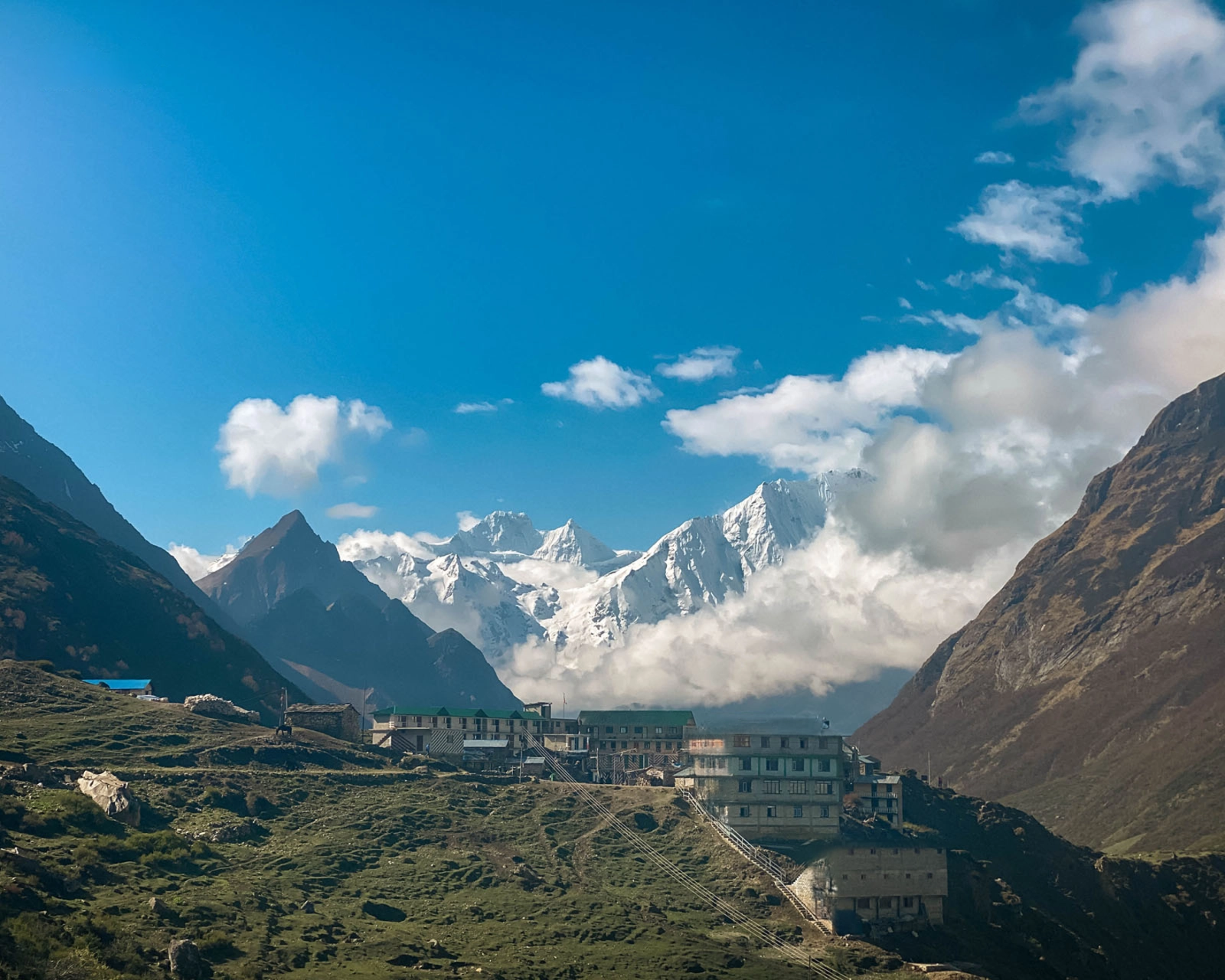
Today's relatively short trek of 4 to 5 hours brings you to Samagaun, one of the largest and most culturally rich villages on the route. Surrounded by dramatic peaks including Manaslu itself, Samagaun serves as the primary acclimatization hub for the remainder of the trek.
A crucial rest day designed to help your body adjust to the altitude before pushing higher. Most trekkers use this day for an optional side hike toward Manaslu Base Camp or nearby Birendra Lake, both offering spectacular views while supporting proper altitude acclimatization through gentle activity at elevation.
A shorter trekking day of around 3 to 4 hours takes you to Samdo, one of the last villages before the high-altitude sections of the trek. The trail passes through increasingly stark, alpine terrain with expansive views of the surrounding peaks and glaciers.
Today's trek climbs steadily to Dharamsala (also known as Larke Phedi), the final staging point before the Larkya La Pass crossing. The 4 to 5 hour walk crosses increasingly remote, high-altitude terrain, and accommodation here is basic, reflecting the trail's growing remoteness.
The most demanding and rewarding day of the entire trek. Starting early in the morning, trekkers make the long ascent to Larkya La Pass at 5,140 meters, the trek's highest point, before descending to Bimthang on the other side. This day typically takes 9 to 11 hours and requires careful pacing, warm layers, and an early start to avoid afternoon winds and cloud buildup at the pass.
After the exertion of crossing Larkya La, today's trek takes you steadily downhill through rhododendron and pine forests as you descend back into the greener Annapurna region. The walk takes approximately 6 to 7 hours, with noticeably warmer temperatures and easier breathing as altitude decreases.
A long but scenic drive of approximately 8 to 9 hours brings you back to Kathmandu, marking the end of the trekking portion of your journey. This is a good time to relax, reflect on the trek, and prepare for your departure or any additional time exploring Kathmandu.
Your Manaslu Circuit adventure concludes with a final breakfast in Kathmandu before your airport transfer for departure, or the start of any additional touring or trekking you may have arranged with Nepal Trip Services.
Since the route passes through a restricted region, beginners should be aware that permits here are more involved than on open routes like Everest Base Camp:
| Permit | Purpose |
|---|---|
| Manaslu Restricted Area Permit (MRAP) | Required for entry into the restricted Manaslu region |
| Manaslu Conservation Area Project (MCAP) | Entry fee for the Manaslu Conservation Area |
| Annapurna Conservation Area Project (ACAP) | Required as the route connects into the Annapurna region |
A licensed guide is mandatory for this trek, and a minimum of two trekkers is typically required to obtain the restricted area permit — both factors that work in a beginner's favor, ensuring proper support throughout the journey.
| Season | Months | Suitability for Beginners |
|---|---|---|
| Spring | March – May | Excellent — stable weather, blooming rhododendrons, clear views |
| Autumn | September – November | Excellent — clearest skies, most popular and reliable season |
| Winter | December – February | Not recommended for beginners — heavy snow, closed teahouses near Larke La |
| Monsoon | June – August | Not recommended — slippery trails, leeches, landslide risk |
Beginners should stick firmly to spring or autumn, when trail conditions, weather stability, and teahouse availability are most favorable.
Yes, complete trekking beginners have successfully completed the Manaslu Circuit Trek, including first-timers with no prior high-altitude experience. Success typically comes down to honest physical preparation, realistic expectations, and trekking with an experienced, licensed guide.
The Manaslu Circuit Trek carries an official difficulty rating of moderate to strenuous, making it more demanding than Annapurna Base Camp but comparable to Everest Base Camp in terms of altitude and remoteness. The trek's biggest challenges for beginners are sustained high altitude and the long Larke La Pass crossing, rather than technical climbing skills.
No prior technical trekking or mountaineering experience is required, as the Manaslu Circuit does not involve ropes, crampons, or climbing skills. However, having some hiking background and solid cardiovascular fitness significantly improves your chances of a comfortable, successful trek.
The single hardest day is the crossing of Larke La Pass at 5,106–5,140 meters, which typically takes 9 to 11 hours from Dharamsala to Bimthang. This long, high-altitude day combines early starts, cold temperatures, and sustained physical effort, making it the trek's true test of endurance.
The trek reaches its highest point at Larke La Pass, at approximately 5,106 to 5,140 meters (16,752–16,864 feet), before descending toward Bimthang on the other side. This is the defining high-altitude challenge of the entire circuit.
Beginners should begin training at least 2 to 3 months in advance with cardiovascular exercises like running, cycling, or stair climbing, combined with strength training for the legs and core. Practicing hikes with a loaded backpack on hilly terrain and breaking in trekking boots beforehand are also essential steps.
Yes, altitude sickness is a genuine risk for all trekkers, including beginners, since the trail climbs from around 900 meters to over 5,100 meters. The itinerary includes a dedicated acclimatization day in Samagaun specifically to help reduce this risk, and trekkers should never skip it.
The Manaslu Circuit Trek typically takes between 13 and 16 days, including acclimatization days, though some itineraries extend to include additional rest or side-trip days. A well-paced itinerary is especially important for beginners to allow proper altitude adjustment.
Yes, a licensed guide is mandatory for the Manaslu Circuit Trek, as the route passes through a restricted region requiring special permits. For beginners, trekking with an experienced guide also provides crucial pacing support, safety monitoring, and cultural insight throughout the journey.
Trekkers need three permits: the Manaslu Restricted Area Permit (MRAP), the Manaslu Conservation Area Project (MCAP) permit, and the Annapurna Conservation Area Project (ACAP) permit. A minimum of two trekkers is typically required to obtain the restricted area permit, which works in beginners' favor by ensuring group support.
The best seasons for beginners are spring (March–May) and autumn (September–November), both offering stable weather, clearer skies, and the most favorable trail and teahouse conditions. Winter and monsoon season are not recommended for first-time high-altitude trekkers due to snow, cold, and slippery trails.
Most days involve 5 to 7 hours of walking, though some sections can extend to 6 to 8 hours over uneven, rugged terrain. Beginners should expect cumulative fatigue building over the course of the trek, particularly in the days leading up to the Larke La crossing.
The trek is teahouse-based, meaning trekkers stay in simple lodges with basic rooms and shared bathrooms, becoming more rudimentary at higher elevations near Samdo and Dharamsala. While comfort levels are more basic than on busier routes like Everest Base Camp, the trail has improved significantly in recent years.
Essential gear includes an insulated down jacket, thermal base layers, sturdy broken-in trekking boots, a sleeping bag rated for sub-zero temperatures, trekking poles, and sun protection. Beginners should prioritize warmth and comfort items, especially for the high-altitude sections near Larke La Pass.
Nepal Trip Services offers a beginner-friendly itinerary built around proper acclimatization, experienced licensed guides, and transparent, well-organized logistics from start to finish. Their Manaslu Circuit Trek package is specifically designed to help first-time high-altitude trekkers prepare thoroughly and complete the journey with confidence.
The Manaslu Circuit Trek is undeniably challenging, but it is far from off-limits for beginners. What matters most isn't prior high-altitude experience — it's honest preparation, realistic pacing, and a willingness to respect the mountain's demands. With proper training, the right gear, and support from an experienced guide, first-time trekkers regularly stand atop Larke La Pass with the same sense of achievement as seasoned mountaineers.
If you're a beginner considering this incredible journey, Nepal Trip Services offers a well-structured, safety-focused itinerary designed to guide first-timers through every stage of the trek with confidence. Explore the Manaslu Circuit Trek today and discover that with the right preparation, this remote Himalayan adventure is well within your reach — regardless of your experience level.
Discover more articles that match your interests! Explore these similar blogs packed with insights, tips, and stories to keep you inspired.
Discover Samagaon, Nepal — the Manaslu region\'s Tibetan-influenced gem. Complete guide to culture, altitude, things t...
Everything on Larkya La Pass — altitude, difficulty, weather, route & crossing times. Complete guide for the Manaslu C...
Discover Samdo, Nepal — the last village before Larkya La Pass on the Manaslu Circuit Trek. Complete guide to culture,...
Discover Pungyen Gompa, Nepal — the sacred monastery beneath Manaslu\\'s south face. Complete guide to history, altitu...
Discover Dharamsala, Manaslu — the last stop before Larkya La Pass. Complete guide to altitude, accommodation & crossi...
Discover Nubri Valley families in Nepal — Tibetan culture, traditions, polyandry & daily life in the Manaslu region. C...