Thamserku: Complete Mountain & Trekking Guide
By Nepal Trip Services On 22 Sep 2026

By Nepal Trip Services On 22 Sep 2026
Rising dramatically above the Dudh Kosi valley, Thamserku is one of the most visually striking peaks trekkers encounter on the Classic Everest Base Camp Trek — a mountain that, despite not reaching 8,000 meters, consistently steals the spotlight with its steep faces and elegant ridgelines. Standing at 6,623 meters within Sagarmatha National Park, this striking peak has seen only a handful of successful summits since its first ascent back in 1964, its steep couloirs and technically demanding faces keeping it far less climbed than its dramatic profile would suggest. This complete guide covers everything you need to know about this iconic Khumbu peak, from its geography and climbing history to what trekkers can expect to see along the trail, helping you appreciate this often-photographed mountain as more than just a scenic backdrop on your journey toward Everest Base Camp.
Thamserku sits at 6,623 meters (21,729 feet) in the Khumbu region of eastern Nepal, forming part of the Mahalangur Himal, a sub-range of the greater Himalayas. It's positioned east of Namche Bazaar, connected by a high ridge to the neighboring peak Kangtega, and lies within Sagarmatha National Park.
| Detail | Information |
|---|---|
| Elevation | 6,623m/21,729ft |
| Prominence | 689m/2,260ft |
| Coordinates | 27°47′25″N, 86°47′15″E |
| Location | Khumbu, Solukhumbu District, Nepal |
| Parent Range | Mahalangur Himal, Himalayas |
| Municipality | Khumbu Pasang Lhamu |
| First Ascent | 4 November 1964 |
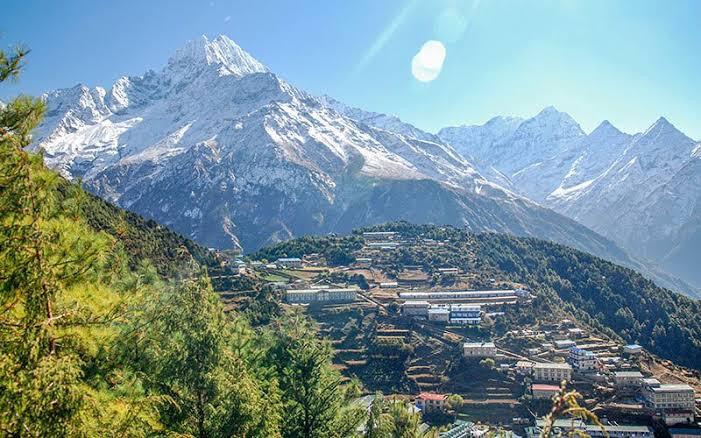
Due to its position near the Dudh Kosi valley and the main trekking trails, Thamserku is often one of the first high Himalayan peaks visible to trekkers entering the upper Khumbu, making it a frequent subject of early trip photographs on the approach to Namche Bazaar.
Despite being modest in height compared to the Himalaya's eight-thousanders, Thamserku remains a rarely climbed peak, having seen only a handful of successful summits since its first ascent in 1964 — a reflection of its steep, technically difficult terrain.
Thamserku links eastward via a high, striking ridge to Kangtega, together forming one of the most photographed mountain silhouettes in the entire Khumbu region.
The mountain stands within Sagarmatha National Park, recognized as a UNESCO World Heritage Site, adding to its protected status and ecological significance.
1964 — First Ascent: Achieved on 4 November by Lynn Crawford, Pete Farrell, John McKinnon, and Richard Stewart, part of an expedition associated with Sir Edmund Hillary's development projects in the region. The team approached from the southwest, climbing a difficult couloir to reach the south ridge.
1986 — Spanish Attempt on the Southwest Face: A four-man Spanish team reached approximately 6,300m before being forced to abandon their attempt due to equipment failure, just over 300m below the summit.
2014 — "Shy Girl" Route: Russian climbers Alexander Gukov and Alexey Lonchinskiy achieved the first ascent of Thamserku's previously unclimbed southwest face, completing the demanding 1,900-meter route in eight days of alpine-style climbing.
| Viewpoint | Trekking Day | What You'll See |
|---|---|---|
| Approach to Namche Bazaar | Day 3 | Southwest face visible during the Dudh Kosi approach |
| Namche Bazaar | Day 3–4 | Dramatic backdrop above the town |
| Khumjung Village | Day 4 (acclimatization) | Classic panoramic view of Thamserku |
| Dole/Namche to Tengboche trail | Day 5 | Thamserku and Kangtega together on the ridgeline |
For climbers (not trekkers) interested in attempting Thamserku, royalty fees apply based on season:
| Season | Nepali Fee (NPR) | Foreign Fee (USD) |
|---|---|---|
| Spring | 5,000 | $400 |
| Autumn | 2,500 | $200 |
| Winter/Summer | 1,250 | $100 |
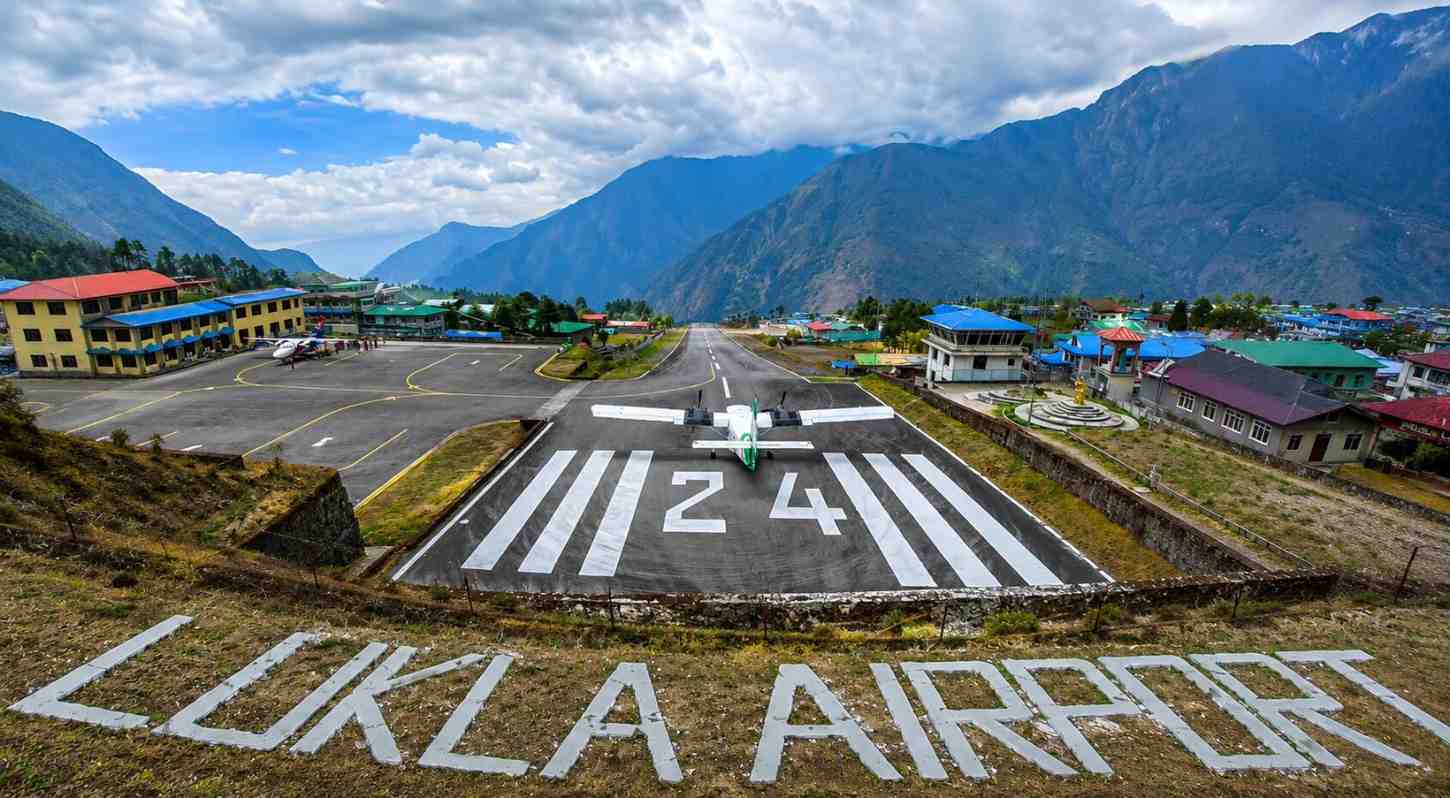
The nearest emergency services are located in Lukla (15 km from base camp along the caravan route), with Monjo (3.5 km) serving as the nearest settlement.
While Thamserku isn't a peak most trekkers will summit, its dramatic presence along the trail adds genuine visual richness to the Everest Base Camp journey. Unlike Everest itself, which remains hidden for much of the lower trek, Thamserku is visible early and often, becoming a familiar, striking landmark that reappears throughout the trek's early stages — a mountain trekkers photograph long before they even reach Namche Bazaar.
Thamserku sits at 6,623 meters (21,729 feet) in the Khumbu region of eastern Nepal, forming part of the Mahalangur Himal sub-range, positioned east of Namche Bazaar within Sagarmatha National Park.
Thamserku reaches 6,623 meters, considerably lower than Everest's 8,849 meters, but its steep, dramatic profile makes it one of the most visually striking peaks in the entire Khumbu region despite not being an eight-thousander.
Thamserku was first climbed on 4 November 1964 by Lynn Crawford, Pete Farrell, John McKinnon, and Richard Stewart, part of an expedition associated with Sir Edmund Hillary's development projects in the region.
No, Thamserku remains a rarely climbed peak, having seen only a handful of successful summits since its 1964 first ascent, due to its steep, technically demanding terrain.
Shy Girl refers to the first ascent of Thamserku's previously unclimbed southwest face, achieved in 2014 by Russian climbers Alexander Gukov and Alexey Lonchinskiy, who completed the 1,900-meter route in eight days of alpine-style climbing.
Yes, Thamserku is one of the first high Himalayan peaks trekkers see during the approach to Namche Bazaar, and it remains visible from several points along the trail, including Namche and Khumjung village.
Yes, Thamserku is connected by a high ridge leading eastward to Kangtega, together forming one of the most photographed mountain silhouettes in the Khumbu region.
Thamserku forms part of the Mahalangur Himal, a sub-range of the greater Himalayas, and lies within Sagarmatha National Park, a UNESCO World Heritage Site.
Khumjung village, typically visited during the Namche Bazaar acclimatization day, offers one of the most classic panoramic views of Thamserku along the entire trekking route.
Royalty fees vary by season, with foreign climbers paying $400 in spring, $200 in autumn, and $100 in winter/summer, while Nepali climbers pay correspondingly lower fees.
Monjo, located 3.5 km from the base camp along the caravan route, serves as the nearest settlement, with emergency services available in Lukla, approximately 15 km away.
Due to its position near the Dudh Kosi valley and main trekking trails, Thamserku is often one of the first high Himalayan peaks visible to trekkers, making it a frequent subject of early trip photographs before reaching Namche Bazaar.
Thamserku has a topographic prominence of 689 meters (2,260 feet), contributing to its striking, standalone appearance when viewed from the Khumbu trekking trails.
No, Thamserku is considered a technically demanding peak best suited for experienced mountaineers, given its steep faces, difficult couloirs, and complex terrain that has limited successful ascents over the decades.
Thamserku is located in the Solukhumbu District, within the Khumbu Pasang Lhamu Rural Municipality, in Nepal's Koshi Province.
Thamserku may not carry the household-name recognition of Everest, but for trekkers walking the Khumbu trail, this striking 6,623-meter peak often becomes one of the most memorable visual highlights of the entire journey. Its steep faces, dramatic ridgeline, and rarely-climbed status make it a genuine standout among the Himalaya's countless peaks — a mountain worth knowing before you set foot on the trail.
Ready to see Thamserku and the rest of the Khumbu's legendary peaks for yourself? Explore the complete Classic Everest Base Camp Trek itinerary with Nepal Trip Services and experience this dramatic mountain landscape firsthand.
Discover more articles that match your interests! Explore these similar blogs packed with insights, tips, and stories to keep you inspired.
Everything on Classic Everest Base Camp Trek permits for 2026–2027 — costs, requirements, where to get them & recent...
Discover the best season for the Classic Everest Base Camp Trek. Compare autumn, spring, winter & monsoon weather, views...
Explore the Classic Everest Base Camp Trek itinerary with detailed day-by-day routes, altitudes, trekking hours & acclim...
Discover what you\\\'ll eat and where you\\'ll sleep on the Classic Everest Base Camp Trek. Complete guide to teahouses,...
Discover the full cost breakdown of the Classic Everest Base Camp Trek — permits, flights, guides, porters, meals & ac...
Is the Classic Everest Base Camp Trek hard? Complete guide to difficulty level, altitude challenges, fitness needs & tra...