Classic Everest Base Camp Trek Itinerary: Complete Guide
By Nepal Trip Services On 17 Sep 2026

By Nepal Trip Services On 17 Sep 2026
Explore the Classic Everest Base Camp Trek itinerary with a detailed day-by-day route covering Kathmandu, Lukla, Namche Bazaar, Tengboche, Dingboche, Lobuche, Everest Base Camp, and Kala Patthar. Learn about daily trekking distances, walking hours, altitude gains, acclimatization days, overnight stops, and the key attractions along the route. This well-planned itinerary helps trekkers understand the journey, prepare for the high-altitude environment, and enjoy a safe and rewarding adventure to the foot of Mount Everest.
The Classic Everest Base Camp Trek is a 14-day journey through the legendary Khumbu region, taking you from Kathmandu through Sherpa villages, ancient monasteries, and dramatic high-altitude terrain to Everest Base Camp (5,364m) and Kala Patthar (5,550m). Built around a well-paced itinerary with two dedicated acclimatization days, this route balances genuine physical challenge with safe, sensible altitude adjustment.
| Trek Detail | Information |
|---|---|
| Duration | 14 days |
| Maximum Altitude | 5,550m (Kala Patthar) |
| Trek Difficulty | Moderate to Challenging |
| Total Trekking Distance | ~130 km (round trip) |
| Total Trekking Days | 8–9 active days |
| Acclimatization Days | 2 (Namche Bazaar & Dingboche) |
| Starting Point | Lukla (via flight from Kathmandu) |
| Day | Route | Altitude | Trekking Duration |
|---|---|---|---|
| Day 1 | Arrival in Kathmandu | 1,300m/4,265ft | — |
| Day 2 | Fly to Lukla; Trek to Phakding | 2,610m/8,562ft | 3–4 hours |
| Day 3 | Phakding to Namche Bazaar | 3,440m/11,285ft | 5–6 hours |
| Day 4 | Namche Bazaar (Acclimatization) | 3,440m/11,285ft | 3–4 hours (optional hike) |
| Day 5 | Namche Bazaar to Tengboche | 3,870m/12,696ft | 5–6 hours |
| Day 6 | Tengboche to Dingboche | 4,410m/14,467ft | 5–6 hours |
| Day 7 | Dingboche (Acclimatization) | 4,410m/14,467ft | 4–5 hours (optional hike) |
| Day 8 | Dingboche to Lobuche | 4,910m/16,207ft | 5 hours |
| Day 9 | Lobuche to Gorak Shep to EBC | 5,364m/17,597ft | 7–8 hours |
| Day 10 | Gorak Shep to Kala Patthar to Pheriche | 5,550m/18,207ft | 8–9 hours |
| Day 11 | Pheriche to Namche Bazaar | 3,440m/11,285ft | 6–8 hours |
| Day 12 | Namche Bazaar to Lukla | 2,845m/9,333ft | 6–7 hours |
| Day 13 | Fly Lukla to Kathmandu | 1,300m/4,265ft | 35-min flight |
| Day 14 | Final Departure | — | — |
Your Classic Everest Base Camp Trek begins the moment you land in Kathmandu, Nepal's vibrant capital city. A representative from our team will greet you at Tribhuvan International Airport and transfer you to your hotel, giving you time to settle in and recover from your journey. Depending on your arrival time, spend the rest of the day exploring the colorful streets of Thamel, sampling authentic Nepali cuisine, or simply resting up before the trek ahead. In the evening, you'll meet your guide for a pre-trek briefing covering essential gear, trip logistics, and a final permit check — the perfect opportunity to ask questions and settle any last-minute nerves.
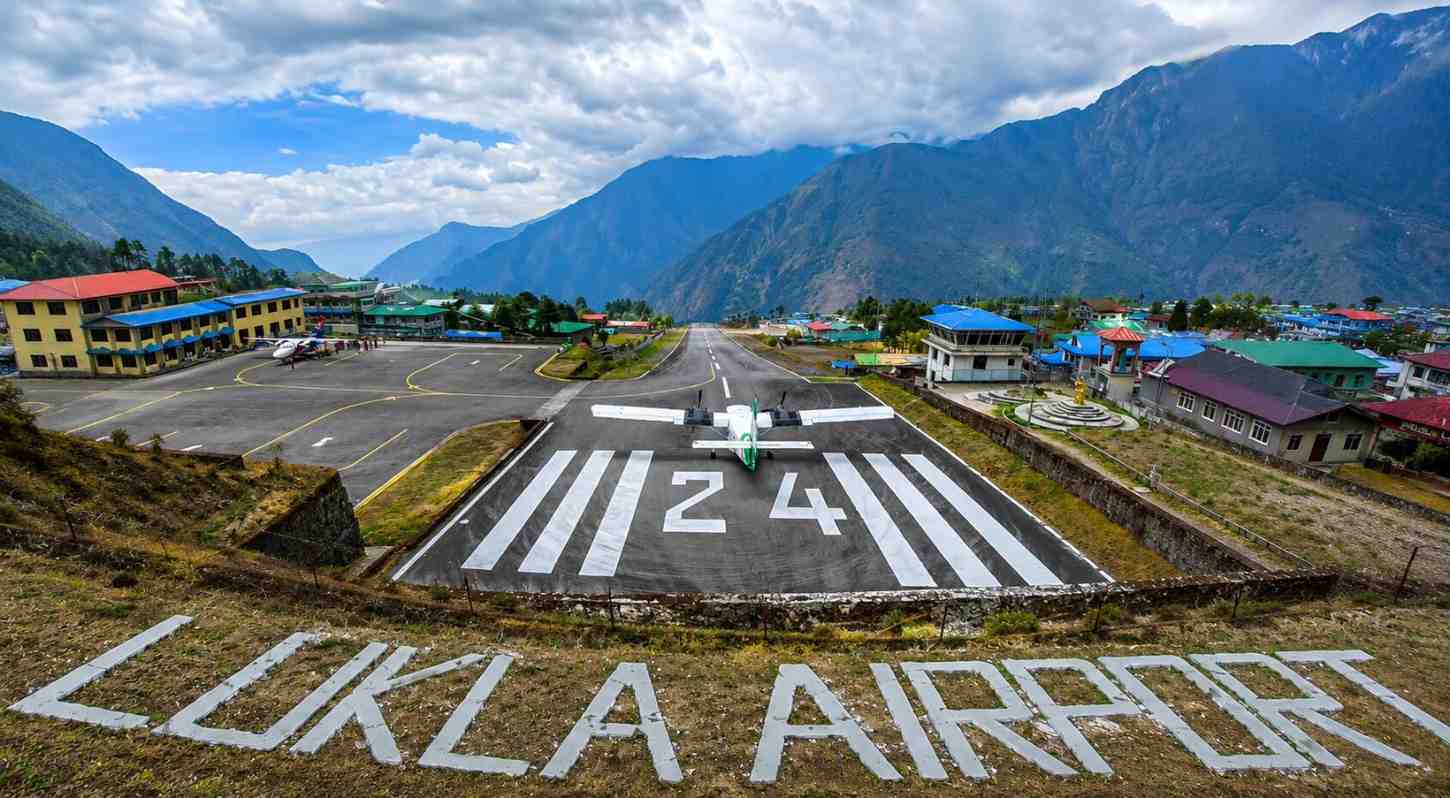
The adventure truly kicks off with an early morning flight from Kathmandu to Lukla, widely regarded as one of the most thrilling short flights in the world. As the plane weaves between snow-capped peaks before touching down on Lukla's dramatic mountainside runway, you'll get your first real taste of the Himalaya. From Lukla, you'll meet your porter team and begin a gentle 3 to 4-hour trek through pine forests and past mani walls to the riverside village of Phakding, where you'll spend your first night on the trail.
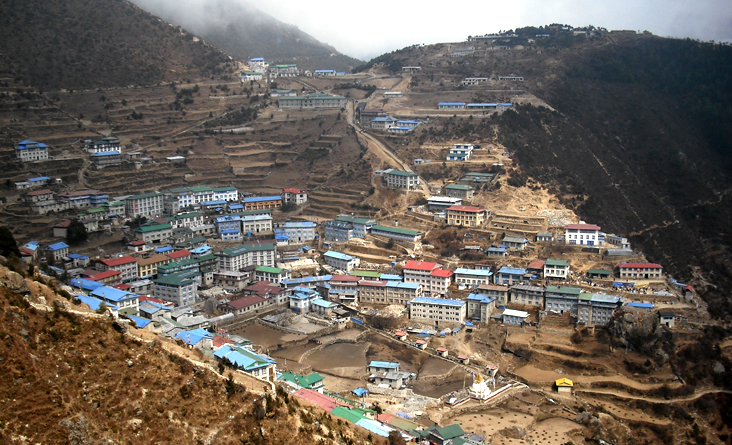
Today marks your first real climb, as the trail follows the Dudh Kosi River, crossing several thrilling suspension bridges draped in prayer flags. You'll enter Sagarmatha National Park at Monjo, where permits are checked, before tackling a steep, switchback climb up to Namche Bazaar — the bustling Sherpa capital of the Khumbu. If skies are clear, you'll catch your very first glimpse of Everest from a viewpoint along the way. This 5 to 6-hour trekking day ends in Namche, a lively town filled with bakeries, gear shops, and a proper introduction to high-altitude mountain life.
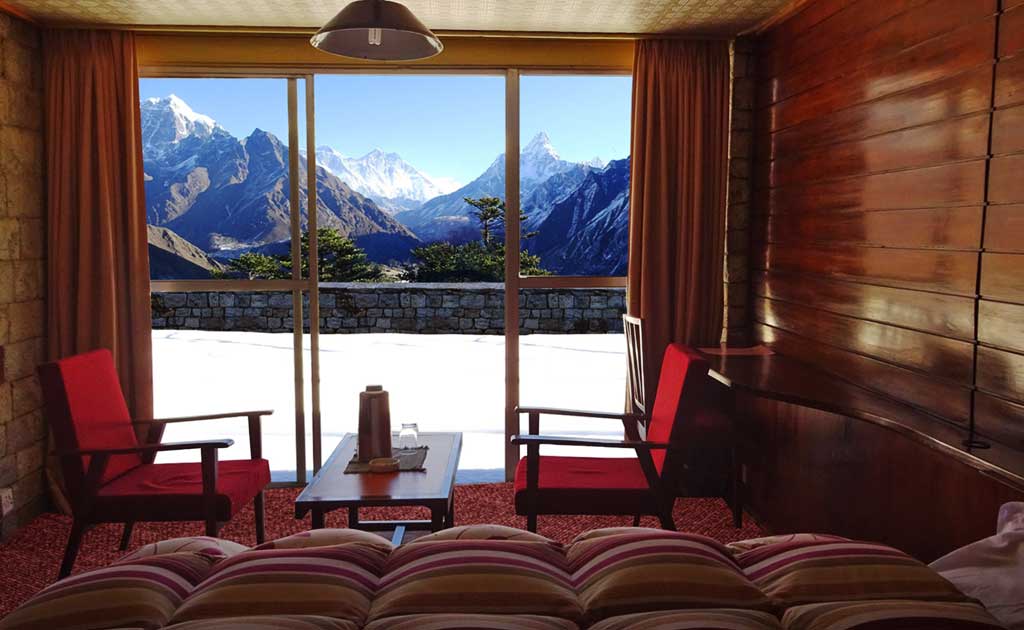
Rather than a true rest day, this acclimatization stop in Namche is built around the "climb high, sleep low" principle to help your body adjust to the altitude. Most trekkers hike up to the Everest View Hotel or the Sherpa villages of Khumjung and Khunde for stunning panoramic views of Everest, Lhotse, and Ama Dablam. You can also visit the Sherpa Culture Museum or wander through Namche's Saturday market before heading back down to your teahouse to rest and refuel.
Leaving Namche behind, the trail offers some of the most rewarding mountain views of the entire trek, with Everest, Ama Dablam, and Thamserku accompanying you along a mostly level path before a final climb into Tengboche. This 5 to 6-hour trekking day ends at the famous Tengboche Monastery, the largest monastery in the Khumbu region, perched dramatically with Ama Dablam rising directly behind it. If timing allows, attending the evening prayer ceremony inside the monastery is an unforgettable cultural experience.
Today's trek descends briefly through rhododendron forests before climbing steadily toward Dingboche, a picturesque farming village enclosed by stone walls built to protect crops from harsh mountain winds. As the trees thin out and the landscape becomes more rugged and alpine, you'll really start to feel the altitude increasing. This 5 to 6-hour day brings you into classic high-Himalayan terrain, with sweeping views of Lhotse framing your teahouse stop for the night.
Your second acclimatization day is spent in Dingboche, and most trekkers use it to hike up Nagarjun Hill or toward Chukhung Valley for exceptional views of Ama Dablam, Makalu, and Island Peak. This extra day is critical for safe altitude adjustment before pushing higher toward Lobuche and Gorak Shep. It's also a great chance to rest tired legs, do laundry, hydrate well, and mentally prepare for the demanding days ahead.
The trail today grows noticeably more remote and rugged as you trek across Thukla Pass, passing memorial chortens built in honor of climbers who lost their lives attempting Everest. It's a sobering yet moving stretch of trail that reminds trekkers of the mountain's power and history. After roughly 5 hours of trekking through increasingly barren, high-altitude terrain, you'll arrive in the small settlement of Lobuche, your final stop before Gorak Shep.
This is the day you've been building toward. After a relatively short trek to Gorak Shep to drop your bags, you'll continue on to Everest Base Camp itself, walking across the rocky Khumbu Glacier with towering icefalls surrounding you. Standing at Base Camp — especially during spring climbing season, when expedition tents dot the landscape — is an emotional, unforgettable milestone. After soaking in the moment, you'll retrace your steps back to Gorak Shep for a well-earned overnight rest, capping off a long but rewarding 7 to 8-hour day.
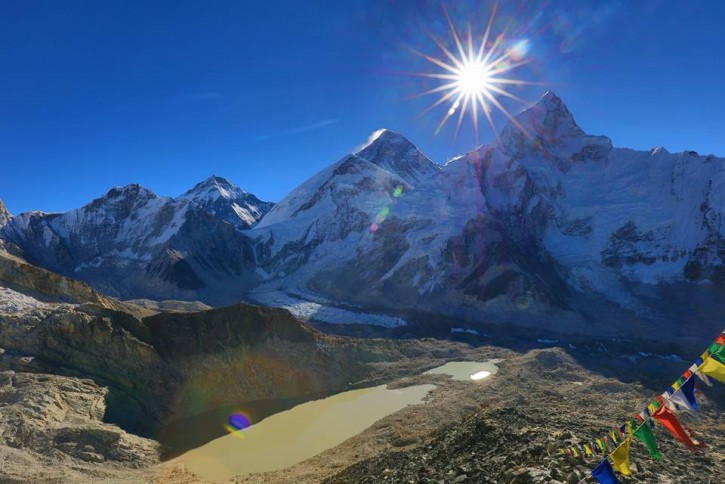
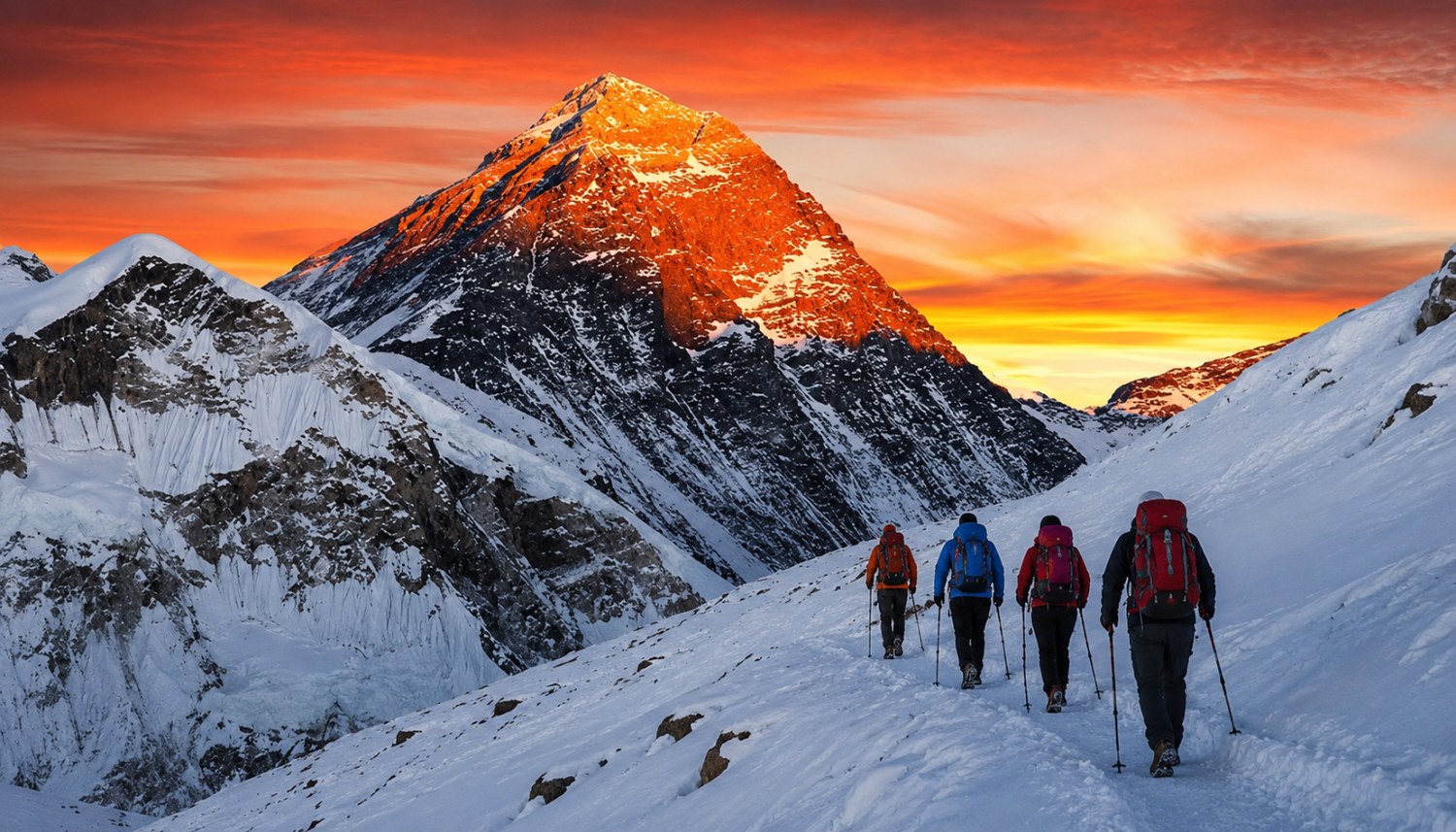
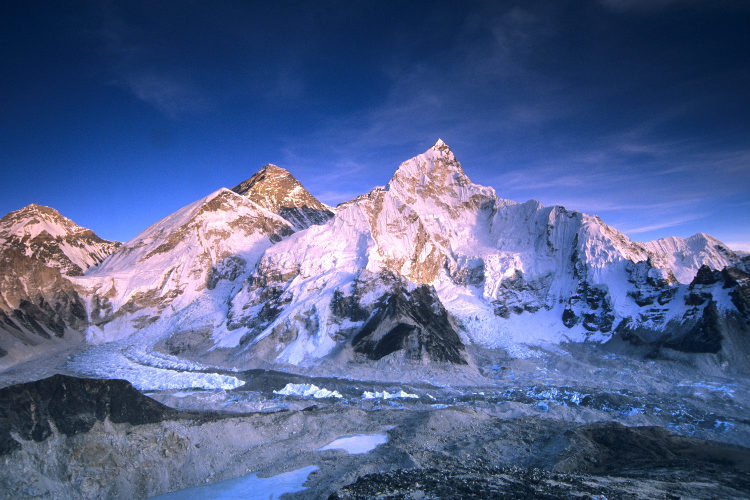
Rising well before sunrise, you'll make the steep climb up Kala Patthar, the trek's highest point, to witness one of the most spectacular sunrises in the world as golden light hits Everest, Nuptse, and Pumori. Unlike Base Camp, Kala Patthar offers a clear, unobstructed view of Everest's summit, making it a highlight many trekkers rate above Base Camp itself. After soaking in the views, you'll begin your descent, trekking all the way down to Pheriche for the night — a long but exhilarating day covering significant elevation loss.
With the hardest part of the trek behind you, today's journey feels noticeably easier as you retrace familiar trails back toward Namche Bazaar. The lower elevation brings warmer air, thicker forests, and a welcome sense of ease in your breathing. It's a good day to reflect on the trek so far while enjoying one last night in Namche's comparatively lively atmosphere, complete with bakeries and hot showers.
Your final trekking day retraces the trail back down toward Lukla, crossing the same suspension bridges and riverside paths that marked the beginning of your journey. It's a fitting, nostalgic end to the trek, giving you time to appreciate how far you've come — both physically and in elevation. Arriving back in Lukla, many trekkers celebrate with the group and guide team before departing the mountains the next morning.
A scenic morning flight returns you to Kathmandu, marking the official end of the trekking portion of your journey. With the rest of the day free, most trekkers use the time to relax at the hotel, enjoy a hot shower and comfortable bed, or head out to explore Kathmandu's markets and restaurants. It's also a great opportunity to pick up souvenirs or gather with your trekking group for a celebratory dinner.
Your Everest Base Camp adventure comes to a close today, with a transfer to Tribhuvan International Airport in time for your international departure flight. Depending on your flight schedule, there may be a little extra time in the morning for last-minute shopping or sightseeing in Kathmandu. As you head home, you'll carry with you not just photos and memories, but the genuine sense of accomplishment that comes from reaching the base of the world's highest mountain.
Ready to start planning? Explore the complete Classic Everest Base Camp Trek itinerary and book your journey to the foot of the world's highest mountain.
The itinerary includes two dedicated acclimatization days, and skipping or rushing through them significantly increases the risk of Acute Mountain Sickness (AMS):
This "climb high, sleep low" approach allows the body to gradually adjust to reduced oxygen levels, following a measured pace of no more than 300–500 meters of sleeping altitude gain per day once above 3,000m.
The Classic Everest Base Camp Trek follows a 14-day itinerary, including arrival and departure days in Kathmandu, with 8 to 9 active trekking days on the trail. This includes two dedicated acclimatization days for safe altitude adjustment.
Most trekking days cover 5 to 7 hours of walking, with the total round-trip distance from Lukla to Everest Base Camp and back covering approximately 130 kilometers (80 miles).
The itinerary includes two acclimatization days — one in Namche Bazaar (Day 4) and one in Dingboche (Day 7) — both essential for safely adjusting to increasing altitude before pushing higher toward Base Camp.
Kala Patthar (5,550m), visited on Day 10, is the highest point of the entire itinerary, offering an unobstructed sunrise view of Everest's summit that many trekkers rate above Base Camp itself.
Day 10, which combines the early morning Kala Patthar climb with a long descent to Pheriche, is generally considered the most demanding, involving 8 to 9 hours of combined ascent and descent.
While shorter itineraries exist, reducing the number of days typically means cutting acclimatization time, which significantly increases the risk of altitude sickness. The 14-day classic route is specifically designed for safe, gradual elevation gain.
No, acclimatization days aren't traditional rest days. Instead, trekkers typically do a shorter hike to a higher elevation before returning to sleep at the same altitude, following the "climb high, sleep low" principle.
The trekking portion begins with a flight from Kathmandu to Lukla and ends with a return flight from Lukla back to Kathmandu, with Days 1 and 14 dedicated to arrival and departure logistics in the capital.
Day 2, the initial trek from Lukla to Phakding, is the shortest trekking day, taking just 3 to 4 hours and serving as a gentle introduction to the trail.
Yes, the classic 14-day itinerary is specifically designed with beginners in mind, incorporating gradual elevation gain and built-in acclimatization days that make it accessible to reasonably fit trekkers without prior high-altitude experience.
Trekkers reach Everest Base Camp on Day 9, after trekking from Lobuche through Gorak Shep, marking the emotional highlight of the entire itinerary.
The standard 14-day itinerary doesn't automatically build in buffer days for flight delays, so it's wise to add 1–2 extra days to your overall trip schedule, especially during unpredictable weather seasons, to avoid missing international connections.
The itinerary ranges from Kathmandu's 1,300m up to Kala Patthar's 5,550m, representing a total elevation gain of over 4,000 meters across the full journey.
Overnight stops include Phakding, Namche Bazaar, Tengboche, Dingboche, Lobuche, Gorak Shep, and Pheriche on the return leg, along with Kathmandu at the start and end of the trip.
Yes, many trekking agencies offer extended versions of this itinerary with additional acclimatization days or rest stops for trekkers wanting a more relaxed pace, particularly beneficial for those with limited prior high-altitude experience.
This 14-day itinerary follows the classic and popular route to Everest Base Camp, carefully designed to combine adventure, stunning Himalayan scenery, and sensible acclimatization. From the exciting flight to Lukla and the vibrant trails around Namche Bazaar to the peaceful monasteries of Tengboche, the dramatic landscapes of Dingboche and Lobuche, and the ultimate achievement of reaching Everest Base Camp and Kala Patthar, every day offers a memorable experience. The gradual increase in altitude, planned acclimatization days, and well-paced walking schedule help trekkers adapt to the high-altitude environment while enjoying the journey comfortably.
Whether you are a first-time Himalayan trekker or an experienced hiker, a well-planned itinerary is essential for making the most of your Everest adventure. Along the route, you can experience the unique Sherpa culture, traditional mountain villages, Buddhist monasteries, suspension bridges, glaciers, and spectacular views of Everest, Lhotse, Nuptse, Ama Dablam, and surrounding peaks. Proper preparation, appropriate trekking equipment, travel insurance, hydration, and listening to your guide and body are also important for a safe and enjoyable experience.
Ready to begin your Everest adventure? Explore the complete Classic Everest Base Camp Trek itinerary to learn more about the daily route, accommodation, meals, permits, costs, acclimatization, and trekking services. Start planning your journey today and experience the breathtaking landscapes, rich Sherpa heritage, and unforgettable Himalayan adventure on the way to the foot of Mount Everest.
Discover more articles that match your interests! Explore these similar blogs packed with insights, tips, and stories to keep you inspired.
Everything on Classic Everest Base Camp Trek permits for 2026–2027 — costs, requirements, where to get them & recent...
Discover the best season for the Classic Everest Base Camp Trek. Compare autumn, spring, winter & monsoon weather, views...
Discover what you\\\'ll eat and where you\\'ll sleep on the Classic Everest Base Camp Trek. Complete guide to teahouses,...
Discover the full cost breakdown of the Classic Everest Base Camp Trek — permits, flights, guides, porters, meals & ac...
Is the Classic Everest Base Camp Trek hard? Complete guide to difficulty level, altitude challenges, fitness needs & tra...
Guide & porter costs, roles, and tips for the Everest Base Camp Trek. Learn 2026 pricing, tipping norms, and how to hire...