Newar Community Of Nepal: Complete Culture & Heritage Guide
By Nepal Trip Services On 29 Sep 2026

By Nepal Trip Services On 29 Sep 2026
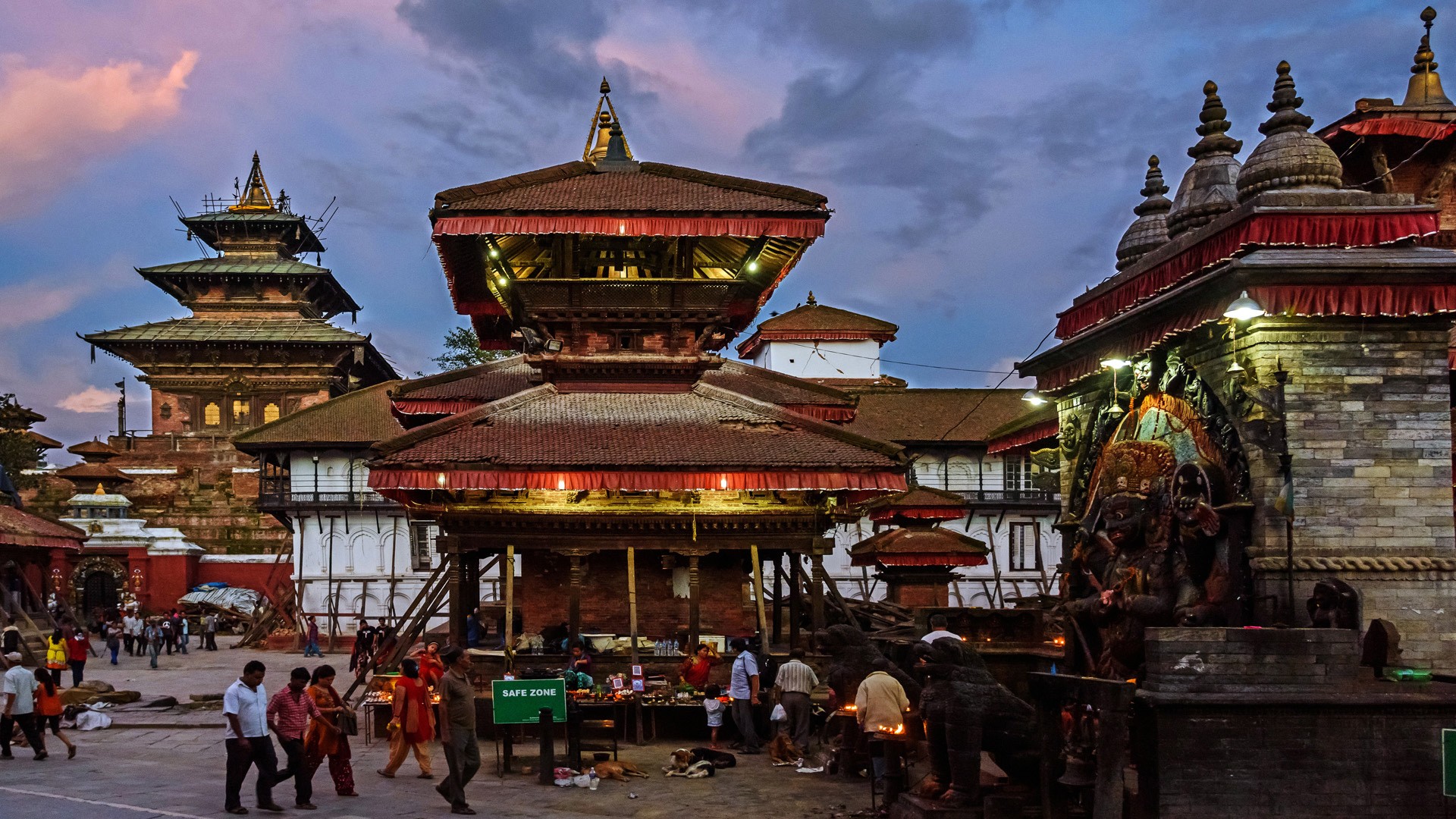
Walk through the old streets of Kathmandu, Patan or Bhaktapur and you are walking through the living world of the Newars. The carved wooden windows, tiered pagoda temples, brick courtyards, masked dancers, chariot festivals and plates of samay baji all come from one remarkable community. The Newars did not just live in the Kathmandu Valley. They built it.
This guide explains who the Newars are, where their culture comes from, what makes it so distinctive, and how travellers can experience it respectfully. Whether you are planning a heritage walk, timing your trip around a festival, or simply curious about the people behind Nepal's most famous monuments, this is your starting point. For the wider city picture, see our Kathmandu, Nepal: Complete Travel & Cultural Guide.
The Newars are the historic creators of much of what visitors come to Nepal to see. Their influence shows up in:
| Detail | Information |
|---|---|
| Homeland | Kathmandu Valley and surrounding areas (historic Nepal Mandala) |
| Population in Nepal | 1,341,363 (2021 census), about 4.6% of Nepal's population |
| Language | Nepal Bhasa (Newari), a Tibeto-Burman language |
| Religion | Hinduism and Buddhism, often practised side by side |
| Calendar | Nepal Sambat, a lunar calendar dating from 879 CE |
| Golden age | Malla period (roughly 12th–18th centuries) |
| Famous cities | Kathmandu, Patan (Lalitpur), Bhaktapur, Kirtipur |
| UNESCO link | Kathmandu Valley World Heritage Site (seven monument zones) |
The Newars are the indigenous inhabitants of Nepal Mandala, which covers the Kathmandu Valley and its surrounding regions. Rather than being a single tribe, the Newars are a complex society made up of many castes, clans and occupational groups, united by a shared language, shared festivals and a deep connection to the valley's towns.
Their identity blends many influences. Over centuries, migrants and traders from India, Tibet and nearby regions mixed with the valley's early inhabitants, bringing new religious, linguistic and artistic ideas. The result is a culture that feels both Himalayan and South Asian at the same time.
Beyond the valley, Newar trading families also settled in hill towns such as Bandipur, Tansen, Dolakha and Nuwakot, and in parts of India such as Darjeeling and Sikkim, carrying their architecture, food and festivals with them.
Newar history begins with a legend. According to a much-loved story, the valley was once a vast lake called Nagadaha. The Bodhisattva Manjushri cut through the hills at Chobar gorge to drain it, and the fertile lakebed that emerged became home to the valley's first settlements.
Geologists agree that the valley was once a lake, which gives the legend an interesting echo of truth.
| Period | What Happened |
|---|---|
| Ancient era | Early settlements grow in the fertile former lakebed of the valley |
| Licchavi period (c. 3rd–9th century CE) | Organised communities, trade routes and early temples take shape |
| 879 CE | Nepal Sambat, the Newar lunar calendar, begins |
| 13th century | Newar artist Araniko travels to Tibet and Yuan-dynasty China, spreading Newar architectural style |
| Malla period (c. 12th–18th century) | Golden age: Kathmandu, Patan and Bhaktapur flourish as rival city-states |
| 1768–1769 | Prithvi Narayan Shah unifies Nepal and the valley kingdoms fall under Gorkha rule |
| Rana era (1846–1951) | Nepal Bhasa faces official suppression |
| 1979 | Kathmandu Valley inscribed as a UNESCO World Heritage Site |
| 2015 | Earthquake damages many monuments; Newar artisans lead traditional rebuilding |
Under the Malla kings, the valley split into three kingdoms centred on Kathmandu, Patan and Bhaktapur. Their rivalry was political, but it was also artistic, with each ruler competing to build grander temples, palaces and public squares than the others. This competition gave us the three Durbar Squares that remain the valley's greatest treasures.
Nepal Bhasa, also called Newari, is a Tibeto-Burman language, which makes it very different from Nepali despite the similar-sounding name. It has one of the richest literary traditions in the Himalaya, with inscriptions, manuscripts, poetry and chronicles going back centuries. It has historically been written in scripts such as Ranjana and Prachalit (Newa), as well as Devanagari today.
The language has faced serious pressure. It suffered official suppression from the start of Rana rule in the 1840s until democratisation, and the share of Newar speakers in the Kathmandu Valley fell from 75% in 1952 to 44% by 1991. Today, UNESCO classifies it as "definitely endangered". Around 880,000 people spoke it as their mother tongue in the 2021 census, and cultural groups continue to promote its revival through schools, radio, music and literature.
| Newari | Meaning |
|---|---|
| Jwajalapa | Hello / greetings |
| Subhaye | Thank you |
| Chhu ya? | What is it? |
| Baanlaa | Beautiful / nice |
One of the most striking features of Newar life is the way Hindu and Buddhist traditions live together. A Newar family may visit a Shiva temple in the morning and a Buddhist bahal (monastery courtyard) in the afternoon, and many deities are honoured by both communities.
This spirit of coexistence is perfectly symbolised by the Kumari.
The Kumari is a young Newar girl worshipped as a living embodiment of the goddess Taleju. Kathmandu's Royal Kumari is chosen from the Buddhist Shakya clan, yet she is worshipped as a Hindu goddess, making her a powerful symbol of the valley's shared faith.
Visitor tip: You may see the Kumari at her window in the courtyard of the Kumari Ghar. Photography of the Kumari is strictly forbidden.
Traditional Newar society is organised into many caste and occupational groups, each historically linked to a particular role:
| Group | Traditional Role |
|---|---|
| Rajopadhyaya | Hindu priests |
| Vajracharya & Shakya | Buddhist priests, goldsmiths and metalworkers |
| Shrestha | Merchants, administrators and traders |
| Jyapu (Maharjan) | Farmers, the backbone of valley agriculture |
| Tamrakar | Copper and metal craftsmen |
| Chitrakar | Painters and mask makers |
| Ranjitkar | Dyers |
Today these roles are much less rigid, and Newars work in every profession, but surnames still often reflect these historic occupations.
The Guthi system is the social glue of Newar life. A guthi is a community trust that organises festivals, maintains temples, manages land and handles funerals and rituals. Guthi traditions have been part of Newar society in the valley for many centuries. When the government proposed a controversial Guthi Bill in 2019, it sparked mass protests in the Kathmandu Valley, showing how strongly Newars value these institutions.
Newar culture marks every stage of life with ceremony:
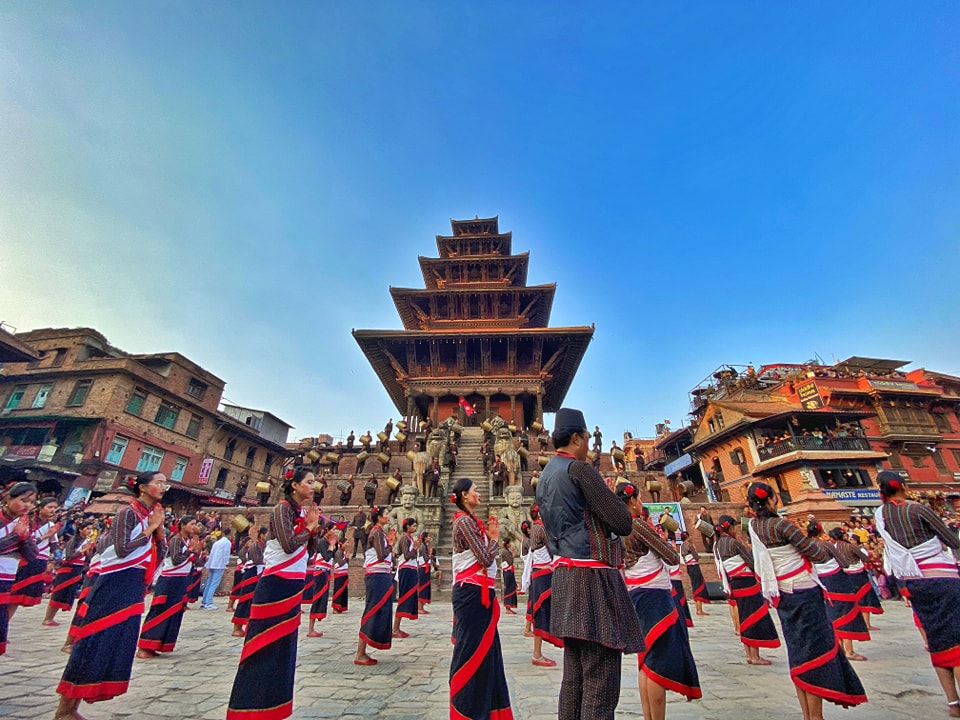
Newar festivals are some of the most spectacular in Nepal, filled with chariots, masked dancers, music and feasts.
| Festival | When | Where | Highlights |
|---|---|---|---|
| Indra Jatra (Yenya) | September | Kathmandu | Kumari chariot procession, masked Lakhe dancers, display of Aakash Bhairav |
| Bisket Jatra | April (Nepali New Year) | Bhaktapur | Giant chariot tug-of-war, raising of a tall wooden pole |
| Rato Machhindranath Jatra | Spring–early summer | Patan | Nepal's longest chariot festival, honouring the rain god |
| Gai Jatra | August/September | Kathmandu, Bhaktapur | Parade honouring family members who passed away in the year, with satire and humour |
| Mha Puja | October/November (during Tihar) | Newar homes | Worship of one's own body and soul on Nepal Sambat New Year |
| Yomari Punhi | December | Across the valley | Harvest celebration with sweet yomari dumplings |
| Pahan Charhe | March/April | Kathmandu | Mother goddesses carried through the streets in palanquins |
| Buddha Jayanti | April/May | Swayambhu, Patan | Buddhist celebrations at stupas and bahals |
Indra Jatra has deep roots. According to Nepal Sambat tradition, Kathmandu is believed to have been founded on the auspicious day of Yenya Punhi. Today, the festival's focus rests on Indra and the Kumari.
Mha Puja is especially beautiful. Families draw intricate mandalas at home and worship themselves, marking a time of renewal and purification for the new year.
Newari cuisine is one of the richest in Nepal, with more than a hundred traditional dishes, many tied to specific festivals and rituals.
| Dish | Description |
|---|---|
| Samay Baji | Ceremonial platter of beaten rice, spiced meat, egg, black soybeans, ginger and pickles |
| Bara (Woh) | Savoury lentil pancake, plain or topped with egg or meat |
| Chatamari | Thin rice-flour crêpe, often called "Newari pizza" |
| Yomari | Steamed rice-flour dumpling filled with molasses and sesame |
| Kwati | Nourishing soup of nine sprouted beans |
| Choila | Spicy grilled buffalo or chicken marinated in mustard oil and spices |
| Juju Dhau | Creamy "king of curd" from Bhaktapur |
| Aila | Traditional strong home-distilled rice spirit |
Where to try it: Traditional eateries in Kirtipur, Patan, Bhaktapur and the old core of Kathmandu, as well as Newari restaurants in Thamel. A Newari cooking class is also a fun way to learn.
Dietary note: Many Newari dishes use buffalo meat, but vegetarian options like bara, chatamari, kwati and yomari are easy to find.
Newar architecture defines the look of the Kathmandu Valley. Its most recognisable features are intricately carved wooden windows and brick buildings, along with:
Did you know? The 13th-century Newar artist Araniko travelled to Tibet and China, where he helped design the famous White Stupa in Beijing. The pagoda style is often linked to the craftsmanship he carried abroad.
After the 2015 earthquake, Newar communities campaigned to rebuild damaged monuments using traditional materials and techniques rather than concrete replicas. Much of that restoration can be seen today.
Newar artisans are famous across the Himalaya. Look out for:
Where to shop: Patan's metalwork workshops near Durbar Square, Bhaktapur's woodcarving and pottery districts, and fair-trade shops across Kathmandu.
| Place | Why Visit |
|---|---|
| Kathmandu Durbar Square | Kumari Ghar, Hanuman Dhoka palace, Indra Jatra celebrations |
| Patan (Lalitpur) | Finest Newar art, Golden Temple (Kwa Bahal), Patan Museum, metal workshops |
| Bhaktapur | Best-preserved medieval Newar city, Nyatapola Temple, Pottery Square, Juju Dhau |
| Kirtipur | Hilltop Newar town with authentic food and quiet lanes |
| Bungamati & Khokana | Traditional Newar villages with woodcarving and mustard-oil production |
| Panauti | Riverside Newar town with ancient temples |
| Bandipur | Newar trading town with beautifully preserved architecture, between Kathmandu and Pokhara |
| Tansen (Palpa) | Hill town with Newar heritage and famous dhaka weaving |
Many of these can be combined into a heritage day tour or added to a longer itinerary such as our Kathmandu, Pokhara & Chitwan Tour or Kathmandu, Pokhara, Chitwan & Lumbini Tour. For dedicated heritage itineraries, explore our Cultural Tours.
| Topic | What to Know |
|---|---|
| Greeting | Say "Namaste" with palms pressed together; "Jwajalapa" is a warm Newari greeting |
| Temples & bahals | Remove shoes, walk clockwise, and avoid leather in Hindu shrines |
| Photography | Ask before photographing people; never photograph the Kumari |
| Festivals | Watch from a safe spot, follow local guidance and respect sacred moments |
| Food | Eat with your right hand; avoid sharing food you've already tasted (jutho) |
| Homes | Remove shoes before entering; some kitchens are off-limits to outsiders |
| Offerings | Don't touch offerings, shrines or sacred objects |
| Dress | Cover shoulders and knees at religious sites |
| Time | What to Expect |
|---|---|
| September | Indra Jatra in Kathmandu, one of the valley's biggest festivals |
| October–November | Clear weather, Dashain, Tihar and Mha Puja (Newar New Year) |
| December | Yomari Punhi and pleasant, dry days |
| March–April | Pahan Charhe and Bisket Jatra in Bhaktapur |
| April–June | Rato Machhindranath chariot festival in Patan |
| Year-round | Heritage sites, food and craft workshops are always open to visitors |
Tip: Festival dates follow the lunar calendar and change each year. Check with your tour operator before booking.
The Newars are the indigenous people of the Kathmandu Valley and the historic builders of its cities, temples and traditions. They are not a single tribe but a complex society of many castes and occupational groups, united by the Nepal Bhasa language, shared festivals and a strong link to the valley's towns. Over centuries, they absorbed influences from India, Tibet and neighbouring regions, creating a unique culture. Much of what travellers admire in Kathmandu, Patan and Bhaktapur today comes directly from Newar civilisation.
According to Nepal's 2021 census, there are 1,341,363 Newars, making up about 4.6% of the country's population. Most live in the Kathmandu Valley, but many also live in hill towns such as Bandipur, Tansen and Dolakha, which grew as Newar trading centres. There are also Newar communities in parts of India, including Darjeeling and Sikkim. Despite modern migration, the Kathmandu Valley remains the cultural heartland of Newar life.
Newars speak Nepal Bhasa, also known as Newari, a Tibeto-Burman language quite different from Nepali. It has a long literary history, with inscriptions and manuscripts dating back centuries, and has been written in scripts such as Ranjana and Prachalit as well as Devanagari. Around 880,000 people reported it as their mother tongue in 2021, and most Newars are also fluent in Nepali. UNESCO lists the language as endangered, so community efforts to keep it alive are important.
Newars follow both Hinduism and Buddhism, and many families take part in both traditions without seeing any conflict. Hindu Newars are served by Rajopadhyaya priests, while Buddhist Newars follow the Vajrayana tradition with Vajracharya and Shakya priests. Many deities, temples and festivals are shared by both communities. This harmony is one of the most distinctive features of Newar culture and is visible everywhere in the Kathmandu Valley.
The Kumari is a young girl worshipped as a living goddess, believed to embody the goddess Taleju. The Royal Kumari of Kathmandu is chosen from the Newar Buddhist Shakya clan, yet she is honoured by Hindus as well, making her a symbol of the valley's shared faith. She lives in the Kumari Ghar in Kathmandu Durbar Square and appears publicly during festivals like Indra Jatra. Several other towns in the valley also have their own Kumaris.
Nepal Sambat is the traditional lunar calendar of the Newar community, which began in 879 CE. Local tradition credits a merchant named Sankhadhar Sakhwa with starting the era after he paid off the debts of the valley's people. The Nepal Sambat New Year falls during Tihar in October or November and is celebrated with Mha Puja, a ritual of self-worship. The calendar remains an important symbol of Newar identity and heritage.
The best-known Newar festivals include Indra Jatra in Kathmandu, Bisket Jatra in Bhaktapur, Rato Machhindranath Jatra in Patan, Gai Jatra, Mha Puja and Yomari Punhi. These celebrations feature chariot processions, masked dances, music and traditional feasts. Each is linked to religious beliefs, seasonal cycles and local history. Visiting during one of these festivals is one of the most memorable ways to experience Nepal.
Newari food is rich, spicy and deeply connected to rituals and festivals. Popular dishes include samay baji, bara, chatamari, yomari, kwati, choila and Bhaktapur's famous Juju Dhau yoghurt. Many dishes feature buffalo meat, beaten rice and fermented or pickled flavours, but vegetarian options are also common. Kirtipur, Patan and Bhaktapur are some of the best places to try authentic Newari cuisine.
Newar architecture is known for tiered pagoda temples, ornate carved wooden windows, brick buildings, palace squares, courtyard monasteries and stone water spouts. Much of it was built during the Malla period, when rival kings in Kathmandu, Patan and Bhaktapur competed to create more beautiful monuments. The style is so distinctive that it defines the look of the Kathmandu Valley. Many of these sites are part of the Kathmandu Valley UNESCO World Heritage Site.
A guthi is a traditional Newar community trust that organises festivals, looks after temples and land, and manages rituals such as funerals. Guthis have been a central part of Newar social life for centuries and help keep traditions alive across generations. They are so valued that a controversial government bill affecting guthis in 2019 led to large protests in the Kathmandu Valley. For visitors, guthis are the hidden force behind many of the festivals they see.
Ihi and Bahra are important rites of passage for Newar girls. In Ihi, a young girl is symbolically married to a bel fruit representing the god Vishnu, a ritual believed to protect her throughout life. Bahra is a later ceremony in which a girl spends a period in seclusion away from sunlight before being welcomed back with rituals. Both ceremonies reflect the deep role of ritual in Newar family life.
Bhaktapur is often considered the best-preserved Newar city, with its medieval squares, temples, pottery and woodcarving traditions. Patan is famous for its metal arts and museum, while Kathmandu Durbar Square offers the Kumari Ghar and major festivals. Kirtipur, Bungamati, Khokana, Panauti and Bandipur provide quieter, more authentic village experiences. A guided heritage tour can combine several of these in a single day.
Yes, visitors are welcome at most Newar festivals, which take place in public streets and squares. Some rituals are private or restricted to certain communities, so follow local guidance and respect any areas that are off-limits. Crowds can be very large, especially during Indra Jatra and Bisket Jatra, so keep your belongings secure and choose a safe viewing spot. A local guide can explain the meaning of what you are watching and help you find the best places to stand.
Dress modestly by covering your shoulders and knees, and remove your shoes before entering temples and courtyards. Walk clockwise around stupas and shrines, avoid touching offerings, and ask permission before photographing people. Leather items may not be welcome inside some Hindu temples, and photography of the Kumari is strictly forbidden. Speaking softly and following posted signs will help you show respect.
The easiest way is to spend at least one or two full days exploring Kathmandu, Patan and Bhaktapur with a licensed guide. You can add experiences such as a Newari cooking class, a pottery or woodcarving workshop, or a homestay in a traditional town. Timing your visit around a festival adds an unforgettable dimension. Newar heritage fits naturally into multi-destination itineraries, so ask us to customise a cultural tour or use our trip planner to build your ideal journey.
The Newar community is the heartbeat of the Kathmandu Valley. Their story is written in brick and timber, in carved windows and golden roofs, in the rhythm of drums during a chariot festival, and in the aroma of a steaming plate of bara at a street stall. For more than a thousand years, Newars have shaped the valley's cities, faith, food and art, blending Hindu and Buddhist traditions into a culture found nowhere else in the world. Even as modern life changes Kathmandu, their guthis, festivals and craft traditions continue to connect each new generation to the past.
To truly understand Nepal, take time to understand the Newars. Wander Bhaktapur's quiet lanes at dawn, watch a metal caster at work in Patan, catch a glimpse of the Kumari in her courtyard, and share a Newari feast in Kirtipur. Go slowly, ask questions, respect local customs, and let a knowledgeable guide bring the stories to life. The monuments may be ancient, but the culture behind them is very much alive, and experiencing it firsthand will turn your visit to Nepal into something far richer and more memorable.
Discover more articles that match your interests! Explore these similar blogs packed with insights, tips, and stories to keep you inspired.
Explore Kathmandu, Nepal\'s vibrant capital — ancient temples, UNESCO sites, Newari culture & top attractions. Your co...
Explore Bhaktapur, Nepal: Durbar Square, Nyatapola Temple, Pottery Square, Juju Dhau, festivals, entry fees & travel tip...