Can Beginners Do The Everest View Trek? Complete Guide
By Nepal Trip Services On 07 Oct 2026

By Nepal Trip Services On 07 Oct 2026

The Himalayas can look intimidating from a photo. Thin air, long flights, strange food and the name "Everest" can make any first-time trekker wonder whether they are fit enough, brave enough or experienced enough.
For the Everest View Trek, the honest answer is reassuring. It is a 7-day, easy-to-moderate trek with four walking days, a maximum altitude of about 3,880 m and a built-in rest day in Namche Bazaar. No technical skills or previous trekking experience are required. It is, in fact, one of the best introductions to the Everest region for first-timers, families and travelers short on time.
This guide explains who the trek suits, what beginners should expect day by day, how to prepare, which mistakes to avoid and when you might need a different trek. It ends with 15 detailed FAQs.
Yes, beginners can do the Everest View Trek. If you can walk 4 to 6 hours a day on hilly ground, climb stairs without being exhausted and follow basic altitude rules, you can complete it. You will have a licensed guide, a porter carrying your main bag, a rest day for acclimatization and teahouse meals and beds every night. The key is preparation, a slow pace and honest communication with your guide.
| Beginner-friendly feature | What it means for you |
|---|---|
| Short duration | 7 days in total, with only 4 walking days |
| Low altitude | Maximum about 3,880 m, compared with 5,364 m at Everest Base Camp |
| Low sleeping altitude | You never sleep above Namche Bazaar (3,440 m) |
| Built-in rest day | Day 4 acclimatization hike, then back to Namche to sleep |
| No technical skills | Well-marked stone trails, forest paths and suspension bridges |
| Teahouse stays | Beds, meals and warm dining rooms every night, no camping |
| Guide and porter support | Your guide handles navigation and safety, and your porter carries your duffel |
| Loaned gear | Duffel, down jacket and sleeping bag available on loan, if needed |
| Flexible exits | Helicopter return can be arranged if you need or want it |
| Day | What happens | Walking time | Beginner effort |
|---|---|---|---|
| 1 | Arrive in Kathmandu, trek briefing, gear check | None | Very easy |
| 2 | Fly to Lukla, trek to Phakding (2,610 m) | 3 to 4 hrs (about 8 km) | Easy, mostly gentle |
| 3 | Trek to Namche Bazaar (3,440 m) | 5 to 6 hrs (about 10 to 11 km) | Hardest uphill day |
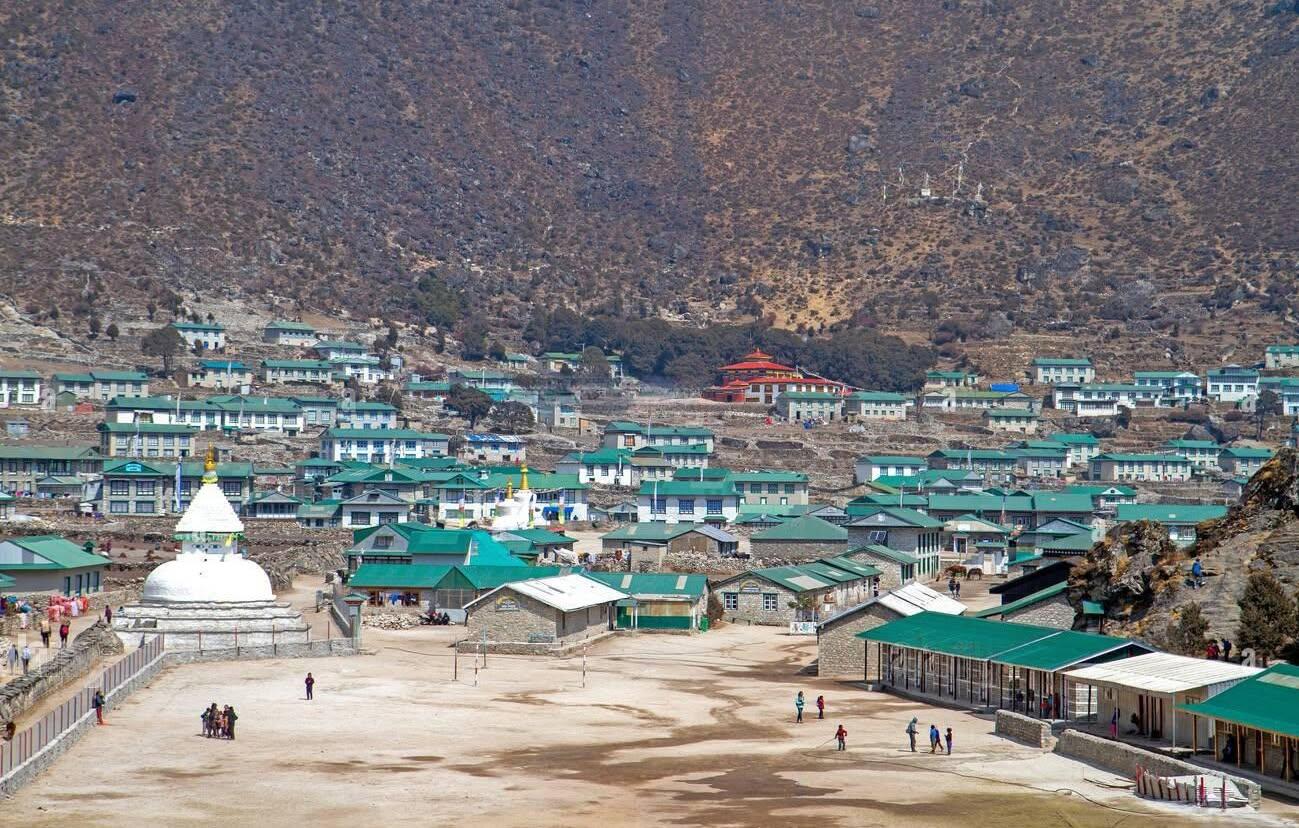
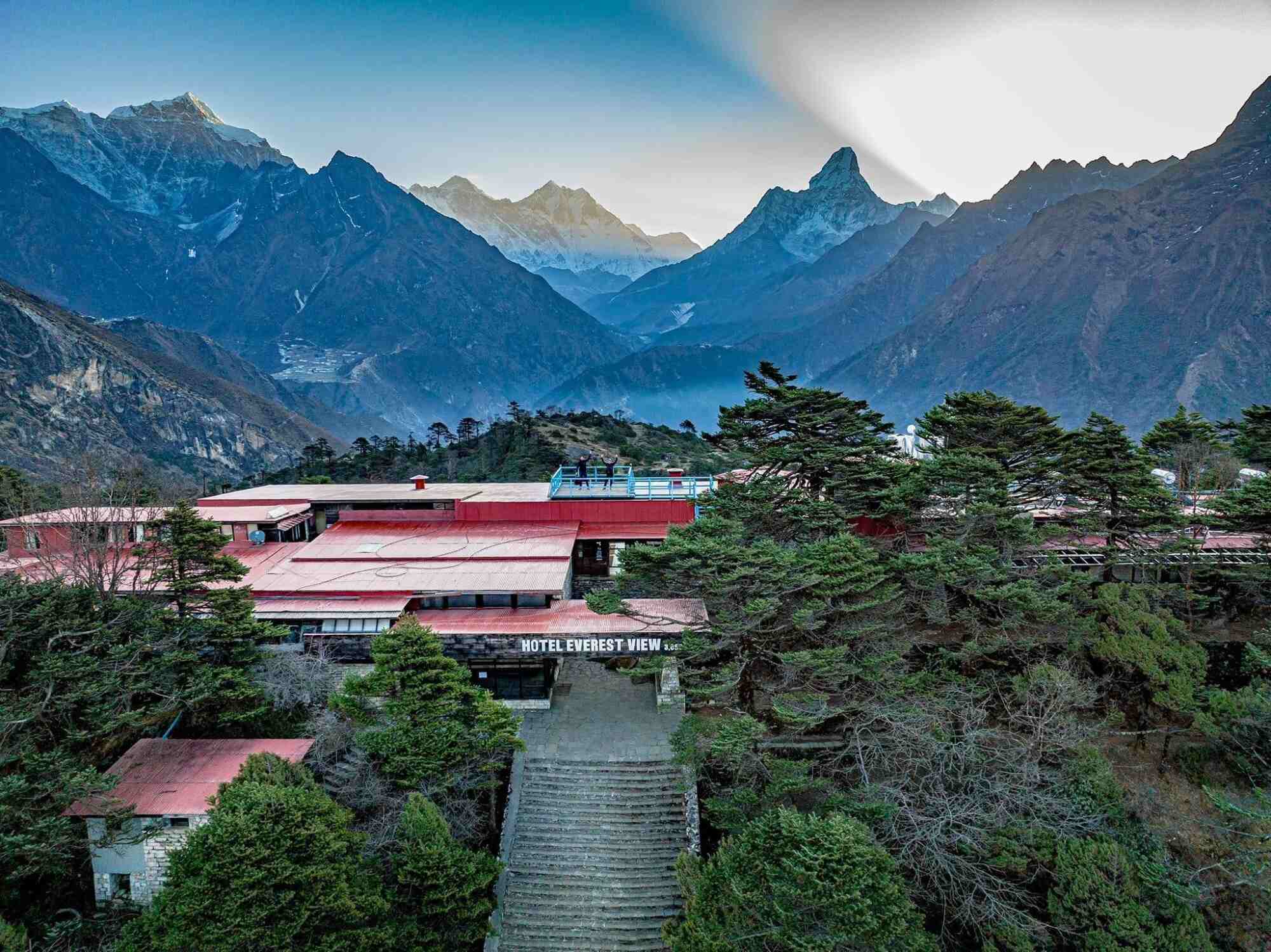
| 4 | Acclimatization hike to the Everest View Hotel and Khumjung | 4 to 5 hrs round trip | Moderate, big reward |
| 5 | Namche Bazaar to Lukla | 7 to 8 hrs (about 18 to 19 km) | Longest day, hard on knees |
| 6 | Fly to Kathmandu | None | Easy |
| 7 | Departure | None | Very easy |
Day 3 (the climb to Namche): After you enter Sagarmatha National Park and cross the high Hillary Suspension Bridge, the trail climbs steadily for hours to Namche Bazaar, a gain of about 830 m. It is not technical, but it is the day most first-timers find tiring. Go slowly, rest often and keep water and snacks handy.
Day 5 (the long descent): The walk back to Lukla is long, at 7 to 8 hours, and mostly downhill. Your lungs get an easy time, but your knees and thighs work hard. Trekking poles and an early start make a big difference.
For the full itinerary, read our Everest View Trek itinerary guide or see the trip page.
| Question | Good sign | Needs attention |
|---|---|---|
| Can you walk 4 to 6 hours with breaks? | Yes, on hilly ground | Only on flat ground or for 1 to 2 hours |
| Can you climb stairs for 30 to 60 minutes? | Yes, without feeling exhausted | Breathless after a few flights |
| Can you carry a 4 to 6 kg daypack? | Yes | Struggle with light loads |
| Do you have comfortable, broken-in boots? | Yes | New or untested boots |
| Do you have any heart, lung or blood pressure conditions? | No | Yes, so see a doctor first |
| Can you adjust to basic lodging? | Yes | Strong need for hotel-style comfort |
| Do you have flexibility for flight delays? | Yes, a buffer day | Tight schedule with fixed flights |
If most answers fall in the first column, you are in good shape. If several fall in the second, start training now, talk to your doctor and consider a longer lead time.
| Weeks | Focus | Example |
|---|---|---|
| 1 to 2 | Build a base | Brisk walking or cycling, 3 times a week, 30 to 45 minutes |
| 3 to 4 | Add hills and stairs | Hill walks or stair climbing, 45 to 60 minutes, plus one longer weekend walk |
| 5 to 6 | Add weight and distance | Hike with your daypack (4 to 6 kg) for 2 to 3 hours |
| 7 to 8 | Simulate the trek | Back-to-back long walks of 3 to 5 hours in your trekking boots |
Include some downhill walking, because the descent on Day 5 is tough on the knees, and break in your boots well before you travel.
Altitude is the part first-timers know least about. At Namche (3,440 m) and the Everest View Hotel (about 3,880 m), mild altitude symptoms can affect some trekkers, whatever their fitness.
What helps:
Common mild symptoms: headache, nausea, tiredness, poor sleep.
Danger signs, descend immediately: breathlessness at rest, confusion or loss of balance, a severe headache that does not ease, or symptoms that keep getting worse.
Your guide carries a pulse oximeter and first-aid kit, checks you daily and can arrange a descent or evacuation if needed.
| Category | Essentials |
|---|---|
| Footwear | Broken-in waterproof trekking boots, camp shoes, 3 to 4 pairs of wool socks |
| Layers | Moisture-wicking tops, fleece, down jacket, waterproof shell, trekking pants, thermal layers |
| Head and hands | Warm hat, sun hat, buff, gloves, sunglasses |
| Bags | 25 to 35 liter daypack, soft duffel for your porter |
| Health | Sunscreen, lip balm, blister plasters, personal medicines, hand sanitizer, wet wipes |
| Extras | Trekking poles, headlamp, water bottle and purification tablets, power bank |
| Documents and cash | Passport, visa, insurance details, Nepalese rupees in small notes |
Keep your total luggage under about 15 kg for the Lukla flights, and wear your heaviest items on the plane. A duffel bag, down jacket and sleeping bag are available on loan with the package, so you do not have to buy them. Most other gear can be rented or bought in Thamel, Kathmandu.
| Mistake | Better approach |
|---|---|
| Starting Day 3 too fast | Walk slowly and take regular breaks |
| Wearing new boots | Break them in for several weeks before you travel |
| Overpacking | Stay under 15 kg and leave extras in Kathmandu |
| Skipping water | Drink 3 to 4 liters a day |
| Ignoring headaches | Tell your guide early |
| Booking a tight flight home | Add a buffer day and avoid same-day international connections |
| Skipping insurance | Buy a policy with trekking and evacuation cover |
| Drinking alcohol on arrival at altitude | Wait until you are back in Kathmandu |
| Not carrying cash | Bring Nepalese rupees in small notes for water, charging and tips |
| Season | Months | Beginner suitability |
|---|---|---|
| Autumn | Late Sep to Nov | Best: dry trails, clear views, stable weather |
| Spring | Mar to May | Excellent: mild days, rhododendrons, clear mornings |
| Winter | Dec to Feb | Possible, but cold nights and flight delays need extra care |
| Monsoon | Jun to Aug | Not recommended for first-timers |
See more in our guides to spring trekking in Nepal and autumn trekking in Nepal.
The Everest View Trek is listed from US$870 per person, with group pricing of US$900 for 1 person, US$870 for 2, US$850 for 3 to 6 and US$830 for 7 to 10. The package includes Kathmandu to Lukla flights, a 3-star Kathmandu hotel, teahouses, listed meals, a licensed guide, a shared porter, permits, an oximeter and first-aid kit. International flights, visa, insurance, extra meals, drinks, charging, hot showers and tips are extra.
Many beginners use the Everest View Trek as a confidence-builder. Once you know how you handle altitude and long walking days, you can step up:
| Next step | Duration | Difficulty |
|---|---|---|
| Gokyo Lakes Trek | 12 days | Moderate |
| Classic Everest Base Camp Trek | 14 days | Moderate to challenging |
| Everest Three High Passes Trek | 19 days | Strenuous |
Compare all routes on the Everest Region Treks page.
Yes. The Everest View Trek is graded easy to moderate and is designed for people with little or no trekking experience. It lasts 7 days, has four walking days of about 4 to 7 hours, reaches a maximum of about 3,880 m and includes a rest day in Namche Bazaar. You walk with a licensed guide, a porter carries your main bag and you sleep in teahouses every night. What matters most is basic fitness, a slow pace and good preparation.
No. The trip page states that no prior hiking background is required. The trail is well marked, the route follows established paths and teahouses are available every night. Experience helps, but it is not necessary. A few weeks of brisk walking, stair climbing or cycling will prepare most people well, and your guide will set a comfortable pace.
You should be able to walk 4 to 6 hours a day on hilly ground, climb stairs or slopes for 30 to 60 minutes without exhaustion and carry a light daypack of 4 to 6 kg. Start training 4 to 8 weeks before departure: brisk walking, hill hikes and stair climbing 3 to 4 times a week, building to hikes of 3 to 5 hours in your trekking boots. Practice downhill walking, because the long descent on Day 5 is tough on the knees.
Day 3, from Phakding to Namche Bazaar, is the hardest uphill day. You walk for about 5 to 6 hours and gain roughly 830 m, including a long, steady climb after the Hillary Suspension Bridge. Day 5, from Namche to Lukla, is the longest, at 7 to 8 hours, and it is hard on the knees. Walk slowly on Day 3, use trekking poles on Day 5 and start both days early.
It is possible, but the risk is lower than on higher treks. Namche sits at 3,440 m and the Everest View Hotel at about 3,880 m, and altitude sickness can affect trekkers above 2,500 m whatever their fitness. The itinerary helps by keeping your first night low at Phakding, including an acclimatization day and using "climb high, sleep low." Walk slowly, drink 3 to 4 liters of water daily, avoid alcohol and tell your guide about headaches, nausea or dizziness.
A licensed guide is strongly recommended, especially for first-timers. Your guide handles navigation, permits and lodging, monitors you daily with a pulse oximeter and helps arrange a descent or evacuation if needed. A porter carries your main bag (about 20 to 25 kg shared between two trekkers), so you only need a light daypack, which makes the climbs much easier. Both are included in the Nepal Trip Services package.
Tell your guide early. Options include slowing your pace, taking extra rests, adding a buffer day or descending to a lower altitude. If you cannot continue, your guide can arrange the safest way down, and a helicopter return from Syangboche, Namche or Lukla can be arranged at extra cost. If altitude symptoms worsen, descent is the cure. Make sure your travel insurance covers emergency evacuation, and see Helicopter Services.
Yes. Many solo travelers do the Everest View Trek, and joining a group departure or booking with a licensed operator is the easiest way. Trails are busy in peak seasons, teahouses are friendly and your guide stays with you throughout. Choose a registered, licensed operator, share your itinerary with someone at home and keep your passport, permits and insurance details accessible. Solo female travelers should follow the same precautions and can ask the operator about guide gender and room arrangements.
You need broken-in waterproof boots, layered clothing, a down jacket, a waterproof shell, a warm hat and gloves, sunglasses, sunscreen, a 25 to 35 liter daypack and trekking poles. A duffel bag, down jacket and sleeping bag are available on loan with the Nepal Trip Services package, and most other gear can be rented or bought in Thamel, Kathmandu. Keep your total luggage under about 15 kg for the Lukla flights. See the full checklist on the Everest View Trek page.
Teahouses offer simple twin-sharing rooms with blankets, shared or attached bathrooms and a warm dining hall. Rooms are unheated, so nights can be cold, especially in winter. Meals include dal bhat, noodles, soups, pasta, eggs and tea, and Namche has cafés and bakeries. Hot showers, charging and Wi-Fi may cost extra. Expect basic comfort, but also warm hospitality. Bring earplugs, a headlamp and a power bank.
The flight is short, about 30 to 35 minutes from Kathmandu or 15 to 20 minutes from Ramechhap, and lands on a short, sloping runway at Tenzing-Hillary Airport. It is operated by experienced pilots and gives spectacular mountain views, but weather decides everything, so delays and cancellations are common. Ask for the earliest morning flight, when conditions are usually clearest, sit on the left side for the views and add a buffer day. See our Kathmandu to Lukla flight guide.
Autumn (late September to November) is best, with dry trails, clear skies and the most reliable flights. Spring (March to May) is also excellent, with mild days and flowering rhododendrons. Winter is possible but cold, and the monsoon (June to August) is not recommended for first-timers because of slippery trails, cloudy views and frequent flight delays.
Yes, with care. Active children regularly complete it, and fit seniors do too. There is no strict age limit, but fitness and health matter more than age. Children should be used to walking several hours at a time and monitored for altitude symptoms, which can be harder to recognize in young children. Older travelers should get a medical check-up, tell the guide about any conditions and consider extra rest days, trekking poles and an optional helicopter return.
The trip is listed from US$870 per person, with group pricing from US$830 to US$900. It includes Kathmandu to Lukla flights, 2 nights in a 3-star Kathmandu hotel, 4 nights in teahouses, listed meals, a licensed guide, a shared porter, permits, an oximeter, a first-aid kit and a down jacket and sleeping bag on loan. International flights, visa, insurance, extra meals, drinks, charging, hot showers and tips are not included. Read our Everest View Trek cost guide for a full breakdown.
Yes. It lets you test how you handle flights, altitude, teahouse life and long walking days without committing to two weeks. If you enjoy it, you can step up to the Gokyo Lakes Trek (12 days), the Classic Everest Base Camp Trek (14 days) or the Everest Three High Passes Trek (19 days). If you struggled with altitude, you will know before you go higher.
You do not need to be a mountaineer to see Everest. The Everest View Trek was built for first-timers: short, scenic, supported by a guide and porter, with a rest day to help your body adjust and a terrace panorama at the end of it. Prepare for a few weeks, pack sensibly, walk slowly and listen to your body, and you will enjoy a trek that many people remember as the start of a lifelong love of the mountains.
Ready to go? View dates and prices on the Everest View Trek page, compare other routes on the Everest Region Treks page, use the Trip Planner to design your own itinerary or message Nepal Trip Services on WhatsApp at +977-9828696557 or by email at info@nepaltripservices.com.
Discover more articles that match your interests! Explore these similar blogs packed with insights, tips, and stories to keep you inspired.
Explore the Hillary Suspension Bridge on the Everest trail: location, height, history, best time, safety tips, and how t...
How hard is the Everest View Trek? Daily walking times, altitude, toughest days, fitness needs, training plan, and tips ...
Everest View Trek in 7 days: fly to Lukla, explore Namche, and see Everest from the Everest View Hotel. Itinerary, cost,...
Everest View Trek from US$870: 7-day itinerary, what the price includes, difficulty, permits and best season to go. Plan...
Follow the 7-day Everest View Trek itinerary day by day: Lukla flight, Namche, Everest View Hotel, Khumjung, altitudes, ...
Everest View Trek cost from US$870: what\'s included, group prices, Lukla flights, permits, extras, tips and budget savi...